
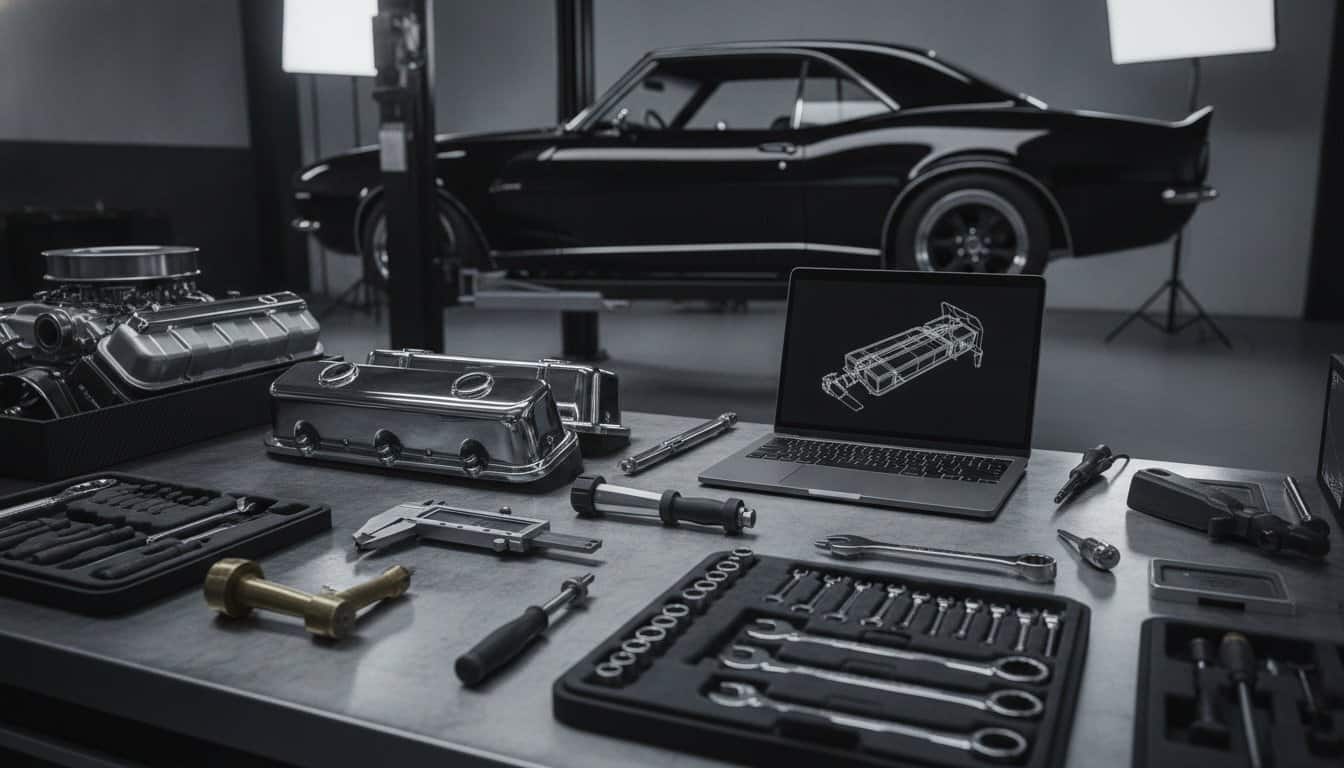
Your grandfather’s heavy duty steel toolbox is no longer enough to build a machine that looks like 1969 but handles like 2026. While those vintage wrenches still have their place, the line between a simple restoration and a high performance build is drawn by the precision of your equipment. You probably know the feeling of hesitation when you are about to cut into a rare vintage panel or the frustration of trying to diagnose a modern fuel injection gremlin with tools meant for a carburetor. It is natural to worry about damaging irreplaceable history or wasting your budget on high end shop equipment that might sit idle. You want the pride of a hand built car without the constant fear of making a costly, technical mistake.
Our expert led guide will empower you to master the hybrid toolkit required to blend classic aesthetics with modern performance. By focusing on the right restomod builder tools, you can invest with total confidence and ensure your project is both safe and reliable. We are going to walk through a definitive checklist that covers every stage of your build, from precision metalwork to advanced electrical integration. This approach ensures you spend your money where it matters most, allowing you to transition from a passive admirer to an active creator who commands the workshop with precision.
Key Takeaways
- Learn how to bridge the gap between vintage charm and modern performance by selecting tools that handle both legacy imperial hardware and high precision metric components.
- Discover why precision measurement is the heart of a successful build and which essential restomod builder tools are required to ensure modern powerplants fit perfectly within classic engine bays.
- Identify the specific welding and cutting equipment needed to modify chassis and bodywork safely without compromising the structural integrity or aesthetic of your heritage machine.
- Master the complexities of modern electrical systems by integrating advanced diagnostic tools and professional grade soldering techniques into your traditional restoration workflow.
- Understand how to use structured blueprints and expert guides to sequence your equipment investments, ensuring you have the right gear for every stage of your project’s evolution.
The Restomod Mindset: Why Your Toolkit Needs an Upgrade
Building a restomod is an act of creative engineering that demands more than a standard set of wrenches. You are not just preserving a piece of history; you are re-imagining it for a new era. This requires a hybrid toolkit that respects the tactile nature of vintage steel while embracing the digital precision of modern performance. Your restomod builder tools must bridge the gap between 1960s assembly lines and 2026 engineering standards.
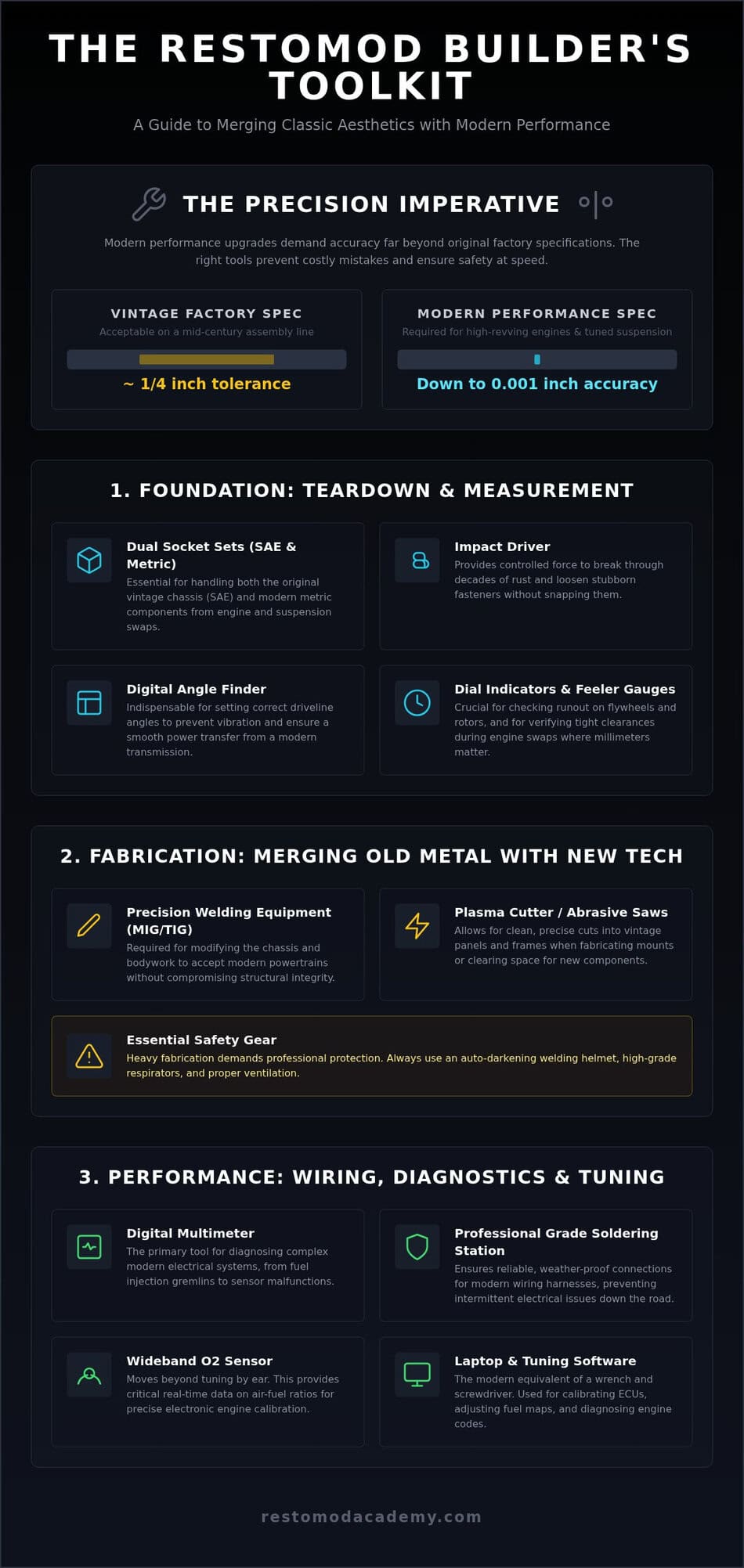
Modern performance upgrades, such as fuel-injected crate engines or multi-link independent rear suspensions, operate on much tighter tolerances than original factory specifications. While a quarter-inch gap might have been acceptable on a mid-century assembly line, today’s high-revving powerplants and precision-tuned geometries demand accuracy down to the thousandth of an inch. Using the wrong tools on a high-horsepower build doesn’t just lead to poor performance; it creates genuine safety risks. A suspension bolt torqued with an uncalibrated wrench or a custom fuel line crimped with pliers instead of a dedicated hydraulic tool can lead to catastrophic failure at highway speeds.
Restoration vs. Restomod: Tooling Differences
A standard kit designed for the conservation and restoration of road vehicles focuses on returning a machine to its original state. However, that kit often falls short when you begin integrating modern technology. The shift from mechanical adjustments, like tuning a carburetor by ear, to electronic calibration through a laptop requires a completely different physical approach. You must move beyond simple hand tools to include digital multimeters and wideband O2 sensors. Precision measurement becomes the backbone of your project, especially when correcting suspension geometry to handle modern cornering forces that the original chassis was never designed to endure.
Setting Up Your Modernized Workshop
Your workshop is the sanctuary where your vision takes shape. To succeed, you must move beyond the basic garage setup and adopt the mindset of a professional fabricator. This starts with essential shop safety gear for heavy fabrication, including auto-darkening welding helmets and high-grade respirators. Lighting and ergonomics are equally vital; you cannot achieve precision in the shadows. Invest in high-output LED shop lights and adjustable work surfaces to reduce fatigue during those long nights of meticulous assembly. Before you pick up a single tool, you must define your project goals. Understanding what is a restomod and how it differs from a stock rebuild will dictate which specialized restomod builder tools deserve a place on your bench.
Foundation Tools: The Essential Teardown and Measurement Kit
Every great build begins with a methodical teardown. You’ll need high quality socket sets that cover both SAE for the original chassis and Metric for the modern components you’re about to install. Don’t skimp on these. A rounded bolt on a rare vintage frame can set your timeline back days. An impact driver is your best friend here, providing the controlled force needed to break through decades of rust without snapping delicate fasteners. This initial phase is about respect for the machine, ensuring that every piece of history is removed without unnecessary damage.
Precision Measurement for Modern Fitment
When you transition from teardown to fitment, your restomod builder tools must become more sophisticated. You aren’t just putting things back where they were; you are engineering new solutions. A digital angle finder is indispensable for setting correct driveline angles, ensuring your new high torque transmission plays nice with the vintage rear end. Dial indicators help you check for runout on new flywheels or brake rotors, catching manufacturing defects before they become vibrations. Feeler gauges, while simple, remain critical for verifying clearances during modern engine swaps where every millimeter of space counts.
Safe Teardown and Organization
Chaos is the enemy of craftsmanship. As you strip the car, implement a rigorous labeling and storage system. Use clear bins and detailed tags for every piece of vintage hardware. You might think you’ll remember where that specific bracket goes, but six months from now, you’ll be glad for the notes. Safety is non negotiable during this phase. High quality floor jacks and heavy duty jack stands are the foundation of a secure workspace. Never trust your life to a cheap, unrated stand. If you want to see which specific brands I trust in my own shop, check out our recommended gear for detailed reviews.
Taking the time to measure twice and organize once sets the stage for a smooth fabrication phase. It’s about building a solid base of precision. By selecting the right restomod builder tools for the job, you ensure that every modern component fits into your vintage frame with factory levels of accuracy. If you’re feeling overwhelmed by the technical requirements, our Premium Project Blueprints can help you visualize the end goal before you even pick up a wrench.
Fabrication and Fitment: Tools for Merging Old Metal with New Tech
You have moved past the teardown, and now the real artistry begins. Merging modern performance into a vintage shell is where your vision truly takes physical form. It is rarely a bolt-on affair. You’ll quickly find that you need to carve out a home for that new drivetrain or suspension system. This stage requires a robust metal fabrication suite to handle the structural and aesthetic challenges of these builds. While some might suggest that modern shortcuts like 3D printing are enough, there is no substitute for the strength and reliability of hand-formed steel and expert welds.
Welding and Metalwork for Chassis Strength
A welder is perhaps the most transformative of all restomod builder tools. Choosing between MIG and TIG welding is your first major decision as a fabricator. MIG is your workhorse for heavy chassis work and floor pans because it is fast and relatively easy to master for structural repairs. However, if you want those beautiful, precise welds on your custom intake or stainless exhaust, TIG is the path to professional results. Whatever you choose, prioritize a high quality auto-darkening helmet and a dedicated ventilation system. For a deeper dive into these techniques, explore our classic car bodywork guide to master the art of metal shaping.
Custom Brackets and Mounts
A high quality drill press is non negotiable for creating the custom brackets that hold your build together. Hand drills are fine for quick fixes, but when you need to mount a modern power steering pump or a custom radiator shroud, vertical precision is vital. Pair this with a heavy duty bench vice and an angle grinder. Use the grinder safely by choosing the right discs; a cutting wheel for removal and flap discs for the final shaping. These tools allow you to remove material with surgical intent, ensuring every new component sits exactly where it belongs.
Don’t overlook the specialized bending and shaping tools for custom fuel and brake lines. Modern high pressure fuel systems require seamless integration, and hand-bending lines often leads to kinks that kill performance. Invest in a quality lever-style bender to achieve those tight, professional radii that define a high end build. This methodical approach to fabrication ensures that your modern upgrades look like they were born in the original engine bay, providing the character of a vintage machine with the reliability of a contemporary one.
Modern Performance Tools: Wiring, Diagnostics, and Tuning
The physical shell of your car is now ready, but it remains a silent monument until you install its nervous system. Modern restomodding requires a shift from simple 12V test lights to sophisticated digital diagnostic equipment. You are no longer just connecting a battery to a starter; you are integrating complex Electronic Fuel Injection (EFI) systems and modern body control modules. This digital frontier is where many builders feel intimidated, but with the right restomod builder tools, you can wire your project with the same confidence you used for the metalwork. Precision in your electrical work is what separates a reliable daily driver from a project that leaves you stranded with an intermittent short.
Mastering the Modern Electrical System
Achieving a professional grade harness starts with ditching the cheap squish crimpers for high quality ratcheting tools designed for specific automotive connectors like Weather-Pack or Deutsch terminals. These ensure every connection can withstand the vibrations of a high performance machine without backing out. Use a high end digital multimeter to verify continuity and voltage drops before you ever turn the key. If you are tackling a popular conversion, like our the definitive guide to an LS engine swap, you will see exactly how critical these precise connections are for sensor accuracy and engine longevity. A circuit tester is also vital for modernizing vintage fuse blocks, allowing you to trace original power sources for your new accessories.
Digital Tuning and Diagnostics
Once the wiring is laid, you must speak the language of the modern ECU. This requires a laptop interface and often an OBD-II scanner to monitor real time data from your sensors. While a traditional timing light is still useful for base settings on some builds, you will likely spend more time with digital ignition controllers that allow you to map spark curves with a keystroke. A wideband O2 sensor is perhaps the most vital of all restomod builder tools in this category. It provides the real time air-fuel ratio data necessary to tune your EFI for maximum power and reliability, preventing the lean conditions that can destroy a new engine during its first test drive.
Don’t forget the sensory experience of the modern cabin. Use dedicated sound deadening rollers and heavy duty utility knives to apply modern insulation throughout the floorboards and doors. This transforms a tinny vintage interior into a quiet, luxury environment that matches the car’s new performance levels. If you want to master these complex systems without the trial and error, download The Ultimate Restomod Guide to get our full technical breakdown of modern electrical integration and tuning protocols.
Organizing Your Build with Restomod Academy
Owning a collection of high quality restomod builder tools is a badge of honor, but without a structured plan, even the best equipment can gather dust. A successful build requires more than just mechanical skill; it demands a logistical strategy that keeps your project moving forward. It’s a common mistake to think that more tools equal a better car. In reality, it is the mastery of those tools and the sequence of their use that defines the quality of the finished machine. Restomod Academy steps in to bridge the gap between your physical workspace and the complex engineering required for a modern build. By following a proven roadmap, you can avoid the common pitfall of buying expensive machinery before you are ready to use it, ensuring your capital is always working for you.
Our resources, specifically The Ultimate Restomod Guide, are designed to help you sequence your tool acquisitions. You don’t need a TIG welder and a laptop tuning interface on day one. We teach you how to prioritize your foundation kit first, moving through the stages of teardown, fabrication, and final assembly with surgical precision. For those high stakes moments where you are modifying a frame or pinning out a custom harness, our Premium Project Blueprints provide the exact measurements and diagrams you need to succeed. If you hit a wall, Restomod Consulting Services offer a direct line to a mentor who can guide you through the most tool intensive stages of your build.
Planning Your Tool Investment
Creating a tool budget that mirrors your car build budget is the only way to stay in the black. Many builders spend their entire allocation on a crate engine only to realize they lack the specialized restomod builder tools required to install it. Decide early on where to invest in professional grade gear versus where enthusiast grade tools will suffice. Precision measurement tools and safety equipment should always be the highest quality you can afford. For a deeper look at how to structure your entire build timeline, read our guide on restomod project planning to ensure you are always one step ahead of the next mechanical hurdle.
Next Steps for Your Restomod Journey
Your journey from a passive admirer to a master builder is a shared adventure. By joining the Restomod Academy community, you gain access to a network of like-minded enthusiasts who value personal labor and technical authenticity. This collective knowledge is a powerful tool in its own right, offering peer to peer support when you are troubleshooting a stubborn EFI map or perfecting a body line. Take the next logical step in your workshop evolution. Download your build roadmap today and start using The Ultimate Restomod Guide to turn your garage into a world class restoration facility. Access our premium blueprints for your specific vehicle and build with the confidence of a seasoned professional. If you are also interested in the digital side of tech curation, you might explore Affiliate Marketing Commissions to see how modern platforms showcase the tools of the trade.
Master the Art of the Modern Build
Success in the workshop is as much about the roadmap as it is about the wrenches. You don’t have to face complex mechanical hurdles alone. Use a proven roadmap followed by successful DIY builders to navigate every stage of your project with calm confidence. Whether you need access to premium project blueprints or expert consulting for daunting technical challenges, the right resources make all the difference. Download The Ultimate Restomod Guide and start building your dream car today. The character of a vintage machine is waiting for your touch. Pick up your tools and begin the adventure of a lifetime.
Frequently Asked Questions
What are the absolute essential tools for a first-time restomod builder?
Start with a high quality socket set in both SAE and Metric, a digital multimeter, and a reliable floor jack with heavy duty stands. These form the core of your restomod builder tools. You will also need a digital angle finder for driveline setup and a basic angle grinder for metal cleanup. Focus on buying the best quality you can afford for measurement and safety equipment to ensure your project begins on a solid, precise foundation.
Is it better to buy a MIG or TIG welder for a car project?
Choose a MIG welder if you are a beginner focusing on chassis repairs and floor pans. It is easier to learn and faster for thick structural steel. However, a TIG welder is superior for precision work on thin body panels, aluminum, or stainless exhaust systems. If your goal is professional level aesthetics and intricate fabrication, the TIG is the better long term investment for your workshop despite the steeper learning curve.
Do I need a car rotisserie for a high-quality restomod build?
You don’t strictly need a rotisserie, but it significantly improves the quality of your undercarriage work and welding. Being able to rotate the chassis allows you to weld in a comfortable down hand position, ensuring better penetration and cleaner beads. For a full frame off project, a rotisserie saves your back and ensures you don’t miss hidden rust or structural cracks. It is a luxury that quickly pays for itself in labor hours.
How much should I budget for tools when starting a restomod?
Allocate a specific percentage of your total project cost to equipment. Many successful DIY builders find that their tool budget grows as they move through different build stages. Start by investing in the essentials for teardown and measurement. You can then acquire specialized restomod builder tools, like EFI tuning interfaces or advanced fabrication gear, only when your project reaches those specific milestones. This approach helps you manage cash flow while building your workshop capabilities.
Can I perform a modern engine swap with standard hand tools?
No, standard hand tools are insufficient for the fabrication and electrical integration required for a modern swap. You will need a hoist to pull the old engine and a drill press to create custom mounting brackets. Most importantly, you need digital diagnostic tools to interface with the new ECU. While your wrenches handle the bolts, the integration of a modern powerplant requires a more advanced suite of specialized equipment to ensure a reliable finish.
What diagnostic tools are needed for modern electronic fuel injection?
Invest in a wideband O2 sensor and a laptop with the appropriate tuning software for your specific ECU. A digital multimeter is also essential for verifying your wiring harness connections and sensor signals. These tools allow you to monitor air fuel ratios in real time, preventing engine damage during initial startup. Without these digital eyes, you are essentially flying blind when it comes to the health and performance of your modern drivetrain.
Should I buy new or used shop equipment for my garage?
Buy new for precision measurement tools and safety gear like jack stands to ensure their accuracy and integrity haven’t been compromised. However, heavy cast iron equipment like drill presses, bench vices, or even car lifts can often be found used for a fraction of the cost. Inspect used gear carefully for cracks or excessive wear. This strategy allows you to build a professional grade shop without overextending your budget on every single item.
How do I organize my workshop for a multi-year car build?
Establish a rigorous labeling system using clear bins and detailed tags for every part you remove. Dedicate specific zones for teardown, fabrication, and clean assembly to prevent metal shavings from contaminating your new components. Good lighting and ergonomic work surfaces are also vital for maintaining your momentum over a long term project. An organized shop reduces frustration and ensures that you spend more time building and less time searching for lost hardware.
Your grandfather’s heavy duty steel toolbox is no longer enough to build a machine that looks like 1969 but handles like 2026. While those vintage wrenches still have their place, the line between a simple restoration and a high performance build is drawn by the precision of your equipment. You probably know the feeling of hesitation when you are about to cut into a rare vintage panel or the frustration of trying to diagnose a modern fuel injection gremlin with tools meant for a carburetor. It is natural to worry about damaging irreplaceable history or wasting your budget on high end shop equipment that might sit idle. You want the pride of a hand built car without the constant fear of making a costly, technical mistake.
Our expert led guide will empower you to master the hybrid toolkit required to blend classic aesthetics with modern performance. By focusing on the right restomod builder tools, you can invest with total confidence and ensure your project is both safe and reliable. We are going to walk through a definitive checklist that covers every stage of your build, from precision metalwork to advanced electrical integration. This approach ensures you spend your money where it matters most, allowing you to transition from a passive admirer to an active creator who commands the workshop with precision.
Key Takeaways
- Learn how to bridge the gap between vintage charm and modern performance by selecting tools that handle both legacy imperial hardware and high precision metric components.
- Discover why precision measurement is the heart of a successful build and which essential restomod builder tools are required to ensure modern powerplants fit perfectly within classic engine bays.
- Identify the specific welding and cutting equipment needed to modify chassis and bodywork safely without compromising the structural integrity or aesthetic of your heritage machine.
- Master the complexities of modern electrical systems by integrating advanced diagnostic tools and professional grade soldering techniques into your traditional restoration workflow.
- Understand how to use structured blueprints and expert guides to sequence your equipment investments, ensuring you have the right gear for every stage of your project’s evolution.
The Restomod Mindset: Why Your Toolkit Needs an Upgrade
Building a restomod is an act of creative engineering that demands more than a standard set of wrenches. You are not just preserving a piece of history; you are re-imagining it for a new era. This requires a hybrid toolkit that respects the tactile nature of vintage steel while embracing the digital precision of modern performance. Your restomod builder tools must bridge the gap between 1960s assembly lines and 2026 engineering standards.
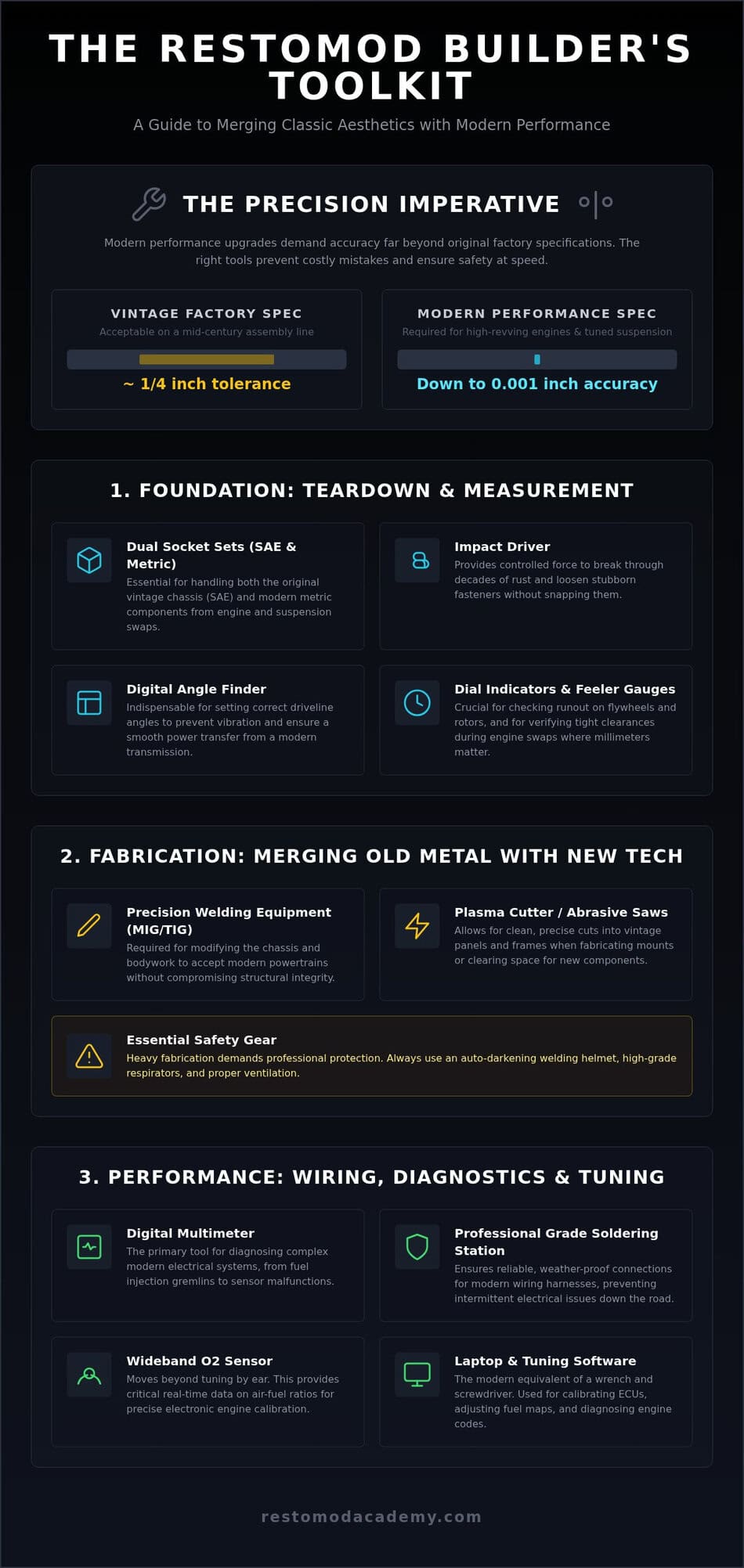
Modern performance upgrades, such as fuel-injected crate engines or multi-link independent rear suspensions, operate on much tighter tolerances than original factory specifications. While a quarter-inch gap might have been acceptable on a mid-century assembly line, today’s high-revving powerplants and precision-tuned geometries demand accuracy down to the thousandth of an inch. Using the wrong tools on a high-horsepower build doesn’t just lead to poor performance; it creates genuine safety risks. A suspension bolt torqued with an uncalibrated wrench or a custom fuel line crimped with pliers instead of a dedicated hydraulic tool can lead to catastrophic failure at highway speeds.
Restoration vs. Restomod: Tooling Differences
A standard kit designed for the conservation and restoration of road vehicles focuses on returning a machine to its original state. However, that kit often falls short when you begin integrating modern technology. The shift from mechanical adjustments, like tuning a carburetor by ear, to electronic calibration through a laptop requires a completely different physical approach. You must move beyond simple hand tools to include digital multimeters and wideband O2 sensors. Precision measurement becomes the backbone of your project, especially when correcting suspension geometry to handle modern cornering forces that the original chassis was never designed to endure.
Setting Up Your Modernized Workshop
Your workshop is the sanctuary where your vision takes shape. To succeed, you must move beyond the basic garage setup and adopt the mindset of a professional fabricator. This starts with essential shop safety gear for heavy fabrication, including auto-darkening welding helmets and high-grade respirators. Lighting and ergonomics are equally vital; you cannot achieve precision in the shadows. Invest in high-output LED shop lights and adjustable work surfaces to reduce fatigue during those long nights of meticulous assembly. Before you pick up a single tool, you must define your project goals. Understanding what is a restomod and how it differs from a stock rebuild will dictate which specialized restomod builder tools deserve a place on your bench.
Foundation Tools: The Essential Teardown and Measurement Kit
Every great build begins with a methodical teardown. You’ll need high quality socket sets that cover both SAE for the original chassis and Metric for the modern components you’re about to install. Don’t skimp on these. A rounded bolt on a rare vintage frame can set your timeline back days. An impact driver is your best friend here, providing the controlled force needed to break through decades of rust without snapping delicate fasteners. This initial phase is about respect for the machine, ensuring that every piece of history is removed without unnecessary damage.
Precision Measurement for Modern Fitment
When you transition from teardown to fitment, your restomod builder tools must become more sophisticated. You aren’t just putting things back where they were; you are engineering new solutions. A digital angle finder is indispensable for setting correct driveline angles, ensuring your new high torque transmission plays nice with the vintage rear end. Dial indicators help you check for runout on new flywheels or brake rotors, catching manufacturing defects before they become vibrations. Feeler gauges, while simple, remain critical for verifying clearances during modern engine swaps where every millimeter of space counts.
Safe Teardown and Organization
Chaos is the enemy of craftsmanship. As you strip the car, implement a rigorous labeling and storage system. Use clear bins and detailed tags for every piece of vintage hardware. You might think you’ll remember where that specific bracket goes, but six months from now, you’ll be glad for the notes. Safety is non negotiable during this phase. High quality floor jacks and heavy duty jack stands are the foundation of a secure workspace. Never trust your life to a cheap, unrated stand. If you want to see which specific brands I trust in my own shop, check out our recommended gear for detailed reviews.
Taking the time to measure twice and organize once sets the stage for a smooth fabrication phase. It’s about building a solid base of precision. By selecting the right restomod builder tools for the job, you ensure that every modern component fits into your vintage frame with factory levels of accuracy. If you’re feeling overwhelmed by the technical requirements, our Premium Project Blueprints can help you visualize the end goal before you even pick up a wrench.
Fabrication and Fitment: Tools for Merging Old Metal with New Tech
You have moved past the teardown, and now the real artistry begins. Merging modern performance into a vintage shell is where your vision truly takes physical form. It is rarely a bolt-on affair. You’ll quickly find that you need to carve out a home for that new drivetrain or suspension system. This stage requires a robust metal fabrication suite to handle the structural and aesthetic challenges of these builds. While some might suggest that modern shortcuts like 3D printing are enough, there is no substitute for the strength and reliability of hand-formed steel and expert welds.
Welding and Metalwork for Chassis Strength
A welder is perhaps the most transformative of all restomod builder tools. Choosing between MIG and TIG welding is your first major decision as a fabricator. MIG is your workhorse for heavy chassis work and floor pans because it is fast and relatively easy to master for structural repairs. However, if you want those beautiful, precise welds on your custom intake or stainless exhaust, TIG is the path to professional results. Whatever you choose, prioritize a high quality auto-darkening helmet and a dedicated ventilation system. For a deeper dive into these techniques, explore our classic car bodywork guide to master the art of metal shaping.
Custom Brackets and Mounts
A high quality drill press is non negotiable for creating the custom brackets that hold your build together. Hand drills are fine for quick fixes, but when you need to mount a modern power steering pump or a custom radiator shroud, vertical precision is vital. Pair this with a heavy duty bench vice and an angle grinder. Use the grinder safely by choosing the right discs; a cutting wheel for removal and flap discs for the final shaping. These tools allow you to remove material with surgical intent, ensuring every new component sits exactly where it belongs.
Don’t overlook the specialized bending and shaping tools for custom fuel and brake lines. Modern high pressure fuel systems require seamless integration, and hand-bending lines often leads to kinks that kill performance. Invest in a quality lever-style bender to achieve those tight, professional radii that define a high end build. This methodical approach to fabrication ensures that your modern upgrades look like they were born in the original engine bay, providing the character of a vintage machine with the reliability of a contemporary one.
Modern Performance Tools: Wiring, Diagnostics, and Tuning
The physical shell of your car is now ready, but it remains a silent monument until you install its nervous system. Modern restomodding requires a shift from simple 12V test lights to sophisticated digital diagnostic equipment. You are no longer just connecting a battery to a starter; you are integrating complex Electronic Fuel Injection (EFI) systems and modern body control modules. This digital frontier is where many builders feel intimidated, but with the right restomod builder tools, you can wire your project with the same confidence you used for the metalwork. Precision in your electrical work is what separates a reliable daily driver from a project that leaves you stranded with an intermittent short.
Mastering the Modern Electrical System
Achieving a professional grade harness starts with ditching the cheap squish crimpers for high quality ratcheting tools designed for specific automotive connectors like Weather-Pack or Deutsch terminals. These ensure every connection can withstand the vibrations of a high performance machine without backing out. Use a high end digital multimeter to verify continuity and voltage drops before you ever turn the key. If you are tackling a popular conversion, like our the definitive guide to an LS engine swap, you will see exactly how critical these precise connections are for sensor accuracy and engine longevity. A circuit tester is also vital for modernizing vintage fuse blocks, allowing you to trace original power sources for your new accessories.
Digital Tuning and Diagnostics
Once the wiring is laid, you must speak the language of the modern ECU. This requires a laptop interface and often an OBD-II scanner to monitor real time data from your sensors. While a traditional timing light is still useful for base settings on some builds, you will likely spend more time with digital ignition controllers that allow you to map spark curves with a keystroke. A wideband O2 sensor is perhaps the most vital of all restomod builder tools in this category. It provides the real time air-fuel ratio data necessary to tune your EFI for maximum power and reliability, preventing the lean conditions that can destroy a new engine during its first test drive.
Don’t forget the sensory experience of the modern cabin. Use dedicated sound deadening rollers and heavy duty utility knives to apply modern insulation throughout the floorboards and doors. This transforms a tinny vintage interior into a quiet, luxury environment that matches the car’s new performance levels. If you want to master these complex systems without the trial and error, download The Ultimate Restomod Guide to get our full technical breakdown of modern electrical integration and tuning protocols.
Organizing Your Build with Restomod Academy
Owning a collection of high quality restomod builder tools is a badge of honor, but without a structured plan, even the best equipment can gather dust. A successful build requires more than just mechanical skill; it demands a logistical strategy that keeps your project moving forward. It’s a common mistake to think that more tools equal a better car. In reality, it is the mastery of those tools and the sequence of their use that defines the quality of the finished machine. Restomod Academy steps in to bridge the gap between your physical workspace and the complex engineering required for a modern build. By following a proven roadmap, you can avoid the common pitfall of buying expensive machinery before you are ready to use it, ensuring your capital is always working for you.
Our resources, specifically The Ultimate Restomod Guide, are designed to help you sequence your tool acquisitions. You don’t need a TIG welder and a laptop tuning interface on day one. We teach you how to prioritize your foundation kit first, moving through the stages of teardown, fabrication, and final assembly with surgical precision. For those high stakes moments where you are modifying a frame or pinning out a custom harness, our Premium Project Blueprints provide the exact measurements and diagrams you need to succeed. If you hit a wall, Restomod Consulting Services offer a direct line to a mentor who can guide you through the most tool intensive stages of your build.
Planning Your Tool Investment
Creating a tool budget that mirrors your car build budget is the only way to stay in the black. Many builders spend their entire allocation on a crate engine only to realize they lack the specialized restomod builder tools required to install it. Decide early on where to invest in professional grade gear versus where enthusiast grade tools will suffice. Precision measurement tools and safety equipment should always be the highest quality you can afford. For a deeper look at how to structure your entire build timeline, read our guide on restomod project planning to ensure you are always one step ahead of the next mechanical hurdle.
Next Steps for Your Restomod Journey
Your journey from a passive admirer to a master builder is a shared adventure. By joining the Restomod Academy community, you gain access to a network of like-minded enthusiasts who value personal labor and technical authenticity. This collective knowledge is a powerful tool in its own right, offering peer to peer support when you are troubleshooting a stubborn EFI map or perfecting a body line. Take the next logical step in your workshop evolution. Download your build roadmap today and start using The Ultimate Restomod Guide to turn your garage into a world class restoration facility. Access our premium blueprints for your specific vehicle and build with the confidence of a seasoned professional.
Master the Art of the Modern Build
Transform your garage into a high performance laboratory with the insights shared today. We have explored how the right restomod builder tools bridge the gap between heritage style and contemporary reliability, from the initial teardown to the final digital tune. Prioritize precision measurement and professional grade fabrication to ensure your project is built to a standard that exceeds original factory specs. This methodical approach turns an intimidating project into a series of achievable, logical steps that respect the soul of your machine.
Success in the workshop is as much about the roadmap as it is about the wrenches. You don’t have to face complex mechanical hurdles alone. Use a proven roadmap followed by successful DIY builders to navigate every stage of your project with calm confidence. Whether you need access to premium project blueprints or expert consulting for daunting technical challenges, the right resources make all the difference. Download The Ultimate Restomod Guide and start building your dream car today. The character of a vintage machine is waiting for your touch. Pick up your tools and begin the adventure of a lifetime.
Frequently Asked Questions
What are the absolute essential tools for a first-time restomod builder?
Start with a high quality socket set in both SAE and Metric, a digital multimeter, and a reliable floor jack with heavy duty stands. These form the core of your restomod builder tools. You will also need a digital angle finder for driveline setup and a basic angle grinder for metal cleanup. Focus on buying the best quality you can afford for measurement and safety equipment to ensure your project begins on a solid, precise foundation.
Is it better to buy a MIG or TIG welder for a car project?
Choose a MIG welder if you are a beginner focusing on chassis repairs and floor pans. It is easier to learn and faster for thick structural steel. However, a TIG welder is superior for precision work on thin body panels, aluminum, or stainless exhaust systems. If your goal is professional level aesthetics and intricate fabrication, the TIG is the better long term investment for your workshop despite the steeper learning curve.
Do I need a car rotisserie for a high-quality restomod build?
You don’t strictly need a rotisserie, but it significantly improves the quality of your undercarriage work and welding. Being able to rotate the chassis allows you to weld in a comfortable down hand position, ensuring better penetration and cleaner beads. For a full frame off project, a rotisserie saves your back and ensures you don’t miss hidden rust or structural cracks. It is a luxury that quickly pays for itself in labor hours.
How much should I budget for tools when starting a restomod?
Allocate a specific percentage of your total project cost to equipment. Many successful DIY builders find that their tool budget grows as they move through different build stages. Start by investing in the essentials for teardown and measurement. You can then acquire specialized restomod builder tools, like EFI tuning interfaces or advanced fabrication gear, only when your project reaches those specific milestones. This approach helps you manage cash flow while building your workshop capabilities.
Can I perform a modern engine swap with standard hand tools?
No, standard hand tools are insufficient for the fabrication and electrical integration required for a modern swap. You will need a hoist to pull the old engine and a drill press to create custom mounting brackets. Most importantly, you need digital diagnostic tools to interface with the new ECU. While your wrenches handle the bolts, the integration of a modern powerplant requires a more advanced suite of specialized equipment to ensure a reliable finish.
What diagnostic tools are needed for modern electronic fuel injection?
Invest in a wideband O2 sensor and a laptop with the appropriate tuning software for your specific ECU. A digital multimeter is also essential for verifying your wiring harness connections and sensor signals. These tools allow you to monitor air fuel ratios in real time, preventing engine damage during initial startup. Without these digital eyes, you are essentially flying blind when it comes to the health and performance of your modern drivetrain.
Should I buy new or used shop equipment for my garage?
Buy new for precision measurement tools and safety gear like jack stands to ensure their accuracy and integrity haven’t been compromised. However, heavy cast iron equipment like drill presses, bench vices, or even car lifts can often be found used for a fraction of the cost. Inspect used gear carefully for cracks or excessive wear. This strategy allows you to build a professional grade shop without overextending your budget on every single item.
How do I organize my workshop for a multi-year car build?
Establish a rigorous labeling system using clear bins and detailed tags for every part you remove. Dedicate specific zones for teardown, fabrication, and clean assembly to prevent metal shavings from contaminating your new components. Good lighting and ergonomic work surfaces are also vital for maintaining your momentum over a long term project. An organized shop reduces frustration and ensures that you spend more time building and less time searching for lost hardware.