
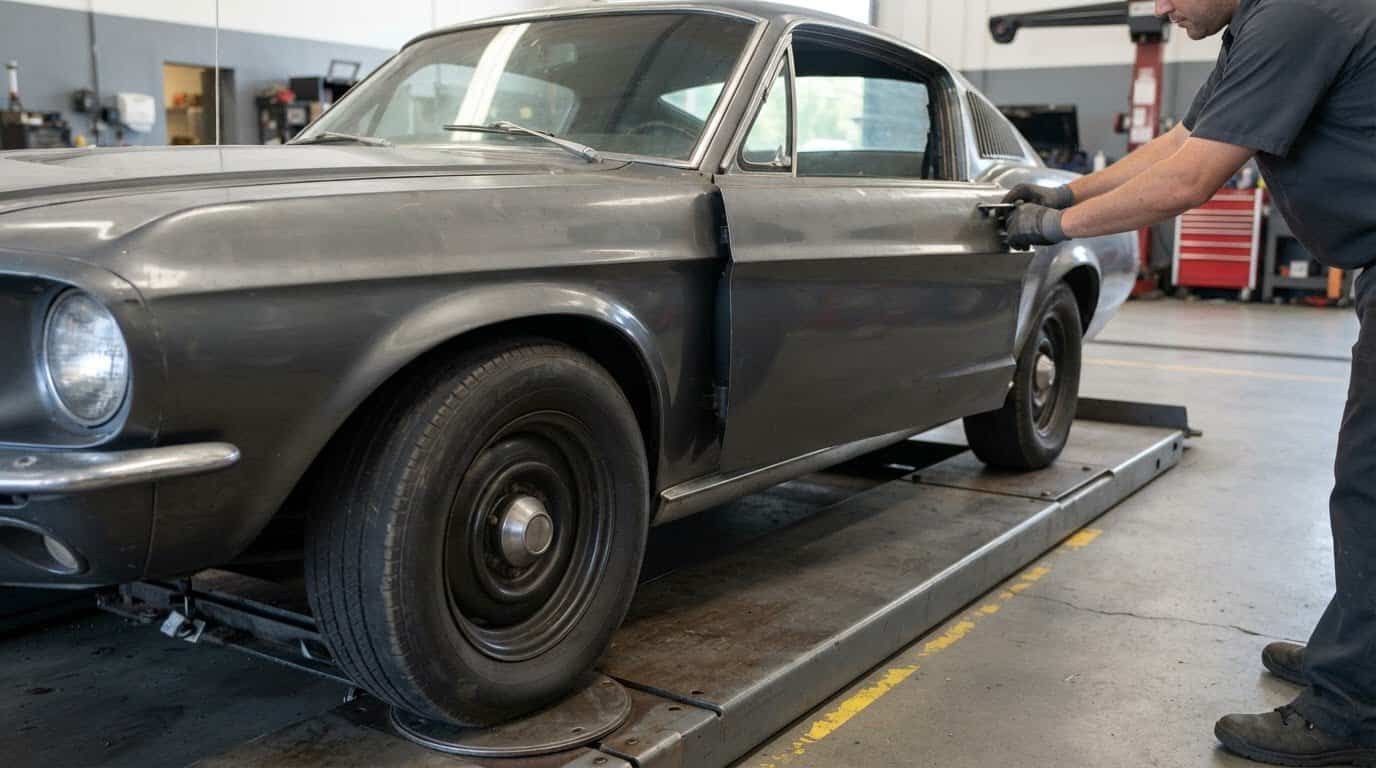
A bent structure can turn a classic unibody car’s familiar road manners into a safety concern. The signs of a bent frame on a classic unibody car include uneven tire wear, doors or panels that bind, wheels that look out of position, and new pulling or unusual noises. These symptoms can have other causes, but several appearing together warrant attention.
It’s natural to focus first on getting the car to track straight and the panels to fit properly. But a unibody combines the body and structural frame, so damage can affect alignment, steering, and how the car absorbs energy in a crash. Suspected structural damage may make driving risky, especially if handling or braking has changed.
Learn to recognize the warning signs and understand why a routine alignment can’t correct a bent structure. This guide covers tire wear, binding doors and panels, handling changes, visible damage, and steps to help protect your classic and its occupants.
Key Takeaways
- Look for patterns across handling, wheel position, underbody condition, and panel fit rather than relying on one symptom alone.
- Persistent uneven tire wear after alignment can point to geometry problems affecting suspension or steering.
- Binding doors, hood, or trunk and uneven panel gaps may signal a shift in the unibody, though worn hinges can also affect fit.
- Suspected structural damage can compromise steering, braking, and crash protection; Restomod Academy’s guides and consulting can help you plan your restoration.
7 Symptoms of a Bent Car Frame: How to Spot Hidden Damage?
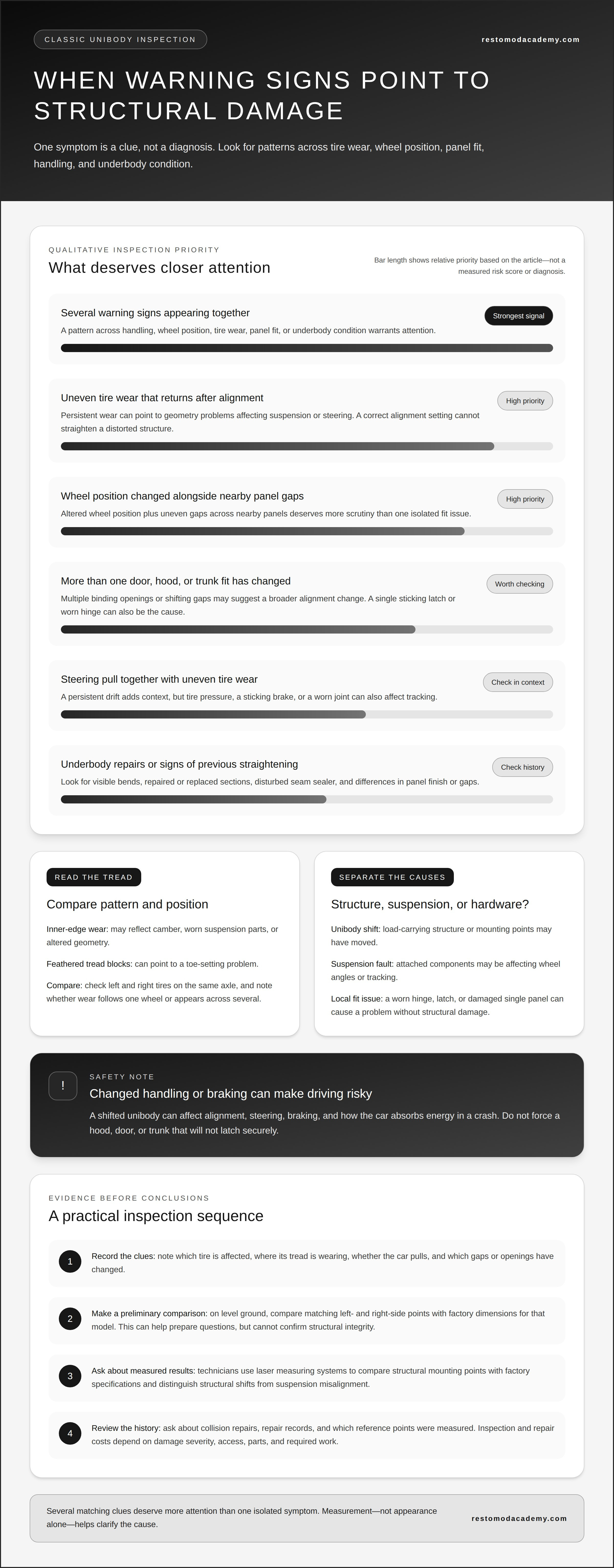
The signs of a bent frame on a classic unibody car are clues, not a diagnosis. Look for pulling, unusual wheel angles, uneven tire wear, misfitting panels, binding doors, underbody damage, or new clunks, especially when several occur together.
Structural Damage Versus Suspension or Panel Problems
Structural damage means the unibody’s load-carrying structure has shifted. Suspension faults affect attached components, while a damaged fender may be limited to one panel. The distinction matters: adjusting a door or replacing a suspension part won’t correct displaced structural mounting points. Altered wheel position combined with changed gaps across nearby panels deserves closer scrutiny than one isolated fit issue.
Professional Structural Measurement and Inspection
Technicians use laser measuring systems to compare structural mounting points with factory specifications. The measurements help distinguish structural shifts from suspension misalignment and inform repair decisions. Inspection and repair costs depend on damage severity, access, parts, and the work required. Ask which reference points were measured and how the results compare with specifications for the specific vehicle.
Signs of Previous Straightening or Collision Repair
Look underneath for repaired or replaced sections, visible bends, disturbed seam sealer, and differences in panel finish or gaps. These signs of a bent frame on a classic unibody car may also point to earlier collision repairs. Ask the seller or mechanic about the vehicle’s history, measured results, and repair records. Damage or improper repairs may affect resale value or an insurance claim; title status depends on vehicle records.
At-Home Unibody Measurement
For a preliminary check, park on level ground and compare matching points on the left and right sides with factory dimensions for that model. Record any differences and note related wheel or panel positions. This home measurement can help you prepare questions for a technician, but it can’t confirm structural integrity or replace professional measuring equipment. A proper assessment helps clarify the repair scope and cost factors.
Uneven tire wear
Read the tread pattern, not just the amount of wear. On a classic car, wear concentrated along one tire’s inner edge differs from wear across both shoulders. Feathered tread blocks can point to a toe-setting problem, while one-sided wear may reflect camber, worn suspension parts, or altered geometry. Compare the left and right tires on the same axle, and note whether wear follows one wheel or appears across several tires.
A collision can shift suspension or unibody geometry, changing the angles at which tires meet the road. That can create recurring wear even after alignment and rotation. For example, if the same front tire keeps wearing on its inner edge after those services, the underlying cause may remain. A correct alignment setting alone won’t straighten a distorted structure or restore a shifted mounting point.
Steering pull adds useful context. If the vehicle consistently drifts on a straight, level road, inspect the tires and suspension rather than assuming frame damage is the only explanation. A sticking brake, mismatched tire pressure, or worn joint can also affect tracking. If those issues are corrected and the pull persists alongside uneven tire wear, structural measuring becomes a more relevant next step.
Connect the tread evidence with the body. For example, uneven wear on a left-front tire together with a different left fender gap suggests more than an isolated tire problem. Record which tire is affected, where the tread is wearing, and whether steering pull or panel gaps have changed. A technician can compare suspension angles and structural mounting points with the vehicle’s specifications using measuring systems. That evidence helps distinguish routine suspension repairs from frame damage and avoid replacing tires without addressing the cause.
Doors, hood, and trunk that bind or fail to close normally
On a classic unibody, a door that suddenly jams or a trunk that sits unevenly can signal shifted structure. Check whether several openings or panels have changed together.
Misaligned Doors and Panel Gaps
Misaligned doors show up as body-panel gaps that widen, narrow, or angle unevenly around the opening. Changes across the door, fender, and adjacent panel matter more than one isolated mismatch because the surrounding structure may have shifted. For example, a rear door that catches while its upper gap tightens deserves closer inspection than a door with one loose hinge.
Binding Hood or Trunk
A hood or trunk that needs extra force, sits high, or fails to latch normally may be misaligned at its hinges, latch, or supporting structure. Compare both sides and check whether the bumper or nearby panels also sit unevenly. Several visible changes after an impact are more concerning than one stubborn latch, which may simply need adjustment or component repair.
Distinguish wear from a new change. Rusted door hinges can let a door drop, while a worn latch can make closing difficult without structural damage. Note whether the problem affects one opening or multiple components, and whether it began after a collision. That sequence helps distinguish local hardware trouble from a broader alignment shift.
Don’t force a hood, door, or trunk that won’t latch securely. A panel that opens while driving can create a hazard, and binding may worsen as the body flexes during handling. If a door jams, inspect the hinge and latch area. If several gaps have changed, have the structure assessed before further road use. Keep photographs and collision-repair records, since improperly repaired frame damage may affect an insurance claim.
Safety risks of driving with a bent frame
A bent unibody can change how a classic car responds to steering and braking. If the structure shifts suspension mounting points, the wheels may no longer track as intended, and the vehicle can pull or feel unstable. A driver who must constantly correct course on a straight road has less control available for a sudden obstacle or evasive maneuver.
The danger extends to a collision. A vehicle’s structural frame supports the body and helps absorb crash energy; distorted sections can change how that energy travels through the car. Structural damage may affect how crumple zones and airbags function. After an accident, even a minor collision, suspected structural damage warrants professional inspection before the car returns to regular driving.
Pay attention to changes that affect control. New steering looseness, poor braking response, unusual wheel angles, or clunks over bumps are reasons to stop treating the problem as cosmetic. An airbag or driver-assistance warning light after an impact can also indicate that sensors have shifted. These signs don’t identify the exact fault, but they make continued driving a poor risk.
Technicians can measure structural mounting points against factory specifications, then determine whether repair or section replacement is needed. A wheel alignment alone cannot straighten a bent unibody, so a car that still pulls after alignment needs further assessment. Until the structure and related components are inspected, avoid high-speed driving or hard braking. Protect the build by prioritizing a measured structural inspection over another test drive.
Restomod Academy
Restomod Academy helps classic-car enthusiasts turn warning signs into informed restoration decisions. If uneven wear, panel fit, or handling changes raise questions about a project’s next steps, its educational resources can help you understand how restoration and modern upgrades fit together. The Ultimate Restomod Guide, Restomod Consulting Services, and Premium Project Blueprints support project planning, but a guide is not a substitute for structural inspection.
Start with clear evidence from the vehicle and a professional assessment of suspected structural damage. Use the findings to shape a practical restoration plan, decide which systems need attention, and balance heritage character with modern reliability. For guidance on your classic-car project, contact Restomod Academy.
Build Your Next Step Around the Car
Recognizing the signs of a bent frame on a classic unibody car is a starting point for deliberate restoration decisions. Before choosing upgrades or planning bodywork, establish what the structure needs and let that guide the project’s order. A sound plan protects the character you want to preserve while giving safety and sound engineering their proper place.
Keep your findings, inspection notes, and restoration priorities together. A clear record can help you make thoughtful choices as the build evolves, rather than letting each new issue pull the project in a different direction. Restomod Academy can help you connect restoration knowledge with broader project planning.
Contact Restomod Academy to discuss your classic-car project. Take the next step with patience, purpose, and a clear vision for the machine you’re bringing back to life.
Frequently Asked Questions
How Does a Shop Determine Whether the Symptoms Involve Frame Damage?
A shop looks for patterns connecting the symptoms, then compares structural measurements with the vehicle’s factory specifications. For example, a pull that persists after alignment is more significant when paired with shifted mounting points or underbody deformation. The technician also considers suspension faults and localized panel damage, since either can cause similar symptoms without proving that the unibody itself has moved.
How do technicians check for frame damage?
Technicians inspect the body and underside, then use a frame measuring system to compare structural reference points with factory dimensions. Laser equipment can identify shifts between mounting points, while visual inspection may reveal kinks, cracks, or disturbed seam sealer. After straightening, technicians measure the vehicle again to assess its position against specifications. Together, these findings guide the repair plan.
Is Frame Damage Worth Fixing?
Repair may be worthwhile when the structure can be restored safely and the vehicle’s condition and significance justify the work. The decision depends on the location and extent of damage, affected sections, and whether repair or replacement is practical. A sound repair plan accounts for structural correction and any damaged panels or refinishing, rather than judging the project by appearance alone.
Is a car safe to drive with a bent frame?
Don’t treat a car with suspected structural damage as safe for regular driving before inspection. A shifted structure can affect how the vehicle responds in an emergency, and damage may alter crash-energy management. If a hood, door, or trunk won’t latch securely, don’t drive it. Arrange a professional assessment, especially after an accident or a sudden change in control.
What are the common signs of a bent or damaged unibody frame on a classic car?
Watch for several changes appearing together, particularly after an impact: the vehicle sits unevenly, wheels look out of position, steering feels different, or new noises emerge over bumps. Visible kinks or cracks underneath add concern. No single clue confirms unibody damage, so note when symptoms began and whether they occur together; that timeline helps technicians assess the car’s condition.
How can uneven panel gaps and misaligned doors indicate unibody damage?
Panel gaps can show that body openings have shifted relative to one another. Compare corresponding gaps on both sides, then note whether a door also catches or sits high at its latch. One dropped door may result from worn hinges, but changes across nearby panels and openings suggest a broader fitment issue. Cracked factory seam sealer near the trunk can provide another clue.
A bent structure can turn a classic unibody car’s familiar road manners into a safety concern. The signs of a bent frame on a classic unibody car include uneven tire wear, doors or panels that bind, wheels that look out of position, and new pulling or unusual noises. These symptoms can have other causes, but several appearing together warrant attention.
It’s natural to focus first on getting the car to track straight and the panels to fit properly. But a unibody combines the body and structural frame, so damage can affect alignment, steering, and how the car absorbs energy in a crash. Suspected structural damage may make driving risky, especially if handling or braking has changed.
Learn to recognize the warning signs and understand why a routine alignment can’t correct a bent structure. This guide covers tire wear, binding doors and panels, handling changes, visible damage, and steps to help protect your classic and its occupants.
Key Takeaways
- Look for patterns across handling, wheel position, underbody condition, and panel fit rather than relying on one symptom alone.
- Persistent uneven tire wear after alignment can point to geometry problems affecting suspension or steering.
- Binding doors, hood, or trunk and uneven panel gaps may signal a shift in the unibody, though worn hinges can also affect fit.
- Suspected structural damage can compromise steering, braking, and crash protection; Restomod Academy’s guides and consulting can help you plan your restoration.
7 Symptoms of a Bent Car Frame: How to Spot Hidden Damage?
The signs of a bent frame on a classic unibody car are clues, not a diagnosis. Look for pulling, unusual wheel angles, uneven tire wear, misfitting panels, binding doors, underbody damage, or new clunks, especially when several occur together.
Structural Damage Versus Suspension or Panel Problems
Structural damage means the unibody’s load-carrying structure has shifted. Suspension faults affect attached components, while a damaged fender may be limited to one panel. The distinction matters: adjusting a door or replacing a suspension part won’t correct displaced structural mounting points. Altered wheel position combined with changed gaps across nearby panels deserves closer scrutiny than one isolated fit issue.
Professional Structural Measurement and Inspection
Technicians use laser measuring systems to compare structural mounting points with factory specifications. The measurements help distinguish structural shifts from suspension misalignment and inform repair decisions. Inspection and repair costs depend on damage severity, access, parts, and the work required. Ask which reference points were measured and how the results compare with specifications for the specific vehicle.
Signs of Previous Straightening or Collision Repair
Look underneath for repaired or replaced sections, visible bends, disturbed seam sealer, and differences in panel finish or gaps. These signs of a bent frame on a classic unibody car may also point to earlier collision repairs. Ask the seller or mechanic about the vehicle’s history, measured results, and repair records. Damage or improper repairs may affect resale value or an insurance claim; title status depends on vehicle records.
At-Home Unibody Measurement
For a preliminary check, park on level ground and compare matching points on the left and right sides with factory dimensions for that model. Record any differences and note related wheel or panel positions. This home measurement can help you prepare questions for a technician, but it can’t confirm structural integrity or replace professional measuring equipment. A proper assessment helps clarify the repair scope and cost factors.
Uneven tire wear
Read the tread pattern, not just the amount of wear. On a classic car, wear concentrated along one tire’s inner edge differs from wear across both shoulders. Feathered tread blocks can point to a toe-setting problem, while one-sided wear may reflect camber, worn suspension parts, or altered geometry. Compare the left and right tires on the same axle, and note whether wear follows one wheel or appears across several tires.
A collision can shift suspension or unibody geometry, changing the angles at which tires meet the road. That can create recurring wear even after alignment and rotation. For example, if the same front tire keeps wearing on its inner edge after those services, the underlying cause may remain. A correct alignment setting alone won’t straighten a distorted structure or restore a shifted mounting point.
Steering pull adds useful context. If the vehicle consistently drifts on a straight, level road, inspect the tires and suspension rather than assuming frame damage is the only explanation. A sticking brake, mismatched tire pressure, or worn joint can also affect tracking. If those issues are corrected and the pull persists alongside uneven tire wear, structural measuring becomes a more relevant next step.
Connect the tread evidence with the body. For example, uneven wear on a left-front tire together with a different left fender gap suggests more than an isolated tire problem. Record which tire is affected, where the tread is wearing, and whether steering pull or panel gaps have changed. A technician can compare suspension angles and structural mounting points with the vehicle’s specifications using measuring systems. That evidence helps distinguish routine suspension repairs from frame damage and avoid replacing tires without addressing the cause.
Doors, hood, and trunk that bind or fail to close normally
On a classic unibody, a door that suddenly jams or a trunk that sits unevenly can signal shifted structure. Check whether several openings or panels have changed together.
Misaligned Doors and Panel Gaps
Misaligned doors show up as body-panel gaps that widen, narrow, or angle unevenly around the opening. Changes across the door, fender, and adjacent panel matter more than one isolated mismatch because the surrounding structure may have shifted. For example, a rear door that catches while its upper gap tightens deserves closer inspection than a door with one loose hinge.
Binding Hood or Trunk
A hood or trunk that needs extra force, sits high, or fails to latch normally may be misaligned at its hinges, latch, or supporting structure. Compare both sides and check whether the bumper or nearby panels also sit unevenly. Several visible changes after an impact are more concerning than one stubborn latch, which may simply need adjustment or component repair.
Distinguish wear from a new change. Rusted door hinges can let a door drop, while a worn latch can make closing difficult without structural damage. Note whether the problem affects one opening or multiple components, and whether it began after a collision. That sequence helps distinguish local hardware trouble from a broader alignment shift.
Don’t force a hood, door, or trunk that won’t latch securely. A panel that opens while driving can create a hazard, and binding may worsen as the body flexes during handling. If a door jams, inspect the hinge and latch area. If several gaps have changed, have the structure assessed before further road use. Keep photographs and collision-repair records, since improperly repaired frame damage may affect an insurance claim.
Safety risks of driving with a bent frame
A bent unibody can change how a classic car responds to steering and braking. If the structure shifts suspension mounting points, the wheels may no longer track as intended, and the vehicle can pull or feel unstable. A driver who must constantly correct course on a straight road has less control available for a sudden obstacle or evasive maneuver.
The danger extends to a collision. A vehicle’s structural frame supports the body and helps absorb crash energy; distorted sections can change how that energy travels through the car. Structural damage may affect how crumple zones and airbags function. After an accident, even a minor collision, suspected structural damage warrants professional inspection before the car returns to regular driving.
Pay attention to changes that affect control. New steering looseness, poor braking response, unusual wheel angles, or clunks over bumps are reasons to stop treating the problem as cosmetic. An airbag or driver-assistance warning light after an impact can also indicate that sensors have shifted. These signs don’t identify the exact fault, but they make continued driving a poor risk.
Technicians can measure structural mounting points against factory specifications, then determine whether repair or section replacement is needed. A wheel alignment alone cannot straighten a bent unibody, so a car that still pulls after alignment needs further assessment. Until the structure and related components are inspected, avoid high-speed driving or hard braking. Protect the build by prioritizing a measured structural inspection over another test drive.
Restomod Academy
Restomod Academy helps classic-car enthusiasts turn warning signs into informed restoration decisions. If uneven wear, panel fit, or handling changes raise questions about a project’s next steps, its educational resources can help you understand how restoration and modern upgrades fit together. The Ultimate Restomod Guide, Restomod Consulting Services, and Premium Project Blueprints support project planning, but a guide is not a substitute for structural inspection.
Start with clear evidence from the vehicle and a professional assessment of suspected structural damage. Use the findings to shape a practical restoration plan, decide which systems need attention, and balance heritage character with modern reliability. For guidance on your classic-car project, contact Restomod Academy.
Build Your Next Step Around the Car
Recognizing the signs of a bent frame on a classic unibody car is a starting point for deliberate restoration decisions. Before choosing upgrades or planning bodywork, establish what the structure needs and let that guide the project’s order. A sound plan protects the character you want to preserve while giving safety and sound engineering their proper place.
Keep your findings, inspection notes, and restoration priorities together. A clear record can help you make thoughtful choices as the build evolves, rather than letting each new issue pull the project in a different direction. Restomod Academy can help you connect restoration knowledge with broader project planning.
Contact Restomod Academy to discuss your classic-car project. Take the next step with patience, purpose, and a clear vision for the machine you’re bringing back to life.
Frequently Asked Questions
How Does a Shop Determine Whether the Symptoms Involve Frame Damage?
A shop looks for patterns connecting the symptoms, then compares structural measurements with the vehicle’s factory specifications. For example, a pull that persists after alignment is more significant when paired with shifted mounting points or underbody deformation. The technician also considers suspension faults and localized panel damage, since either can cause similar symptoms without proving that the unibody itself has moved.
How do technicians check for frame damage?
Technicians inspect the body and underside, then use a frame measuring system to compare structural reference points with factory dimensions. Laser equipment can identify shifts between mounting points, while visual inspection may reveal kinks, cracks, or disturbed seam sealer. After straightening, technicians measure the vehicle again to assess its position against specifications. Together, these findings guide the repair plan.
Is Frame Damage Worth Fixing?
Repair may be worthwhile when the structure can be restored safely and the vehicle’s condition and significance justify the work. The decision depends on the location and extent of damage, affected sections, and whether repair or replacement is practical. A sound repair plan accounts for structural correction and any damaged panels or refinishing, rather than judging the project by appearance alone.
Is a car safe to drive with a bent frame?
Don’t treat a car with suspected structural damage as safe for regular driving before inspection. A shifted structure can affect how the vehicle responds in an emergency, and damage may alter crash-energy management. If a hood, door, or trunk won’t latch securely, don’t drive it. Arrange a professional assessment, especially after an accident or a sudden change in control.
What are the common signs of a bent or damaged unibody frame on a classic car?
Watch for several changes appearing together, particularly after an impact: the vehicle sits unevenly, wheels look out of position, steering feels different, or new noises emerge over bumps. Visible kinks or cracks underneath add concern. No single clue confirms unibody damage, so note when symptoms began and whether they occur together; that timeline helps technicians assess the car’s condition.
How can uneven panel gaps and misaligned doors indicate unibody damage?
Panel gaps can show that body openings have shifted relative to one another. Compare corresponding gaps on both sides, then note whether a door also catches or sits high at its latch. One dropped door may result from worn hinges, but changes across nearby panels and openings suggest a broader fitment issue. Cracked factory seam sealer near the trunk can provide another clue.