

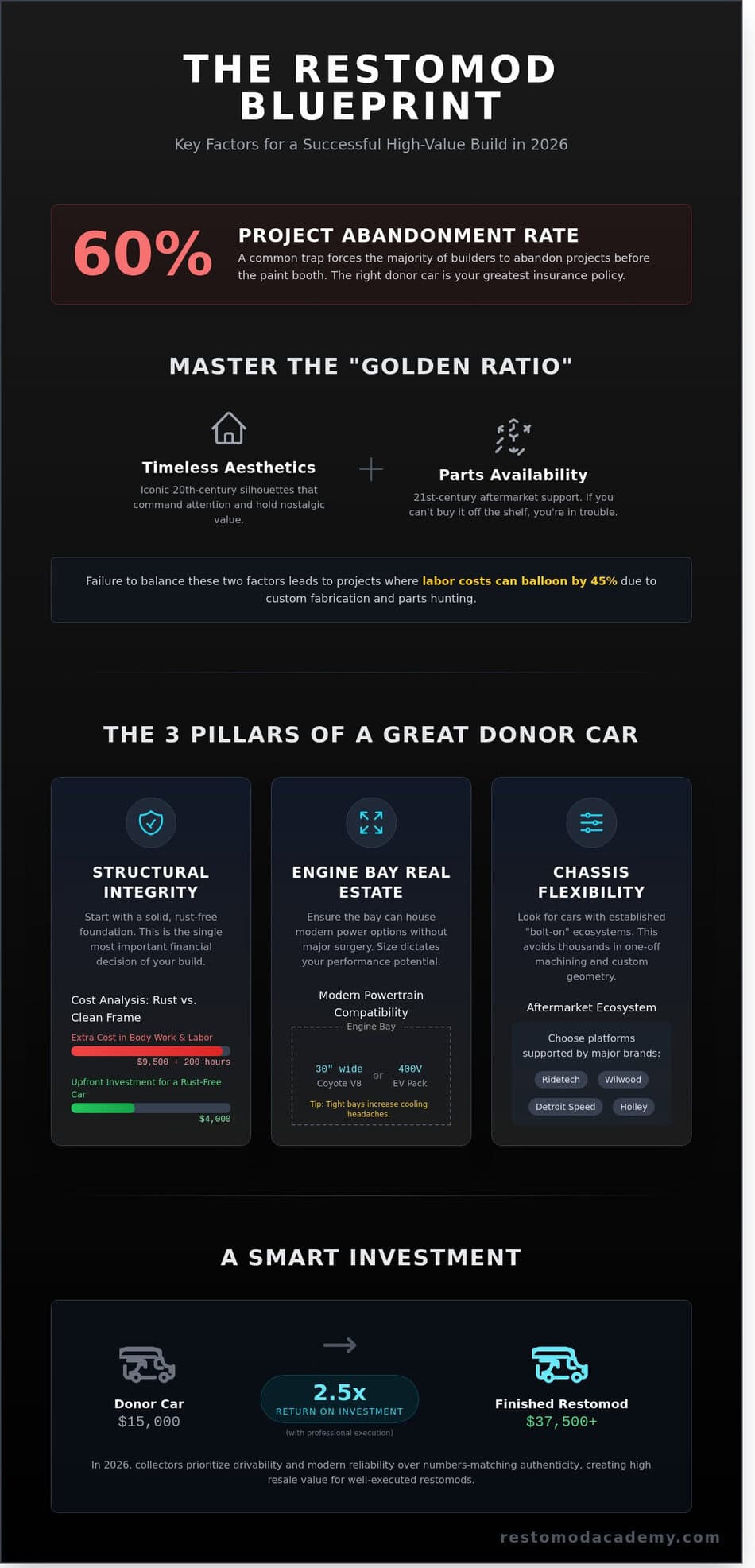
What if the most iconic car in your garage was also the most reliable vehicle you owned? Identifying the best cars to restomod in 2026 requires a shift in perspective; you aren’t just buying a vintage shell, you’re investing in a compatible performance ecosystem. We’ve all seen the heartbreak of a project stalled for years because a replacement floor pan hasn’t been manufactured since 1978. It’s a common trap that forces 60% of builders to abandon their projects before they even reach the paint booth.
At the Restomod Academy, we believe your sweat equity should lead to a high-value masterpiece, not a pile of mismatched parts. You want a machine that captures the raw soul of the past while utilizing the precision of modern fuel injection and suspension geometry. This guide breaks down the elite platforms that offer a massive parts catalog and seamless engine swap compatibility. We’ll show you exactly which models provide the highest resale value and the smoothest path to a professional-grade build.
Key Takeaways
- Master the “Golden Ratio” of restomodding by learning how to balance timeless vintage aesthetics with the modern parts availability required for a seamless build.
- Explore the best cars to restomod within the American muscle and truck categories, where massive aftermarket support makes every replacement component available brand new.
- Shift your focus to performance-driven European and JDM icons, prioritizing suspension geometry and modern handling for a more surgical driving experience.
- Identify high-value, “unloved” second-generation donor cars that offer the same soul and potential as their pricier predecessors without breaking your budget.
- Protect your legacy by applying the “Buy the Best” rule and learning how to spot deal-breaking structural rust before you commit to a project.
What Makes a Vehicle One of the Best Cars to Restomod?
Selecting a project car is a high-stakes decision that dictates your garage life for the next 24 months. The best cars to restomod achieve a “Golden Ratio” where iconic 20th-century aesthetics meet 21st-century parts availability. You want a silhouette that stops traffic but a mechanical backbone that doesn’t require custom fabrication for every single bolt. By 2026, the market has shifted to favor cars with massive aftermarket support. If you can’t buy a wiring harness or a weatherstripping kit off the shelf, your budget build will quickly balloon by 45% in labor costs alone.
The investment side is equally critical. In 2026, collectors prioritize drivability over numbers-matching authenticity. A donor car bought for $15,000 that accepts a modern crate engine can often command a 2.5x return on investment if the execution is professional. Stick to modular platforms. These vehicles allow you to swap in modern coilovers or fuel-injection systems without cutting the floorboards. This accessibility ensures your project stays on the road rather than sitting on jack stands for a decade.
Defining the Restomod Identity
A restomod isn’t a museum piece. While a purist restoration focuses on assembly-line stamps and period-correct bias-ply tires, we prioritize performance. We choose safety and reliability. This means swapping 50-year-old drum brakes for six-piston calipers and replacing temperamental carburetors with electronic fuel injection. To understand the full philosophy behind these builds, check out our guide on What is a Restomod?
The Three Pillars of a Great Donor Car
- Structural Integrity: Start with a solid foundation. Spending $4,000 more on a rust-free frame saves you 200 hours of metalwork and roughly $9,500 in specialist body shop fees.
- Engine Bay Real Estate: Ensure the bay can house a 30-inch wide Coyote V8 or a 400V EV battery pack. Tight bays limit your power options and increase cooling headaches during the summer months.
- Chassis Flexibility: Look for cars with established bolt-on ecosystems. If companies like Ridetech or Wilwood don’t support your specific chassis, you’ll spend thousands on one-off machining and custom geometry.
Focus your energy on vehicles that offer a clear path to completion. The best cars to restomod are those that allow you to spend more time behind the steering wheel and less time searching through obscure forum archives for discontinued parts. Your vision deserves a platform that can actually handle the power of a modern powertrain.
The American Legends: Classic Muscle and Truck Platforms
1960s American steel remains the undisputed king of the restomod world for a simple reason: accessibility. When you’re searching for the best cars to restomod, you want a platform that doesn’t require a master’s degree in fabrication just to source a door handle. This is the “Parts Catalog” advantage. Companies like Holley, Detroit Speed, and Roadster Shop have spent decades refining components specifically for these chassis. You can literally build a 1969 Camaro from a catalog without a single original donor part.
The performance potential of these platforms has evolved dramatically. We aren’t just talking about adding a shiny set of wheels. Modern builders are stripping away leaf-spring relics and replacing them with sophisticated multi-link rear suspensions and coil-overs. This transformation turns a wallowing 4,000-pound boat into a corner-carving machine capable of pulling 1.0g on a skidpad. It’s the ultimate marriage of nostalgic aesthetics and 2026 performance standards.
The 1964-1970 Ford Mustang
The Mustang is the most supported platform in history. Builders today aren’t just swapping carburetors; they’re installing 460-horsepower Coyote crates that require precision engineering. To handle that modern torque, you’ll need to cut out the factory shock towers and install an Independent Front Suspension (IFS) kit. If your donor car is a pile of rust, Dynacorn offers full replacement steel bodies licensed by Ford. It’s a clean slate for your vision that eliminates the headache of 50-year-old metal fatigue.
The 1967-1969 Chevrolet Camaro & Firebird
These are the quintessential Pro-Touring candidates. The F-Body platform is the perfect candidate for The Definitive Guide to an LS Engine Swap. Most builders aim to keep the iconic RS or SS trim while hiding a 6-speed Tremec and a modern fuel system underneath. You get the aggressive 1960s silhouette with the turn-key reliability of a modern Corvette. It’s a proven formula that holds its value better than almost any other project on this list.
Chevrolet C10 (1967-1972) and Square Bodies
Vintage pickups are dominating the scene because they’re approachable. A 1970 C10 uses a simple ladder-frame construction that makes suspension swaps and engine positioning straightforward for beginners. While a 1973-1987 “Square Body” was once a budget choice, their market value has increased 25% since 2022. Modern builds now feature leather-wrapped dashes and dual-zone climate control. These trucks have transitioned from farm tools to luxury cruisers that happen to have a bed in the back. Before you buy your first project, check out our recommended gear to ensure your garage is ready for the heavy lifting.
European and JDM Excellence: Style Meets Performance
The landscape of the best cars to restomod shifted toward 1990s icons and high-revving imports. While domestic muscle often dominates the drag strip, these European and Japanese platforms prioritize surgical handling and tactile feedback. You aren’t just building a car; you’re refining a legacy. Your goal is preserving that raw, analog connection while curing the 30-year-old headaches of vacuum leaks and brittle wiring. Sourcing authentic trim pieces can take months of hunting on global forums, but the result is a machine that stands out in a sea of cookie-cutter builds.
The BMW E30 3-Series
The E30 remains the definitive “Youngtimer” for builders who demand telepathic steering. Between 1982 and 1994, BMW perfected this balanced chassis. For your build, swap the tired M20 engine for a 3.2L S54 inline-six to gain a reliable 333 horsepower. If you want to future-proof the project, 2026 offers more bolt-in electric conversion kits than ever before. Don’t stop at the engine. Replace the cracked dashboard with a custom-wrapped leather unit and integrate a subtle digital display to bring the 1980s cabin into the modern era.
Datsun 240Z (S30)
Often called the “Japanese E-Type,” the S30 Datsun is a masterclass in GT styling. These cars are notorious for floor pan and frame rail rust. Inspect your donor car with a magnet and a borescope before committing. Many builders now bypass heavy bodywork by using full carbon-fiber replacement panels, which can shed over 200 pounds from the total curb weight. Pair a modern Garrett turbocharger with a 300mm big brake kit. This combination ensures the car stops as fast as it accelerates, turning a 1970s cruiser into a legitimate track weapon.
Porsche 911 (G-Body and 964)
The “Singer Effect” has pushed air-cooled Porsche prices high, but the G-Body (1974-1989) and 964 remain the gold standard for the best cars to restomod. Focus your energy on weight reduction and modern Electronic Fuel Injection (EFI) conversions. Replacing the restrictive Bosch K-Jetronic system with a modern ECU improves cold starts and throttle response by 25 percent. Strip the interior back to RS-style door cards and lightweight carpets to feel every nuance of the road. Before you turn the first wrench on your flat-six, Check out our Recommended Gear for Porsche builds to ensure you have the precision tools required for Stuttgart engineering.
Budget-Friendly Candidates: Restomodding Without Breaking the Bank
Stop chasing overpriced 1960s steel. The smart money in 2026 is moving toward the “unloved” classics of the late 20th century. These platforms offer a distinct second-gen advantage. You receive better factory engineering, such as rack-and-pinion steering and improved crash safety, for a fraction of the entry price. Focus your budget on the mechanical soul of the machine. Invest your capital in the drivetrain and suspension rather than chasing $15,000 cosmetic “jewelry” like billet trim or custom paint. By targeting these 1980s platforms now, you secure some of the best cars to restomod before the collectors drive prices out of reach.
The C4 Chevrolet Corvette (1984-1996)
This chassis is a goldmine for performance-minded builders. It features lightweight aluminum suspension geometry that still holds up against modern sports cars. In 2026, the C4 stands as the premier bargain candidate for an LS engine. You can find high-mileage donors for under $7,500 today. Ditch the flickering 80s digital dash. Replace it with a sleek Holley EFI or Dakota Digital cluster to bring the cockpit into the 21st century while maintaining that iconic wedge silhouette.
The Ford Fox Body Mustang (1979-1993)
Weighing in at roughly 3,100 pounds, the Fox Body is a featherweight compared to modern muscle. Its aftermarket support is staggering; it rivals the original 1965 Mustang in terms of sheer parts availability. Don’t build just another drag car. Transform it into a sophisticated street machine by installing thick sound deadening and modern TMI interior kits. These upgrades fix the “cheap plastic” feel that plagued the original Ford factory builds, turning a budget pony car into a premium grand tourer.
Third-Gen GM F-Bodies (Camaro/Firebird)
The aggressive styling of the 1982 to 1992 Camaro and Firebird is finally gaining the respect it deserves. These cars have massive engine bays, making them one of the best cars to restomod for those wanting modern LT1 power. You must install subframe connectors immediately. These cars suffer from significant chassis flex; a $350 set of weld-in connectors increases torsional rigidity by roughly 35 percent. Secure a clean title example before 1980s nostalgia drives the entry price above the $10,000 mark.
Ready to start your powertrain upgrade? Check out our LS engine swap guide to learn how to drop modern power into these budget platforms.
How to Select Your Perfect Donor Car and Start Your Build
Success in the shop begins long before you pick up a torque wrench. It starts with the “Buy the Best You Can Afford” rule. A $2,000 shell might look like a bargain, but it often hides $15,000 in structural repairs and hundreds of hours of grueling metal work. Spend $10,000 on a running, solid car instead. You’ll save months of frustration and thousands in fabrication costs. When hunting for the best cars to restomod, prioritize a rust-free frame over a running engine. You can always swap a motor, but fixing a twisted or rotted chassis requires specialized jigs and expensive labor that can quickly drain your project fund.
Inspect every candidate for “Restomod-killing” structural rust. Focus your attention on the frame rails, torque boxes, and floor pans. If the structural skeleton is compromised, you aren’t building a car; you’re fighting a losing battle against physics. Creating a build blueprint is your next vital step. Match your performance goals to a hard budget. If you want 500 horsepower and modern cornering, map out your suspension geometry and powertrain needs before the car arrives in your driveway. The “built, not bought” journey is a marathon. The right education ensures you cross the finish line with a vehicle that’s safe, fast, and reliable.
The Pre-Purchase Inspection (PPI) Checklist
Don’t trust your eyes alone when scouting the best cars to restomod. Bring a high-lumen LED flashlight and a borescope camera to peer inside frame rails and cowl vents. These tools reveal the hidden decay that ruins projects. Verify the title status and ensure the VIN plate matches the paperwork and the stamped numbers on the chassis. For a deep dive into the gear you need, check out our Product Reviews for Inspection Tools to see what we keep in our mobile kits.
Setting a Realistic 2026 Budget
Account for the “Restomod Tax” early. Shipping costs for oversized parts and specialized labor rates have increased by 18% since 2024. Always add a 20% buffer for unexpected mechanical gremlins that appear during teardown. Prioritize safety upgrades over aesthetics. Modern disc brakes, responsive steering racks, and baffled EFI fuel systems should always come before custom paint or interior leather. When you’re ready to turn your vision into a legacy, join the Academy to access our Premium Project Blueprints and master every step of the build process.
Ignite Your Build Journey for 2026
Choosing from the best cars to restomod isn’t just about picking a vintage shell; it’s about bridging the 50 year gap between classic aesthetics and modern 2026 performance standards. You’ve identified the ideal donor, whether it’s a 1967 muscle car or a 1990s JDM icon, and now you’re ready to integrate fuel injection and precision suspension geometry. The transition from a passive admirer to an active builder starts with a commitment to craftsmanship and a solid plan for every wiring harness and bolt.
Don’t let the technical hurdles of fabrication slow your momentum. You can master the garage with expert mentorship from Brook Walsh and our library of 50+ comprehensive engine swap blueprints. You’ll join a vibrant community of 5,000 DIY builders who believe in the “built, not bought” philosophy. Every challenge you face is a valuable learning opportunity that brings you closer to that first roar of the engine.
Download The Ultimate Restomod Guide and Start Your Build Today
Your vision deserves to be on the road, not stuck on jack stands. Grab your tools and let’s start building your legacy one turn of the wrench at a time.
Frequently Asked Questions
What is the easiest car to restomod for a beginner?
The 1965 to 1968 Ford Mustang and the Chevrolet C10 pickup are the best cars to restomod if you’re just starting your first build. These platforms benefit from a massive aftermarket where 95% of the components are available as new reproductions. You won’t need to spend months scouring junkyards for obscure trim pieces. This accessibility cuts the average assembly time by 300 hours because almost every part bolts directly into place without custom fabrication.
Are restomods worth more than original classic cars?
High quality restomods frequently command higher prices than their numbers matching counterparts in the 2026 market. Recent auction data shows that a pro touring 1969 Camaro can sell for $155,000, while a stock version often peaks at $85,000. Modern buyers prioritize 500 horsepower reliability and functional air conditioning over historical purity. Your investment in precision suspension geometry and fuel injection adds tangible value that collectors now pay a significant premium to own.
Can you restomod a car with a modern electric motor?
You can definitely convert a classic to electric power, a trend known as EV modding that has grown by 45% since 2023. The best chassis for this transition are the Porsche 911 or the Volkswagen Beetle because their rear engine layouts accommodate 100kWh battery packs efficiently. A Tesla Large Drive Unit swap provides 450 horsepower instantly. This path blends a vintage silhouette with the silent, maintenance free performance of 2026 technology for a truly future proof build.
How much does a typical restomod project cost in 2026?
A typical restomod project in 2026 costs between $30,000 for a dedicated DIY build and over $210,000 for a professional commission. If you perform the labor yourself, expect to spend $13,000 on a modern crate engine and transmission package alone. High quality paint and bodywork usually consume another $12,000 of your budget. Professional shops currently charge between $160 and $260 per hour, so doing the work yourself saves you a fortune while teaching you vital skills.
Which engine is best for a restomod swap?
The GM LS series remains the gold standard for budget friendly swaps, while the Ford Coyote 5.0L is the top choice for Ford purists. An LS3 crate engine delivers 430 horsepower for roughly $9,500 and fits into almost any engine bay. The Coyote engine offers a sophisticated 460 horsepower design but requires a wider 30 inch engine bay for clearance. Both options provide the turn key reliability and 22 mile per gallon efficiency that define the best cars to restomod today.
Is it better to buy a finished restomod or build one?
Building your own car is the superior choice because it creates a deep mechanical connection that a simple purchase can’t replicate. At the Restomod Academy, we believe the 1,200 hours spent in the garage are where you truly earn your stripes as a builder. You gain total control over every wiring harness and suspension bolt. This process ensures the final machine matches your vision perfectly and gives you the immense pride of driving something you built with your own hands.