
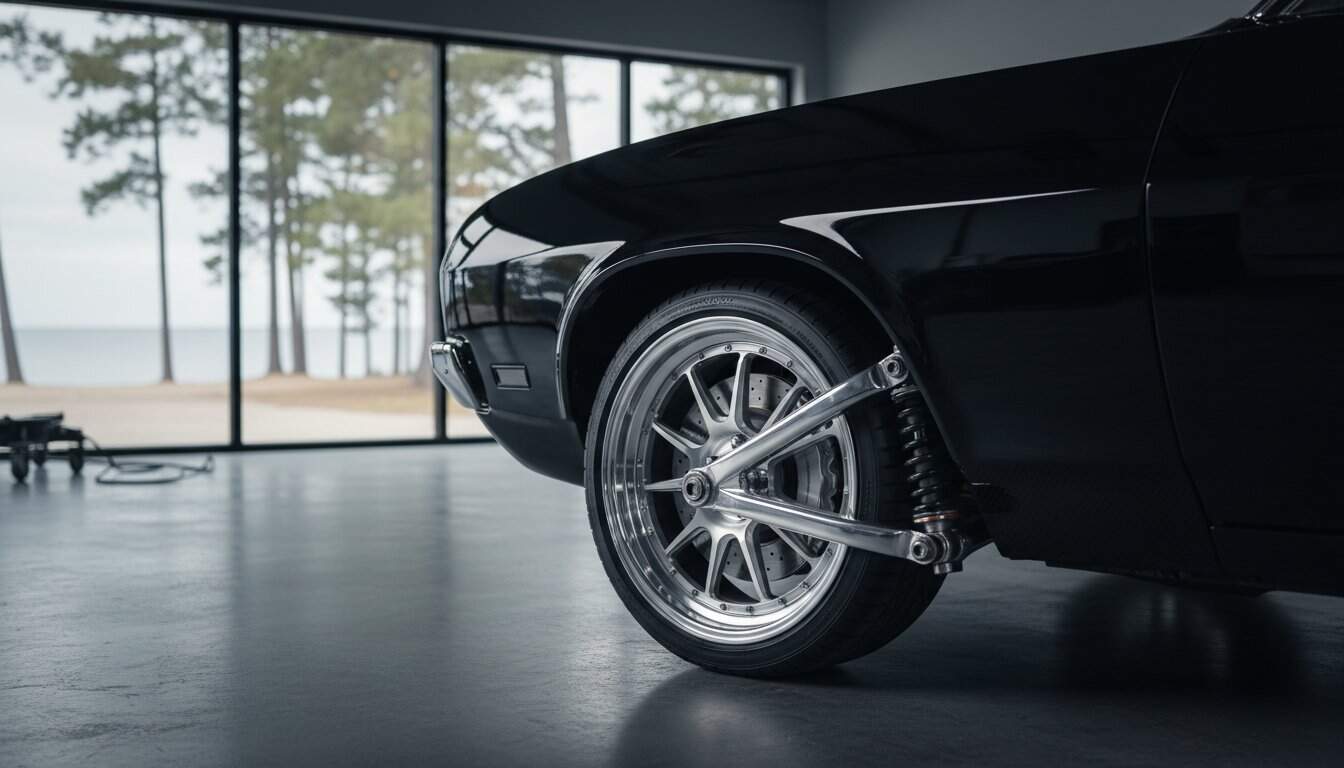
Your 1965 muscle car might look like a masterpiece, but at 70 mph, that 60-year-old steering box feels more like a vague suggestion than a command. It’s a frustrating reality for many builders who’ve spent 500 hours on a restoration only to find the car wallows through corners like a boat in a storm. You shouldn’t have to choose between preserving your vintage frame and enjoying the precision of a modern sports car, nor should you fear the plasma cutter just to fit a set of 275mm performance tires.
We’re here to bridge that gap by helping you select the best restomod suspension kits available in 2026. This guide promises to show you how to replace antiquated geometry with modern engineering, resulting in a 40% reduction in body roll and a level of highway safety that matches contemporary standards. We’ll explore the industry’s top-rated bolt-on systems that deliver a “built, not bought” sense of pride without requiring irreversible modifications to your car’s soul.
Key Takeaways
- Understand why your classic’s factory geometry fails modern radial tires and how to bridge the “geometry gap” for superior cornering grip.
- Identify the best restomod suspension kits for your specific goals, comparing top-tier systems from industry leaders like QA1, RideTech, and Speedtech Performance.
- Master the core components of modern handling, from reducing unsprung weight with tubular arms to dialing in the perfect stance with adjustable coilovers.
- Learn why a “system approach” is critical for predictable handling and how to properly allocate your build budget for maximum performance.
- Discover the essential post-installation secrets, including why modern alignment specs are the key to unlocking your new hardware’s full potential.
Why Original Suspension is the Weakest Link in Your Build
Your classic car was designed for a world that no longer exists. Back in 1965, engineers optimized chassis for bias-ply tires that thrived on soft sidewalls and low-speed cruising. Today, you’re likely running sticky modern radials that demand a completely different set of physics. When you push a factory front end into a corner, the 60-year-old components struggle to keep up. This is where the best restomod suspension kits come into play, replacing antiquated parts with a cohesive system of control arms, coilover shocks, and precision-engineered springs.
Understanding the Anatomy of a High-Performance Restomod Suspension Kit is the first step in diagnosing why your vintage ride feels floaty or unpredictable at highway speeds. Metal fatigue in stamped steel arms isn’t just a performance killer; it’s a safety liability that can lead to catastrophic failure during spirited driving. Investing in the best restomod suspension kits ensures you aren’t just replacing old parts, but upgrading the entire mechanical DNA of the vehicle.
To better understand how these modern upgrades change the driving experience, watch this breakdown of a classic setup:
The Geometry Gap Explained
Vintage suspension often suffers from positive camber gain. As the car leans into a turn, the top of the tire tips outward, forcing the car to lean onto its sidewall rather than the tread. Modern kits solve this by relocating pivot points to ensure negative camber gain, keeping your contact patch flat on the pavement. Scrub Radius is the distance between the steering axis and the center of the tire contact patch, and it dictates how much kickback you feel through the steering wheel when hitting bumps.
Reliability and Modern Road Manners
Factory rubber bushings from the 1960s were designed to mask vibration, but they deflect heavily under load. Switching to polyurethane or Delrin bushings in a modern kit provides a 30% increase in steering response by eliminating that unwanted movement. This transformation is at the heart of the what is a restomod philosophy, where we preserve the soul of the car while adding the precision of 2026 technology. Modern shock valving eliminates the “pogo stick” effect, allowing your car to settle instantly after a dip in the road.
Anatomy of a High-Performance Restomod Suspension Kit
Building a world-class handler starts with understanding the mechanical hardware that connects your tires to the pavement. While vintage aesthetics matter, the best restomod suspension kits focus on replacing 60-year-old compromises with precision engineering. To appreciate these upgrades, you should first understand how car suspensions work at a fundamental level before diving into the specific components that transform a classic.
Control Arms and Geometry Correction
Stock stamped-steel control arms were designed for bias-ply tires and soft rides. They flex under load and offer poor geometry. Modern tubular control arms, typically crafted from DOM steel tubing, reduce unsprung weight by as much as 10 to 15 pounds per side. This reduction allows your tires to react faster to road imperfections.
The real magic lies in geometry correction. Most vintage muscle cars featured zero to one degree of caster, leading to “darty” highway behavior. High-performance kits increase this to five or six degrees of positive caster. This change ensures your car tracks straight at 70 mph and provides a self-centering steering feel. Look for kits that utilize tall ball joints to improve the camber curve, ensuring the tire contact patch remains flat during hard cornering. These kits also eliminate factory rubber bushings in favor of Delrin or poly-graphite to ensure bind-free movement throughout the suspension’s travel.
The Dampening Revolution: Coilovers
Coilovers represent the single biggest leap in handling technology for the 2026 build season. Unlike traditional separate shocks and springs, a coilover wraps the spring around the shock body. This design allows you to adjust ride height by moving the spring perch up or down. You can drop your car two inches for a mean stance without losing suspension travel.
When selecting your kit, decide between single-adjustable and double-adjustable shocks. Single-adjustable units control rebound, which is sufficient for 90 percent of street-driven projects. Double-adjustable shocks allow you to tune both compression and rebound independently, a necessity for those hitting the autocross track. For a balanced ride, aim for spring rates around 450 to 550 pounds for small-block V8 applications. Ensure you have the right tools for the job by checking our recommended gear for the home garage.
Modern builds also benefit from fast-ratio steering boxes or rack-and-pinion conversions. Replacing a sloppy 16:1 factory box with a 12:1 fast-ratio unit provides the surgical precision required to match your new grip levels. Finish the package with a thick, hollow sway bar to kill body roll while maintaining independent wheel movement. If you want to master your build, start by exploring our expert product reviews to find the right fit for your specific chassis.

Best Restomod Suspension Kits of 2026: Top Recommendations
Selecting the right hardware defines your build’s soul. In 2026, the market offers more than just shiny parts; it provides engineered solutions that erase decades of handling deficiencies. Whether you’re chasing lap times or cruising coastal highways, the best restomod suspension kits bridge the gap between 1960s style and 2020s performance. You aren’t just replacing old bushings. You’re re-engineering the vehicle’s footprint using modern kinematics and high-grade materials.
The Pro-Touring Titans: QA1 and Speedtech
QA1 has mastered the art of the bolt-in conversion. Their Level 2 and Level 3 kits are the gold standard for Mopar and GM enthusiasts who demand modern geometry without cutting their floors. By utilizing high-strength 4130 chromoly steel, these kits often shed 40 pounds of unsprung weight from the front end. This improves turn-in response instantly. Most home builders can install a QA1 system in a weekend with standard garage tools.
Speedtech Performance takes a more aggressive approach with their ExtReme line. These kits are for the serious track enthusiast or “Canyon Carver” who isn’t afraid of a welder. They feature a unique subframe that allows for 30 degrees of steering angle and helps heavy muscle cars pull over 1.1 lateral Gs on the skidpad. While the Speedtech setup requires fabrication skills, the payoff is a car that out-corners modern sports cars. Key features of these titans include:
- QA1 Level 3: Includes double-adjustable shocks for precise tuning of compression and rebound.
- Speedtech ExtReme: Uses Sweet Manufacturing steering racks for zero-play feedback.
- Material Quality: Both brands use black powder-coated finishes that resist salt and road debris for years.
Street Excellence: RideTech and UMI Performance
If your goal is a refined daily driver, RideTech is your primary partner. Their StreetGrip system focuses on luxury ride quality. It uses dual-rate springs and custom-valved shocks to soak up potholes that would shatter a stock setup. RideTech is so confident in their durability that they offer a 1,000,001-mile warranty on their shocks. It’s a “set it and forget it” solution for the builder who wants comfort without the classic “boat-like” float.
UMI Performance dominates the GM A-Body and G-Body markets by focusing on American-made durability. Their parts are fabricated in Philipsburg, Pennsylvania, and tested on their private autocross track. UMI kits are almost entirely bolt-on, making them perfect for the DIY community. They specialize in correcting the poor factory camber curves found on 1964 to 1972 Chevelles and GTOs. Check out our full product reviews for deep dives on these brands and how they fit your specific chassis. These kits ensure your classic stays glued to the road while maintaining the reliability you expect from a 2026 build.
Matching the Kit to Your Project Goals
Don’t fall into the trap of buying parts piece-meal. You wouldn’t pair a bespoke tuxedo with flip-flops; your car deserves the same level of coordination. When selecting the best restomod suspension kits for your build, you must adopt a “system approach.” Manufacturers design their components to work in harmony. Mixing a set of Brand A control arms with Brand B coilovers often creates geometry conflicts that lead to “bump steer,” where your car’s alignment changes mid-corner. To ensure your classic tracks straight and true, buy a kit where the roll center, scrub radius, and damping rates were engineered together in the same CAD environment.
Your choice also dictates your wheel and tire options. Most modern performance kits require 17-inch or larger wheels. This isn’t a stylistic choice. It’s a mechanical necessity to clear the 13-inch or 14-inch rotors and multi-piston calipers that high-performance spindles require. Before you pull the trigger, verify that the kit’s track width won’t push your tires into the fenders, especially if you’re aiming for a slammed aesthetic.
Budgeting and ROI
Allocate 15% to 20% of your total build cost to the chassis and suspension. If you’re targeting a $60,000 total build, expect to invest $9,000 to $12,000 in what lies beneath the body. This might seem steep, but the suspension is your primary source of “smiles per mile.” You can choose between entry-level “handling kits” that refresh stock mounting points for about $2,000 or full subframe replacements that can exceed $10,000. Avoid unbranded “Chinese knock-off” parts found on auction sites. A snapped ball joint at 70 mph is a catastrophic failure that negates any initial savings. High-quality kits from reputable brands retain their value, often returning 70% of their cost during a vehicle resale.
Engine Swap Considerations
Your engine choice fundamentally alters your suspension tuning. A traditional cast-iron Big Block weighs nearly 700 pounds, while a modern aluminum-block LS engine weighs approximately 460 pounds. This 240-pound weight reduction off the nose will cause a car setup for a Big Block to sit too high and handle poorly. You must match your spring rates to your specific powertrain. Check out the definitive guide to an LS engine swap to compare engine weights and see how they impact your front-end bias. Modern best restomod suspension kits often include adjustable engine mounts that allow you to move the motor back 1 to 2 inches, significantly improving the car’s center of gravity and turn-in response.
Ready to start your transformation? View our curated list of recommended gear to find the right components for your garage.
Installation Strategy: Getting the Most from Your Kit
Buying the best restomod suspension kits is only half the battle. You have to prep the canvas before you apply the paint. Start by stripping the underside of your car to inspect the frame for hidden rot or stress cracks. Use a tram gauge to verify that your chassis is square within 0.125 inches. If your frame is twisted or rusted through the torque boxes, even the most expensive coilover setup won’t save your handling. Clean every mounting point and replace worn body bushings with polyurethane or solid aluminum units to ensure your new components have a rigid foundation.
Chassis stiffening is non-negotiable for unibody cars. If you’re building a 1960s muscle car, weld in subframe connectors to bridge the gap between the front and rear clips. This simple addition can reduce chassis flex by 30 percent or more. For builds exceeding 500 horsepower, consider a four-point roll bar or a cage. These reinforcements prevent the body from twisting under torque, allowing the suspension to do its job without fighting a “wet-noodle” frame. Investing in the best restomod suspension kits requires a chassis that can actually handle the increased cornering loads.
The Modern Alignment Specs
Throw the factory service manual in the trash for alignment specs. Original 1960s settings were designed for bias-ply tires and manual steering, often calling for zero or negative caster. Modern radial tires require a “Restomod Alignment” to track straight and feel responsive. Your local tire shop might try to hit factory zeros; don’t let them. For an aggressive street setup, aim for 4 to 6 degrees of positive caster to improve high-speed stability and steering return. Set your camber at -0.5 degrees and keep toe-in at a tight 1/16 of an inch to maximize tire contact and turn-in precision.
The Restomod Academy Philosophy
The transition from a floating boat to a corner-carving machine is the ultimate reward of the “built, not bought” mindset. Taking the time to dial in your chassis transforms your car into a legacy piece that commands respect on the road. Don’t rush the final stages. Spend the first 100 miles listening for rattles, re-torquing every bolt to spec, and adjusting your shock valving. If you hit a snag or want to share your progress, join our community of builders at the Restomod Academy. We believe every project is a chance to master a new skill and preserve the soul of a classic with 21st-century performance.
Command the Road with 2026 Precision
Upgrading your classic from a 1965 factory setup to a modern 2026 configuration isn’t just about aesthetics; it’s about safety and control. You’ve seen how the best restomod suspension kits bridge the gap between vintage soul and modern engineering. Whether you’re aiming for a 1.0g lateral grip on the skidpad or a refined weekend cruise, your choice of geometry and dampening defines the entire driving experience. A high-quality 4-link conversion or an independent front suspension requires meticulous alignment to function as intended, so take your time during the installation phase.
Don’t let technical complexity stall your progress in the garage. Master every bolt and bracket with a roadmap designed for success. Download The Ultimate Restomod Guide to master your build to access expert guidance from 15 professional builders who’ve seen it all. This resource provides step-by-step blueprints for 12 of the most popular classic models along with community-vetted product recommendations to ensure your project stays on track. You possess the vision to create a legacy on wheels. Now, grab your tools and turn that vision into a high-performance reality.
Frequently Asked Questions
Do I need a full subframe replacement or just a bolt-on kit?
Choose a bolt-on kit if you want to retain your car’s original structure while improving geometry for weekend cruises. Full subframe replacements are necessary when your goals include 1.0g of lateral acceleration or fitting 315mm front tires. Most enthusiasts find that high-quality bolt-on components solve 85% of handling issues without the 40 hours of labor required for a frame swap. Start by assessing your ultimate goal for the build before cutting into the metal.
Will a restomod suspension kit make my car ride too stiff for the street?
Modern engineering ensures the best restomod suspension kits offer a more compliant ride than your 50-year-old factory leaf springs. By utilizing digressive valving in the shocks, these systems soak up small bumps while remaining firm during hard cornering. You can select spring rates like 250lb/in for a plush feel or 450lb/in for aggressive handling. This technology eliminates the bouncy, unrefined feel common in vintage 1960s muscle cars and provides a stable, confident platform.
Can I install a suspension kit myself with basic hand tools?
You can perform a basic bolt-on installation with a 150-piece mechanic’s tool set and a sturdy 2-ton floor jack. However, a successful project requires a calibrated torque wrench and a 1/2-inch drive impact gun to secure critical fasteners. Expect to spend 12 to 16 hours in your garage for a full front and rear swap. If your kit involves welding, you’ll need a 220V MIG welder and the skill to use it safely to ensure structural integrity.
How much lower will my car be after installing a restomod kit?
Most kits provide a 2-inch drop right out of the box to improve the center of gravity and eliminate unsightly wheel gap. If you choose coilovers, you gain the ability to fine-tune your height by another 1.5 inches using threaded adjustment collars. This flexibility allows you to clear 18-inch wheels while maintaining enough ground clearance to navigate a standard 4-inch tall speed bump without scraping your oil pan. Always measure your current height before starting your teardown.
Do I need to upgrade my brakes at the same time as the suspension?
You don’t have to upgrade your brakes immediately, but it’s the most logical time to do so since the spindles are already removed. Installing 12-inch rotors and 4-piston calipers alongside your new control arms saves you roughly 6 hours of redundant labor later. High-performance best restomod suspension kits often feature spindles designed specifically to accept modern brake brackets. This ensures your stopping power matches your new cornering capabilities and keeps you safe during spirited driving.
What is the difference between single and double adjustable coilovers?
Single adjustable coilovers feature one knob that controls rebound damping, which affects how fast the shock extends after a bump. Double adjustable units add a second knob for compression, allowing you to tune how the car reacts to the initial impact. If you’re 90% focused on street driving, 24 clicks of single adjustment provide plenty of versatility. Double adjustables are reserved for builders who spend 5 or more weekends a year at the track and need precision tuning.
Will these kits work with my original factory wheels?
Many modern suspension components require at least 17-inch wheels to clear larger ball joints and steering arms. Original 14 or 15-inch steel wheels often have 3.5 inches of backspacing, which can cause interference with tubular control arms. Before you buy, check the manufacturer’s spec sheet for minimum wheel diameter. Transitioning to a 17×8-inch wheel allows you to run modern 245mm tires that fully utilize your new suspension geometry and provide superior grip on the road.
How does a restomod suspension affect the resale value of my classic car?
Upgrading to a restomod setup typically increases the resale value by 15% for buyers looking for a reliable, high-performance driver. While a 100-point NCRS judge prefers original parts, the broader market values the safety and comfort of modern handling. Document your build with photos and receipts to prove the quality of the craftsmanship. A well-executed suspension swap shows potential buyers that the car is ready for a 500-mile road trip today without any mechanical hesitation.