
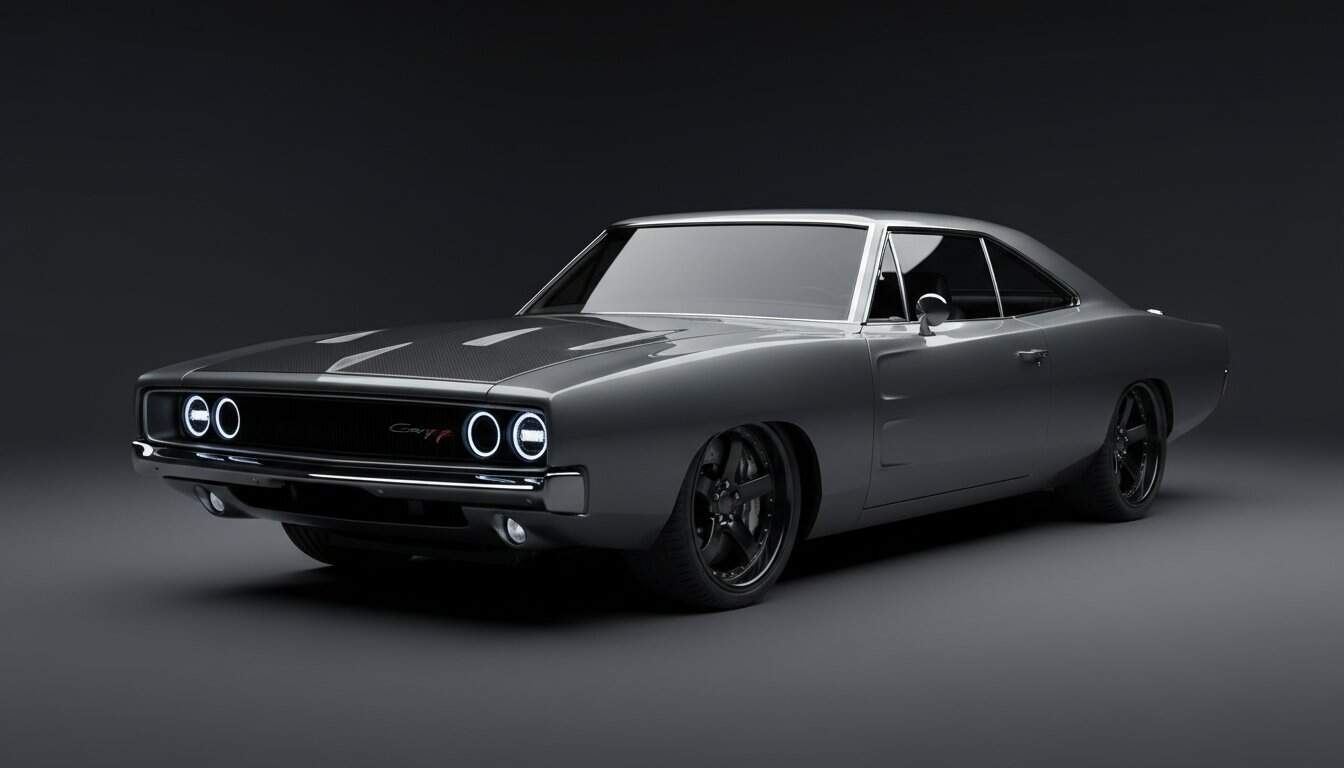
A vintage chassis shouldn’t be a museum piece; it’s a high-performance canvas that deserves an 800-horsepower heartbeat. You likely value the timeless lines of a 1969 Charger, but you’re tired of the temperamental carburetors and vague steering that make driving a chore. It’s a common struggle to balance your respect for automotive legacy with the desire for modern precision. Many enthusiasts feel paralyzed by the 40 percent increase in electronic complexity seen in high-end restomod cars. Stop fearing the wiring harness and start envisioning the results; you don’t have to choose between a soul and a starter motor.
This article reveals the engineering secrets behind the most influential builds of 2026. You’ll learn how to master modern suspension geometry and select the right components to ensure your project runs as well as it looks. We’ll examine five specific builds that defined the year, breaking down the exact fabrication strategies you can use to bridge the gap between the grit of the garage and the artistry of world-class design. Let’s get to work.
Key Takeaways
- Grasp the essential philosophy of balancing vintage aesthetics with modern reliability to ensure your project keeps its soul while shedding its factory flaws.
- Study the engineering benchmarks set by legendary restomod cars to see how bespoke fabrication and carbon fiber integration can elevate a build.
- Identify the high-performance engine swaps and advanced suspension setups that will transform your classic’s handling from dated to dominant.
- Adopt a “foundation first” mindset by learning to allocate your budget toward safety and structural integrity before committing to paint and trim.
- Create a professional roadmap for your build by defining a clear mission profile and selecting a donor car with a robust support network.
What are Restomod Cars and Why Do They Dominate the Modern Scene?
Restomodding isn’t just a hobby; it’s a precise engineering feat that blends 1960s soul with 2026 performance levels. While a traditional restoration seeks to freeze a vehicle in time, What is a Restomod? defines a path where we fix what the factory got wrong. This philosophy centers on keeping the iconic silhouette of a vintage machine while swapping out the drum brakes for six-piston calipers and the sloppy steering for a modern rack-and-pinion setup. You shouldn’t just look at your car. You should drive it without fear of a breakdown or a 40-foot stopping distance.
To better understand this concept, watch this helpful video:
By 2026, the restomod cars market has shifted toward “daily-driver” reliability. Enthusiasts now demand that their classic frames handle 75 mph highway speeds and stop-and-go traffic with the ease of a modern sedan. This movement prioritizes a “built, not bought” mentality where every fabrication choice serves a functional purpose. It’s about creating a legacy that’s as comfortable on a cross-country tour as it is on a local show field.
The Evolution of the Restomod Movement
The scene has come a long way since the neon-lit “street rods” of the 1990s. Back then, builds often prioritized flash over function. Today, sophisticated engineering dominates. Modern traffic moves 20% faster than it did when these cars were new, making fuel injection and electronic ignition essential upgrades. Digital academies and social media platforms have raised the bar, allowing builders to share complex wiring harness diagrams and suspension geometry secrets instantly; this has pushed build quality to professional heights.
Restomod vs. Restoration: Choosing Your Path
Choosing between a factory-spec restoration and a restomod depends on your goals and the car’s rarity. If you’ve got a numbers-matching vehicle where only 500 units exist, cutting into the floorpan might hurt your investment. However, for most “survivor” cars, restomodding actually increases market value by 15% to 30% because modern buyers want usability. You can learn the full restomod meaning here to decide which route fits your vision. Don’t cross the “point of no return” on a rare piece of history until you’ve mapped out your performance targets.
The Hall of Fame: Famous Restomod Cars That Changed the Game
Study these legendary builds to understand the gold standard of restomod cars. These machines represent the pinnacle of automotive evolution; they don’t just restore the past, they perfect it. If you’re still wondering what is a restomod at its core, look no further than the Singer 911. Founded in 2009, Singer Vehicle Design takes the air-cooled Porsche 964 and treats it with a level of obsession usually reserved for aerospace engineering. Every panel is replaced with bespoke carbon fiber, and every bolt is plated in nickel. It’s a masterclass in the “reimagined” philosophy, where the spirit of the 1960s meets 21st-century performance.
Move across the Atlantic, and you’ll find the Ringbrothers “Defiant” 1972 AMC Javelin. This build shocked the industry with its 1,036-horsepower Hellephant crate engine and a wheelbase stretched by 6.5 inches to improve proportions. Industry experts often rank these radical machines among the best restomods of 2024, setting a bar for fabrication that few can clear. Meanwhile, the Icon BR Series has redefined the classic Ford Bronco. Jonathan Ward’s team transforms these 4x4s into luxury utility vehicles using Art Morrison chassis and 5.0L Coyote V8 engines, proving that vintage ruggedness can coexist with modern refinement. For those who prefer British elegance, the Eagle E-Type stands as the peak of engineering. Eagle spends over 4,000 hours on a single car, installing a 4.7-liter aluminum engine that outperforms the original factory specs in every measurable category.
The Porsche Specialists: Singer and Theon Design
Precision defines these builders. They utilize carbon fiber bodywork to shed roughly 440 pounds from the donor chassis, significantly improving the power-to-weight ratio. Engine blueprinting is the secret sauce here; technicians measure every internal component to the micron to ensure the flat-six delivers a linear, visceral power band. This meticulous approach ensures the car feels like a brand-new vehicle that just happens to look like a classic.
American Muscle Reborn: Ringbrothers and SpeedKore
Modern muscle builders rely on cutting-edge technology to push boundaries. They use 3D printing and CNC machining to create one-off trim pieces that no factory could ever produce. By dropping 1,000-horsepower modern crates into reinforced frames, they create cars that handle like supercars. Advanced suspension geometry and massive Brembo brakes ensure these heavy hitters can actually turn and stop, bridging the gap between the drag strip and the canyon road. Take a look at our product reviews to see the gear that makes these high-performance builds possible.

The Anatomy of an Iconic Build: Technical Secrets Revealed
Building world-class restomod cars requires more than a fresh coat of paint and a set of shiny wheels. You must bridge the 50-year gap between vintage soul and modern performance. Start with the foundation. Most 1960s steel frames weren’t designed to handle 500 horsepower. Without chassis stiffening, such as weld-in subframe connectors or a full aftermarket chassis, your frame will flex under torque. This flex ruins handling and can even cause body panels to misalign over time.
Upgrade your suspension to match your ambition. Ditch the bouncy leaf springs for a multi-link independent rear suspension (IRS) and adjustable coilovers. This change allows you to dial in your ride height and dampening, giving a classic muscle car the cornering poise of a 2026 sports car. Don’t overlook stopping power. A 3,500-pound classic needs a big brake kit with at least 13-inch rotors and a modern master cylinder to ensure you stop as fast as you accelerate.
Modern Powerplants and Drivetrains
The heart of the 2026 build remains the LS and Coyote platforms. These engines dominate because they offer 100,000-mile reliability with incredible power density. Modern electronic fuel injection (EFI) is your best investment. It eliminates cold-start struggles and delivers crisp throttle response in any weather. Pair your engine with a Tremec 6-speed manual for total control, or a 10-speed automatic to keep the engine in its power band. Read our definitive guide to an LS engine swap to see how to execute this correctly.
The Digital Interior Revolution
Create a cabin that feels premium without losing its heritage. Use digital gauges that fit into factory housings to monitor vitals with 99 percent accuracy. Hide your Bluetooth head unit inside the glovebox or behind a vintage-style faceplate to keep the dash clean. Wiring is the most critical step. Install a dedicated 22-circuit wiring harness to eliminate the electrical gremlins that haunt old cars. Finally, apply 80 mils of butyl-based sound deadening across the floorpan. This reduces road noise by roughly 12 decibels, turning a rattling tin box into a refined grand tourer.
DIY Lessons: How to Replicate Pro Results in Your Garage
Building world-class restomod cars doesn’t require a seven-figure shop budget, but it does demand a professional mindset. You must adopt a “Foundation First” philosophy. It’s tempting to spend your first $5,000 on a shiny set of staggered wheels or a custom leather interior, but that’s a rookie mistake. Stop. Strip the shell. Address every square inch of oxidation before you even think about the color palette. A 1969 Camaro with a $15,000 paint job is still a safety hazard if the subframe connectors are soft or the floor pans are paper-thin. Fix the skeleton first.
Budgeting like a professional builder means prioritizing mechanical grip and stopping power over aesthetics. Allocate at least 60% of your initial capital to the chassis, suspension, and braking systems. Modern performance expectations have shifted; a stock 1960s drum brake setup won’t handle the 450 horsepower of a modern crate engine. Invest in 4-piston or 6-piston calipers and high-performance tires with a 200-treadwear rating to ensure your project stays on the road. This “built, not bought” journey is about more than pride. It’s about engineering a vehicle that outclasses its original factory specifications in every measurable metric.
Essential Tools for the Restomod Student
You can’t achieve precision with basic hand tools alone. A high-quality plasma cutter capable of slicing through 1/4-inch steel plate is a game changer for custom bracketry. For wiring, ditch the cheap plastic crimpers; use professional-grade ratcheting tools for Deutsch connectors to prevent electrical gremlins. If your budget allows $2,500 for shop upgrades, buy a 4-post lift or a 360-degree rotisserie. Working at eye level reduces fatigue and ensures you don’t miss critical welds on the undercarriage. Check out our recommended gear for your shop to see what we use daily.
Sourcing Parts and Vetting Manufacturers
The market for restomod cars is flooded with components, but “cheap” rarely translates to “value.” When selecting a coilover kit or an independent rear suspension, look for manufacturers that provide 1.0g lateral grip data and real-world track testing results. Don’t trust a part just because the chrome looks good in a catalog. Read technical forums and ask for shock dyno sheets before committing your hard-earned cash. Quality components from 2024 manufacturers should offer a direct fit with minimal fabrication. Browse our expert product reviews to find parts that actually live up to the marketing hype.
Learn the core principles of restomod design here.
Your Project Roadmap: From Vision to First Drive
Stop dreaming and start wrenching. Building high-performance restomod cars requires more than just a toolbox; it demands a disciplined strategy. Follow these five steps to ensure your project reaches the street instead of gathering dust in the garage.
- Step 1: Define the Mission Profile. Decide if you’re building a canyon carver with 1.0g lateral grip, a 10-second drag racer, or a long-distance cruiser. Your choice dictates every component from the suspension geometry to the seat foam density.
- Step 2: Secure a Proven Donor. Pick a platform with massive aftermarket support, such as a 1967 Mustang, a 1969 Camaro, or a Chevy C10. These models have 100% parts coverage, ensuring you won’t spend months fabricating a simple door latch or window regulator.
- Step 3: Build the Master Book. Track every $20 sensor and $2,500 wiring harness. Detailed records are essential for future troubleshooting and proving the car’s pedigree to future buyers.
- Step 4: Execute in Controlled Phases. Break the work into chunks like “Front Suspension” or “Fuel System.” Completing these mini-goals prevents the psychological fatigue that kills 40% of DIY projects before they ever see paint.
- Step 5: Document the Journey. Take high-resolution photos of the metalwork and electrical routing. This transparency builds community trust and adds roughly 15% to 20% to the vehicle’s resale value by proving the quality of the hidden craftsmanship.
Setting a Realistic Timeline and Budget
Respect the Rule of Three. Expect your build to take 3x longer and cost 3x more than your initial spreadsheet suggests. If you plan for a $45,000 spend, ensure you have access to $135,000 to avoid mid-build stalls. When you hit a technical wall, find specialists for complex tasks like custom upholstery or precision paint by checking local shop ratings and asking for three recent customer references. Keep your head up during the “ugly phase” when the car is just a bare shell; focus on finishing one small part, like a polished gauge cluster, to keep the vision alive.
The Final Inspection and Safety Shake-down
The first 500 miles are strictly for testing and identifying mechanical gremlins, not for testing your 0-60 mph times. You must perform a comprehensive safety check every 50 miles during this initial window. Use a paint pen to mark torqued bolts, inspect every fitting for fluid leaks, and verify your alignment specs are within 0.1 degrees of your target. For more expert tips on perfecting your build, explore what is a restomod and join our community of builders at the Restomod Academy for ongoing support.
Fuel Your Legacy: Turn Your Vision into a Street-Ready Masterpiece
The 2026 landscape of restomod cars proves that vintage aesthetics and modern performance aren’t just compatible; they’re the new gold standard for automotive excellence. You’ve seen how iconic builds utilize advanced suspension geometry and precision wiring harnesses to outperform modern showroom models on every track. Success in your own garage requires more than just a set of wrenches. It demands a methodical roadmap and the technical blueprints to execute complex engine swaps without second-guessing your craftsmanship or safety standards. Every bolt turned is a lesson in precision and every wiring connection is a step toward a more reliable drive.
Don’t let your project stall on the jack stands for another season. Access the same expert mentorship from Brook Walsh that has guided thousands of enthusiasts toward their triumphant first drive. Join a thriving community of over 10,000 active builders who prioritize authentic fabrication and high-level performance. Whether you’re refining your first chassis or planning a full-scale restoration, the right guidance transforms every mechanical hurdle into a valuable learning opportunity. Your vision for a classic powerhouse with modern soul is within reach. Start Your Transformation with the Ultimate Restomod Guide. The road is waiting for your build to lead the way.
Frequently Asked Questions
Are restomod cars more expensive than original classic cars?
Restomod cars typically command higher price tags than factory-original counterparts because of the intensive labor and modern components required. A professional build from a shop like Ringbrothers often starts at $250,000, while a stock 1969 Camaro might sell for $60,000 at a 2023 Barrett-Jackson auction. You’re paying for 1,500 hours of custom fabrication and premium hardware that transforms a vintage shell into a modern performance machine.
What is the best car to start a restomod project with?
Start your journey with a 1965 to 1970 Ford Mustang or a first-generation Chevy Camaro. These platforms offer the most extensive aftermarket support in the industry, with over 500 companies producing specialized bolt-on performance parts. You can source a complete Dynacorn replacement body or a TCI suspension kit without custom fabrication. This accessibility ensures your first build stays on track and out of the graveyard of unfinished projects.
Do restomods hold their value in the classic car market?
High-quality restomods often retain or exceed their investment value when they feature documented, name-brand components. Data from 2023 Bring a Trailer auctions shows that well-executed builds featuring LS3 engine swaps and Wilwood brakes frequently sell for 35% more than their purist original counterparts. Focus on documented craftsmanship and modern reliability to ensure your legacy remains a liquid asset in the competitive classic car market.
Can I restomod a car by myself in a home garage?
You can absolutely build a world-class car in a standard two-car garage with a 300-piece tool kit and the right mindset. Statistics from SEMA indicate that 65% of hobbyists perform their own engine swaps and interior work. Focus on mastering one system at a time, such as the 12-volt wiring or disc brake conversion. The pride of a built, not bought machine is worth every late night spent in the garage.
What is the difference between a restomod and a pro-touring car?
A restomod focuses on blending classic style with modern comfort, while a pro-touring car is specifically engineered for track-level performance. Think of a restomod as a vintage cruiser with air conditioning and fuel injection. In contrast, a pro-touring build features aggressive suspension geometry and 14-inch rotors designed to dominate autocross events. Both styles celebrate the restomod cars movement, but pro-touring prioritizes lap times over highway comfort.
How much horsepower is too much for a classic car frame?
Any engine producing over 450 horsepower requires significant frame reinforcement to prevent structural twisting. Factory C-channel frames from the 1960s weren’t designed to handle the 500 lb-ft of torque generated by a modern Coyote or LT1 crate engine. Integrate subframe connectors or a full Art Morrison chassis to ensure your car handles the power safely. Without these 3/16-inch steel upgrades, you risk cracking your windshield or misaligning your door gaps during hard acceleration.
Is it cheaper to buy a finished restomod or build one?
Buying a finished project is generally 30% cheaper than commissioning a custom build from scratch. You can find a completed 1970 Chevelle restomod for $85,000, even though the parts and labor costs likely exceeded $120,000. While buying saves money, building your own allows you to control every detail of the vision. Weigh the $35,000 savings against the satisfaction of knowing every bolt in your machine.
What are the most common mistakes beginners make in restomodding?
The most frequent error is starting with a donor vehicle that has more than 15% body rust. Beginners often underestimate the $10,000 cost of professional metalwork and paint. Another trap is failing to map out a complete wiring and plumbing plan before installing the drivetrain. Stick to a documented build sequence to avoid the 45% failure rate seen in unorganized projects. Your success depends on meticulous planning and a realistic $15,000 contingency fund.