

Your restomod is a technical audit of your engineering choices, yet to an insurance adjuster, it might just look like an old car with a pile of expensive receipts. Look at your project as a fusion of heritage and modern precision that requires a specialized eye to value. Many builders realize too late that a standard policy won’t cover the true cost of their labor or high-end components. You’ve likely felt that nagging worry that an accident could erase years of work because you haven’t taken the step of getting a restomod appraised by a professional who understands the nuance of modern performance.
We agree that your investment deserves more than a generic book value estimate. This guide helps you navigate the 2026 valuation landscape so you can protect your project with a certified document that reflects its real-world worth. You’ll learn how to find appraisers who speak the language of the workshop and how to organize your build records for a high-value sale. We’ll explore the specific criteria that turn a garage project into a documented asset, ensuring you have total peace of mind every time you hit the road.
Key Takeaways
- Discover why traditional valuation methods fail to account for modern performance upgrades and how specialized audits protect your creative labor.
- Navigate the process of getting a restomod appraised by selecting certified experts who understand the intersection of vintage aesthetics and contemporary technology.
- Learn the meticulous steps for preparing a Build Book that documents every component and engineering choice to maximize your vehicle’s market recognized value.
- Secure your financial future by leveraging professional appraisals to obtain Agreed Value insurance policies and command premium prices during a sale.
Why Restomod Appraisals Differ from Standard Classic Valuations
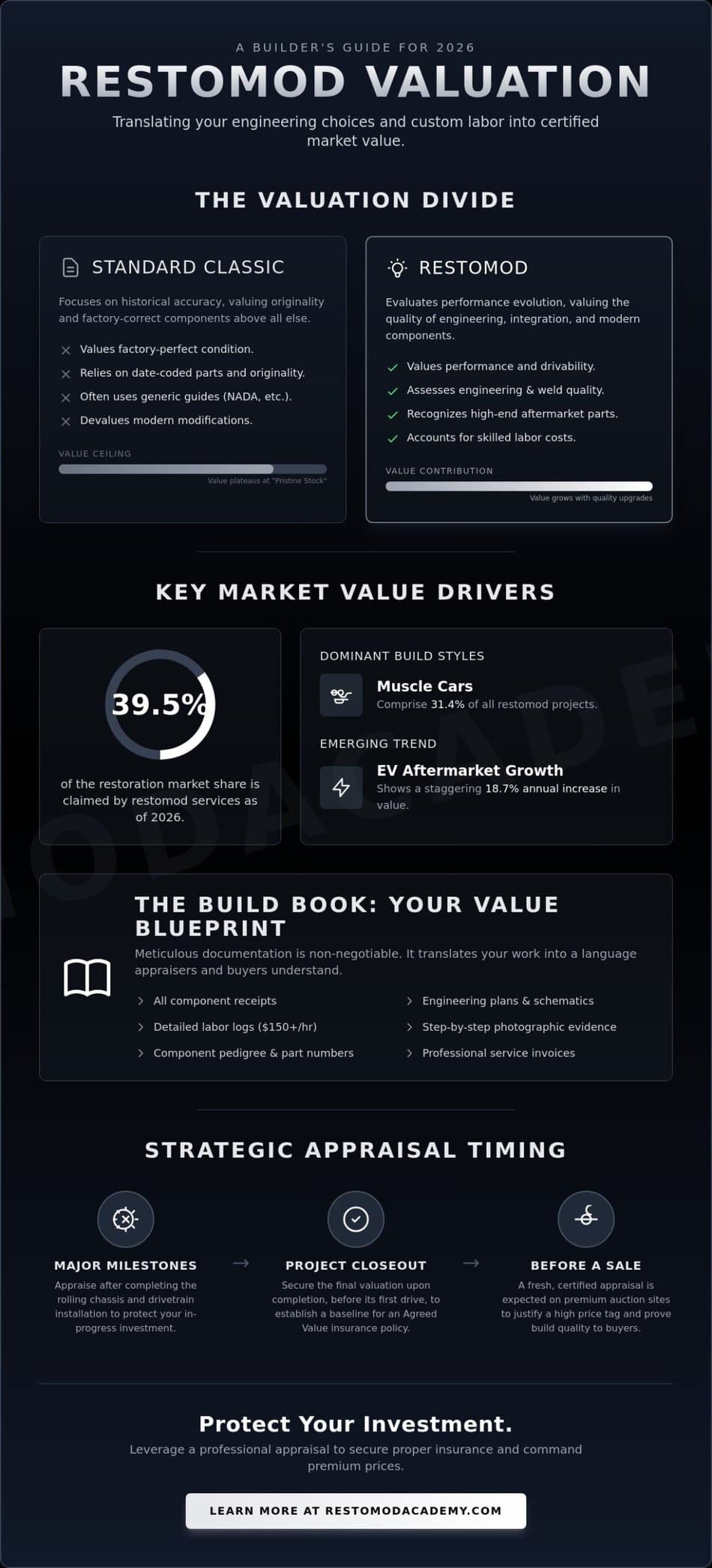
Standard restoration aims for a factory-perfect time capsule, but your project is about performance evolution. Getting a restomod appraised is fundamentally different because you aren’t just valuing a vehicle; you’re valuing a series of complex engineering decisions. A traditional appraisal looks for original date-coded spark plug wires and factory-correct paint overspray. In contrast, a restomod appraisal looks for the precision of your TIG welds, the cleanliness of your wiring harnesses, and the seamless integration of a modern crate engine. Every bolt you’ve tightened and every wire you’ve tucked represents real value that deserves recognition from more than just your fellow enthusiasts. To truly grasp the distinction, it helps to look at the broader philosophy of What is a restomod? compared to a standard concourse restoration.
Your appraiser acts as the vital bridge between your grease-stained workshop and the data-driven financial markets. They translate the blood and sweat of a custom build into a language that insurance underwriters and high-end collectors understand. This process is a non-negotiable requirement if you’ve installed modern high-performance safety upgrades. Without a professional document, those life-saving enhancements are often ignored by standard adjusters who only see a modified 1960s chassis rather than a modern machine with superior stopping power and structural integrity. Precision is the goal in every technical audit.
To better understand how a professional views these unique machines, watch this helpful video:
The Problem with Traditional Valuation Guides
Generic tools like NADA or standard Hagerty price guides often hit a ceiling once they reach pristine stock condition. These guides are built for mass-market classics, not unique machines with $50,000 in suspension and drivetrain parts. If you rely on a blue book, your modern fuel injection and independent rear suspension are essentially invisible. You risk the invisible investment trap, where the market sees a $30,000 car, but your total build costs, including labor rates that can exceed $150 per hour, are much higher. For a deeper dive into the technical side of these builds, check out our guide on what is a restomod and how it shifts the valuation needle.
When to Seek a Professional Valuation
Timing is everything for documenting equity. Treat getting a restomod appraised as a mandatory final step for project closeout. Don’t wait until you’re backing it out of the driveway for the first time. For long-term builds, seek a valuation at major milestones, such as when the rolling chassis is completed and the drivetrain is set. This protects your progress if the project is interrupted for an extended period. Finally, secure a fresh appraisal before listing on specialty auction sites. Buyers on platforms like Bring a Trailer expect a professional audit to justify a premium price tag and prove the quality of the work performed.
The Key Factors That Drive Restomod Market Value
Market value in the restomod world is a moving target that depends heavily on the quality of your execution. While a standard classic relies on historical accuracy, a restomod’s worth is anchored in its performance credentials and modern reliability. When you are getting a restomod appraised, the evaluator isn’t just checking for rust; they are looking for the pedigree of the parts you’ve chosen. High-end builds often command a premium because they use components from recognized leaders in the industry. This focus on drivability is why restomod services currently account for 39.5% of the restoration market share as of 2026. Muscle cars remain the dominant force, making up 31.4% of these builds, but the 18.7% annual increase in the EV aftermarket shows that modern power sources are rapidly becoming a value driver.
You must understand that the market reward follows technical precision. A garage project with loose wiring and mismatched hardware won’t hold value like a professional-grade build. Appraisers are trained to spot the difference between a car that looks good in photos and one that is engineered for the long haul. Precision is the goal. Every choice you make, from the fastener finish to the routing of your fuel lines, contributes to the final number on that appraisal document.
Mechanical Upgrades and Component Pedigree
The heart of your build often dictates the price floor. A well-executed LS engine swap significantly raises the baseline value because it offers a proven balance of power and modern serviceability. If you’re planning this upgrade, consult the definitive guide to an ls engine swap to ensure your installation meets the high standards of a certified restomod appraiser. Beyond the engine, name-brand suspension kits and big brake systems add tangible equity. Evaluators look for specific performance markers:
- Multi-link rear suspension conversions that replace outdated leaf springs.
- Adjustable coilover systems that allow for precise ride height and handling.
- Hydroboost braking systems that provide modern stopping power for high-horsepower builds.
These aren’t just parts; they are insurance for the buyer that the car can handle the power it produces. Using recognized brands signals that you didn’t cut corners on safety or engineering.
Aesthetic Cohesion and Interior Modernization
Visual harmony is the final frontier of a high-value build. An appraiser scrutinizes how well you’ve integrated digital technology into a vintage dashboard. If a modern screen looks like an afterthought, it can actually detract from the value. Conversely, seamless integration paired with high-quality leather and modern sound deadening creates a luxury experience that justifies a six-figure price tag. Body gaps and paint finish remain the ultimate litmus test for quality. Precise panel alignment shows a level of craftsmanship that DIY builds often lack. If you want to ensure your project hits these marks, our Ultimate Restomod Guide provides the blueprints for professional-grade results.
Finding and Selecting a Certified Restomod Appraiser
You have spent countless hours in the shop perfecting your build, but now you need a professional to validate your engineering. Getting a restomod appraised isn’t a job for the local insurance adjuster who handles daily driver fender benders. You need a specialist who understands that a vintage chassis equipped with a modern subframe and a high-output crate engine is a completely different asset than a factory-original survivor. A general appraiser might look at the Hagerty Valuation Tool and stop at the stock concours price, but a restomod expert knows that high-end builds often exceed those baseline values due to the sheer cost of modern performance components and specialized labor.
Your appraiser should act as a technical witness to your craftsmanship. In the 2026 market, where restomod builds account for nearly 40% of the restoration industry, the demand for qualified evaluators has never been higher. Don’t settle for someone who doesn’t know the difference between a budget disc brake conversion and a six-piston performance system. You’re hiring someone to translate your mechanical precision into financial equity, so their credentials must be beyond reproach.
Professional Certifications to Look For
Demand excellence in certification. The International Vehicle Appraisers Network (I-VAN) is widely considered the gold standard for custom and modified vehicles because their standards specifically address the nuances of non-stock builds. You should also ensure your appraiser follows the Uniform Standards of Professional Appraisal Practice (USPAP). This framework is essential because it provides the legal and ethical weight required for your appraisal to hold up during insurance disputes or tax audits. A vehicle specialist with these credentials understands how to value the synergy of modern reliability and classic style.
Checking References and Portfolios
Ask for proof of expertise before signing a contract. Request redacted samples of previous restomod appraisal reports to see how they document modifications. Does the report detail the specific brand of the fuel injection system or the engineering behind the suspension geometry? If the appraiser only shows you stock concours vehicles, they likely won’t appreciate the value of your custom-fabricated interior or tucked wiring. You want an expert who actively tracks auction results for modified cars. They should be aware that in 2026, buyers are paying significant premiums for vehicles that offer modern climate control and contemporary safety features. Avoid anyone who treats your performance upgrades as mere “accessories” rather than integral value drivers.
When you interview a potential appraiser, ask about their familiarity with current labor rates, which verified data shows can range from $85 to over $150 per hour. They need to understand that the labor involved in a high-quality restomod is often the primary cost factor. If they don’t speak the language of the workshop, they won’t be able to defend your investment when it matters most.
How to Prepare Your Vehicle for a Professional Appraisal
Preparation is the vital bridge between your hard work in the shop and the appraiser’s final valuation. When you are getting a restomod appraised, you aren’t just showing off a shiny paint job. You are presenting a complex piece of engineering that requires a technical roadmap. An appraiser needs to see the logic behind your component choices and the quality of your assembly. Start by scrubbing the undercarriage as meticulously as the hood. A clean chassis allows the evaluator to inspect your suspension geometry and brake line routing without fighting through years of road grime. Precision matters in every corner of the build.
Building the Build Book
Your Build Book is the technical heart of the appraisal process. Organize it chronologically or by vehicle system, such as drivetrain, suspension, and interior. Include every receipt to justify the total cost of parts and professional labor. Since labor rates in 2026 often range from $85 to over $150 per hour, documenting those hours is essential for a true valuation. This is where you prove that your premium components were installed with professional care. For help selecting the right equipment for future phases of your project, check out our recommended gear for professional-grade builds.
Don’t forget the performance data. Include dyno sheets to verify horsepower and torque, along with alignment specs that prove the car is road-legal and safe. A digital photo gallery of the restoration process, from bare metal to final assembly, is equally vital. It provides proof of the structural repairs and hidden fabrication that a finished car simply cannot reveal. This level of transparency builds immediate trust with the appraiser.
Physical Presentation and Mechanical Readiness
Ensure your vehicle is ready for a full mechanical audit. Most restomod appraisers will want to see the car on a lift to verify the integrity of the subframe and the quality of the welds. Every modern creature comfort, from the vintage-style air conditioning to the digital gauge cluster, must be fully functional. A malfunctioning power window or a flickering LED dash can signal a lack of attention to detail that might lower the final valuation. You want the appraiser to feel the reliability of a modern car inside the body of a classic.
Your workspace matters too. If you are hosting the appraiser at your home shop, ensure the environment is organized and clean. A tidy, professional-grade garage suggests a meticulous builder who doesn’t cut corners. This psychological impact reinforces the quality of the machine itself. If you want to ensure your next project meets these high standards from day one, download The Ultimate Restomod Guide to master the art of the perfect build.
Leveraging Your Appraisal for Insurance and Future Sales
Your finished project represents more than just a collection of high-end parts; it is a significant financial asset that requires proactive management. Getting a restomod appraised is the final step in securing the equity you’ve built through countless hours of meticulous mechanical labor. In a market projected to reach $7.9 billion by the end of 2026, the stakes for protecting your investment have never been higher. A professional appraisal isn’t a static document to be filed away and forgotten. It is your primary tool for negotiating with insurance underwriters and justifying a premium price tag to future buyers who value precision and modern reliability.
Understanding Agreed Value vs Actual Cash Value
The most dangerous mistake a restomod owner can make is relying on a standard Actual Cash Value (ACV) insurance policy. Under an ACV policy, an insurance company determines the payout based on the depreciated market value of a stock vehicle. This often results in the insurer ignoring your six-figure investment in modern drivetrain and suspension components. You must insist on an Agreed Value policy instead. This specific coverage ensures that in the event of a total loss, the insurer pays the exact amount stated in your professional appraisal. Your appraisal serves as the legal basis for this figure, providing the technical evidence needed to bypass generic valuation tables. Use your certified data to show underwriters that your vehicle is a high-performance machine with modern safety features, not just a vintage chassis with accessories.
Using the Appraisal as a Sales Tool
When the time comes to pass the torch to a new owner, your appraisal acts as a silent salesman. High-end collectors and enthusiasts are often wary of custom builds, fearing hidden shortcuts or poor engineering. Presenting a professional valuation report immediately builds trust by proving that an independent expert has audited your work. Incorporate highlights from the appraisal into your listing descriptions on specialty auction sites. Focus on the certified quality of the paint, the pedigree of the engine components, and the functional excellence of the modern electronics. To keep your vehicle in peak condition for these future evaluations, browse our recommended gear for maintaining your machine’s market value.
The restomod market moves quickly. With the EV aftermarket growing by 18.7% annually and new suspension technologies emerging every season, you should update your appraisal every two to three years. This ensures your coverage keeps pace with shifting trends and rising replacement costs. If you need expert eyes on your project before the appraiser arrives, our Restomod Consulting Services can help you identify any final details that could boost your vehicle’s score. Treat your appraisal as your strongest weapon in any dispute, ensuring your hard work is always recognized at its true worth.
Protect Your Engineering Investment
Your restomod is a testament to your vision and technical skill, blending the soul of a classic with the heartbeat of modern performance. We’ve explored why standard valuation tools fail and how a meticulous Build Book serves as your strongest evidence of quality. Getting a restomod appraised is the final, essential step in a professional project, ensuring that your labor and high-end components are protected by an Agreed Value insurance policy. It turns your technical choices into a documented asset that commands respect from collectors and insurers alike.
Precision in the workshop leads to confidence on the road. If you’re ready to elevate your craftsmanship and master every stage of the building process, take the guesswork out of your build with The Ultimate Restomod Guide. Founded by restomod expert Brook Walsh, our platform offers comprehensive blueprints for complex modern swaps and community-trusted educational resources. You don’t have to navigate the complexities of restoration alone. Embrace the challenge of your next build with the right guidance and keep the spirit of vintage performance alive for the next generation. Your project deserves nothing less than perfection.
Frequently Asked Questions
How much does a professional restomod appraisal cost in 2026?
Professional evaluations for custom vehicles typically cost between $450 and $650. This price reflects the complexity of getting a restomod appraised, as the expert must research specific performance components and custom engineering. It covers the extra time required to verify the market recognition of your modern upgrades and the quality of the professional labor involved in the build.
Can I get a restomod appraised online using photos and videos?
You can obtain a remote valuation starting from $450 using digital documentation. This process requires a high-resolution photo gallery and detailed video walkarounds of the engine bay and undercarriage. While convenient, ensure your appraiser is comfortable valuing custom work without a physical lift inspection to ensure the report accurately reflects your machine’s structural integrity.
Does a restomod appraisal expire or should I get it updated?
You should update your appraisal every two to three years to stay current with rapid market shifts. The restomod market is evolving quickly, with the EV aftermarket growing by 18.7% annually as of 2026. Frequent updates ensure your Agreed Value insurance policy reflects the rising replacement costs of modern performance parts and shifting collector tastes.
Will an LS swap always increase the appraised value of my classic car?
An LS swap generally increases value, but only if the installation meets professional standards. Getting a restomod appraised involves a deep look at the integration of the drivetrain and wiring. A poorly executed swap can actually detract from the car’s desirability and lower your final valuation regardless of the engine’s potential horsepower or modern reliability.
What is the difference between a classic car appraisal and a restomod appraisal?
Classic appraisals focus on factory originality, while restomod appraisals focus on engineering quality and modern reliability. A restomod evaluator looks for the pedigree of your performance parts rather than date-coded spark plug wires. They bridge the gap between vintage aesthetics and contemporary performance technology to find the true market recognized equity of your project.
Do I need an appraisal if I have all my original receipts?
Receipts only prove what you spent, not what the vehicle is worth on the open market. Insurance companies require a certified third-party appraisal to establish an Agreed Value policy. Without this document, your insurer might only offer a depreciated Actual Cash Value that completely ignores your substantial investment in modern performance components.
How does the appraiser determine the value of my personal DIY labor?
Appraisers evaluate DIY labor by comparing the finished quality to professional shop standards. Verified data shows that premium restoration labor rates range from $85 to $150 per hour. If your work matches the precision of a top-tier shop, the appraiser can justify a valuation that reflects that professional effort and the technical skill required for custom fabrication.
What happens if the insurance company disagrees with my professional appraisal?
You can challenge a low valuation through a formal Reconsideration of Value process. New interagency guidance has standardized how consumers can contest an appraisal. This transparent process allows you to present additional data or highlight missed upgrades to ensure your machine is valued fairly by your insurance provider or lender during a dispute.
Your restomod is a technical audit of your engineering choices, yet to an insurance adjuster, it might just look like an old car with a pile of expensive receipts. Look at your project as a fusion of heritage and modern precision that requires a specialized eye to value. Many builders realize too late that a standard policy won’t cover the true cost of their labor or high-end components. You’ve likely felt that nagging worry that an accident could erase years of work because you haven’t taken the step of getting a restomod appraised by a professional who understands the nuance of modern performance.
We agree that your investment deserves more than a generic book value estimate. This guide helps you navigate the 2026 valuation landscape so you can protect your project with a certified document that reflects its real-world worth. You’ll learn how to find appraisers who speak the language of the workshop and how to organize your build records for a high-value sale. We’ll explore the specific criteria that turn a garage project into a documented asset, ensuring you have total peace of mind every time you hit the road.
Key Takeaways
- Discover why traditional valuation methods fail to account for modern performance upgrades and how specialized audits protect your creative labor.
- Navigate the process of getting a restomod appraised by selecting certified experts who understand the intersection of vintage aesthetics and contemporary technology.
- Learn the meticulous steps for preparing a Build Book that documents every component and engineering choice to maximize your vehicle’s market recognized value.
- Secure your financial future by leveraging professional appraisals to obtain Agreed Value insurance policies and command premium prices during a sale.
Why Restomod Appraisals Differ from Standard Classic Valuations
Standard restoration aims for a factory-perfect time capsule, but your project is about performance evolution. Getting a restomod appraised is fundamentally different because you aren’t just valuing a vehicle; you’re valuing a series of complex engineering decisions. A traditional appraisal looks for original date-coded spark plug wires and factory-correct paint overspray. In contrast, a restomod appraisal looks for the precision of your TIG welds, the cleanliness of your wiring harnesses, and the seamless integration of a modern crate engine. Every bolt you’ve tightened and every wire you’ve tucked represents real value that deserves recognition from more than just your fellow enthusiasts. To truly grasp the distinction, it helps to look at the broader philosophy of What is a restomod? compared to a standard concourse restoration.
Your appraiser acts as the vital bridge between your grease-stained workshop and the data-driven financial markets. They translate the blood and sweat of a custom build into a language that insurance underwriters and high-end collectors understand. This process is a non-negotiable requirement if you’ve installed modern high-performance safety upgrades. Without a professional document, those life-saving enhancements are often ignored by standard adjusters who only see a modified 1960s chassis rather than a modern machine with superior stopping power and structural integrity. Precision is the goal in every technical audit.
To better understand how a professional views these unique machines, watch this helpful video:
The Problem with Traditional Valuation Guides
Generic tools like NADA or standard Hagerty price guides often hit a ceiling once they reach pristine stock condition. These guides are built for mass-market classics, not unique machines with $50,000 in suspension and drivetrain parts. If you rely on a blue book, your modern fuel injection and independent rear suspension are essentially invisible. You risk the invisible investment trap, where the market sees a $30,000 car, but your total build costs, including labor rates that can exceed $150 per hour, are much higher. For a deeper dive into the technical side of these builds, check out our guide on what is a restomod and how it shifts the valuation needle.
When to Seek a Professional Valuation
Timing is everything for documenting equity. Treat getting a restomod appraised as a mandatory final step for project closeout. Don’t wait until you’re backing it out of the driveway for the first time. For long-term builds, seek a valuation at major milestones, such as when the rolling chassis is completed and the drivetrain is set. This protects your progress if the project is interrupted for an extended period. Finally, secure a fresh appraisal before listing on specialty auction sites. Buyers on platforms like Bring a Trailer expect a professional audit to justify a premium price tag and prove the quality of the work performed.
The Key Factors That Drive Restomod Market Value
Market value in the restomod world is a moving target that depends heavily on the quality of your execution. While a standard classic relies on historical accuracy, a restomod’s worth is anchored in its performance credentials and modern reliability. When you are getting a restomod appraised, the evaluator isn’t just checking for rust; they are looking for the pedigree of the parts you’ve chosen. High-end builds often command a premium because they use components from recognized leaders in the industry. This focus on drivability is why restomod services currently account for 39.5% of the restoration market share as of 2026. Muscle cars remain the dominant force, making up 31.4% of these builds, but the 18.7% annual increase in the EV aftermarket shows that modern power sources are rapidly becoming a value driver.
You must understand that the market reward follows technical precision. A garage project with loose wiring and mismatched hardware won’t hold value like a professional-grade build. Appraisers are trained to spot the difference between a car that looks good in photos and one that is engineered for the long haul. Precision is the goal. Every choice you make, from the fastener finish to the routing of your fuel lines, contributes to the final number on that appraisal document.
Mechanical Upgrades and Component Pedigree
The heart of your build often dictates the price floor. A well-executed LS engine swap significantly raises the baseline value because it offers a proven balance of power and modern serviceability. If you’re planning this upgrade, consult the definitive guide to an ls engine swap to ensure your installation meets the high standards of a certified restomod appraiser. Beyond the engine, name-brand suspension kits and big brake systems add tangible equity. Evaluators look for specific performance markers:
- Multi-link rear suspension conversions that replace outdated leaf springs.
- Adjustable coilover systems that allow for precise ride height and handling.
- Hydroboost braking systems that provide modern stopping power for high-horsepower builds.
These aren’t just parts; they are insurance for the buyer that the car can handle the power it produces. Using recognized brands signals that you didn’t cut corners on safety or engineering.
Aesthetic Cohesion and Interior Modernization
Visual harmony is the final frontier of a high-value build. An appraiser scrutinizes how well you’ve integrated digital technology into a vintage dashboard. If a modern screen looks like an afterthought, it can actually detract from the value. Conversely, seamless integration paired with high-quality leather and modern sound deadening creates a luxury experience that justifies a six-figure price tag. Body gaps and paint finish remain the ultimate litmus test for quality. Precise panel alignment shows a level of craftsmanship that DIY builds often lack. If you want to ensure your project hits these marks, our Ultimate Restomod Guide provides the blueprints for professional-grade results.
Finding and Selecting a Certified Restomod Appraiser
You have spent countless hours in the shop perfecting your build, but now you need a professional to validate your engineering. Getting a restomod appraised isn’t a job for the local insurance adjuster who handles daily driver fender benders. You need a specialist who understands that a vintage chassis equipped with a modern subframe and a high-output crate engine is a completely different asset than a factory-original survivor. A general appraiser might look at the Hagerty Valuation Tool and stop at the stock concours price, but a restomod expert knows that high-end builds often exceed those baseline values due to the sheer cost of modern performance components and specialized labor.
Your appraiser should act as a technical witness to your craftsmanship. In the 2026 market, where restomod builds account for nearly 40% of the restoration industry, the demand for qualified evaluators has never been higher. Don’t settle for someone who doesn’t know the difference between a budget disc brake conversion and a six-piston performance system. You’re hiring someone to translate your mechanical precision into financial equity, so their credentials must be beyond reproach.
Professional Certifications to Look For
Demand excellence in certification. The International Vehicle Appraisers Network (I-VAN) is widely considered the gold standard for custom and modified vehicles because their standards specifically address the nuances of non-stock builds. You should also ensure your appraiser follows the Uniform Standards of Professional Appraisal Practice (USPAP). This framework is essential because it provides the legal and ethical weight required for your appraisal to hold up during insurance disputes or tax audits. A vehicle specialist with these credentials understands how to value the synergy of modern reliability and classic style.
Checking References and Portfolios
Ask for proof of expertise before signing a contract. Request redacted samples of previous restomod appraisal reports to see how they document modifications. Does the report detail the specific brand of the fuel injection system or the engineering behind the suspension geometry? If the appraiser only shows you stock concours vehicles, they likely won’t appreciate the value of your custom-fabricated interior or tucked wiring. You want an expert who actively tracks auction results for modified cars. They should be aware that in 2026, buyers are paying significant premiums for vehicles that offer modern climate control and contemporary safety features. Avoid anyone who treats your performance upgrades as mere “accessories” rather than integral value drivers.
When you interview a potential appraiser, ask about their familiarity with current labor rates, which verified data shows can range from $85 to over $150 per hour. They need to understand that the labor involved in a high-quality restomod is often the primary cost factor. If they don’t speak the language of the workshop, they won’t be able to defend your investment when it matters most.
How to Prepare Your Vehicle for a Professional Appraisal
Preparation is the vital bridge between your hard work in the shop and the appraiser’s final valuation. When you are getting a restomod appraised, you aren’t just showing off a shiny paint job. You are presenting a complex piece of engineering that requires a technical roadmap. An appraiser needs to see the logic behind your component choices and the quality of your assembly. Start by scrubbing the undercarriage as meticulously as the hood. A clean chassis allows the evaluator to inspect your suspension geometry and brake line routing without fighting through years of road grime. Precision matters in every corner of the build.
Building the Build Book
Your Build Book is the technical heart of the appraisal process. Organize it chronologically or by vehicle system, such as drivetrain, suspension, and interior. Include every receipt to justify the total cost of parts and professional labor. Since labor rates in 2026 often range from $85 to over $150 per hour, documenting those hours is essential for a true valuation. This is where you prove that your premium components were installed with professional care. For help selecting the right equipment for future phases of your project, check out our recommended gear for professional-grade builds.
Don’t forget the performance data. Include dyno sheets to verify horsepower and torque, along with alignment specs that prove the car is road-legal and safe. A digital photo gallery of the restoration process, from bare metal to final assembly, is equally vital. It provides proof of the structural repairs and hidden fabrication that a finished car simply cannot reveal. This level of transparency builds immediate trust with the appraiser.
Physical Presentation and Mechanical Readiness
Ensure your vehicle is ready for a full mechanical audit. Most restomod appraisers will want to see the car on a lift to verify the integrity of the subframe and the quality of the welds. Every modern creature comfort, from the vintage-style air conditioning to the digital gauge cluster, must be fully functional. A malfunctioning power window or a flickering LED dash can signal a lack of attention to detail that might lower the final valuation. You want the appraiser to feel the reliability of a modern car inside the body of a classic.
Your workspace matters too. If you are hosting the appraiser at your home shop, ensure the environment is organized and clean. A tidy, professional-grade garage suggests a meticulous builder who doesn’t cut corners. This psychological impact reinforces the quality of the machine itself. If you want to ensure your next project meets these high standards from day one, download The Ultimate Restomod Guide to master the art of the perfect build.
Leveraging Your Appraisal for Insurance and Future Sales
Your finished project represents more than just a collection of high-end parts; it is a significant financial asset that requires proactive management. Getting a restomod appraised is the final step in securing the equity you’ve built through countless hours of meticulous mechanical labor. In a market projected to reach $7.9 billion by the end of 2026, the stakes for protecting your investment have never been higher. A professional appraisal isn’t a static document to be filed away and forgotten. It is your primary tool for negotiating with insurance underwriters and justifying a premium price tag to future buyers who value precision and modern reliability.
Understanding Agreed Value vs Actual Cash Value
The most dangerous mistake a restomod owner can make is relying on a standard Actual Cash Value (ACV) insurance policy. Under an ACV policy, an insurance company determines the payout based on the depreciated market value of a stock vehicle. This often results in the insurer ignoring your six-figure investment in modern drivetrain and suspension components. You must insist on an Agreed Value policy instead. This specific coverage ensures that in the event of a total loss, the insurer pays the exact amount stated in your professional appraisal. Your appraisal serves as the legal basis for this figure, providing the technical evidence needed to bypass generic valuation tables. Use your certified data to show underwriters that your vehicle is a high-performance machine with modern safety features, not just a vintage chassis with accessories.
Using the Appraisal as a Sales Tool
When the time comes to pass the torch to a new owner, your appraisal acts as a silent salesman. High-end collectors and enthusiasts are often wary of custom builds, fearing hidden shortcuts or poor engineering. Presenting a professional valuation report immediately builds trust by proving that an independent expert has audited your work. Incorporate highlights from the appraisal into your listing descriptions on specialty auction sites. Focus on the certified quality of the paint, the pedigree of the engine components, and the functional excellence of the modern electronics. To keep your vehicle in peak condition for these future evaluations, browse our recommended gear for maintaining your machine’s market value.
The restomod market moves quickly. With the EV aftermarket growing by 18.7% annually and new suspension technologies emerging every season, you should update your appraisal every two to three years. This ensures your coverage keeps pace with shifting trends and rising replacement costs. If you need expert eyes on your project before the appraiser arrives, our Restomod Consulting Services can help you identify any final details that could boost your vehicle’s score. Treat your appraisal as your strongest weapon in any dispute, ensuring your hard work is always recognized at its true worth.
Protect Your Engineering Investment
Your restomod is a testament to your vision and technical skill, blending the soul of a classic with the heartbeat of modern performance. We’ve explored why standard valuation tools fail and how a meticulous Build Book serves as your strongest evidence of quality. Getting a restomod appraised is the final, essential step in a professional project, ensuring that your labor and high-end components are protected by an Agreed Value insurance policy. It turns your technical choices into a documented asset that commands respect from collectors and insurers alike.
Precision in the workshop leads to confidence on the road. If you’re ready to elevate your craftsmanship and master every stage of the building process, take the guesswork out of your build with The Ultimate Restomod Guide. Founded by restomod expert Brook Walsh, our platform offers comprehensive blueprints for complex modern swaps and community-trusted educational resources. You don’t have to navigate the complexities of restoration alone. Embrace the challenge of your next build with the right guidance and keep the spirit of vintage performance alive for the next generation. Your project deserves nothing less than perfection.
Frequently Asked Questions
How much does a professional restomod appraisal cost in 2026?
Professional evaluations for custom vehicles typically cost between $450 and $650. This price reflects the complexity of getting a restomod appraised, as the expert must research specific performance components and custom engineering. It covers the extra time required to verify the market recognition of your modern upgrades and the quality of the professional labor involved in the build.
Can I get a restomod appraised online using photos and videos?
You can obtain a remote valuation starting from $450 using digital documentation. This process requires a high-resolution photo gallery and detailed video walkarounds of the engine bay and undercarriage. While convenient, ensure your appraiser is comfortable valuing custom work without a physical lift inspection to ensure the report accurately reflects your machine’s structural integrity.
Does a restomod appraisal expire or should I get it updated?
You should update your appraisal every two to three years to stay current with rapid market shifts. The restomod market is evolving quickly, with the EV aftermarket growing by 18.7% annually as of 2026. Frequent updates ensure your Agreed Value insurance policy reflects the rising replacement costs of modern performance parts and shifting collector tastes.
Will an LS swap always increase the appraised value of my classic car?
An LS swap generally increases value, but only if the installation meets professional standards. Getting a restomod appraised involves a deep look at the integration of the drivetrain and wiring. A poorly executed swap can actually detract from the car’s desirability and lower your final valuation regardless of the engine’s potential horsepower or modern reliability.
What is the difference between a classic car appraisal and a restomod appraisal?
Classic appraisals focus on factory originality, while restomod appraisals focus on engineering quality and modern reliability. A restomod evaluator looks for the pedigree of your performance parts rather than date-coded spark plug wires. They bridge the gap between vintage aesthetics and contemporary performance technology to find the true market recognized equity of your project.
Do I need an appraisal if I have all my original receipts?
Receipts only prove what you spent, not what the vehicle is worth on the open market. Insurance companies require a certified third-party appraisal to establish an Agreed Value policy. Without this document, your insurer might only offer a depreciated Actual Cash Value that completely ignores your substantial investment in modern performance components.
How does the appraiser determine the value of my personal DIY labor?
Appraisers evaluate DIY labor by comparing the finished quality to professional shop standards. Verified data shows that premium restoration labor rates range from $85 to $150 per hour. If your work matches the precision of a top-tier shop, the appraiser can justify a valuation that reflects that professional effort and the technical skill required for custom fabrication.
What happens if the insurance company disagrees with my professional appraisal?
You can challenge a low valuation through a formal Reconsideration of Value process. New interagency guidance has standardized how consumers can contest an appraisal. This transparent process allows you to present additional data or highlight missed upgrades to ensure your machine is valued fairly by your insurance provider or lender during a dispute.