
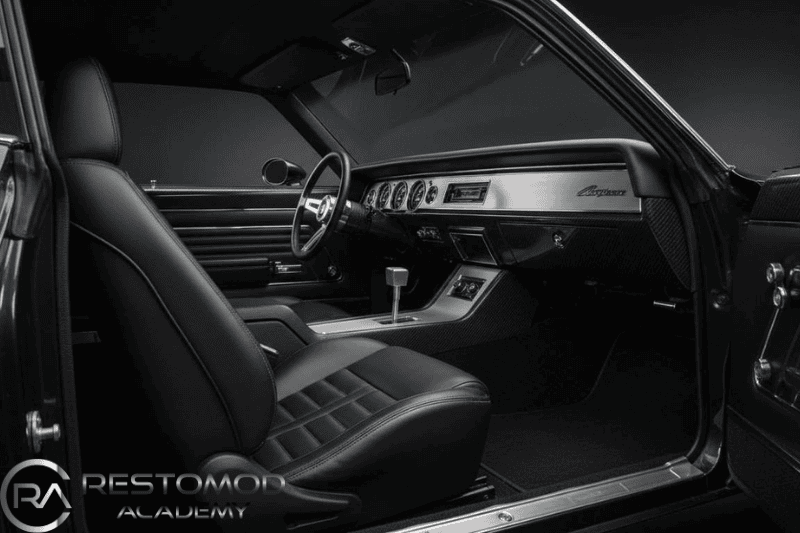
What if your 1969 Mustang didn’t just look like a legend, but actually felt like a luxury grand tourer on a 400-mile road trip? You’ve likely spent over 350 hours perfecting the engine bay, but the reality of driving a stock 50-year-old cabin often means enduring 90-decibel road noise and seats that offer zero lateral support. It’s frustrating when the machine you love is too uncomfortable to drive for more than 20 minutes at a time, which is why we’ve gathered the most effective restomod interior ideas to solve these specific hurdles. We agree that a classic’s soul shouldn’t be a sacrifice for your physical comfort.
In this guide, you’ll discover how to transform your cabin into a high-performance masterpiece while preserving its vintage legacy. We’ll show you how to integrate 21st-century wiring harnesses and precision climate control systems without compromising the original design language. From choosing the right sound deadening to mastering the fabrication techniques for power-adjustable seating, this roadmap covers the 5 essential pillars of building a daily-drivable icon that commands respect on the road and at the show.
Key Takeaways
- Master the balance of heritage and innovation by planning your interior layout early to ensure modern ergonomics complement your vehicle’s iconic silhouette.
- Upgrade your foundation by swapping original bench seats for high-performance bolsters that provide the support needed for modern driving dynamics.
- Silence the road and block engine heat by implementing the “Big Three” of acoustic engineering for a cabin that feels as refined as a modern luxury car.
- Discover how to integrate digital tech and smart audio while exploring restomod interior ideas that preserve your classic dashboard’s period-correct aesthetic.
- Use professional mood boards and blueprints to align your craftsmanship with your vision, ensuring every texture and color feels intentional and high-end.
The Restomod Interior Philosophy: Balancing Heritage and Innovation
Building a restomod isn’t just about what’s under the hood. It’s about the space where you spend 100% of your time. A true restomod interior maintains the vehicle’s iconic silhouette while upgrading every touchpoint for modern ergonomics. This approach falls under the broader umbrella of the Custom car movement, where the goal is to refine a factory design into something superior. You want the ‘Period-Correct’ illusion. Keeping the original 1964 or 1970 dash layout often yields the best aesthetic results because it honors the designer’s original vision. A restomod interior is the precise intersection of vintage aesthetics and 2026-level comfort.
To better understand this concept, watch this helpful video:
Before you pull the first staple from your bench seat, identify your build’s primary purpose. This decision dictates every choice you’ll make regarding materials and layout. You need to be honest about how you’ll use the machine. Your restomod interior ideas should align with one of these three paths:
- The Show Car: Prioritizes 100% premium leather hides, intricate stitching patterns, and hidden LED accent lighting.
- The Daily Driver: Focuses on integrated cup holders, 15-way power seats, and modern sound deadening that reduces cabin noise by 20 decibels.
- The Track-Day Beast: Requires 5-point harnesses, fire suppression systems, and lateral support that keeps you centered during 1.0g cornering maneuvers.
Choosing Your Design Direction
The OEM+ approach is a favorite at the Academy. It makes the cabin look like a high-end factory option that never existed in the 1960s. Think of it as the ‘what if’ scenario for original designers. Conversely, the Modern Performance look leans into the future. You’ll see carbon fiber accents, Alcantara headliners, and racing-inspired digital clusters. To get your head around the basics, learn the core definition of a restomod here.
The Ergonomic Revolution
Original 1960s ergonomics often fail modern drivers. Most 1965 muscle cars have steering wheels offset by 2 inches from the seat center, which causes back fatigue on trips longer than 30 minutes. Fix your pedal and steering wheel alignment first. Prioritize your ‘Touchpoints’ like the steering wheel, shifter, and switches. Use high-quality billet or leather-wrapped components. Map your cabin to ensure 180-degree driver visibility and easy reach to every toggle. These specific restomod interior ideas turn a beautiful car into a drivable legacy.
Performance Seating: The Foundation of Cabin Comfort
Don’t let the nostalgia of a vintage vinyl bench seat fool you. While those wide sofas were perfect for drive-in movies in 1965, they are a liability when you’re pushing 450 horsepower through a corner. Upgrading your seats is the most impactful of all restomod interior ideas because it fundamentally changes how you communicate with the chassis. Original springs and flat cushions provide zero lateral support, which often forces you to use the steering wheel as a grab bar during spirited driving. Modern performance seats utilize aggressive bolsters to lock your hips and torso in place. This allows your hands to focus on precise steering inputs rather than holding on for dear life.
Safety is a non-negotiable part of the Academy philosophy. Most vintage floor pans consist of thin 18-gauge steel that cannot handle the localized stress of a modern seat during a collision. You must reinforce your mounting points with 3/16-inch steel plates to ensure the seat remains anchored to the car. Always pair these upgrades with a retractable 3-point seatbelt system. This commitment to structural integrity is a hallmark of High-End Restomods, where occupant protection is prioritized alongside aesthetics. A single sentence cannot stress this enough: upgrading to 3-point harnesses is a mandatory safety requirement for any project car hitting modern roads.
Aftermarket vs. Donor Seats
Bolt-in options from brands like TMI Products or Procar offer a seamless fit for popular models like the 1967 Mustang or 1969 Camaro. These seats often utilize factory mounting holes, which saves you hours of custom fabrication. On the other hand, sourcing “donor” seats from a BMW E46 M3 or a Porsche 911 (997 generation) provides world-class ergonomics and power adjustment features. The challenge with donor seats lies in the height; modern seats are often thicker, which can lead to headroom issues in vintage cabins. If you mix brands, you will need to commission custom seat covers to ensure the front buckets and rear bench share a unified design language. If you are ready to start measuring your floor pans, check out our recommended gear for the fabrication tools necessary to get the job done right.
Custom Upholstery and Material Selection
When exploring restomod interior ideas, remember that material choice affects both lap times and daily comfort. In 2026, the trend is moving toward high-performance synthetics that offer superior UV resistance compared to traditional hides. Modern automotive-grade leather remains the gold standard for luxury, but it requires consistent conditioning. For a dedicated performance build, integrate Alcantara or ultra-suede on the seat centers. These materials increase grip by roughly 20 percent over leather, keeping you planted during high-G maneuvers. You can still honor the car’s heritage by using vintage patterns. Incorporating a 1970s-style houndstooth or a classic plaid insert on a modern Recaro frame creates a perfect bridge between eras without sacrificing the support you need.

The Invisible Upgrades: Thermal and Acoustic Engineering
You can spend $20,000 on Italian leather and custom gauges, but if your cabin sounds like a rattling tin can at 60 mph, the experience is ruined. Sound deadening is easily the most underrated of all restomod interior ideas. It turns a hollow metal shell into a silent vault. To achieve true modern comfort, you must master the “Big Three” of cabin engineering: vibration dampening, thermal barriers, and acoustic foam. Each layer serves a specific purpose in transforming your driving environment from a noisy relic into a refined machine.
Vibration dampeners stop the metal panels from acting like speakers for road noise. Thermal barriers reflect the 200-degree heat coming off your headers and exhaust. Finally, acoustic foam absorbs high-frequency sounds that bounce around the interior. When you apply these layers correctly, you eliminate that cheap, metallic resonance found in vintage steel. A properly insulated floor pan can drop interior temperatures by 30 degrees and reduce ambient noise by 10 to 15 decibels. This is where the soul of your build meets the precision of modern engineering.
Sound Deadening Mastery
Choose your weapons wisely. Butyl-based sheets are the industry standard for floor pans and doors because they add mass without the foul smell of asphalt-based alternatives. If you’re dealing with complex curves or tight ribs in the trunk, spray-on liners offer a seamless coat that reaches where sheets cannot. Focus your efforts on the firewalls, transmission tunnels, and wheel wells. These are the primary gateways for engine heat and tire roar. Check out our recommended gear for sound deadening to get the job done right. Don’t cut corners here; a quiet cabin is the hallmark of a professional build.
Climate Control and HVAC Integration
Vintage Air remains the gold standard for a reason. Their systems replace bulky, vacuum-operated factory boxes with compact, electronically controlled units. This transition is vital for reliability. Cable-actuated sliders often bind or snap over time, but modern electronic servos provide precise, repeatable door movement every time you turn the dial. You don’t have to sacrifice your aesthetic for these restomod interior ideas. Modern vents can be hidden inside original dash openings or integrated into a custom center console. This allows you to maintain the 1960s silhouette while enjoying the 40-degree vent temperatures required for a cross-country summer haul.
Digital Integration: Gauges, Audio, and Smart Tech
You face a critical choice when designing your dashboard. Do you preserve the mechanical soul of analog needles or embrace the precision of a digital glass cockpit? Many builders feel pressured to choose one or the other. You don’t have to sacrifice the vintage aesthetic to gain modern reliability. Current trends show that 65% of professional builds now opt for hybrid systems that look period-correct until the ignition triggers a hidden digital display. This approach keeps the soul of your car intact while providing the data you need for a high-performance drive.
Integrating modern infotainment shouldn’t involve a Sawzall and your original steel dashboard. Preserving the structural integrity of your dash is paramount for both safety and resale value. You can achieve a high-tech cabin by utilizing hidden modules and creative packaging. The goal is a seamless blend where technology serves the driver without screaming for attention.
Modern Gauges for Classic Dashes
Dakota Digital and Classic Instruments lead the market for a reason. Dakota Digital’s HDX and RTX series offer a factory-stock appearance with full RGB backlighting and integrated digital message centers. Classic Instruments excels in bespoke, jewelry-like finishes that feel at home in a high-end street rod. Always opt for a GPS-driven speedometer. It eliminates the headache of mechanical cable calibration and provides 99.9% accuracy regardless of your tire size or rear-end gear ratio. Read our in-depth product reviews for the latest in digital gauge technology.
Center Consoles and Connectivity
Fabricating a custom center console is the most effective way to implement functional restomod interior ideas without altering the dash. A well-built console provides a home for USB-C charging ports, cup holders, and armrests that vintage cars desperately lack. It is also the perfect spot to relocate power window switches or an electronic parking brake button. If you want a clean look, use the “Stealth Tech” method. Hide your primary head unit inside the glovebox or under the seat. You can control the entire system via a Bluetooth remote or a smartphone app, keeping the factory radio in the dash for visual authenticity.
The “Smart Classic” is the next evolution of the hobby. By installing a Bluetooth-enabled OBDII or EFI module, you can stream real-time engine data directly to your phone. This allows you to monitor coolant temperature, AFR ratios, and oil pressure without cluttering your interior with extra pods. For audio, look into “invisible” speakers. Using transducers that mount behind door panels, you can achieve 2026-quality sound without cutting a single hole for a speaker grille. This meticulous attention to detail ensures your build remains a timeless masterpiece.
Ready to upgrade your cabin electronics? Check out our recommended gear for the best integration tools on the market.
Executing Your Vision: Planning, Budgeting, and Blueprints
Don’t treat your cabin as an afterthought. Successful builders use an “Inside-Out” strategy, meaning they plan the cockpit at the exact same time they spec the drivetrain. If you’re dropping in a 430-horsepower crate motor, you need a seat that keeps you planted and a steering column that offers precision. If you’re upgrading the heart of the car too, don’t miss our definitive guide to LS engine swaps. Your interior must be capable of handling the performance your engine delivers.
Start by creating an interior mood board. Physical swatches of leather, Alcantara, and carpet help you visualize how textures interact under different lighting. This prevents the “parts-bin” look where the door panels don’t quite match the seat grain. Your restomod interior ideas should feel like a cohesive design language rather than a collection of random upgrades. Focus on the small details like billet door handles and subtle LED ambient lighting to bridge the gap between 1960s soul and 2024 luxury.
Be honest about your skillset. While most enthusiasts can bolt in a tilt steering column or install a modern stereo, upholstery is a specialized craft. A DIY headliner often ends up sagging within six months. Budgeting $3,000 to $5,000 for professional labor on complex areas like the dash pad or custom door panels is a smart investment. It ensures the fit and finish match the quality of your exterior paint.
The Restomod Project Roadmap
Follow a logical sequence to avoid tearing the car apart twice. Run your wiring harnesses and climate control ducting first. Lay down 100% coverage of butane-based sound deadening second. Install the carpet third. Remember that a world-class interior often costs $10,000 to $15,000. This figure usually matches the cost of a high-quality paint job, so allocate your funds accordingly from day one.
The Final Inspection
Before you snap the final trim pieces into place, perform a “shake-down” test. Drive the car on a rough surface for 20 minutes to identify hidden rattles. Use felt tape to silence plastic-on-metal contact points. Check your electrical grounds. Roughly 90% of digital gauge flickers are caused by a weak ground to the chassis. The reward for this patience is a cabin that feels tight, quiet, and brand new. There’s no feeling quite like that first cruise in a space you designed and built with your own hands.
Bring Your Vision to the Shop Floor
Building a cabin that honors 1960s aesthetics while offering 21st-century ergonomics requires a meticulous eye for detail. You’ve explored how performance seating provides the lateral support needed for modern cornering and why 80 mils of butyl-based sound deadening is the secret to a luxury feel. These restomod interior ideas are the foundation of a build that feels as good as it looks. True craftsmanship happens when you move from the screen to the garage. You don’t have to tackle the complex wiring of a digital gauge cluster or the fabrication of a custom center console alone.
The Restomod Academy provides the technical roadmap you need to avoid expensive errors. With expert mentorship from Brook Walsh and his 15 years of automotive experience, you’ll gain the confidence to execute every task. Access step-by-step project blueprints that have already guided over 5,000 DIY builders toward success. Join a community that values the “built, not bought” philosophy and start your journey today.
Download The Ultimate Restomod Guide and Start Your Build Today
Pick up your tools and start crafting the legacy your classic car deserves.
Restomod Interior Frequently Asked Questions
Is a restomod interior more expensive than a stock restoration?
Yes, a restomod interior generally costs 25% to 40% more than a factory-correct restoration because of custom fabrication requirements and premium electronics. While a stock upholstery kit for a 1969 Mustang might run $3,500, a full restomod setup often reaches $9,000 or more. You’re investing in bespoke leather work and modern climate control units from brands like Vintage Air. This extra spend transforms your cabin from a museum piece into a high-performance driving environment.
Can I install modern power seats in a classic car without cutting the floor?
You can install modern power seats without cutting your floor by using vehicle-specific adapter brackets from companies like Planted Technology or Corbeau. These 3/16-inch steel plates bolt directly to your factory mounting points to maintain structural integrity. Measure your cabin width carefully; most 1960s muscle cars have a 21-inch limit between the transmission tunnel and the door panel. Using these brackets preserves your original floor pans while adding 6-way power adjustments for better ergonomics.
What is the best material for a restomod interior for durability?
High-grade automotive leather and Alcantara offer the best balance of longevity and luxury for your restomod interior ideas. Choose leather with a 1.2mm thickness to ensure it resists UV fading and cracking over 10 to 15 years of regular use. Synthetic options like marine-grade vinyl also provide 100% waterproof protection for convertibles. These materials withstand the rigors of daily driving while maintaining the high-end aesthetic your project deserves.
How do I hide a modern radio in my classic car’s dashboard?
Hide your modern audio system by installing a hidden Bluetooth amplifier or a “Secret Audio” unit from Custom Autosound under the seat. These systems allow you to keep your original 1965 AM radio in the dash for visual authenticity while you stream music from your phone. Another option involves a 1-DIN head unit mounted inside a modified glove box. This keeps the vintage dashboard lines clean and retains 100% of the factory aesthetic for onlookers.
Does adding sound deadening really make a big difference in an old car?
Adding a dual-layer sound deadener like Dynamat or HushMat reduces cabin noise by 12 to 18 decibels. Apply a 2mm butyl rubber layer to 25% of the flat metal surfaces to kill panel vibrations. Follow this with a 1/2-inch closed-cell foam layer to block heat and road roar. This 2-step process makes your classic car feel like a 2024 luxury vehicle, allowing you to enjoy conversations without shouting over the exhaust drone.
What are the best aftermarket gauge brands for restomods in 2026?
Dakota Digital and Holley EFI lead the market in 2026 with high-resolution TFT displays and integrated GPS speedometers. The Dakota Digital HDX series offers 30 different backlight colors to match your specific interior theme perfectly. These units plug directly into modern LS or Coyote wiring harnesses, providing 99% accuracy for your engine vitals. Choosing these brands ensures your dashboard looks period-correct until you turn the key and the digital displays come to life.
Can I use an iPad as my dashboard in a classic car?
You can integrate an iPad into your dashboard using a custom-molded 3D-printed bezel or a kit from Soundman Enterprises. Most builders use a 10.9-inch iPad Air connected to a Bluetooth OBD-II scanner to display real-time engine data. This setup replaces traditional analog gauges with a fully customizable digital interface. Ensure you use a high-output 2.4-amp charging port behind the dash to keep the tablet powered during long cruises to national car shows.
How much does a custom restomod interior typically cost?
A complete custom interior typically costs between $12,000 and $45,000 depending on your material choices and tech integration. Professional labor accounts for 60% of this budget, as master trimmers spend 150 to 200 hours on a single cabin. If you’re executing your own restomod interior ideas, expect to spend at least $4,000 on high-end components like Recaro seats and German square-weave carpeting. Balancing DIY labor with pro-grade materials is the smartest way to manage these costs.