
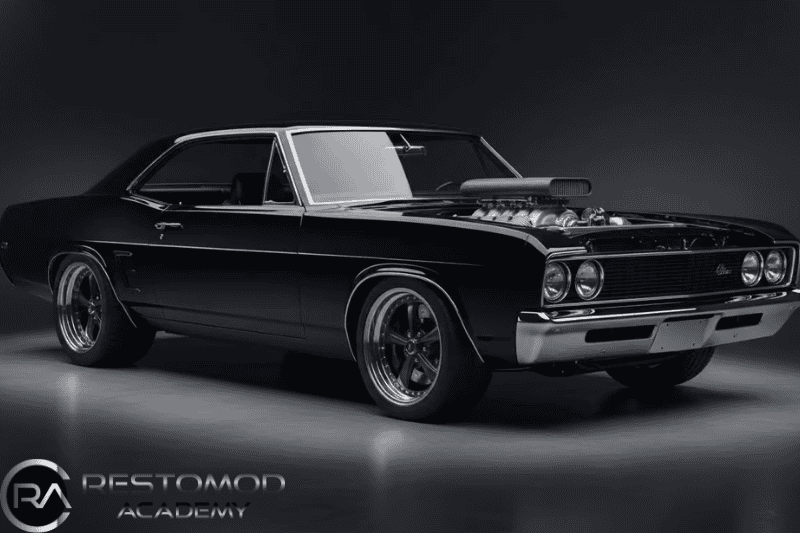
Your vintage dream car shouldn’t spend 90 percent of its life on jack stands just because you’re afraid to lose its original soul. Many enthusiasts believe that adding modern disc brakes or a fuel injected V8 ruins the vehicle’s heritage, but that mindset keeps beautiful machines locked in garages instead of on the open road. Grasping the true restomod meaning is your first step toward building a car that looks like a 1967 masterpiece but handles like a precision instrument. It is the art of blending legendary craftsmanship with 21st century safety and performance.
You probably agree that the roar of a classic engine is irreplaceable, yet the constant fear of a breakdown or outdated suspension geometry shouldn’t dictate your driving experience. This guide provides the exact blueprint you need to modernize your classic with total confidence. You’ll learn to navigate technical terms like Pro-Touring and discover how to justify your project to every purist at the local car show. We’ll walk through the essential upgrades across five key categories, from wiring harnesses to modern drivetrain swaps, ensuring your vision remains grounded in quality and authenticity.
Key Takeaways
- Grasp the true restomod meaning by learning how to fuse a vintage soul with the high-performance reliability of modern automotive technology.
- Decide between the purist’s path of original restoration and the builder’s path of innovative modification to suit your specific driving goals.
- Master the four pillars of a successful build, ensuring your classic handles 2026 traffic with modern safety systems and a dependable powertrain.
- Develop a professional project strategy that defines your car’s end use while navigating the hidden complexities of custom fabrication and budgeting.
- Embrace the “built, not bought” philosophy to transform mechanical challenges into a lasting legacy of personal craftsmanship and skill.
Restomod Meaning: The Fusion of Vintage Soul and Modern Performance
To understand the restomod meaning, you must look past the polished chrome and deep paint. At its core, the term is a portmanteau of “restoration” and “modification.” While a pure restoration seeks to preserve a vehicle exactly as it left the assembly line, a restomod seeks to improve it. You preserve the aesthetic legacy while upgrading the mechanical soul. This movement exploded in popularity during the early 2020s as enthusiasts grew tired of the “trailer queen” lifestyle. They wanted cars they could actually drive without the constant fear of a breakdown.
The global classic car market hit a valuation of $31 billion in 2024, and the demand for drivable vintage steel continues to climb. By 2026, the standard for these builds has evolved significantly. We no longer just swap parts; we engineer integrated systems. You can learn more about this philosophy in our guide on what is a restomod. The goal is to keep classic silhouettes on the road in a modern driving environment where traffic is faster, drivers are more distracted, and safety expectations are much higher.
The ‘Resto’ Side: Preserving the Aesthetic Legacy
Maintaining the original body lines is a non-negotiable rule for a high-level build. If you change the profile of a 1967 Mustang too much, you lose the very reason you bought it. A great donor car is one with a recognizable silhouette but mechanicals that have seen better days. Focus on the interior by blending period-correct materials with subtle upgrades. You might use original-style upholstery but add modern sound deadening or ergonomic foam to make a 300-mile road trip actually enjoyable. It is about honoring the designers of the past while catering to the drivers of the present.
The ‘Mod’ Side: Engineering for the 21st Century
Engineering for the modern era focuses on the “Big Three” pillars: power, handling, and safety. You don’t have to settle for 1960s drum brakes that fade after one hard stop. Instead, install 14-inch rotors and six-piston calipers for modern stopping distances. Ditch the temperamental carburetor for a smart, self-learning fuel injection system that adjusts for altitude and temperature in real-time. The 2026 standard also includes seamless tech integration. We hide Bluetooth modules behind factory radio faces and use digital gauges that maintain a vintage font. It’s about adding 21st-century reliability without sacrificing the car’s 20th-century personality.
Restoration vs. Restomod: Choosing Between Preservation and Innovation
Decide your destination before you turn the first wrench. The path you choose dictates your budget, your timeline, and ultimately, how you’ll enjoy the car. Understanding the restomod meaning requires looking at the fork in the road between historical preservation and modern utility. If you’ve discovered a rare, numbers-matching 1969 Z/28 Camaro with its original drivetrain intact, the purist’s path is your best financial play. In 2024, top-tier concours restorations for rare muscle cars saw a 14 percent value increase at major auctions, as collectors still pay a premium for “as-delivered” perfection. These are museum pieces. You’ll spend your time detailing the undercarriage with a toothbrush rather than hitting the apex of a mountain curve.
The builder’s path prioritizes the experience behind the wheel. Stock 1960s drum brakes and steering boxes feel vague and dangerous by 2026 standards. A restomod project swaps that anxiety for confidence. By integrating independent rear suspensions and modern electronic fuel injection, you transform a temperamental vintage machine into a reliable daily driver. Data from recent Barrett-Jackson events shows that high-end restomods often command 30 to 50 percent more than their stock counterparts because modern buyers value “turn-key” performance over historical accuracy. Ask yourself if you want a car that stays in a climate-controlled bubble or one that carves through canyons on a Sunday morning.
Understanding the Pro-Touring Sub-Genre
Pro-Touring represents the extreme edge of the restomod world. While a standard restomod focuses on comfort and reliability, a Pro-Touring build is a track-focused monster designed to out-handle modern supercars. These builds utilize aggressive suspension geometry, often replacing the entire factory frame with a rigid hydroformed chassis. You’ll see 18-inch or 19-inch wheels wrapped in 315-series rubber to accommodate massive six-piston brakes. If your goal involves autocross events or high-speed track days, you’re building a Pro-Touring machine. If you just want air conditioning and a smooth highway cruise, stick to a street restomod.
The Hybrid Approach: The ‘Invisible’ Restomod
You don’t have to sacrifice vintage aesthetics for modern power. The “invisible” restomod is a growing trend in 2026, where builders hide cutting-edge technology under period-correct skins. You can install a 500-horsepower crate engine but dress it with a vintage air cleaner and painted valve covers to mimic a factory 327. Modern wiring harnesses are tucked inside fenders, and Bluetooth audio systems are hidden behind original AM radio faceplates. This approach preserves the soul of the car while fixing every mechanical headache. To get started on your own build plan, learn more about what defines a restomod project to see which philosophy fits your garage.
Building a legacy takes patience. Whether you choose the precision of a track-ready build or the charm of a stock-appearing sleeper, ensure every modification serves your final vision. If you’re ready to select the right components for your build, check out our recommended gear for the essential tools every mentor suggests.

The Four Pillars of a Successful Restomod Build
To truly understand the restomod meaning, you must look beneath the vintage paint. A masterpiece isn’t just about aesthetics; it’s about engineering a vehicle that outperforms its original factory specifications in every measurable way. We define a successful build through four foundational pillars that bridge the gap between 20th-century soul and 21st-century performance. These elements ensure your car is as capable on a cross-country haul as it is on a show field.
- Modern Powertrains: Your car should fire up on the first turn of the key, whether it’s 30 degrees or 100 degrees outside. Fuel injection and modern electronic control units (ECUs) eliminate the temperamental nature of carburetors.
- Safety Systems: Original 1960s drum brakes are a liability in 2026 traffic. Upgrading to four-wheel discs is the most important insurance policy you’ll ever buy for your investment.
- Chassis and Handling: We replace flexible factory frames and leaf springs with rigid subframes and coilover suspensions. This makes a 4,000lb muscle car corner with the precision of a modern sportscar.
- Driver Comfort: A cabin should be a sanctuary. This includes modern HVAC systems, sound-dampening materials like Dynamat, and ergonomic seating that supports you through long drives.
Modern Power: The Heart of the Build
Reliability is the cornerstone of the modern restomod. While some purists argue for original blocks, the LS swap remains the industry standard in 2026 because of its compact size and massive aftermarket support. If you’re planning this route, read The Definitive Guide to an LS Engine Swap to understand the specific wiring and plumbing requirements. Beyond internal combustion, we’ve seen a 22 percent increase in “E-Restomods” over the last two years. These builds integrate electric crate motors into vintage steel, providing instant torque and a silent, futuristic driving experience that still turns heads at every stoplight.
Safety and Stopping Power
Stopping a classic car in modern traffic requires more than hope. Factory drum brakes often require 250 feet to stop from 60 mph; a modern disc conversion can cut that distance to 120 feet. This 50 percent reduction in stopping distance is vital when navigating highways filled with modern commuters. Precision is just as important as stopping power. Replacing a vague, recirculating ball steering box with a modern rack-and-pinion unit transforms the driving experience from “guiding a boat” to “carving a line.” Finally, don’t overlook visibility. High-output LED conversions now provide 3,000 lumens of light without the garish “spaceship” look, ensuring you see the road as clearly as a driver in a 2026 luxury sedan. This commitment to safety is a core part of the restomod meaning for any serious builder.
The Restomod Strategy: How to Plan Your 2026 Project
Planning a build requires more than a digital mood board and a dream. To truly grasp the restomod meaning, you must view your car as a cohesive system rather than a collection of separate parts. Every decision you make in the planning phase dictates whether you’ll be driving your masterpiece in 2026 or looking at a rust-covered shell under a tarp in 2029. Success is found in the details of the blueprint.
Start by defining your end use with absolute clarity. If you want a weekend cruiser, prioritize ride quality and cabin insulation. If you’re building a daily driver, focus on modern electronic fuel injection and thermal management. A show car requires a different level of fit and finish that often triples the labor hours. Be honest about your goals before you turn a single wrench.
- Step 1: Define the Mission. Decide if the car belongs on the track, the highway, or the local car meet. This dictates your entire parts list.
- Step 2: Realistic Budgeting. Add a 15% contingency fund for the custom fabrication that inevitably arises during the assembly of mismatched parts.
- Step 3: Source Quality. Don’t buy mystery-brand steering or suspension components. Mechanical failure at 70 mph is a risk no builder should take.
- Step 4: The Build Sequence. Perform a full mechanical mock-up first. Fitting the engine, transmission, and cooling system before paint prevents heart-wrenching damage to your fresh finish.
Budgeting for Success
Success in the garage starts in the spreadsheet. Experienced builders follow the 20/80 rule: the final 20% of the build, including wiring harnesses and interior trim, usually consumes 80% of your remaining budget. If you’re building in stages, prioritize safety and performance. Get the brakes and suspension right first. You can always upgrade the upholstery later, but you can’t drive a car that won’t stop. For a deeper look at the process, you can explore the restomod meaning and how it impacts your financial planning.
Choosing Your Gear
The “built not bought” philosophy demands a professional shop setup. You don’t need every tool in the catalog, but you do need precision. In early 2024, digital blueprints became the gold standard for DIY builders, allowing enthusiasts to save over 200 hours of trial and error in fabrication. Using accurate measurements ensures your modern drivetrain fits the classic chassis without unnecessary cutting. Check out our Restomod Academy Recommended Gear to see the specific tools we trust for high-level builds.
Mastering the Craft: Why the ‘Built Not Bought’ Philosophy Wins
Pick up a wrench and you’ll quickly realize that the true restomod meaning isn’t just about the final product; it’s about the grit required to get there. There’s a profound psychological victory in diagnosing a parasitic electrical draw or perfecting the fitment of a modern suspension geometry. You aren’t just assembling parts. You’re solving a complex mechanical puzzle that demands patience, precision, and a willingness to learn. This process builds more than just a high-performance machine. It builds a legacy of self-reliance and technical mastery.
When you teach a younger generation how to flare a brake line or tune an EFI system, you’re preserving a culture of craftsmanship that’s becoming rare. These skills are the heartbeat of the automotive hobby. The Restomod Academy community is specifically designed to support you through the “Valley of Despair,” that inevitable point in a build where the garage feels cold and the tasks feel endless. We provide the technical roadmap and the peer encouragement needed to turn a pile of parts into a masterpiece. Every hurdle you overcome in the garage translates to a deeper connection with your vehicle.
Avoiding the ‘Project Car Trap’
Industry data shows that 50% of restomod projects are sold unfinished because owners lose momentum during the difficult middle stages. You can avoid this fate by chasing small, tangible wins. Don’t wait for a show-quality paint job to enjoy your work. Aim to get the car “yard-drivable” as early as possible. Hearing the engine fire up and moving the vehicle under its own power provides the dopamine hit needed to push through the long nights of fabrication. If you’re feeling stuck, revisiting the core principles of your build can help you refocus on the vision that started it all.
The Future of the Hobby
The barrier to entry for DIYers is lower than it’s ever been. In 2026, 3D printing and AI-assisted tuning software have made complex custom fabrication and engine mapping accessible to the average enthusiast. The restomod meaning continues to evolve as these technologies allow for even greater levels of personalization and reliability without needing a six-figure shop budget. The Restomod Academy plays a vital role in this evolution by educating the next generation of builders on how to blend these new tools with traditional metalwork. Join the Academy today and start your journey. Your dream car is waiting for you to build it.
Drive Your Vision Into 2026
Mastering the restomod meaning requires more than just a passion for vintage steel; it demands a strategic fusion of 1960s soul and 2026 performance standards. You’ve explored how to balance the four pillars of a successful build and why the “built, not bought” philosophy creates a deeper connection to your machine. By prioritizing modern suspension geometry and reliable wiring harnesses, you’re not just fixing an old car. You’re engineering a legacy that’s ready for the modern road.
Brook Walsh founded the Restomod Academy to provide every builder with a professional roadmap. Our community of DIY enthusiasts relies on comprehensive digital blueprints to navigate complex fabrication and assembly stages with confidence. You don’t have to guess your way through a project when you can follow a proven system designed by experts who live for the roar of a tuned engine. Take the first step toward your finished masterpiece today.
Enroll in the Restomod Academy and Download Your Ultimate Builder’s Guide
Your dream build is waiting in the garage. Grab your tools and let’s make it a reality.
Frequently Asked Questions
What is the difference between a restomod and a restoration?
A restoration returns a vehicle to its exact factory specifications using original or period-correct parts; a restomod keeps the vintage aesthetics while upgrading the mechanicals for modern drivability. Think of a 1965 Mustang. A restoration uses a drum brake setup and a 4-barrel carburetor. A restomod project swaps those for 6-piston Wilwood discs and electronic fuel injection. You get the 1960s soul with 2026 reliability and safety.
Are restomods worth more than original classic cars?
High-quality restomods frequently command prices 30% higher than their stock counterparts at major auctions like Barrett-Jackson. While a numbers-matching rarity like a 1970 Hemi Cuda is a blue-chip investment, a well-executed restomod offers a broader market appeal because it’s actually drivable. Buyers in 2026 often pay a premium for the 500-plus horsepower and climate control that original classics lack. Quality craftsmanship always drives the final valuation higher.
Can any classic car be a restomod?
You can apply the restomod meaning to virtually any vintage vehicle, though 1960s muscle cars and 1980s square-body trucks remain the most popular candidates. The key is parts availability. Building a 1969 Camaro is straightforward because 95% of its components are available as modern performance upgrades. Rare European imports or 1930s orphans require more custom fabrication; this can double your build time and your total project budget.
What is a Pro-Touring car vs. a restomod?
A Pro-Touring car is a specific type of restomod built primarily for high-speed handling and track performance. While a standard restomod might focus on comfort and cruising, a Pro-Touring build prioritizes suspension geometry, massive tires, and aerodynamic functional bits. These machines are designed to pull over 1.0g on a skid pad. They often feature roll cages and stripped-down interiors that a typical street-focused restomod project avoids for comfort reasons.
How much does a typical restomod project cost in 2026?
Budgeting for a restomod in 2026 requires an investment between $75,000 for a DIY project and $250,000 for a professional shop build. Parts costs have stabilized, but high-end components like a Crate LT4 engine now retail for $15,000 alone. Labor typically accounts for 60% of a professional build’s total cost. Plan for a 15% contingency fund to cover the inevitable surprises found once you strip the chassis to bare metal.
Is it better to buy a finished restomod or build one myself?
Buying a finished car is usually 20% cheaper than building one because you don’t pay for the previous owner’s labor hours. However, building it yourself ensures every bolt meets your standards. A full build requires roughly 1,500 hours of shop time. If you have the garage space and patience, the “built, not bought” philosophy provides a deeper connection to the machine’s legacy and your own personal craftsmanship.
Do restomods have to have modern engines?
Modern engines are the heart of the restomod meaning, but you can also modernize a period-correct block with fuel injection and electronic ignition. In 2026, roughly 70% of builders choose modern LS or Coyote crates, while 15% are moving toward high-voltage EV conversions. The goal is always reliability. If your vintage engine can’t keep up with modern highway speeds, it’s time for a performance upgrade to ensure safety.
Will restomodding a car ruin its resale value?
Restomodding only hurts the value if the vehicle is a rare, documented survivor, such as one of the 504 original 1969 Dodge Daytonas. For the other 99% of classic cars, modern upgrades actually increase the resale value and marketability. Most buyers prefer a car that starts every time and stops on a dime. Unless you’re holding a 1-of-100 museum piece, the performance gains will outweigh the loss of originality.