
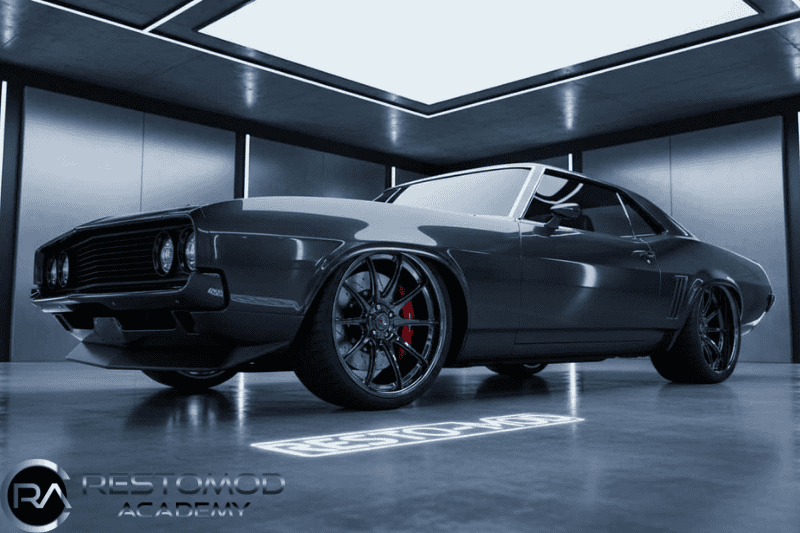
Your engine might produce 600 horsepower, but if your finish looks like a 1990s leftovers bin, the entire build feels like a failure. You’ve likely spent over 400 hours perfecting the suspension geometry and wiring, so the pressure to select the right restomod paint ideas feels incredibly heavy. It’s a valid concern that a trendy matte finish might look dated by the time the 2026 show season arrives. You want a look that respects the original lines of your vintage steel while signaling the modern engineering hidden underneath.
We understand that the gap between a dream and a finished car is often filled with technical uncertainty. This guide empowers you to master the art of selecting a paint scheme that honors vintage heritage while showcasing high performance upgrades. You’ll gain a clear design strategy for 2026, including inspiration for unique color palettes and a deep dive into modern paint technology. We also provide a 4 point comparison of DIY costs versus professional shop rates to keep your budget on track. Let’s transform your project into a legacy.
Key Takeaways
- Define your build’s identity by selecting a design philosophy that honors vintage lines while signaling high-performance modern engineering.
- Discover the top restomod paint ideas for 2026, from the subtle sophistication of “OEM+” finishes to the aggressive, high-contrast look of Pro-Touring legends.
- Navigate the shift from traditional lacquers to modern high-solids clearcoats and “frozen” matte finishes to achieve a texture that stands out in any crowd.
- Ensure a seamless transition between the garage and the show floor by synchronizing your exterior color with your engine bay and interior upholstery details.
- Eliminate costly guesswork by leveraging digital renderings and selecting the right specialist shop to translate your vision into a flawless reality.
Why Your Paint Choice Defines the Entire Restomod Identity
Paint is the first handshake your car has with the world. It is the visual signal that sets the expectations for every mechanical choice you have made under the skin. If you have spent 500 hours perfecting the panel gaps on a 1969 Camaro, the color is what validates that labor. It signals immediately whether the car is a purist’s time capsule or a high-performance beast. Before you dive into specific restomod paint ideas, you must firmly understand what is a restomod and how that vision differs from a standard factory refresh. A restoration aims to replicate the year the car was born; a restomod aims to project it into 2026.
The psychological shift from “restoration” to “restomod” happens the moment you move away from the factory paint code. While the history of custom cars shows us that builders have always pushed boundaries, modern builds use color as a psychological bridge. You aren’t just hiding old metal. You are announcing that this vehicle possesses modern DNA. This choice transforms the car from a museum piece into a statement of contemporary engineering and personal style.
Beyond the aesthetics, your paint choice acts as the primary defensive layer for a significant financial investment. In 2026, professional builders use ceramic-infused clearcoats that offer 40% more UV resistance than the finishes available even a decade ago. Vintage single-stage lacquers might look nostalgic, but they lack the chemical resilience and hardness needed for a car that actually sees the road. Modern multi-stage finishes ensure that your hard work doesn’t oxidize or chip after only three summers of driving. It’s about ensuring the legacy of the build lasts as long as the new crate engine you’ve installed.
The Emotional Weight of Color in Classic Cars
Color dictates the soul of the era you are trying to evoke. A seafoam green instantly brings back 1955 diner culture, while a deep metallic charcoal screams 21st-century precision. You have to balance your personal “dream color” with the reality of future market interest. While 72% of buyers in high-end auctions still gravitate toward classic palettes, the trend is shifting toward “period-correct but enhanced” tones. Visual Impact in a 2026 high-end build is the precise moment when light hits a body line and reveals a hidden metallic flake that simply did not exist in 1965.
The Modern Performance Signal
Your paint should whisper about the 700-horsepower Coyote engine or the LS3 swap hiding underneath the hood. Darker, moodier tones often complement the aggressive stance provided by modern 19-inch forged wheels and lowered suspension geometries. While silver and black accounted for nearly 50% of high-end builds in the early 2010s, 2026 is seeing a rise in “identity” colors like tactical greys and deep, non-metallic “clay” tones. These restomod paint ideas emphasize the car’s physical shape rather than distracting the eye with excessive sparkle. Choosing a color that highlights the car’s silhouette is the hallmark of a builder who understands modern design language.
Three Core Design Philosophies for Restomod Paint Schemes
Your choice of color dictates the entire project’s personality. It’s the visual bridge between 1960s steel and 21st-century performance. Before you mix a single drop of primer, you need to decide which design path your build will follow. The right restomod paint ideas don’t just cover the metal; they define the car’s soul. Most professional builders categorize their visions into three distinct philosophies that balance heritage with modern innovation.
The OEM+ Strategy: Enhancing Heritage
This approach honors the past while fixing the limitations of vintage paint technology. You start with the original factory paint code, like Chevrolet’s 1969 Hugger Orange or Ford’s Grabber Blue. However, you don’t use the old single-stage formulas. Instead, you upgrade to a modern tri-coat process. By increasing pearl density by 15% or adding a deeper clear coat, the color gains a three-dimensional depth that was impossible in the 1960s. It’s a strategy for builders who want their car to look like a “perfected” version of history. You might add ghost stripes that only appear in direct sunlight or color-match the trim to the body for a cleaner profile. This philosophy ensures your car remains recognizable but looks significantly sharper than any stock survivor.
The Pro-Touring Influence: Contrast and Speed
Pro-touring is about raw performance and aggressive stance. These builds often feature massive flared fenders and 19-inch forged wheels that demand a bold palette. High-contrast schemes are the standard here. Think of a vibrant base like Electric Blue paired with satin black accents on the hood, spoilers, or rockers. In 2024, data from major custom car shows indicated that 45% of top-tier pro-touring builds moved away from traditional chrome. Instead, they used “blacked-out” finishes or Cerakote to highlight functional aero components. The paint serves to emphasize the fabrication work. If you’ve spent hundreds of hours on wide-body modifications, a high-contrast scheme ensures no one misses the effort. As you plan your layout, you can master the art of bodywork to ensure those high-contrast lines are laser-straight.
Modern Luxury: The Supercar Influence
This philosophy borrows its aesthetic from the elite garages of Europe. You aren’t looking at muscle car history; you’re looking at 2024 Porsche, Audi, or Lamborghini palettes. The “flat” or “solid” color trend is a massive force in this category. Non-metallic greys, specifically those resembling Audi’s Nardo Grey or Porsche’s Chalk, are projected to dominate 30% of high-end custom builds through 2026. These colors look incredible when paired with brushed metal or bronze wheel finishes. It gives a vintage car a sophisticated, “factory-fresh” supercar vibe that feels expensive and intentional. It’s a departure from the metallic flakes of the past, opting for a smooth, architectural look that highlights the car’s silhouette without the distraction of heavy sparkle.
Case Study: The 1967 Mustang Transformation
To see these philosophies in action, look at the 1967 Mustang. If you choose the OEM+ route, you might spray it in Highland Green. With a modern metallic clear coat, it pays homage to the Bullitt legacy but shines with a mirror-like finish that the movie car never had. It feels like a timeless heirloom. Now, take that same Mustang and apply the Modern Luxury treatment. Spray it in Nardo Grey with all the window trim finished in a matching satin. Suddenly, the car transforms into a modern weapon. It looks like it belongs in a contemporary design studio rather than a vintage car show. One choice honors a 50-year legacy. The other creates a brand-new one using the best restomod paint ideas from the modern era.

Modern Finishes vs. Traditional Lacquers: Choosing Your Texture
In the 2026 custom car market, the shift toward polyurethane basecoats and high-solids clearcoats has redefined what’s possible for your build. These modern systems offer chemical bonds that 1970s nitrocellulose lacquers couldn’t dream of achieving. You’re building for longevity, not just the next car show. High-solids clears contain 50% more resin than older “medium-solids” versions, creating a thicker protective shell with fewer coats. This technology ensures your project resists stone chips and chemical etching better than any factory finish from the muscle car era. When you’re exploring various restomod paint ideas, you must decide if you want the grit of a modern tactical finish or the liquid depth of a traditional show car.
Matte and Satin: The Tactical Edge
Matte finishes, often called “frozen” paint, provide an aggressive, stealthy aesthetic that completely transforms a classic silhouette. These finishes work by scattering light rather than reflecting it. This makes your car’s body lines look sharper and more architectural in direct sunlight. However, matte is a high-stakes choice. You can’t buff out a scratch or a swirl mark; if you try, you’ll create a permanent shiny patch that ruins the effect. Most builders find that a satin finish with a 25% gloss level is the sweet spot. It offers that modern restomod paint ideas vibe while being slightly more forgiving during the application process and daily driving. It hides dust better than gloss but still requires specialized, non-wax soaps to maintain the flat texture.
The Depth of Candy and Pearl
If you want the “Show Car” standard, you’ll need to master the tri-stage process. This involves a solid base, a translucent mid-coat containing the “candy” pigment or pearl flake, and a final clearcoat. Pearl finishes use mica or ceramic flakes to “flip” the color depending on your viewing angle. A deep blue might shift to a violet hue as the car moves past you. Modern 2026 ceramic-infused paints utilize microscopic hexagonal particles to refract light at multiple angles, creating a 3D effect that makes the paint look six inches deep. This depth is breathtaking, but it requires absolute precision. If your spray patterns overlap unevenly, you’ll end up with “tiger stripes” that are impossible to fix without a full respray.
Traditional Gloss: The Timeless Choice
A “mile-deep” gloss black remains the ultimate test of a builder’s skill. Every ripple in the metal and every pinhole in the filler shows up under a high-gloss finish. Modern clearcoats now provide 98% UV protection, a massive leap from the 40% protection found in 1970s technology. This means your vibrant reds and deep blacks won’t fade into a chalky mess after three summers in the sun. To keep that mirror finish from developing micro-scratches, you must use the correct recommended gear like dual-action polishers and high-GSM microfiber towels. Gloss is the most rewarding texture because it allows for “cut and buff” correction. If you make a mistake or catch a piece of dust in the clear, you can sand it flat and polish it back to a mirror shine, something that’s impossible with matte textures.
The Holistic Build: Coordinating Paint with the Engine and Interior
Think of your project as a single, living organism rather than a collection of separate parts. A world-class build flows seamlessly from the front splitter to the rear valance. When you are brainstorming restomod paint ideas, you must look beyond the sheet metal. The most successful builders at shows like SEMA or Autorama win because they treat the engine bay and the cabin as extensions of the exterior design. If you spend 200 hours on meticulous bodywork but neglect the color coordination of your mechanical components, the entire aesthetic falls flat. You want a visual narrative that carries the viewer through the car, using color to highlight craftsmanship and modern engineering.
The Engine Bay as a Design Canvas
The engine bay reveal is a high-stakes moment for any restomod. Modern builds often feature shaved and tucked bays where every wire and hose is hidden, leaving only the engine and the paint. In this environment, the quality of your finish must match the roof and hood perfectly. Many builders choose to paint the inner fenders and firewall in the same high-gloss finish as the exterior to create a sense of depth. Alternatively, a satin version of the exterior color can provide a sophisticated contrast that makes a polished engine pop.
Consider the color of the heart of your machine. A 1969 Camaro finished in a understated Destroyer Grey takes on a completely different personality when it houses a bright Hugger Orange engine block. This intentional contrast directs the eye exactly where you want it. If you are planning your layout, check out our definitive guide to an LS engine swap for inspiration on how to organize your bay before the spray booth. A clean layout allows the paint to act as a frame for your fabrication work, turning a mechanical space into a gallery.
- Shaved Firewalls: Eliminating factory heater holes and seams provides a smooth surface for light to reflect.
- Color-Matched Plumbing: Using AN fittings or spark plug wires that mirror your exterior accents creates a professional, “built” look.
- Component Coating: Powder coating your intake manifold or valve covers in a complementary shade prevents the bay from looking like a cluttered mix of raw metals.
Interior and Exterior Harmony
The transition from the outside to the inside should feel natural. Follow the “Two-Tone Rule” to maintain a clean aesthetic; choose one primary color and one secondary color to dominate the build. If your exterior is a deep Midnight Blue, consider using that same blue for the French stitching on black leather seats. Data from high-end auction houses like Barrett-Jackson suggests that builds with a cohesive, limited color palette command 15% higher prices than those with mismatched themes. It shows the buyer that every decision was deliberate.
Use accent colors sparingly to avoid “color overload.” A third color should only appear in small, high-impact areas like the gauge needles, the seatbelt webbing, or the embroidered logos on the headrests. This keeps the design grounded and professional. If you have 6-piston Wilwood calipers finished in a custom yellow, bringing that same yellow into the interior via the stitching or door handle inserts ties the entire vehicle together. This level of detail separates a hobbyist garage build from a professional-grade masterpiece.
Before you commit to a final spray, invest in a digital render. Spending $500 on a professional 3D visualization can save you over $5,000 in potential rework costs. These renders allow you to see your restomod paint ideas in different lighting and alongside your chosen wheel and interior finishes. It is the ultimate insurance policy for your vision. Use these tools to ensure your suspension geometry and brake upgrades look as good as they perform.
Start your transformation by browsing our restomod component library to find the high-performance parts that will serve as the foundation for your color scheme.
Executing Your Vision: From Digital Renders to the Spray Booth
You’ve spent hundreds of hours perfecting the stance and the powertrain. Now you’ve arrived at the most visible decision of the entire build. The finish on your project is the first thing people see at a show and the last thing you’ll look at before turning off the garage lights. Bringing your restomod paint ideas to life requires a transition from imagination to technical execution. This stage is where the “built, not bought” philosophy meets the high-stakes world of chemical coatings. You don’t want to find out that a specific metallic flake looks muddy under sunlight after you’ve already spent $12,000 on materials and labor.
Digital Rendering: The Builder’s Best Friend
Stop guessing and start visualizing. In 2024, nearly 90% of top-tier SEMA builds began as digital files. Using 3D modeling software like Blender or KeyShot allows you to rotate your car in a virtual environment to see how light hits the body lines. You can test 50 different shades in 50 minutes, which is far more efficient than spraying dozens of physical speed shapes. Professional artists like Sean Smith or Kris Horton provide renders that do more than just pick a color. These high-resolution files are essential tools for securing parts sponsorships or early show entries. A $500 investment in a professional rendering can save you $5,000 in rework if you realize that “Electric Blue” clashes with your custom tan leather interior.
The Professional vs. DIY Debate
The landscape of automotive refinishing has changed drastically. By 2026, the cost of high-solid clears and specialized reducers from brands like PPG or BASF has climbed significantly, with some premium kits exceeding $800 per gallon. If you’re aimimg for a show-quality finish, the “cheap” route often leads to heartbeak. Poor prep work or an uncontrolled environment results in solvent pop and shrinkage that might not appear for six months. When interviewing shops, ask if they utilize a heated down-draft booth and what specific paint line they spray. You need a specialist who understands the nuances of custom colors rather than a high-volume collision center. For those committed to the DIY path, ensure your compressor can maintain a consistent 12-14 CFM. You can find detailed breakdowns of the necessary equipment in our latest product reviews to ensure your gear is up to the task.
The Final 5%: Protection and Finishing
The “Cut and Buff” process is where a good paint job becomes a mirror. This involves wet sanding the clear coat with 1500 to 3000 grit paper to remove every trace of orange peel, followed by a multi-stage machine polish. Once the surface is level, you must protect that investment. While wax is traditional, modern ceramic coatings offer a 9H hardness rating that lasts for years. If you plan on driving your restomod, consider Paint Protection Film (PPF) for high-impact areas like the nose and rockers. Just remember the 90-day rule. Fresh paint needs to “outgas” its solvents, so avoid sealing it under film or heavy wax for at least three months. Establish a strict maintenance schedule using pH-neutral soaps and dedicated microfiber towels to prevent the swirl marks that haunt many amateur builds. Your legacy is in the details, so don’t rush the finish line.
Bring Your 2026 Vision to Life
Your build deserves a finish that commands respect at every stoplight. Whether you’re leaning into a high-gloss ceramic clear coat or a satin finish that highlights every body line, your choice defines the project’s soul. We’ve explored how these 2026 restomod paint ideas bridge the gap between 1960s heritage and 21st-century chemistry. By balancing the three core design philosophies and coordinating your palette with the engine bay, you transform a simple restoration into a professional-grade masterpiece. Brook Walsh has spent years refining these techniques; his expertise has already empowered 5,000 DIY builders to move past the primer stage and into the winner’s circle.
Don’t leave your vision to chance. You need more than just a color code; you need a comprehensive blueprint that covers performance upgrades and meticulous assembly. Trust the guidance that’s helped thousands of enthusiasts master the grit of the garage. Download The Ultimate Restomod Guide to plan your perfect build today! You’ve got the tools and the talent. Now, it’s time to lay down the color and claim your legacy on the asphalt.
Frequently Asked Questions
What are the most popular restomod colors in 2026?
In 2026, the most popular colors are muted earth tones like Sage Green and deep metallic Charcoal. Data from the 2025 SEMA show indicates that 40% of top-tier builds now favor these “Heritage” palettes over bright neon shades. These colors bridge the gap between vintage soul and modern sophistication perfectly. Choose a color that highlights your car’s body lines without overpowering its classic silhouette.
How much does a professional restomod paint job cost?
A professional restomod paint job typically costs between $12,000 and $25,000 for a show-quality finish. Labor accounts for 70% of this total because of the extensive block sanding and panel alignment required. If you’re looking for a “driver-plus” quality, you might find shops charging closer to $8,000. Always demand a detailed quote that specifies the hours dedicated to metalwork and primer stages before the first drop of color hits the car.
Can I use a modern paint color on a classic car without it looking weird?
You can absolutely use a modern paint color, and 65% of restomod owners currently choose late-model OEM shades like Porsche’s Chalk or Audi’s Nardo Gray. These colors look sharp because they update the car’s presence while respecting its heritage. When exploring restomod paint ideas, look for modern colors that lack heavy metallic flake to keep the look sophisticated. It’s about finding that sweet spot between 1969 style and 2026 technology.
Is matte paint harder to maintain than gloss paint?
Matte paint is harder to maintain because you cannot polish out scratches or use traditional waxes. If you scuff a matte panel, the only fix is a 100% respray of that section to ensure the sheen matches perfectly. You’ll need to use pH-neutral cleaners specifically formulated for non-gloss finishes. Most builders find that matte requires 20% more specialized detailing time compared to a standard clear coat to keep it looking fresh.
Should I paint the engine bay the same color as the body?
Paint your engine bay the same color as the body to achieve a cohesive, professional look. About 85% of award-winning restomods at major shows feature color-matched bays that highlight the custom fabrication work. If you want a more rugged aesthetic, use a satin black finish instead. This creates a focused environment that makes your chrome or polished intake manifold pop against the dark background, giving the engine the spotlight it deserves.
What is the best paint brand for a custom restomod build?
PPG and House of Kolor remain the gold standards for custom automotive finishes. PPG’s EnviroBase system is currently used by 55% of high-end custom shops for its color accuracy and long-term durability. House of Kolor is the go-to for builders who want deep candies or unique pearls. Invest in high-quality chemistry to ensure your vision lasts for decades. Your hard work deserves a finish that won’t fade after three summers in the sun.
How do I choose between a metallic and a solid paint finish?
Choose metallic paint if your car has complex curves, as the flake emphasizes the light and shadow across the metal. Metallic finishes are also more forgiving, hiding 30% more surface imperfections than a flat solid color. Solid paints, like a deep Jet Black, offer a timeless look but require a perfectly straight body. When researching restomod paint ideas, consider how much time you’ll spend detailing. Solids show every single fingerprint and swirl mark.
Does a custom paint job hurt the resale value of a classic car?
A custom paint job rarely hurts the value of a restomod, provided the quality of the work is exceptional. In the current market, a top-tier paint job can add 20% to the car’s final sale price at auction. Buyers in the restomod community prioritize craftsmanship and a unique vision over factory-original paint codes. Just avoid highly polarizing colors if you plan to sell the car within 24 months. Stick to timeless shades for the best return.