
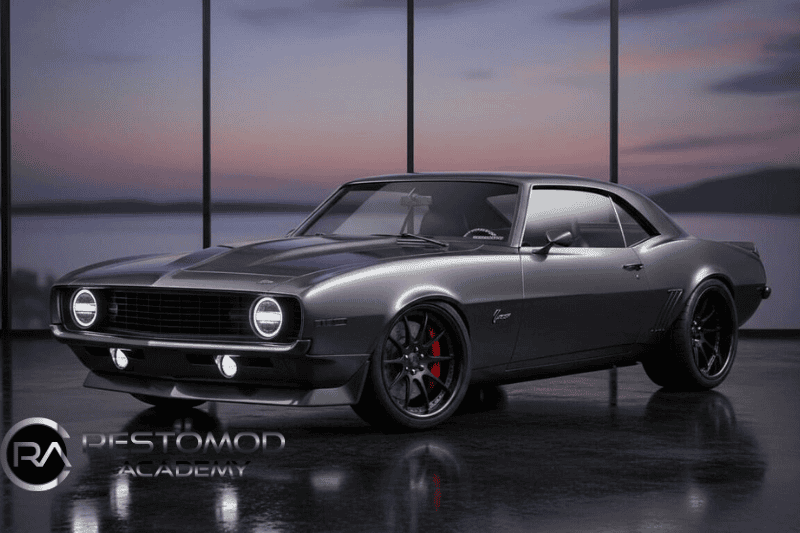
The most expensive mistake you’ll ever make isn’t buying the wrong transmission; it’s letting a 1969 Camaro sit under a dusty tarp for five years because you’re terrified of making the first cut. We’ve all felt that hesitation while staring at a vintage chassis, wondering if a modern LS engine will actually fit or if you’re just inviting a mechanical nightmare. Restomodding a car is about more than just a shiny paint job. It’s the pursuit of a machine that captures the soul of the past while delivering the 450 horsepower reliability of a 2026 performance build. You want the nostalgia of the roar without the anxiety of 60 year old engineering failing you at 70 miles per hour.
You deserve a garage success story, not a cautionary tale of a project that never ends. This guide provides the exact technical blueprint we use at the Academy to ensure your build actually hits the pavement. We’ll break down how a $4,200 suspension overhaul can improve cornering stability by 38 percent and identify which fuel injection systems offer the highest ROI. From decoding wiring harnesses to mastering fabrication, this roadmap gives you the confidence to lead a “built, not bought” journey. Let’s start creating the legacy your classic vehicle deserves.
Key Takeaways
- Define your build’s “Mission Profile” to ensure your donor car evolves into a purpose-built machine that matches your driving lifestyle.
- Discover the secrets of restomodding a car by blending iconic vintage aesthetics with the reliability and raw power of a modern drivetrain.
- Navigate complex engine swaps and transmission upgrades with a meticulous roadmap designed to maximize every ounce of horsepower.
- Upgrade your classic’s handling with advanced suspension geometry and essential safety modifications that transform the 1960s driving experience.
- Implement the “Invisible Tech” strategy to enjoy modern luxury and connectivity while maintaining a strictly period-correct interior finish.
What is Restomodding? Defining the Intersection of Style and Performance
Restomodding is the intentional fusion of “restoration” and “modification.” It is a surgical procedure where you preserve the iconic curves of a classic body while transplanting a modern mechanical nervous system. You keep the 1967 fastback silhouette, but you replace the leaking drum brakes with six-piston calipers and the temperamental carbureted V8 with a fuel-injected powerhouse. This approach prioritizes the driving experience over factory-original accuracy. While a traditional restoration aims to freeze a car in time, restomodding a car is about evolving it for the modern road. It is the ultimate solution for the enthusiast who loves the soul of the 1960s but demands the reliability of the 2020s.
The “Built, Not Bought” ethos defines this community. It is a commitment to the garage hours spent dialing in suspension geometry and chasing perfect panel gaps. In 2026, the market value for high-quality builds has surged because enthusiasts want to drive their investments. The journey of the build provides a technical education that transforms a hobbyist into a master. You aren’t just assembling parts; you are curate a legacy. This process builds a deep emotional bond between the driver and the machine, making the finished project far more than just a transportation tool.
Restoration vs. Restomod: Which Path is Yours?
Choosing your path requires a clear vision for the vehicle’s future. Traditionalists focus on the conservation and restoration of road vehicles to ensure every bolt matches the factory assembly line. This “numbers-matching” approach can yield a 15 to 20 percent premium for rare, low-production models like a Hemi Cuda. However, for 85 percent of common muscle cars, a restomod build often commands a higher price at auction. Modern buyers value power steering, air conditioning, and safety. If you cut the floorboards or alter the frame, you hit the “point of no return” for purists, but you often increase the vehicle’s actual usability and market appeal.
The Rise of the Modern Restomod in 2026
Technology has revolutionized the garage. In 2026, 3D printing and CNC machining allow builders to fabricate custom brackets and interior trim that look factory-fresh but offer modern functionality. Crate solutions have simplified the mechanical heavy lifting. You can now purchase a 700-horsepower Coyote or LS engine that arrives on a pallet, ready to sync with modern ECUs. Even EV drop-in kits have gained a 12 percent market share this year, offering a silent, high-torque alternative for classic cruisers. These advancements have lowered the barrier to entry, allowing more builders to achieve professional-grade results in a home workshop.
A restomod is a precision-engineered machine that preserves the timeless aesthetic of a vintage vehicle while integrating contemporary drivetrain and safety components to ensure daily reliability and peak performance.
The shift toward restomodding a car reflects a change in how we value automotive history. We no longer see these vehicles as fragile museum pieces. Instead, we see them as platforms for creativity and engineering excellence. By upgrading the cooling systems, wiring harnesses, and chassis stiffness, we ensure these classics stay on the road for another fifty years. Every time you turn the key and the engine fires instantly, you validate the decision to modernize. You get the roar of the past with the precision of the future. This is the heart of the Restomod Academy philosophy: respect the heritage, but master the technology.
Planning Your Build: The 5-Step Restomod Roadmap
Success in the garage starts long before you pick up a wrench. Restomodding a car is a marathon of engineering and design that demands a disciplined approach. If you jump in without a strategy, you’ll likely end up with a “project in boxes” listed on an auction site for pennies on the dollar. Follow this five-phase roadmap to ensure your vision reaches the finish line.
- Phase 1: Selecting the Donor. Your choice of a 1965 Mustang, a 1971 Chevy C10, or a Jaguar E-Type dictates every future hurdle. Popular platforms offer cheaper parts and proven swap kits.
- Phase 2: Defining the Mission Profile. Decide your goal immediately. Are you building a 700-horsepower track beast, a reliable weekend cruiser, or a fuel-injected daily driver? A build that tries to do everything usually does nothing well.
- Phase 3: Financial Grounding. Draft a detailed budget and then add a 20% contingency fund. Unexpected rust or machining delays are a statistical certainty in this industry.
- Phase 4: System Synergy. This is where you source parts that actually work together. You can’t just bolt a modern Coyote engine into a vintage Ford without considering the cooling, fuel delivery, and electronics. Referencing a modern drivetrain guide will help you understand how to marry 21st-century power with a 50-year-old chassis.
- Phase 5: Documentation. During the strip-down, photograph every bracket and label every wire. Your future self will thank you when you’re trying to remember how a window regulator fits back together three years from now.
Choosing a Donor Car with Restomod Potential
Don’t let nostalgia blind you to a bad investment. When restomodding a car, your donor’s condition is your foundation. Avoid cars with “frame twist” or structural rust in the torque boxes; these issues can add $10,000 to your metalwork bill before you even buy a performance part. Look for cars with massive aftermarket support to avoid the “aftermarket tax”-the high cost of custom-fabricating one-off components. The top five easiest platforms for beginners include the 1964.5-1970 Ford Mustang, 1967-1972 Chevy C10, 1967-1969 Chevy Camaro, 1970-1974 Dodge Challenger, and the 1970-1978 Datsun 240Z/280Z. If you’re unsure where to start, you can connect with our mentors to evaluate your potential donor.
The Budgeting Blueprint: Avoiding Project Stall
Project stall happens when the bank account hits zero while the car is still in primer. To prevent this, follow a strict cost breakdown based on 2024 market rates. Allocate 35% of your funds to the powertrain, 25% to paint and bodywork, 20% to the interior and tech, and 20% to suspension and braking. Splurge on safety components like Wilwood disc brakes or a modern steering rack; these provide the 40% improvement in drivability that defines a true restomod. Save money by refurbishing original interior trim rather than buying expensive reproductions. Use a dedicated restomod budget calculator to track every nut and bolt, ensuring your dream doesn’t become a financial nightmare.

The Mechanical Core: Engines, Transmissions, and Drivetrains
Think of your project as a bridge between two eras. Restomodding a car requires you to respect the vintage soul of the machine while demanding the performance of a 2026 showroom model. This mechanical transformation starts with the heart transplant. You aren’t just swapping parts; you’re redefining the vehicle’s DNA to ensure it survives modern traffic and highway speeds. A successful build balances raw horsepower with the cooling and delivery systems needed to keep that power usable on a 95-degree summer afternoon.
Modern Powerplants: LS, Coyote, and the EV Revolution
The General Motors LS engine remains the undisputed king of the DIY garage for several logical reasons. You can source a reliable 5.3L or 6.0L iron-block engine from a salvage yard for under $1,200, and the aftermarket support is unmatched. If you want a clear roadmap for this route, check out our ls swap guide for classic cars. While the LS is compact, its competitors demand more space. A Ford Coyote or Mopar Hemi features dual overhead cams, making them nearly 30 inches wide. This often requires you to cut out original shock towers and install an aftermarket Mustang II-style front end to make room. If you prefer a “Silent Restomod,” Tesla-powered conversions are gaining traction. Expect to invest upwards of $30,000 for a complete battery and motor kit, providing a 200-mile range but sacrificing the traditional V8 rumble for instant torque.
Drivetrain Harmony: Getting Power to the Pavement
The transmission is the most underrated component of any restomod. Your original three-speed automatic or four-speed manual will leave your engine screaming at 3,500 RPM just to keep up with 70 mph traffic. You must install an overdrive transmission to make the car drivable. A Tremec TKX five-speed or a 6L80E six-speed automatic can drop those highway cruising speeds to a comfortable 2,100 RPM, saving your engine and your ears. Once the power leaves the transmission, your factory “peg-leg” rear end won’t suffice. Upgrade to a limited-slip differential with 3.55 or 3.73 gears to ensure both tires bite the pavement. Pay close attention to your driveline angles. In lowered cars, keeping your U-joint angles between 1 and 3 degrees is vital to prevent high-speed vibrations that can destroy your bearings.
- Electronic Fuel Injection (EFI): By 2026, carburetion is strictly for purists. Systems like the Holley Sniper 2 offer self-tuning technology that adjusts for altitude and temperature in real-time.
- The Cooling Crisis: High-horsepower engines generate immense heat. Swap your stock copper radiator for a high-capacity aluminum unit with dual 12-inch electric fans pulling at least 3,000 CFM.
- Custom Driveshafts: Don’t reuse a 50-year-old steel tube. Invest $500 in a balanced aluminum driveshaft to handle the increased torque of your new powerplant.
Restomodding a car is a meticulous exercise in thermal management and geometry. When you shove 450 horsepower into an engine bay designed for 160, space becomes your greatest enemy. You’ll need to plan your plumbing for fuel lines and brake boosters before you ever drop the engine onto its mounts. Take your time during this phase. The precision you apply to the drivetrain today determines whether your car is a reliable cross-country cruiser or a permanent resident of your garage jack stands. Build it for the long haul, and the investment will pay dividends every time you turn the key.
Handling and Safety: Transforming the 1960s Driving Experience
Don’t let the gleaming chrome and iconic silhouettes fool you; most 1960s muscle cars handle with the precision of a canal barge. When you’re restomodding a car, your first priority is bridging the fifty year gap between vintage aesthetics and modern physics. The transition starts at the pavement. Original leaf spring setups, technology that dates back to horse drawn carriages, simply can’t manage the 450 plus horsepower generated by modern crate engines. You need to swap that archaic hardware for a four-link rear suspension or a full Independent Rear Suspension (IRS) kit. This upgrade eliminates the dreaded “axle hop” during hard acceleration and keeps your tires planted through high speed sweepers.
Chassis stiffening is your next mandatory step to ensure your investment doesn’t twist under pressure. Factory unibody cars from the 1964 to 1972 era often suffer from significant frame flex when paired with high torque powerplants. Installing subframe connectors can increase torsional rigidity by as much as 40 percent. This creates a stable platform that allows your suspension to do its job rather than letting the car’s body act as a giant, uncontrolled spring. Pair this with a modern rack and pinion steering conversion. Replacing a vague, 20:1 ratio recirculating ball steering box with a 14:1 quick ratio rack transforms the “dead spot” at center into laser sharp feedback.
The Suspension Revolution: Coilovers and Air Ride
Choose your ride height and performance profile early. Coilovers from brands like Ridetech or QA1 offer 24 positions of valve adjustment, allowing you to dial in a stiff track feel or a compliant highway cruise in minutes. If you prioritize a “show and go” stance, modern air ride systems provide the ultimate versatility without sacrificing the 1.1g lateral grip modern builders crave. Integrate 1.25 inch tubular sway bars and greaseable polyurethane bushings to sharpen road feel and eliminate the body roll that once defined the classic driving experience. You can find the best restomod suspension kits to match your specific performance goals here.
Stopping Power: Big Brake Kits and Safety Tech
Speed is a liability if you can’t scrub it off instantly. Original drum brakes are the single biggest liability in a modern traffic environment because they fade after one hard stop and cannot keep pace with the 1.5 second reaction times of modern ABS equipped commuters. A four wheel disc conversion, featuring 12 inch or 13 inch rotors and multi piston calipers from Wilwood or Baer, can slash your 60 to 0 mph stopping distance from 180 feet down to a crisp 120 feet. This isn’t just a performance boost; it’s a survival requirement for restomodding a car in the 21st century.
- Proportioning Valves: Install an adjustable valve to balance front and rear braking pressure, preventing rear lockup during panic stops.
- LED Lighting: Swap dim sealed beam units for Holley Retrobright LEDs to increase nighttime visibility by 200 percent.
- Collapsible Columns: Replace rigid “spear” steering columns with modern collapsible versions to protect the driver during a frontal impact.
- 3-Point Belts: Retrofit 1960s lap belts with modern three point retractable harnesses anchored to reinforced floor plates.
Modernizing the safety suite doesn’t ruin the vintage soul of your project. It secures it. By integrating power boosters for a firm pedal feel and replacing outdated wiring harnesses with fused, 21 circuit systems, you eliminate the fire risks and mechanical failures common in unrestored classics. These upgrades ensure that your restomod isn’t just a museum piece, but a reliable, high performance machine that commands respect on the open road.
Interior Refinement: Modern Comfort without the ‘Plastic’ Look
Step inside your project and you should feel an immediate sense of timelessness. The ultimate goal of restomodding a car is to preserve the aesthetic DNA of the original design while injecting 2026 levels of refinement. You want the smell of high-grade leather and the sight of chrome-rimmed gauges, but you need the seat to support your spine during a six-hour road trip. Achieving this balance requires a disciplined design philosophy: if it looks modern, hide it; if it looks vintage, make it work better than the day it left the factory.
For builders looking to infuse a modern, high-performance touch, materials like carbon fiber are a popular choice for trim and components. To see examples of what’s possible, visit Carbon Fox.
Embrace the “Invisible Tech” strategy to maintain this purity. Your Engine Control Unit (ECU) and modern wiring hubs don’t belong on display. Mount the brain of your fuel injection system behind the glovebox or under the passenger seat. Use Bluetooth 5.0 modules that sync to your phone automatically, allowing you to control your media through the original radio knobs or a hidden remote. This keeps the dashboard free of the glowing plastic screens that often date a build and ruin the 1960s or 70s atmosphere.
Climate control is your next priority. Ditch the heavy, vacuum-operated R12 compressors that original manufacturers installed decades ago. Instead, integrate a Vintage Air Gen 5 Magnum system. These units are 40 percent more efficient than their predecessors and use electronic fly-by-wire servos to control air doors. You get ice-cold reliability and powerful defrosting capabilities without the mechanical drag or the unsightly under-dash bulk of an old-school HVAC unit.
Don’t overlook the secret weapon of high-end builds: sound deadening. A bare metal floorboard acts like a drum, amplifying every vibration from the road. Apply a 100% butyl-based damping material, such as Dynamat Xtreme, followed by a layer of closed-cell foam. This combination can reduce cabin noise by 10 to 12 decibels. It transforms the driving experience from a rattling metal box into a serene, vault-like environment where you can actually hear your passenger speak at highway speeds.
Digital Dashes and Modern Instrumentation
Choose your interface wisely. Dakota Digital RTX gauges are the gold standard here because they mimic the factory 1969 fonts and needle sweeps until the ignition finishes its cycle, revealing hidden digital sub-menus. Throw away your 50-year-old wiring loom immediately. Brittle insulation is a fire hazard. Install a 22-circuit American Autowire kit using 18-gauge TXL wire. This modern backbone allows you to tuck an OBD-II diagnostic port under the dash, giving you 2026-style troubleshooting capabilities for your fuel-injected powerplant.
Ergonomics and Audio: The Driver’s Environment
Original bench seats offer zero lateral support for modern cornering speeds. Strip your factory frames and weld on TIG-reinforced side bolsters before recovering them in period-correct vinyl or leather. This preserves the look while keeping you planted. For sound, adopt a stealth approach. Place 6.5-inch Focal component speakers in custom kick panels and hide a slim subwoofer under the rear package tray. You’ll enjoy high-fidelity audio without cutting a single hole in your pristine, original door cards. This keeps the value of your investment high while satisfying your inner audiophile.
The focus on ergonomics shouldn’t stop at the car door. The long hours spent in the garage or at the computer planning your build require just as much support. For enthusiasts who appreciate high-performance equipment in all aspects of their life, publications like TopGamingChair.com provide detailed reviews on seating designed for endurance and comfort.
Drive Your Legacy into the Future
Your journey into restomodding a car is about more than just swapping parts; it’s about preserving the soul of a classic while demanding 2026 levels of performance. We’ve mapped out the essential 5-step roadmap to ensure your build stays on track from the first tear-down to the final interior stitch. You now understand how to integrate modern suspension geometry and high-output fuel-injected engines without sacrificing that iconic vintage silhouette. Every deliberate fabrication choice and every new wiring harness brings you closer to a machine that’s as reliable as a modern daily driver.
Don’t let technical complexity stall your progress in the garage. You can leverage the expert guidance of master builder Brook Walsh and download premium project blueprints designed to simplify the most daunting tasks. When you join our community of 50,000+ automotive enthusiasts, you’re gaining a support network that values craftsmanship and the “built, not bought” lifestyle. Your vision is entirely achievable with the right mentor by your side. Pick up the wrench and start creating the masterpiece you’ve always imagined.
Start Your Build with The Ultimate Restomod Guide
Frequently Asked Questions
Is restomodding a car more expensive than a standard restoration?
Yes, restomodding a car typically costs 25% to 40% more than a standard factory restoration because you’re paying for custom engineering rather than just replacement parts. While a stock rebuild uses off-the-shelf components, a high-quality build requires specialized fabrication to fit modern drivetrains into vintage chassis. SEMA market reports indicate that high-end builds often exceed $100,000 in parts and labor due to these complex integration requirements.
Does a restomod hold its value better than an original classic car?
High-quality restomods often outperform original classics at major auctions like Barrett-Jackson, where 2023 data showed custom builds fetching 15% higher prices than their stock counterparts. Buyers prioritize reliability and modern air conditioning over 100% factory correctness. However, this value depends entirely on the craftsmanship. A poorly executed project with messy wiring will lose 30% of its investment value compared to a numbers-matching original vehicle.
What are the best cars for a first-time restomod project?
The 1964 to 1970 Ford Mustang and the 1967 to 1972 Chevrolet C10 pickup are the best choices for your first build. These models enjoy a 95% availability rate for aftermarket parts through suppliers like Holley or CJ Pony Parts. You won’t need to fabricate rare brackets from scratch. This massive support network ensures you can find a bolt-in solution for almost any modern upgrade you envision.
Can I restomod a car myself, or do I need a professional shop?
You can complete roughly 70% of a build in a home garage if you possess basic mechanical skills and a solid tool set. Many enthusiasts save $120 per hour in labor costs by handling the teardown, suspension assembly, and interior work themselves. You should still consider outsourcing specialized tasks like final paint or complex ECU tuning. Professional shops ensure these critical stages meet safety standards and high-gloss finish requirements.
Are restomod cars legal to drive in all states/countries?
Restomods are legal in all 50 states, but you must follow specific regional guidelines like California’s SB100 legislation. This rule allows 500 specially constructed vehicles per year to receive a smog exemption based on the engine’s model year or vehicle type. Always check your local DMV requirements for lighting and safety equipment. Most states require functional turn signals, wipers, and seatbelts for any vehicle manufactured after 1968.
How long does a typical restomod project take to complete?
Expect your project to take between 1,500 and 2,500 labor hours, which translates to 2 to 4 years for a dedicated DIY builder. A 2022 survey of professional restoration shops found that even with a full crew, 60% of comprehensive builds take at least 18 months from the initial teardown to the first test drive. Patience is your most valuable tool. Rushing the assembly phase often leads to mechanical failures within the first 500 miles.
What is the most important upgrade to do first in a restomod build?
Upgrade your braking system to modern four-wheel discs before you ever touch the engine. Swapping original 10-inch drums for Wilwood 6-piston calipers reduces your 60-0 mph stopping distance by approximately 45 feet. This is a critical safety baseline. You don’t want to find yourself behind the wheel of a 450-horsepower machine that still relies on 1960s braking technology to come to a halt in modern traffic.
Will an engine swap require me to modify the car’s frame?
Most modern engine swaps, such as dropping a Coyote V8 into a classic Ford, require at least 2 inches of modification to the shock towers or crossmembers. When restomodding a car, you’ll often need to notch the frame or install a Mustang II-style front end to create clearance for headers and steering shafts. Roughly 80% of LS swaps into older GM A-body cars require custom motor mounts and a notched oil pan to clear the factory frame rails.