
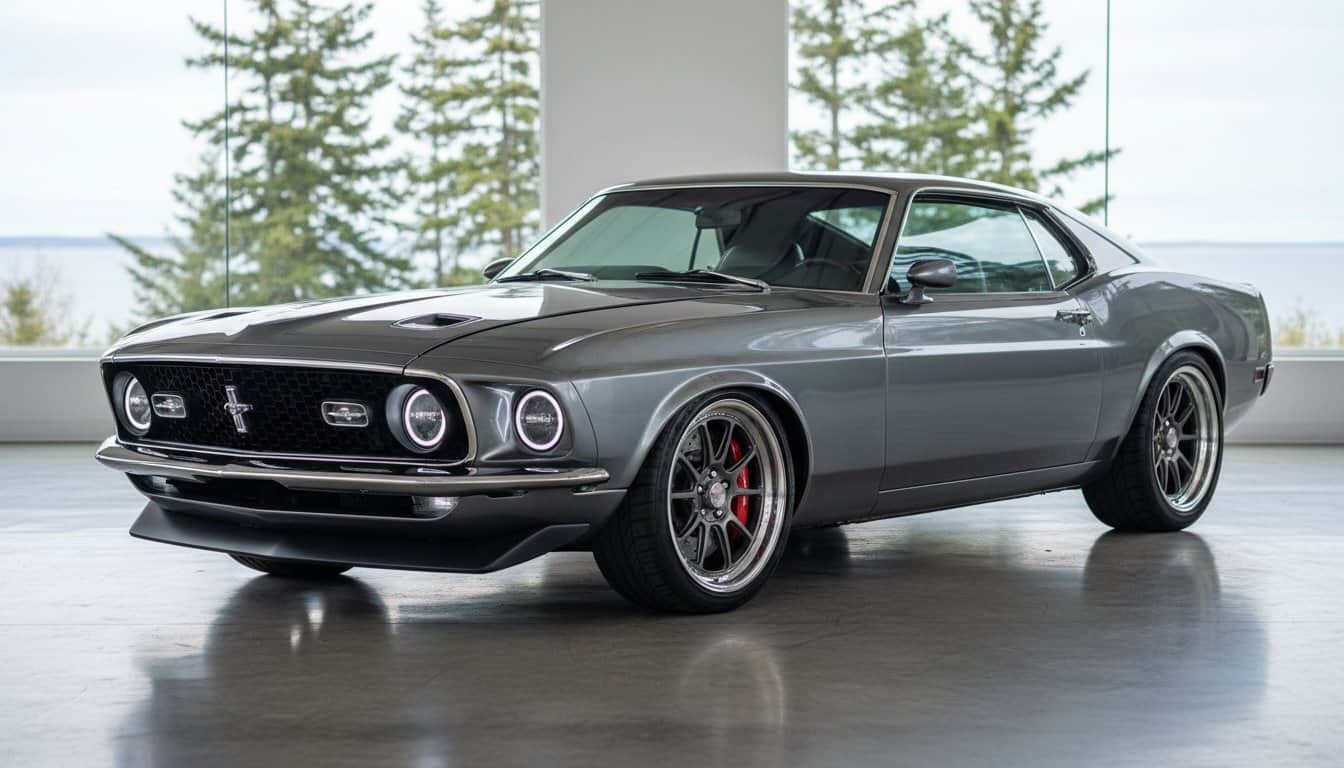
The 1970 mustang is often wrongly dismissed as a mere facelift of the 1969 model, but its refined front fascia and simplified side scoops make it the most sophisticated canvas for a modern build. You love the heritage and the raw mechanical connection of this era; however, you likely don’t love the vague steering play or the anxiety of 50-year-old drum brakes. It’s a common hurdle for the 190,727 owners of this production year who want to enjoy their classic on a Tuesday morning commute rather than just at a Sunday car show.
I’m here to show you that you don’t have to choose between vintage style and modern safety. You’ll learn how to integrate electronic fuel injection for turn-key reliability and upgrade your suspension geometry to rival contemporary sports cars while keeping that iconic silhouette intact. We’ll walk through a complete project roadmap that covers everything from Wilwood disc brake conversions to complete wiring harness overhauls. Let’s stop admiring the dream and start building a high-performance machine that’s as dependable as it is beautiful.
Key Takeaways
- Identify the unique styling cues and structural nuances that make the 1970 mustang the ultimate final-year canvas for a small-body restomod project.
- Select the perfect modern powerplant, from the high-revving Coyote 5.0L to the heavy-hitting Godzilla 7.3L, to ensure daily-driver reliability.
- Eliminate the “death trap” handling of the past by upgrading to precision rack-and-pinion steering and high-performance braking systems.
- Modernize your cockpit with 21st-century tech by seamlessly integrating digital displays and bolstered seating while maintaining vintage aesthetics.
- Master the essential planning phases, from critical rust assessment in the cowl to the meticulous metal work required before starting your build.
Why the 1970 Mustang is the Perfect Restomod Canvas
The 1970 mustang stands as the final evolution of the Ford Mustang (first generation) small-body platform. It’s a year defined by a shift toward a cleaner, more muscular aesthetic. While the previous year relied on quad headlights and side scoops for visual drama, the 1970 model opted for a more sophisticated look. Ford moved the headlights back inside the grille opening and smoothed out the rear quarter panels by deleting the non-functional scoops. This creates a streamlined profile that serves as a blank slate for custom bodywork and modern paint finishes.
This year is the ultimate “built, not bought” machine. Fabricators love the flat tail light panel and the absence of side scoops because it allows the car’s natural lines to speak without the clutter of 1960s chrome trim. It’s a design that feels more modern than its predecessors, making it the ideal candidate for a project that blends vintage soul with 21st-century performance. You aren’t just restoring a car; you’re refining a legacy.
To visualize how these design choices translate into a high-end build, watch this detailed walkaround of a professional project:
Choosing a 1970 mustang often saves a builder between $5,000 and $10,000 on the initial purchase price compared to a 1969 fastback in similar condition. This price gap doesn’t reflect a lack of quality. It’s simply a result of historical market preference for the “four-headlight” look. For a restomod project, this “discount” is pure gold. It frees up your budget for high-performance suspension geometry or a modern fuel-injected crate engine. Since the 1970 model shares the same chassis architecture as the 1967 through 1969 models, you have access to a massive catalog of interchangeable aftermarket parts.
1969 vs. 1970: What Builders Need to Know
Start your project by verifying the VIN on the driver side dash and the door data plate. A true 1970 model will have a VIN starting with the digit “0”. Structurally, the 1970 is identical to the 1969, meaning floor pans, torque boxes, and frame rails are interchangeable. Don’t overlook the 1970-specific “Grabber” paint codes. These high-impact colors, like Grabber Blue and Grabber Orange, were introduced to compete with the bold palettes of the era and remain some of the most sought-after shades for modern builds.
The Investment Case for a 1970 Restomod
The market is shifting. While a 100-point concours restoration has its place, the demand for modernized classics is surging. Buyers now prioritize reliability and air conditioning over factory-correct chalk marks. By building a What is a Restomod? style 1970 Mustang, you bridge the gap between a weekend driver and a world-class show car. Data from 2023 auction results indicates that restomods featuring modern drivetrain swaps can command a 30% premium over standard “driver-quality” restorations. Grab your wrenches and start your legacy; the 1970 model is waiting to be reborn.
Modern Power: Engine Swap Options for Your 1970 Build
Your 1970 mustang deserves a heart that matches its aggressive body lines and legendary presence. While the original factory specifications preserved at the Mustang Museum of America remind us of where this pony car started, modern technology allows you to push performance far beyond 1970 standards. Choosing the right powerplant is the most critical decision in your restomod journey. It dictates the car’s personality, your budget, and the level of fabrication required to get the job done right.
The 5.0L Coyote engine is the gold standard for modern Ford performance. A Gen 3 Coyote crate engine delivers 460 horsepower and 420 lb-ft of torque right out of the box. It revs to a screaming 7,500 RPM, providing a linear power delivery that transforms the driving experience. If you crave massive displacement, the Godzilla 7.3L V8 is the new frontier. This iron-block pushrod engine offers 430 horsepower and 475 lb-ft of torque in stock form. It provides the low-end grunt of a classic big-block with the bulletproof reliability of a 2024 workhorse.
Don’t overlook the modernized 351 Windsor for a path that respects tradition. By utilizing a 408 stroker kit and forged internals, you can easily achieve 500 horsepower while maintaining a period-correct appearance. Ditch the old 3-speed C4 or C6 “slushbox” transmissions for something that can handle this modern output. The 10R80 10-speed automatic offers lightning-fast shifts and incredible fuel economy. For those who demand a physical connection to the machine, the Tremec T56 6-speed manual remains the ultimate choice for highway cruising and track days alike.
The Coyote Swap Roadmap
Fitting a Coyote into a 1970 mustang requires surgery. You must remove the factory shock towers to make room for the massive DOHC cylinder heads. Most builders install a Mustang II style front suspension or a specialized subframe to regain structural integrity. Use a Ford Performance Control Pack to simplify the wiring process. It provides a pre-configured ECU and harness that makes modern electronics accessible. If you’re considering a different path for your build, you can also explore The Definitive Guide to an LS Engine Swap to see how the competition handles modern power.
Fuel Injection vs. Carburetion
A Holley Sniper EFI system is the best 800 dollar investment you can make for a Windsor build. It replaces your carburetor and provides instant throttle response and 100% better cold starts. You’ll need a high-pressure fuel pump capable of 58 psi and a dedicated return line to the tank. This setup eliminates vapor lock and compensates for altitude changes automatically. This reliability ensures your classic is always ready for the road. You can find the necessary fuel system components and tools in our recommended gear section to ensure your installation meets professional standards.
Taming the Pony: Suspension, Steering, and Braking
Driving a stock 1970 Mustang often feels like trying to steer a freighter through a narrow canal. Those original four wheel drum brakes and the manual recirculating ball steering boxes aren’t just charming relics; they’re safety liabilities in modern traffic. The “Death Trap” reputation comes from the massive brake fade and the four inches of steering wheel play that make high speed maneuvers terrifying. You need to prioritize precision and stopping power before you ever think about adding more horsepower.
Start your transformation with a rack and pinion conversion. This upgrade replaces the vague, wandering feel of the 1970s with a sharp 15:1 or 12:1 steering ratio. When you pair this with a modern coilover system, you move away from the bouncy, unpredictable leaf springs of the past. A high quality coilover setup allows you to tune your ride height and dampening, giving your 1970 mustang the ability to pull 1.0g on the skidpad. To bring 3,200 lbs of vintage steel to a halt, invest in a Big Brake Kit (BBK). Swapping those 9 inch drums for 13 inch vented rotors and six piston calipers can drop your 60 to 0 mph stopping distance from a dangerous 185 feet to a modern 110 feet.
Front-End Geometry Upgrades
The original front suspension geometry was designed for bias-ply tires and comfortable cruising, not lateral grip. To fix this, many builders choose to replace the entire front clip with a modern subframe. This transition often includes installing tubular control arms, which reduce unsprung weight by approximately 8 to 12 lbs per side. Check out this guide on Suspension Upgrades for Cars to see how these components work together to provide 2026 level handling. These parts allow for greater caster and camber adjustments, ensuring your tires stay flat against the pavement during hard cornering.
Stiffening the 1970 Unibody
A 50 year old unibody flexes significantly under load, which ruins the effectiveness of even the best suspension. Your first purchase should be a set of weld-in subframe connectors. These steel bars tie the front and rear frame rails together, creating a rigid platform that eliminates body twist. When modernizing a 1970 Mustang, don’t overlook the engine bay. Installing an export brace and a Monte Carlo bar prevents the shock towers from leaning inward during aggressive driving. This structural reinforcement ensures that your suspension does the work of absorbing bumps rather than the car’s body panels, resulting in a quieter, more composed ride.
- Subframe Connectors: Essential for preventing “Mustang Twist” during hard launches.
- Export Braces: Triangulates the firewall and shock towers for front end rigidity.
- Tubular Arms: Provides better geometry and less weight than stamped steel factory units.

Restomod Interior: 2026 Tech in a 1970 Cockpit
The 1970 mustang cockpit is a masterpiece of design, but it wasn’t built for modern endurance. To transform this space into a 2026-ready environment, you must prioritize ergonomics and electronics. Swap out those flat, original buckets for TMI Pro-Series bolstered seats or Recaro Sportsters. These provide the lateral support necessary when you’re pushing through corners, a feature the factory seats lacked entirely. You’ll notice the difference in your lower back after just thirty minutes of driving.
Visibility and data accuracy are your next priorities. Integrating a Dakota Digital RTX system into your factory bezel preserves the original aesthetic while providing high-accuracy digital data. For temperature management, Vintage Air remains the industry standard. Their Gen IV SureFit system replaces your bulky factory heater box with a compact, high-efficiency unit. It keeps the cabin at a steady temperature even when the asphalt outside is radiating heat at 110 degrees.
Don’t overlook the “silent” upgrade of sound deadening. Apply a layer of butyl-based material like Dynamat across the floor pans, roof, and doors. This single step can reduce cabin noise by 10 to 15 decibels. It transforms a rattly muscle car into a refined grand tourer where you can actually hold a conversation at highway speeds.
Modernizing the 1970 Center Console
Your center console should serve your modern needs without destroying the car’s soul. Install a custom console that includes much-needed cup holders and dual USB charging ports. For audio, keep the original AM radio in the dash for looks, but hide a Bluetooth-controlled amplifier behind the glovebox. This setup maintains the vintage vibe while letting you stream music directly from your phone. Explore these Restomod Interior Ideas to see how to blend these worlds seamlessly.
Wiring Harness Replacement
Old wiring is a ticking time bomb. Brittle insulation and corroded connectors lead to high resistance and potential fires in a 1970 mustang. Replace the entire loom with a modern kit from American Autowire or Painless Performance. These kits use modern blade-style fuses and dedicated circuits for high-draw items like electric fans or fuel pumps. This foundation is essential for integrating LED lighting. LEDs draw 80% less power than incandescent bulbs and provide significantly better visibility for your gauges and tail lights. Safety starts with a reliable electrical backbone.
Before you start stripping the interior, make sure you have the right tools by checking our recommended gear for restoration.
Starting Your 1970 Mustang Project: Planning and Blueprints
Building a 1970 mustang requires more than a toolbox and a dream; it demands a disciplined roadmap. Your journey begins with Phase 1: the teardown. Strip the chassis to its bare bones to expose hidden structural failures. You must pay specific attention to the cowl vents and floor pans. These areas are notorious for trapping moisture in 1970 models. If you find pinholes in the cowl, address them now, as a leaking cowl can ruin a fresh interior in a single rainstorm. Don’t cut corners here; metal integrity is the soul of your build.
Phase 2 moves into metal work and fabrication. Complete every weld and body patch before any primer touches the metal. Once the body is straight, move to Phase 3: the “Mock-up.” Install your engine and transmission to verify clearances. If you’re considering a modern powerplant, see our definitive guide to an LS engine swap for technical insights. It’s much easier to modify a transmission tunnel or engine mount now than after you’ve spent $8,000 on a custom paint job. Finally, Phase 4 involves final assembly and the shakedown period. Plan for at least 500 miles of local driving to identify vibrations or leaks before you attempt a long-distance cruise.
Budgeting for Reality
Restoration veterans rely on the “Rule of Three.” Whatever your initial estimate for time and cost, triple it. If you expect a six-month build, prepare for 18 months. This mindset prevents burnout when unexpected hurdles arise. Focus your spending on safety and reliability. You can always polish trim later, but you should never skimp on high-quality disc brakes or a modern wiring harness. Faulty wiring is responsible for a significant percentage of classic car fires. For a deeper look at organizing your finances and timeline, check out our guide on Restomod Project Planning.
Expert Guidance for Your Build
Mistakes in the garage are expensive and time-consuming. Our Premium Blueprints provide the exact specifications you need to avoid the trial and error that plagues most DIY builders. These documents can save you over 200 hours of research and fabrication time. Beyond the build itself, a documented history increases the resale value of your 1970 mustang by providing proof of professional-grade craftsmanship. Buyers pay a premium for cars with a transparent, well-mapped construction history. Ready to take the next step? Download The Ultimate Restomod Guide and start your transformation today.
Ignite Your 1970 Mustang Transformation
Your 1970 mustang project is the bridge between raw vintage soul and the relentless precision of modern performance. Success requires more than just parts; it demands a strategic approach to engine swaps like the 5.0L Coyote or the versatile LS platform. By focusing on advanced suspension geometry and 2026-grade interior technology, you create a machine that respects its heritage while dominating the modern road. Meticulous planning is the difference between a stalled project and a finished masterpiece that commands attention at every light.
The path from a bare chassis to a roaring engine is smoother when you follow a proven roadmap. Brook Walsh, a lifelong enthusiast with decades of hands-on experience, developed the Restomod Academy to help builders like you master the craft. You’ll find detailed, step-by-step blueprints for Coyote and LS swaps alongside a community of builders who share your passion for technical excellence. Stop guessing about fabrication or wiring harnesses; start building with the confidence of a seasoned pro.
Master your build with The Ultimate Restomod Guide and join a network of enthusiasts dedicated to the “built, not bought” philosophy. Your dream car is within reach, so grab your tools and let’s get to work.
Frequently Asked Questions
Is a 1970 Mustang a good first restomod project?
Yes, the 1970 mustang is an excellent choice for your first build because of its massive aftermarket support and straightforward mechanical layout. You’ll find that 95 percent of the components needed for a full overhaul are available as direct-fit replacements. This accessibility reduces the need for custom fabrication, allowing you to focus on mastering assembly and wiring. It’s a forgiving chassis that rewards patience with a world-class driving experience.
How much does it cost to restomod a 1970 Mustang in 2026?
Your budget depends on whether you’re performing the labor yourself or hiring a professional shop. The 2023 SEMA Market Report indicates that high-end restomod projects frequently range from $50,000 to over $150,000 depending on component selection. Expect to allocate 40 percent of your funds to the powertrain and suspension. Planning for these costs now ensures your vision doesn’t stall halfway through the build process.
Will a Coyote engine fit in a 1970 Mustang without cutting the shock towers?
No, a modern 5.0L Coyote engine won’t fit between the factory shock towers without significant modification. The Coyote engine measures approximately 30 inches in width, while the factory opening is restricted to 29 inches. You must install an Independent Front Suspension kit, such as a Mustang II or Heidts system. This modification removes the towers entirely, providing the 5 inches of extra clearance required for the modular engine’s overhead cams.
What is the best suspension for a 1970 Mustang restomod?
The best suspension setup for a 1970 mustang restomod is a front coilover conversion paired with a rear four-link system. This combination replaces 50 year old leaf spring technology with adjustable damping and better geometry. Brands like Ridetech offer bolt-in kits that improve lateral grip by 30 percent. You’ll gain modern handling characteristics while maintaining the car’s iconic silhouette, turning a floaty cruiser into a sharp, responsive corner carver.
Can I keep the original 1970 look while upgrading the brakes?
Yes, you can maintain the vintage aesthetic by choosing high-performance disc brake kits designed to fit behind factory 15 inch wheels. Manufacturers like Wilwood produce 4-piston calipers that provide a 40 percent increase in stopping power over stock drums. These kits often use a master cylinder that mimics the original appearance while hiding modern proportioning valves. You get the safety of 21st-century technology without sacrificing the classic 1970 visual DNA.
Is a 1970 Mustang restomod worth more than a stock restoration?
High-quality restomods currently command higher prices at auction than standard stock restorations. Data from 2023 Barrett-Jackson auctions shows that modified Mustangs frequently sell for 25 percent more than their original counterparts. Buyers prioritize reliability, air conditioning, and modern fuel injection over numbers-matching purity. If you build with premium components and document the process, your investment will likely see a higher return than a strictly factory-correct build.
What are the most common rust areas on a 1970 Mustang?
Inspect the cowl vents first, as they’re the most notorious rust trap on this model. Water collects in the hat-shaped vents, rotting the metal and leaking into the floor pans. You should also check the torque boxes and rear quarter panels, where 60 percent of 1970 models show signs of corrosion. Use a magnet to test for body filler in the lower fenders and wheel arches before you commit to a purchase.
Should I use a manual or automatic transmission for my restomod?
Choose a manual transmission like the Tremec TKX if you want an engaging, connected driving experience. The TKX is specifically designed for classic tunnels and handles up to 600 pound-feet of torque. If you prefer a cruiser, the Ford 10R80 automatic offers 10 speeds for incredible fuel efficiency and rapid shifts. Your decision should reflect how you plan to use the car, whether it’s for weekend canyon carving or long-distance highway touring.
The 1970 mustang is often wrongly dismissed as a mere facelift of the 1969 model, but its refined front fascia and simplified side scoops make it the most sophisticated canvas for a modern build. You love the heritage and the raw mechanical connection of this era; however, you likely don’t love the vague steering play or the anxiety of 50-year-old drum brakes. It’s a common hurdle for the 190,727 owners of this production year who want to enjoy their classic on a Tuesday morning commute rather than just at a Sunday car show.
I’m here to show you that you don’t have to choose between vintage style and modern safety. You’ll learn how to integrate electronic fuel injection for turn-key reliability and upgrade your suspension geometry to rival contemporary sports cars while keeping that iconic silhouette intact. We’ll walk through a complete project roadmap that covers everything from Wilwood disc brake conversions to complete wiring harness overhauls. Let’s stop admiring the dream and start building a high-performance machine that’s as dependable as it is beautiful.
Key Takeaways
- Identify the unique styling cues and structural nuances that make the 1970 mustang the ultimate final-year canvas for a small-body restomod project.
- Select the perfect modern powerplant, from the high-revving Coyote 5.0L to the heavy-hitting Godzilla 7.3L, to ensure daily-driver reliability.
- Eliminate the “death trap” handling of the past by upgrading to precision rack-and-pinion steering and high-performance braking systems.
- Modernize your cockpit with 21st-century tech by seamlessly integrating digital displays and bolstered seating while maintaining vintage aesthetics.
- Master the essential planning phases, from critical rust assessment in the cowl to the meticulous metal work required before starting your build.
Why the 1970 Mustang is the Perfect Restomod Canvas
The 1970 mustang stands as the final evolution of the Ford Mustang (first generation) small-body platform. It’s a year defined by a shift toward a cleaner, more muscular aesthetic. While the previous year relied on quad headlights and side scoops for visual drama, the 1970 model opted for a more sophisticated look. Ford moved the headlights back inside the grille opening and smoothed out the rear quarter panels by deleting the non-functional scoops. This creates a streamlined profile that serves as a blank slate for custom bodywork and modern paint finishes.
This year is the ultimate “built, not bought” machine. Fabricators love the flat tail light panel and the absence of side scoops because it allows the car’s natural lines to speak without the clutter of 1960s chrome trim. It’s a design that feels more modern than its predecessors, making it the ideal candidate for a project that blends vintage soul with 21st-century performance. You aren’t just restoring a car; you’re refining a legacy.
To visualize how these design choices translate into a high-end build, watch this detailed walkaround of a professional project:
Choosing a 1970 mustang often saves a builder between $5,000 and $10,000 on the initial purchase price compared to a 1969 fastback in similar condition. This price gap doesn’t reflect a lack of quality. It’s simply a result of historical market preference for the “four-headlight” look. For a restomod project, this “discount” is pure gold. It frees up your budget for high-performance suspension geometry or a modern fuel-injected crate engine. Since the 1970 model shares the same chassis architecture as the 1967 through 1969 models, you have access to a massive catalog of interchangeable aftermarket parts.
1969 vs. 1970: What Builders Need to Know
Start your project by verifying the VIN on the driver side dash and the door data plate. A true 1970 model will have a VIN starting with the digit “0”. Structurally, the 1970 is identical to the 1969, meaning floor pans, torque boxes, and frame rails are interchangeable. Don’t overlook the 1970-specific “Grabber” paint codes. These high-impact colors, like Grabber Blue and Grabber Orange, were introduced to compete with the bold palettes of the era and remain some of the most sought-after shades for modern builds.
The Investment Case for a 1970 Restomod
The market is shifting. While a 100-point concours restoration has its place, the demand for modernized classics is surging. Buyers now prioritize reliability and air conditioning over factory-correct chalk marks. By building a What is a Restomod? style 1970 Mustang, you bridge the gap between a weekend driver and a world-class show car. Data from 2023 auction results indicates that restomods featuring modern drivetrain swaps can command a 30% premium over standard “driver-quality” restorations. Grab your wrenches and start your legacy; the 1970 model is waiting to be reborn.
Modern Power: Engine Swap Options for Your 1970 Build
Your 1970 mustang deserves a heart that matches its aggressive body lines and legendary presence. While the original factory specifications preserved at the Mustang Museum of America remind us of where this pony car started, modern technology allows you to push performance far beyond 1970 standards. Choosing the right powerplant is the most critical decision in your restomod journey. It dictates the car’s personality, your budget, and the level of fabrication required to get the job done right.
The 5.0L Coyote engine is the gold standard for modern Ford performance. A Gen 3 Coyote crate engine delivers 460 horsepower and 420 lb-ft of torque right out of the box. It revs to a screaming 7,500 RPM, providing a linear power delivery that transforms the driving experience. If you crave massive displacement, the Godzilla 7.3L V8 is the new frontier. This iron-block pushrod engine offers 430 horsepower and 475 lb-ft of torque in stock form. It provides the low-end grunt of a classic big-block with the bulletproof reliability of a 2024 workhorse.
Don’t overlook the modernized 351 Windsor for a path that respects tradition. By utilizing a 408 stroker kit and forged internals, you can easily achieve 500 horsepower while maintaining a period-correct appearance. Ditch the old 3-speed C4 or C6 “slushbox” transmissions for something that can handle this modern output. The 10R80 10-speed automatic offers lightning-fast shifts and incredible fuel economy. For those who demand a physical connection to the machine, the Tremec T56 6-speed manual remains the ultimate choice for highway cruising and track days alike.
The Coyote Swap Roadmap
Fitting a Coyote into a 1970 mustang requires surgery. You must remove the factory shock towers to make room for the massive DOHC cylinder heads. Most builders install a Mustang II style front suspension or a specialized subframe to regain structural integrity. Use a Ford Performance Control Pack to simplify the wiring process. It provides a pre-configured ECU and harness that makes modern electronics accessible. If you’re considering a different path for your build, you can also explore The Definitive Guide to an LS Engine Swap to see how the competition handles modern power.
Fuel Injection vs. Carburetion
A Holley Sniper EFI system is the best 800 dollar investment you can make for a Windsor build. It replaces your carburetor and provides instant throttle response and 100% better cold starts. You’ll need a high-pressure fuel pump capable of 58 psi and a dedicated return line to the tank. This setup eliminates vapor lock and compensates for altitude changes automatically. This reliability ensures your classic is always ready for the road. You can find the necessary fuel system components and tools in our recommended gear section to ensure your installation meets professional standards.
Taming the Pony: Suspension, Steering, and Braking
Driving a stock 1970 Mustang often feels like trying to steer a freighter through a narrow canal. Those original four wheel drum brakes and the manual recirculating ball steering boxes aren’t just charming relics; they’re safety liabilities in modern traffic. The “Death Trap” reputation comes from the massive brake fade and the four inches of steering wheel play that make high speed maneuvers terrifying. You need to prioritize precision and stopping power before you ever think about adding more horsepower.
Start your transformation with a rack and pinion conversion. This upgrade replaces the vague, wandering feel of the 1970s with a sharp 15:1 or 12:1 steering ratio. When you pair this with a modern coilover system, you move away from the bouncy, unpredictable leaf springs of the past. A high quality coilover setup allows you to tune your ride height and dampening, giving your 1970 mustang the ability to pull 1.0g on the skidpad. To bring 3,200 lbs of vintage steel to a halt, invest in a Big Brake Kit (BBK). Swapping those 9 inch drums for 13 inch vented rotors and six piston calipers can drop your 60 to 0 mph stopping distance from a dangerous 185 feet to a modern 110 feet.
Front-End Geometry Upgrades
The original front suspension geometry was designed for bias-ply tires and comfortable cruising, not lateral grip. To fix this, many builders choose to replace the entire front clip with a modern subframe. This transition often includes installing tubular control arms, which reduce unsprung weight by approximately 8 to 12 lbs per side. Check out this guide on Suspension Upgrades for Cars to see how these components work together to provide 2026 level handling. These parts allow for greater caster and camber adjustments, ensuring your tires stay flat against the pavement during hard cornering.
Stiffening the 1970 Unibody
A 50 year old unibody flexes significantly under load, which ruins the effectiveness of even the best suspension. Your first purchase should be a set of weld-in subframe connectors. These steel bars tie the front and rear frame rails together, creating a rigid platform that eliminates body twist. When modernizing a 1970 Mustang, don’t overlook the engine bay. Installing an export brace and a Monte Carlo bar prevents the shock towers from leaning inward during aggressive driving. This structural reinforcement ensures that your suspension does the work of absorbing bumps rather than the car’s body panels, resulting in a quieter, more composed ride.
- Subframe Connectors: Essential for preventing “Mustang Twist” during hard launches.
- Export Braces: Triangulates the firewall and shock towers for front end rigidity.
- Tubular Arms: Provides better geometry and less weight than stamped steel factory units.

Restomod Interior: 2026 Tech in a 1970 Cockpit
The 1970 mustang cockpit is a masterpiece of design, but it wasn’t built for modern endurance. To transform this space into a 2026-ready environment, you must prioritize ergonomics and electronics. Swap out those flat, original buckets for TMI Pro-Series bolstered seats or Recaro Sportsters. These provide the lateral support necessary when you’re pushing through corners, a feature the factory seats lacked entirely. You’ll notice the difference in your lower back after just thirty minutes of driving.
Visibility and data accuracy are your next priorities. Integrating a Dakota Digital RTX system into your factory bezel preserves the original aesthetic while providing high-accuracy digital data. For temperature management, Vintage Air remains the industry standard. Their Gen IV SureFit system replaces your bulky factory heater box with a compact, high-efficiency unit. It keeps the cabin at a steady temperature even when the asphalt outside is radiating heat at 110 degrees.
Don’t overlook the “silent” upgrade of sound deadening. Apply a layer of butyl-based material like Dynamat across the floor pans, roof, and doors. This single step can reduce cabin noise by 10 to 15 decibels. It transforms a rattly muscle car into a refined grand tourer where you can actually hold a conversation at highway speeds.
Modernizing the 1970 Center Console
Your center console should serve your modern needs without destroying the car’s soul. Install a custom console that includes much-needed cup holders and dual USB charging ports. For audio, keep the original AM radio in the dash for looks, but hide a Bluetooth-controlled amplifier behind the glovebox. This setup maintains the vintage vibe while letting you stream music directly from your phone. Explore these Restomod Interior Ideas to see how to blend these worlds seamlessly.
Wiring Harness Replacement
Old wiring is a ticking time bomb. Brittle insulation and corroded connectors lead to high resistance and potential fires in a 1970 mustang. Replace the entire loom with a modern kit from American Autowire or Painless Performance. These kits use modern blade-style fuses and dedicated circuits for high-draw items like electric fans or fuel pumps. This foundation is essential for integrating LED lighting. LEDs draw 80% less power than incandescent bulbs and provide significantly better visibility for your gauges and tail lights. Safety starts with a reliable electrical backbone.
Before you start stripping the interior, make sure you have the right tools by checking our recommended gear for restoration.
Starting Your 1970 Mustang Project: Planning and Blueprints
Building a 1970 mustang requires more than a toolbox and a dream; it demands a disciplined roadmap. Your journey begins with Phase 1: the teardown. Strip the chassis to its bare bones to expose hidden structural failures. You must pay specific attention to the cowl vents and floor pans. These areas are notorious for trapping moisture in 1970 models. If you find pinholes in the cowl, address them now, as a leaking cowl can ruin a fresh interior in a single rainstorm. Don’t cut corners here; metal integrity is the soul of your build.
Phase 2 moves into metal work and fabrication. Complete every weld and body patch before any primer touches the metal. Once the body is straight, move to Phase 3: the “Mock-up.” Install your engine and transmission to verify clearances. If you’re considering a modern powerplant, see our definitive guide to an LS engine swap for technical insights. It’s much easier to modify a transmission tunnel or engine mount now than after you’ve spent $8,000 on a custom paint job. Finally, Phase 4 involves final assembly and the shakedown period. Plan for at least 500 miles of local driving to identify vibrations or leaks before you attempt a long-distance cruise.
Budgeting for Reality
Restoration veterans rely on the “Rule of Three.” Whatever your initial estimate for time and cost, triple it. If you expect a six-month build, prepare for 18 months. This mindset prevents burnout when unexpected hurdles arise. Focus your spending on safety and reliability. You can always polish trim later, but you should never skimp on high-quality disc brakes or a modern wiring harness. Faulty wiring is responsible for a significant percentage of classic car fires. For a deeper look at organizing your finances and timeline, check out our guide on Restomod Project Planning.
Expert Guidance for Your Build
Mistakes in the garage are expensive and time-consuming. Our Premium Blueprints provide the exact specifications you need to avoid the trial and error that plagues most DIY builders. These documents can save you over 200 hours of research and fabrication time. Beyond the build itself, a documented history increases the resale value of your 1970 mustang by providing proof of professional-grade craftsmanship. Buyers pay a premium for cars with a transparent, well-mapped construction history. Ready to take the next step? Download The Ultimate Restomod Guide and start your transformation today.
Ignite Your 1970 Mustang Transformation
Your 1970 mustang project is the bridge between raw vintage soul and the relentless precision of modern performance. Success requires more than just parts; it demands a strategic approach to engine swaps like the 5.0L Coyote or the versatile LS platform. By focusing on advanced suspension geometry and 2026-grade interior technology, you create a machine that respects its heritage while dominating the modern road. Meticulous planning is the difference between a stalled project and a finished masterpiece that commands attention at every light.
The path from a bare chassis to a roaring engine is smoother when you follow a proven roadmap. Brook Walsh, a lifelong enthusiast with decades of hands-on experience, developed the Restomod Academy to help builders like you master the craft. You’ll find detailed, step-by-step blueprints for Coyote and LS swaps alongside a community of builders who share your passion for technical excellence. Stop guessing about fabrication or wiring harnesses; start building with the confidence of a seasoned pro.
Master your build with The Ultimate Restomod Guide and join a network of enthusiasts dedicated to the “built, not bought” philosophy. Your dream car is within reach, so grab your tools and let’s get to work.
Frequently Asked Questions
Is a 1970 Mustang a good first restomod project?
Yes, the 1970 mustang is an excellent choice for your first build because of its massive aftermarket support and straightforward mechanical layout. You’ll find that 95 percent of the components needed for a full overhaul are available as direct-fit replacements. This accessibility reduces the need for custom fabrication, allowing you to focus on mastering assembly and wiring. It’s a forgiving chassis that rewards patience with a world-class driving experience.
How much does it cost to restomod a 1970 Mustang in 2026?
Your budget depends on whether you’re performing the labor yourself or hiring a professional shop. The 2023 SEMA Market Report indicates that high-end restomod projects frequently range from $50,000 to over $150,000 depending on component selection. Expect to allocate 40 percent of your funds to the powertrain and suspension. Planning for these costs now ensures your vision doesn’t stall halfway through the build process.
Will a Coyote engine fit in a 1970 Mustang without cutting the shock towers?
No, a modern 5.0L Coyote engine won’t fit between the factory shock towers without significant modification. The Coyote engine measures approximately 30 inches in width, while the factory opening is restricted to 29 inches. You must install an Independent Front Suspension kit, such as a Mustang II or Heidts system. This modification removes the towers entirely, providing the 5 inches of extra clearance required for the modular engine’s overhead cams.
What is the best suspension for a 1970 Mustang restomod?
The best suspension setup for a 1970 mustang restomod is a front coilover conversion paired with a rear four-link system. This combination replaces 50 year old leaf spring technology with adjustable damping and better geometry. Brands like Ridetech offer bolt-in kits that improve lateral grip by 30 percent. You’ll gain modern handling characteristics while maintaining the car’s iconic silhouette, turning a floaty cruiser into a sharp, responsive corner carver.
Can I keep the original 1970 look while upgrading the brakes?
Yes, you can maintain the vintage aesthetic by choosing high-performance disc brake kits designed to fit behind factory 15 inch wheels. Manufacturers like Wilwood produce 4-piston calipers that provide a 40 percent increase in stopping power over stock drums. These kits often use a master cylinder that mimics the original appearance while hiding modern proportioning valves. You get the safety of 21st-century technology without sacrificing the classic 1970 visual DNA.
Is a 1970 Mustang restomod worth more than a stock restoration?
High-quality restomods currently command higher prices at auction than standard stock restorations. Data from 2023 Barrett-Jackson auctions shows that modified Mustangs frequently sell for 25 percent more than their original counterparts. Buyers prioritize reliability, air conditioning, and modern fuel injection over numbers-matching purity. If you build with premium components and document the process, your investment will likely see a higher return than a strictly factory-correct build.
What are the most common rust areas on a 1970 Mustang?
Inspect the cowl vents first, as they’re the most notorious rust trap on this model. Water collects in the hat-shaped vents, rotting the metal and leaking into the floor pans. You should also check the torque boxes and rear quarter panels, where 60 percent of 1970 models show signs of corrosion. Use a magnet to test for body filler in the lower fenders and wheel arches before you commit to a purchase.
Should I use a manual or automatic transmission for my restomod?
Choose a manual transmission like the Tremec TKX if you want an engaging, connected driving experience. The TKX is specifically designed for classic tunnels and handles up to 600 pound-feet of torque. If you prefer a cruiser, the Ford 10R80 automatic offers 10 speeds for incredible fuel efficiency and rapid shifts. Your decision should reflect how you plan to use the car, whether it’s for weekend canyon carving or long-distance highway touring.