
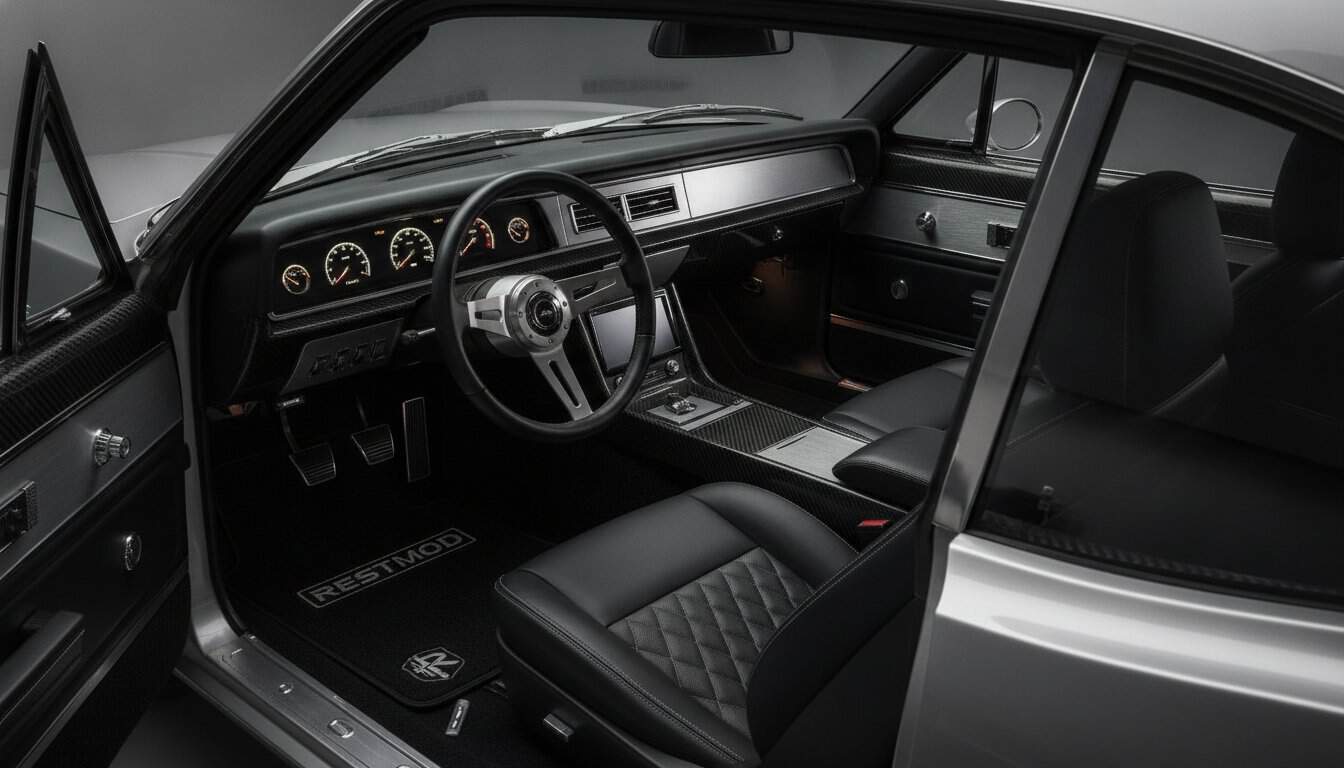
A true restomod interior isn’t just about new leather; it is an engineered environment where modern ergonomics meet vintage soul. Most of us love the smell of vintage vinyl and the sweep of a classic dashboard, but we don’t love the deafening road noise or the backache after an hour behind the wheel. If you’ve ever felt like your cabin was a beautiful furnace, you know that finding the right restomod interior ideas is essential for a build you actually want to drive.
You can keep your car’s iconic heritage while upgrading the experience to rival a modern luxury vehicle. This guide promises to show you how to achieve a quiet, comfortable cabin through smart design and seamless technology integration. We will explore how to silence the road, install effective climate control, and hide modern connectivity within a vintage aesthetic. It is time to move beyond the restoration of the past and start creating a masterpiece that’s built for the future of the open road.
Key Takeaways
- Understand the balance between heritage aesthetics and modern usability to create a cabin that feels classic but drives like a contemporary machine.
- Master the foundational layers of sound deadening and thermal insulation to turn a noisy, hot cockpit into a refined space using these restomod interior ideas.
- Upgrade your driving experience by integrating modern seating solutions that provide necessary lumbar support and safety without clashing with your car’s original design.
- Learn how to seamlessly integrate precise digital gauges and efficient climate control systems to ensure your classic is ready for long distance touring in any weather.
- Follow a disciplined order of operations from mood board planning to final assembly to ensure your custom interior comes together with professional precision.
The Restomod Interior Philosophy: Why Modernize Your Classic Cabin?
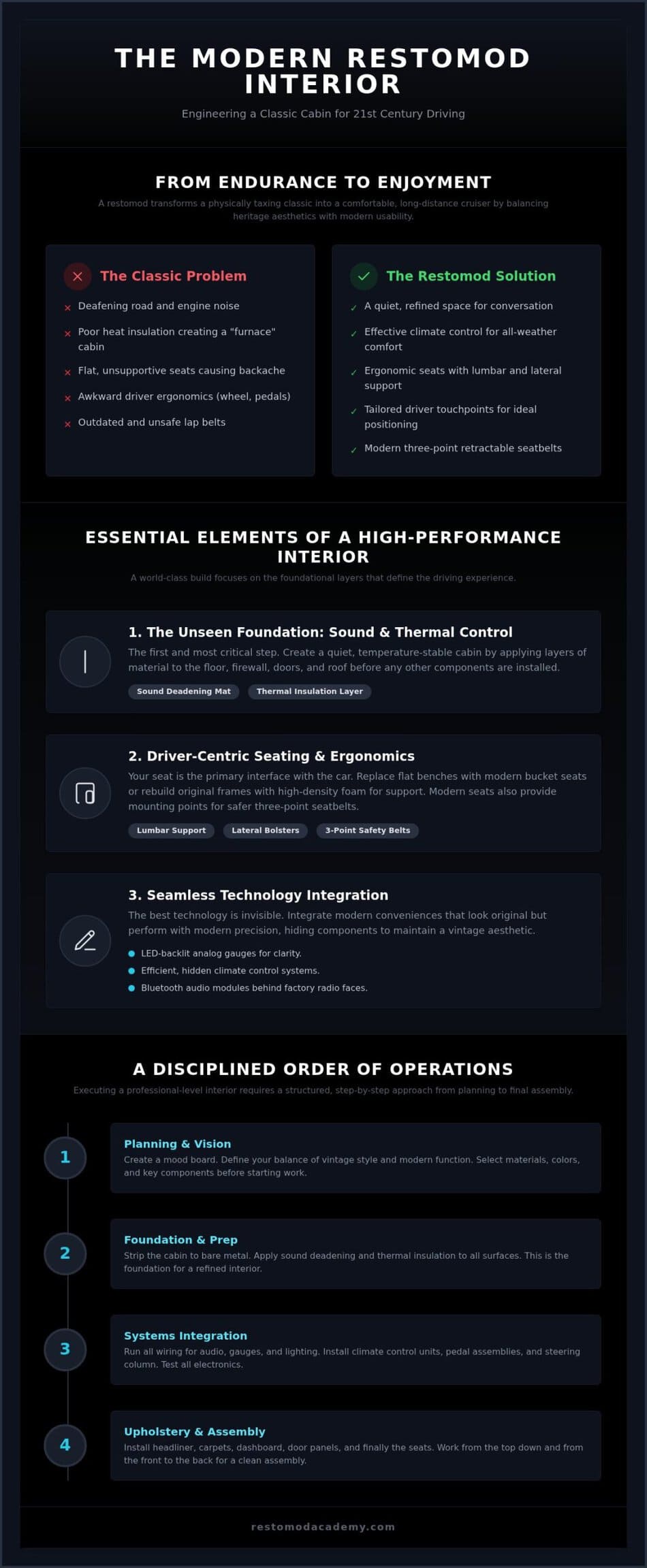
Building a classic car is an act of passion, but driving one shouldn’t be an act of endurance. For decades, the restoration world focused almost exclusively on returning vehicles to their factory-correct assembly line specifications. While that preserves history, it often leaves the driver with a machine that is loud, hot, and physically taxing to operate. The modern Resto-modification philosophy represents a shift in mindset. It’s the realization that you can honor the soul of a vintage machine while demanding the comfort and safety of a 21st-century vehicle. When you prioritize usability over strict originality, you transform a garage queen into a reliable long-distance cruiser.
Modernizing your cabin does more than just make the drive pleasant; it significantly increases the long-term value and utility of your project. A car that is comfortable to drive is a car that gets driven. This increased seat time justifies the investment and effort of the build. Psychologically, a refined interior changes how you perceive the entire vehicle. When you aren’t fighting a heavy clutch or sweating through your shirt because of poor insulation, you can finally focus on the mechanical harmony of the engine and the road ahead. Exploring various restomod interior ideas allows you to decide exactly where to draw the line between heritage and innovation.
Balancing Vintage Aesthetics with Modern Function
The gold standard for any high-end build is the seamless integration of hidden technology. You want the clarity of a modern sound system without a neon-lit head unit clashing with your 1960s dashboard. Achieving this balance requires a surgical approach to design. Use period-correct textures, such as grain-matched vinyl or woven inserts, but apply them over modern, high-density foams. This preserves the visual DNA of the car while providing a tactile experience that feels premium and supportive. Focus on replacing obsolete components with parts that look original but perform with modern precision, such as LED-backlit analog gauges or Bluetooth modules hidden behind a factory radio face.
The Ergonomic Revolution in Classic Cars
If you want to understand what is a restomod at its core, look at the driver’s seat. Factory cockpits from the 1960s and 70s were often designed with little regard for human geometry. Flat bench seats offer zero lateral support, and steering columns are frequently positioned at awkward angles. To fix these flaws, you must focus on the primary touch points of the vehicle:
- Install seats with modern bolsters to keep you centered during cornering.
- Adjust the steering column height and shifter reach to fit your specific wingspan.
- Optimize pedal spacing and feel to ensure confident braking and acceleration.
By tailoring these elements to your body, you bridge the gap between the practical labor of the workshop and the artistry of a truly custom driving environment.
Essential Elements of a High-Performance Restomod Interior
Executing a world-class build requires looking past the surface level of upholstery and paint. To create a cabin that truly performs, you must focus on the structural and functional layers that define the driving experience. This is where the most impactful restomod interior ideas take shape, moving from aesthetic concepts to engineered solutions. Every component you select should serve a dual purpose: honoring the vehicle’s heritage while providing the support and reliability you expect from a modern machine.
Seating and Safety: Beyond the Bench
Your seats are the primary interface between you and the car. While original bench seats carry a nostalgic charm, they offer almost no lateral support during spirited cornering and lack the ergonomic structure needed for long hauls. You have two primary paths: swapping in modern bucket seats from a late-model donor or rebuilding your original frames with high-density, multi-layer foam and integrated lumbar support. If you choose modern buckets, prioritize low-profile mounting brackets to maintain a correct line of sight through the windshield. Safety is non-negotiable in a high-performance build. Always integrate three-point retractable seatbelts with reinforced floor anchors to replace the lap belts of the past, ensuring you are securely positioned behind the wheel. For those looking for specific hardware recommendations, checking out recommended gear can help you identify the right components for your specific floor pan.
Material choice is where the artistry of the workshop meets technical performance. Leather remains the standard for luxury and that unmistakable vintage scent, but modern builders often incorporate Alcantara or high-friction synthetics in the seat centers. These materials provide superior grip, preventing you from sliding during aggressive maneuvers, and they manage temperature better than traditional vinyl. A custom center console serves as the functional hub for these upgrades, providing a home for modern shifters, power window switches, and essential storage that factory interiors simply didn’t offer.
The Invisible Upgrade: Sound and Heat Management
The most impressive restomod interiors are often the ones you can’t hear. Vintage steel bodies act like acoustic drums, amplifying road noise and exhaust drone. You must address this with a multi-stage insulation strategy before a single yard of carpet is laid down. Start with a butyl-based vibration damper to add mass to the large, flat panels of the floor and doors. This stops the metal from resonating. Follow this with a layer of closed-cell foam or a decoupled heat barrier to block airborne sound and radiant heat from the engine bay. A luxury restomod should aim for a 10 to 15 decibel reduction in ambient cabin noise to truly replicate the serene environment of a modern vehicle. This meticulous layering ensures that your climate control works efficiently and your audio system delivers crystal-clear sound without competing with the roar of the road.
Custom Kits vs. Bespoke Fabrication: Choosing Your Path
Every builder eventually faces a critical decision: do you buy the solution or build it from scratch? This choice defines your timeline, your budget, and the final character of your machine. Sourcing the right components is a balancing act between the convenience of mass production and the soul of hand-crafted artistry. Whether you are aiming for a show-stopping masterpiece or a high-quality daily driver, your strategy for acquiring parts will dictate the success of your project. The goal is to find the most efficient route to a professional result without sacrificing the unique identity of your build.
Off-the-Shelf Solutions for Popular Classics
If you are working on a high-volume platform like a first-generation Mustang, a Camaro, or a C10 truck, you have access to a massive market of pre-engineered kits. These solutions offer a predictable path to a clean, professional look because they are designed to fit factory mounting points. The primary benefit is speed; you can transform a gutted cabin in a fraction of the time it takes for custom work. However, the risk is ending up with a catalog car that looks identical to every other build at the local show. To avoid this, use a high-quality kit as a foundation and add custom touches like unique thread colors or upgraded hardware. Exploring product reviews for these kits can help you separate the precision-engineered options from the poorly fitting alternatives.
The Bespoke Experience: Working with a Pro
For those whose vision doesn’t fit in a box, a professional upholstery shop is the only way to achieve a truly one-of-a-kind cabin. This path is essential if you’ve modified the floor pan for a modern transmission or swapped in a dashboard from a different era. Communicating with a custom trimmer requires a clear vision and a shared language of design. Be prepared for a significant investment in both labor and time. A full bespoke interior can take hundreds of hours to execute properly. You are paying for the artistry of hand-stitched leather and custom-molded panels that flow perfectly with your car’s unique architecture. This level of detail ensures that your restomod interior ideas are executed with the highest degree of precision and style.
You don’t have to outsource every single task to achieve a high-end result. A smart builder knows where to splurge on professional labor and where to apply their own effort. Spend your budget on the high-visibility touch points like the seats and the dashboard. Save money by tackling the sound deadening, carpet installation, and basic trim assembly yourself in the home garage. If you find yourself stuck between a standard kit and a full custom build, Restomod Consulting Services can provide the clarity needed to navigate these complex design hurdles. This structured approach ensures that your restomod interior ideas translate into a cohesive environment that respects both your budget and your car’s heritage.
Practical Tech Upgrades: Audio, Gauges, and Climate Control
Integrating modern electronics into a vintage dash is where many builders feel the most pressure. You want the precision of contemporary data without the visual noise of a modern plastic head unit. When exploring restomod interior ideas, the goal should be a high-fidelity environment that looks like it left the factory with options that didn’t exist in the 1960s. This isn’t just about gadgetry; it’s about reliability and the peace of mind that comes from knowing exactly what is happening under the hood.
Modern Instrumentation and Monitoring
Original mechanical gauges are notoriously vague and prone to failure. Upgrading to modern stepper-motor units allows for razor-sharp accuracy while retaining a period-correct appearance. These units eliminate the erratic needle bounce common in 50-year-old sensors. If you’ve performed a modern powertrain swap, such as following the definitive guide to an LS engine swap, you can link your interior gauges directly to the ECU. This provides real-time monitoring of engine vitals through high-resolution OLED displays hidden within traditional round housings. You gain the benefit of programmable warning lights and precise digital readouts without sacrificing the nostalgic sweep of an analog needle.
Stealth Audio and Connectivity
High-fidelity sound shouldn’t require cutting up a pristine dashboard. Use Bluetooth-enabled head units that mimic the look of original thumbwheel radios to maintain the period aesthetic. These units provide modern smartphone integration and hands-free calling while looking perfectly at home in a 1970s cockpit. Hide your speakers in custom kick panels or rear packages trays, and use compact sub-enclosures that preserve your trunk space. For a truly clean look, install power window conversions that utilize your original crank handles as switches. This small detail provides modern convenience without a single visible plastic button to break the vintage illusion.
Climate control is the single most important upgrade for a car you intend to drive year-round. Modern systems replace bulky, vacuum-operated factory heater boxes with compact, electronically controlled units. These systems clear up significant space under the dash and ensure your defrost and air conditioning work with the efficiency of a new luxury car. If you’re overwhelmed by the wiring and integration of these complex electronic systems, our Restomod Consulting Services can provide a clear roadmap for your specific build. Prioritizing these tech upgrades ensures your classic is as functional on a cross-country tour as it is beautiful at a local show.
Executing Your Vision: From Planning to Final Assembly
Success in any build is found in the preparation stage. Before you turn a single wrench, you must define the aesthetic and functional goals for your project. Start by creating a mood board that captures your color palette and material choices. This visual guide ensures that every component, from the thread color on the seats to the finish on the door handles, works toward a cohesive design. Bringing your restomod interior ideas to life requires a disciplined approach that balances your creative intent with the practical realities of the workshop.
Phase 1: Stripping and Prepping the Shell
A professional grade interior begins with a clean, sound floor pan. Once the old upholstery is removed, inspect every inch of the metal for rust or structural fatigue. Clean and seal the floors with a high quality primer to prevent future corrosion. This is also the ideal time to route your wiring harnesses for modern accessories, EFI systems, and audio components. Planning your wire runs now prevents the frustration of having to pull up carpet later to add a forgotten circuit. For a detailed breakdown of how to manage your build schedule, consult the restomod project planning guide to stay on track.
Phase 2: The Art of the Install
The order of operations is critical during assembly to avoid damaging new components. Always install the headliner first, followed by the dashboard and steering column. This sequence prevents you from leaning over finished seats or fresh carpet while struggling with overhead trim. When securing panels, look for ways to use hidden fasteners or high strength adhesives to maintain a clean, modern appearance. If you encounter a complex custom hurdle, remember that Restomod Consulting Services can provide the expert guidance needed to avoid costly rework. This phase is about the satisfaction of precision, where the character of your machine finally begins to emerge.
Before the final assembly is complete, you must test every electrical system. Power up your gauges, check the climate control gates, and verify that every interior light functions correctly. It’s far easier to fix a loose ground wire now than after the seats are bolted down. Once the car is back on the road, take the time for a shakedown period to identify and chase down any remaining squeaks or rattles. Applying small pieces of felt or foam behind trim panels can eliminate these minor annoyances, resulting in a cabin that feels as solid and refined as a modern luxury vehicle. Your effort in these final steps transforms a collection of parts into a unified masterpiece.
Build Your Modern Masterpiece Today
Transforming your classic cabin is a journey that moves from the heavy labor of stripping the shell to the fine artistry of final assembly. By prioritizing invisible upgrades like sound deadening and thermal barriers, you create a foundation that allows modern technology to truly shine. Integrating these restomod interior ideas ensures your vehicle is not just a museum piece, but a refined machine capable of modern performance and luxury. You have the power to bridge the gap between vintage soul and 21st-century reliability through careful planning and precision execution.
Don’t let common restoration mistakes stall your progress or drain your budget. Brook Walsh has founded this academy to provide the expert guidance and premium project blueprints you need to succeed. Start your interior transformation with The Ultimate Restomod Guide and gain the confidence to turn your vision into a reality. Your project is more than just a car; it is a legacy of personal labor and creative intent. Pick up your tools and start building the cabin you’ve always imagined.
Frequently Asked Questions
How much does a full restomod interior cost?
The total investment for a full cabin overhaul depends on the complexity of your design and whether you choose professional labor over personal assembly. High-quality materials like premium leather and technical components like climate control systems will always represent a larger portion of your budget. Off-the-shelf kits offer a more predictable cost structure compared to bespoke fabrication. Always plan for the foundational layers of insulation and wiring to avoid unexpected expenses during the final assembly.
Can I install a modern interior myself or do I need a professional?
You can certainly install a modern interior yourself if you have the patience for meticulous technical assembly and the right guidance. Many enthusiasts successfully use pre-engineered kits to achieve a high-end look in their home garage. However, complex custom work like hand-stitching leather or molding one-off door panels often requires the specialized tools and experience of a professional trimmer. Evaluate your skill level against your desired outcome before diving into the project.
What are the best seats to swap into a classic car for a restomod?
Late-model bucket seats from donor cars like the Pontiac GTO or modern Mustangs are popular choices for their superior bolsters and lumbar support. These seats provide the lateral grip and ergonomic structure that original bench seats lack. When selecting seats, ensure the mounting height doesn’t compromise your visibility or headroom. Many restomod interior ideas revolve around finding donor seats that fit the cabin’s scale while offering modern safety features like integrated headrests.
How do I stop my classic car from being so loud inside?
You stop excessive cabin noise by applying a multi-stage insulation strategy to the floor, doors, and roof panels. Start with a butyl-based vibration damper to stop metal panels from resonating like a drum. Follow this with a layer of closed-cell foam or a decoupled heat barrier to block airborne sound and radiant engine heat. This systematic layering is the only way to achieve the quiet, luxury feel of a modern vehicle while protecting yourself from road noise.
Will a modern interior ruin the resale value of my classic car?
A modern interior usually enhances the resale value of a classic car by making it more appealing to the contemporary enthusiast. Most buyers today look for a vehicle that offers a refined driving experience without sacrificing the iconic look of the past. The key to maintaining value is ensuring the modifications are executed with professional precision and a cohesive aesthetic. High-quality restomod interior ideas that prioritize comfort and reliability often result in a much higher market demand.
What is the best material for a restomod interior: leather or vinyl?
Leather is the superior choice for luxury and tactile feel, while modern high-performance vinyl offers incredible durability and ease of maintenance. Many builders choose a hybrid approach, using leather on the primary touch points and high-quality synthetics for the less visible panels. Consider your climate and how often you’ll drive the car. Leather manages heat better than traditional vinyl, but it requires more frequent conditioning to stay supple and prevent cracking over time.
How can I add air conditioning to my vintage car interior?
You add air conditioning by installing a compact, electronically controlled HVAC system that replaces your bulky factory heater box. These systems are designed to fit behind the dash of specific classic models and utilize modern, efficient refrigerants. They provide much better airflow and temperature control than original hardware. Installing a modern system also cleans up your engine bay by using a smaller compressor compared to the massive units used in the 1960s and 70s.
Can I put a digital dashboard in a classic car?
You can definitely install a digital dashboard by using a modern gauge cluster that fits into your original housing or a custom bezel. These units provide precise data from modern EFI systems and offer programmable displays for various engine vitals. Many digital clusters allow you to choose between a modern interface or a simulated analog look to match your car’s aesthetic. This upgrade provides the reliability of modern electronics without destroying the vintage character of your dashboard.