
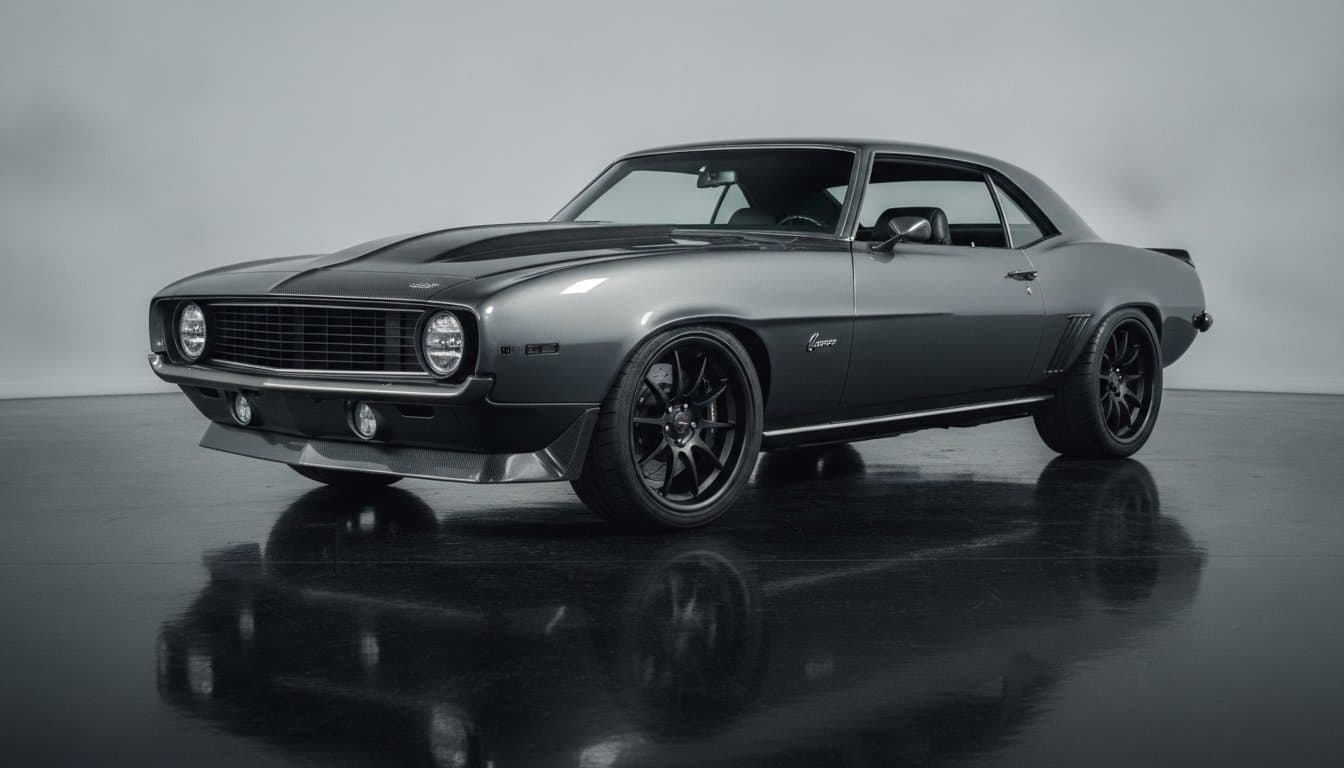
What if your 1969 Camaro could out-brake and out-corner a modern supercar while still turning heads at the local cruise-in? It’s a bold ambition, but it’s the core philosophy behind the most impressive pro touring cars on the road today. You likely appreciate the timeless lines of vintage iron, yet you’re tired of the vague steering and drum brakes that make every spirited drive feel like a gamble. You want a machine that respects its heritage but demands respect on the autocross track.
I understand the hesitation. It’s easy to get lost in complex suspension geometry or feel overwhelmed by the $30,000 price tag of a high-end chassis. This guide is your roadmap to building a functional, high-performance masterpiece without the typical “all show and no go” pitfalls. We’ll explore the engineering secrets and build strategies required to master these machines. From selecting the right LS crate engine to balancing modern reliability with classic aesthetics, you’ll gain the clarity needed to plan a build that performs as beautifully as it looks. Let’s get to work on turning that vintage metal into a precision instrument.
Key Takeaways
- Learn the performance-first philosophy that transforms classic muscle into track-ready machines by prioritizing functional engineering over simple aesthetics.
- Identify the essential mechanical pillars, including advanced suspension geometry and high-performance braking systems, that define modern pro touring cars.
- Differentiate between a standard restomod and a performance-focused build to ensure your project’s final outcome matches your specific driving goals and budget.
- Develop a strategic roadmap for your build by selecting the right donor platform and mapping out your technical specs before you’ve even picked up a wrench.
- Leverage The Ultimate Restomod Guide to bridge the gap between vintage style and modern reliability using proven, step-by-step technical frameworks.
Defining the Pro Touring Standard: Philosophy and History
To truly understand the DNA of pro touring cars, you have to look past the shiny paint and custom wheels. This movement isn’t just about aesthetics; it’s an engineering philosophy that demands vintage muscle perform with the same agility as a modern track car. While a standard restoration focuses on preserving the past, pro touring focuses on perfecting it for the road ahead. You’re building a machine that can handle high-speed corners and emergency stops with the poise of a contemporary sports car. It’s a commitment to precision that transforms a classic silhouette into a legitimate performance weapon.
The term itself gained traction in the early 1990s when builders began pushing classic platforms into the grueling One Lap of America event. To get a deeper technical background on this evolution, you can explore the foundational definition of What is Pro Touring in the broader automotive landscape. This era marked a shift from cars that only looked fast to cars that could actually survive a thousand mile road trip and a weekend of competitive racing without mechanical failure.
To better understand the distinction between different build styles, watch this helpful video:
The Origins of the Movement
The spark for this revolution came from the collaboration between Mark Stielow and Jeff Smith. Their work on early pro touring cars, specifically Stielow’s 1969 Camaro known as the ‘Tri-Tip,’ proved that a classic could compete in modern endurance events. Before this, the hobby was largely obsessed with drag racing and straight-line speed. However, as car magazines began highlighting autocross and road course performance, the focus shifted toward suspension geometry and braking efficiency. This was the birth of the ‘G-Machine’ era. It was a time when lateral acceleration and stopping distances became the new gold standard for enthusiasts who wanted more than just a shiny trophy.
Function Over Form: The Pro Touring Mindset
In the world of high-performance builds, function always dictates form. A true pro touring machine is never a ‘trailer queen’ meant only for indoor shows. It’s a vehicle built to be driven hard and driven often. This philosophy requires a level of reliability that matches modern daily drivers. While you might be tempted to prioritize a plush interior, remember that what is a restomod often differs from pro touring by favoring comfort over track capability. A pro touring build prioritizes the sensory feedback of a tight steering rack and the confidence of a firm brake pedal. It’s about the pride of knowing your vintage machine can hold its own on any modern circuit, delivering a raw and mechanical experience that modern cars simply can’t replicate.
The Mechanical Pillars: Engineering for the Track and Street
Building a car that excels on both the interstate and the autocross course requires more than just a high horsepower rating. You need a cohesive system where every component communicates with the next. In the world of pro touring cars, the goal is to eliminate the flex and unpredictability inherent in fifty-year-old designs. This means moving beyond the limitations of factory leaf springs and narrow tires toward a setup that manages weight transfer and maintains a consistent contact patch through every turn. It’s a meticulous process of upgrading the skeleton of your machine before you ever think about the skin.
Success in this arena depends on your understanding of Pro Touring engineering and how modern geometry can be adapted to vintage frames. You aren’t just bolting on parts; you’re re-engineering the vehicle’s behavior. This involves a careful balance of unsprung weight and damping rates to ensure the car stays planted when the pavement gets rough. It’s about creating a machine that inspires confidence at the limit.
Suspension and Chassis Rigidity
The foundation of any high-performance build is a rigid chassis. Without it, your expensive suspension components are simply trying to compensate for a twisting frame. Start by installing subframe connectors to tie the front and rear of the car together. For those aiming for serious track time, a well-designed roll cage adds another layer of structural integrity while keeping you safe. For managing cornering forces, modern coilovers offer the precise adjustment you need for ride height and damping. While air ride systems have come a long way in terms of performance, dedicated coilovers remain the standard for those who prioritize lap times over show-floor versatility. These upgrades ensure that your suspension geometry remains stable under heavy lateral loads.
Modern Power and Braking Systems
Once your chassis can handle the stress, you need a drivetrain that provides relentless power without sacrificing street manners. The LS engine swap has become the gold standard for pro touring cars because of its incredible power-to-weight ratio and compact dimensions. It offers the reliability of a modern fuel-injected system with the potential for massive naturally aspirated or forced induction gains. If you’re planning this transition, our definitive guide to an ls engine swap provides the technical roadmap you need to get it right the first time.
Stopping that power is just as critical as creating it. A high-performance build is incomplete without a big brake kit and a hydroboost system to provide consistent pedal feel. You must also consider your brake pad compounds. Street pads offer quiet operation and low dust, but track-focused pads are essential for resisting fade during repeated high-speed stops. If you’re looking for the right components to round out your build, check out our recommended gear for parts that have been proven in real-world performance scenarios.
Pro Touring vs Restomod: Understanding the Performance Gap
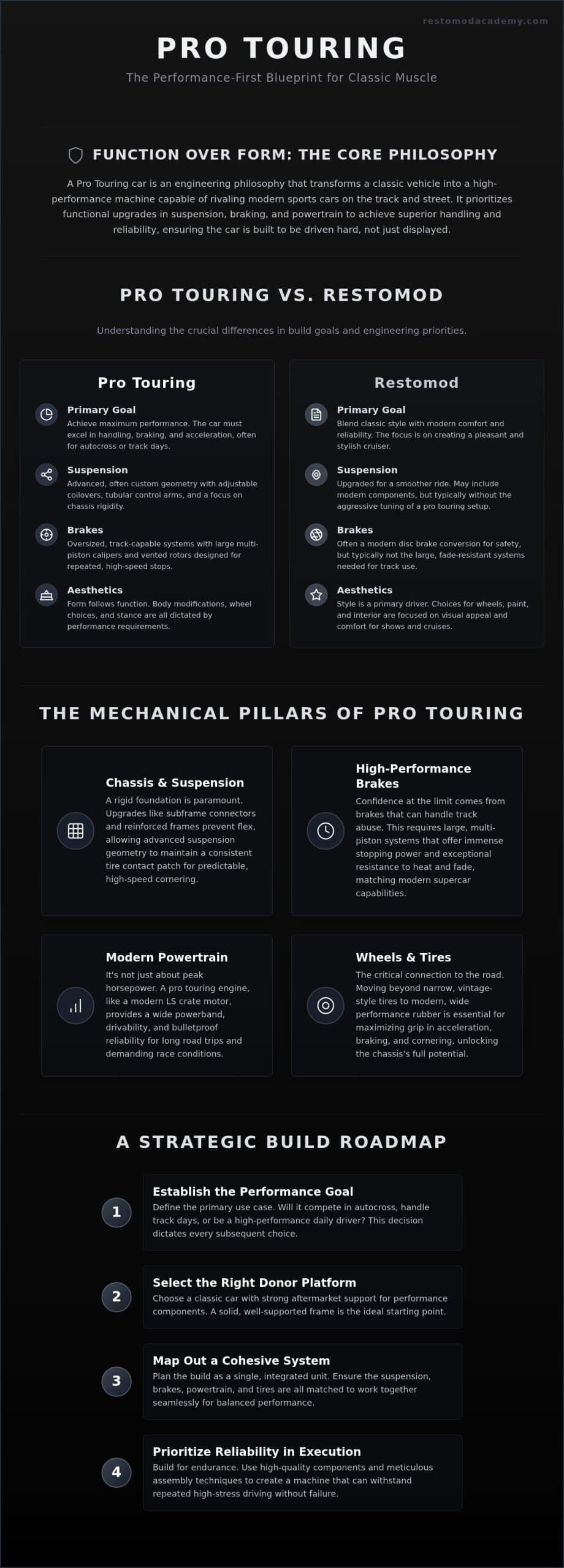
You’ll often see sales listings that label every upgraded classic as either a restomod or a pro touring car. This creates a significant amount of confusion for builders who are just starting their journey. While all pro touring cars are technically restomods, the reverse isn’t true. The performance gap is a deliberate technical threshold that separates a weekend cruiser from a track-slaying machine. If your goal is to win an autocross event, you need to understand where the aesthetic ends and the engineering begins.
The Aesthetic Priorities
Restomods frequently prioritize modern luxury and visual impact. Think of these as high-end grand tourers designed for comfort and style. They feature digital dashes, premium leather, and extensive sound deadening to make the driving experience as smooth as possible. You can find inspiration for these builds in our guide on restomod interior ideas. In contrast, pro touring builds often move toward race-inspired cabins. You’ll see bolstered seats for lateral support, simplified switchgear, and even integrated roll cages. The weight saved by stripping back non-essential luxury is reinvested into the car’s mechanical capabilities.
The Driven Mentality
The ‘pro’ in pro touring cars stands for professional-level performance capabilities. It implies a vehicle that can compete on track while maintaining the durability to survive a 3,000-mile road tour. This is the ultimate test of your build’s reliability. A true pro touring machine isn’t just about a low stance; it’s about how that stance behaves at 100 mph. When you’re at a show, look for these specific indicators of a performance-first build:
- Functional aerodynamic enhancements like front splitters and rear spoilers.
- Aggressive wheel fitment that maximizes the tire contact patch for grip.
- Visible cooling solutions for brakes and power steering systems.
- A stance that prioritizes suspension travel over just looking “slammed.”
Choosing your path comes down to your primary driving goals. If you want a comfortable cruiser that looks the part, a restomod is your best bet. However, if you crave the thrill of the apex and the precision of a modern chassis, commit to the pro touring standard. Every modification must earn its place through improved lap times or road manners. Don’t build a car that’s all show and no go; build a machine that commands respect on the street and the circuit alike.
Planning Your Pro Touring Build: From Donor Car to First Lap
Planning is the most critical phase of your journey. You shouldn’t start a project of this magnitude without a comprehensive technical blueprint. Every decision you make now affects how the car behaves when you’re clipping an apex at high speed. Building pro touring cars requires a systems-based approach where the engine, suspension, and brakes work in total harmony. Map out your path before you ever touch a wrench to avoid the costly mistake of buying parts that don’t play well together.
Selecting the Right Platform
Your choice of donor car sets the ceiling for your project’s performance and budget. While you can technically build anything, five platforms dominate the scene because of their massive aftermarket support. These include the 1967-1969 Camaro, the 1964-1970 Mustang, the 1964-1972 Chevelle, the 1968-1974 Nova, and the 1970-1973 Firebird. Starting with a rust-free survivor typically costs between $8,000 and $25,000. While this is a higher entry price than a “basket case,” it saves you thousands in labor and sheet metal replacement. A solid foundation allows you to focus your resources on performance engineering rather than structural repair.
Budgeting for Performance
Adopt a “buy once, cry once” philosophy when it comes to your mechanical pillars. Professional builds can reach $250,000 to $350,000, but a dedicated DIY builder can achieve impressive results for much less if they provide the labor. Allocate at least 40% of your budget to the suspension and braking systems. A high-end, complete chassis for a build can cost between $20,000 and $35,000, while a modern LS or Coyote crate engine package ranges from $15,000 to $35,000. Don’t settle for inferior components that you’ll only end up replacing later. If you’re ready to begin the heart of your project, follow our definitive guide to an ls engine swap to ensure your drivetrain is as reliable as it is powerful.
Your build isn’t finished when the engine first fires up. The final 10% of your car’s performance is found during the testing and tuning phase. You’ll need to spend time on the track or a skid pad to adjust your shock damping, fine-tune your alignment settings, and verify your brake bias. This methodical process is what separates a collection of expensive parts from a precision driving instrument. For a list of vetted components that have been proven in competition, check our recommended gear list to see what the pros are using. Stay patient and stay focused on the details; the reward of a perfectly balanced machine is worth every hour in the shop.
Mastering the Art of the High-Performance Build
Transitioning from a passive admirer at a car show to an active creator in your own garage is the most rewarding part of the automotive hobby. It’s the moment when you stop asking “what if” and start turning bolts. Building pro touring cars is a long-term commitment that requires a blend of mechanical skill and creative vision. While the technical hurdles can feel daunting, you don’t have to tackle them alone. With the right educational framework, you can transform that intimidating pile of parts into a track-slaying machine that reflects your personal standards for quality and safety.
The Ultimate Restomod Guide
Our curriculum is designed to bridge the gap between vintage aesthetics and modern precision. Through The Ultimate Restomod Guide, we break down complex suspension geometry and electrical integration into achievable, logical steps. We prioritize reliability and safety above all else, ensuring that your high-performance build is as stable at triple-digit speeds as it is at a stoplight. For those looking for a shortcut to professional results, our Premium Project Blueprints provide model-specific technical data that eliminates the guesswork from your assembly process. This structured approach allows you to focus on the craftsmanship of the build rather than the frustration of trial and error.
Consulting and Community Support
Even the most experienced builders encounter specific mechanical hurdles that require a second set of eyes. This is where our Restomod Consulting Services become an invaluable asset to your project. Whether you’re struggling with brake bias settings or drivetrain alignment, having a seasoned mentor to offer direct guidance can save you months of wasted effort and thousands in potential mistakes. Beyond consulting, the value of a like-minded community cannot be overstated. Share your progress, learn from the successes of your peers, and embrace the camaraderie of the DIY world.
Your journey into the world of pro touring cars is about more than just the finished product; it’s about the skills you gain and the precision you achieve along the way. If you’re ready to move past the planning phase and start making real progress, join the academy today. Let’s work together to build something that honors the past while dominating the future. Check our product reviews for insights on the latest tools and components to help you cross the finish line with confidence.
Take the Wheel of Your High-Performance Future
You’ve explored the evolution of the G-machine and the technical pillars that separate track weapons from simple cruisers. You now understand that a successful project requires a meticulous balance of modern geometry and vintage aesthetics. Building pro touring cars isn’t just about the parts you buy; it’s about the engineering secrets and planning strategies you apply in the workshop. By focusing on chassis rigidity and drivetrain reliability early on, you ensure your classic handles with the poise of a contemporary supercar.
You don’t have to navigate these complex mechanical systems on your own. Through the expert mentorship of Brook Walsh and our authoritative guides on modernizing classics, you can access the same technical frameworks used by the pros. Our Premium Project Blueprints provide the specific roadmap needed to avoid costly mistakes and achieve precision results.
Unlock the secrets to your build with The Ultimate Restomod Guide
The journey from a donor car to the first lap is a long one, but every hour spent in the shop brings you closer to a machine that is uniquely yours. Stay patient, trust the process, and take pride in the labor of your own hands. The road is open, and your masterpiece is waiting to be built.
Frequently Asked Questions
What makes a car pro touring instead of just a restomod?
The primary distinction is a focus on track performance and lateral acceleration over pure aesthetics. While restomods often prioritize cruising comfort and modern luxury, pro touring cars must be capable of competing in autocross or road course events. This means every modification is vetted for its ability to improve lap times or stopping distances. It’s an engineering standard that demands the vehicle out-handle and out-brake modern sports cars.
Can any classic car be turned into a pro touring machine?
Technically any classic can be modified, but platforms with extensive aftermarket support like the Camaro or Mustang are much easier to build. Vehicles with a full frame or a widely supported unibody structure allow for easier integration of modern suspension geometry. If you choose a rare or obscure model, you’ll likely face significant custom fabrication costs to achieve the necessary chassis rigidity and performance thresholds required for this style of build.
How much does it typically cost to build a pro touring car?
A professional build typically ranges from $250,000 to $350,000, not including the cost of the donor car. If you’re a skilled DIY builder performing most of the labor, an entry-level project can start around $30,000. Keep in mind that high-end components like a complete performance chassis can cost up to $35,000. Modern engine and transmission packages often add another $15,000 to $35,000 to your total investment.
Is a pro touring car comfortable enough for daily driving?
Modern amenities like air conditioning, fuel injection, and overdrive transmissions make these cars remarkably drivable on the street. Builders often balance track capability with street manners by using adjustable coilovers that can be softened for long road tours. While the suspension is firmer than a factory restoration, the increased reliability of modern electronics ensures you can drive to a show three states away without the constant fear of a mechanical breakdown.
Do I need a roll cage for a pro touring build?
A roll cage isn’t strictly required for street use, but it’s a vital safety component for cars that see frequent track time. Many builders opt for a roll bar to increase chassis rigidity without sacrificing too much interior accessibility. If you plan to compete, check the 2026 Goodguys regulations. For example, the Forgeline Street Machine class has a minimum weight of 3,200 lbs, and specific safety equipment is required based on your class.
What are the best tires for a pro touring car that sees track time?
High-performance summer tires with a 200-treadwear rating are the standard for pro touring cars that balance street and track use. Tires like the Michelin Pilot Sport 4S or the BFGoodrich g-Force Rival S offer the necessary grip for autocross while remaining safe for highway driving. Maximizing your contact patch is essential, so many builders move to 18-inch wheels to accommodate wider tires and larger brake calipers for better heat dissipation.
Can I build a pro touring car on a budget?
You can build a capable machine on a budget by prioritizing functional mechanical upgrades over expensive cosmetic finishes. Focus your initial investment on a solid suspension kit, better brakes, and a reliable overdrive transmission rather than a $40,000 paint job. By performing the assembly yourself and sourcing quality components where they matter most, you can create a high-performance classic that competes with much more expensive builds on the track.
Why is the LS engine so popular in the pro touring community?
The LS engine is favored for its exceptional power-to-weight ratio, compact size, and vast aftermarket support. These engines are easy to package in vintage engine bays and offer modern fuel-injected reliability that classic carburetors can’t match. A standard LS3 crate engine provides 430 to 525 horsepower right out of the box. This makes it a foundational resource for builders who want consistent performance without the maintenance headaches of older small-block designs.
What if your 1969 Camaro could out-brake and out-corner a modern supercar while still turning heads at the local cruise-in? It’s a bold ambition, but it’s the core philosophy behind the most impressive pro touring cars on the road today. You likely appreciate the timeless lines of vintage iron, yet you’re tired of the vague steering and drum brakes that make every spirited drive feel like a gamble. You want a machine that respects its heritage but demands respect on the autocross track.
I understand the hesitation. It’s easy to get lost in complex suspension geometry or feel overwhelmed by the $30,000 price tag of a high-end chassis. This guide is your roadmap to building a functional, high-performance masterpiece without the typical “all show and no go” pitfalls. We’ll explore the engineering secrets and build strategies required to master these machines. From selecting the right LS crate engine to balancing modern reliability with classic aesthetics, you’ll gain the clarity needed to plan a build that performs as beautifully as it looks. Let’s get to work on turning that vintage metal into a precision instrument.
Key Takeaways
- Learn the performance-first philosophy that transforms classic muscle into track-ready machines by prioritizing functional engineering over simple aesthetics.
- Identify the essential mechanical pillars, including advanced suspension geometry and high-performance braking systems, that define modern pro touring cars.
- Differentiate between a standard restomod and a performance-focused build to ensure your project’s final outcome matches your specific driving goals and budget.
- Develop a strategic roadmap for your build by selecting the right donor platform and mapping out your technical specs before you’ve even picked up a wrench.
- Leverage The Ultimate Restomod Guide to bridge the gap between vintage style and modern reliability using proven, step-by-step technical frameworks.
Defining the Pro Touring Standard: Philosophy and History
To truly understand the DNA of pro touring cars, you have to look past the shiny paint and custom wheels. This movement isn’t just about aesthetics; it’s an engineering philosophy that demands vintage muscle perform with the same agility as a modern track car. While a standard restoration focuses on preserving the past, pro touring focuses on perfecting it for the road ahead. You’re building a machine that can handle high-speed corners and emergency stops with the poise of a contemporary sports car. It’s a commitment to precision that transforms a classic silhouette into a legitimate performance weapon.
The term itself gained traction in the early 1990s when builders began pushing classic platforms into the grueling One Lap of America event. To get a deeper technical background on this evolution, you can explore the foundational definition of What is Pro Touring in the broader automotive landscape. This era marked a shift from cars that only looked fast to cars that could actually survive a thousand mile road trip and a weekend of competitive racing without mechanical failure.
To better understand the distinction between different build styles, watch this helpful video:
The Origins of the Movement
The spark for this revolution came from the collaboration between Mark Stielow and Jeff Smith. Their work on early pro touring cars, specifically Stielow’s 1969 Camaro known as the ‘Tri-Tip,’ proved that a classic could compete in modern endurance events. Before this, the hobby was largely obsessed with drag racing and straight-line speed. However, as car magazines began highlighting autocross and road course performance, the focus shifted toward suspension geometry and braking efficiency. This was the birth of the ‘G-Machine’ era. It was a time when lateral acceleration and stopping distances became the new gold standard for enthusiasts who wanted more than just a shiny trophy.
Function Over Form: The Pro Touring Mindset
In the world of high-performance builds, function always dictates form. A true pro touring machine is never a ‘trailer queen’ meant only for indoor shows. It’s a vehicle built to be driven hard and driven often. This philosophy requires a level of reliability that matches modern daily drivers. While you might be tempted to prioritize a plush interior, remember that what is a restomod often differs from pro touring by favoring comfort over track capability. A pro touring build prioritizes the sensory feedback of a tight steering rack and the confidence of a firm brake pedal. It’s about the pride of knowing your vintage machine can hold its own on any modern circuit, delivering a raw and mechanical experience that modern cars simply can’t replicate.
The Mechanical Pillars: Engineering for the Track and Street
Building a car that excels on both the interstate and the autocross course requires more than just a high horsepower rating. You need a cohesive system where every component communicates with the next. In the world of pro touring cars, the goal is to eliminate the flex and unpredictability inherent in fifty-year-old designs. This means moving beyond the limitations of factory leaf springs and narrow tires toward a setup that manages weight transfer and maintains a consistent contact patch through every turn. It’s a meticulous process of upgrading the skeleton of your machine before you ever think about the skin.
Success in this arena depends on your understanding of Pro Touring engineering and how modern geometry can be adapted to vintage frames. You aren’t just bolting on parts; you’re re-engineering the vehicle’s behavior. This involves a careful balance of unsprung weight and damping rates to ensure the car stays planted when the pavement gets rough. It’s about creating a machine that inspires confidence at the limit.
Suspension and Chassis Rigidity
The foundation of any high-performance build is a rigid chassis. Without it, your expensive suspension components are simply trying to compensate for a twisting frame. Start by installing subframe connectors to tie the front and rear of the car together. For those aiming for serious track time, a well-designed roll cage adds another layer of structural integrity while keeping you safe. For managing cornering forces, modern coilovers offer the precise adjustment you need for ride height and damping. While air ride systems have come a long way in terms of performance, dedicated coilovers remain the standard for those who prioritize lap times over show-floor versatility. These upgrades ensure that your suspension geometry remains stable under heavy lateral loads.
Modern Power and Braking Systems
Once your chassis can handle the stress, you need a drivetrain that provides relentless power without sacrificing street manners. The LS engine swap has become the gold standard for pro touring cars because of its incredible power-to-weight ratio and compact dimensions. It offers the reliability of a modern fuel-injected system with the potential for massive naturally aspirated or forced induction gains. If you’re planning this transition, our definitive guide to an ls engine swap provides the technical roadmap you need to get it right the first time.
Stopping that power is just as critical as creating it. A high-performance build is incomplete without a big brake kit and a hydroboost system to provide consistent pedal feel. You must also consider your brake pad compounds. Street pads offer quiet operation and low dust, but track-focused pads are essential for resisting fade during repeated high-speed stops. If you’re looking for the right components to round out your build, check out our recommended gear for parts that have been proven in real-world performance scenarios.
Pro Touring vs Restomod: Understanding the Performance Gap
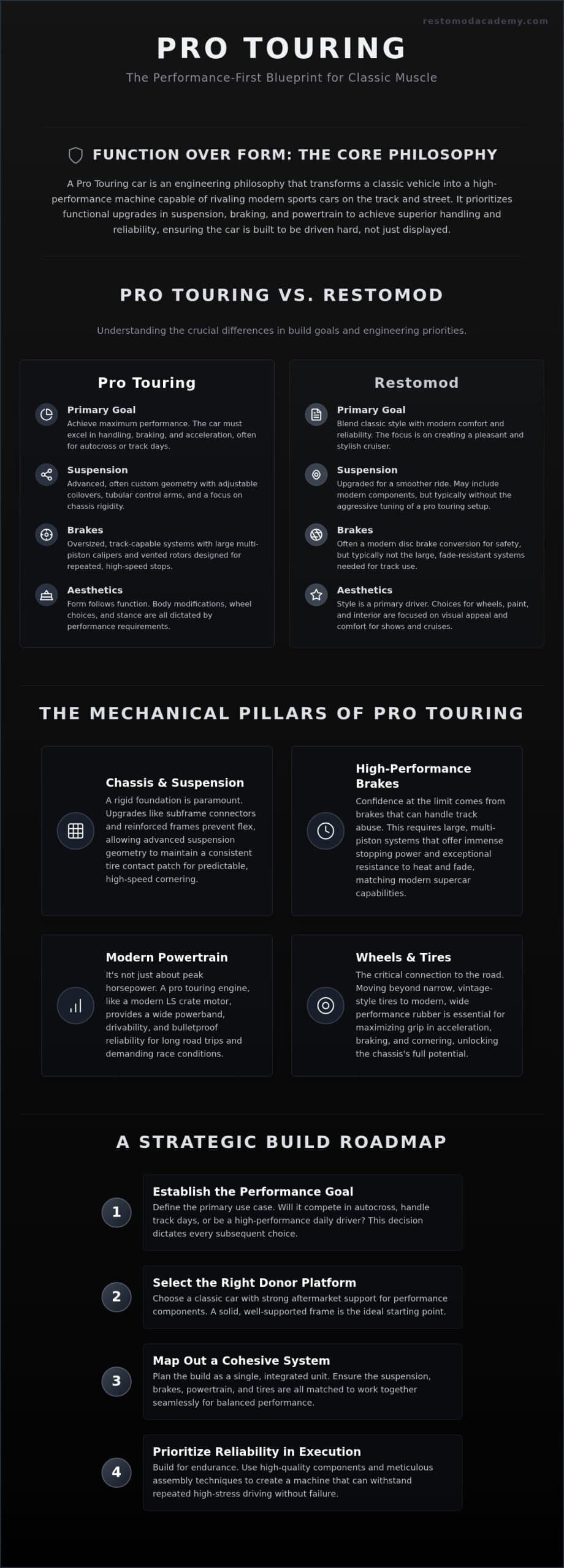
You’ll often see sales listings that label every upgraded classic as either a restomod or a pro touring car. This creates a significant amount of confusion for builders who are just starting their journey. While all pro touring cars are technically restomods, the reverse isn’t true. The performance gap is a deliberate technical threshold that separates a weekend cruiser from a track-slaying machine. If your goal is to win an autocross event, you need to understand where the aesthetic ends and the engineering begins.
The Aesthetic Priorities
Restomods frequently prioritize modern luxury and visual impact. Think of these as high-end grand tourers designed for comfort and style. They feature digital dashes, premium leather, and extensive sound deadening to make the driving experience as smooth as possible. You can find inspiration for these builds in our guide on restomod interior ideas. In contrast, pro touring builds often move toward race-inspired cabins. You’ll see bolstered seats for lateral support, simplified switchgear, and even integrated roll cages. The weight saved by stripping back non-essential luxury is reinvested into the car’s mechanical capabilities.
The Driven Mentality
The ‘pro’ in pro touring cars stands for professional-level performance capabilities. It implies a vehicle that can compete on track while maintaining the durability to survive a 3,000-mile road tour. This is the ultimate test of your build’s reliability. A true pro touring machine isn’t just about a low stance; it’s about how that stance behaves at 100 mph. When you’re at a show, look for these specific indicators of a performance-first build:
- Functional aerodynamic enhancements like front splitters and rear spoilers.
- Aggressive wheel fitment that maximizes the tire contact patch for grip.
- Visible cooling solutions for brakes and power steering systems.
- A stance that prioritizes suspension travel over just looking “slammed.”
Choosing your path comes down to your primary driving goals. If you want a comfortable cruiser that looks the part, a restomod is your best bet. However, if you crave the thrill of the apex and the precision of a modern chassis, commit to the pro touring standard. Every modification must earn its place through improved lap times or road manners. Don’t build a car that’s all show and no go; build a machine that commands respect on the street and the circuit alike.
Planning Your Pro Touring Build: From Donor Car to First Lap
Planning is the most critical phase of your journey. You shouldn’t start a project of this magnitude without a comprehensive technical blueprint. Every decision you make now affects how the car behaves when you’re clipping an apex at high speed. Building pro touring cars requires a systems-based approach where the engine, suspension, and brakes work in total harmony. Map out your path before you ever touch a wrench to avoid the costly mistake of buying parts that don’t play well together.
Selecting the Right Platform
Your choice of donor car sets the ceiling for your project’s performance and budget. While you can technically build anything, five platforms dominate the scene because of their massive aftermarket support. These include the 1967-1969 Camaro, the 1964-1970 Mustang, the 1964-1972 Chevelle, the 1968-1974 Nova, and the 1970-1973 Firebird. Starting with a rust-free survivor typically costs between $8,000 and $25,000. While this is a higher entry price than a “basket case,” it saves you thousands in labor and sheet metal replacement. A solid foundation allows you to focus your resources on performance engineering rather than structural repair.
Budgeting for Performance
Adopt a “buy once, cry once” philosophy when it comes to your mechanical pillars. Professional builds can reach $250,000 to $350,000, but a dedicated DIY builder can achieve impressive results for much less if they provide the labor. Allocate at least 40% of your budget to the suspension and braking systems. A high-end, complete chassis for a build can cost between $20,000 and $35,000, while a modern LS or Coyote crate engine package ranges from $15,000 to $35,000. Don’t settle for inferior components that you’ll only end up replacing later. If you’re ready to begin the heart of your project, follow our definitive guide to an ls engine swap to ensure your drivetrain is as reliable as it is powerful.
Your build isn’t finished when the engine first fires up. The final 10% of your car’s performance is found during the testing and tuning phase. You’ll need to spend time on the track or a skid pad to adjust your shock damping, fine-tune your alignment settings, and verify your brake bias. This methodical process is what separates a collection of expensive parts from a precision driving instrument. For a list of vetted components that have been proven in competition, check our recommended gear list to see what the pros are using. Stay patient and stay focused on the details; the reward of a perfectly balanced machine is worth every hour in the shop.
Mastering the Art of the High-Performance Build
Transitioning from a passive admirer at a car show to an active creator in your own garage is the most rewarding part of the automotive hobby. It’s the moment when you stop asking “what if” and start turning bolts. Building pro touring cars is a long-term commitment that requires a blend of mechanical skill and creative vision. While the technical hurdles can feel daunting, you don’t have to tackle them alone. With the right educational framework, you can transform that intimidating pile of parts into a track-slaying machine that reflects your personal standards for quality and safety.
The Ultimate Restomod Guide
Our curriculum is designed to bridge the gap between vintage aesthetics and modern precision. Through The Ultimate Restomod Guide, we break down complex suspension geometry and electrical integration into achievable, logical steps. We prioritize reliability and safety above all else, ensuring that your high-performance build is as stable at triple-digit speeds as it is at a stoplight. For those looking for a shortcut to professional results, our Premium Project Blueprints provide model-specific technical data that eliminates the guesswork from your assembly process. This structured approach allows you to focus on the craftsmanship of the build rather than the frustration of trial and error.
Consulting and Community Support
Even the most experienced builders encounter specific mechanical hurdles that require a second set of eyes. This is where our Restomod Consulting Services become an invaluable asset to your project. Whether you’re struggling with brake bias settings or drivetrain alignment, having a seasoned mentor to offer direct guidance can save you months of wasted effort and thousands in potential mistakes. Beyond consulting, the value of a like-minded community cannot be overstated. Share your progress, learn from the successes of your peers, and embrace the camaraderie of the DIY world.
Your journey into the world of pro touring cars is about more than just the finished product; it’s about the skills you gain and the precision you achieve along the way. If you’re ready to move past the planning phase and start making real progress, join the academy today. Let’s work together to build something that honors the past while dominating the future. Check our product reviews for insights on the latest tools and components to help you cross the finish line with confidence.
Take the Wheel of Your High-Performance Future
You’ve explored the evolution of the G-machine and the technical pillars that separate track weapons from simple cruisers. You now understand that a successful project requires a meticulous balance of modern geometry and vintage aesthetics. Building pro touring cars isn’t just about the parts you buy; it’s about the engineering secrets and planning strategies you apply in the workshop. By focusing on chassis rigidity and drivetrain reliability early on, you ensure your classic handles with the poise of a contemporary supercar.
You don’t have to navigate these complex mechanical systems on your own. Through the expert mentorship of Brook Walsh and our authoritative guides on modernizing classics, you can access the same technical frameworks used by the pros. Our Premium Project Blueprints provide the specific roadmap needed to avoid costly mistakes and achieve precision results.
Unlock the secrets to your build with The Ultimate Restomod Guide
The journey from a donor car to the first lap is a long one, but every hour spent in the shop brings you closer to a machine that is uniquely yours. Stay patient, trust the process, and take pride in the labor of your own hands. The road is open, and your masterpiece is waiting to be built.
Frequently Asked Questions
What makes a car pro touring instead of just a restomod?
The primary distinction is a focus on track performance and lateral acceleration over pure aesthetics. While restomods often prioritize cruising comfort and modern luxury, pro touring cars must be capable of competing in autocross or road course events. This means every modification is vetted for its ability to improve lap times or stopping distances. It’s an engineering standard that demands the vehicle out-handle and out-brake modern sports cars.
Can any classic car be turned into a pro touring machine?
Technically any classic can be modified, but platforms with extensive aftermarket support like the Camaro or Mustang are much easier to build. Vehicles with a full frame or a widely supported unibody structure allow for easier integration of modern suspension geometry. If you choose a rare or obscure model, you’ll likely face significant custom fabrication costs to achieve the necessary chassis rigidity and performance thresholds required for this style of build.
How much does it typically cost to build a pro touring car?
A professional build typically ranges from $250,000 to $350,000, not including the cost of the donor car. If you’re a skilled DIY builder performing most of the labor, an entry-level project can start around $30,000. Keep in mind that high-end components like a complete performance chassis can cost up to $35,000. Modern engine and transmission packages often add another $15,000 to $35,000 to your total investment.
Is a pro touring car comfortable enough for daily driving?
Modern amenities like air conditioning, fuel injection, and overdrive transmissions make these cars remarkably drivable on the street. Builders often balance track capability with street manners by using adjustable coilovers that can be softened for long road tours. While the suspension is firmer than a factory restoration, the increased reliability of modern electronics ensures you can drive to a show three states away without the constant fear of a mechanical breakdown.
Do I need a roll cage for a pro touring build?
A roll cage isn’t strictly required for street use, but it’s a vital safety component for cars that see frequent track time. Many builders opt for a roll bar to increase chassis rigidity without sacrificing too much interior accessibility. If you plan to compete, check the 2026 Goodguys regulations. For example, the Forgeline Street Machine class has a minimum weight of 3,200 lbs, and specific safety equipment is required based on your class.
What are the best tires for a pro touring car that sees track time?
High-performance summer tires with a 200-treadwear rating are the standard for pro touring cars that balance street and track use. Tires like the Michelin Pilot Sport 4S or the BFGoodrich g-Force Rival S offer the necessary grip for autocross while remaining safe for highway driving. Maximizing your contact patch is essential, so many builders move to 18-inch wheels to accommodate wider tires and larger brake calipers for better heat dissipation.
Can I build a pro touring car on a budget?
You can build a capable machine on a budget by prioritizing functional mechanical upgrades over expensive cosmetic finishes. Focus your initial investment on a solid suspension kit, better brakes, and a reliable overdrive transmission rather than a $40,000 paint job. By performing the assembly yourself and sourcing quality components where they matter most, you can create a high-performance classic that competes with much more expensive builds on the track.
Why is the LS engine so popular in the pro touring community?
The LS engine is favored for its exceptional power-to-weight ratio, compact size, and vast aftermarket support. These engines are easy to package in vintage engine bays and offer modern fuel-injected reliability that classic carburetors can’t match. A standard LS3 crate engine provides 430 to 525 horsepower right out of the box. This makes it a foundational resource for builders who want consistent performance without the maintenance headaches of older small-block designs.