
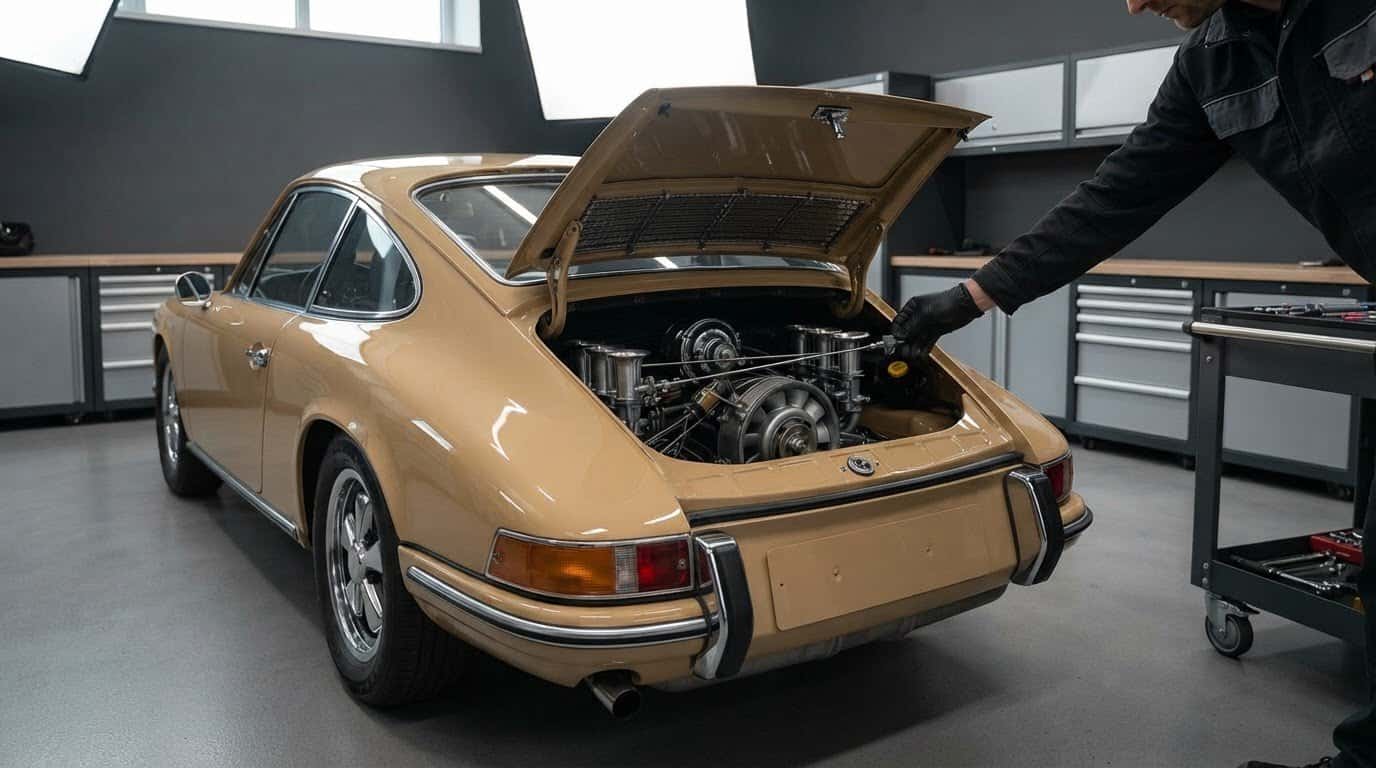
The strongest flat-six build starts with the car, not the engine. Porsche introduced the 912 in 1965 as a four-cylinder version of the 911 and discontinued it in 1969. The classic Porsche 912’s restomod potential depends on whether its condition, specification, and service history can support the conversion you have in mind.
A 911-derived flat-six can bring a different character to the 912, while the original shape and compact proportions keep the build rooted in its heritage. The appeal is clear, but a promising project needs more than an exciting engine plan.
Assess the conversion alongside the body and chassis condition, existing specification, and service records. These factors shape the scope of a build and help you approach the project with enthusiasm and a practical understanding of what the car needs.
Key Takeaways
- Assess the flat-six conversion as a complete drivetrain project, with the engine choice guiding the supporting setup.
- Prioritize structural condition when weighing a candidate car; body and chassis work can shape the project as much as the powertrain.
- Decide how closely to preserve the 912’s original character by setting clear goals for its exterior and interior specification.
- Use service records to understand the car’s maintenance history and identify where the build plan needs closer attention.
911-Derived flat-six engine conversion
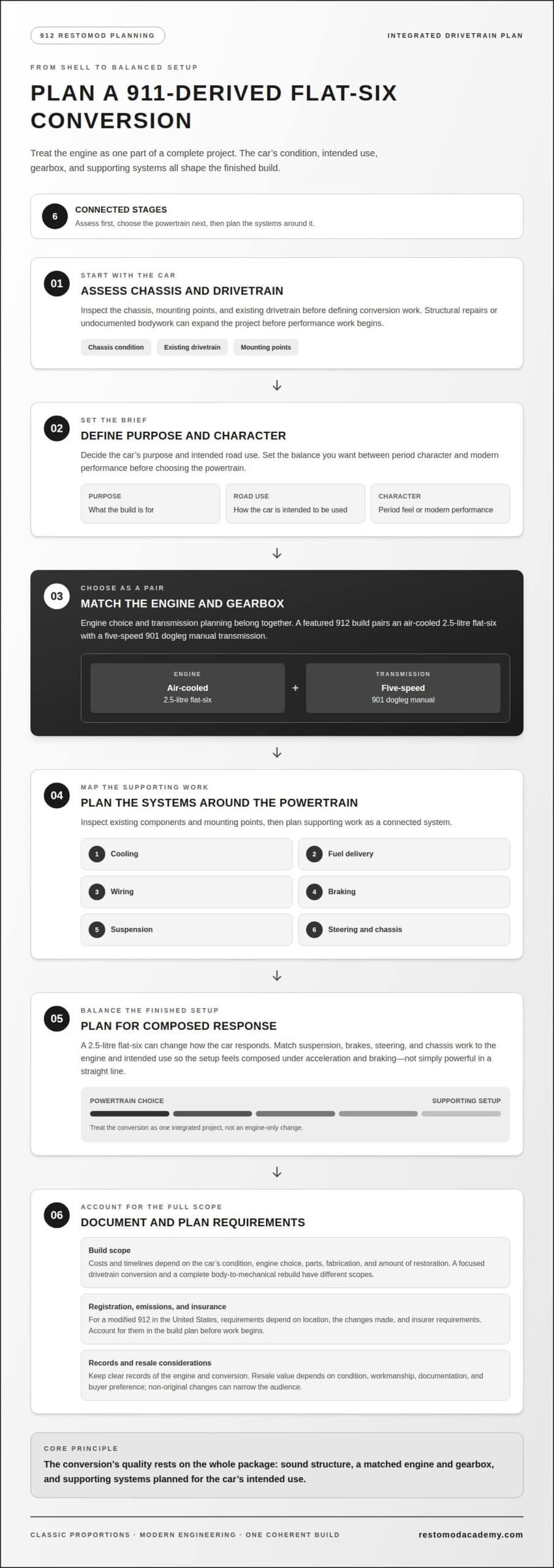
A 911-derived flat-six can give a 912 a broader, more forceful character, but the engine is only one part of the conversion. A featured Porsche 912 build pairs an air-cooled 2.5-litre flat-six with a five-speed 901 dogleg manual transmission. That combination shows why engine choice and transmission planning belong together. Before selecting a powertrain, define the car’s purpose, intended road use, and desired balance between period character and modern performance. A restomod approach helps frame those choices as one integrated project.
Compared with a Porsche 911, the 912 shares the classic shape and related engineering lineage, while its original four-cylinder configuration gives a flat-six conversion a distinct starting point. A 911 can offer a more direct factory reference for a six-cylinder build; the 912’s appeal lies in shaping that character around a lighter, four-cylinder-origin platform. The classic Porsche 912’s restomod potential rests on the quality of the whole package, not the engine badge alone.
Plan the conversion in stages. First, assess the chassis and existing drivetrain. Next, establish the engine and gearbox combination, then map the supporting work needed for cooling, fuel delivery, wiring, braking, and suspension. A 2.5-litre flat-six can change how the car responds, so the finished setup should feel composed under acceleration and braking, not simply powerful in a straight line.
Registration, emissions compliance, and insurance for a modified Porsche 912 in the United States depend on the car’s location, the changes made, and insurer requirements. Keep clear records of the engine and conversion, and account for those requirements in the build plan before work begins.
Build costs and timelines depend on the car’s condition, engine choice, parts, fabrication, and the amount of restoration involved. A focused drivetrain conversion and a complete body-to-mechanical rebuild have different scopes, so define the work before estimating either.
Match suspension, brakes, steering, and chassis work to the engine and intended use. Inspect existing components and mounting points, then plan upgrades as a balanced system. Resale value depends on condition, workmanship, documentation, and buyer preference. Non-original changes can narrow the audience, while incomplete records or poorly integrated modifications add risk.
Condition issues
Start with the structure, because fresh paint can conceal repairs. Inspect the floors, inner and outer sills, wheel wells, suspension mounting areas, and battery compartment for corrosion, patchwork, or distortion. Check door gaps and panel alignment from several angles, since uneven gaps can point to past impact or body movement. Look beneath carpets and trim where practical, and compare visible repairs with the car’s restoration records.
The odometer indicates 78,146 miles, but that mileage is not warranted. Treat it as a reading, not proof of total distance traveled. Compare the dashboard, pedals, seats, and steering wheel for consistent wear, then note any mismatch for follow-up. A single reading cannot establish the car’s history, so give documented work and physical evidence more weight than appearance alone.
Use a deliberate inspection sequence before defining the build:
- Record rust, accident repairs, panel replacements, and signs of structural movement.
- Check suspension attachment points and chassis areas for cracks, corrosion, or improvised repairs.
- Inspect the engine bay, wiring, fuel lines, and visible oil leaks, even if the drivetrain will change.
- Test doors, windows, lights, instruments, and switches to identify restoration tasks beyond the body.
- Match invoices and photographs to the work visible on the car, noting gaps in the records.
Separate essential repairs from chosen modifications. A structurally sound shell may suit a focused conversion, while corrosion or undocumented bodywork can expand the project before performance work begins. Record each finding with its location, evidence, and priority. This gives the build a clear order and helps prevent cosmetic decisions from obscuring foundational work.
For a measured project plan, use restomod planning guidance to organize inspection findings into a coherent scope before committing to modifications.
Exterior and interior specification
Choose exterior and cabin details as one design, not separate afterthoughts. A 912’s wheels, bodywork, upholstery, and safety equipment establish its visual character.
Exterior Specification
Start with body shape, paint, panel fit, and wheel choice. The KAMM 912c full-carbon-body specification was introduced in 2024, while its setup uses 17-inch, three-piece center-lock wheels. The Kamm Porsche 912T is available with 15-inch alloy wheels, and another Porsche 912 specification uses 15-inch Fuchs alloy wheels. These examples show how a restomod can preserve classic proportions while changing materials or stance.
Inspect replacement panels and doors against the car’s overall finish. A Porsche 912 restoration included replacement body panels and doors, making alignment and paint consistency key details to assess. Decide whether the build should retain familiar metalwork and period cues or adopt a more contemporary carbon-fiber direction. Record wheel size and body changes in the specification so each choice supports the intended look.
Interior Specification
Set the cabin around material, color, seating, and controls. One restored Porsche 912 paired a tan leather interior with brown three-point seat belts. That example demonstrates how a practical safety detail can also complement the upholstery. Choose colors and textures together, then consider how new trim will sit beside the dashboard, door cards, and visible metalwork.
Preserve the cabin’s tactile character where it matters to you. For example, keep the original visual layout while renewing worn upholstery, or coordinate revised materials with a more modern build theme. Document seat belts, seat trim, and other changed details. Consistent choices help the interior feel deliberate rather than assembled from unrelated upgrades.
Before approving the specification, compare exterior and cabin samples under the same lighting. Check whether the selected wheel design suits the body treatment, and whether interior colors echo the exterior palette. A clear record of paint, panels, wheels, upholstery, and belts helps keep restoration decisions aligned through the project. That cohesion gives a modified 912 a distinct identity without losing the design cues that make it recognizable.
Maintenance and service records
Read service records as a timeline, not a stack of receipts. A Porsche 912 received a minor service in January 2024 at an indicated 76,652 miles. In February 2025, it had an annual service at 77,271 miles. In May 2025, maintenance at 77,455 miles included replacing the oil cooler and lower valve covers. Those entries show recorded work and odometer readings at specific points, not the car’s entire mechanical history.
Compare each invoice’s date and mileage with the work described. The recorded readings rise from 76,652 to 77,455 miles across these three entries. That sequence helps establish when the documented services occurred. The May 2025 oil cooler replacement also gives the build plan a concrete component to track. Keep the invoice with the project file, then record subsequent work against the same component and mileage history.
- Sort invoices by date, then note each recorded odometer reading.
- Separate routine service from component replacements, such as the oil cooler and lower valve covers.
- Match each invoice to the car and the work it describes.
- List unanswered maintenance needs separately from completed repairs.
Use the record trail to plan the order of work. A service entry documents that service, but it doesn’t establish the condition of every system. A replacement part records a specific repair, not the performance of the whole engine. For a flat-six conversion, preserve the original service documents alongside conversion records. This helps distinguish inherited maintenance history from work completed during the restomod.
Build a clear project file with dated invoices, mileage readings, parts replaced, and work still required. If the records contain a long gap, mark where the documented history resumes rather than treating an undocumented period as completed maintenance. A consistent log gives future servicing a useful starting point and helps keep the project’s mechanical history intact.
Plan your 912 service-record review with Restomod Consulting Services to turn the documented history into a practical project sequence.
Restomod Academy
Restomod Academy helps you turn a 912 concept into a considered project plan. Once you’ve weighed the flat-six conversion against the car’s condition, specification, and service history, the next step is organizing those decisions into a coherent build direction.
The Ultimate Restomod Guide offers broad educational support, while Restomod Consulting Services can help you think through project-specific choices. Premium Project Blueprints provide another planning resource when you’re ready to map a build. These offerings support different stages, from developing your approach to working through the details of a defined project.
Bring your priorities into focus before committing to major modifications. Decide what you want to preserve, what you want to change, and how the finished 912 should feel on the road. That clarity makes each technical decision easier to evaluate against the character you want from the car.
Contact Restomod Academy to discuss your Porsche 912 restomod project.
Shape the Build Around Your Vision
A strong project begins with a clear definition of success. Decide whether your 912 should retain its original character, deliver a more purposeful driving experience, or balance both aims. Assess the classic Porsche 912 restomod potential you want to realize by defining what the finished car should feel like, rather than starting with a list of modifications.
Before committing to the next stage, write a short build brief. Describe the driving feel you want, the features you value, and the character you want to preserve. Use this brief to judge whether each new idea strengthens your plan and makes the classic Porsche 912 restomod potential meaningful for your goals. If priorities shift, revise the brief deliberately instead of adding changes one at a time.
Restomod Academy can help you turn that direction into a practical plan. Discuss your Porsche 912 project with Restomod Academy, and take the next step with purpose. A thoughtful build can honor the car’s heritage while making its future distinctly yours.
Frequently Asked Questions
What makes a classic Porsche 912 a good restomod candidate?
A 912 can suit a restomod because its classic Porsche character leaves room to tailor the driving experience while retaining the car’s recognizable identity. Its original four-cylinder layout also gives builders a clear starting point for deciding whether to preserve the existing character or pursue a different powertrain. The best candidate is one whose condition, history, and intended use align with the build’s scope.
What are common rust, mechanical, and parts-availability issues on classic Porsche 912s?
Rust, aging mechanical components, and the exact parts needed for a particular specification can all affect a 912 project. Don’t assume every car has the same problems: assess the individual shell and systems, then list repairs and required components before setting the build sequence. Parts planning depends on whether the project retains its original configuration or uses modified components, so identify needs by application rather than relying on a generic parts list.
Which suspension, brake, steering, and chassis upgrades are recommended for a Porsche 912?
Match suspension, brakes, steering, and chassis work to the engine and intended use. Inspect existing components and mounting points, then plan upgrades as a balanced system.
The strongest flat-six build starts with the car, not the engine. Porsche introduced the 912 in 1965 as a four-cylinder version of the 911 and discontinued it in 1969. The classic Porsche 912’s restomod potential depends on whether its condition, specification, and service history can support the conversion you have in mind.
A 911-derived flat-six can bring a different character to the 912, while the original shape and compact proportions keep the build rooted in its heritage. The appeal is clear, but a promising project needs more than an exciting engine plan.
Assess the conversion alongside the body and chassis condition, existing specification, and service records. These factors shape the scope of a build and help you approach the project with enthusiasm and a practical understanding of what the car needs.
Key Takeaways
- Assess the flat-six conversion as a complete drivetrain project, with the engine choice guiding the supporting setup.
- Prioritize structural condition when weighing a candidate car; body and chassis work can shape the project as much as the powertrain.
- Decide how closely to preserve the 912’s original character by setting clear goals for its exterior and interior specification.
- Use service records to understand the car’s maintenance history and identify where the build plan needs closer attention.
911-Derived flat-six engine conversion
A 911-derived flat-six can give a 912 a broader, more forceful character, but the engine is only one part of the conversion. A featured Porsche 912 build pairs an air-cooled 2.5-litre flat-six with a five-speed 901 dogleg manual transmission. That combination shows why engine choice and transmission planning belong together. Before selecting a powertrain, define the car’s purpose, intended road use, and desired balance between period character and modern performance. A restomod approach helps frame those choices as one integrated project.
Compared with a Porsche 911, the 912 shares the classic shape and related engineering lineage, while its original four-cylinder configuration gives a flat-six conversion a distinct starting point. A 911 can offer a more direct factory reference for a six-cylinder build; the 912’s appeal lies in shaping that character around a lighter, four-cylinder-origin platform. The classic Porsche 912’s restomod potential rests on the quality of the whole package, not the engine badge alone.
Plan the conversion in stages. First, assess the chassis and existing drivetrain. Next, establish the engine and gearbox combination, then map the supporting work needed for cooling, fuel delivery, wiring, braking, and suspension. A 2.5-litre flat-six can change how the car responds, so the finished setup should feel composed under acceleration and braking, not simply powerful in a straight line.
Registration, emissions compliance, and insurance for a modified Porsche 912 in the United States depend on the car’s location, the changes made, and insurer requirements. Keep clear records of the engine and conversion, and account for those requirements in the build plan before work begins.
Build costs and timelines depend on the car’s condition, engine choice, parts, fabrication, and the amount of restoration involved. A focused drivetrain conversion and a complete body-to-mechanical rebuild have different scopes, so define the work before estimating either.
Match suspension, brakes, steering, and chassis work to the engine and intended use. Inspect existing components and mounting points, then plan upgrades as a balanced system. Resale value depends on condition, workmanship, documentation, and buyer preference. Non-original changes can narrow the audience, while incomplete records or poorly integrated modifications add risk.
Condition issues
Start with the structure, because fresh paint can conceal repairs. Inspect the floors, inner and outer sills, wheel wells, suspension mounting areas, and battery compartment for corrosion, patchwork, or distortion. Check door gaps and panel alignment from several angles, since uneven gaps can point to past impact or body movement. Look beneath carpets and trim where practical, and compare visible repairs with the car’s restoration records.
The odometer indicates 78,146 miles, but that mileage is not warranted. Treat it as a reading, not proof of total distance traveled. Compare the dashboard, pedals, seats, and steering wheel for consistent wear, then note any mismatch for follow-up. A single reading cannot establish the car’s history, so give documented work and physical evidence more weight than appearance alone.
Use a deliberate inspection sequence before defining the build:
- Record rust, accident repairs, panel replacements, and signs of structural movement.
- Check suspension attachment points and chassis areas for cracks, corrosion, or improvised repairs.
- Inspect the engine bay, wiring, fuel lines, and visible oil leaks, even if the drivetrain will change.
- Test doors, windows, lights, instruments, and switches to identify restoration tasks beyond the body.
- Match invoices and photographs to the work visible on the car, noting gaps in the records.
Separate essential repairs from chosen modifications. A structurally sound shell may suit a focused conversion, while corrosion or undocumented bodywork can expand the project before performance work begins. Record each finding with its location, evidence, and priority. This gives the build a clear order and helps prevent cosmetic decisions from obscuring foundational work.
For a measured project plan, use restomod planning guidance to organize inspection findings into a coherent scope before committing to modifications.
Exterior and interior specification
Choose exterior and cabin details as one design, not separate afterthoughts. A 912’s wheels, bodywork, upholstery, and safety equipment establish its visual character.
Exterior Specification
Start with body shape, paint, panel fit, and wheel choice. The KAMM 912c full-carbon-body specification was introduced in 2024, while its setup uses 17-inch, three-piece center-lock wheels. The Kamm Porsche 912T is available with 15-inch alloy wheels, and another Porsche 912 specification uses 15-inch Fuchs alloy wheels. These examples show how a restomod can preserve classic proportions while changing materials or stance.
Inspect replacement panels and doors against the car’s overall finish. A Porsche 912 restoration included replacement body panels and doors, making alignment and paint consistency key details to assess. Decide whether the build should retain familiar metalwork and period cues or adopt a more contemporary carbon-fiber direction. Record wheel size and body changes in the specification so each choice supports the intended look.
Interior Specification
Set the cabin around material, color, seating, and controls. One restored Porsche 912 paired a tan leather interior with brown three-point seat belts. That example demonstrates how a practical safety detail can also complement the upholstery. Choose colors and textures together, then consider how new trim will sit beside the dashboard, door cards, and visible metalwork.
Preserve the cabin’s tactile character where it matters to you. For example, keep the original visual layout while renewing worn upholstery, or coordinate revised materials with a more modern build theme. Document seat belts, seat trim, and other changed details. Consistent choices help the interior feel deliberate rather than assembled from unrelated upgrades.
Before approving the specification, compare exterior and cabin samples under the same lighting. Check whether the selected wheel design suits the body treatment, and whether interior colors echo the exterior palette. A clear record of paint, panels, wheels, upholstery, and belts helps keep restoration decisions aligned through the project. That cohesion gives a modified 912 a distinct identity without losing the design cues that make it recognizable.
Maintenance and service records
Read service records as a timeline, not a stack of receipts. A Porsche 912 received a minor service in January 2024 at an indicated 76,652 miles. In February 2025, it had an annual service at 77,271 miles. In May 2025, maintenance at 77,455 miles included replacing the oil cooler and lower valve covers. Those entries show recorded work and odometer readings at specific points, not the car’s entire mechanical history.
Compare each invoice’s date and mileage with the work described. The recorded readings rise from 76,652 to 77,455 miles across these three entries. That sequence helps establish when the documented services occurred. The May 2025 oil cooler replacement also gives the build plan a concrete component to track. Keep the invoice with the project file, then record subsequent work against the same component and mileage history.
- Sort invoices by date, then note each recorded odometer reading.
- Separate routine service from component replacements, such as the oil cooler and lower valve covers.
- Match each invoice to the car and the work it describes.
- List unanswered maintenance needs separately from completed repairs.
Use the record trail to plan the order of work. A service entry documents that service, but it doesn’t establish the condition of every system. A replacement part records a specific repair, not the performance of the whole engine. For a flat-six conversion, preserve the original service documents alongside conversion records. This helps distinguish inherited maintenance history from work completed during the restomod.
Build a clear project file with dated invoices, mileage readings, parts replaced, and work still required. If the records contain a long gap, mark where the documented history resumes rather than treating an undocumented period as completed maintenance. A consistent log gives future servicing a useful starting point and helps keep the project’s mechanical history intact.
Plan your 912 service-record review with Restomod Consulting Services to turn the documented history into a practical project sequence.
Restomod Academy
Restomod Academy helps you turn a 912 concept into a considered project plan. Once you’ve weighed the flat-six conversion against the car’s condition, specification, and service history, the next step is organizing those decisions into a coherent build direction.
The Ultimate Restomod Guide offers broad educational support, while Restomod Consulting Services can help you think through project-specific choices. Premium Project Blueprints provide another planning resource when you’re ready to map a build. These offerings support different stages, from developing your approach to working through the details of a defined project.
Bring your priorities into focus before committing to major modifications. Decide what you want to preserve, what you want to change, and how the finished 912 should feel on the road. That clarity makes each technical decision easier to evaluate against the character you want from the car.
Contact Restomod Academy to discuss your Porsche 912 restomod project.
Shape the Build Around Your Vision
A strong project begins with a clear definition of success. Decide whether your 912 should retain its original character, deliver a more purposeful driving experience, or balance both aims. Assess the classic Porsche 912 restomod potential you want to realize by defining what the finished car should feel like, rather than starting with a list of modifications.
Before committing to the next stage, write a short build brief. Describe the driving feel you want, the features you value, and the character you want to preserve. Use this brief to judge whether each new idea strengthens your plan and makes the classic Porsche 912 restomod potential meaningful for your goals. If priorities shift, revise the brief deliberately instead of adding changes one at a time.
Restomod Academy can help you turn that direction into a practical plan. Discuss your Porsche 912 project with Restomod Academy, and take the next step with purpose. A thoughtful build can honor the car’s heritage while making its future distinctly yours.
Frequently Asked Questions
What makes a classic Porsche 912 a good restomod candidate?
A 912 can suit a restomod because its classic Porsche character leaves room to tailor the driving experience while retaining the car’s recognizable identity. Its original four-cylinder layout also gives builders a clear starting point for deciding whether to preserve the existing character or pursue a different powertrain. The best candidate is one whose condition, history, and intended use align with the build’s scope.
What are common rust, mechanical, and parts-availability issues on classic Porsche 912s?
Rust, aging mechanical components, and the exact parts needed for a particular specification can all affect a 912 project. Don’t assume every car has the same problems: assess the individual shell and systems, then list repairs and required components before setting the build sequence. Parts planning depends on whether the project retains its original configuration or uses modified components, so identify needs by application rather than relying on a generic parts list.
Which suspension, brake, steering, and chassis upgrades are recommended for a Porsche 912?
Match suspension, brakes, steering, and chassis work to the engine and intended use. Inspect existing components and mounting points, then plan upgrades as a balanced system.