
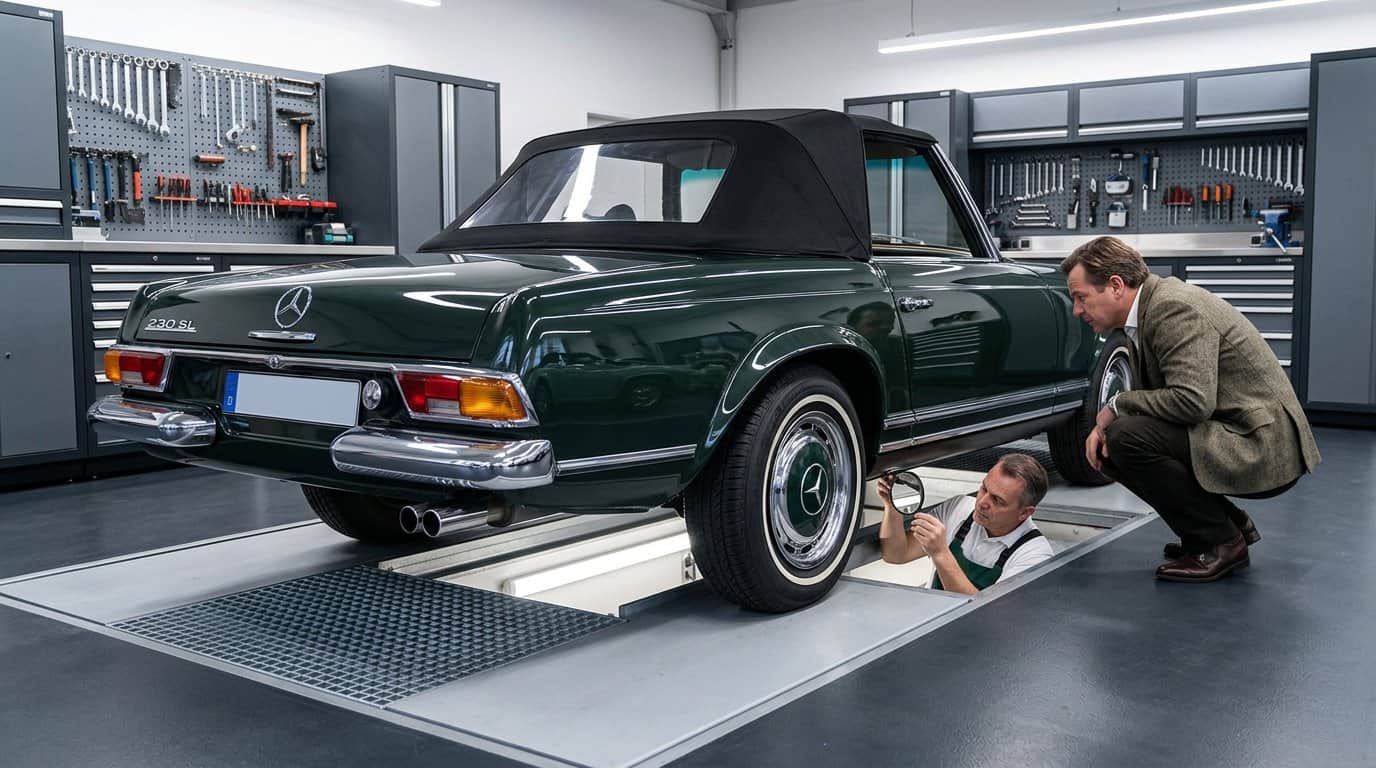
A Mercedes W113 Pagoda restomod’s cost depends on the condition of the car and the scope of the transformation, not simply its model or year. Bodywork, mechanical restoration, interior work, labor, and modern upgrades all shape the project, so there isn’t one figure that fits every build.
That uncertainty can make planning feel daunting, especially when you want modern reliability without losing the Pagoda’s unmistakable lines and character. Start by separating essential restoration from optional upgrades: the car’s condition sets the groundwork, while your priorities determine how far the restomod goes.
This guide explains how restoration scope and labor shape the cost, what the build process involves, and how to preserve the Pagoda’s original form while integrating modern performance. Think through each decision in sequence, from assessing the body and mechanical systems to refining the interior, so the finished car remains true to its heritage and purpose-built for the road.
Key Takeaways
- Prioritize the Pagoda’s body, engine, underbody, and interior condition to shape a realistic restoration scope.
- Plan the build in stages so discoveries during restoration can inform later decisions and upgrades.
- Account for labor by considering the complexity of the work, not just the parts involved.
- Protect the car’s original silhouette by making thoughtful, reversible modifications wherever practical.
Bodywork, engine, underbody and interior restoration
Start with the shell: corrosion repairs and panel alignment set the foundation for paint and final fit. The Mercedes-Benz W113 SL debuted at the Geneva Motor Show in March 1963, and its distinctive Pagoda roofline remains central to the car’s identity. A restomod’s total cost compared with concours restoration or an original car depends on scope. Concours work prioritizes factory-correct condition; a restomod adds modern upgrades and their integration, while buying an original car avoids commissioning that work.
Inspect the body and underbody before choosing upgrades. Record rust, previous repairs, panel gaps, and signs of impact, then document any metalwork needed. Corrosion hidden beneath trim or coatings can expand the repair scope once panels are opened. Assess the engine’s condition and decide whether to preserve the original setup or change its performance. Each option affects parts selection, machine work, and assembly.
A donor car’s condition affects its purchase price and the work it needs: structural rust, collision damage, missing components, and an unclear repair history can all expand the project. A sound, complete example may need less restoration, but condition matters more than appearance alone. Assess the body, engine, underbody, and interior as separate work areas before judging a candidate.
Model year, existing condition, and parts choices all influence the project. The 280 SL was produced from 1968 through 1971, but the specific car’s configuration and chosen upgrades matter more than the badge alone. A typical build can include body repairs, engine work, underbody restoration, interior renewal, and modern modifications. The restomod approach combines classic-car character with selected modern improvements.
In the U.S., registration, emissions, and insurance requirements vary by location, vehicle configuration, and policy. Treat them as separate planning items and disclose modifications when arranging coverage. Concealed corrosion, missing parts, earlier repairs, and additional labor uncovered during disassembly can all affect the project. Photograph findings and revise the build scope before approving the next stage.
Restoration and build process
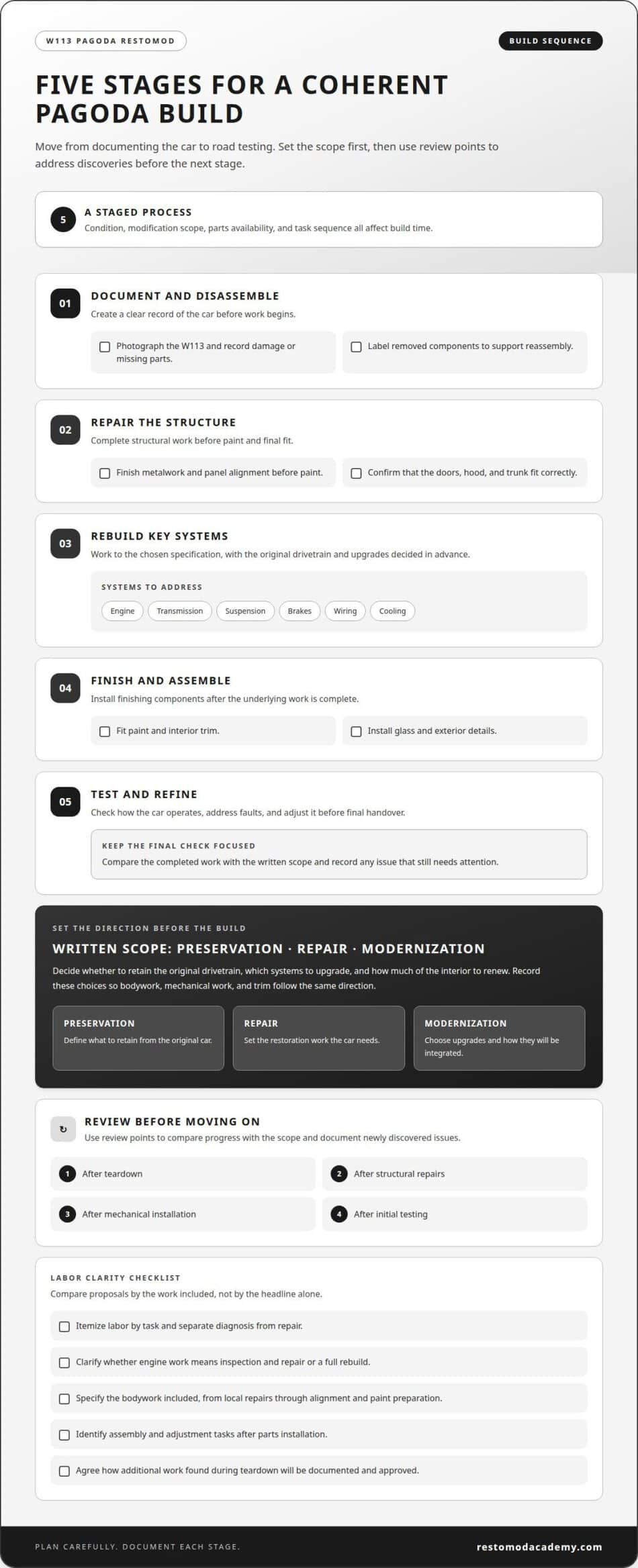
A W113 Pagoda restomod moves through planned stages, from initial assessment to final road testing. Build time depends on the car’s condition, the scope of modifications, parts availability, and how restoration tasks are sequenced. A car needing extensive metalwork follows a different schedule from one requiring a focused mechanical refresh.
Begin with a written scope that separates preservation, repair, and modernization. Decide whether to retain the original drivetrain, which systems to upgrade, and how much of the interior to renew. This keeps design choices connected to the build instead of leaving them until assembly. Record the decisions so the bodywork, mechanical work, and trim follow the same direction.
- Document and disassemble: Photograph the W113, label removed components, and record damage or missing parts.
- Repair the structure: Complete metalwork and panel alignment before paint, then confirm doors, hood, and trunk fit.
- Rebuild key systems: Address the engine, transmission, suspension, brakes, wiring, and cooling according to the chosen specification.
- Finish and assemble: Install paint, interior trim, glass, and exterior details after underlying work is complete.
- Test and refine: Check operation, address faults, and adjust the car before final handover.
Keep parts organization tied to each stage. Labeled containers for fasteners, photographed connections, and a parts log help prevent confusion during reassembly. Choose workshop gear for restoration tasks that supports careful disassembly and accurate assembly.
Set review points after teardown, structural repairs, mechanical installation, and initial testing. At each point, compare the completed work with the scope and document any newly discovered issue before proceeding. This creates a clear decision trail and helps prevent late changes from disrupting finished work. A staged process gives each craft, from paint preparation to engine setup, room for careful execution and helps the finished Pagoda feel coherent.
Restoration labor
Labor depends on the work the W113 needs and the finish the owner expects. A body technician may repair corrosion, align panels, and prepare the shell for paint. An engine specialist handles diagnosis, machining coordination, assembly, and tuning. Upholstery work adds separate time for seat frames, coverings, carpet, and trim. Each trade contributes distinct work, so a complete build involves more than one labor category.
Leading W113 builders generally price projects around their defined scope rather than one universal charge. A build’s price depends on the case and is provided after a quote request; the main factors include the car’s condition, restoration depth, selected upgrades, parts requirements, and the labor needed to integrate them. Compare proposals by what each includes, not by the headline alone.
Ask for labor to be itemized by task. For example, “engine work” should distinguish inspection and repair from a full rebuild. “Bodywork” should clarify whether it includes local panel repairs, extensive metalwork, alignment, and paint preparation. Clear descriptions make omissions easier to spot before disassembly begins.
- Separate diagnosis from repair, especially for the engine, transmission, and electrical system.
- Identify which assembly and adjustment tasks are included after parts installation.
- Record how the builder documents additional work uncovered during teardown.
Labor can increase when hidden damage changes the work sequence. A corroded panel may need metal repair before paint preparation; worn suspension components can affect later alignment. Use a written scope with approval points: ask the builder to document the issue, explain the proposed work, and revise the task list before proceeding.
Finally, consider how much work you’ll do yourself. Removing trim or organizing components may suit an experienced owner, while structural repairs, engine machining, and safety-critical assembly require appropriate skills and tools. Define responsibilities before the build starts. A precise labor plan clarifies what the quote covers and where craftsmanship shapes the finished Pagoda.
Reversibility and preservation of the original car
Preserve the W113’s recognizable shape by treating the body, cabin, and drivetrain as heritage elements. Keep the Pagoda roofline, factory panel contours, and original proportions intact. Before modifying the car, photograph each area and record existing parts. This baseline helps distinguish original features from later repairs during planning and reassembly.
Favor upgrades that avoid permanent body changes. For example, a modern audio system can be integrated without cutting the original door panels. Plan a revised engine or control system around mounting points and wiring routes rather than improvising after installation begins. If a modification requires removing original components, label and store them with their fasteners.
- Photograph trim, brackets, wiring, and mounting locations before disassembly.
- Label removed parts by location, such as dashboard, doors, or engine bay.
- Document any new holes, brackets, or altered wiring in the build record.
- Retain original components when replacement or adaptation makes them unnecessary.
Use the same discipline for interior work. Preserve original seat frames, switches, and trim pieces when they remain serviceable. If new upholstery or sound equipment changes the cabin, keep the layout visually consistent with the W113’s restrained design. A reversible installation gives a future owner clearer options than a cut dash or permanently altered trim.
Reversibility has practical limits. Corrosion repair may require cutting damaged metal, and a safe, durable repair takes priority over retaining unsound material. Record why structural work was needed, where replacement metal was fitted, and which original pieces were saved. This documentation explains the decisions behind the finished car.
Set a preservation goal before selecting upgrades: retain the original appearance, keep removed parts, or permit limited visible changes. Write that goal into the project scope, then review each proposed modification against it. Build a preservation-first restomod plan before committing to irreversible changes.
Restomod Academy
Restomod Academy helps Pagoda owners turn restoration questions into a clearer project plan. Its educational resources explain how build scope, labor, upgrades, and preservation choices shape a restomod. The Ultimate Restomod Guide, Restomod Consulting Services, and Premium Project Blueprints can support different stages, from learning the fundamentals to organizing decisions for a specific build.
Use these resources when defining priorities, weighing modifications against originality, or mapping the work before restoration begins. A considered plan connects the car’s condition with the finish you want and makes it easier to discuss the project’s scope and sequence.
Contact Restomod Academy to discuss your Pagoda restomod questions.
Shape the Pagoda You Want to Drive
Before the next decision, picture the finished Mercedes in its everyday role. Is it a relaxed weekend cruiser, a responsive touring car, or a personal expression of classic design? That purpose gives each technical choice a clear reference point. The mercedes W113 Pagoda restomod cost becomes easier to assess when the project’s intended character guides what belongs in the build and what doesn’t.
Write a short project brief in your own words. Describe how you want the car to feel, which parts of its heritage matter most, and where modern performance should make a difference. Keep the brief beside the build plan to stay focused when new possibilities arise during the work.
Give the vision room to evolve, but make each change deliberate. A well-considered Pagoda should feel like your car without losing the qualities that drew you to it. For help developing your next steps, contact Restomod Academy and keep moving your project forward with purpose.
Frequently Asked Questions
How much does a Mercedes-Benz W113 Pagoda restomod cost in the United States?
There isn’t one fixed U.S. price for a W113 Pagoda restomod. The total depends on the individual car, the restoration work required, the chosen upgrades, parts, and labor. To understand a project’s likely financial scope, separate the donor car from restoration and modification work, then request an estimate based on a defined specification. A total without those details can’t meaningfully describe your build.
How much do W113 Pagoda restoration, engine, transmission, and suspension upgrades cost separately?
The cost of each area depends on the system’s condition and the work selected, so there’s no reliable universal figure for restoration or engine, transmission, and suspension upgrades. For a useful breakdown, list each system as a separate estimate line and specify whether it covers inspection, parts, repair or replacement, installation, and setup. This makes it easier to see how a change to one system affects the overall project scope.
A Mercedes W113 Pagoda restomod’s cost depends on the condition of the car and the scope of the transformation, not simply its model or year. Bodywork, mechanical restoration, interior work, labor, and modern upgrades all shape the project, so there isn’t one figure that fits every build.
That uncertainty can make planning feel daunting, especially when you want modern reliability without losing the Pagoda’s unmistakable lines and character. Start by separating essential restoration from optional upgrades: the car’s condition sets the groundwork, while your priorities determine how far the restomod goes.
This guide explains how restoration scope and labor shape the cost, what the build process involves, and how to preserve the Pagoda’s original form while integrating modern performance. Think through each decision in sequence, from assessing the body and mechanical systems to refining the interior, so the finished car remains true to its heritage and purpose-built for the road.
Key Takeaways
- Prioritize the Pagoda’s body, engine, underbody, and interior condition to shape a realistic restoration scope.
- Plan the build in stages so discoveries during restoration can inform later decisions and upgrades.
- Account for labor by considering the complexity of the work, not just the parts involved.
- Protect the car’s original silhouette by making thoughtful, reversible modifications wherever practical.
Bodywork, engine, underbody and interior restoration
Start with the shell: corrosion repairs and panel alignment set the foundation for paint and final fit. The Mercedes-Benz W113 SL debuted at the Geneva Motor Show in March 1963, and its distinctive Pagoda roofline remains central to the car’s identity. A restomod’s total cost compared with concours restoration or an original car depends on scope. Concours work prioritizes factory-correct condition; a restomod adds modern upgrades and their integration, while buying an original car avoids commissioning that work.
Inspect the body and underbody before choosing upgrades. Record rust, previous repairs, panel gaps, and signs of impact, then document any metalwork needed. Corrosion hidden beneath trim or coatings can expand the repair scope once panels are opened. Assess the engine’s condition and decide whether to preserve the original setup or change its performance. Each option affects parts selection, machine work, and assembly.
A donor car’s condition affects its purchase price and the work it needs: structural rust, collision damage, missing components, and an unclear repair history can all expand the project. A sound, complete example may need less restoration, but condition matters more than appearance alone. Assess the body, engine, underbody, and interior as separate work areas before judging a candidate.
Model year, existing condition, and parts choices all influence the project. The 280 SL was produced from 1968 through 1971, but the specific car’s configuration and chosen upgrades matter more than the badge alone. A typical build can include body repairs, engine work, underbody restoration, interior renewal, and modern modifications. The restomod approach combines classic-car character with selected modern improvements.
In the U.S., registration, emissions, and insurance requirements vary by location, vehicle configuration, and policy. Treat them as separate planning items and disclose modifications when arranging coverage. Concealed corrosion, missing parts, earlier repairs, and additional labor uncovered during disassembly can all affect the project. Photograph findings and revise the build scope before approving the next stage.
Restoration and build process
A W113 Pagoda restomod moves through planned stages, from initial assessment to final road testing. Build time depends on the car’s condition, the scope of modifications, parts availability, and how restoration tasks are sequenced. A car needing extensive metalwork follows a different schedule from one requiring a focused mechanical refresh.
Begin with a written scope that separates preservation, repair, and modernization. Decide whether to retain the original drivetrain, which systems to upgrade, and how much of the interior to renew. This keeps design choices connected to the build instead of leaving them until assembly. Record the decisions so the bodywork, mechanical work, and trim follow the same direction.
- Document and disassemble: Photograph the W113, label removed components, and record damage or missing parts.
- Repair the structure: Complete metalwork and panel alignment before paint, then confirm doors, hood, and trunk fit.
- Rebuild key systems: Address the engine, transmission, suspension, brakes, wiring, and cooling according to the chosen specification.
- Finish and assemble: Install paint, interior trim, glass, and exterior details after underlying work is complete.
- Test and refine: Check operation, address faults, and adjust the car before final handover.
Keep parts organization tied to each stage. Labeled containers for fasteners, photographed connections, and a parts log help prevent confusion during reassembly. Choose workshop gear for restoration tasks that supports careful disassembly and accurate assembly.
Set review points after teardown, structural repairs, mechanical installation, and initial testing. At each point, compare the completed work with the scope and document any newly discovered issue before proceeding. This creates a clear decision trail and helps prevent late changes from disrupting finished work. A staged process gives each craft, from paint preparation to engine setup, room for careful execution and helps the finished Pagoda feel coherent.
Restoration labor
Labor depends on the work the W113 needs and the finish the owner expects. A body technician may repair corrosion, align panels, and prepare the shell for paint. An engine specialist handles diagnosis, machining coordination, assembly, and tuning. Upholstery work adds separate time for seat frames, coverings, carpet, and trim. Each trade contributes distinct work, so a complete build involves more than one labor category.
Leading W113 builders generally price projects around their defined scope rather than one universal charge. A build’s price depends on the case and is provided after a quote request; the main factors include the car’s condition, restoration depth, selected upgrades, parts requirements, and the labor needed to integrate them. Compare proposals by what each includes, not by the headline alone.
Ask for labor to be itemized by task. For example, “engine work” should distinguish inspection and repair from a full rebuild. “Bodywork” should clarify whether it includes local panel repairs, extensive metalwork, alignment, and paint preparation. Clear descriptions make omissions easier to spot before disassembly begins.
- Separate diagnosis from repair, especially for the engine, transmission, and electrical system.
- Identify which assembly and adjustment tasks are included after parts installation.
- Record how the builder documents additional work uncovered during teardown.
Labor can increase when hidden damage changes the work sequence. A corroded panel may need metal repair before paint preparation; worn suspension components can affect later alignment. Use a written scope with approval points: ask the builder to document the issue, explain the proposed work, and revise the task list before proceeding.
Finally, consider how much work you’ll do yourself. Removing trim or organizing components may suit an experienced owner, while structural repairs, engine machining, and safety-critical assembly require appropriate skills and tools. Define responsibilities before the build starts. A precise labor plan clarifies what the quote covers and where craftsmanship shapes the finished Pagoda.
Reversibility and preservation of the original car
Preserve the W113’s recognizable shape by treating the body, cabin, and drivetrain as heritage elements. Keep the Pagoda roofline, factory panel contours, and original proportions intact. Before modifying the car, photograph each area and record existing parts. This baseline helps distinguish original features from later repairs during planning and reassembly.
Favor upgrades that avoid permanent body changes. For example, a modern audio system can be integrated without cutting the original door panels. Plan a revised engine or control system around mounting points and wiring routes rather than improvising after installation begins. If a modification requires removing original components, label and store them with their fasteners.
- Photograph trim, brackets, wiring, and mounting locations before disassembly.
- Label removed parts by location, such as dashboard, doors, or engine bay.
- Document any new holes, brackets, or altered wiring in the build record.
- Retain original components when replacement or adaptation makes them unnecessary.
Use the same discipline for interior work. Preserve original seat frames, switches, and trim pieces when they remain serviceable. If new upholstery or sound equipment changes the cabin, keep the layout visually consistent with the W113’s restrained design. A reversible installation gives a future owner clearer options than a cut dash or permanently altered trim.
Reversibility has practical limits. Corrosion repair may require cutting damaged metal, and a safe, durable repair takes priority over retaining unsound material. Record why structural work was needed, where replacement metal was fitted, and which original pieces were saved. This documentation explains the decisions behind the finished car.
Set a preservation goal before selecting upgrades: retain the original appearance, keep removed parts, or permit limited visible changes. Write that goal into the project scope, then review each proposed modification against it. Build a preservation-first restomod plan before committing to irreversible changes.
Restomod Academy
Restomod Academy helps Pagoda owners turn restoration questions into a clearer project plan. Its educational resources explain how build scope, labor, upgrades, and preservation choices shape a restomod. The Ultimate Restomod Guide, Restomod Consulting Services, and Premium Project Blueprints can support different stages, from learning the fundamentals to organizing decisions for a specific build.
Use these resources when defining priorities, weighing modifications against originality, or mapping the work before restoration begins. A considered plan connects the car’s condition with the finish you want and makes it easier to discuss the project’s scope and sequence.
Contact Restomod Academy to discuss your Pagoda restomod questions.
Shape the Pagoda You Want to Drive
Before the next decision, picture the finished Mercedes in its everyday role. Is it a relaxed weekend cruiser, a responsive touring car, or a personal expression of classic design? That purpose gives each technical choice a clear reference point. The mercedes W113 Pagoda restomod cost becomes easier to assess when the project’s intended character guides what belongs in the build and what doesn’t.
Write a short project brief in your own words. Describe how you want the car to feel, which parts of its heritage matter most, and where modern performance should make a difference. Keep the brief beside the build plan to stay focused when new possibilities arise during the work.
Give the vision room to evolve, but make each change deliberate. A well-considered Pagoda should feel like your car without losing the qualities that drew you to it. For help developing your next steps, contact Restomod Academy and keep moving your project forward with purpose.
Frequently Asked Questions
How much does a Mercedes-Benz W113 Pagoda restomod cost in the United States?
There isn’t one fixed U.S. price for a W113 Pagoda restomod. The total depends on the individual car, the restoration work required, the chosen upgrades, parts, and labor. To understand a project’s likely financial scope, separate the donor car from restoration and modification work, then request an estimate based on a defined specification. A total without those details can’t meaningfully describe your build.
How much do W113 Pagoda restoration, engine, transmission, and suspension upgrades cost separately?
The cost of each area depends on the system’s condition and the work selected, so there’s no reliable universal figure for restoration or engine, transmission, and suspension upgrades. For a useful breakdown, list each system as a separate estimate line and specify whether it covers inspection, parts, repair or replacement, installation, and setup. This makes it easier to see how a change to one system affects the overall project scope.