
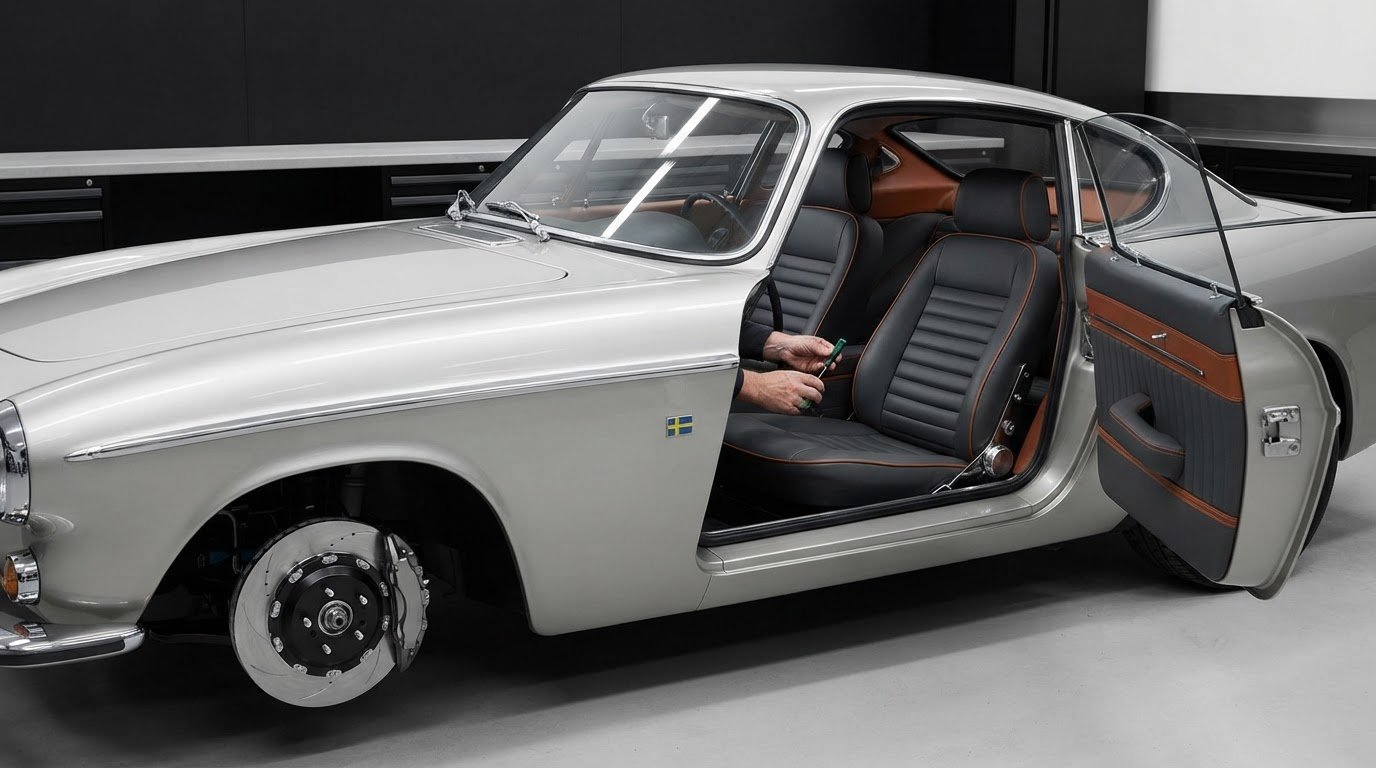
A Volvo P1800 restomod build sheet should preserve the car’s character while making every modern change feel deliberate. The original lines and mechanical personality set the direction; your choices shape how the finished car looks, feels and drives.
It’s natural to want the comfort and confidence of modern upgrades without losing the details that make a P1800 special. A clear build sheet helps turn that balance into a practical plan, so craftsmanship, equipment and performance work together rather than compete.
Use this guide to define interior materials and finishes, choose modern amenities, and plan transmission, brake, and chassis upgrades. Organize each decision around your priorities, the donor car’s condition, and the character you want to preserve. Working through choices in sequence helps shape a cohesive classic with a distinctly personal feel.
Key Takeaways
- Choose interior materials and craftsmanship details that respect the P1800’s character while making the cabin your own.
- Plan modern amenities around how you’ll use the car, and account for their fit with the interior and electrical system.
- Consider transmission, braking and chassis changes as a coordinated set of driving upgrades, not isolated choices.
- Organize interior, electrical and exterior decisions in one build sheet to keep the finished car cohesive.
Interior materials and craftsmanship
Plan the cabin around the P1800’s original lines, then record each material, finish, and removal step. That makes interior choices part of a coherent restomod approach, not a collection of unrelated upgrades.
Custom Interior Materials
Choose seat upholstery, door panels, carpet, and trim as one coordinated palette. Leather can give the seats a tailored feel, while woven cloth can bring a quieter, period-inspired texture; match either choice to the dashboard and door surfaces. List each material, color, texture, and intended location on the build sheet. Then assess how the combination suits the P1800’s exterior finish and the cabin’s intended use, rather than selecting each surface in isolation.
Craftsmanship Details
Custom work depends on accurate patterns, clean seams, and careful fitting around the P1800’s original shapes. During dashboard removal, photograph the layout and label each connector and fastener before separating components. Record damaged trim, worn padding, and areas needing repair before new upholstery goes in. Specify seam style, edge finish, and how panels meet at corners; those small decisions make the difference between a cabin that feels integrated and one that looks assembled from separate pieces.
U.S. emissions, registration, and safety requirements vary by state and vehicle configuration. Record engine and safety modifications on the build sheet, then identify the applicable state requirements before finalizing them.
A Volvo P1800 restomod’s 2026 cost depends on donor condition, rust repairs, interior materials, and the scope of mechanical and electrical work. Set priorities first; structural repairs and custom trim affect the project differently.
The Volvo P1800 Cyan offers a completed-build reference: it weighs from 990 kilos, depending on specification, and uses a carbon-fibre body bonded to its steel chassis for added rigidity.
Plan the build in stages: assess the donor car, document disassembly, complete body and cabin work, then install and test upgraded systems. The right sequence depends on the project scope and the car’s condition.
Donor condition shapes both restoration work and interior fit. A planned full disassembly of a 1963 Volvo P1800S shows how far a project may go; inspect the floor and lower body closely, since a lack of drainage promotes rust.
Modern amenities and everyday usability
An original Volvo P1800 retains its period equipment and driving character. A restomod adds selected modern conveniences while keeping the classic body and cabin recognizable. Compared with a contemporary restomod, a P1800 build starts with vintage architecture, so every addition must suit the existing layout. Decide whether comfort, navigation, music, or visibility matters most in your routine.
List each amenity by function, location, and integration needs. For example, specify whether the audio system should be visually discreet or a visible cabin feature. A phone connection can support navigation and music, but place it where controls remain accessible and the dashboard does not feel crowded. Record the functions you want before choosing equipment to help avoid incompatible choices.
Everyday usability also depends on how systems work together. Plan speakers, wiring routes, and dashboard controls alongside the audio setup. Treat ventilation, cabin lighting, and charging access as separate requirements, and note where each should fit. Including these details early helps coordinate electrical work and trim, rather than leaving accessories as last-minute additions.
Preserve the P1800’s visual restraint by matching modern components to the cabin’s materials and finish. A discreet control panel may suit a period-style dashboard better than a large display. Likewise, choose lighting that serves the intended use without dominating the cabin at night. Describe the desired appearance and operation on the build sheet, including which original features should remain visible.
Use a simple priority list: essential for regular driving, useful convenience, or optional refinement. Then review each item against available space, wiring, and the finished interior design. This step makes trade-offs visible before installation begins. For a clearer framework, explore restomod planning principles and apply them to the P1800’s original character.

Transmission, braking and chassis changes
Treat the transmission, brakes, and chassis as one handling package. The Norrsken performance-focused interpretation combines a revised transmission, enhanced braking systems, and reworked chassis geometry. Use that combination as a planning example, not a parts prescription. Each change should support the engine output, intended driving style, and character you want from the P1800.
Start with the transmission. Record the current setup and condition, along with the driving feel you want to preserve or change. A transmission change affects how engine power reaches the road, so consider gear selection alongside engine response and how you’ll use the car. Note supporting work, such as changes to mounting or linkage, as project considerations rather than assumed specifications. The build sheet should state the intended outcome and its dependencies.
Next, document your braking goals. Record the existing system’s condition and planned improvements, then describe the pedal feel and response you want in plain terms. Braking upgrades should suit the car’s power and intended use, not be chosen as an isolated performance feature. Keep the components, installation requirements, and planned testing together in the project record.
Chassis geometry shapes how the P1800 responds through corners and over uneven surfaces. Record the intended balance between a composed road feel and sharper responses. Include suspension and steering changes in the same plan, since their setup influences how geometry changes feel from the driver’s seat. Mark any body or chassis repairs that should precede final adjustment.
- Document the current transmission, brake, and chassis condition before specifying changes.
- Describe the desired driving character, then connect each upgrade to that goal.
- Track component compatibility, installation dependencies, and final testing as separate build-sheet items.
Review the package as a whole before committing to parts. A transmission change without coordinated braking and chassis decisions can take the project away from its intended character. Use the Norrsken approach as a reminder to plan these systems together, while tailoring the final specification to your donor car and priorities.
What interior, electrical, and exterior upgrades should a P1800 build sheet list?
Make the build sheet a clear record of decisions, not just a wish list. Divide it into three areas: cabin, electrical system, and exterior. For every planned change, note its location, purpose, finish, and dependencies. For example, an added dashboard control may affect both wiring and trim installation.
For the cabin, record seat and door-panel work, carpet coverage, dashboard treatment, and original details to retain. Describe each finish by color, texture, and placement. Note whether new controls or accessories require dashboard openings. This helps upholstery patterns and panel fitting account for the final layout instead of covering a change planned for later.
Give electrical work its own entries. List each added function, its control location, wiring route, and connection to existing equipment. An audio system, cabin lighting, and a charging point are distinct items, even when they share space. Record which original instruments and switches will remain in use. This defines the installation scope and helps coordinate wiring decisions with the finished cabin.
For the exterior, identify paint or refinishing work, trim, glass, lamps, mirrors, and weather seals. State whether each item will be restored, replaced, or retained, and describe the desired finish. For example, note whether brightwork should keep its original appearance or follow a different visual direction. Record body repairs alongside finish work, since surface preparation affects the final result.
- Cabin: upholstery locations, dashboard finish, carpet, and retained details.
- Electrical: added functions, control positions, wiring routes, and original equipment.
- Exterior: paint, trim, glass, lighting, mirrors, seals, and body repairs.
Close each entry with its status, dependencies, and installation notes. Keep choices specific enough to guide the work, but avoid locking in a component before the surrounding systems are understood. For help shaping a coordinated specification, plan your P1800 build with a clear, connected set of decisions.
Restomod Academy
Restomod Academy helps turn a Volvo P1800 build sheet into a connected plan for craftsmanship, usability, and mechanical changes. Use The Ultimate Restomod Guide to build your understanding of the process, or Restomod Consulting Services when you want help thinking through project decisions. Premium Project Blueprints can offer a structured reference as you shape the scope.
Turn to these resources when your priorities are clear but the choices still feel difficult to coordinate. For example, you may need to align interior work with electrical additions, or weigh transmission changes alongside braking and chassis plans. A well-considered plan preserves the P1800’s character while making room for modern function.
If you’d like guidance as you develop your build, contact Restomod Academy.
Shape the Next Chapter of Your P1800
Treat your Volvo P1800 restomod build sheet as a working design brief, not a document that ends once the first decisions are made. As the project develops, use it to capture why each choice matters and how the finished car should feel on the road. That record can keep the original spirit of the P1800 present as new ideas emerge.
Before moving forward, decide what you want the car to represent: personal expression, a regular driver, or a careful blend of both. Let that intention guide the choices ahead. A considered build doesn’t need to follow someone else’s formula; it needs a clear point of view and decisions that support it.
If you’re ready to turn your direction into a workable project plan, contact Restomod Academy to discuss your build. Take the next step with patience and purpose. Every thoughtful decision brings your tailored classic closer to the car you imagined.
Frequently Asked Questions
What is included in a Volvo P1800 restomod build sheet?
A build sheet records the car’s starting condition, planned changes, and decisions that shape the finished project. Include the donor’s identity, systems to retain or replace, selected finishes, and dependencies between modifications. Set a priority for each item, such as essential, preferred, or optional. This helps distinguish core work from later refinements and keep the project aligned with your intended use.
What engine and transmission options are available for a Volvo P1800 restomod?
Engine and transmission choices depend on the build’s direction, from preserving the existing powertrain to planning a different configuration. The Norrsken interpretation is one example: it pairs a performance-focused engine with a revised transmission. A useful specification records the intended engine setup, transmission choice, and supporting integration work together. That keeps power delivery and the car’s overall character connected as decisions.
What chassis, suspension, brake, and steering upgrades are used in a P1800 restomod?
Upgrades may address chassis geometry, suspension behavior, braking performance, and steering response as a coordinated package. The Norrsken interpretation includes reworked chassis geometry and enhanced braking systems. For your own plan, describe the handling character you want, document the condition of existing components, and identify steering or suspension work separately. This gives each decision a clear purpose without assuming one setup suits every P1800.
What U.S. emissions, registration, and safety rules apply to a modified Volvo P1800?
U.S. emissions, registration, and safety requirements vary by state and vehicle configuration. Record engine and safety modifications, then identify applicable state requirements before finalizing them.
How much does a Volvo P1800 restomod build cost in 2026?
Costs depend on the donor car’s condition, rust repairs, interior materials, and the scope of mechanical and electrical work. Set priorities first: structural repairs and custom trim have different effects on the project.
What are examples of completed Volvo P1800 restomod builds and their specifications?
The Volvo P1800 Cyan weighs from 990 kilos, depending on specification, and has a carbon-fibre body bonded to its steel chassis for added rigidity. The Norrsken performance-focused interpretation combines a revised transmission, enhanced braking systems, and reworked chassis geometry.
A Volvo P1800 restomod build sheet should preserve the car’s character while making every modern change feel deliberate. The original lines and mechanical personality set the direction; your choices shape how the finished car looks, feels and drives.
It’s natural to want the comfort and confidence of modern upgrades without losing the details that make a P1800 special. A clear build sheet helps turn that balance into a practical plan, so craftsmanship, equipment and performance work together rather than compete.
Use this guide to define interior materials and finishes, choose modern amenities, and plan transmission, brake, and chassis upgrades. Organize each decision around your priorities, the donor car’s condition, and the character you want to preserve. Working through choices in sequence helps shape a cohesive classic with a distinctly personal feel.
Key Takeaways
- Choose interior materials and craftsmanship details that respect the P1800’s character while making the cabin your own.
- Plan modern amenities around how you’ll use the car, and account for their fit with the interior and electrical system.
- Consider transmission, braking and chassis changes as a coordinated set of driving upgrades, not isolated choices.
- Organize interior, electrical and exterior decisions in one build sheet to keep the finished car cohesive.
Interior materials and craftsmanship
Plan the cabin around the P1800’s original lines, then record each material, finish, and removal step. That makes interior choices part of a coherent restomod approach, not a collection of unrelated upgrades.
Custom Interior Materials
Choose seat upholstery, door panels, carpet, and trim as one coordinated palette. Leather can give the seats a tailored feel, while woven cloth can bring a quieter, period-inspired texture; match either choice to the dashboard and door surfaces. List each material, color, texture, and intended location on the build sheet. Then assess how the combination suits the P1800’s exterior finish and the cabin’s intended use, rather than selecting each surface in isolation.
Craftsmanship Details
Custom work depends on accurate patterns, clean seams, and careful fitting around the P1800’s original shapes. During dashboard removal, photograph the layout and label each connector and fastener before separating components. Record damaged trim, worn padding, and areas needing repair before new upholstery goes in. Specify seam style, edge finish, and how panels meet at corners; those small decisions make the difference between a cabin that feels integrated and one that looks assembled from separate pieces.
U.S. emissions, registration, and safety requirements vary by state and vehicle configuration. Record engine and safety modifications on the build sheet, then identify the applicable state requirements before finalizing them.
A Volvo P1800 restomod’s 2026 cost depends on donor condition, rust repairs, interior materials, and the scope of mechanical and electrical work. Set priorities first; structural repairs and custom trim affect the project differently.
The Volvo P1800 Cyan offers a completed-build reference: it weighs from 990 kilos, depending on specification, and uses a carbon-fibre body bonded to its steel chassis for added rigidity.
Plan the build in stages: assess the donor car, document disassembly, complete body and cabin work, then install and test upgraded systems. The right sequence depends on the project scope and the car’s condition.
Donor condition shapes both restoration work and interior fit. A planned full disassembly of a 1963 Volvo P1800S shows how far a project may go; inspect the floor and lower body closely, since a lack of drainage promotes rust.
Modern amenities and everyday usability
An original Volvo P1800 retains its period equipment and driving character. A restomod adds selected modern conveniences while keeping the classic body and cabin recognizable. Compared with a contemporary restomod, a P1800 build starts with vintage architecture, so every addition must suit the existing layout. Decide whether comfort, navigation, music, or visibility matters most in your routine.
List each amenity by function, location, and integration needs. For example, specify whether the audio system should be visually discreet or a visible cabin feature. A phone connection can support navigation and music, but place it where controls remain accessible and the dashboard does not feel crowded. Record the functions you want before choosing equipment to help avoid incompatible choices.
Everyday usability also depends on how systems work together. Plan speakers, wiring routes, and dashboard controls alongside the audio setup. Treat ventilation, cabin lighting, and charging access as separate requirements, and note where each should fit. Including these details early helps coordinate electrical work and trim, rather than leaving accessories as last-minute additions.
Preserve the P1800’s visual restraint by matching modern components to the cabin’s materials and finish. A discreet control panel may suit a period-style dashboard better than a large display. Likewise, choose lighting that serves the intended use without dominating the cabin at night. Describe the desired appearance and operation on the build sheet, including which original features should remain visible.
Use a simple priority list: essential for regular driving, useful convenience, or optional refinement. Then review each item against available space, wiring, and the finished interior design. This step makes trade-offs visible before installation begins. For a clearer framework, explore restomod planning principles and apply them to the P1800’s original character.
Transmission, braking and chassis changes
Treat the transmission, brakes, and chassis as one handling package. The Norrsken performance-focused interpretation combines a revised transmission, enhanced braking systems, and reworked chassis geometry. Use that combination as a planning example, not a parts prescription. Each change should support the engine output, intended driving style, and character you want from the P1800.
Start with the transmission. Record the current setup and condition, along with the driving feel you want to preserve or change. A transmission change affects how engine power reaches the road, so consider gear selection alongside engine response and how you’ll use the car. Note supporting work, such as changes to mounting or linkage, as project considerations rather than assumed specifications. The build sheet should state the intended outcome and its dependencies.
Next, document your braking goals. Record the existing system’s condition and planned improvements, then describe the pedal feel and response you want in plain terms. Braking upgrades should suit the car’s power and intended use, not be chosen as an isolated performance feature. Keep the components, installation requirements, and planned testing together in the project record.
Chassis geometry shapes how the P1800 responds through corners and over uneven surfaces. Record the intended balance between a composed road feel and sharper responses. Include suspension and steering changes in the same plan, since their setup influences how geometry changes feel from the driver’s seat. Mark any body or chassis repairs that should precede final adjustment.
- Document the current transmission, brake, and chassis condition before specifying changes.
- Describe the desired driving character, then connect each upgrade to that goal.
- Track component compatibility, installation dependencies, and final testing as separate build-sheet items.
Review the package as a whole before committing to parts. A transmission change without coordinated braking and chassis decisions can take the project away from its intended character. Use the Norrsken approach as a reminder to plan these systems together, while tailoring the final specification to your donor car and priorities.
What interior, electrical, and exterior upgrades should a P1800 build sheet list?
Make the build sheet a clear record of decisions, not just a wish list. Divide it into three areas: cabin, electrical system, and exterior. For every planned change, note its location, purpose, finish, and dependencies. For example, an added dashboard control may affect both wiring and trim installation.
For the cabin, record seat and door-panel work, carpet coverage, dashboard treatment, and original details to retain. Describe each finish by color, texture, and placement. Note whether new controls or accessories require dashboard openings. This helps upholstery patterns and panel fitting account for the final layout instead of covering a change planned for later.
Give electrical work its own entries. List each added function, its control location, wiring route, and connection to existing equipment. An audio system, cabin lighting, and a charging point are distinct items, even when they share space. Record which original instruments and switches will remain in use. This defines the installation scope and helps coordinate wiring decisions with the finished cabin.
For the exterior, identify paint or refinishing work, trim, glass, lamps, mirrors, and weather seals. State whether each item will be restored, replaced, or retained, and describe the desired finish. For example, note whether brightwork should keep its original appearance or follow a different visual direction. Record body repairs alongside finish work, since surface preparation affects the final result.
- Cabin: upholstery locations, dashboard finish, carpet, and retained details.
- Electrical: added functions, control positions, wiring routes, and original equipment.
- Exterior: paint, trim, glass, lighting, mirrors, seals, and body repairs.
Close each entry with its status, dependencies, and installation notes. Keep choices specific enough to guide the work, but avoid locking in a component before the surrounding systems are understood. For help shaping a coordinated specification, plan your P1800 build with a clear, connected set of decisions.
Restomod Academy
Restomod Academy helps turn a Volvo P1800 build sheet into a connected plan for craftsmanship, usability, and mechanical changes. Use The Ultimate Restomod Guide to build your understanding of the process, or Restomod Consulting Services when you want help thinking through project decisions. Premium Project Blueprints can offer a structured reference as you shape the scope.
Turn to these resources when your priorities are clear but the choices still feel difficult to coordinate. For example, you may need to align interior work with electrical additions, or weigh transmission changes alongside braking and chassis plans. A well-considered plan preserves the P1800’s character while making room for modern function.
If you’d like guidance as you develop your build, contact Restomod Academy.
Shape the Next Chapter of Your P1800
Treat your Volvo P1800 restomod build sheet as a working design brief, not a document that ends once the first decisions are made. As the project develops, use it to capture why each choice matters and how the finished car should feel on the road. That record can keep the original spirit of the P1800 present as new ideas emerge.
Before moving forward, decide what you want the car to represent: personal expression, a regular driver, or a careful blend of both. Let that intention guide the choices ahead. A considered build doesn’t need to follow someone else’s formula; it needs a clear point of view and decisions that support it.
If you’re ready to turn your direction into a workable project plan, contact Restomod Academy to discuss your build. Take the next step with patience and purpose. Every thoughtful decision brings your tailored classic closer to the car you imagined.
Frequently Asked Questions
What is included in a Volvo P1800 restomod build sheet?
A build sheet records the car’s starting condition, planned changes, and decisions that shape the finished project. Include the donor’s identity, systems to retain or replace, selected finishes, and dependencies between modifications. Set a priority for each item, such as essential, preferred, or optional. This helps distinguish core work from later refinements and keep the project aligned with your intended use.
What engine and transmission options are available for a Volvo P1800 restomod?
Engine and transmission choices depend on the build’s direction, from preserving the existing powertrain to planning a different configuration. The Norrsken interpretation is one example: it pairs a performance-focused engine with a revised transmission. A useful specification records the intended engine setup, transmission choice, and supporting integration work together. That keeps power delivery and the car’s overall character connected as decisions.
What chassis, suspension, brake, and steering upgrades are used in a P1800 restomod?
Upgrades may address chassis geometry, suspension behavior, braking performance, and steering response as a coordinated package. The Norrsken interpretation includes reworked chassis geometry and enhanced braking systems. For your own plan, describe the handling character you want, document the condition of existing components, and identify steering or suspension work separately. This gives each decision a clear purpose without assuming one setup suits every P1800.
What U.S. emissions, registration, and safety rules apply to a modified Volvo P1800?
U.S. emissions, registration, and safety requirements vary by state and vehicle configuration. Record engine and safety modifications, then identify applicable state requirements before finalizing them.
How much does a Volvo P1800 restomod build cost in 2026?
Costs depend on the donor car’s condition, rust repairs, interior materials, and the scope of mechanical and electrical work. Set priorities first: structural repairs and custom trim have different effects on the project.
What are examples of completed Volvo P1800 restomod builds and their specifications?
The Volvo P1800 Cyan weighs from 990 kilos, depending on specification, and has a carbon-fibre body bonded to its steel chassis for added rigidity. The Norrsken performance-focused interpretation combines a revised transmission, enhanced braking systems, and reworked chassis geometry.