
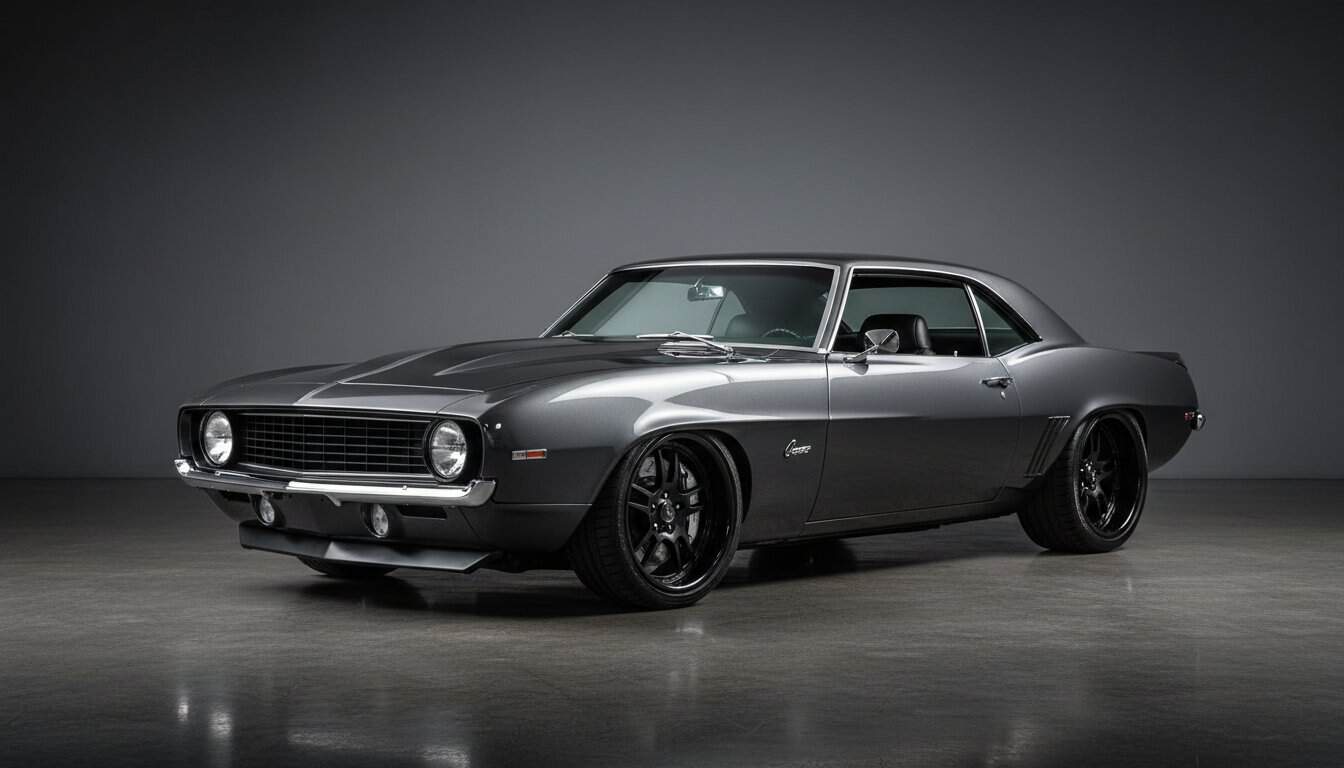
You don’t have to choose between the timeless silhouette of a 1969 legend and the reliable performance of a 2026 supercar. We understand the hesitation that comes with cutting into a classic. You want the roar of a modern V8 but fear stripping away the history that makes the first gen camaro an American icon. Whether you’re looking at a $11,000 project car or a $122,850 high-end build, the pressure to get the restoration right is real. You’ve likely felt overwhelmed by the sheer volume of suspension geometries and engine swap options currently flooding the market.
This guide serves as your master blueprint for modernizing your F-body without losing its vintage heart. We’ll show you how to build a machine that handles like a dream and stops on a dime. You’ll gain a clear understanding of the mechanical differences between the 1967 and 1969 model years; plus, we’ll dive into the specifics of modern hardware. From installing a $12,201 Total Cost Involved suspension to understanding how California’s February 2026 Senate Bill 1392 impacts your engine choice, you’ll find everything you need to start your build with total confidence.
Key Takeaways
- Learn how the unique unibody and front subframe design of the first gen camaro provides the perfect foundation for a precision-engineered performance build.
- Identify critical rust hotspots in the cowl and floor pans to ensure you invest your energy into a structurally sound chassis rather than a bottomless pit of fabrication.
- Master the Pro-Touring philosophy by replacing dated leaf springs with modern suspension geometry that allows your 1960s icon to corner like a contemporary sports car.
- Discover how to integrate high-performance fuel-injected engines and digital gauge clusters while preserving the legendary aesthetic of the original dual-pod dashboard.
- Develop a clear roadmap for your project by prioritizing mechanical reliability and modern safety standards over matching-numbers originality.
The F-Body Icon: Evolution of the 1967-1969 Camaro
The first gen camaro arrived in September 1966 as a direct response to the Ford Mustang. Chevrolet didn’t just want to compete; they wanted to dominate the pony car market. They engineered the F-body platform with a unique hybrid structure. It features a unibody rear section paired with a bolt-on front subframe. This design is a gift to the modern builder. It allows you to unbolt the entire factory front suspension and replace it with a high-performance aftermarket subframe without ever touching a plasma cutter. Before you dive into the garage, it’s vital to understand what is a restomod and how this platform serves as the ultimate canvas for your vision.
Historical records for the Chevrolet Camaro (first generation) show that while the bones stayed the same, the aesthetics evolved rapidly over three short years. The 1969 model remains the undisputed king of pro-touring builds. Its flatter wheel arches and wider stance provide the perfect clearance for the massive 315mm or 335mm rear tires that modern performance demands. This car isn’t just a vehicle; it’s a cultural cornerstone that bridges the gap between 1960s grit and 2026 precision engineering.
To see how a professional shop transforms these icons from the ground up, watch this detailed build overview:
Year-by-Year Visual and Mechanical Shifts
The 1967 debut models are easily identified by their vent windows and a unique steering column. These cars carry a delicate, classic look that many purists adore. By 1968, federal safety laws mandated side marker lights. Chevrolet also introduced Astro Ventilation, which removed the vent windows for a cleaner glass profile. The 1969 model year brought a total sheet metal redesign. Every panel except the hood and trunk lid changed. This created a more aggressive, muscular silhouette that defines the restomod movement today.
Choosing Your Canvas: RS vs SS vs Z28 for Restomodding
Picking the right trim level is a financial and aesthetic decision. The Rally Sport (RS) package is a favorite for high-end builds because of those iconic vacuum-operated hidden headlights. If you find a Super Sport (SS), you’re starting with a chassis already designed for big-block power and heavy-duty use. However, be careful with the Z/28. These high-revving legends are often worth more as stock restorations. A 1969 Yenko Camaro Prototype fetched $1,815,000 on January 17, 2026. While you can find a project first gen camaro for as low as $11,000, cutting into a rare, numbers-matching Z/28 might hurt your long-term investment. Save the heavy modifications for the base models and let the rare survivors keep their factory soul.
Performance Foundation: Suspension and Chassis Modernization
Don’t let the classic lines fool you into thinking the factory hardware is up to the task of modern driving. The original first gen camaro left the factory with a steering box that feels like a vague suggestion and a rear leaf spring setup that belongs in the 19th century. If you drop a 500-horsepower engine into a stock chassis, you’ll feel the body flex and the tires struggle for grip. The Pro-Touring philosophy changes the game. It focuses on making your 1967-1969 machine handle with the precision of a modern Corvette while maintaining that vintage soul.
Safety must be your priority before you add a single horsepower. A big brake kit isn’t just for show; it’s a necessity. The factory drum brakes or early discs are prone to fade after just a few hard stops. Upgrading to a four-wheel disc system ensures you can actually control the power you’re building. Before you turn the first wrench, consider looking into recommended gear to ensure you have the right tools for this level of fabrication.
Modern Handling: Coilovers and Multi-Link Conversions
Ditching the leaf springs is the most significant improvement you can make. A modern front suspension upgrade replaces the factory stamped-steel arms with tubular control arms and adjustable coilovers. For the rear, you have choices. A Speedtech Performance rear torque arm kit starts at $3,692.63, while a full independent rear suspension system can reach $17,938.96. These systems eliminate wheel hop and provide a level of grip the original engineers never imagined. If you want a deep dive into suspension geometry, read our ultimate restomod handling guide to see how these parts work together.
Steering and Braking: Precision Control
Get rid of that vague recirculating ball steering box. A modern rack and pinion system provides the direct feedback you need for high-speed confidence. Pair this with a hydroboost unit to replace your vacuum booster. This setup uses power steering fluid pressure to provide consistent, high-effort stopping power, even if your modern cammed engine doesn’t produce enough vacuum. For the corners, look at Wilwood or Baer kits. A complete front and rear suspension and brake package from Total Cost Involved can range from $12,201 to $17,542. This gives you a turnkey foundation for a world-class build. A solid performance foundation is what separates a show car from a driver’s car. By modernizing the chassis of your first gen camaro, you’re building a legacy that can actually handle the road. If you’re unsure how these parts fit into the larger picture, reviewing our category of product reviews can help you select the right hardware for your budget.
Power and Precision: Modern Powertrain Swaps for the F-Body
The original small block Chevy engines that powered the first gen camaro into the history books are legendary, but they often fall short in a world of high-speed interstates and precision performance. While a factory 302 or 327 carries immense nostalgic value, the reality of carburetors includes cold-start struggles and inconsistent fuel delivery. Modernizing your powertrain isn’t just about raw horsepower; it’s about achieving a level of reliability that allows you to drive your classic every single day without a second thought. You’re building a machine that should be as comfortable on a 500-mile road trip as it is on the local drag strip.
Transitioning to a modern fuel-injected engine requires a holistic approach to your support systems. You can’t just drop in a 500-horsepower crate engine and expect the factory radiator to keep up. Plan for a high-capacity aluminum radiator with dual electric fans to manage the thermal loads. Similarly, your fuel system needs a complete overhaul. Swap your factory tank for an EFI-ready unit featuring an internal high-pressure pump and a baffled design to prevent fuel starvation during hard cornering. This foundation ensures your engine receives a steady 58 psi of pressure regardless of the g-forces you’re pulling.
The LS and LT Swap Revolution
The LS3 has earned its place as the gold standard for first gen camaro builds because of its compact size and incredible power-to-weight ratio. It fits the F-body engine bay perfectly, and the aftermarket support is unmatched. If you’re looking for the cutting edge, the new generation of LT engines offers direct injection and variable valve timing, though they require more complex high-pressure fuel plumbing. For a technical deep dive into the wiring and plumbing, consult this LS engine swap guide before you start the teardown. Always verify your local regulations before committing. While the EPA requires the engine to be the same year or newer than the car, California’s February 2026 Senate Bill 1392 may soon offer a rolling emissions exemption for collector cars. To master the specifics of the most popular engine choice, study the definitive guide to an LS engine swap.
Transmission Options: Overdrive is Essential
Stop settling for high-RPM highway cruising. Replacing a factory 4-speed with a Tremec T56 6-speed manual transforms the driving experience by adding two overdrive gears. If you prefer an automatic, the 6L80E or even the 10L80 10-speed transmissions provide lightning-fast shifts and a gear for every situation. Remember that modern torque levels will snap a factory driveshaft. Upgrade to a custom 3-inch steel or aluminum driveshaft and consider a Ford 9-inch or a built GM 12-bolt rear end to handle the abuse. This ensures every bit of power from your modern swap actually reaches the pavement with total precision.

The Cockpit: Blending Vintage Aesthetic with Modern Tech
The cockpit of your first gen camaro is where the emotional connection to your build truly takes hold. While the exterior commands attention, you experience the machine from the driver’s seat. The challenge lies in preserving that legendary 1960s fighter-pilot aesthetic while integrating the creature comforts of a 2026 luxury vehicle. Start by addressing the biggest weakness of a classic cabin: noise and heat. Applying a high-quality butyl-based sound deadener can reduce interior decibels by up to 15 points, transforming a tinny rattle-box into a solid, quiet environment that feels modern and refined.
Don’t compromise on seating. Original low-back buckets offer zero lateral support and poor ergonomics for long hauls. Modern replacements from brands like TMI provide the bolstered support needed for high-g cornering while maintaining period-correct upholstery patterns that look factory-fresh. For your audio, look into the RetroSound Motor 4HD radio. It fits the factory dash opening without cutting but includes Bluetooth and SiriusXM-Ready capabilities. If you want more inspiration on how to balance these elements, explore our restomod interior ideas for blending vintage style with modern comfort.
Digital Integration and Gauges
Your gauges are the window into your engine’s soul. For a seamless look, the Dakota Digital RTX instrument cluster for the 1969 Camaro costs $1,676.75 and replicates the factory analog appearance while using high-precision electronic sensors. If your build leans toward a track-focused beast, the Holley 12.3-inch Pro Dash at $2,732.99 offers full digital customization. These units plug directly into your modern engine’s OBD-II port, providing real-time data on everything from oil pressure to intake air temperatures without a messy web of individual wires cluttering the firewall.
Climate Control and Wiring
Modernizing the electrical system is a non-negotiable safety step. Replace your 60-year-old brittle copper with a dedicated restomod wiring harness from American Autowire. This ensures your high-draw modern fuel pumps and cooling fans don’t overload the system. For comfort, a Vintage Air system is the industry standard. These units replace the bulky factory heater box with a compact, electronically controlled HVAC system that fits neatly behind the dash. Finally, convert your interior and exterior lights to LED. A modern LED conversion increases dash visibility by 300% and ensures you can actually see the road ahead during night drives without the flickering of old incandescent bulbs.
Launching Your Build: Finding the Right First Gen Canvas
Finding your first gen camaro is a high-stakes treasure hunt that requires a cold, analytical eye. It’s easy to fall in love with a shiny paint job, but as a builder, you’re looking for the quality of the “bones” underneath. When you’re planning a full restomod, you must prioritize structural integrity over historical provenance. You don’t need a numbers-matching engine or a rare trim code if your goal is to install a modern LS powerplant and an independent rear suspension. In fact, paying a premium for a rare survivor is often a waste of capital that could be better spent on high-end fabrication or premium components.
Inspect every potential donor car for the “big three” rust hotspots: the cowl, the floor pans, and the trunk pan. While you can buy replacement sheet metal for every inch of an F-body, extensive rust repair adds hundreds of hours to your timeline. A project car listed for $11,000 on April 9, 2026, might seem like a bargain until you realize the frame rails are compromised. We always advocate for the “built, not bought” philosophy because it ensures you know every nut and bolt of your machine. To keep your vision from spiraling out of control, we recommend using our Premium Project Blueprints to define your goals before you ever strike an arc or turn a wrench.
Market Reality: What to Pay for a Donor in 2026
The market for the first gen camaro remains incredibly active with hundreds of listings currently available. While the average price for a first-generation model is $80,727, you can find project-grade rollers for significantly less. A base-model “plain jane” car, originally equipped with an inline-six, is often your best starting point. These cars usually haven’t been thrashed as hard as original SS models, which carry an average sale price of $72,094. By starting with a humble base model, you avoid the collector’s premium and gain a clean slate for your modern performance upgrades.
Project Planning and Mentorship
Success in the garage depends on a methodical approach. Set a realistic timeline; a frame-off restomod often takes 1,500 to 2,500 man-hours to complete to a professional standard. Document every stage of your build with photos and detailed notes on wiring colors and torque specs. This documentation isn’t just for your own sanity; it adds significant value if you ever decide to sell the vehicle. If you’re feeling overwhelmed by the technical hurdles of suspension geometry or engine management, our Restomod Consulting Services provide the expert guidance needed to clear those hurdles. You can also revisit our breakdown of what is a restomod to ensure your planning aligns with the core philosophy of blending vintage style with 21st-century reliability.
Ignite Your Legacy: Take the First Step in Your Build
Transforming a first gen camaro from a vintage survivor into a modern masterpiece requires more than just a large budget; it demands a clear vision and a methodical approach. You’ve learned that the foundation of every great restomod starts with a rigid chassis and high-performance brakes before you ever drop in a modern LS or LT engine. By prioritizing structural integrity and selecting the right 1967-1969 canvas, you ensure that your investment pays dividends in both driving pleasure and future resale value.
You don’t have to struggle through this complex journey alone. With expert mentorship from Brook Walsh and our comprehensive project blueprints for F-body platforms, you can avoid the costly mistakes that stall so many garage projects. Join our worldwide community of DIY builders who are currently turning wrenches on icons just like yours. It’s time to stop dreaming about the perfect drive and start creating it. Start your build with The Ultimate Restomod Guide today. The road is waiting, and with the right plan, your classic will be ready to conquer it.
Frequently Asked Questions
What is the best year for a first gen Camaro restomod?
The 1969 model is the preferred choice for pro-touring builds because of its redesigned sheet metal and flatter wheel arches. These factory modifications allow you to tuck larger 315mm or 335mm tires more easily than the 1967 or 1968 models. While the mechanical bones are identical across the first gen camaro years, the aggressive stance of the 1969 remains the industry standard for modern performance aesthetics.
How much does it cost to restomod a first gen Camaro in 2026?
Budget between $40,000 and $150,000 depending on your starting point and performance goals. A donor car can be found for as low as $11,000 as of April 2026, but high-end components like a $17,542 Stage Package suspension from Total Cost Involved quickly elevate the total. Most professional-grade builds that reach the $80,727 market average involve a complete overhaul of the drivetrain, chassis, and interior.
Is an LS swap better than rebuilding the original small block?
An LS swap is superior for drivability and reliability, whereas rebuilding an original small block is best for historical preservation. Modern LS kits can be started for under $2,000 and provide a significant power-to-weight advantage. Rebuilding a factory 302 or 327 is a noble pursuit for a survivor, but it won’t match the turn-key reliability of a fuel-injected LS3.
Can I fit modern wide tires on a stock first gen Camaro body?
You can fit up to a 275mm tire on a stock 1969 body without major modifications, but anything wider requires mini-tubs. The 1967 and 1968 models have rounded wheel arches that are even more restrictive for modern rubber. If you want to run the massive 335mm tires seen on top-tier first gen camaro builds, you must commit to modifying the inner wheel houses.
What are the most common rust areas on a 1967-1969 Camaro?
Focus your inspection on the cowl, floor pans, and trunk pan, as these are the most notorious areas for terminal rot. Water often traps behind the dash in the cowl area, leading to hidden structural damage that is expensive to repair. Check the rear quarter panels and the base of the windshield as well; these spots often hide rust under thick body filler.
Does restomodding a Camaro hurt its resale value?
Restomodding generally increases the value of base-model cars, though it can hurt the value of rare, numbers-matching survivors. High-quality builds currently average over $80,000 on auction platforms. Unless you’re cutting into a million-dollar prototype like the one sold on January 17, 2026, modernizing the suspension and brakes typically makes the car more desirable to the modern buyer.
How long does a full frame-off restomod project typically take?
Plan for a timeline of 1,500 to 2,500 man-hours for a comprehensive, professional-grade restoration. If you’re working on the car during weekends alone, this process can easily stretch over three to five years. Speeding through a build often leads to safety compromises, so we encourage you to embrace the methodical pace required for high-level craftsmanship.
You don’t have to choose between the timeless silhouette of a 1969 legend and the reliable performance of a 2026 supercar. We understand the hesitation that comes with cutting into a classic. You want the roar of a modern V8 but fear stripping away the history that makes the first gen camaro an American icon. Whether you’re looking at a $11,000 project car or a $122,850 high-end build, the pressure to get the restoration right is real. You’ve likely felt overwhelmed by the sheer volume of suspension geometries and engine swap options currently flooding the market.
This guide serves as your master blueprint for modernizing your F-body without losing its vintage heart. We’ll show you how to build a machine that handles like a dream and stops on a dime. You’ll gain a clear understanding of the mechanical differences between the 1967 and 1969 model years; plus, we’ll dive into the specifics of modern hardware. From installing a $12,201 Total Cost Involved suspension to understanding how California’s February 2026 Senate Bill 1392 impacts your engine choice, you’ll find everything you need to start your build with total confidence.
Key Takeaways
- Learn how the unique unibody and front subframe design of the first gen camaro provides the perfect foundation for a precision-engineered performance build.
- Identify critical rust hotspots in the cowl and floor pans to ensure you invest your energy into a structurally sound chassis rather than a bottomless pit of fabrication.
- Master the Pro-Touring philosophy by replacing dated leaf springs with modern suspension geometry that allows your 1960s icon to corner like a contemporary sports car.
- Discover how to integrate high-performance fuel-injected engines and digital gauge clusters while preserving the legendary aesthetic of the original dual-pod dashboard.
- Develop a clear roadmap for your project by prioritizing mechanical reliability and modern safety standards over matching-numbers originality.
The F-Body Icon: Evolution of the 1967-1969 Camaro
The first gen camaro arrived in September 1966 as a direct response to the Ford Mustang. Chevrolet didn’t just want to compete; they wanted to dominate the pony car market. They engineered the F-body platform with a unique hybrid structure. It features a unibody rear section paired with a bolt-on front subframe. This design is a gift to the modern builder. It allows you to unbolt the entire factory front suspension and replace it with a high-performance aftermarket subframe without ever touching a plasma cutter. Before you dive into the garage, it’s vital to understand what is a restomod and how this platform serves as the ultimate canvas for your vision.
Historical records for the Chevrolet Camaro (first generation) show that while the bones stayed the same, the aesthetics evolved rapidly over three short years. The 1969 model remains the undisputed king of pro-touring builds. Its flatter wheel arches and wider stance provide the perfect clearance for the massive 315mm or 335mm rear tires that modern performance demands. This car isn’t just a vehicle; it’s a cultural cornerstone that bridges the gap between 1960s grit and 2026 precision engineering.
To see how a professional shop transforms these icons from the ground up, watch this detailed build overview:
Year-by-Year Visual and Mechanical Shifts
The 1967 debut models are easily identified by their vent windows and a unique steering column. These cars carry a delicate, classic look that many purists adore. By 1968, federal safety laws mandated side marker lights. Chevrolet also introduced Astro Ventilation, which removed the vent windows for a cleaner glass profile. The 1969 model year brought a total sheet metal redesign. Every panel except the hood and trunk lid changed. This created a more aggressive, muscular silhouette that defines the restomod movement today.
Choosing Your Canvas: RS vs SS vs Z28 for Restomodding
Picking the right trim level is a financial and aesthetic decision. The Rally Sport (RS) package is a favorite for high-end builds because of those iconic vacuum-operated hidden headlights. If you find a Super Sport (SS), you’re starting with a chassis already designed for big-block power and heavy-duty use. However, be careful with the Z/28. These high-revving legends are often worth more as stock restorations. A 1969 Yenko Camaro Prototype fetched $1,815,000 on January 17, 2026. While you can find a project first gen camaro for as low as $11,000, cutting into a rare, numbers-matching Z/28 might hurt your long-term investment. Save the heavy modifications for the base models and let the rare survivors keep their factory soul.
Performance Foundation: Suspension and Chassis Modernization
Don’t let the classic lines fool you into thinking the factory hardware is up to the task of modern driving. The original first gen camaro left the factory with a steering box that feels like a vague suggestion and a rear leaf spring setup that belongs in the 19th century. If you drop a 500-horsepower engine into a stock chassis, you’ll feel the body flex and the tires struggle for grip. The Pro-Touring philosophy changes the game. It focuses on making your 1967-1969 machine handle with the precision of a modern Corvette while maintaining that vintage soul.
Safety must be your priority before you add a single horsepower. A big brake kit isn’t just for show; it’s a necessity. The factory drum brakes or early discs are prone to fade after just a few hard stops. Upgrading to a four-wheel disc system ensures you can actually control the power you’re building. Before you turn the first wrench, consider looking into recommended gear to ensure you have the right tools for this level of fabrication.
Modern Handling: Coilovers and Multi-Link Conversions
Ditching the leaf springs is the most significant improvement you can make. A modern front suspension upgrade replaces the factory stamped-steel arms with tubular control arms and adjustable coilovers. For the rear, you have choices. A Speedtech Performance rear torque arm kit starts at $3,692.63, while a full independent rear suspension system can reach $17,938.96. These systems eliminate wheel hop and provide a level of grip the original engineers never imagined. If you want a deep dive into suspension geometry, read our ultimate restomod handling guide to see how these parts work together.
Steering and Braking: Precision Control
Get rid of that vague recirculating ball steering box. A modern rack and pinion system provides the direct feedback you need for high-speed confidence. Pair this with a hydroboost unit to replace your vacuum booster. This setup uses power steering fluid pressure to provide consistent, high-effort stopping power, even if your modern cammed engine doesn’t produce enough vacuum. For the corners, look at Wilwood or Baer kits. A complete front and rear suspension and brake package from Total Cost Involved can range from $12,201 to $17,542. This gives you a turnkey foundation for a world-class build. A solid performance foundation is what separates a show car from a driver’s car. By modernizing the chassis of your first gen camaro, you’re building a legacy that can actually handle the road. If you’re unsure how these parts fit into the larger picture, reviewing our category of product reviews can help you select the right hardware for your budget.
Power and Precision: Modern Powertrain Swaps for the F-Body
The original small block Chevy engines that powered the first gen camaro into the history books are legendary, but they often fall short in a world of high-speed interstates and precision performance. While a factory 302 or 327 carries immense nostalgic value, the reality of carburetors includes cold-start struggles and inconsistent fuel delivery. Modernizing your powertrain isn’t just about raw horsepower; it’s about achieving a level of reliability that allows you to drive your classic every single day without a second thought. You’re building a machine that should be as comfortable on a 500-mile road trip as it is on the local drag strip.
Transitioning to a modern fuel-injected engine requires a holistic approach to your support systems. You can’t just drop in a 500-horsepower crate engine and expect the factory radiator to keep up. Plan for a high-capacity aluminum radiator with dual electric fans to manage the thermal loads. Similarly, your fuel system needs a complete overhaul. Swap your factory tank for an EFI-ready unit featuring an internal high-pressure pump and a baffled design to prevent fuel starvation during hard cornering. This foundation ensures your engine receives a steady 58 psi of pressure regardless of the g-forces you’re pulling.
The LS and LT Swap Revolution
The LS3 has earned its place as the gold standard for first gen camaro builds because of its compact size and incredible power-to-weight ratio. It fits the F-body engine bay perfectly, and the aftermarket support is unmatched. If you’re looking for the cutting edge, the new generation of LT engines offers direct injection and variable valve timing, though they require more complex high-pressure fuel plumbing. For a technical deep dive into the wiring and plumbing, consult this LS engine swap guide before you start the teardown. Always verify your local regulations before committing. While the EPA requires the engine to be the same year or newer than the car, California’s February 2026 Senate Bill 1392 may soon offer a rolling emissions exemption for collector cars. To master the specifics of the most popular engine choice, study the definitive guide to an LS engine swap.
Transmission Options: Overdrive is Essential
Stop settling for high-RPM highway cruising. Replacing a factory 4-speed with a Tremec T56 6-speed manual transforms the driving experience by adding two overdrive gears. If you prefer an automatic, the 6L80E or even the 10L80 10-speed transmissions provide lightning-fast shifts and a gear for every situation. Remember that modern torque levels will snap a factory driveshaft. Upgrade to a custom 3-inch steel or aluminum driveshaft and consider a Ford 9-inch or a built GM 12-bolt rear end to handle the abuse. This ensures every bit of power from your modern swap actually reaches the pavement with total precision.

The Cockpit: Blending Vintage Aesthetic with Modern Tech
The cockpit of your first gen camaro is where the emotional connection to your build truly takes hold. While the exterior commands attention, you experience the machine from the driver’s seat. The challenge lies in preserving that legendary 1960s fighter-pilot aesthetic while integrating the creature comforts of a 2026 luxury vehicle. Start by addressing the biggest weakness of a classic cabin: noise and heat. Applying a high-quality butyl-based sound deadener can reduce interior decibels by up to 15 points, transforming a tinny rattle-box into a solid, quiet environment that feels modern and refined.
Don’t compromise on seating. Original low-back buckets offer zero lateral support and poor ergonomics for long hauls. Modern replacements from brands like TMI provide the bolstered support needed for high-g cornering while maintaining period-correct upholstery patterns that look factory-fresh. For your audio, look into the RetroSound Motor 4HD radio. It fits the factory dash opening without cutting but includes Bluetooth and SiriusXM-Ready capabilities. If you want more inspiration on how to balance these elements, explore our restomod interior ideas for blending vintage style with modern comfort.
Digital Integration and Gauges
Your gauges are the window into your engine’s soul. For a seamless look, the Dakota Digital RTX instrument cluster for the 1969 Camaro costs $1,676.75 and replicates the factory analog appearance while using high-precision electronic sensors. If your build leans toward a track-focused beast, the Holley 12.3-inch Pro Dash at $2,732.99 offers full digital customization. These units plug directly into your modern engine’s OBD-II port, providing real-time data on everything from oil pressure to intake air temperatures without a messy web of individual wires cluttering the firewall.
Climate Control and Wiring
Modernizing the electrical system is a non-negotiable safety step. Replace your 60-year-old brittle copper with a dedicated restomod wiring harness from American Autowire. This ensures your high-draw modern fuel pumps and cooling fans don’t overload the system. For comfort, a Vintage Air system is the industry standard. These units replace the bulky factory heater box with a compact, electronically controlled HVAC system that fits neatly behind the dash. Finally, convert your interior and exterior lights to LED. A modern LED conversion increases dash visibility by 300% and ensures you can actually see the road ahead during night drives without the flickering of old incandescent bulbs.
Launching Your Build: Finding the Right First Gen Canvas
Finding your first gen camaro is a high-stakes treasure hunt that requires a cold, analytical eye. It’s easy to fall in love with a shiny paint job, but as a builder, you’re looking for the quality of the “bones” underneath. When you’re planning a full restomod, you must prioritize structural integrity over historical provenance. You don’t need a numbers-matching engine or a rare trim code if your goal is to install a modern LS powerplant and an independent rear suspension. In fact, paying a premium for a rare survivor is often a waste of capital that could be better spent on high-end fabrication or premium components.
Inspect every potential donor car for the “big three” rust hotspots: the cowl, the floor pans, and the trunk pan. While you can buy replacement sheet metal for every inch of an F-body, extensive rust repair adds hundreds of hours to your timeline. A project car listed for $11,000 on April 9, 2026, might seem like a bargain until you realize the frame rails are compromised. We always advocate for the “built, not bought” philosophy because it ensures you know every nut and bolt of your machine. To keep your vision from spiraling out of control, we recommend using our Premium Project Blueprints to define your goals before you ever strike an arc or turn a wrench.
Market Reality: What to Pay for a Donor in 2026
The market for the first gen camaro remains incredibly active with hundreds of listings currently available. While the average price for a first-generation model is $80,727, you can find project-grade rollers for significantly less. A base-model “plain jane” car, originally equipped with an inline-six, is often your best starting point. These cars usually haven’t been thrashed as hard as original SS models, which carry an average sale price of $72,094. By starting with a humble base model, you avoid the collector’s premium and gain a clean slate for your modern performance upgrades.
Project Planning and Mentorship
Success in the garage depends on a methodical approach. Set a realistic timeline; a frame-off restomod often takes 1,500 to 2,500 man-hours to complete to a professional standard. Document every stage of your build with photos and detailed notes on wiring colors and torque specs. This documentation isn’t just for your own sanity; it adds significant value if you ever decide to sell the vehicle. If you’re feeling overwhelmed by the technical hurdles of suspension geometry or engine management, our Restomod Consulting Services provide the expert guidance needed to clear those hurdles. You can also revisit our breakdown of what is a restomod to ensure your planning aligns with the core philosophy of blending vintage style with 21st-century reliability.
Ignite Your Legacy: Take the First Step in Your Build
Transforming a first gen camaro from a vintage survivor into a modern masterpiece requires more than just a large budget; it demands a clear vision and a methodical approach. You’ve learned that the foundation of every great restomod starts with a rigid chassis and high-performance brakes before you ever drop in a modern LS or LT engine. By prioritizing structural integrity and selecting the right 1967-1969 canvas, you ensure that your investment pays dividends in both driving pleasure and future resale value.
You don’t have to struggle through this complex journey alone. With expert mentorship from Brook Walsh and our comprehensive project blueprints for F-body platforms, you can avoid the costly mistakes that stall so many garage projects. Join our worldwide community of DIY builders who are currently turning wrenches on icons just like yours. It’s time to stop dreaming about the perfect drive and start creating it. Start your build with The Ultimate Restomod Guide today. The road is waiting, and with the right plan, your classic will be ready to conquer it.
Frequently Asked Questions
What is the best year for a first gen Camaro restomod?
The 1969 model is the preferred choice for pro-touring builds because of its redesigned sheet metal and flatter wheel arches. These factory modifications allow you to tuck larger 315mm or 335mm tires more easily than the 1967 or 1968 models. While the mechanical bones are identical across the first gen camaro years, the aggressive stance of the 1969 remains the industry standard for modern performance aesthetics.
How much does it cost to restomod a first gen Camaro in 2026?
Budget between $40,000 and $150,000 depending on your starting point and performance goals. A donor car can be found for as low as $11,000 as of April 2026, but high-end components like a $17,542 Stage Package suspension from Total Cost Involved quickly elevate the total. Most professional-grade builds that reach the $80,727 market average involve a complete overhaul of the drivetrain, chassis, and interior.
Is an LS swap better than rebuilding the original small block?
An LS swap is superior for drivability and reliability, whereas rebuilding an original small block is best for historical preservation. Modern LS kits can be started for under $2,000 and provide a significant power-to-weight advantage. Rebuilding a factory 302 or 327 is a noble pursuit for a survivor, but it won’t match the turn-key reliability of a fuel-injected LS3.
Can I fit modern wide tires on a stock first gen Camaro body?
You can fit up to a 275mm tire on a stock 1969 body without major modifications, but anything wider requires mini-tubs. The 1967 and 1968 models have rounded wheel arches that are even more restrictive for modern rubber. If you want to run the massive 335mm tires seen on top-tier first gen camaro builds, you must commit to modifying the inner wheel houses.
What are the most common rust areas on a 1967-1969 Camaro?
Focus your inspection on the cowl, floor pans, and trunk pan, as these are the most notorious areas for terminal rot. Water often traps behind the dash in the cowl area, leading to hidden structural damage that is expensive to repair. Check the rear quarter panels and the base of the windshield as well; these spots often hide rust under thick body filler.
Does restomodding a Camaro hurt its resale value?
Restomodding generally increases the value of base-model cars, though it can hurt the value of rare, numbers-matching survivors. High-quality builds currently average over $80,000 on auction platforms. Unless you’re cutting into a million-dollar prototype like the one sold on January 17, 2026, modernizing the suspension and brakes typically makes the car more desirable to the modern buyer.
How long does a full frame-off restomod project typically take?
Plan for a timeline of 1,500 to 2,500 man-hours for a comprehensive, professional-grade restoration. If you’re working on the car during weekends alone, this process can easily stretch over three to five years. Speeding through a build often leads to safety compromises, so we encourage you to embrace the methodical pace required for high-level craftsmanship.