
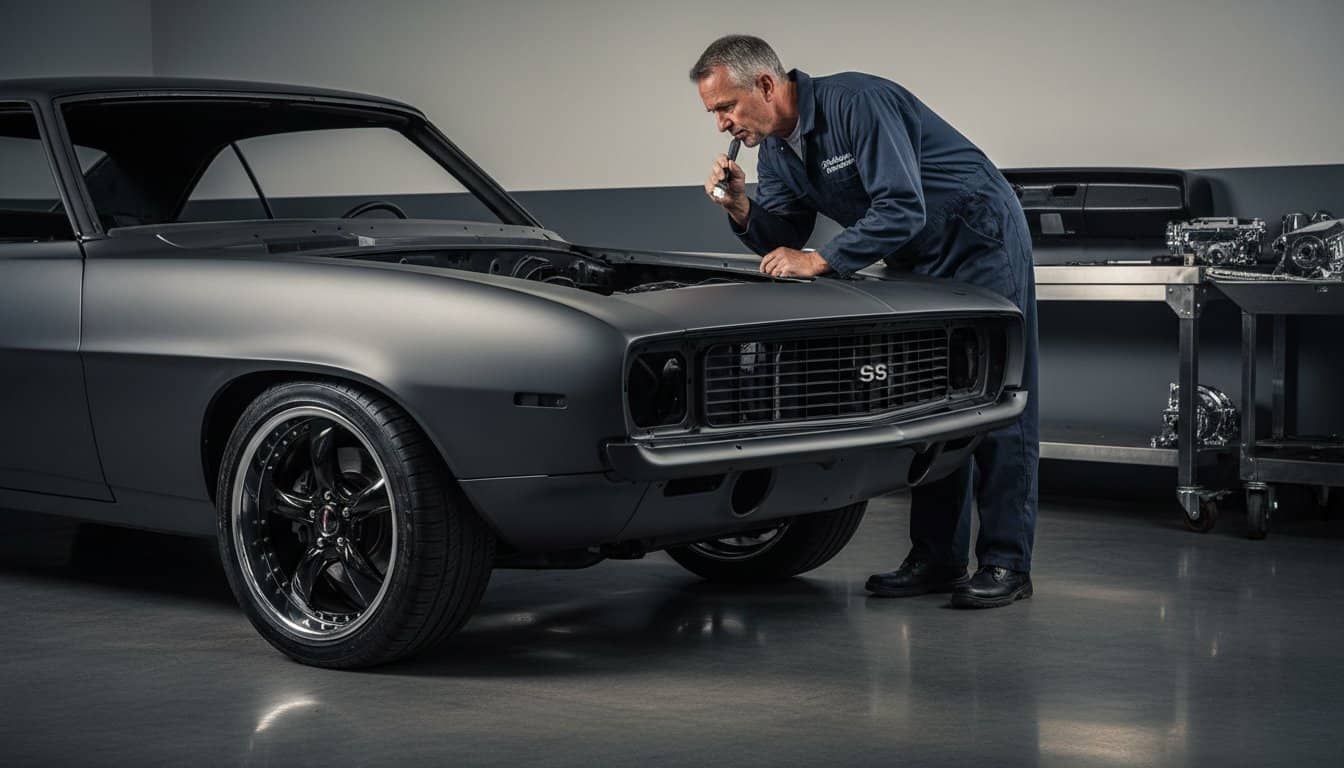
A pristine 1969 Camaro is the ultimate canvas for a restomod, yet with 243,085 units originally produced, finding an authentic donor car that hasn’t succumbed to 55 years of decay is a high-stakes hunt. You’ve likely spent hours scrolling through every 1969 camaro for sale online, only to worry that a fresh coat of paint is hiding a structural nightmare. It’s a common fear. We all want that iconic silhouette, but the anxiety of overpaying for a cloned SS or a car with a twisted frame is enough to keep your project stalled in the research phase.
You deserve to feel the thrill of the hunt without the looming threat of buyer’s remorse. This guide provides the technical roadmap you need to evaluate every potential candidate with the eyes of a professional builder. We’ll break down the critical differences between a numbers-matching survivor and a solid restomod donor, ensuring you spend your money on metal, not filler. You’ll learn to verify trim tags, inspect floor pans for hidden rot, and negotiate with the confidence of a seasoned collector. Let’s get your project off the trailer and into the shop with a foundation you can actually trust.
Key Takeaways
- Analyze the current market tiers to identify the ideal entry point for your project, whether you are seeking a raw project car or a turn-key showpiece.
- Expose hidden issues like rust crystallization and decode cowl tags to ensure you are investing in an authentic foundation rather than a costly mistake.
- Learn to navigate the competitive market for a 1969 camaro for sale by weighing the long-term value of a numbers-matching survivor against the modern thrill of a pro-touring build.
- Implement a rigorous pre-purchase inspection checklist that demands mechanical transparency and a real-world test drive before you commit your capital.
- Kickstart your Restomod Academy experience with a 90-day roadmap that prioritizes safety and structural integrity as the bedrock of your performance build.
Navigating the 1969 Camaro Market in 2026
Finding a 1969 camaro for sale in 2026 involves more than just scrolling through classifieds. This specific year represents the absolute pinnacle of the first-generation Chevrolet Camaro, and the market reflects that legendary status. Collectors and builders alike hunt for this body style because it offers the perfect canvas for both factory-correct restorations and high-performance builds. You aren’t just buying a car; you’re securing a piece of American engineering legacy that continues to appreciate as quality metal becomes harder to source.
The 2026 market demands a “buy once, cry once” philosophy. In previous years, enthusiasts might have gambled on a cheap project car, but rising labor costs for metal fabrication mean that starting with a solid foundation is now the more economical choice. If you choose a car with a compromised floor pan or rusted cowl, you’ll likely spend double the purchase price just to reach a baseline of safety. Focus your energy on finding a vehicle with structural integrity so you can spend your budget on modern performance upgrades rather than rust repair.
To better understand the quality and craftsmanship available in today’s market, watch this helpful video showcasing a high-end build:
Understanding the 2026 Price Tiers
Market values in 2026 have stabilized into three distinct tiers. Solid “driver” quality cars typically sit between $30,000 and $60,000. These vehicles usually run and drive but require interior updates or paint correction. Once you cross the $100,000 threshold, you’re looking at professional-grade restomods or numbers-matching Z/28s. If you’re planning a high-end build, check out the definitive guide to an LS engine swap to see how these modern powerplants affect value. Avoid the “danger zone” of listings under $25,000; these often hide catastrophic frame rot or VIN discrepancies that can’t be easily fixed.
Where to Look: Auctions vs. Private Sellers vs. Dealers
Your search strategy should balance risk and convenience. High-end dealers like Streetside Classics provide a layer of security through detailed inspections and simplified paperwork, though you’ll pay a premium for their curation. Online auction platforms offer a massive inventory of 1969 camaro for sale listings, but the “as-is” nature of these sales requires a cynical eye and a professional pre-purchase inspection. For the best “barn find” opportunities, engage with enthusiast forums. These tight-knit communities often trade cars internally before they ever hit the public market, allowing you to buy from a fellow builder who values the car’s history.
- Dealers: Best for buyers who want a turn-key experience and verified titles.
- Private Sellers: Ideal for finding honest “survivor” cars and negotiating directly.
- Auctions: Great for variety, but stay disciplined to avoid bidding wars on “tribute” cars that lack documented provenance.
Evaluating a 1969 Camaro: What to Look for Beyond the Paint
Hunting for a 1969 camaro for sale requires more than an eye for a mirror-like finish. You’re inspecting the structural integrity of a 55-year-old machine. Unlike the full-frame Chevelles or GTOs of the era, the 1969 Camaro features a semi-unibody design. The rear section is a single, unitized shell, while the front suspension and engine sit on a detachable subframe. This layout makes the car lighter and more agile, but it also creates specific stress points where the subframe meets the body. You must verify these connection points are solid before committing to a purchase.
Start by looking for the “Body by Fisher” door sill plates. While these are frequently replaced during a restoration, original plates often indicate that the surrounding rocker panels and floor pans haven’t been hacked apart. You should also be wary of rust crystallization. This isn’t just surface scale; it’s a deep intergranular corrosion that makes vintage steel as brittle as a cracker. If you find this in the cowl or floor pans, you’re looking at a full teardown. If you’re planning to transform your find into a modern performance machine, understanding what is a restomod will help you decide which original components are worth saving and which should be swapped for high-performance alternatives.
The “Big Three” Rust Spots You Cannot Ignore
Inspect the rear window channels with a flashlight. Water frequently traps under the stainless trim, rotting the metal and draining directly into the trunk floors. If the trunk floor feels soft or looks like Swiss cheese, the window channel is almost certainly compromised. Next, examine the front subframe mounts. These four points are critical for safety and suspension geometry; if the metal here is thin, the car will never align properly. Finally, perform a magnet test on the lower quarter panels. If the magnet drops, you’ve found “bondo-sculpted” bodywork rather than original sheet metal. For a comprehensive look at valuation and model-specific nuances, consult this 1967-69 Camaro Buyer’s Guide before you sign any paperwork.
Decoding the VIN and Cowl Tag
Authenticity is the foundation of your investment. To verify a 1969 camaro for sale, you must look beyond the dashboard VIN plate. Find the hidden partial VINs stamped on the firewall, typically located behind the heater blower motor or near the cowl vent. These numbers must match your title and the dashboard plate. The cowl tag, found on the driver side firewall, is your roadmap to the car’s original identity. Look for X-codes if the car was built in Norwood, Ohio. An X33 or X77 code confirms a legitimate Z/28, while X22 or X66 indicates a big-block SS. A numbers-matching car means the engine, transmission, and rear axle serial numbers align with the vehicle’s specific production date. This alignment can increase the resale value by 20% to 30% compared to a car with a “period-correct” but non-original drivetrain.
Choosing Your Path: Original Restoration vs. High-Performance Restomod
Deciding how to build your 1969 Camaro for sale depends on your goals for the driver’s seat. You’ll face a fork in the road between historical preservation and modern performance. A survivor car holds its value through rarity and documented history. Conversely, a restomod gains its worth through engineering excellence and daily drivability. High-end pro-touring builds frequently command prices 20 percent higher than standard restorations at major auctions because they solve the vintage headache of mechanical failure. To understand the full scope of this transformation, you should learn what is a restomod before turning a single wrench.
Preserving a rare, numbers-matching Z/28 or an SS 396 is a stewardship of history. Cutting the floorboards or swapping the original block on these investment-grade vehicles is a documented financial mistake. These cars represent a finite resource. If you find a 1969 Camaro for sale with its original drivetrain intact, your primary job is protection. Your return on investment relies on every bolt being period-correct. You’re building a time capsule, not a track monster.
The Survivor Car: Preservation and Its Costs
Driving an original 1969 Camaro requires a shift in expectations. You’re dealing with 55-year-old brake technology and steering boxes that feel vague by modern standards. Original 302 or 396 engines demand high-maintenance care, including specific zinc additives to protect flat-tappet camshafts. You’ll spend more time in the garage adjusting points than on the road. Keep it stock only when the VIN proves it’s a rare specimen like a COPO.
The Restomod Candidate: The Perfect Canvas
Look for a “plain jane” 6-cylinder or a base V8 model if you want to build a performer. These cars are the ideal foundation because they lack the “collector tax” of their high-performance siblings. You can strip them to the bare shell without guilt. For those seeking the ultimate power upgrade, check out the definitive guide to an LS engine swap to see how modern small-blocks bring 400 plus horsepower with turn-key reliability. This path turns a sluggish classic into a machine that corners like a modern sports car.

The 1969 Camaro Pre-Purchase Inspection (PPI) Checklist
Approach every 1969 camaro for sale with the clinical eye of a master restorer. You aren’t just buying a vehicle; you’re auditing a piece of American history. To do this effectively, you need a systematic inspection kit. Pack a high-intensity flashlight with at least 1000 lumens, a small magnet wrapped in a thin cloth to detect body filler, and a telescoping mirror for viewing the dark corners of the undercarriage. These tools reveal what a fresh coat of “Resale Red” paint tries to hide.
Start by interviewing the seller to gauge the car’s soul. Ask for the last 36 months of maintenance logs. A seller who can’t recall the last time they changed the differential fluid or the age of the tires likely hasn’t been a meticulous steward. Demand to see the car when the engine is stone cold. A warm engine can mask startup rattles, smoke, and poor battery health. If the car is already idling when you arrive, stay alert; the seller might be hiding a cold-start struggle.
Mechanical and Electrical Red Flags
Inspect the rocker panels and A-pillars for signs of “clipping.” This occurs when two separate car halves are welded together after a major wreck. Look for non-factory weld beads or mismatched sheet metal thickness. Beneath the dashboard, look for “rat’s nest” wiring. If you see a tangle of crimp connectors and electrical tape, you’re looking at a potential fire hazard. Check the engine’s health by observing the exhaust. Blue smoke indicates oil consumption from worn rings or valve seals. Thick white smoke points to a blown head gasket or a cracked block. Black smoke suggests the carburetor is dumping too much fuel, which can wash out cylinder walls over time.
The Test Drive: Sifting Fact from Fiction
Every 1969 camaro for sale requires a rigorous road test, regardless of how perfect it looks on a trailer. Listen for heavy clunks in the Muncie 4-speed during downshifts, which usually signals worn synchronizers. If the car has a TH400 automatic, feel for “soft” shifts or slipping between 2nd and 3rd gear. Watch the car’s tracking in your rearview mirror. If the rear end seems to kick out to one side, a condition known as “crabbing,” the frame is likely bent or the leaf spring bushings have failed. Finally, if the car is an RS model, cycle the hidden headlights at least five times. The vacuum system should snap the doors open in under 2 seconds. Any hesitation indicates a leak in the vacuum canisters or aged hoses that will require immediate attention.
Before you head out to inspect your next project, make sure you have the right recommended gear to spot hidden issues and protect your investment.
From Purchase to Performance: Starting Your Restomod Journey
Securing a 1969 Camaro for sale is the official start of your enrollment at the Restomod Academy. This moment marks your transition from a passive admirer to an active builder. We champion the “built, not bought” philosophy because it forge a deeper bond between the driver and the machine. You aren’t just purchasing a vehicle; you’re starting a multi-year project that will sharpen your mechanical skills and define your legacy as a craftsman.
The first 90 days of ownership are critical for setting the right trajectory. Don’t rush into a full frame-off teardown immediately. Instead, spend the first 2,160 hours of ownership establishing a baseline of reliability. Drive the car to feel how it tracks and listen for specific mechanical groans. This initial phase is about safety first and performance second. Use this time to audit the core systems:
- Inspect the 55-year-old wiring harness for brittle insulation and amateur repairs.
- Check the fuel lines for modern ethanol-induced degradation.
- Test the master cylinder for internal pressure leaks.
- Audit all suspension bushings for dry rot and play.
When you’re ready to move beyond the stock configuration, power is usually the first priority. Dropping a modern fuel-injected engine into a classic chassis changes everything. If you want 430 horsepower with turn-key reliability, check out our LS Engine Swap Guide to understand the mounting, cooling, and electronic requirements for this upgrade.
Prioritizing Your Upgrades
Stop before you go. Disc brake conversions are the #1 safety upgrade for any 69 Camaro. Original drum brakes often require 250 feet to stop from 60 mph. A modern 4-piston system reduces that distance by 40%, providing the confidence needed for modern traffic. It’s a vital part of what is a restomod. Focus your budget on mechanical integrity before aesthetics. A reliable drivetrain is worth more than custom upholstery.
Joining the Restomod Academy Community
Don’t tackle fabrication challenges alone. Our blueprints help you avoid the common $3,000 mistakes made during floor pan or mini-tub installations. When you hit a mechanical wall, expert consulting saves weeks of frustration. We provide the technical clarity needed to finish your build. Finding a 1969 Camaro for sale is the start; building your legacy is the mission.
Ignite Your 1969 Camaro Legacy
Finding a 1969 camaro for sale in 2026 requires more than just a quick online search; it demands a disciplined eye for structural integrity and a clear vision for modern performance. Focus on the 5-point PPI checklist to avoid the hidden pitfalls of metal fatigue or compromised suspension geometry that often plague these vintage frames. Brook Walsh founded the Restomod Academy to ensure every first-gen project benefits from the same precision found in professional fabrication shops. By following our comprehensive project blueprints, you’ll transform a vintage shell into a high-performance machine that balances 1960s soul with 21st-century reliability.
You aren’t just buying a classic car; you’re joining an expert-led community of DIY builders dedicated to the “built, not bought” philosophy. Every mechanical hurdle is a learning opportunity when you have the right technical guidance at your workbench. Download The Ultimate Restomod Guide to start your 1969 Camaro build today and join a network of enthusiasts who value craftsmanship over shortcuts. Your journey from the garage to the open road starts with a single, well-informed decision. We’ll be with you for every turn of the wrench.
Frequently Asked Questions
Is a 1969 Camaro a good investment in 2026?
Yes, the 1969 Camaro remains a blue-chip asset for 2026. Data from the Hagerty Price Guide indicates that values for “Excellent” condition models rose by 12 percent between 2021 and 2024. As internal combustion engines become rarer, these icons attract collectors who value the 1969’s unique one-year-only body style. You’re buying a piece of history that historically outpaces inflation.
What is the difference between an RS and an SS 1969 Camaro?
The RS package is an aesthetic upgrade while the SS package focuses on performance. An RS features the iconic hideaway headlights and revised taillights. The SS includes a 350 or 396 V8 engine, heavy-duty suspension, and distinct hood louvers. You can find a 1969 camaro for sale that features both packages, known as an RS/SS, which combines the hidden headlamps with big-block power.
How much does it cost to restomod a 1969 Camaro?
Expect to invest between $50,000 and $150,000 for a high-quality restomod build. According to Barrett-Jackson auction data from 2023, top-tier builds featuring LS3 swaps and aftermarket subframes frequently command six-figure prices. Your budget splits between the donor chassis, modern drivetrain components, and labor for bodywork. Focus your spending on the suspension geometry and wiring harness to ensure the car performs correctly.
Can I daily drive a 1969 Camaro if it has modern upgrades?
You can daily drive a 1969 Camaro if you prioritize modern reliability and safety. Swapping the original carburetor for an electronic fuel injection system improves cold starts and fuel efficiency by 25 percent. Pair this with a Tremec five-speed overdrive transmission to keep highway RPMs low. These upgrades transform a temperamental classic into a dependable machine that handles morning commutes and weekend cruises with equal ease.
What is a “numbers-matching” 1969 Camaro and why does it matter?
A numbers-matching car means the engine, transmission, and rear axle serial numbers align with the vehicle’s VIN. This verification proves the car retains its original factory drivetrain from 1969. For purists, this authenticity adds a 30 percent premium to the vehicle’s valuation. If you’re looking for a 1969 camaro for sale to keep as a survivor, verifying these stamps is your most critical step.
Where can I find a 1969 Camaro VIN decoder?
Locate a reliable VIN decoder through the Camaro Research Group website. Their database provides the 13-digit breakdown for every 1969 model produced at the Norwood and Van Nuys plants. The first six digits identify your model and body style, such as 12437 for a V8 coupe. Cross-reference this with the cowl tag located on the firewall to verify original paint codes and interior trim.
Should I buy a 1969 Camaro with a 6-cylinder engine for a restomod project?
Buying a 6-cylinder model is a smart move for a restomod project. Since you’ll likely replace the engine, transmission, and brakes, starting with a cheaper base model saves you the collector tax associated with original V8 cars. Approximately 18 percent of 1969 Camaros left the factory with a straight-six. You get the same iconic sheet metal while keeping more room in your budget for high-performance fabrication.
How do I spot a fake 1969 Camaro Z/28 for sale?
Spot a fake Z/28 by checking the cowl tag for the X33 or X77 code. These codes were exclusive to Norwood-built Z/28s starting in December 1968. If the car lacks these codes or shows a 350 engine instead of the high-revving 302, it’s likely a clone. Inspect the rear axle for factory multi-leaf springs and power front disc brakes, which were mandatory Z/28 equipment for that year.
A pristine 1969 Camaro is the ultimate canvas for a restomod, yet with 243,085 units originally produced, finding an authentic donor car that hasn’t succumbed to 55 years of decay is a high-stakes hunt. You’ve likely spent hours scrolling through every 1969 camaro for sale online, only to worry that a fresh coat of paint is hiding a structural nightmare. It’s a common fear. We all want that iconic silhouette, but the anxiety of overpaying for a cloned SS or a car with a twisted frame is enough to keep your project stalled in the research phase.
You deserve to feel the thrill of the hunt without the looming threat of buyer’s remorse. This guide provides the technical roadmap you need to evaluate every potential candidate with the eyes of a professional builder. We’ll break down the critical differences between a numbers-matching survivor and a solid restomod donor, ensuring you spend your money on metal, not filler. You’ll learn to verify trim tags, inspect floor pans for hidden rot, and negotiate with the confidence of a seasoned collector. Let’s get your project off the trailer and into the shop with a foundation you can actually trust.
Key Takeaways
- Analyze the current market tiers to identify the ideal entry point for your project, whether you are seeking a raw project car or a turn-key showpiece.
- Expose hidden issues like rust crystallization and decode cowl tags to ensure you are investing in an authentic foundation rather than a costly mistake.
- Learn to navigate the competitive market for a 1969 camaro for sale by weighing the long-term value of a numbers-matching survivor against the modern thrill of a pro-touring build.
- Implement a rigorous pre-purchase inspection checklist that demands mechanical transparency and a real-world test drive before you commit your capital.
- Kickstart your Restomod Academy experience with a 90-day roadmap that prioritizes safety and structural integrity as the bedrock of your performance build.
Navigating the 1969 Camaro Market in 2026
Finding a 1969 camaro for sale in 2026 involves more than just scrolling through classifieds. This specific year represents the absolute pinnacle of the first-generation Chevrolet Camaro, and the market reflects that legendary status. Collectors and builders alike hunt for this body style because it offers the perfect canvas for both factory-correct restorations and high-performance builds. You aren’t just buying a car; you’re securing a piece of American engineering legacy that continues to appreciate as quality metal becomes harder to source.
The 2026 market demands a “buy once, cry once” philosophy. In previous years, enthusiasts might have gambled on a cheap project car, but rising labor costs for metal fabrication mean that starting with a solid foundation is now the more economical choice. If you choose a car with a compromised floor pan or rusted cowl, you’ll likely spend double the purchase price just to reach a baseline of safety. Focus your energy on finding a vehicle with structural integrity so you can spend your budget on modern performance upgrades rather than rust repair.
To better understand the quality and craftsmanship available in today’s market, watch this helpful video showcasing a high-end build:
Understanding the 2026 Price Tiers
Market values in 2026 have stabilized into three distinct tiers. Solid “driver” quality cars typically sit between $30,000 and $60,000. These vehicles usually run and drive but require interior updates or paint correction. Once you cross the $100,000 threshold, you’re looking at professional-grade restomods or numbers-matching Z/28s. If you’re planning a high-end build, check out the definitive guide to an LS engine swap to see how these modern powerplants affect value. Avoid the “danger zone” of listings under $25,000; these often hide catastrophic frame rot or VIN discrepancies that can’t be easily fixed.
Where to Look: Auctions vs. Private Sellers vs. Dealers
Your search strategy should balance risk and convenience. High-end dealers like Streetside Classics provide a layer of security through detailed inspections and simplified paperwork, though you’ll pay a premium for their curation. Online auction platforms offer a massive inventory of 1969 camaro for sale listings, but the “as-is” nature of these sales requires a cynical eye and a professional pre-purchase inspection. For the best “barn find” opportunities, engage with enthusiast forums. These tight-knit communities often trade cars internally before they ever hit the public market, allowing you to buy from a fellow builder who values the car’s history.
- Dealers: Best for buyers who want a turn-key experience and verified titles.
- Private Sellers: Ideal for finding honest “survivor” cars and negotiating directly.
- Auctions: Great for variety, but stay disciplined to avoid bidding wars on “tribute” cars that lack documented provenance.
Evaluating a 1969 Camaro: What to Look for Beyond the Paint
Hunting for a 1969 camaro for sale requires more than an eye for a mirror-like finish. You’re inspecting the structural integrity of a 55-year-old machine. Unlike the full-frame Chevelles or GTOs of the era, the 1969 Camaro features a semi-unibody design. The rear section is a single, unitized shell, while the front suspension and engine sit on a detachable subframe. This layout makes the car lighter and more agile, but it also creates specific stress points where the subframe meets the body. You must verify these connection points are solid before committing to a purchase.
Start by looking for the “Body by Fisher” door sill plates. While these are frequently replaced during a restoration, original plates often indicate that the surrounding rocker panels and floor pans haven’t been hacked apart. You should also be wary of rust crystallization. This isn’t just surface scale; it’s a deep intergranular corrosion that makes vintage steel as brittle as a cracker. If you find this in the cowl or floor pans, you’re looking at a full teardown. If you’re planning to transform your find into a modern performance machine, understanding what is a restomod will help you decide which original components are worth saving and which should be swapped for high-performance alternatives.
The “Big Three” Rust Spots You Cannot Ignore
Inspect the rear window channels with a flashlight. Water frequently traps under the stainless trim, rotting the metal and draining directly into the trunk floors. If the trunk floor feels soft or looks like Swiss cheese, the window channel is almost certainly compromised. Next, examine the front subframe mounts. These four points are critical for safety and suspension geometry; if the metal here is thin, the car will never align properly. Finally, perform a magnet test on the lower quarter panels. If the magnet drops, you’ve found “bondo-sculpted” bodywork rather than original sheet metal. For a comprehensive look at valuation and model-specific nuances, consult this 1967-69 Camaro Buyer’s Guide before you sign any paperwork.
Decoding the VIN and Cowl Tag
Authenticity is the foundation of your investment. To verify a 1969 camaro for sale, you must look beyond the dashboard VIN plate. Find the hidden partial VINs stamped on the firewall, typically located behind the heater blower motor or near the cowl vent. These numbers must match your title and the dashboard plate. The cowl tag, found on the driver side firewall, is your roadmap to the car’s original identity. Look for X-codes if the car was built in Norwood, Ohio. An X33 or X77 code confirms a legitimate Z/28, while X22 or X66 indicates a big-block SS. A numbers-matching car means the engine, transmission, and rear axle serial numbers align with the vehicle’s specific production date. This alignment can increase the resale value by 20% to 30% compared to a car with a “period-correct” but non-original drivetrain.
Choosing Your Path: Original Restoration vs. High-Performance Restomod
Deciding how to build your 1969 Camaro for sale depends on your goals for the driver’s seat. You’ll face a fork in the road between historical preservation and modern performance. A survivor car holds its value through rarity and documented history. Conversely, a restomod gains its worth through engineering excellence and daily drivability. High-end pro-touring builds frequently command prices 20 percent higher than standard restorations at major auctions because they solve the vintage headache of mechanical failure. To understand the full scope of this transformation, you should learn what is a restomod before turning a single wrench.
Preserving a rare, numbers-matching Z/28 or an SS 396 is a stewardship of history. Cutting the floorboards or swapping the original block on these investment-grade vehicles is a documented financial mistake. These cars represent a finite resource. If you find a 1969 Camaro for sale with its original drivetrain intact, your primary job is protection. Your return on investment relies on every bolt being period-correct. You’re building a time capsule, not a track monster.
The Survivor Car: Preservation and Its Costs
Driving an original 1969 Camaro requires a shift in expectations. You’re dealing with 55-year-old brake technology and steering boxes that feel vague by modern standards. Original 302 or 396 engines demand high-maintenance care, including specific zinc additives to protect flat-tappet camshafts. You’ll spend more time in the garage adjusting points than on the road. Keep it stock only when the VIN proves it’s a rare specimen like a COPO.
The Restomod Candidate: The Perfect Canvas
Look for a “plain jane” 6-cylinder or a base V8 model if you want to build a performer. These cars are the ideal foundation because they lack the “collector tax” of their high-performance siblings. You can strip them to the bare shell without guilt. For those seeking the ultimate power upgrade, check out the definitive guide to an LS engine swap to see how modern small-blocks bring 400 plus horsepower with turn-key reliability. This path turns a sluggish classic into a machine that corners like a modern sports car.

The 1969 Camaro Pre-Purchase Inspection (PPI) Checklist
Approach every 1969 camaro for sale with the clinical eye of a master restorer. You aren’t just buying a vehicle; you’re auditing a piece of American history. To do this effectively, you need a systematic inspection kit. Pack a high-intensity flashlight with at least 1000 lumens, a small magnet wrapped in a thin cloth to detect body filler, and a telescoping mirror for viewing the dark corners of the undercarriage. These tools reveal what a fresh coat of “Resale Red” paint tries to hide.
Start by interviewing the seller to gauge the car’s soul. Ask for the last 36 months of maintenance logs. A seller who can’t recall the last time they changed the differential fluid or the age of the tires likely hasn’t been a meticulous steward. Demand to see the car when the engine is stone cold. A warm engine can mask startup rattles, smoke, and poor battery health. If the car is already idling when you arrive, stay alert; the seller might be hiding a cold-start struggle.
Mechanical and Electrical Red Flags
Inspect the rocker panels and A-pillars for signs of “clipping.” This occurs when two separate car halves are welded together after a major wreck. Look for non-factory weld beads or mismatched sheet metal thickness. Beneath the dashboard, look for “rat’s nest” wiring. If you see a tangle of crimp connectors and electrical tape, you’re looking at a potential fire hazard. Check the engine’s health by observing the exhaust. Blue smoke indicates oil consumption from worn rings or valve seals. Thick white smoke points to a blown head gasket or a cracked block. Black smoke suggests the carburetor is dumping too much fuel, which can wash out cylinder walls over time.
The Test Drive: Sifting Fact from Fiction
Every 1969 camaro for sale requires a rigorous road test, regardless of how perfect it looks on a trailer. Listen for heavy clunks in the Muncie 4-speed during downshifts, which usually signals worn synchronizers. If the car has a TH400 automatic, feel for “soft” shifts or slipping between 2nd and 3rd gear. Watch the car’s tracking in your rearview mirror. If the rear end seems to kick out to one side, a condition known as “crabbing,” the frame is likely bent or the leaf spring bushings have failed. Finally, if the car is an RS model, cycle the hidden headlights at least five times. The vacuum system should snap the doors open in under 2 seconds. Any hesitation indicates a leak in the vacuum canisters or aged hoses that will require immediate attention.
Before you head out to inspect your next project, make sure you have the right recommended gear to spot hidden issues and protect your investment.
From Purchase to Performance: Starting Your Restomod Journey
Securing a 1969 Camaro for sale is the official start of your enrollment at the Restomod Academy. This moment marks your transition from a passive admirer to an active builder. We champion the “built, not bought” philosophy because it forge a deeper bond between the driver and the machine. You aren’t just purchasing a vehicle; you’re starting a multi-year project that will sharpen your mechanical skills and define your legacy as a craftsman.
The first 90 days of ownership are critical for setting the right trajectory. Don’t rush into a full frame-off teardown immediately. Instead, spend the first 2,160 hours of ownership establishing a baseline of reliability. Drive the car to feel how it tracks and listen for specific mechanical groans. This initial phase is about safety first and performance second. Use this time to audit the core systems:
- Inspect the 55-year-old wiring harness for brittle insulation and amateur repairs.
- Check the fuel lines for modern ethanol-induced degradation.
- Test the master cylinder for internal pressure leaks.
- Audit all suspension bushings for dry rot and play.
When you’re ready to move beyond the stock configuration, power is usually the first priority. Dropping a modern fuel-injected engine into a classic chassis changes everything. If you want 430 horsepower with turn-key reliability, check out our LS Engine Swap Guide to understand the mounting, cooling, and electronic requirements for this upgrade.
Prioritizing Your Upgrades
Stop before you go. Disc brake conversions are the #1 safety upgrade for any 69 Camaro. Original drum brakes often require 250 feet to stop from 60 mph. A modern 4-piston system reduces that distance by 40%, providing the confidence needed for modern traffic. It’s a vital part of what is a restomod. Focus your budget on mechanical integrity before aesthetics. A reliable drivetrain is worth more than custom upholstery.
Joining the Restomod Academy Community
Don’t tackle fabrication challenges alone. Our blueprints help you avoid the common $3,000 mistakes made during floor pan or mini-tub installations. When you hit a mechanical wall, expert consulting saves weeks of frustration. We provide the technical clarity needed to finish your build. Finding a 1969 Camaro for sale is the start; building your legacy is the mission.
Ignite Your 1969 Camaro Legacy
Finding a 1969 camaro for sale in 2026 requires more than just a quick online search; it demands a disciplined eye for structural integrity and a clear vision for modern performance. Focus on the 5-point PPI checklist to avoid the hidden pitfalls of metal fatigue or compromised suspension geometry that often plague these vintage frames. Brook Walsh founded the Restomod Academy to ensure every first-gen project benefits from the same precision found in professional fabrication shops. By following our comprehensive project blueprints, you’ll transform a vintage shell into a high-performance machine that balances 1960s soul with 21st-century reliability.
You aren’t just buying a classic car; you’re joining an expert-led community of DIY builders dedicated to the “built, not bought” philosophy. Every mechanical hurdle is a learning opportunity when you have the right technical guidance at your workbench. Download The Ultimate Restomod Guide to start your 1969 Camaro build today and join a network of enthusiasts who value craftsmanship over shortcuts. Your journey from the garage to the open road starts with a single, well-informed decision. We’ll be with you for every turn of the wrench.
Frequently Asked Questions
Is a 1969 Camaro a good investment in 2026?
Yes, the 1969 Camaro remains a blue-chip asset for 2026. Data from the Hagerty Price Guide indicates that values for “Excellent” condition models rose by 12 percent between 2021 and 2024. As internal combustion engines become rarer, these icons attract collectors who value the 1969’s unique one-year-only body style. You’re buying a piece of history that historically outpaces inflation.
What is the difference between an RS and an SS 1969 Camaro?
The RS package is an aesthetic upgrade while the SS package focuses on performance. An RS features the iconic hideaway headlights and revised taillights. The SS includes a 350 or 396 V8 engine, heavy-duty suspension, and distinct hood louvers. You can find a 1969 camaro for sale that features both packages, known as an RS/SS, which combines the hidden headlamps with big-block power.
How much does it cost to restomod a 1969 Camaro?
Expect to invest between $50,000 and $150,000 for a high-quality restomod build. According to Barrett-Jackson auction data from 2023, top-tier builds featuring LS3 swaps and aftermarket subframes frequently command six-figure prices. Your budget splits between the donor chassis, modern drivetrain components, and labor for bodywork. Focus your spending on the suspension geometry and wiring harness to ensure the car performs correctly.
Can I daily drive a 1969 Camaro if it has modern upgrades?
You can daily drive a 1969 Camaro if you prioritize modern reliability and safety. Swapping the original carburetor for an electronic fuel injection system improves cold starts and fuel efficiency by 25 percent. Pair this with a Tremec five-speed overdrive transmission to keep highway RPMs low. These upgrades transform a temperamental classic into a dependable machine that handles morning commutes and weekend cruises with equal ease.
What is a “numbers-matching” 1969 Camaro and why does it matter?
A numbers-matching car means the engine, transmission, and rear axle serial numbers align with the vehicle’s VIN. This verification proves the car retains its original factory drivetrain from 1969. For purists, this authenticity adds a 30 percent premium to the vehicle’s valuation. If you’re looking for a 1969 camaro for sale to keep as a survivor, verifying these stamps is your most critical step.
Where can I find a 1969 Camaro VIN decoder?
Locate a reliable VIN decoder through the Camaro Research Group website. Their database provides the 13-digit breakdown for every 1969 model produced at the Norwood and Van Nuys plants. The first six digits identify your model and body style, such as 12437 for a V8 coupe. Cross-reference this with the cowl tag located on the firewall to verify original paint codes and interior trim.
Should I buy a 1969 Camaro with a 6-cylinder engine for a restomod project?
Buying a 6-cylinder model is a smart move for a restomod project. Since you’ll likely replace the engine, transmission, and brakes, starting with a cheaper base model saves you the collector tax associated with original V8 cars. Approximately 18 percent of 1969 Camaros left the factory with a straight-six. You get the same iconic sheet metal while keeping more room in your budget for high-performance fabrication.
How do I spot a fake 1969 Camaro Z/28 for sale?
Spot a fake Z/28 by checking the cowl tag for the X33 or X77 code. These codes were exclusive to Norwood-built Z/28s starting in December 1968. If the car lacks these codes or shows a 350 engine instead of the high-revving 302, it’s likely a clone. Inspect the rear axle for factory multi-leaf springs and power front disc brakes, which were mandatory Z/28 equipment for that year.