
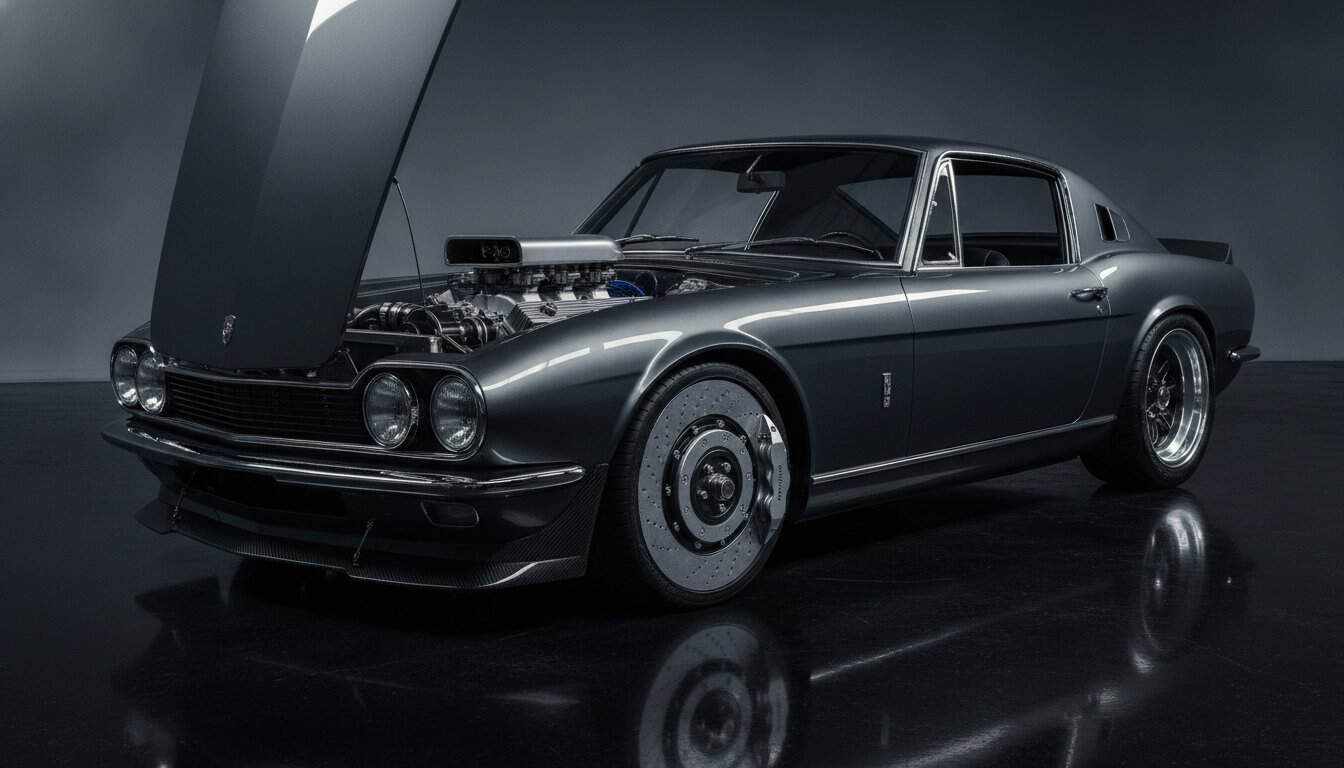
Is your dream car a masterpiece of design that spends more time on jack stands than on the open road? Most enthusiasts start with a vision of vintage chrome and leather, only to be sidelined by the harsh reality of fifty-year-old wiring and unpredictable drum brakes. You aren’t alone in wanting that timeless silhouette without the constant anxiety of a roadside breakdown. It’s frustrating to watch a project stall because of technical complexity or costs that seem to spiral out of control. However, effective restomod project planning transforms these hurdles into a series of manageable, rewarding victories.
You can build a machine that honors its heritage while delivering the turn-key reliability of a modern performance vehicle. This mentor-led guide provides the exact framework you need to bridge the gap between classic aesthetics and contemporary engineering. We’ll walk through a methodical process that prioritizes safety and precision over guesswork. From selecting the right drivetrain to managing your budget against current market labor rates, you’ll gain the confidence to stop being a passive admirer and start being an active creator. Let’s get to work on making your classic a daily-driver reality.
Key Takeaways
- Define your vision by balancing heritage aesthetics with 2026 reliability standards to ensure your classic is as dependable as it is beautiful.
- Adopt a methodical approach to restomod project planning to eliminate the technical complexity and hidden costs that often derail ambitious builds.
- Understand the critical engineering requirements for powertrain swaps, including why chassis reinforcement is essential for handling modern torque levels.
- Learn to integrate contemporary creature comforts and sound-deadening materials without compromising the nostalgic character of your car’s interior.
- Master the professional assembly sequence to protect your investment, ensuring every component is tested and tuned before the final drive.
The Philosophy of Restomodding: Where Heritage Style Meets 2026 Reliability
To truly appreciate a vintage machine, you have to drive it. But 1960s technology often creates a barrier between the owner and the open road. Restomodding is the deliberate process of restoring a classic car while weaving in modern technology for superior performance and safety. In the 2026 market, where Gen X and older Millennials are the primary collectors, the demand for vehicles that can handle modern traffic is at an all-time high. This movement is about more than just speed; it’s about making a classic usable in a world that has moved on from points ignition and bias-ply tires.
The Philosophy of Restomodding teaches us that a vehicle is more than a static sculpture. By prioritizing reliability, you aren’t erasing history; you’re ensuring it survives. Whether you’re looking at a subtle suspension upgrade or a full-scale modern chassis swap, your restomod project planning must start with a clear intent. You’re building a bridge between the soul of the past and the precision of the present.
Restomod vs. Restoration: Choosing Your Path
Choosing between a concours restoration and a restomod is a decision of function over form. A pure restoration aims for factory-perfect accuracy, which is ideal for rare survivor cars that belong in a museum. However, for most enthusiasts, the restomod meaning is rooted in utility. Restomods typically offer a better return on investment for those who want to actually use their vehicles. While a restoration might cost more in specialized labor to source date-coded parts, a restomod allows you to invest in performance components that improve the driving experience. Don’t cut up a rare, numbers-matching survivor; instead, find a solid donor that’s ready for a new lease on life.
The 2026 Advantages of Modernizing a Classic
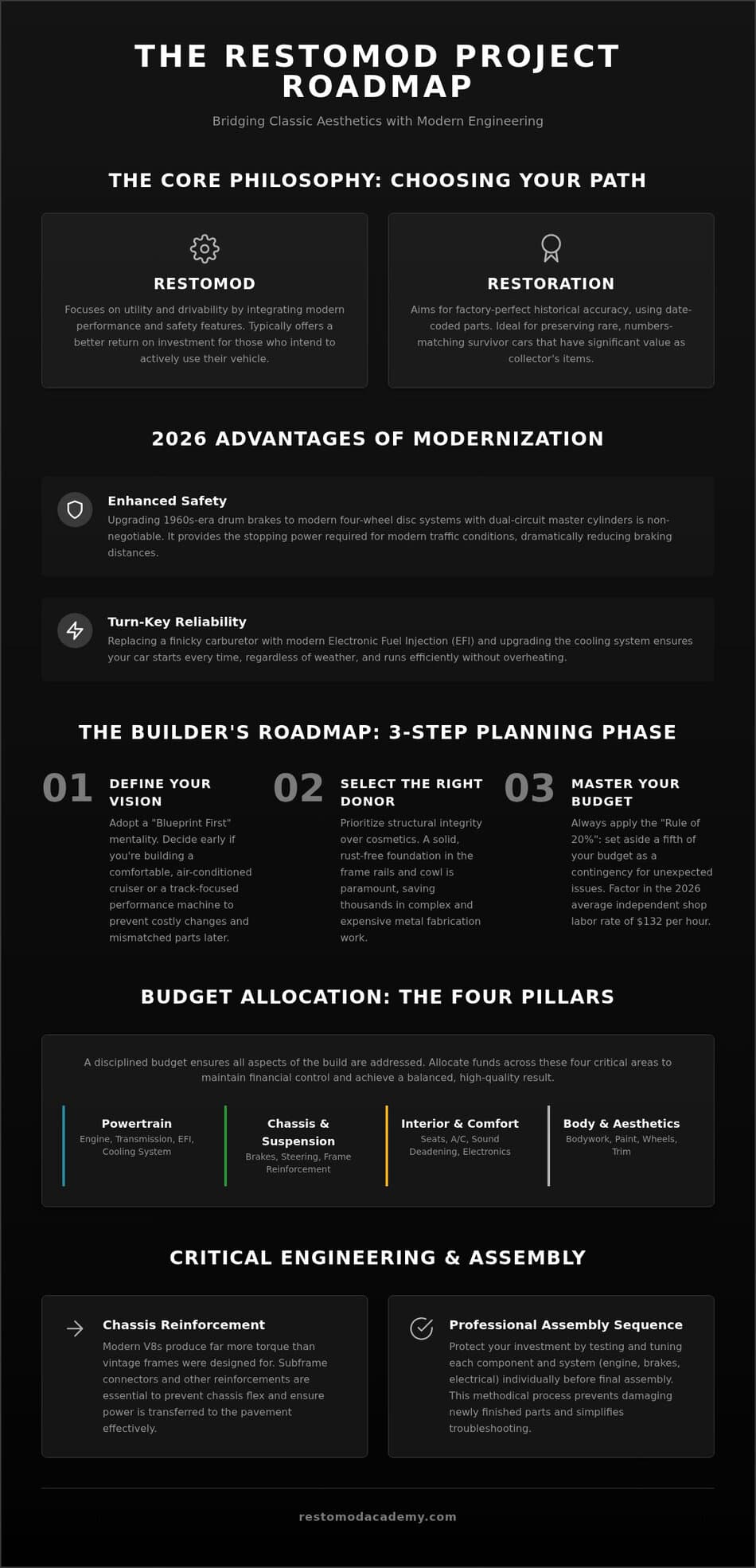
Safety is the most compelling reason to modernize. 1960s drum brakes weren’t designed for the aggressive stop-and-go traffic of 2026. Upgrading to modern discs and dual-circuit master cylinders is a non-negotiable step for any builder. Reliability follows closely. Replacing a finicky carburetor with electronic fuel injection (EFI) means your car starts every time, regardless of the weather. When you combine these with modern cooling systems, you transform a weekend-only garage queen into a legitimate daily driver. This evolution is the heart of effective restomod project planning, ensuring your investment is something you can actually enjoy on the pavement.
Planning Your Restomod Project: The Builder’s Roadmap
Success in the workshop starts at the drafting table. Many enthusiasts dive head-first into a teardown only to realize they lack a cohesive vision. You need to decide early if your priority is blistering track performance or a comfortable, air-conditioned cruiser. This Blueprint First mentality is what separates finished masterpieces from abandoned projects. Without a structured approach to restomod project planning, you’ll likely find yourself stalled by conflicting parts or exhausted funds.
Sourcing the right donor car is your next critical step. Look past the faded paint and focus on structural integrity. Rust in the cowl or frame rails can double your bodywork costs instantly. As you evaluate potential candidates, stay informed on the legal landscape of vehicle modification. Organizations like SEMA advocate for the Mechanical Transformation: Power, Handling, and Safety standards that keep our hobby legal and safe on modern roads. Choosing a solid foundation prevents your dream from becoming a nightmare of endless metal fabrication.
Budgeting for the Unexpected
Financial transparency with yourself is non-negotiable. Always apply the Rule of 20%; set aside a fifth of your total budget for the inevitable while I’m in there discoveries. In 2026, the national average for independent shop labor is $132 per hour. Doing your own mechanical assembly can save thousands, but be honest about your skill level. Allocate your funds across four pillars: powertrain, chassis and suspension, interior comfort, and final aesthetics. This discipline ensures that your restomod project planning remains grounded in reality even when your ambition starts to soar.
Essential Tools for the DIY Mentor
You can’t build a 21st-century car with 19th-century tools. Beyond basic wrenches, you’ll need a high-quality welder for modern chassis stiffening and digital diagnostic tools for tuning fuel injection systems. Precision is the goal here. If you’re unsure where to start outfitting your space, check our recommended gear for a curated list of workshop essentials. Taking the time to set up your environment correctly makes every technical challenge a learning opportunity rather than a frustration. If you need a more personalized strategy, our Restomod Consulting Services can help you navigate these complex planning hurdles before you turn the first bolt.
Mechanical Transformation: Power, Handling, and Safety
Once your roadmap is set, it’s time to dive into the mechanical heart of the build. This phase is where the most significant technical hurdles live, but it is also where your classic truly earns its modern wings. Selecting a powertrain requires a realistic look at how you intend to use the car. While a 1,000-horsepower monster sounds impressive, a well-tuned 450-horsepower engine with modern fuel injection offers the drivability and efficiency needed for a cross-country tour. Effective restomod project planning balances these performance goals with the practicalities of modern fuel availability and cooling demands.
Don’t make the mistake of dropping a high-torque engine into a stock vintage chassis without reinforcement. Classic frames were designed for much lower power levels; excessive torque can twist the body or even crack the windshield under load. Integrating subframe connectors or a custom X-brace provides the rigidity required to handle contemporary performance levels safely. This structural integrity also allows your suspension to work more effectively, as the chassis no longer acts as a giant spring. For a deeper look at these dynamics, explore suspension upgrades for cars to understand how to sharpen your vehicle’s reflexes.
The Modern Engine Swap: Power with Precision
Choosing your platform is a pivotal moment. The debate between an LS swap and a Coyote swap often comes down to packaging and personal brand loyalty. LS engines are prized for their compact dimensions and massive aftermarket support, making them fit into engine bays where overhead cam engines struggle. If you’re leaning toward the GM platform, consult our the definitive guide to an ls engine swap for a technical breakdown of the process. If you prefer to keep the original block, a modern EFI conversion provides the cold-start reliability and crisp throttle response that carburetors simply cannot match.
Braking and Suspension: Controlling the Power
Power is addictive, but it’s dangerous if you can’t stop. Transitioning from antiquated drum brakes to a modern four-wheel disc system is the single most important safety upgrade you can perform. Modern coilovers further enhance this control, allowing you to dial in ride height and damping for a perfect balance of comfort and cornering ability. Finally, consider a rack and pinion conversion. This replaces the vague, slow steering boxes of the past with a direct, connected road feel that makes every corner a joy. This holistic approach to restomod project planning ensures that your car is as safe at a standstill as it is at full throttle.
The Modern Interior: Comfort Without Losing Classic Soul
While the mechanical heart of your build provides the thrill, the interior is where you’ll experience the results of your labor. A true restomod isn’t just about speed. It’s about creating a cabin where you can comfortably endure a five-hour road trip without fatigue. Success in this phase depends on your ability to blend vintage aesthetics with 21st-century creature comforts. You want the cockpit to feel like a time capsule that has been meticulously upgraded with modern ergonomics. This specific stage of restomod project planning requires a delicate touch to ensure that technology serves the design rather than overwhelming its historical character.
Climate Control and Sound Management
Modern air conditioning is a non-negotiable requirement for a legitimate daily driver. Fortunately, you can integrate modern AC systems into vintage dashboards without cutting original metal by using model-specific kits. These systems often utilize factory vents and controls to maintain a seamless look. Pair this with a comprehensive strategy for sound management. Strategic use of sound-deadening materials applied to the floor pans, doors, and roof does more than just silence road noise. These materials provide essential heat transfer resistance, turning a loud, hot cabin into a premium environment. When selecting insulation, check our product reviews for the best climate control and sound-dampening options. Upgrading your seats with modern foam densities or installing units with better lateral support will provide the ergonomic support needed for long-distance touring.
Digital Integration and Modern Gauges
A reliable electrical system is the foundation of any modern interior. Replace your old, brittle wiring with a modern harness to eliminate the risk of electrical gremlins or fires. Once the foundation is secure, you can focus on digital integration that respects analog charm. Modern digital dashes now mimic original analog styles, offering precise engine data without clashing with the dash’s period-correct silhouette. For audio, hidden Bluetooth systems allow you to keep the factory radio in the dash while enjoying modern sound quality. This meticulous approach to restomod project planning ensures your car remains a vintage machine at heart while functioning like a modern luxury vehicle.
If you’re ready to transition from planning to execution, visit Restomod Academy to master every detail of your interior transformation and design a cabin that honors your car’s heritage.
Executing the Build: From First Bolt to Final Drive
The transition from a blueprint to a rolling machine is the most demanding phase of any build. This is where your restomod project planning is put to the ultimate test. Don’t rush to the paint booth. Perform a complete mechanical mock-up instead. Fit every bracket, route every wire, and mount the entire cooling system before a single drop of color hits the metal. This dry fit prevents you from having to grind or weld on a finished surface later, protecting both your budget and your sanity. It is much easier to relocate a reservoir now than it is after the engine bay has been polished.
As you move into final assembly, maintain a rigorous standard for quality control. Every fastener should be torqued to spec and marked with a paint pen to verify it has been checked. If you hit a wall with complex engineering hurdles, like custom wiring integration or chassis geometry, don’t hesitate to seek guidance. Utilizing Restomod Consulting Services can save you weeks of frustration by providing a fresh set of expert eyes on a difficult problem. This collaborative approach ensures that your project continues to move forward with precision, turning a collection of parts into a cohesive, high-performance machine.
The DIY vs. Professional Debate
There is a unique pride in the personal labor philosophy we champion. Turning your own wrenches creates a connection to the vehicle that a checkbook simply cannot buy. However, be realistic about your limitations. Tasks involving structural safety, such as complex roll cage fabrication, often require the specialized equipment and experience of a professional shop. Your role as the lead builder is to manage these contributions while staying true to your original vision. You are the conductor of this mechanical symphony, ensuring that every outsourced component fits perfectly into your broader restomod project planning framework.
Your First 500 Miles: The Break-In Period
The first 500 miles are the most critical in the life of your new build. Develop a post-build inspection checklist to catch the loose bolts or minor fluid leaks that inevitably appear after initial heat cycles and road vibrations. When performing these checks, ensure you have the recommended gear for a thorough nut-and-bolt inspection. Use this time to refine your tuning. Modern EFI systems are incredibly capable, but they require fine-tuning to perform optimally in your specific local climate and driving conditions. Once the mechanical systems are settled, protect your investment. Secure an agreed-value insurance policy that reflects the true market value of your labor and premium parts. Finally, join the community. Sharing your journey and learning from peers is the best way to transition from a student of the craft to a mentor for the next generation of enthusiasts.
Your Journey to the Driver’s Seat Starts Now
Building a restomod is about more than just modernizing a machine; it’s about preserving a legacy while claiming the freedom of the open road. You’ve learned that the secret to a successful build lies in the balance of heritage aesthetics and 2026 reliability standards. By prioritizing a methodical approach to restomod project planning, you eliminate the guesswork and ensure every hour in the garage brings you closer to a turn-key reality. Whether you are stiffening a chassis for modern torque or integrating a seamless digital dash, your dedication to precision defines the quality of the final drive.
You don’t have to navigate these complex engineering hurdles alone. With expert mentorship from Brook Walsh and our authoritative guides on LS engine swaps, you have a steady hand to guide you through every technical challenge. From premium project blueprints to step-by-step assembly sequences, the resources you need are ready for you. Download The Ultimate Restomod Guide and start your build today to transform your passive admiration into active creation. The workshop is waiting, and the satisfaction of that first successful test drive is well within your reach. Let’s get to work.
Frequently Asked Questions
Is restomodding a car more expensive than a standard restoration?
Restomodding often carries a higher entry point than a standard restoration. In the 2026 market, basic projects typically start between $65,000 and $180,000 because you are paying for both the restoration of the body and the acquisition of modern performance systems. While a standard restoration focuses on sourcing period-correct parts, a restomod requires the additional cost of modern crate engines and performance suspension. Labor is the dominant factor, especially if you outsource to high-end shops charging $135 or more per hour for specialized fabrication.
What are the best classic cars to use for a restomod project?
The best donors are cars with extensive aftermarket support, such as the first-generation Ford Mustang, the Chevrolet Camaro, or the C10 pickup. These platforms have a wealth of ready-made parts that simplify restomod project planning by reducing the need for custom one-off fabrication. Choosing a popular model ensures you can find proven suspension kits and engine mounts that have been tested by thousands of other builders, making the assembly process much more predictable.
Does restomodding a car hurt its resale value?
Resale value typically increases for well-executed restomods on common production vehicles. Many buyers in 2026 prefer the drivability of modern fuel injection and disc brakes over factory originality for their weekend cruisers. However, you should avoid restomodding a rare, low-mileage survivor car. In those specific cases, the historical value of a numbers-matching machine usually outweighs the market demand for modern performance upgrades, making a pure restoration the better financial choice.
Can I restomod a car by myself in a home garage?
You can absolutely execute a build in a home garage with the right mindset and equipment. Most mechanical assembly, wiring, and interior work are well within the reach of a dedicated DIY enthusiast. While you might outsource specialized tasks like final body paint or complex roll cage welding to professional facilities, performing the bulk of the labor yourself is the best way to master the technical intricacies of your machine. It turns the workshop into a classroom where you are the lead engineer; for those who wish to take this mechanical expertise into the aviation field, AMT Guides offers specialized resources for technician certification.
What is the most common engine swap for a restomod build?
The GM LS engine is the undisputed king of swaps because of its compact overhead valve design and massive power-to-weight ratio. It fits into almost any engine bay with minimal cutting. While Ford’s Coyote 5.0L is a fantastic modern engine, its wide dual-overhead-cam cylinder heads often require more intensive restomod project planning to clear shock towers and steering components in older chassis. The LS remains the go-to choice for its simplicity and the sheer volume of available mounting kits.
How long does a typical restomod project take to complete?
Do I need special insurance for a restomod vehicle?
You must secure an agreed-value policy to protect the true worth of your vehicle. Standard insurance companies usually value cars based on their age and original equipment, which would leave you severely underinsured after a total loss. An agreed-value policy recognizes the cost of your modern drivetrain, custom fabrication, and specialized labor. This ensures that your financial investment is fully covered in the event of an accident, providing peace of mind every time you hit the road.
What is the difference between a restomod and a pro-touring car?
A restomod is a general category for any classic car with modern parts, but pro-touring is a specific discipline focused on maximum handling performance. Pro-touring cars are built to compete in autocross and road course events, featuring aggressive suspension geometry and massive brakes. While all pro-touring cars are restomods, not every restomod is a pro-touring machine. Many are built simply for comfortable cruising and reliable daily use rather than shaving seconds off a lap time at the track.
Is your dream car a masterpiece of design that spends more time on jack stands than on the open road? Most enthusiasts start with a vision of vintage chrome and leather, only to be sidelined by the harsh reality of fifty-year-old wiring and unpredictable drum brakes. You aren’t alone in wanting that timeless silhouette without the constant anxiety of a roadside breakdown. It’s frustrating to watch a project stall because of technical complexity or costs that seem to spiral out of control. However, effective restomod project planning transforms these hurdles into a series of manageable, rewarding victories.
You can build a machine that honors its heritage while delivering the turn-key reliability of a modern performance vehicle. This mentor-led guide provides the exact framework you need to bridge the gap between classic aesthetics and contemporary engineering. We’ll walk through a methodical process that prioritizes safety and precision over guesswork. From selecting the right drivetrain to managing your budget against current market labor rates, you’ll gain the confidence to stop being a passive admirer and start being an active creator. Let’s get to work on making your classic a daily-driver reality.
Key Takeaways
- Define your vision by balancing heritage aesthetics with 2026 reliability standards to ensure your classic is as dependable as it is beautiful.
- Adopt a methodical approach to restomod project planning to eliminate the technical complexity and hidden costs that often derail ambitious builds.
- Understand the critical engineering requirements for powertrain swaps, including why chassis reinforcement is essential for handling modern torque levels.
- Learn to integrate contemporary creature comforts and sound-deadening materials without compromising the nostalgic character of your car’s interior.
- Master the professional assembly sequence to protect your investment, ensuring every component is tested and tuned before the final drive.
The Philosophy of Restomodding: Where Heritage Style Meets 2026 Reliability
To truly appreciate a vintage machine, you have to drive it. But 1960s technology often creates a barrier between the owner and the open road. Restomodding is the deliberate process of restoring a classic car while weaving in modern technology for superior performance and safety. In the 2026 market, where Gen X and older Millennials are the primary collectors, the demand for vehicles that can handle modern traffic is at an all-time high. This movement is about more than just speed; it’s about making a classic usable in a world that has moved on from points ignition and bias-ply tires.
The Philosophy of Restomodding teaches us that a vehicle is more than a static sculpture. By prioritizing reliability, you aren’t erasing history; you’re ensuring it survives. Whether you’re looking at a subtle suspension upgrade or a full-scale modern chassis swap, your restomod project planning must start with a clear intent. You’re building a bridge between the soul of the past and the precision of the present.
Restomod vs. Restoration: Choosing Your Path
Choosing between a concours restoration and a restomod is a decision of function over form. A pure restoration aims for factory-perfect accuracy, which is ideal for rare survivor cars that belong in a museum. However, for most enthusiasts, the restomod meaning is rooted in utility. Restomods typically offer a better return on investment for those who want to actually use their vehicles. While a restoration might cost more in specialized labor to source date-coded parts, a restomod allows you to invest in performance components that improve the driving experience. Don’t cut up a rare, numbers-matching survivor; instead, find a solid donor that’s ready for a new lease on life.
The 2026 Advantages of Modernizing a Classic
Safety is the most compelling reason to modernize. 1960s drum brakes weren’t designed for the aggressive stop-and-go traffic of 2026. Upgrading to modern discs and dual-circuit master cylinders is a non-negotiable step for any builder. Reliability follows closely. Replacing a finicky carburetor with electronic fuel injection (EFI) means your car starts every time, regardless of the weather. When you combine these with modern cooling systems, you transform a weekend-only garage queen into a legitimate daily driver. This evolution is the heart of effective restomod project planning, ensuring your investment is something you can actually enjoy on the pavement.
Planning Your Restomod Project: The Builder’s Roadmap
Success in the workshop starts at the drafting table. Many enthusiasts dive head-first into a teardown only to realize they lack a cohesive vision. You need to decide early if your priority is blistering track performance or a comfortable, air-conditioned cruiser. This Blueprint First mentality is what separates finished masterpieces from abandoned projects. Without a structured approach to restomod project planning, you’ll likely find yourself stalled by conflicting parts or exhausted funds.
Sourcing the right donor car is your next critical step. Look past the faded paint and focus on structural integrity. Rust in the cowl or frame rails can double your bodywork costs instantly. As you evaluate potential candidates, stay informed on the legal landscape of vehicle modification. Organizations like SEMA advocate for the Mechanical Transformation: Power, Handling, and Safety standards that keep our hobby legal and safe on modern roads. Choosing a solid foundation prevents your dream from becoming a nightmare of endless metal fabrication.
Budgeting for the Unexpected
Financial transparency with yourself is non-negotiable. Always apply the Rule of 20%; set aside a fifth of your total budget for the inevitable while I’m in there discoveries. In 2026, the national average for independent shop labor is $132 per hour. Doing your own mechanical assembly can save thousands, but be honest about your skill level. Allocate your funds across four pillars: powertrain, chassis and suspension, interior comfort, and final aesthetics. This discipline ensures that your restomod project planning remains grounded in reality even when your ambition starts to soar.
Essential Tools for the DIY Mentor
You can’t build a 21st-century car with 19th-century tools. Beyond basic wrenches, you’ll need a high-quality welder for modern chassis stiffening and digital diagnostic tools for tuning fuel injection systems. Precision is the goal here. If you’re unsure where to start outfitting your space, check our recommended gear for a curated list of workshop essentials. Taking the time to set up your environment correctly makes every technical challenge a learning opportunity rather than a frustration. If you need a more personalized strategy, our Restomod Consulting Services can help you navigate these complex planning hurdles before you turn the first bolt.
Mechanical Transformation: Power, Handling, and Safety
Once your roadmap is set, it’s time to dive into the mechanical heart of the build. This phase is where the most significant technical hurdles live, but it is also where your classic truly earns its modern wings. Selecting a powertrain requires a realistic look at how you intend to use the car. While a 1,000-horsepower monster sounds impressive, a well-tuned 450-horsepower engine with modern fuel injection offers the drivability and efficiency needed for a cross-country tour. Effective restomod project planning balances these performance goals with the practicalities of modern fuel availability and cooling demands.
Don’t make the mistake of dropping a high-torque engine into a stock vintage chassis without reinforcement. Classic frames were designed for much lower power levels; excessive torque can twist the body or even crack the windshield under load. Integrating subframe connectors or a custom X-brace provides the rigidity required to handle contemporary performance levels safely. This structural integrity also allows your suspension to work more effectively, as the chassis no longer acts as a giant spring. For a deeper look at these dynamics, explore suspension upgrades for cars to understand how to sharpen your vehicle’s reflexes.
The Modern Engine Swap: Power with Precision
Choosing your platform is a pivotal moment. The debate between an LS swap and a Coyote swap often comes down to packaging and personal brand loyalty. LS engines are prized for their compact dimensions and massive aftermarket support, making them fit into engine bays where overhead cam engines struggle. If you’re leaning toward the GM platform, consult our the definitive guide to an ls engine swap for a technical breakdown of the process. If you prefer to keep the original block, a modern EFI conversion provides the cold-start reliability and crisp throttle response that carburetors simply cannot match.
Braking and Suspension: Controlling the Power
Power is addictive, but it’s dangerous if you can’t stop. Transitioning from antiquated drum brakes to a modern four-wheel disc system is the single most important safety upgrade you can perform. Modern coilovers further enhance this control, allowing you to dial in ride height and damping for a perfect balance of comfort and cornering ability. Finally, consider a rack and pinion conversion. This replaces the vague, slow steering boxes of the past with a direct, connected road feel that makes every corner a joy. This holistic approach to restomod project planning ensures that your car is as safe at a standstill as it is at full throttle.
The Modern Interior: Comfort Without Losing Classic Soul
While the mechanical heart of your build provides the thrill, the interior is where you’ll experience the results of your labor. A true restomod isn’t just about speed. It’s about creating a cabin where you can comfortably endure a five-hour road trip without fatigue. Success in this phase depends on your ability to blend vintage aesthetics with 21st-century creature comforts. You want the cockpit to feel like a time capsule that has been meticulously upgraded with modern ergonomics. This specific stage of restomod project planning requires a delicate touch to ensure that technology serves the design rather than overwhelming its historical character.
Climate Control and Sound Management
Modern air conditioning is a non-negotiable requirement for a legitimate daily driver. Fortunately, you can integrate modern AC systems into vintage dashboards without cutting original metal by using model-specific kits. These systems often utilize factory vents and controls to maintain a seamless look. Pair this with a comprehensive strategy for sound management. Strategic use of sound-deadening materials applied to the floor pans, doors, and roof does more than just silence road noise. These materials provide essential heat transfer resistance, turning a loud, hot cabin into a premium environment. When selecting insulation, check our product reviews for the best climate control and sound-dampening options. Upgrading your seats with modern foam densities or installing units with better lateral support will provide the ergonomic support needed for long-distance touring.
Digital Integration and Modern Gauges
A reliable electrical system is the foundation of any modern interior. Replace your old, brittle wiring with a modern harness to eliminate the risk of electrical gremlins or fires. Once the foundation is secure, you can focus on digital integration that respects analog charm. Modern digital dashes now mimic original analog styles, offering precise engine data without clashing with the dash’s period-correct silhouette. For audio, hidden Bluetooth systems allow you to keep the factory radio in the dash while enjoying modern sound quality. This meticulous approach to restomod project planning ensures your car remains a vintage machine at heart while functioning like a modern luxury vehicle.
If you’re ready to transition from planning to execution, visit Restomod Academy to master every detail of your interior transformation and design a cabin that honors your car’s heritage.
Executing the Build: From First Bolt to Final Drive
The transition from a blueprint to a rolling machine is the most demanding phase of any build. This is where your restomod project planning is put to the ultimate test. Don’t rush to the paint booth. Perform a complete mechanical mock-up instead. Fit every bracket, route every wire, and mount the entire cooling system before a single drop of color hits the metal. This dry fit prevents you from having to grind or weld on a finished surface later, protecting both your budget and your sanity. It is much easier to relocate a reservoir now than it is after the engine bay has been polished.
As you move into final assembly, maintain a rigorous standard for quality control. Every fastener should be torqued to spec and marked with a paint pen to verify it has been checked. If you hit a wall with complex engineering hurdles, like custom wiring integration or chassis geometry, don’t hesitate to seek guidance. Utilizing Restomod Consulting Services can save you weeks of frustration by providing a fresh set of expert eyes on a difficult problem. This collaborative approach ensures that your project continues to move forward with precision, turning a collection of parts into a cohesive, high-performance machine.
The DIY vs. Professional Debate
There is a unique pride in the personal labor philosophy we champion. Turning your own wrenches creates a connection to the vehicle that a checkbook simply cannot buy. However, be realistic about your limitations. Tasks involving structural safety, such as complex roll cage fabrication, often require the specialized equipment and experience of a professional shop. Your role as the lead builder is to manage these contributions while staying true to your original vision. You are the conductor of this mechanical symphony, ensuring that every outsourced component fits perfectly into your broader restomod project planning framework.
Your First 500 Miles: The Break-In Period
The first 500 miles are the most critical in the life of your new build. Develop a post-build inspection checklist to catch the loose bolts or minor fluid leaks that inevitably appear after initial heat cycles and road vibrations. When performing these checks, ensure you have the recommended gear for a thorough nut-and-bolt inspection. Use this time to refine your tuning. Modern EFI systems are incredibly capable, but they require fine-tuning to perform optimally in your specific local climate and driving conditions. Once the mechanical systems are settled, protect your investment. Secure an agreed-value insurance policy that reflects the true market value of your labor and premium parts. Finally, join the community. Sharing your journey and learning from peers is the best way to transition from a student of the craft to a mentor for the next generation of enthusiasts.
Your Journey to the Driver’s Seat Starts Now
Building a restomod is about more than just modernizing a machine; it’s about preserving a legacy while claiming the freedom of the open road. You’ve learned that the secret to a successful build lies in the balance of heritage aesthetics and 2026 reliability standards. By prioritizing a methodical approach to restomod project planning, you eliminate the guesswork and ensure every hour in the garage brings you closer to a turn-key reality. Whether you are stiffening a chassis for modern torque or integrating a seamless digital dash, your dedication to precision defines the quality of the final drive.
You don’t have to navigate these complex engineering hurdles alone. With expert mentorship from Brook Walsh and our authoritative guides on LS engine swaps, you have a steady hand to guide you through every technical challenge. From premium project blueprints to step-by-step assembly sequences, the resources you need are ready for you. Download The Ultimate Restomod Guide and start your build today to transform your passive admiration into active creation. The workshop is waiting, and the satisfaction of that first successful test drive is well within your reach. Let’s get to work.
Frequently Asked Questions
Is restomodding a car more expensive than a standard restoration?
Restomodding often carries a higher entry point than a standard restoration. In the 2026 market, basic projects typically start between $65,000 and $180,000 because you are paying for both the restoration of the body and the acquisition of modern performance systems. While a standard restoration focuses on sourcing period-correct parts, a restomod requires the additional cost of modern crate engines and performance suspension. Labor is the dominant factor, especially if you outsource to high-end shops charging $135 or more per hour for specialized fabrication.
What are the best classic cars to use for a restomod project?
The best donors are cars with extensive aftermarket support, such as the first-generation Ford Mustang, the Chevrolet Camaro, or the C10 pickup. These platforms have a wealth of ready-made parts that simplify restomod project planning by reducing the need for custom one-off fabrication. Choosing a popular model ensures you can find proven suspension kits and engine mounts that have been tested by thousands of other builders, making the assembly process much more predictable.
Does restomodding a car hurt its resale value?
Resale value typically increases for well-executed restomods on common production vehicles. Many buyers in 2026 prefer the drivability of modern fuel injection and disc brakes over factory originality for their weekend cruisers. However, you should avoid restomodding a rare, low-mileage survivor car. In those specific cases, the historical value of a numbers-matching machine usually outweighs the market demand for modern performance upgrades, making a pure restoration the better financial choice.
Can I restomod a car by myself in a home garage?
You can absolutely execute a build in a home garage with the right mindset and equipment. Most mechanical assembly, wiring, and interior work are well within the reach of a dedicated DIY enthusiast. While you might outsource specialized tasks like final body paint or complex roll cage welding to professional facilities, performing the bulk of the labor yourself is the best way to master the technical intricacies of your machine. It turns the workshop into a classroom where you are the lead engineer.
What is the most common engine swap for a restomod build?
The GM LS engine is the undisputed king of swaps because of its compact overhead valve design and massive power-to-weight ratio. It fits into almost any engine bay with minimal cutting. While Ford’s Coyote 5.0L is a fantastic modern engine, its wide dual-overhead-cam cylinder heads often require more intensive restomod project planning to clear shock towers and steering components in older chassis. The LS remains the go-to choice for its simplicity and the sheer volume of available mounting kits.
How long does a typical restomod project take to complete?
A professional build can require 4,000 to 5,000 hours of labor, but a high-quality street restomod usually takes between 1,500 and 2,500 hours. If you are working as a solo builder in your spare time, expect the journey to span three to five years. Rushing the process often leads to safety compromises or skipped steps, so it’s better to embrace a methodical, long-term pace. Patience in the workshop is just as important as the quality of the parts you install.
Do I need special insurance for a restomod vehicle?
You must secure an agreed-value policy to protect the true worth of your vehicle. Standard insurance companies usually value cars based on their age and original equipment, which would leave you severely underinsured after a total loss. An agreed-value policy recognizes the cost of your modern drivetrain, custom fabrication, and specialized labor. This ensures that your financial investment is fully covered in the event of an accident, providing peace of mind every time you hit the road.
What is the difference between a restomod and a pro-touring car?
A restomod is a general category for any classic car with modern parts, but pro-touring is a specific discipline focused on maximum handling performance. Pro-touring cars are built to compete in autocross and road course events, featuring aggressive suspension geometry and massive brakes. While all pro-touring cars are restomods, not every restomod is a pro-touring machine. Many are built simply for comfortable cruising and reliable daily use rather than shaving seconds off a lap time at the track.