
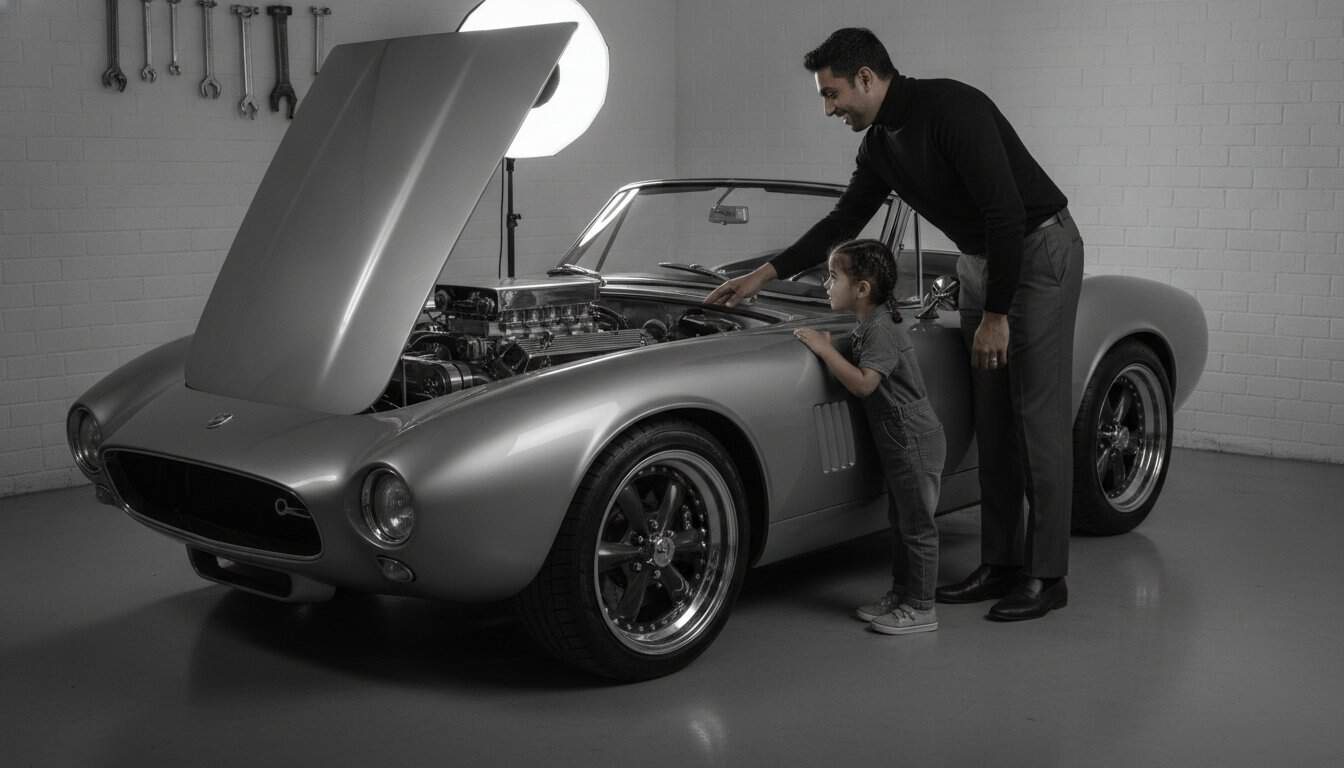
Imagine it’s a Saturday afternoon, and you’re standing in the garage with a wrench in hand while your family’s laughter drifts in from the backyard. You love the mechanical heritage of your vintage machine, but the guilt of missing out on life’s moments is starting to weigh heavier than a cast-iron engine block. Mastering the art of balancing a project car with family life is the most important tool in your workshop, yet it’s often the one most builders forget to sharpen. You’ve likely felt the sting of financial strain from unplanned parts runs or the frustration of a project that’s been in pieces for years.
It doesn’t have to be this way. You can build a high-performance, roadworthy machine without sacrificing your sanity or your seat at the dinner table. This guide provides a clear roadmap to help you transition from a frustrated tinkerer to a successful creator. We’ll examine how strategic planning and modern restomodding principles can streamline your work. You’ll learn to manage the 1,500 to 2,500 labor hours required for a typical DIY build with precision, ensuring you spend less time stuck in the garage and more time behind the wheel with the people you love.
Key Takeaways
- Identify the common friction points between your restoration goals and domestic duties so you don’t cause financial or emotional strain on your household.
- Implement a project management framework using the 15-minute win strategy to keep momentum steady even when life gets busy.
- Transform your build from a solo mission into a shared family adventure by assigning age-appropriate tasks that foster mechanical interest in your children.
- Master the art of balancing a project car with family life by prioritizing modern safety and drivability upgrades that everyone can enjoy on the open road.
- Recognize the early signs of project fatigue and learn when to leverage professional consulting to push through technical roadblocks.
The Reality Check: Why Project Cars and Family Life Often Clash
Every builder knows the intoxicating pull of the garage. It’s your sanctuary, but when your project becomes a source of tension at the dinner table, you’ve hit a mechanical wall. The Reality Check: Why Project Cars and Family Life Often Clash is about more than just finding a spare hour; it’s about preserving your relationships while pursuing your passion. Balancing a project car with family life requires you to acknowledge that your hobby doesn’t exist in a vacuum. It shares space, money, and emotional energy with the people you love most.
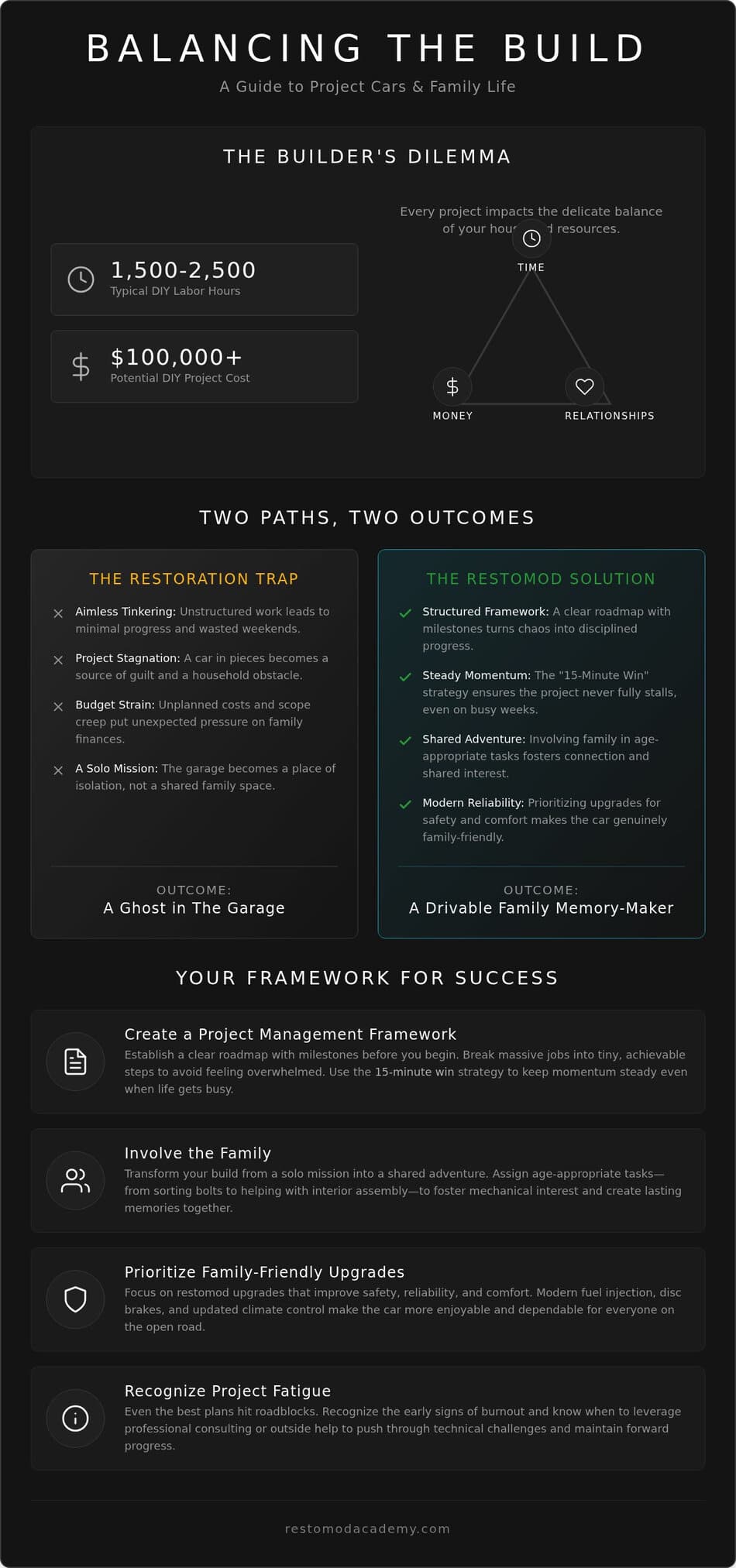
Traditional restorations often lead to stagnation. A car in pieces for years creates a psychological weight that affects everyone in the house. When a vehicle occupies the garage but never moves, it stops being a dream and starts being an obstacle. Research indicates that a DIY restomod can take between 1,500 and 2,500 labor hours. If those hours aren’t managed with precision, the project car becomes a ghost that haunts your family schedule rather than a vehicle that serves it.
The Time-Money-Relationship Triangle
Think of your household as having a finite time bank. Every Saturday spent grinding rust is a significant withdrawal. This tension often escalates when hidden costs emerge. A DIY project can cost around $100,000, and unplanned parts purchases can quickly strain the household budget. Project creep, the slow expansion of your build’s scope, is the primary enemy. It turns a simple engine refresh into a full frame-off restoration, delaying the day your family can actually enjoy the car together. The emotional cost of an unfinished machine is high; it represents a promise of fun that remains unfulfilled.
Restomodding as a Solution for Modern Life
This is where understanding what is a restomod changes the game. Unlike pure vintage restorations that require constant maintenance just to stay roadworthy, restomods prioritize modern reliability. By integrating fuel injection, disc brakes, and updated climate control, you create a vehicle that’s a viable family cruiser. Your spouse and children are more likely to support the build if they know the final result is a safe, comfortable machine they actually want to ride in. Focus on performance that improves drivability. If you feel stuck, tools like The Ultimate Restomod Guide can help you streamline the process, ensuring that balancing a project car with family life remains a shared victory rather than a solo struggle.
Creating a Project Management Framework for the Garage
Aimless tinkering is the fastest way to stall a build. Without a roadmap, you’ll find yourself standing in the garage for two hours only to realize you’ve accomplished nothing but moving a pile of parts from one corner to another. A structured framework is the secret to balancing a project car with family life. It transforms the workshop from a place of chaotic labor into a zone of disciplined progress. Start by establishing a clear project roadmap that identifies every major milestone before you ever pick up a wrench. This prevents the analysis paralysis that often leads to a car sitting on jack stands for years.
Utilize the 15-minute win strategy to keep the momentum high during busy work weeks. If you can’t commit a full Saturday, commit to one small task like cleaning a gasket surface or organizing a bolt bin. These micro-victories keep the project active in your mind and prevent the guilt of total stagnation. Use digital tools and technical blueprints to eliminate the guesswork. When you have a proven plan to follow, you spend less time in trial-and-error and more time making tangible progress toward a drivable machine. Setting a realistic budget is equally vital; ensure it includes a family fun buffer so your automotive passion doesn’t come at the expense of household joy.
The Power of the Micro-Goal
Massive undertakings like engine swaps can feel overwhelming when viewed as a single task. Break these down into tiny, achievable steps. Instead of “install engine,” your goal for the night should be “torque the motor mount bolts.” You can use resources like the definitive guide to an LS engine swap to see how a complex process is naturally segmented into logical phases. Write a single sentence defining your goal for each session. This clarity ensures you don’t wander off into unrelated sub-tasks that don’t move the project forward. Documenting these small wins creates a visual record of progress that maintains your motivation through the long, slow phases of assembly.
Scheduling Garage Time Like a Professional
Communication is your most valuable tool for balancing a project car with family life. Negotiate specific garage hours with your partner well in advance. When you have a set schedule, you eliminate the friction of surprise conflicts and “just one more hour” excuses. Respect this schedule with absolute discipline. If your session ends at 5:00 PM, stop at 5:00 PM. Being fully present for family events shows that you value your people as much as your pistons. A project that respects family boundaries is a project the whole family can support. If you find yourself stuck at a technical plateau, Restomod Consulting Services can provide the expert guidance needed to get your project back on track quickly.
Involving the Family: From Passive Observers to Active Creators
Stop treating the garage as a fortress of solitude. If the door is always shut, your project remains a mysterious drain on your time and energy. Open the bay, turn on the lights, and invite your family into the process. Balancing a project car with family life is significantly easier when the build feels like a shared adventure rather than a solo obsession. When your partner and children have a hand in the assembly, they stop seeing the car as a rival for your attention and start seeing it as a family legacy in the making. This shift in perspective transforms your workshop into a place of connection rather than isolation.
This transition requires you to step into the role of a mentor. You aren’t just building a machine; you’re building mechanical literacy and confidence in your kids. It is about creating a welcoming environment where mistakes are treated as valuable learning opportunities. Ensure the workshop is clean, well-lit, and stocked with recommended gear like safety glasses and gloves that actually fit smaller hands. This accessibility transforms the workspace from an intimidating maze of grease and steel into a playground of creativity and shared achievement among a community of like-minded enthusiasts in your own home.
Age-Appropriate Garage Tasks
Engagement starts with tasks that match your helper’s skill level. Younger children can sort hardware or clean non-critical parts to learn the value of order and preparation. As they grow, introduce them to complex systems like wiring logic or the tactile satisfaction of trim assembly. Always prioritize safety gear and proper tool handling as the first lesson of every session. By giving them real responsibilities, you foster a genuine interest in the craft that lasts a lifetime.
Designing for Shared Comfort
Vintage cars are often loud, hot, and smelly, which causes many families to lose interest after the first drive. Change this narrative by involving your family in the design phase. Let your partner help choose interior materials or modern tech features that make long cruises enjoyable. Prioritize restomod upgrades like high-quality sound deadening and modern climate control systems. When the car is comfortable and safe, it stops being a garage ornament and becomes a vessel for memories. Building a car that everyone actually wants to ride in is the ultimate goal of balancing a project car with family life.
Prioritizing Restomod Upgrades That Benefit the Family
Shift your focus from the drag strip to the local cruise night. While raw horsepower might win bragging rights at a car show, it won’t win over your spouse or children if the vehicle is a chore to drive. Balancing a project car with family life means investing in upgrades that increase the vehicle’s utility and safety. You want a machine that feels as confident in a school drop-off line as it does on a winding backroad. Select performance parts that prioritize drivability and predictable behavior. Modern cooling systems and advanced climate control are essential for year-round use, ensuring the cabin remains a sanctuary regardless of the weather outside.
Evaluate your project through the lens of a passenger. High-performance builds often sacrifice comfort for speed, but a family restomod requires a more balanced approach. Integrating modern audio and seamless connectivity keeps everyone entertained during long hauls. High-fidelity sound deadening is another critical investment; it allows for clear conversations and a premium feel that rivals modern luxury vehicles. When you build with these priorities, the project stops being a selfish pursuit and becomes a shared family asset.
Safety First: Brakes and Suspension
Vintage drum brakes are a liability in modern traffic. Upgrading to a big brake kit is a non-negotiable step for any family-oriented restomod. These systems provide the stopping power and fade resistance necessary to handle the weight of a full cabin safely. Pair this with modern seat belts and reinforced seating mounts to provide genuine peace of mind for every passenger. Handling should be equally reliable to ensure safety in emergency maneuvers. Focus on modern geometry that makes your classic feel planted and responsive rather than just lowering the car for aesthetics.
Reliability: The Key to Family Support
Nothing kills family enthusiasm faster than a car that won’t start when it’s time to head out. Pure vintage setups with temperamental carburetors often lead to canceled plans and domestic frustration. Embrace modern fuel injection to ensure your engine fires up every time, regardless of temperature or elevation. If you want the ultimate in dependable performance, consider a modern power plant. You can explore the definitive guide to an LS engine swap to understand how modern technology can transform a high-maintenance machine into a reliable daily cruiser that the whole family can trust. If you’re struggling to choose the right components for your specific goals, The Ultimate Restomod Guide provides the technical clarity you need to finish your build efficiently.
Navigating the Long Haul with the Restomod Academy Approach
A restomod project is a marathon, not a sprint. There will be seasons where the enthusiasm of the first teardown fades and the sheer volume of remaining tasks feels insurmountable. Recognizing the signs of project fatigue is a critical skill for any builder. If you find yourself walking into the garage only to turn around and walk back out, it’s time to pivot. Balancing a project car with family life requires you to be honest about your energy levels. Sometimes, the best thing you can do for your build and your family is to step away for a week to recharge your mental batteries.
The Restomod Academy approach emphasizes the importance of celebration. Don’t wait for the final paint job to acknowledge your progress. Celebrate the small milestones with the whole family, whether it’s the first time the engine fires or the day the interior is finally bolted in. These moments transform the project from a lonely labor into a collective triumph. Keeping the end goal in sight is vital; you aren’t just building a car, you’re creating a reliable vessel for future family memories.
When to Call in the Experts
There is no shame in seeking a guiding hand when you hit a technical plateau. If a specific hurdle like a complex wiring harness or a stubborn suspension geometry is threatening your family harmony, it’s time to reevaluate your strategy. Professional consulting offers a way to bypass months of trial and error. By leveraging Restomod Consulting Services, you gain access to a proven educational framework that moves your project toward completion with surgical precision. Value the time you save by following a roadmap developed by experts who have already navigated these hurdles. This proactive step ensures that balancing a project car with family life doesn’t lead to a car that sits in pieces for a decade.
The Ultimate Reward: The First Family Drive
The first family drive is more than just a mechanical test; it’s a commemoration of your shared journey. Plan a special trip to mark the completion of a major phase. Focus on the sensory experience that only a modern-classic hybrid can provide. Feel the rumble of a modern V8 through a vintage chassis and enjoy the cool air from a high-efficiency climate control system. This is the moment where the years of meticulous labor translate into tangible joy. The journey of building together, teaching your children the value of precision, and collaborating with your partner on design is just as valuable as the finished machine itself. Your restomod is now a functional piece of your family’s story.
Take the Wheel of Your Shared Legacy
Building a world-class machine doesn’t require you to choose between your passion and your people. You now have the framework to integrate your workshop time into a healthy household rhythm. By utilizing professional planning tactics and involving your family in design decisions, you transform a solo labor into a collective triumph. Success comes from prioritizing modern reliability and safety; it ensures the final result is a vehicle your family is eager to ride in. Mastering the art of balancing a project car with family life is the ultimate victory for any dedicated builder.
Don’t let your dream stall on jack stands. Stop the project car struggle and Download The Ultimate Restomod Guide today to finish your build faster. You’ll gain expert guidance from founder Brook Walsh and access actionable blueprints for modern reliability. Join a community of dedicated DIY builders who are turning vintage metal into modern masterpieces. Your journey from passive admirer to active creator is just beginning. Pick up your tools with confidence; the road is waiting for you and your family.
Frequently Asked Questions
How do I explain the cost of a project car to my partner?
Be honest about the financial commitment from the start. A high-quality DIY restomod can realistically cost around $100,000 in 2026. Present a clear budget that includes a family fun buffer to ensure your hobby doesn’t drain the household of joy. Frame the car as a shared family legacy rather than a private expense. This transparency builds trust and helps you manage cash flow effectively over the two to four years required for a build.
What are the best car projects for families with small children?
Muscle cars are the leading choice for restomod projects, holding a 31.4% market share. They offer excellent parts availability and enough interior room for the whole crew. Look for vintage wagons or four-door sedans if you have small children. These body styles make balancing a project car with family life much easier because you can actually fit modern car seats. Choosing a popular platform ensures you won’t struggle to find the safety upgrades necessary for your kids.
Is it possible to build a restomod on a tight budget without losing my weekends?
You can achieve steady progress by applying the 15-minute win strategy during the week. This approach keeps the project moving without consuming every Saturday. Focus on one specific system at a time to avoid expensive project creep. Using Premium Project Blueprints helps you eliminate the trial-and-error that wastes precious hours. By working with precision and following a structured plan, you can build a high-quality machine while remaining fully present for your family’s weekend activities.
How can I make my garage safer for my kids to be around?
Safety starts with a disciplined workshop environment. Invest in locking cabinets for all hazardous chemicals and sharp tools. Create a dedicated safe zone for children that is well away from heavy machinery or unstable components on jack stands. Always provide them with high-quality safety gear like gloves and eye protection that fits properly. Teaching your kids the value of workshop safety from day one builds their confidence and ensures the garage remains a welcoming space for everyone.
Which restomod upgrades provide the most value for family comfort?
Prioritize modern climate control and high-fidelity sound deadening. These upgrades address the heat and noise that often make vintage cars unpleasant for passengers. Modern fuel injection is another high-value choice because it ensures the car starts reliably every time. When you focus on these comfort-driven enhancements, the vehicle transitions from a loud garage ornament into a reliable cruiser that your spouse and children will actually look forward to riding in for long weekend trips and car shows.
How do I stay motivated when the project feels like it is taking forever?
Motivation often fades when you lose sight of the finish line. Keep a visual log of your progress to remind yourself how far you’ve come from the initial teardown. Celebrate the completion of major phases, like finishing the wiring or the first engine start, with the whole family. If you hit a technical wall that feels insurmountable, leverage Restomod Consulting Services. Getting expert advice can provide the breakthrough you need to push past the plateau and regain your momentum.
Should I buy the Ultimate Restomod Guide if I am a complete beginner?
The Ultimate Restomod Guide is the perfect starting point for any novice builder. It’s designed to empower enthusiasts to transition from passive admirers to active creators by breaking down complex tasks into achievable steps. You don’t need a lifetime of mechanical experience to begin. The guide provides a comprehensive roadmap that helps you avoid the common mistakes that lead to project stagnation. It’s an essential tool for anyone who wants to build with precision from the very first day.
Can restomodding a car actually be a good family investment?
Restomodding can be a powerful investment in family legacy and mechanical literacy. While a DIY project requires a significant commitment of time and money, the finished vehicle holds its value in a market projected to reach $14.4 billion by 2036. Beyond the financial aspect, the skills your children learn and the memories you create during the build are priceless. You are creating a unique, modern-classic hybrid that can be enjoyed and passed down through your family for generations.
Imagine it’s a Saturday afternoon, and you’re standing in the garage with a wrench in hand while your family’s laughter drifts in from the backyard. You love the mechanical heritage of your vintage machine, but the guilt of missing out on life’s moments is starting to weigh heavier than a cast-iron engine block. Mastering the art of balancing a project car with family life is the most important tool in your workshop, yet it’s often the one most builders forget to sharpen. You’ve likely felt the sting of financial strain from unplanned parts runs or the frustration of a project that’s been in pieces for years.
It doesn’t have to be this way. You can build a high-performance, roadworthy machine without sacrificing your sanity or your seat at the dinner table. This guide provides a clear roadmap to help you transition from a frustrated tinkerer to a successful creator. We’ll examine how strategic planning and modern restomodding principles can streamline your work. You’ll learn to manage the 1,500 to 2,500 labor hours required for a typical DIY build with precision, ensuring you spend less time stuck in the garage and more time behind the wheel with the people you love.
Key Takeaways
- Identify the common friction points between your restoration goals and domestic duties so you don’t cause financial or emotional strain on your household.
- Implement a project management framework using the 15-minute win strategy to keep momentum steady even when life gets busy.
- Transform your build from a solo mission into a shared family adventure by assigning age-appropriate tasks that foster mechanical interest in your children.
- Master the art of balancing a project car with family life by prioritizing modern safety and drivability upgrades that everyone can enjoy on the open road.
- Recognize the early signs of project fatigue and learn when to leverage professional consulting to push through technical roadblocks.
The Reality Check: Why Project Cars and Family Life Often Clash
Every builder knows the intoxicating pull of the garage. It’s your sanctuary, but when your project becomes a source of tension at the dinner table, you’ve hit a mechanical wall. The Reality Check: Why Project Cars and Family Life Often Clash is about more than just finding a spare hour; it’s about preserving your relationships while pursuing your passion. Balancing a project car with family life requires you to acknowledge that your hobby doesn’t exist in a vacuum. It shares space, money, and emotional energy with the people you love most.
Traditional restorations often lead to stagnation. A car in pieces for years creates a psychological weight that affects everyone in the house. When a vehicle occupies the garage but never moves, it stops being a dream and starts being an obstacle. Research indicates that a DIY restomod can take between 1,500 and 2,500 labor hours. If those hours aren’t managed with precision, the project car becomes a ghost that haunts your family schedule rather than a vehicle that serves it.
The Time-Money-Relationship Triangle
Think of your household as having a finite time bank. Every Saturday spent grinding rust is a significant withdrawal. This tension often escalates when hidden costs emerge. A DIY project can cost around $100,000, and unplanned parts purchases can quickly strain the household budget. Project creep, the slow expansion of your build’s scope, is the primary enemy. It turns a simple engine refresh into a full frame-off restoration, delaying the day your family can actually enjoy the car together. The emotional cost of an unfinished machine is high; it represents a promise of fun that remains unfulfilled.
Restomodding as a Solution for Modern Life
This is where understanding what is a restomod changes the game. Unlike pure vintage restorations that require constant maintenance just to stay roadworthy, restomods prioritize modern reliability. By integrating fuel injection, disc brakes, and updated climate control, you create a vehicle that’s a viable family cruiser. Your spouse and children are more likely to support the build if they know the final result is a safe, comfortable machine they actually want to ride in. Focus on performance that improves drivability. If you feel stuck, tools like The Ultimate Restomod Guide can help you streamline the process, ensuring that balancing a project car with family life remains a shared victory rather than a solo struggle.
Creating a Project Management Framework for the Garage
Aimless tinkering is the fastest way to stall a build. Without a roadmap, you’ll find yourself standing in the garage for two hours only to realize you’ve accomplished nothing but moving a pile of parts from one corner to another. A structured framework is the secret to balancing a project car with family life. It transforms the workshop from a place of chaotic labor into a zone of disciplined progress. Start by establishing a clear project roadmap that identifies every major milestone before you ever pick up a wrench. This prevents the analysis paralysis that often leads to a car sitting on jack stands for years.
Utilize the 15-minute win strategy to keep the momentum high during busy work weeks. If you can’t commit a full Saturday, commit to one small task like cleaning a gasket surface or organizing a bolt bin. These micro-victories keep the project active in your mind and prevent the guilt of total stagnation. Use digital tools and technical blueprints to eliminate the guesswork. When you have a proven plan to follow, you spend less time in trial-and-error and more time making tangible progress toward a drivable machine. Setting a realistic budget is equally vital; ensure it includes a family fun buffer so your automotive passion doesn’t come at the expense of household joy.
The Power of the Micro-Goal
Massive undertakings like engine swaps can feel overwhelming when viewed as a single task. Break these down into tiny, achievable steps. Instead of “install engine,” your goal for the night should be “torque the motor mount bolts.” You can use resources like the definitive guide to an LS engine swap to see how a complex process is naturally segmented into logical phases. Write a single sentence defining your goal for each session. This clarity ensures you don’t wander off into unrelated sub-tasks that don’t move the project forward. Documenting these small wins creates a visual record of progress that maintains your motivation through the long, slow phases of assembly.
Scheduling Garage Time Like a Professional
Communication is your most valuable tool for balancing a project car with family life. Negotiate specific garage hours with your partner well in advance. When you have a set schedule, you eliminate the friction of surprise conflicts and “just one more hour” excuses. Respect this schedule with absolute discipline. If your session ends at 5:00 PM, stop at 5:00 PM. Being fully present for family events shows that you value your people as much as your pistons. A project that respects family boundaries is a project the whole family can support. If you find yourself stuck at a technical plateau, Restomod Consulting Services can provide the expert guidance needed to get your project back on track quickly.
Involving the Family: From Passive Observers to Active Creators
Stop treating the garage as a fortress of solitude. If the door is always shut, your project remains a mysterious drain on your time and energy. Open the bay, turn on the lights, and invite your family into the process. Balancing a project car with family life is significantly easier when the build feels like a shared adventure rather than a solo obsession. When your partner and children have a hand in the assembly, they stop seeing the car as a rival for your attention and start seeing it as a family legacy in the making. This shift in perspective transforms your workshop into a place of connection rather than isolation.
This transition requires you to step into the role of a mentor. You aren’t just building a machine; you’re building mechanical literacy and confidence in your kids. It is about creating a welcoming environment where mistakes are treated as valuable learning opportunities. Ensure the workshop is clean, well-lit, and stocked with recommended gear like safety glasses and gloves that actually fit smaller hands. This accessibility transforms the workspace from an intimidating maze of grease and steel into a playground of creativity and shared achievement among a community of like-minded enthusiasts in your own home.
Age-Appropriate Garage Tasks
Engagement starts with tasks that match your helper’s skill level. Younger children can sort hardware or clean non-critical parts to learn the value of order and preparation. As they grow, introduce them to complex systems like wiring logic or the tactile satisfaction of trim assembly. Always prioritize safety gear and proper tool handling as the first lesson of every session. By giving them real responsibilities, you foster a genuine interest in the craft that lasts a lifetime.
Designing for Shared Comfort
Vintage cars are often loud, hot, and smelly, which causes many families to lose interest after the first drive. Change this narrative by involving your family in the design phase. Let your partner help choose interior materials or modern tech features that make long cruises enjoyable. Prioritize restomod upgrades like high-quality sound deadening and modern climate control systems. When the car is comfortable and safe, it stops being a garage ornament and becomes a vessel for memories. Building a car that everyone actually wants to ride in is the ultimate goal of balancing a project car with family life.
Prioritizing Restomod Upgrades That Benefit the Family
Shift your focus from the drag strip to the local cruise night. While raw horsepower might win bragging rights at a car show, it won’t win over your spouse or children if the vehicle is a chore to drive. Balancing a project car with family life means investing in upgrades that increase the vehicle’s utility and safety. You want a machine that feels as confident in a school drop-off line as it does on a winding backroad. Select performance parts that prioritize drivability and predictable behavior. Modern cooling systems and advanced climate control are essential for year-round use, ensuring the cabin remains a sanctuary regardless of the weather outside.
Evaluate your project through the lens of a passenger. High-performance builds often sacrifice comfort for speed, but a family restomod requires a more balanced approach. Integrating modern audio and seamless connectivity keeps everyone entertained during long hauls. High-fidelity sound deadening is another critical investment; it allows for clear conversations and a premium feel that rivals modern luxury vehicles. When you build with these priorities, the project stops being a selfish pursuit and becomes a shared family asset.
Safety First: Brakes and Suspension
Vintage drum brakes are a liability in modern traffic. Upgrading to a big brake kit is a non-negotiable step for any family-oriented restomod. These systems provide the stopping power and fade resistance necessary to handle the weight of a full cabin safely. Pair this with modern seat belts and reinforced seating mounts to provide genuine peace of mind for every passenger. Handling should be equally reliable to ensure safety in emergency maneuvers. Focus on modern geometry that makes your classic feel planted and responsive rather than just lowering the car for aesthetics.
Reliability: The Key to Family Support
Nothing kills family enthusiasm faster than a car that won’t start when it’s time to head out. Pure vintage setups with temperamental carburetors often lead to canceled plans and domestic frustration. Embrace modern fuel injection to ensure your engine fires up every time, regardless of temperature or elevation. If you want the ultimate in dependable performance, consider a modern power plant. You can explore the definitive guide to an LS engine swap to understand how modern technology can transform a high-maintenance machine into a reliable daily cruiser that the whole family can trust. If you’re struggling to choose the right components for your specific goals, The Ultimate Restomod Guide provides the technical clarity you need to finish your build efficiently.
Navigating the Long Haul with the Restomod Academy Approach
A restomod project is a marathon, not a sprint. There will be seasons where the enthusiasm of the first teardown fades and the sheer volume of remaining tasks feels insurmountable. Recognizing the signs of project fatigue is a critical skill for any builder. If you find yourself walking into the garage only to turn around and walk back out, it’s time to pivot. Balancing a project car with family life requires you to be honest about your energy levels. Sometimes, the best thing you can do for your build and your family is to step away for a week to recharge your mental batteries.
The Restomod Academy approach emphasizes the importance of celebration. Don’t wait for the final paint job to acknowledge your progress. Celebrate the small milestones with the whole family, whether it’s the first time the engine fires or the day the interior is finally bolted in. These moments transform the project from a lonely labor into a collective triumph. Keeping the end goal in sight is vital; you aren’t just building a car, you’re creating a reliable vessel for future family memories.
When to Call in the Experts
There is no shame in seeking a guiding hand when you hit a technical plateau. If a specific hurdle like a complex wiring harness or a stubborn suspension geometry is threatening your family harmony, it’s time to reevaluate your strategy. Professional consulting offers a way to bypass months of trial and error. By leveraging Restomod Consulting Services, you gain access to a proven educational framework that moves your project toward completion with surgical precision. Value the time you save by following a roadmap developed by experts who have already navigated these hurdles. This proactive step ensures that balancing a project car with family life doesn’t lead to a car that sits in pieces for a decade.
The Ultimate Reward: The First Family Drive
The first family drive is more than just a mechanical test; it’s a commemoration of your shared journey. Plan a special trip to mark the completion of a major phase. Focus on the sensory experience that only a modern-classic hybrid can provide. Feel the rumble of a modern V8 through a vintage chassis and enjoy the cool air from a high-efficiency climate control system. This is the moment where the years of meticulous labor translate into tangible joy. The journey of building together, teaching your children the value of precision, and collaborating with your partner on design is just as valuable as the finished machine itself. Your restomod is now a functional piece of your family’s story.
Take the Wheel of Your Shared Legacy
Building a world-class machine doesn’t require you to choose between your passion and your people. You now have the framework to integrate your workshop time into a healthy household rhythm. By utilizing professional planning tactics and involving your family in design decisions, you transform a solo labor into a collective triumph. Success comes from prioritizing modern reliability and safety; it ensures the final result is a vehicle your family is eager to ride in. Mastering the art of balancing a project car with family life is the ultimate victory for any dedicated builder.
Don’t let your dream stall on jack stands. Stop the project car struggle and Download The Ultimate Restomod Guide today to finish your build faster. You’ll gain expert guidance from founder Brook Walsh and access actionable blueprints for modern reliability. Join a community of dedicated DIY builders who are turning vintage metal into modern masterpieces. Your journey from passive admirer to active creator is just beginning. Pick up your tools with confidence; the road is waiting for you and your family.
Frequently Asked Questions
How do I explain the cost of a project car to my partner?
Be honest about the financial commitment from the start. A high-quality DIY restomod can realistically cost around $100,000 in 2026. Present a clear budget that includes a family fun buffer to ensure your hobby doesn’t drain the household of joy. Frame the car as a shared family legacy rather than a private expense. This transparency builds trust and helps you manage cash flow effectively over the two to four years required for a build.
What are the best car projects for families with small children?
Muscle cars are the leading choice for restomod projects, holding a 31.4% market share. They offer excellent parts availability and enough interior room for the whole crew. Look for vintage wagons or four-door sedans if you have small children. These body styles make balancing a project car with family life much easier because you can actually fit modern car seats. Choosing a popular platform ensures you won’t struggle to find the safety upgrades necessary for your kids.
Is it possible to build a restomod on a tight budget without losing my weekends?
You can achieve steady progress by applying the 15-minute win strategy during the week. This approach keeps the project moving without consuming every Saturday. Focus on one specific system at a time to avoid expensive project creep. Using Premium Project Blueprints helps you eliminate the trial-and-error that wastes precious hours. By working with precision and following a structured plan, you can build a high-quality machine while remaining fully present for your family’s weekend activities.
How can I make my garage safer for my kids to be around?
Safety starts with a disciplined workshop environment. Invest in locking cabinets for all hazardous chemicals and sharp tools. Create a dedicated safe zone for children that is well away from heavy machinery or unstable components on jack stands. Always provide them with high-quality safety gear like gloves and eye protection that fits properly. Teaching your kids the value of workshop safety from day one builds their confidence and ensures the garage remains a welcoming space for everyone.
Which restomod upgrades provide the most value for family comfort?
Prioritize modern climate control and high-fidelity sound deadening. These upgrades address the heat and noise that often make vintage cars unpleasant for passengers. Modern fuel injection is another high-value choice because it ensures the car starts reliably every time. When you focus on these comfort-driven enhancements, the vehicle transitions from a loud garage ornament into a reliable cruiser that your spouse and children will actually look forward to riding in for long weekend trips and car shows.
How do I stay motivated when the project feels like it is taking forever?
Motivation often fades when you lose sight of the finish line. Keep a visual log of your progress to remind yourself how far you’ve come from the initial teardown. Celebrate the completion of major phases, like finishing the wiring or the first engine start, with the whole family. If you hit a technical wall that feels insurmountable, leverage Restomod Consulting Services. Getting expert advice can provide the breakthrough you need to push past the plateau and regain your momentum.
Should I buy the Ultimate Restomod Guide if I am a complete beginner?
The Ultimate Restomod Guide is the perfect starting point for any novice builder. It’s designed to empower enthusiasts to transition from passive admirers to active creators by breaking down complex tasks into achievable steps. You don’t need a lifetime of mechanical experience to begin. The guide provides a comprehensive roadmap that helps you avoid the common mistakes that lead to project stagnation. It’s an essential tool for anyone who wants to build with precision from the very first day.
Can restomodding a car actually be a good family investment?
Restomodding can be a powerful investment in family legacy and mechanical literacy. While a DIY project requires a significant commitment of time and money, the finished vehicle holds its value in a market projected to reach $14.4 billion by 2036. Beyond the financial aspect, the skills your children learn and the memories you create during the build are priceless. You are creating a unique, modern-classic hybrid that can be enjoyed and passed down through your family for generations.