
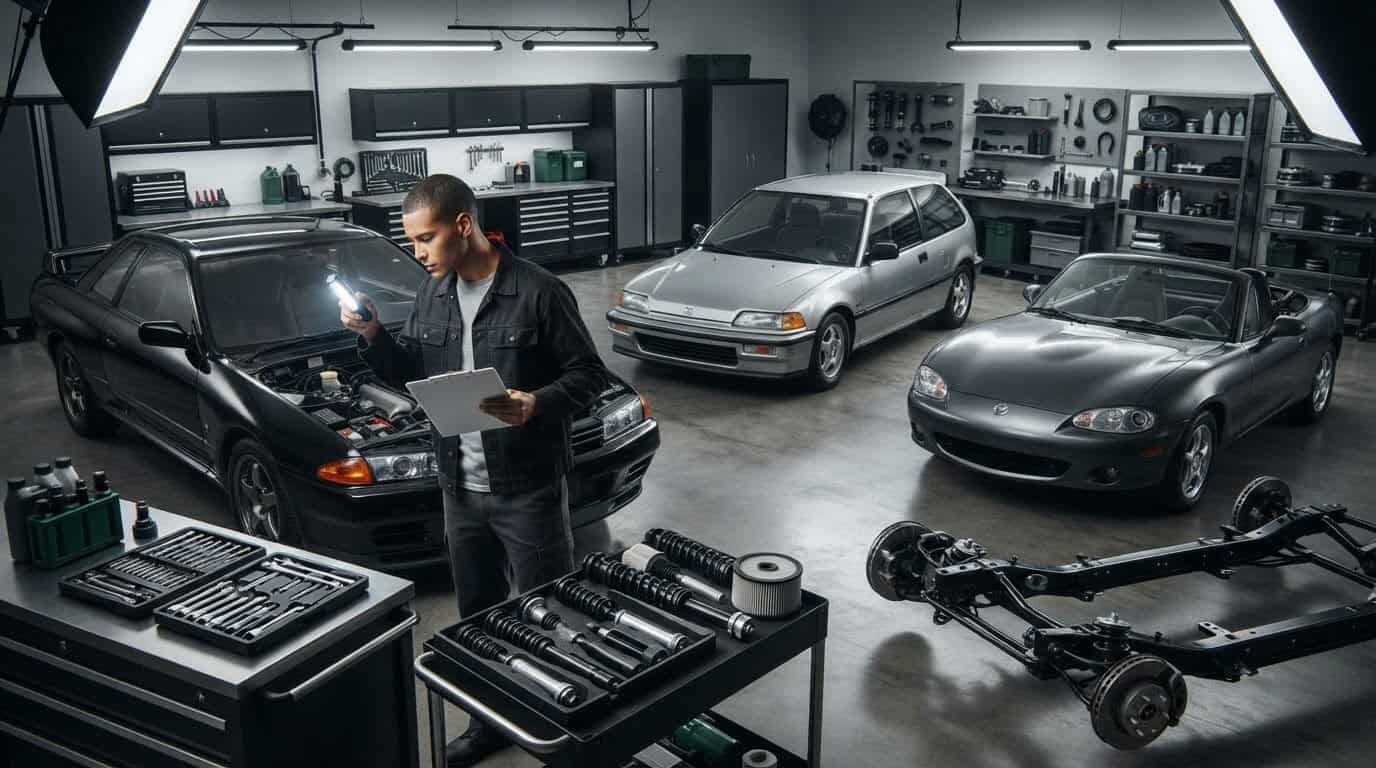
The best first project car for under $10,000 usually isn’t the one with the most exciting badge. It’s the soundest, simplest example you can find, with parts and repairs that fit your budget and skills. A cheap car with hidden rust, missing components, or neglected mechanicals can turn a manageable build into a money pit before you’ve learned the basics.
If you’re drawn to classic character but unsure which car fits your budget, skills, and goals, start by deciding what you want the project to teach you. A first build should let you inspect, maintain, and improve the car in stages, not demand a full restoration on day one. A pre-purchase inspection by a qualified mechanic can help uncover costly trouble before you commit.
This guide compares approachable candidates, including the SN95 Ford Mustang, 1990s Honda Civic, and non-M BMW E36, while explaining why an early Mazda Miata may be harder to find in sound condition at this budget. You’ll learn what to inspect, how parts access and diagnostics affect the workload, and how to keep room in your budget for repairs. Start with a realistic shortlist, then build your project in deliberate phases.
Key Takeaways
- The best first project car for under $10,000 is the one that fits your skills and goals, not necessarily the cheapest listing or most powerful badge.
- Compare candidates such as the Miata, Mustang, Camaro or Firebird, and Volvo 240 by condition, parts access, and the kind of build you want.
- Judge a car’s real potential by its structure, completeness, running condition, and fit with your project, not just its asking price.
- Set clear project limits, inspect carefully, estimate immediate needs, and document safety-related repairs before planning upgrades.
- Establish a sound baseline first. A staged roadmap makes future mechanical and cosmetic changes easier to manage.
What makes the best first project car under $10,000?
A first project car is a manageable platform for learning, repairing, and improving a vehicle over time. It doesn’t need to be rare or powerful. It should give you room to build practical skills without making every job depend on specialized equipment, extensive fabrication, or a full teardown. The best first project car for under $10,000 is usually the one that’s sound and straightforward, not the one with the most impressive badge or modification potential.
Define your budget before you shop. Unless you decide otherwise, under $10,000 means the car’s purchase price, not the total cost of owning and building it. Keep separate room for an inspection, transport, safety work, and initial repairs. You’ll have more control over the project if you can address its needs in sequence instead of spending the entire budget just to get it home.
For a quick primer on the kinds of changes a project might involve, explore car tuning and how modifications can affect performance, handling, or appearance. Then watch this overview for examples of potential first-build candidates:
Which traits make a project car beginner-friendly?
Start with the structure. Look for a solid body and chassis, understandable mechanical systems, and maintenance records that help explain what has been serviced. A running, largely complete car often keeps the first phase focused on learning and repairs. A non-running or heavily dismantled example can add diagnosis, missing-part searches, and reassembly before you reach the work you were excited to do.
Be realistic about your setup, too. Match the car’s needs to your mechanical confidence, tools, workspace, and available time. Consider whether you can safely support the car for the work you plan, and whether your space can accommodate parts and tools without disrupting the project. A small job that fits your garage and schedule can teach more than an ambitious build that stalls because you lack room or equipment.
Does the $10,000 limit cover the whole build?
Usually, treat it as a purchase ceiling and plan the rest separately. Budget for inspection, transport, immediate repairs, and later upgrades. The reserve you need depends on the car’s condition and how much work you can competently handle yourself, so don’t assume a particular model or listing will fit every buyer’s budget.
Write down the first repairs before planning performance or cosmetic changes. Separate essential safety and drivability work from optional upgrades, then consider what remains for the build. That simple step protects the project’s foundation and turns a promising purchase into a series of achievable learning steps.
Best first project cars under $10,000: candidates worth comparing
Use this shortlist to guide your search, not as a promise that every example will fit your budget or be ready to build. Prices and condition vary by location, and a car’s generation, completeness, and maintenance matter as much as its name. Compare actual local listings, then judge each car’s structure and current condition before weighing its modification potential.
Which approachable platforms suit a hands-on beginner?
A Mazda Miata can suit a focused, compact build, but early examples under this budget may have high mileage or need repairs. The SN95 Ford Mustang is another candidate for buyers interested in customization. The 1990s Honda Civic and non-M BMW E36 are also worth comparing if they match your goals. For each one, identify the specific generation and configuration, then assess the individual car rather than assuming every example offers the same ownership experience.
Use the comparison below to shape your inspection, not to treat a model’s broad reputation as proof that a particular car is a good buy.
| Candidate | Project character and learning opportunities | Inspection priorities | Likely complexity |
|---|---|---|---|
| Mazda Miata | Compact, focused platform for learning basic maintenance and staged upgrades. | Check structure, completeness, running condition, and maintenance history. Compare current local asking prices. | Varies with age, condition, and previous work. |
| Ford Mustang | Broad customization potential; the SN95 is one generation to investigate. | Identify the exact generation, then assess structure, drivetrain condition, and modifications already made. | Depends on the example and how extensively it has been altered. |
| Chevrolet Camaro or Pontiac Firebird | Classic American coupe character with room for mechanical and cosmetic learning. | Look closely at structure, completeness, and the condition of major systems. | Can rise if the car is incomplete or needs extensive restoration. |
| Volvo 240 | A less typical path for a hands-on project with a distinct, practical character. | Verify condition, service history, and parts availability for the exact car in your area. | Depends on parts access and the work required by the individual car. |
Which cars offer a different kind of first build?
Consider a Camaro or Firebird if you’re drawn to the proportions and feel of a classic American coupe. A Volvo 240 may be a better match if you want a less obvious platform. Neither choice is automatically easier or cheaper: local parts access, the car’s completeness, and your repair skills shape the workload. A sound, complete example of a less popular model may be a smarter starting point than a neglected favorite.
Before committing, compare the candidate’s needs with your tools, workspace, and available time. For help connecting a donor car to a broader modification plan, explore this guide to what a restomod project involves.
How to compare project cars when the cheapest listing may cost more
A low asking price tells you what the seller wants, not what the car will demand. The actual vehicle matters more than its model’s reputation: a popular platform can still be a poor project if it has structural damage, missing components, or layers of unfinished work. Compare each car using the same four checks before deciding which one deserves a closer look.
| Comparison point | What to assess |
|---|---|
| Structure | Look for visible corrosion, damage, or repairs that may affect the body or chassis. |
| Completeness | Note missing parts, removed components, and modifications that appear unfinished. |
| Running condition | Record whether it starts, runs, steers, and stops, while remembering that operation alone doesn’t diagnose its mechanical health. |
| Project fit | Compare the work ahead with your skills, tools, workspace, time, and intended use. |
Use the comparison to separate essential safety and drivability work from optional paint, interior, or performance upgrades. List the immediate needs first, then consider what remains for the build. A car that needs basic maintenance may be a more manageable teacher than a cheaper example with major unknowns, but only an inspection can reveal the specific workload.
How should a beginner assess rust and structural condition?
Inspect visible structural areas and previous repairs, and take uncertainty seriously. Corrosion hidden beneath coverings or old repairs can expand the scope of a project, so don’t assume a clean-looking exterior tells the whole story. If you can’t judge the structure confidently, arrange an inspection by a qualified mechanic before committing. Understand the repair scope before treating bodywork as a cosmetic phase.
What should buyers check before judging the mechanical work?
Check whether the car starts, runs, steers, and stops, but don’t mistake a short drive for a diagnosis. Review available maintenance records and note how complete the car is. Look carefully at previous modifications: an unusual engine swap or incomplete wiring may offer a learning opportunity, but it can also add troubleshooting demands and make it harder to understand what needs attention.
The best first project car for under $10,000 is the example whose condition and workload match your capacity, not simply the one with the lowest price. Document safety-related repairs before planning upgrades. Then build your next steps around a sound baseline and a clear project plan. Explore structured restomod learning as you map out what you want to improve.
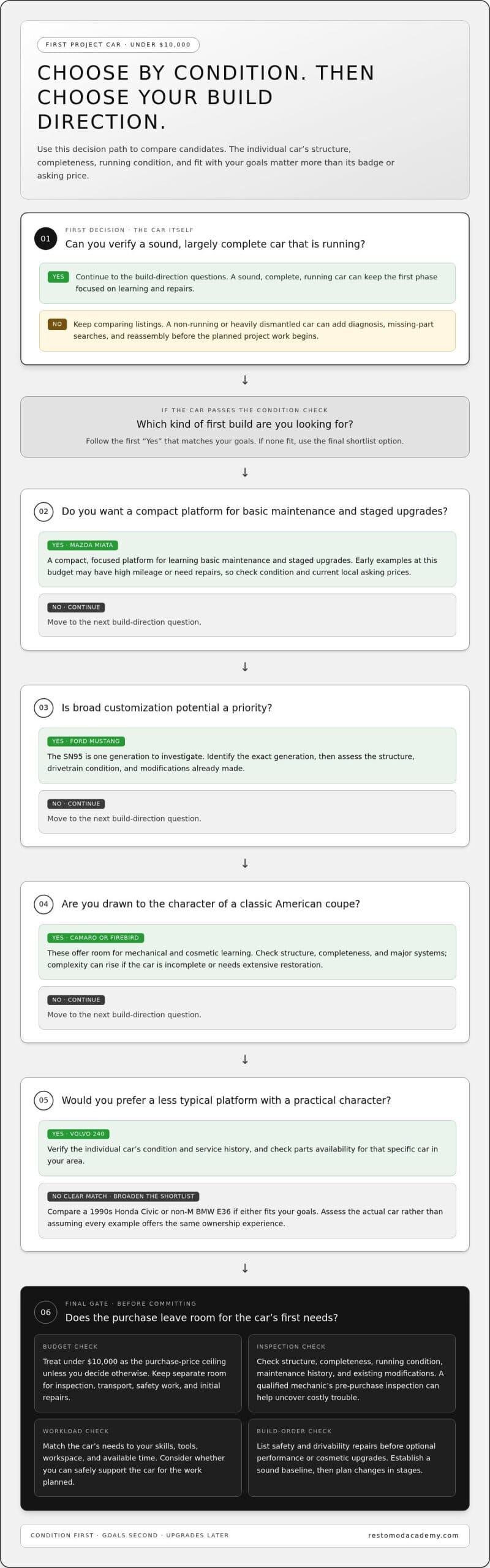
A first-project-car inspection plan that protects your budget
Inspect in a deliberate order. A consistent process helps you avoid making a rushed decision based on a shiny paint job, an appealing badge, or a low asking price.
- Set project limits. Decide how much you can put toward the purchase and initial work, what repairs you can handle, and what jobs would exceed your skills, tools, or workspace.
- Shortlist suitable cars. Compare candidates by condition, completeness, local parts support, and fit with your intended use. Keep more than one option in play.
- Inspect the specific car. Review its identity and paperwork, body condition, visible leaks, interior completeness, maintenance records, and modification quality. If structural or mechanical concerns are unclear, arrange an inspection by a qualified mechanic.
- Estimate the actual needs. Write down required safety and drivability work first, then separate optional appearance and performance upgrades. Base your estimate on this car and your intended scope, not generic averages.
- Decide without pressure. Compare the known needs with your limits. Be ready to walk away if major unknowns make the first phase unrealistic.
What belongs on a first viewing checklist?
Take notes as you inspect. Record missing parts, visible fluid leaks, signs of unfinished repairs, and questions about previous modifications. Check the vehicle identity and paperwork against the car, and note what maintenance records are available. A test drive can reveal useful clues, but only drive the car if it appears roadworthy and the seller permits it. A drive is not a mechanical diagnosis. If something feels or sounds wrong, include it in your notes rather than guessing at the cause.
How can buyers keep the first phase manageable?
Set a stop point for the purchase and initial repairs before you consider optional upgrades. Make the first milestone a car that is safe, functional, and easier to assess. Then tackle one system at a time, tracking decisions, parts, and completed work as you go. That record helps you see what’s been addressed and keeps enthusiasm from turning into a scattered parts-shopping sprint.
Use the inspection findings to shape a broader project roadmap, with priorities and budget decisions tied to the car you actually buy. The best first project car for under $10,000 is not just a promising platform; it’s a project you can approach in manageable stages. Build a clear roadmap for your restomod project before moving from essential repairs to larger changes.
Choose your first project car and build it with a clear roadmap
Make the final choice around the build you can actually take on. Consider how you’ll use the car, which jobs you’re ready to learn, what your workspace can accommodate, and whether you want a restoration, a subtle restomod, or a more extensive modification. The best first project car for under $10,000 isn’t automatically a Miata, Mustang, Camaro, Firebird, or Volvo 240. It’s the specific car whose condition and next steps fit your goals and resources.
Which candidate fits your goals and current skills?
For a first hands-on build, favor the candidate in the best condition with the clearest path to getting it safe and functional. If you’re considering a future restomod, make sure the donor car suits the direction you have in mind and the scope you can manage. An appealing platform can still be the wrong choice if its needs outstrip your tools, experience, or available space. The right answer depends on the individual car and your plans.
Before planning major engine, suspension, or cosmetic changes, establish a sound baseline. Address known safety and maintenance needs, then confirm how the car behaves in its current form. That foundation gives you a clearer reference point for later modifications and helps keep decisions connected to the car’s actual condition.
What should you do after choosing the car?
Create a simple project record. Note the car’s baseline condition, known issues, immediate priorities, available tools and workspace, and the time you can realistically give the build. Keep completed work and new findings in the same record. A clear log makes it easier to plan the next task without losing sight of what has already been addressed.
Start with foundational safety and maintenance work before elective upgrades. Then take on one system at a time, learning its condition before deciding whether to restore, improve, or replace anything. If you’re weighing preservation against modification, this explanation of what a restomod is can help clarify the approach.
Give the project a sequence, not just a parts list. The Ultimate Restomod Guide offers a structured learning resource as you develop your plan and build your understanding of classic-car modification. Choose a sound starting point, record your decisions, and let each completed phase inform the next. The satisfaction comes not only from the finished car, but from the skills and judgment you gain along the way.
Choose a project you can build with confidence
The best first project car for under $10,000 isn’t defined by a badge or a long list of possible upgrades. Choose the example whose condition, complexity, and repair needs match your skills, workspace, and goals. Compare the actual cars, protect room in your budget for inspection and initial work, and establish a safe, reliable baseline before planning major changes.
Then let the build unfold in stages. Document what the car needs, handle foundational repairs first, and use each phase to sharpen your mechanical judgment. A clear roadmap turns an exciting idea into a project you can approach with patience and purpose.
Restomod Academy provides educational resources for planning and learning about classic-car modification. Explore The Ultimate Restomod Guide and Premium Project Blueprints to develop your project roadmap and take the next step with a clear plan.
Frequently Asked Questions
What is the best first project car under $10,000?
There isn’t one universal best first project car for under $10,000. The strongest choice is a sound, complete example that fits your skills and plans. Compare candidates such as a Miata, Mustang, Camaro or Firebird, and Volvo 240, but judge each individual car rather than its reputation. Prioritize structural condition, understandable repair needs, and parts access in your area over a rare trim or ambitious modification potential.
Can you really build a project car for under $10,000?
Possibly, if you mean buying the car for under $10,000 and keeping the first phase modest. That amount shouldn’t automatically be treated as a whole-build budget. Inspection, transport, safety work, maintenance, and later upgrades all add to the project. Your total depends on the car’s condition, the scope you choose, and the work you can do yourself. Plan in phases and protect a separate repair reserve.
Is a Miata a good first project car?
A Miata can be a rewarding first project if you find one in suitable condition and its needs match your experience. Its compact format can make it an appealing platform for learning maintenance and making gradual changes. But don’t assume every example is an easy bargain: under-budget cars may be older, high-mileage, or in need of repairs. Inspect the structure, review its history, and compare local asking prices before committing.
What should I inspect before buying a project car?
Check the vehicle’s identity and paperwork, visible structure and corrosion, signs of damage or unfinished repairs, fluid leaks, and interior completeness. Review maintenance records and look closely at previous modifications, including wiring. Note whether it starts, runs, steers, and stops, but don’t treat a test drive as a diagnosis. If you’re unsure about structural or mechanical condition, arrange an inspection by a qualified mechanic before making your decision.
Should I buy a running project car or a non-running one?
For a first build, a running, largely complete car is often the more manageable starting point because it gives you a clearer baseline and fewer unknowns. A non-running car may still suit a buyer with diagnosis experience, suitable workspace, and time to investigate why it won’t start. Factor in missing parts and unresolved faults, too. Don’t assume a low asking price makes a non-runner the lower-risk choice.
How much of my budget should I reserve for repairs?
There’s no reliable fixed amount that suits every project. Set aside funds separately from the purchase price for inspection, transport, immediate repairs, and safety-related work. The reserve you need depends on the specific car, its condition, and what you can competently repair yourself. Get an estimate based on the issues actually found, and delay optional appearance or performance upgrades until you understand the essential work ahead.
Is an old Mustang or Camaro a good first project car?
Either can be a good first project if the particular car is complete, structurally sound, and suited to your skills and intended build. An old Mustang may appeal to someone drawn to broad customization, while a Camaro offers classic coupe character. Both can become demanding projects if they have extensive modifications, missing parts, or unclear repair histories. Identify the generation and inspect the actual example before judging its workload.
What should I fix first on a project car?
Start with issues that affect safety and basic drivability, then address maintenance needs that prevent you from establishing a dependable baseline. Record the car’s known faults and prioritize work according to inspection findings rather than jumping straight to cosmetic or performance changes. If you’re uncertain about a safety-related problem, have it assessed before driving the car. Once the foundation is sound, plan elective upgrades one system at a time.
The best first project car for under $10,000 usually isn’t the one with the most exciting badge. It’s the soundest, simplest example you can find, with parts and repairs that fit your budget and skills. A cheap car with hidden rust, missing components, or neglected mechanicals can turn a manageable build into a money pit before you’ve learned the basics.
If you’re drawn to classic character but unsure which car fits your budget, skills, and goals, start by deciding what you want the project to teach you. A first build should let you inspect, maintain, and improve the car in stages, not demand a full restoration on day one. A pre-purchase inspection by a qualified mechanic can help uncover costly trouble before you commit.
This guide compares approachable candidates, including the SN95 Ford Mustang, 1990s Honda Civic, and non-M BMW E36, while explaining why an early Mazda Miata may be harder to find in sound condition at this budget. You’ll learn what to inspect, how parts access and diagnostics affect the workload, and how to keep room in your budget for repairs. Start with a realistic shortlist, then build your project in deliberate phases.
Key Takeaways
- The best first project car for under $10,000 is the one that fits your skills and goals, not necessarily the cheapest listing or most powerful badge.
- Compare candidates such as the Miata, Mustang, Camaro or Firebird, and Volvo 240 by condition, parts access, and the kind of build you want.
- Judge a car’s real potential by its structure, completeness, running condition, and fit with your project, not just its asking price.
- Set clear project limits, inspect carefully, estimate immediate needs, and document safety-related repairs before planning upgrades.
- Establish a sound baseline first. A staged roadmap makes future mechanical and cosmetic changes easier to manage.
What makes the best first project car under $10,000?
A first project car is a manageable platform for learning, repairing, and improving a vehicle over time. It doesn’t need to be rare or powerful. It should give you room to build practical skills without making every job depend on specialized equipment, extensive fabrication, or a full teardown. The best first project car for under $10,000 is usually the one that’s sound and straightforward, not the one with the most impressive badge or modification potential.
Define your budget before you shop. Unless you decide otherwise, under $10,000 means the car’s purchase price, not the total cost of owning and building it. Keep separate room for an inspection, transport, safety work, and initial repairs. You’ll have more control over the project if you can address its needs in sequence instead of spending the entire budget just to get it home.
For a quick primer on the kinds of changes a project might involve, explore car tuning and how modifications can affect performance, handling, or appearance. Then watch this overview for examples of potential first-build candidates:
Which traits make a project car beginner-friendly?
Start with the structure. Look for a solid body and chassis, understandable mechanical systems, and maintenance records that help explain what has been serviced. A running, largely complete car often keeps the first phase focused on learning and repairs. A non-running or heavily dismantled example can add diagnosis, missing-part searches, and reassembly before you reach the work you were excited to do.
Be realistic about your setup, too. Match the car’s needs to your mechanical confidence, tools, workspace, and available time. Consider whether you can safely support the car for the work you plan, and whether your space can accommodate parts and tools without disrupting the project. A small job that fits your garage and schedule can teach more than an ambitious build that stalls because you lack room or equipment.
Does the $10,000 limit cover the whole build?
Usually, treat it as a purchase ceiling and plan the rest separately. Budget for inspection, transport, immediate repairs, and later upgrades. The reserve you need depends on the car’s condition and how much work you can competently handle yourself, so don’t assume a particular model or listing will fit every buyer’s budget.
Write down the first repairs before planning performance or cosmetic changes. Separate essential safety and drivability work from optional upgrades, then consider what remains for the build. That simple step protects the project’s foundation and turns a promising purchase into a series of achievable learning steps.
Best first project cars under $10,000: candidates worth comparing
Use this shortlist to guide your search, not as a promise that every example will fit your budget or be ready to build. Prices and condition vary by location, and a car’s generation, completeness, and maintenance matter as much as its name. Compare actual local listings, then judge each car’s structure and current condition before weighing its modification potential.
Which approachable platforms suit a hands-on beginner?
A Mazda Miata can suit a focused, compact build, but early examples under this budget may have high mileage or need repairs. The SN95 Ford Mustang is another candidate for buyers interested in customization. The 1990s Honda Civic and non-M BMW E36 are also worth comparing if they match your goals. For each one, identify the specific generation and configuration, then assess the individual car rather than assuming every example offers the same ownership experience.
Use the comparison below to shape your inspection, not to treat a model’s broad reputation as proof that a particular car is a good buy.
| Candidate | Project character and learning opportunities | Inspection priorities | Likely complexity |
|---|---|---|---|
| Mazda Miata | Compact, focused platform for learning basic maintenance and staged upgrades. | Check structure, completeness, running condition, and maintenance history. Compare current local asking prices. | Varies with age, condition, and previous work. |
| Ford Mustang | Broad customization potential; the SN95 is one generation to investigate. | Identify the exact generation, then assess structure, drivetrain condition, and modifications already made. | Depends on the example and how extensively it has been altered. |
| Chevrolet Camaro or Pontiac Firebird | Classic American coupe character with room for mechanical and cosmetic learning. | Look closely at structure, completeness, and the condition of major systems. | Can rise if the car is incomplete or needs extensive restoration. |
| Volvo 240 | A less typical path for a hands-on project with a distinct, practical character. | Verify condition, service history, and parts availability for the exact car in your area. | Depends on parts access and the work required by the individual car. |
Which cars offer a different kind of first build?
Consider a Camaro or Firebird if you’re drawn to the proportions and feel of a classic American coupe. A Volvo 240 may be a better match if you want a less obvious platform. Neither choice is automatically easier or cheaper: local parts access, the car’s completeness, and your repair skills shape the workload. A sound, complete example of a less popular model may be a smarter starting point than a neglected favorite.
Before committing, compare the candidate’s needs with your tools, workspace, and available time. For help connecting a donor car to a broader modification plan, explore this guide to what a restomod project involves.
How to compare project cars when the cheapest listing may cost more
A low asking price tells you what the seller wants, not what the car will demand. The actual vehicle matters more than its model’s reputation: a popular platform can still be a poor project if it has structural damage, missing components, or layers of unfinished work. Compare each car using the same four checks before deciding which one deserves a closer look.
| Comparison point | What to assess |
|---|---|
| Structure | Look for visible corrosion, damage, or repairs that may affect the body or chassis. |
| Completeness | Note missing parts, removed components, and modifications that appear unfinished. |
| Running condition | Record whether it starts, runs, steers, and stops, while remembering that operation alone doesn’t diagnose its mechanical health. |
| Project fit | Compare the work ahead with your skills, tools, workspace, time, and intended use. |
Use the comparison to separate essential safety and drivability work from optional paint, interior, or performance upgrades. List the immediate needs first, then consider what remains for the build. A car that needs basic maintenance may be a more manageable teacher than a cheaper example with major unknowns, but only an inspection can reveal the specific workload.
How should a beginner assess rust and structural condition?
Inspect visible structural areas and previous repairs, and take uncertainty seriously. Corrosion hidden beneath coverings or old repairs can expand the scope of a project, so don’t assume a clean-looking exterior tells the whole story. If you can’t judge the structure confidently, arrange an inspection by a qualified mechanic before committing. Understand the repair scope before treating bodywork as a cosmetic phase.
What should buyers check before judging the mechanical work?
Check whether the car starts, runs, steers, and stops, but don’t mistake a short drive for a diagnosis. Review available maintenance records and note how complete the car is. Look carefully at previous modifications: an unusual engine swap or incomplete wiring may offer a learning opportunity, but it can also add troubleshooting demands and make it harder to understand what needs attention.
The best first project car for under $10,000 is the example whose condition and workload match your capacity, not simply the one with the lowest price. Document safety-related repairs before planning upgrades. Then build your next steps around a sound baseline and a clear project plan. Explore structured restomod learning as you map out what you want to improve.
A first-project-car inspection plan that protects your budget
Inspect in a deliberate order. A consistent process helps you avoid making a rushed decision based on a shiny paint job, an appealing badge, or a low asking price.
- Set project limits. Decide how much you can put toward the purchase and initial work, what repairs you can handle, and what jobs would exceed your skills, tools, or workspace.
- Shortlist suitable cars. Compare candidates by condition, completeness, local parts support, and fit with your intended use. Keep more than one option in play.
- Inspect the specific car. Review its identity and paperwork, body condition, visible leaks, interior completeness, maintenance records, and modification quality. If structural or mechanical concerns are unclear, arrange an inspection by a qualified mechanic.
- Estimate the actual needs. Write down required safety and drivability work first, then separate optional appearance and performance upgrades. Base your estimate on this car and your intended scope, not generic averages.
- Decide without pressure. Compare the known needs with your limits. Be ready to walk away if major unknowns make the first phase unrealistic.
What belongs on a first viewing checklist?
Take notes as you inspect. Record missing parts, visible fluid leaks, signs of unfinished repairs, and questions about previous modifications. Check the vehicle identity and paperwork against the car, and note what maintenance records are available. A test drive can reveal useful clues, but only drive the car if it appears roadworthy and the seller permits it. A drive is not a mechanical diagnosis. If something feels or sounds wrong, include it in your notes rather than guessing at the cause.
How can buyers keep the first phase manageable?
Set a stop point for the purchase and initial repairs before you consider optional upgrades. Make the first milestone a car that is safe, functional, and easier to assess. Then tackle one system at a time, tracking decisions, parts, and completed work as you go. That record helps you see what’s been addressed and keeps enthusiasm from turning into a scattered parts-shopping sprint.
Use the inspection findings to shape a broader project roadmap, with priorities and budget decisions tied to the car you actually buy. The best first project car for under $10,000 is not just a promising platform; it’s a project you can approach in manageable stages. Build a clear roadmap for your restomod project before moving from essential repairs to larger changes.
Choose your first project car and build it with a clear roadmap
Make the final choice around the build you can actually take on. Consider how you’ll use the car, which jobs you’re ready to learn, what your workspace can accommodate, and whether you want a restoration, a subtle restomod, or a more extensive modification. The best first project car for under $10,000 isn’t automatically a Miata, Mustang, Camaro, Firebird, or Volvo 240. It’s the specific car whose condition and next steps fit your goals and resources.
Which candidate fits your goals and current skills?
For a first hands-on build, favor the candidate in the best condition with the clearest path to getting it safe and functional. If you’re considering a future restomod, make sure the donor car suits the direction you have in mind and the scope you can manage. An appealing platform can still be the wrong choice if its needs outstrip your tools, experience, or available space. The right answer depends on the individual car and your plans.
Before planning major engine, suspension, or cosmetic changes, establish a sound baseline. Address known safety and maintenance needs, then confirm how the car behaves in its current form. That foundation gives you a clearer reference point for later modifications and helps keep decisions connected to the car’s actual condition.
What should you do after choosing the car?
Create a simple project record. Note the car’s baseline condition, known issues, immediate priorities, available tools and workspace, and the time you can realistically give the build. Keep completed work and new findings in the same record. A clear log makes it easier to plan the next task without losing sight of what has already been addressed.
Start with foundational safety and maintenance work before elective upgrades. Then take on one system at a time, learning its condition before deciding whether to restore, improve, or replace anything. If you’re weighing preservation against modification, this explanation of what a restomod is can help clarify the approach.
Give the project a sequence, not just a parts list. The Ultimate Restomod Guide offers a structured learning resource as you develop your plan and build your understanding of classic-car modification. Choose a sound starting point, record your decisions, and let each completed phase inform the next. The satisfaction comes not only from the finished car, but from the skills and judgment you gain along the way.
Choose a project you can build with confidence
The best first project car for under $10,000 isn’t defined by a badge or a long list of possible upgrades. Choose the example whose condition, complexity, and repair needs match your skills, workspace, and goals. Compare the actual cars, protect room in your budget for inspection and initial work, and establish a safe, reliable baseline before planning major changes.
Then let the build unfold in stages. Document what the car needs, handle foundational repairs first, and use each phase to sharpen your mechanical judgment. A clear roadmap turns an exciting idea into a project you can approach with patience and purpose.
Restomod Academy provides educational resources for planning and learning about classic-car modification. Explore The Ultimate Restomod Guide and Premium Project Blueprints to develop your project roadmap and take the next step with a clear plan.
Frequently Asked Questions
What is the best first project car under $10,000?
There isn’t one universal best first project car for under $10,000. The strongest choice is a sound, complete example that fits your skills and plans. Compare candidates such as a Miata, Mustang, Camaro or Firebird, and Volvo 240, but judge each individual car rather than its reputation. Prioritize structural condition, understandable repair needs, and parts access in your area over a rare trim or ambitious modification potential.
Can you really build a project car for under $10,000?
Possibly, if you mean buying the car for under $10,000 and keeping the first phase modest. That amount shouldn’t automatically be treated as a whole-build budget. Inspection, transport, safety work, maintenance, and later upgrades all add to the project. Your total depends on the car’s condition, the scope you choose, and the work you can do yourself. Plan in phases and protect a separate repair reserve.
Is a Miata a good first project car?
A Miata can be a rewarding first project if you find one in suitable condition and its needs match your experience. Its compact format can make it an appealing platform for learning maintenance and making gradual changes. But don’t assume every example is an easy bargain: under-budget cars may be older, high-mileage, or in need of repairs. Inspect the structure, review its history, and compare local asking prices before committing.
What should I inspect before buying a project car?
Check the vehicle’s identity and paperwork, visible structure and corrosion, signs of damage or unfinished repairs, fluid leaks, and interior completeness. Review maintenance records and look closely at previous modifications, including wiring. Note whether it starts, runs, steers, and stops, but don’t treat a test drive as a diagnosis. If you’re unsure about structural or mechanical condition, arrange an inspection by a qualified mechanic before making your decision.
Should I buy a running project car or a non-running one?
For a first build, a running, largely complete car is often the more manageable starting point because it gives you a clearer baseline and fewer unknowns. A non-running car may still suit a buyer with diagnosis experience, suitable workspace, and time to investigate why it won’t start. Factor in missing parts and unresolved faults, too. Don’t assume a low asking price makes a non-runner the lower-risk choice.
How much of my budget should I reserve for repairs?
There’s no reliable fixed amount that suits every project. Set aside funds separately from the purchase price for inspection, transport, immediate repairs, and safety-related work. The reserve you need depends on the specific car, its condition, and what you can competently repair yourself. Get an estimate based on the issues actually found, and delay optional appearance or performance upgrades until you understand the essential work ahead.
Is an old Mustang or Camaro a good first project car?
Either can be a good first project if the particular car is complete, structurally sound, and suited to your skills and intended build. An old Mustang may appeal to someone drawn to broad customization, while a Camaro offers classic coupe character. Both can become demanding projects if they have extensive modifications, missing parts, or unclear repair histories. Identify the generation and inspect the actual example before judging its workload.
What should I fix first on a project car?
Start with issues that affect safety and basic drivability, then address maintenance needs that prevent you from establishing a dependable baseline. Record the car’s known faults and prioritize work according to inspection findings rather than jumping straight to cosmetic or performance changes. If you’re uncertain about a safety-related problem, have it assessed before driving the car. Once the foundation is sound, plan elective upgrades one system at a time.