
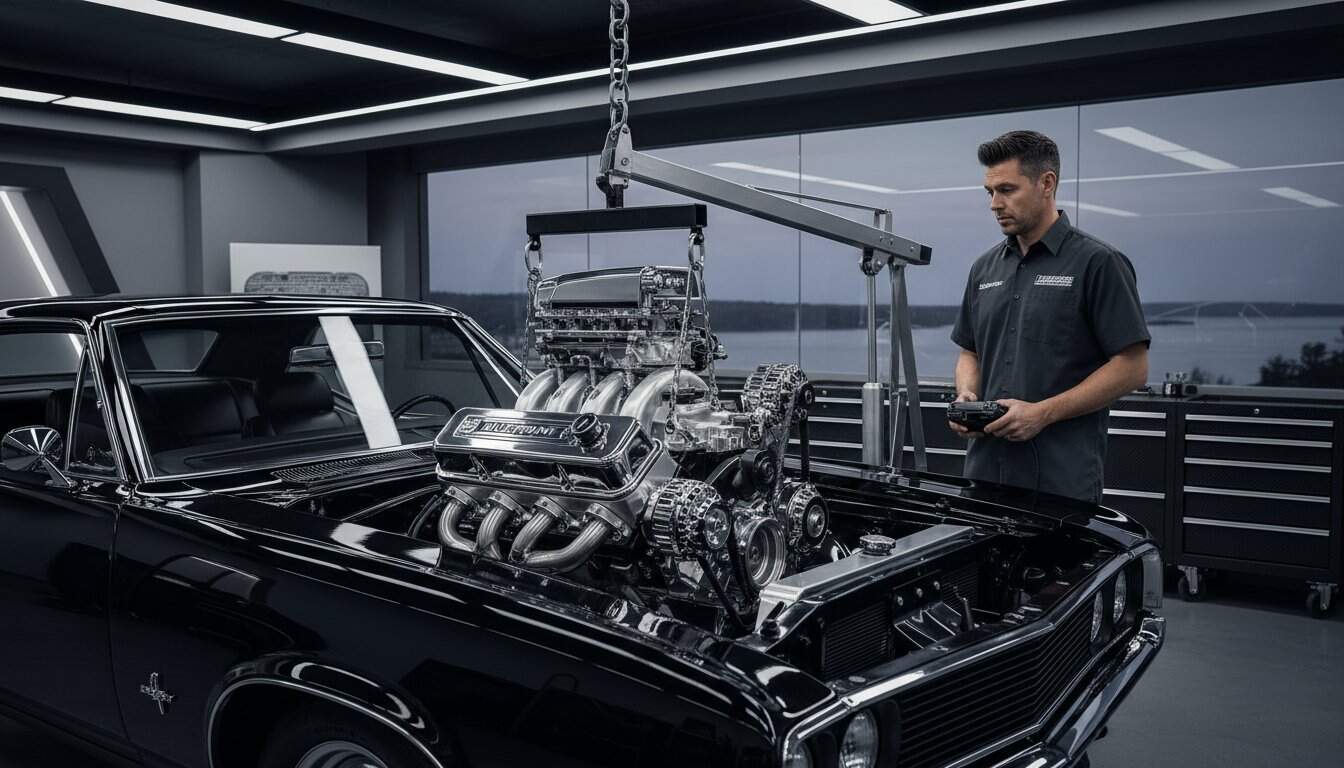
You can spend 18 months waiting on a local machine shop only to have your custom build fail on its first 500-mile road trip. It’s a heartbreak every restomodder fears; the “lemon” engine that drains your budget and leaves your vision gathering dust under a tarp. You want the visceral roar of a vintage V8 but need the surgical precision of modern engineering to keep your car on the street instead of a trailer. This is why blueprint engines have become the definitive power solution for builders in 2026, offering a seamless bridge between classic soul and contemporary reliability.
Stop guessing and start building with the authority of a seasoned mentor. You deserve a powertrain that arrives dyno-tested and ready to drop into your engine bay without the typical fabrication headaches. We will walk you through the specific GM, Ford, and Chrysler crate configurations that fit your chassis and explain how the 30-month warranty secures your legacy. From understanding the installation flow to choosing the right horsepower rating, this guide provides the roadmap to turn your restoration project into a high-performance reality.
Key Takeaways
- Master the engineering differences between professional crate power and generic rebuilds to ensure your project starts with a precision-engineered foundation.
- Learn how to select the ideal GM, Ford, or Chrysler configuration by matching engine displacement and weight to your specific chassis requirements.
- Discover how the proprietary components and documented dyno testing behind blueprint engines guarantee out-of-the-box performance without the risks of a traditional custom build.
- Identify the essential cooling, fuel, and electrical upgrades needed to prep your vintage frame for a massive injection of modern torque.
- Evaluate the long-term total cost of ownership and see how a branded crate engine significantly boosts your restomod’s market resale value.
Why BluePrint Engines are the Gold Standard for Modern Restomods
Choosing the right heartbeat for your project is the most critical decision you’ll face as a builder. While the allure of a junkyard find is real, the 2026 market has shifted the math in favor of purpose-built power. A Crate engine from BluePrint Engines isn’t just a collection of parts; it’s a precision-engineered solution designed to eliminate the guesswork that kills so many projects. These aren’t generic rebuilds. They are manufactured with new castings and specific tolerances that far exceed original factory specs.
To better understand why professional assembly is the superior route for your build, watch this helpful video:
The “Built not Bought” badge of honor often loses its luster when your car sits on jack stands for 18 months waiting for a local machine shop to clear their backlog. Starting with blueprint engines saves you more than just time; it protects your investment. In 2026, availability has become the primary bottleneck for builders. By choosing a professional block, you bypass the scavenger hunt for viable vintage cores and move straight to the rewarding phase of fabrication and assembly. For a deeper look at how this fits into your overall project timeline, check out our classic car modern engine swap guide.
The Crate Engine vs. Traditional Rebuild
Analyze the numbers before you commit to a machine shop. In 2026, specialized labor rates have climbed significantly, often making a custom rebuild more expensive than a flat-rate crate engine. BluePrint offers a 30-month or 50,000-mile warranty, providing a level of peace of mind that a local shop simply can’t match. Every engine is dyno-tested before it leaves the factory. You receive a printed dyno sheet showing the exact horsepower and torque your specific engine produced. This predictable performance ensures your cooling system and drivetrain are sized correctly from day one.
How BluePrint Fits the Restomod Philosophy
The core of a successful restomod is the seamless blend of vintage aesthetics and modern driveability. BluePrint designs their engines to accept modern EFI and high-output ignition systems while maintaining the classic silhouette of a small block or big block. Reliability is a safety feature. Modern internals like forged rods and hydraulic roller cams are essential if you plan on daily driving your classic. This eliminates the “tuning blues” and provides the “Smile Factor,” which is that immediate, crisp throttle response that makes every turn of the key feel like a victory.
Decoding the Powerplant: GM, Ford, and Chrysler Configurations
Selecting the right heart for your project requires a balance of ambition and physics. The blueprint engines catalog offers three distinct families: GM, Ford, and Chrysler. You must decide if your chassis can handle the torque of a 632 cubic inch Big Block or if the nimble weight distribution of a Small Block serves your cornering goals better. Heavy iron blocks change your suspension geometry; they demand stiffer springs and better brakes to manage the extra mass hanging over the front wheels. Street Trucks’ overview of BluePrint Engines confirms that every unit, from the 300 horsepower cruisers to the 600+ horsepower Pro-Series, arrives dyno-tested and ready for the street.
Horsepower tiers define the character of your build. A 300 to 400 horsepower setup provides reliable, effortless cruising for weekend trips. If you want a pro-touring monster, look toward the 500 to 600+ horsepower range. Naturally aspirated engines offer that classic, immediate throttle response we all love. However, if you crave modern efficiency and peak power, the forced induction options in the lineup provide a level of performance that was once reserved for dedicated race cars. Master your build by exploring our expert product reviews before you finalize your engine choice.
The GM Small Block and LS Dominance
The 350 Small Block remains the king of budget restomods for a reason. It’s affordable, parts are everywhere, and it fits almost any engine bay. But if you want the peak of modern performance, the LS platform is the gold standard. We’ve put together the definitive guide to an LS engine swap to help you handle the wiring and plumbing challenges. For those who want maximum output, the LS3 and LS Pro-Series engines deliver high-revving reliability that makes a 50-year-old car feel like a 2026 supercar. These engines use aluminum blocks to shed weight, which significantly improves your car’s turn-in and overall balance.
Ford and Chrysler Alternatives
Ford enthusiasts don’t have to settle for “close enough.” The 302 and 347 Stroker engines are the perfect fit for tight engine bays in early Mustangs and Broncos. They provide a massive jump in torque without requiring you to cut your shock towers. Mopar builders can keep their projects authentic with the Chrysler 360 and 408 configurations. These engines respect the legacy of the Pentastar while providing the modern sealing and metallurgy needed for daily driving. If you’re tackling a unique custom fabrication project, the Builder Series engines come with the essentials, leaving the final aesthetic and accessory drive choices to your creative vision. This flexibility ensures your blueprint engines investment aligns perfectly with your specific fabrication goals.
Performance vs. Reliability: The Engineering Advantage
Building a high-performance car often feels like a trade-off between raw power and daily-driver dependability. You might hear skeptics claim that high-output horsepower at a fair price is a myth, but blueprint engines prove that theory wrong through vertical integration. Instead of scavenging for 40-year-old “seasoned” cores with unknown histories and fatigue, this manufacturer controls the entire lifecycle of the build. From the initial CNC machining to the final bolt, every step happens in their Kearney, Nebraska facility. This centralized quality control eliminates the variables that often plague traditional machine shop rebuilds.
The “too good to be true” objection usually stems from a misunderstanding of modern manufacturing scale. By producing their own components, they bypass the markup and inconsistency of third-party suppliers. You aren’t just buying a box of parts; you’re investing in a system where the block, heads, and rotating assembly were engineered to work in harmony. This focus on precision is what allows a crate engine to deliver 400 or 500 horsepower while maintaining a warranty that protects your investment and your vision.
Proprietary Castings and Modern Materials
The move from used cores to 100% brand-new proprietary castings changed the game for the restomod community. These blocks feature thicker cylinder walls and reinforced bulkheads that factory castings from the 1960s simply lack. When you choose aluminum heads over traditional iron, you shave approximately 45 to 50 pounds off the front end of your vehicle. This weight reduction drastically improves suspension geometry and heat dissipation. For builders seeking maximum strength, selecting forged internals over cast components provides the structural integrity needed for aggressive street driving or future power adders.
The Dyno-Testing Process Explained
Every engine shipped from the Kearney plant includes its own unique “birth certificate.” This dyno sheet is your verified proof of performance. During the testing phase, technicians run the engine through a series of simulated loads to verify oil pressure, check for leaks, and ensure every component is seated correctly. This rigorous process prevents the heartbreak of a “Dead on Arrival” engine installation after you’ve spent weeks on fabrication.
- Verify the Stats: The sheet confirms your specific engine hits the horsepower and torque numbers promised on the box.
- Analyze the Curve: Look for a broad torque curve. For a street-driven project, you want high torque at lower RPMs to ensure effortless acceleration from a stoplight.
- Quality Assurance: Knowing your blueprint engines build has already survived a full-throttle pull gives you the confidence to turn the key for the first time.
Reviewing these numbers allows you to tune your transmission shift points and rear-gear ratios to match the engine’s power band perfectly. It is a methodical, professional approach that turns a collection of metal into a reliable heart for your classic project.

Installation Roadmap: Preparing Your Classic for a Swap
Dropping a high-output crate engine into a decades-old engine bay requires more than just a hoist and a weekend. You’re bridging a 60-year gap in technology. Before you lower your new blueprint engines power plant into place, you must verify that your chassis can handle the literal twist. A stock 1960s perimeter frame can flex under the 500 lb-ft of torque generated by modern strokers. This often leads to cracked windshields or misaligned doors. Weld-in frame connectors or a full chassis stiffening kit are mandatory upgrades for any build pushing past the 400-horsepower mark.
Don’t overlook the gearbox. Your original Powerglide or Toploader won’t survive the first hard launch with this much power. Plan for a transmission that matches your torque curve, such as a Tremec TKX five-speed or a built 4L70E automatic. You’ll also need the right tools for this precision work, so check our recommended gear for the essential shop setup required to complete the job safely.
Fuel and Cooling System Requirements
Modern performance demands high-volume support. If your crate engine features EFI, your old mechanical pump is obsolete. You’ll need an in-tank electric pump capable of maintaining a steady 58 to 60 PSI. Cooling is equally critical. A vintage brass radiator won’t shed heat fast enough for a 450-horsepower small block. Swap to an aluminum unit with at least two rows of 1.0-inch tubes. Pair this with a custom shroud and dual electric fans pulling a minimum of 2,500 CFM to ensure your temperature needle stays centered during summer cruises.
Electrical and Ignition Integration
Integrating modern electronics into a vintage dash is where many builders stall. Your blueprint engines setup likely includes an ECU that needs a clean, vibration-free home. Mount the controller inside the cabin, away from headers and moisture. Use a dedicated 12-gauge power wire directly from the battery to avoid voltage drops. Simplifying your harness now saves hours of diagnostic headaches later. Focus on clean grounds; 90 percent of EFI issues stem from poor electrical contact. Take your time with the routing to keep the engine bay looking like a piece of art rather than a bird’s nest of wires.
Ready to take the next step in your build journey? Learn more about the core philosophy behind these high-performance upgrades in our guide on what is a restomod.
The Restomod Academy Verdict: Why BluePrint is a Builder’s Favorite
Choosing the right powerplant is the most significant decision you will make in your garage. After analyzing the performance data and installation feedback from hundreds of builds, the verdict is clear. blueprint engines represent the gold standard for enthusiasts who demand a balance of vintage soul and modern precision. You aren’t just buying a block of iron; you’re investing in a documented performance legacy that simplifies the most complex part of your project.
The Total Cost of Ownership (TCO) over a five-year period often favors a crate engine over a custom machine-shop build. While a local rebuild might seem cheaper upfront, the costs of sourcing individual components, correcting machining errors, and troubleshooting mismatched parts quickly add up. A 2025 market analysis suggests that vehicles equipped with a branded, dyno-tested crate engine see a 15% higher resale value compared to those with “unmarked” rebuilds. Buyers want the peace of mind that comes with a transferable warranty and a professional build sheet.
Joining the BluePrint community means you gain access to a dedicated technical support line. This isn’t a generic call center. It is staffed by builders who understand the specific nuances of fitting a high-performance V8 into a classic chassis. Whether you are chasing a vacuum leak or timing your ignition, having an expert mentor a phone call away ensures your project doesn’t stall on the jack stands.
The Long-Term Ownership Experience
Your journey begins with the critical 500-mile break-in period. During these first few hundred miles, you must vary your engine speeds and avoid sustained high-RPM runs to ensure the piston rings seat perfectly against the cylinder walls. Stick to a rigorous maintenance schedule to protect your investment. Change your oil after the first 500 miles, then every 3,000 miles or once a year, using the specific zinc-rich oils recommended by the manufacturer. If you encounter a stumble or a mechanical noise, use the tech line immediately. Documenting your maintenance helps maintain the 30-month or 50,000-mile warranty coverage.
Final Recommendations for Your Build
Be honest about how you will actually use the car. It is easy to get seduced by high horsepower numbers, but a radical cam profile designed for the track will make a street cruiser miserable to drive in traffic. If your goal is a weekend driver, prioritize a broad torque curve and enough vacuum to power your power brakes. Balancing power with drivability is the hallmark of a professional-grade restomod.
- Street Profile: Focuses on low-end torque and smooth idling.
- Track Profile: Designed for high-RPM breathing and maximum peak power.
- The Sweet Spot: A hydraulic roller cam that offers a “lopey” idle without sacrificing power steering or brake assist.
The “Built, Not Bought” philosophy doesn’t mean you have to cast the block yourself. It means you had the vision to select the best components and the grit to turn the wrenches. Ordering your blueprint engines crate is the first step in a “heart transplant” that will define your car’s identity for the next generation. Grab your tools and prepare for that first fire-up; the road is waiting.
Claim Your Legacy on the Open Road
Your restomod project deserves a heart that beats with 2026 precision and classic soul. By choosing blueprint engines, you’re investing in a dyno-tested powerhouse that bridges the gap between vintage aesthetics and modern reliability. We’ve seen how the right crate engine transforms a frustrating project into a reliable daily driver. You don’t have to navigate these complex wiring harnesses and mounting brackets alone. The Restomod Academy has already empowered over 10,000 DIY builders to turn their garage dreams into high-performance reality. We offer expert consulting for those intricate swap hurdles and provide comprehensive blueprints for every major classic platform. It’s time to stop planning and start building. The satisfaction of that first turn of the key is waiting for you.
Start your engine swap journey with The Ultimate Restomod Guide
Grab your tools and step into the garage with confidence. We’re ready to help you build something legendary.
Frequently Asked Questions
Is a BluePrint engine better than a junkyard LS swap?
A BluePrint engine provides a brand new casting and a 30 month warranty that a 150,000 mile junkyard core simply cannot match. While a salvage yard LS swap saves money upfront, the hidden costs of machining, sensors, and gaskets often close that gap. You get a documented dyno sheet with blueprint engines, ensuring your restomod starts with a verified power figure instead of a gamble on internal wear.
Do BluePrint Engines come with a warranty for DIY installations?
Yes, these engines include a 30 month or 50,000 mile limited warranty that covers DIY installations. You don’t need a professional shop to perform the swap to keep your coverage active. Just ensure you follow the pre-lube and break-in procedures documented in the 12 page installation guide. This protection gives you peace of mind while you’re wrenching in your own garage on a Saturday afternoon.
Which BluePrint engine is best for a daily driver restomod?
The 383 Stroker is the gold standard for a daily driver because it balances 436 horsepower with 443 lb-ft of torque for effortless cruising. It’s designed to run on 91 octane pump gas, making it practical for regular commutes. If you prefer modern architecture, the LS-based 427 offers fuel injection reliability that handles stop and go traffic without the temperamental nature of high-strung racing builds.
Can I run a carburetor on a BluePrint crate engine?
You can absolutely run a carburetor on several blueprint engines models, specifically the “dressed” versions that ship with a dual-plane intake manifold. These units are dyno-tested with a 600 or 750 CFM carburetor to ensure the timing and fuel curves are set before they arrive. This choice preserves the vintage aesthetic of your engine bay while providing the reliability of modern internal components and precise machining.
How much does shipping a crate engine typically cost in 2026?
Freight shipping for heavy automotive components in 2026 typically ranges from $250 to $600 depending on the distance from the Nebraska distribution hub. Most carriers use LTL freight with liftgate service for residential deliveries. You should check the current fuel surcharge rates, as these fluctuate monthly based on the Department of Energy’s national average diesel prices. Always have a clear path for the delivery truck to drop the pallet.
What is the “Builder Series” and is it right for beginners?
The Builder Series is a package that includes a fully machined block and rotating assembly but requires you to install the heads, cam, and valvetrain. It’s an excellent choice for builders who want to learn the internal geometry of their engine without the risk of improper machining. Beginners should feel confident if they have a torque wrench and a clean workspace, as the kit eliminates the most complex clearance measurements.
Are BluePrint engines dyno-tested with my specific accessories?
BluePrint engines are dyno-tested using standardized shop accessories and headers to verify peak power and torque. They don’t use your specific alternator, power steering pump, or A/C compressor during the run. This 20 minute test ensures the rings are seated and there are no leaks. You’ll receive a printed dyno sheet that shows the exact performance of your long block or dressed engine before it leaves the factory.
Do I need to buy a specific transmission for a BluePrint engine?
You don’t need a proprietary transmission, but your gearbox must be rated to handle the engine’s specific torque output. For example, a 500 lb-ft 408 Stroker will quickly destroy a stock T-5 or a weak 700R4. Most builders pair these engines with a Tremec TKX five speed or a reinforced 4L60E to ensure the drivetrain survives the power. Match your bellhousing and flywheel to the engine’s balance requirements.
You can spend 18 months waiting on a local machine shop only to have your custom build fail on its first 500-mile road trip. It’s a heartbreak every restomodder fears; the “lemon” engine that drains your budget and leaves your vision gathering dust under a tarp. You want the visceral roar of a vintage V8 but need the surgical precision of modern engineering to keep your car on the street instead of a trailer. This is why blueprint engines have become the definitive power solution for builders in 2026, offering a seamless bridge between classic soul and contemporary reliability.
Stop guessing and start building with the authority of a seasoned mentor. You deserve a powertrain that arrives dyno-tested and ready to drop into your engine bay without the typical fabrication headaches. We will walk you through the specific GM, Ford, and Chrysler crate configurations that fit your chassis and explain how the 30-month warranty secures your legacy. From understanding the installation flow to choosing the right horsepower rating, this guide provides the roadmap to turn your restoration project into a high-performance reality.
Key Takeaways
- Master the engineering differences between professional crate power and generic rebuilds to ensure your project starts with a precision-engineered foundation.
- Learn how to select the ideal GM, Ford, or Chrysler configuration by matching engine displacement and weight to your specific chassis requirements.
- Discover how the proprietary components and documented dyno testing behind blueprint engines guarantee out-of-the-box performance without the risks of a traditional custom build.
- Identify the essential cooling, fuel, and electrical upgrades needed to prep your vintage frame for a massive injection of modern torque.
- Evaluate the long-term total cost of ownership and see how a branded crate engine significantly boosts your restomod’s market resale value.
Why BluePrint Engines are the Gold Standard for Modern Restomods
Choosing the right heartbeat for your project is the most critical decision you’ll face as a builder. While the allure of a junkyard find is real, the 2026 market has shifted the math in favor of purpose-built power. A Crate engine from BluePrint Engines isn’t just a collection of parts; it’s a precision-engineered solution designed to eliminate the guesswork that kills so many projects. These aren’t generic rebuilds. They are manufactured with new castings and specific tolerances that far exceed original factory specs.
To better understand why professional assembly is the superior route for your build, watch this helpful video:
The “Built not Bought” badge of honor often loses its luster when your car sits on jack stands for 18 months waiting for a local machine shop to clear their backlog. Starting with blueprint engines saves you more than just time; it protects your investment. In 2026, availability has become the primary bottleneck for builders. By choosing a professional block, you bypass the scavenger hunt for viable vintage cores and move straight to the rewarding phase of fabrication and assembly. For a deeper look at how this fits into your overall project timeline, check out our classic car modern engine swap guide.
The Crate Engine vs. Traditional Rebuild
Analyze the numbers before you commit to a machine shop. In 2026, specialized labor rates have climbed significantly, often making a custom rebuild more expensive than a flat-rate crate engine. BluePrint offers a 30-month or 50,000-mile warranty, providing a level of peace of mind that a local shop simply can’t match. Every engine is dyno-tested before it leaves the factory. You receive a printed dyno sheet showing the exact horsepower and torque your specific engine produced. This predictable performance ensures your cooling system and drivetrain are sized correctly from day one.
How BluePrint Fits the Restomod Philosophy
The core of a successful restomod is the seamless blend of vintage aesthetics and modern driveability. BluePrint designs their engines to accept modern EFI and high-output ignition systems while maintaining the classic silhouette of a small block or big block. Reliability is a safety feature. Modern internals like forged rods and hydraulic roller cams are essential if you plan on daily driving your classic. This eliminates the “tuning blues” and provides the “Smile Factor,” which is that immediate, crisp throttle response that makes every turn of the key feel like a victory.
Decoding the Powerplant: GM, Ford, and Chrysler Configurations
Selecting the right heart for your project requires a balance of ambition and physics. The blueprint engines catalog offers three distinct families: GM, Ford, and Chrysler. You must decide if your chassis can handle the torque of a 632 cubic inch Big Block or if the nimble weight distribution of a Small Block serves your cornering goals better. Heavy iron blocks change your suspension geometry; they demand stiffer springs and better brakes to manage the extra mass hanging over the front wheels. Street Trucks’ overview of BluePrint Engines confirms that every unit, from the 300 horsepower cruisers to the 600+ horsepower Pro-Series, arrives dyno-tested and ready for the street.
Horsepower tiers define the character of your build. A 300 to 400 horsepower setup provides reliable, effortless cruising for weekend trips. If you want a pro-touring monster, look toward the 500 to 600+ horsepower range. Naturally aspirated engines offer that classic, immediate throttle response we all love. However, if you crave modern efficiency and peak power, the forced induction options in the lineup provide a level of performance that was once reserved for dedicated race cars. Master your build by exploring our expert product reviews before you finalize your engine choice.
The GM Small Block and LS Dominance
The 350 Small Block remains the king of budget restomods for a reason. It’s affordable, parts are everywhere, and it fits almost any engine bay. But if you want the peak of modern performance, the LS platform is the gold standard. We’ve put together the definitive guide to an LS engine swap to help you handle the wiring and plumbing challenges. For those who want maximum output, the LS3 and LS Pro-Series engines deliver high-revving reliability that makes a 50-year-old car feel like a 2026 supercar. These engines use aluminum blocks to shed weight, which significantly improves your car’s turn-in and overall balance.
Ford and Chrysler Alternatives
Ford enthusiasts don’t have to settle for “close enough.” The 302 and 347 Stroker engines are the perfect fit for tight engine bays in early Mustangs and Broncos. They provide a massive jump in torque without requiring you to cut your shock towers. Mopar builders can keep their projects authentic with the Chrysler 360 and 408 configurations. These engines respect the legacy of the Pentastar while providing the modern sealing and metallurgy needed for daily driving. If you’re tackling a unique custom fabrication project, the Builder Series engines come with the essentials, leaving the final aesthetic and accessory drive choices to your creative vision. This flexibility ensures your blueprint engines investment aligns perfectly with your specific fabrication goals.
Performance vs. Reliability: The Engineering Advantage
Building a high-performance car often feels like a trade-off between raw power and daily-driver dependability. You might hear skeptics claim that high-output horsepower at a fair price is a myth, but blueprint engines prove that theory wrong through vertical integration. Instead of scavenging for 40-year-old “seasoned” cores with unknown histories and fatigue, this manufacturer controls the entire lifecycle of the build. From the initial CNC machining to the final bolt, every step happens in their Kearney, Nebraska facility. This centralized quality control eliminates the variables that often plague traditional machine shop rebuilds.
The “too good to be true” objection usually stems from a misunderstanding of modern manufacturing scale. By producing their own components, they bypass the markup and inconsistency of third-party suppliers. You aren’t just buying a box of parts; you’re investing in a system where the block, heads, and rotating assembly were engineered to work in harmony. This focus on precision is what allows a crate engine to deliver 400 or 500 horsepower while maintaining a warranty that protects your investment and your vision.
Proprietary Castings and Modern Materials
The move from used cores to 100% brand-new proprietary castings changed the game for the restomod community. These blocks feature thicker cylinder walls and reinforced bulkheads that factory castings from the 1960s simply lack. When you choose aluminum heads over traditional iron, you shave approximately 45 to 50 pounds off the front end of your vehicle. This weight reduction drastically improves suspension geometry and heat dissipation. For builders seeking maximum strength, selecting forged internals over cast components provides the structural integrity needed for aggressive street driving or future power adders.
The Dyno-Testing Process Explained
Every engine shipped from the Kearney plant includes its own unique “birth certificate.” This dyno sheet is your verified proof of performance. During the testing phase, technicians run the engine through a series of simulated loads to verify oil pressure, check for leaks, and ensure every component is seated correctly. This rigorous process prevents the heartbreak of a “Dead on Arrival” engine installation after you’ve spent weeks on fabrication.
- Verify the Stats: The sheet confirms your specific engine hits the horsepower and torque numbers promised on the box.
- Analyze the Curve: Look for a broad torque curve. For a street-driven project, you want high torque at lower RPMs to ensure effortless acceleration from a stoplight.
- Quality Assurance: Knowing your blueprint engines build has already survived a full-throttle pull gives you the confidence to turn the key for the first time.
Reviewing these numbers allows you to tune your transmission shift points and rear-gear ratios to match the engine’s power band perfectly. It is a methodical, professional approach that turns a collection of metal into a reliable heart for your classic project.
Installation Roadmap: Preparing Your Classic for a Swap
Dropping a high-output crate engine into a decades-old engine bay requires more than just a hoist and a weekend. You’re bridging a 60-year gap in technology. Before you lower your new blueprint engines power plant into place, you must verify that your chassis can handle the literal twist. A stock 1960s perimeter frame can flex under the 500 lb-ft of torque generated by modern strokers. This often leads to cracked windshields or misaligned doors. Weld-in frame connectors or a full chassis stiffening kit are mandatory upgrades for any build pushing past the 400-horsepower mark.
Don’t overlook the gearbox. Your original Powerglide or Toploader won’t survive the first hard launch with this much power. Plan for a transmission that matches your torque curve, such as a Tremec TKX five-speed or a built 4L70E automatic. You’ll also need the right tools for this precision work, so check our recommended gear for the essential shop setup required to complete the job safely.
Fuel and Cooling System Requirements
Modern performance demands high-volume support. If your crate engine features EFI, your old mechanical pump is obsolete. You’ll need an in-tank electric pump capable of maintaining a steady 58 to 60 PSI. Cooling is equally critical. A vintage brass radiator won’t shed heat fast enough for a 450-horsepower small block. Swap to an aluminum unit with at least two rows of 1.0-inch tubes. Pair this with a custom shroud and dual electric fans pulling a minimum of 2,500 CFM to ensure your temperature needle stays centered during summer cruises.
Electrical and Ignition Integration
Integrating modern electronics into a vintage dash is where many builders stall. Your blueprint engines setup likely includes an ECU that needs a clean, vibration-free home. Mount the controller inside the cabin, away from headers and moisture. Use a dedicated 12-gauge power wire directly from the battery to avoid voltage drops. Simplifying your harness now saves hours of diagnostic headaches later. Focus on clean grounds; 90 percent of EFI issues stem from poor electrical contact. Take your time with the routing to keep the engine bay looking like a piece of art rather than a bird’s nest of wires.
Ready to take the next step in your build journey? Learn more about the core philosophy behind these high-performance upgrades in our guide on what is a restomod.
The Restomod Academy Verdict: Why BluePrint is a Builder’s Favorite
Choosing the right powerplant is the most significant decision you will make in your garage. After analyzing the performance data and installation feedback from hundreds of builds, the verdict is clear. blueprint engines represent the gold standard for enthusiasts who demand a balance of vintage soul and modern precision. You aren’t just buying a block of iron; you’re investing in a documented performance legacy that simplifies the most complex part of your project.
The Total Cost of Ownership (TCO) over a five-year period often favors a crate engine over a custom machine-shop build. While a local rebuild might seem cheaper upfront, the costs of sourcing individual components, correcting machining errors, and troubleshooting mismatched parts quickly add up. A 2025 market analysis suggests that vehicles equipped with a branded, dyno-tested crate engine see a 15% higher resale value compared to those with “unmarked” rebuilds. Buyers want the peace of mind that comes with a transferable warranty and a professional build sheet.
Joining the BluePrint community means you gain access to a dedicated technical support line. This isn’t a generic call center. It is staffed by builders who understand the specific nuances of fitting a high-performance V8 into a classic chassis. Whether you are chasing a vacuum leak or timing your ignition, having an expert mentor a phone call away ensures your project doesn’t stall on the jack stands.
The Long-Term Ownership Experience
Your journey begins with the critical 500-mile break-in period. During these first few hundred miles, you must vary your engine speeds and avoid sustained high-RPM runs to ensure the piston rings seat perfectly against the cylinder walls. Stick to a rigorous maintenance schedule to protect your investment. Change your oil after the first 500 miles, then every 3,000 miles or once a year, using the specific zinc-rich oils recommended by the manufacturer. If you encounter a stumble or a mechanical noise, use the tech line immediately. Documenting your maintenance helps maintain the 30-month or 50,000-mile warranty coverage.
Final Recommendations for Your Build
Be honest about how you will actually use the car. It is easy to get seduced by high horsepower numbers, but a radical cam profile designed for the track will make a street cruiser miserable to drive in traffic. If your goal is a weekend driver, prioritize a broad torque curve and enough vacuum to power your power brakes. Balancing power with drivability is the hallmark of a professional-grade restomod.
- Street Profile: Focuses on low-end torque and smooth idling.
- Track Profile: Designed for high-RPM breathing and maximum peak power.
- The Sweet Spot: A hydraulic roller cam that offers a “lopey” idle without sacrificing power steering or brake assist.
The “Built, Not Bought” philosophy doesn’t mean you have to cast the block yourself. It means you had the vision to select the best components and the grit to turn the wrenches. Ordering your blueprint engines crate is the first step in a “heart transplant” that will define your car’s identity for the next generation. Grab your tools and prepare for that first fire-up; the road is waiting.
Claim Your Legacy on the Open Road
Your restomod project deserves a heart that beats with 2026 precision and classic soul. By choosing blueprint engines, you’re investing in a dyno-tested powerhouse that bridges the gap between vintage aesthetics and modern reliability. We’ve seen how the right crate engine transforms a frustrating project into a reliable daily driver. You don’t have to navigate these complex wiring harnesses and mounting brackets alone. The Restomod Academy has already empowered over 10,000 DIY builders to turn their garage dreams into high-performance reality. We offer expert consulting for those intricate swap hurdles and provide comprehensive blueprints for every major classic platform. It’s time to stop planning and start building. The satisfaction of that first turn of the key is waiting for you.
Start your engine swap journey with The Ultimate Restomod Guide
Grab your tools and step into the garage with confidence. We’re ready to help you build something legendary.
Frequently Asked Questions
Is a BluePrint engine better than a junkyard LS swap?
A BluePrint engine provides a brand new casting and a 30 month warranty that a 150,000 mile junkyard core simply cannot match. While a salvage yard LS swap saves money upfront, the hidden costs of machining, sensors, and gaskets often close that gap. You get a documented dyno sheet with blueprint engines, ensuring your restomod starts with a verified power figure instead of a gamble on internal wear.
Do BluePrint Engines come with a warranty for DIY installations?
Yes, these engines include a 30 month or 50,000 mile limited warranty that covers DIY installations. You don’t need a professional shop to perform the swap to keep your coverage active. Just ensure you follow the pre-lube and break-in procedures documented in the 12 page installation guide. This protection gives you peace of mind while you’re wrenching in your own garage on a Saturday afternoon.
Which BluePrint engine is best for a daily driver restomod?
The 383 Stroker is the gold standard for a daily driver because it balances 436 horsepower with 443 lb-ft of torque for effortless cruising. It’s designed to run on 91 octane pump gas, making it practical for regular commutes. If you prefer modern architecture, the LS-based 427 offers fuel injection reliability that handles stop and go traffic without the temperamental nature of high-strung racing builds.
Can I run a carburetor on a BluePrint crate engine?
You can absolutely run a carburetor on several blueprint engines models, specifically the “dressed” versions that ship with a dual-plane intake manifold. These units are dyno-tested with a 600 or 750 CFM carburetor to ensure the timing and fuel curves are set before they arrive. This choice preserves the vintage aesthetic of your engine bay while providing the reliability of modern internal components and precise machining.
How much does shipping a crate engine typically cost in 2026?
Freight shipping for heavy automotive components in 2026 typically ranges from $250 to $600 depending on the distance from the Nebraska distribution hub. Most carriers use LTL freight with liftgate service for residential deliveries. You should check the current fuel surcharge rates, as these fluctuate monthly based on the Department of Energy’s national average diesel prices. Always have a clear path for the delivery truck to drop the pallet.
What is the “Builder Series” and is it right for beginners?
The Builder Series is a package that includes a fully machined block and rotating assembly but requires you to install the heads, cam, and valvetrain. It’s an excellent choice for builders who want to learn the internal geometry of their engine without the risk of improper machining. Beginners should feel confident if they have a torque wrench and a clean workspace, as the kit eliminates the most complex clearance measurements.
Are BluePrint engines dyno-tested with my specific accessories?
BluePrint engines are dyno-tested using standardized shop accessories and headers to verify peak power and torque. They don’t use your specific alternator, power steering pump, or A/C compressor during the run. This 20 minute test ensures the rings are seated and there are no leaks. You’ll receive a printed dyno sheet that shows the exact performance of your long block or dressed engine before it leaves the factory.
Do I need to buy a specific transmission for a BluePrint engine?
You don’t need a proprietary transmission, but your gearbox must be rated to handle the engine’s specific torque output. For example, a 500 lb-ft 408 Stroker will quickly destroy a stock T-5 or a weak 700R4. Most builders pair these engines with a Tremec TKX five speed or a reinforced 4L60E to ensure the drivetrain survives the power. Match your bellhousing and flywheel to the engine’s balance requirements.