
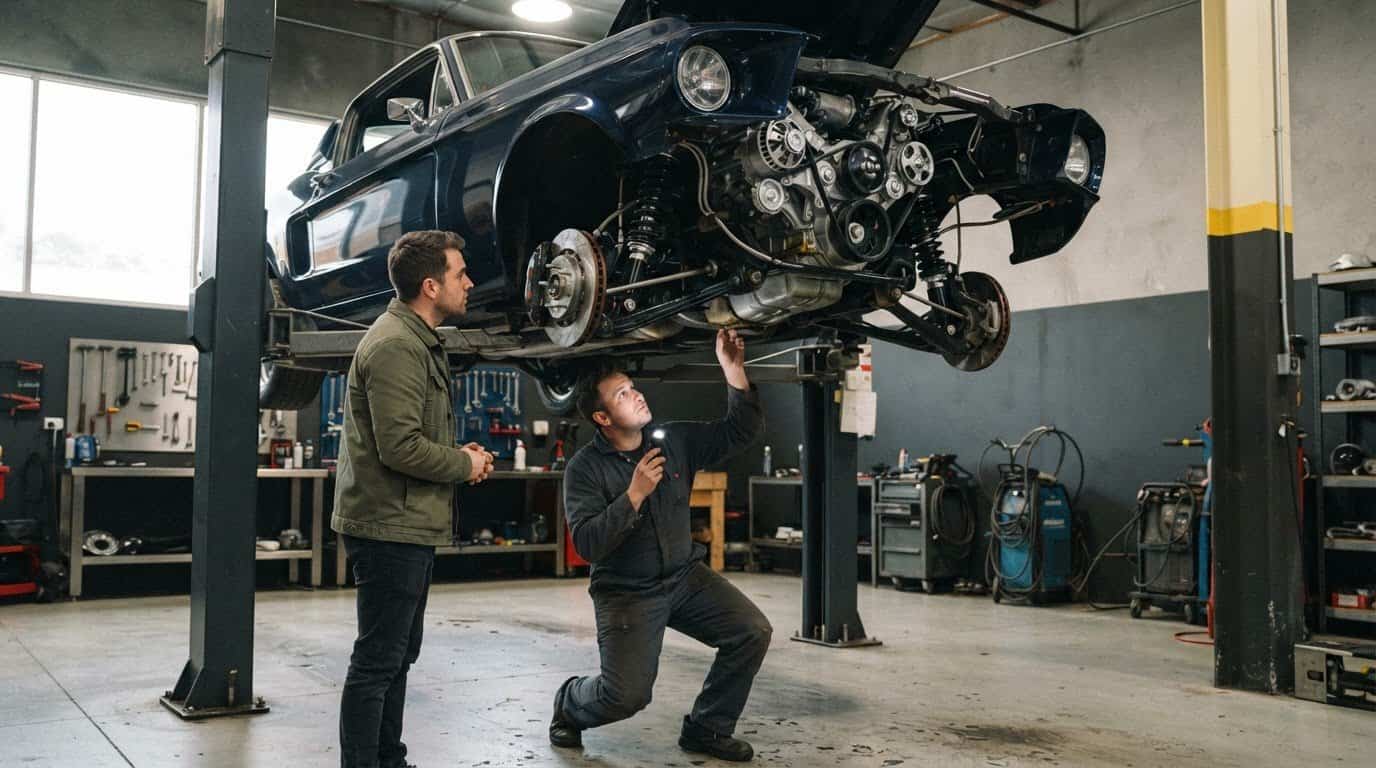
The hidden costs to look for when buying a restomod go beyond the first repair. Budget for deferred mechanical work, purchase charges, taxes, registration, and insurance, then account for specialist parts, servicing, storage, and upkeep. Even a carefully finished build can bring long-term expenses that the asking price doesn’t reveal.
The appeal is clear: classic character sharpened by modern engineering. But vintage systems and upgraded components may need different maintenance, parts, and service resources. A car that feels ready on a test drive can still require a careful ownership budget.
This guide explains where costs can surface, from inspection and paperwork to routine service and future component replacement. Learn what to budget for before buying, why serviceability matters over the long term, and how to assess the commitment behind the asking price.
Key Takeaways
- Look beyond the test drive: deferred maintenance and mismatched or poorly integrated upgrades can turn an attractive build into an immediate repair project.
- Build the purchase budget around more than the asking price, including inspection, dealer charges, taxes, title, registration and insurance.
- Plan for the upkeep of both vintage systems and modern components, with parts availability and specialist service shaping long-term costs.
- Estimate insurance, storage, routine maintenance and emergency repairs together to see whether ownership fits your budget after the purchase.
Hidden mechanical issues and deferred maintenance
A polished finish can hide neglected mechanical work, especially where vintage systems meet modern upgrades. Look beyond the test drive: leaks, inconsistent braking, overheating, charging faults, and rough shifts may signal repairs that change the real cost of ownership.
Trace each upgrade to the systems around it. A modern engine or transmission affects cooling, wiring, mounts, and driveline behavior. Understanding what defines a restomod helps you recognize how original and updated components work together, and where one weak link can burden another.
Maintenance Frequency and Service Intervals
Service intervals are the time or mileage limits for routine work, and they vary with the build’s components and specifications. A restomod built to original specifications may need conventional oil changes every 3,000 miles or three months, whichever comes first. Tire rotations generally fall every 5,000 to 7,500 miles, while cabin and engine air filters should be changed once a year or every 15,000 miles. These intervals matter because a modernized drivetrain doesn’t automatically erase the needs of older systems.
First-Year Maintenance Budget
Set separate budget lines for first-year maintenance, routine servicing, and early repairs after purchase. Then account for any issues found during inspection.
Maintenance Records and Resale Value
Maintenance records document service, repairs, and installed components. Keep invoices, mileage entries, and descriptions of work together, noting which parts were replaced and which systems were modified. This history helps future buyers assess the car’s condition and upkeep. Complete records can support buyer confidence and clarify the build’s maintenance history, though they don’t guarantee a particular resale value.
Ownership costs also include sales tax, title and registration, insurance, and ongoing maintenance. Rates and requirements vary by location. According to the California Department of Tax and Fee Administration, California buyers may owe use tax if they didn’t pay sales tax to a California dealer. Budget for insurance and local registration alongside routine service instead of treating the advertised price as the full cost.
Purchase price beyond the advertised amount
Treat the advertised price as a starting point, not the complete transaction total. Dealer charges, financing terms, an independent inspection, and sales tax can all increase the amount needed to buy the vehicle.
Request an itemized buyer’s order before agreeing to terms. Potential dealership costs include dealer and documentation fees, optional products, and financing markup tied to the interest rate. Separate optional add-ons from other charges, then compare the full purchase price with the financed total. A lower monthly payment can hide higher financing costs. Ask for each line item in writing and remove unwanted optional products before signing.
Independent Pre-Purchase Inspections
An independent pre-purchase inspection is an assessment by a mechanic who isn’t involved in selling the vehicle. It’s especially important for a restomod, which combines vintage systems with modifications that need careful evaluation. Have the mechanic assess the engine, transmission, brakes, steering, wiring, and fit of upgraded components. A written report helps separate immediate repairs from future service needs.
Sales Tax on Vehicle Purchases
Sales tax is a percentage of the vehicle’s purchase price, with rates varying according to state and local taxes. That makes tax a separate acquisition cost, not part of the advertised amount. Include it when comparing vehicles with different asking prices, since a percentage-based charge changes with the taxable price. California buyers may owe use tax if they didn’t pay sales tax to a California dealer, according to the California Department of Tax and Fee Administration.
Before committing, combine the itemized buyer’s order, inspection findings, and applicable tax into one transaction estimate. This gives you a more accurate comparison between the advertised price and the funds needed to complete the purchase. If financing, consider how the interest rate affects total repayment, not just the monthly payment. Keep the inspection report and signed paperwork with the vehicle’s records.

Long-term component replacement and service costs
The hidden costs to look for when buying a restomod often emerge once routine servicing begins. A restomod may combine aging original systems with newer components, each with different service needs. Ask where replacement parts come from, whether any are becoming scarce, and whether routine work requires specialty oils or brand-specific diagnostic tools. These details affect service access and labor costs.
Use the build’s service history and component list to plan for likely replacements. Typical listed costs include:
These figures help frame future service costs, but the vehicle’s components and use determine when work is due. Specialty oil can limit service options, while scarce parts may delay repairs or raise costs. Original or OEM parts can cost more than aftermarket alternatives. Ask for part numbers and service specifications for major upgrades, then keep them with the car’s records.
Read any service contract before signing. Compare its term, covered components, deductibles, and exclusions with the actual build. A contract that excludes a modified engine, transmission, or suspension may offer little help with systems that need specialized attention. Reviewing the terms clarifies which long-term expenses remain your responsibility.
Include the hidden costs to look for when buying a restomod in a replacement forecast based on mileage, age, parts availability, and documented condition. Budget for specialist labor and tools alongside each component. For example, uncommon parts or brand-specific diagnostics can add to transmission-fluid service costs. A thoughtful forecast gives you a clearer picture of long-term ownership.
What hidden costs should buyers budget for after purchasing a restomod?
After purchase, routine upkeep is only one part of the ownership budget. Add title and registration, insurance, storage, emergency repairs, and labor for specialized components. These costs continue beyond the initial purchase and can affect how often you drive the car.
Title and registration are separate costs paid through your local DMV, and classic-car fees vary by state. Historic or antique plates may involve inspections, appraisals, or additional paperwork. Review insurance separately: agreed-value coverage can cost more than standard market-value coverage. Classic-car policies may also restrict driving, storage, and annual mileage, so factor those conditions in along with the premium.
Plan where the vehicle will be stored and who can service it. Secure, climate-controlled storage can cost hundreds per month, especially in larger cities. Vintage-vehicle specialists often charge premium labor rates, and rare original or OEM parts can make restoration more expensive than aftermarket alternatives. Reserve budget for emergency repairs, towing, replacement parts, and urgent labor, not just scheduled maintenance.
- Storage: consider secure, climate-controlled space and its recurring monthly expense.
- Insurance: compare agreed value, driving limits, storage rules, and mileage restrictions.
- Repairs: allow for towing, urgent labor, and parts that may be scarce.
Estimate insurance, storage, and average maintenance before buying, then revisit the budget as you learn the car’s needs. A useful ownership plan connects each expected expense to a real use case, such as covered storage during winter or specialist labor for a modified system. For help weighing build choices against ongoing ownership costs, explore Restomod Consulting Services as you plan your next steps.
Restomod Academy: The Ultimate Restomod Guide
Restomod Academy’s The Ultimate Restomod Guide helps you build a stronger foundation for planning and understanding a classic-car modification project. Use it to compare build choices and connect mechanical decisions with the work and upkeep they may involve.
For a project with specific goals or complex trade-offs, Restomod Consulting Services can help you think through the decisions involved. Premium Project Blueprints offer another resource for planning a build. Each supports a different stage, from learning the fundamentals to organizing a project’s direction.
Keep your inspection notes, service history, and ownership budget together as you plan. Visit Restomod Academy to explore The Ultimate Restomod Guide and keep developing your restomod project.
Make Your Next Move With a Clear Plan
A restomod is more than a purchase: it’s a machine you’ll shape through how you drive, maintain, and understand it. Use the hidden costs to look for when buying a restomod as a starting point for deciding what matters most in your ownership experience. Consider the balance you want between heritage character, modern performance, and the time you can devote to the car.
Before committing, turn your priorities into a practical ownership plan. Set out what you expect from the vehicle, which trade-offs you can accept, and how you’ll track its changing needs. That clarity helps you decide deliberately instead of letting the excitement of a finished build make the choice for you.
If you’re ready to explore your next step, contact Restomod Academy. Keep learning, stay deliberate, and enjoy the craft of bringing classic character forward.
Frequently Asked Questions
What maintenance and repair costs are common for restomod engines, transmissions, and electronics?
Service needs depend on the specific components and how well the systems work together. An engine conversion can require attention to cooling, fuel delivery, wiring, and engine management, while transmission concerns may involve shifting or leaks. For electronics, test charging, gauges, lighting, and added controls. A fault in one integrated system can complicate diagnosis, so record symptoms and component details for the mechanic.
What additional costs arise from unfinished builds or missing documentation?
An unfinished build can leave you paying to complete fabrication, correct installation problems, or make the vehicle roadworthy. Missing documentation adds another challenge: without parts lists, wiring diagrams, receipts, or build notes, a mechanic may need extra time for diagnosis and identification. Before buying, list unfinished tasks by system, such as brakes or electrical work, and compare that list with the car’s records and inspection findings.
What are the risks of buying a restomod with custom or discontinued parts?
Custom or discontinued parts can complicate repairs if replacements require fabrication or adaptation. A one-off wiring harness, bracket, or control module may have no direct substitute, and a similar-looking component may not fit or work correctly. Ask for part numbers, manufacturer details, and installation specifications. Keep this information with the vehicle so future service starts with a clear record, not guesswork.
How much should buyers reserve for shipping, taxes, inspections, and registration?
There’s no single useful reserve for every buyer; calculate costs based on the vehicle and transaction. Shipping depends on distance, transport method, and pickup arrangements. Taxes depend on applicable state and local rates, while inspection charges vary with the scope of the inspection. Registration costs and paperwork depend on location and vehicle status. Gather written transport and inspection estimates, then add local tax and registration amounts to your purchase worksheet.
The hidden costs to look for when buying a restomod go beyond the first repair. Budget for deferred mechanical work, purchase charges, taxes, registration, and insurance, then account for specialist parts, servicing, storage, and upkeep. Even a carefully finished build can bring long-term expenses that the asking price doesn’t reveal.
The appeal is clear: classic character sharpened by modern engineering. But vintage systems and upgraded components may need different maintenance, parts, and service resources. A car that feels ready on a test drive can still require a careful ownership budget.
This guide explains where costs can surface, from inspection and paperwork to routine service and future component replacement. Learn what to budget for before buying, why serviceability matters over the long term, and how to assess the commitment behind the asking price.
Key Takeaways
- Look beyond the test drive: deferred maintenance and mismatched or poorly integrated upgrades can turn an attractive build into an immediate repair project.
- Build the purchase budget around more than the asking price, including inspection, dealer charges, taxes, title, registration and insurance.
- Plan for the upkeep of both vintage systems and modern components, with parts availability and specialist service shaping long-term costs.
- Estimate insurance, storage, routine maintenance and emergency repairs together to see whether ownership fits your budget after the purchase.
Hidden mechanical issues and deferred maintenance
A polished finish can hide neglected mechanical work, especially where vintage systems meet modern upgrades. Look beyond the test drive: leaks, inconsistent braking, overheating, charging faults, and rough shifts may signal repairs that change the real cost of ownership.
Trace each upgrade to the systems around it. A modern engine or transmission affects cooling, wiring, mounts, and driveline behavior. Understanding what defines a restomod helps you recognize how original and updated components work together, and where one weak link can burden another.
Maintenance Frequency and Service Intervals
Service intervals are the time or mileage limits for routine work, and they vary with the build’s components and specifications. A restomod built to original specifications may need conventional oil changes every 3,000 miles or three months, whichever comes first. Tire rotations generally fall every 5,000 to 7,500 miles, while cabin and engine air filters should be changed once a year or every 15,000 miles. These intervals matter because a modernized drivetrain doesn’t automatically erase the needs of older systems.
First-Year Maintenance Budget
Set separate budget lines for first-year maintenance, routine servicing, and early repairs after purchase. Then account for any issues found during inspection.
Maintenance Records and Resale Value
Maintenance records document service, repairs, and installed components. Keep invoices, mileage entries, and descriptions of work together, noting which parts were replaced and which systems were modified. This history helps future buyers assess the car’s condition and upkeep. Complete records can support buyer confidence and clarify the build’s maintenance history, though they don’t guarantee a particular resale value.
Ownership costs also include sales tax, title and registration, insurance, and ongoing maintenance. Rates and requirements vary by location. According to the California Department of Tax and Fee Administration, California buyers may owe use tax if they didn’t pay sales tax to a California dealer. Budget for insurance and local registration alongside routine service instead of treating the advertised price as the full cost.
Purchase price beyond the advertised amount
Treat the advertised price as a starting point, not the complete transaction total. Dealer charges, financing terms, an independent inspection, and sales tax can all increase the amount needed to buy the vehicle.
Request an itemized buyer’s order before agreeing to terms. Potential dealership costs include dealer and documentation fees, optional products, and financing markup tied to the interest rate. Separate optional add-ons from other charges, then compare the full purchase price with the financed total. A lower monthly payment can hide higher financing costs. Ask for each line item in writing and remove unwanted optional products before signing.
Independent Pre-Purchase Inspections
An independent pre-purchase inspection is an assessment by a mechanic who isn’t involved in selling the vehicle. It’s especially important for a restomod, which combines vintage systems with modifications that need careful evaluation. Have the mechanic assess the engine, transmission, brakes, steering, wiring, and fit of upgraded components. A written report helps separate immediate repairs from future service needs.
Sales Tax on Vehicle Purchases
Sales tax is a percentage of the vehicle’s purchase price, with rates varying according to state and local taxes. That makes tax a separate acquisition cost, not part of the advertised amount. Include it when comparing vehicles with different asking prices, since a percentage-based charge changes with the taxable price. California buyers may owe use tax if they didn’t pay sales tax to a California dealer, according to the California Department of Tax and Fee Administration.
Before committing, combine the itemized buyer’s order, inspection findings, and applicable tax into one transaction estimate. This gives you a more accurate comparison between the advertised price and the funds needed to complete the purchase. If financing, consider how the interest rate affects total repayment, not just the monthly payment. Keep the inspection report and signed paperwork with the vehicle’s records.
Long-term component replacement and service costs
The hidden costs to look for when buying a restomod often emerge once routine servicing begins. A restomod may combine aging original systems with newer components, each with different service needs. Ask where replacement parts come from, whether any are becoming scarce, and whether routine work requires specialty oils or brand-specific diagnostic tools. These details affect service access and labor costs.
Use the build’s service history and component list to plan for likely replacements. Typical listed costs include:
These figures help frame future service costs, but the vehicle’s components and use determine when work is due. Specialty oil can limit service options, while scarce parts may delay repairs or raise costs. Original or OEM parts can cost more than aftermarket alternatives. Ask for part numbers and service specifications for major upgrades, then keep them with the car’s records.
Read any service contract before signing. Compare its term, covered components, deductibles, and exclusions with the actual build. A contract that excludes a modified engine, transmission, or suspension may offer little help with systems that need specialized attention. Reviewing the terms clarifies which long-term expenses remain your responsibility.
Include the hidden costs to look for when buying a restomod in a replacement forecast based on mileage, age, parts availability, and documented condition. Budget for specialist labor and tools alongside each component. For example, uncommon parts or brand-specific diagnostics can add to transmission-fluid service costs. A thoughtful forecast gives you a clearer picture of long-term ownership.
What hidden costs should buyers budget for after purchasing a restomod?
After purchase, routine upkeep is only one part of the ownership budget. Add title and registration, insurance, storage, emergency repairs, and labor for specialized components. These costs continue beyond the initial purchase and can affect how often you drive the car.
Title and registration are separate costs paid through your local DMV, and classic-car fees vary by state. Historic or antique plates may involve inspections, appraisals, or additional paperwork. Review insurance separately: agreed-value coverage can cost more than standard market-value coverage. Classic-car policies may also restrict driving, storage, and annual mileage, so factor those conditions in along with the premium.
Plan where the vehicle will be stored and who can service it. Secure, climate-controlled storage can cost hundreds per month, especially in larger cities. Vintage-vehicle specialists often charge premium labor rates, and rare original or OEM parts can make restoration more expensive than aftermarket alternatives. Reserve budget for emergency repairs, towing, replacement parts, and urgent labor, not just scheduled maintenance.
- Storage: consider secure, climate-controlled space and its recurring monthly expense.
- Insurance: compare agreed value, driving limits, storage rules, and mileage restrictions.
- Repairs: allow for towing, urgent labor, and parts that may be scarce.
Estimate insurance, storage, and average maintenance before buying, then revisit the budget as you learn the car’s needs. A useful ownership plan connects each expected expense to a real use case, such as covered storage during winter or specialist labor for a modified system. For help weighing build choices against ongoing ownership costs, explore Restomod Consulting Services as you plan your next steps.
Restomod Academy: The Ultimate Restomod Guide
Restomod Academy’s The Ultimate Restomod Guide helps you build a stronger foundation for planning and understanding a classic-car modification project. Use it to compare build choices and connect mechanical decisions with the work and upkeep they may involve.
For a project with specific goals or complex trade-offs, Restomod Consulting Services can help you think through the decisions involved. Premium Project Blueprints offer another resource for planning a build. Each supports a different stage, from learning the fundamentals to organizing a project’s direction.
Keep your inspection notes, service history, and ownership budget together as you plan. Visit Restomod Academy to explore The Ultimate Restomod Guide and keep developing your restomod project.
Make Your Next Move With a Clear Plan
A restomod is more than a purchase: it’s a machine you’ll shape through how you drive, maintain, and understand it. Use the hidden costs to look for when buying a restomod as a starting point for deciding what matters most in your ownership experience. Consider the balance you want between heritage character, modern performance, and the time you can devote to the car.
Before committing, turn your priorities into a practical ownership plan. Set out what you expect from the vehicle, which trade-offs you can accept, and how you’ll track its changing needs. That clarity helps you decide deliberately instead of letting the excitement of a finished build make the choice for you.
If you’re ready to explore your next step, contact Restomod Academy. Keep learning, stay deliberate, and enjoy the craft of bringing classic character forward.
Frequently Asked Questions
What maintenance and repair costs are common for restomod engines, transmissions, and electronics?
Service needs depend on the specific components and how well the systems work together. An engine conversion can require attention to cooling, fuel delivery, wiring, and engine management, while transmission concerns may involve shifting or leaks. For electronics, test charging, gauges, lighting, and added controls. A fault in one integrated system can complicate diagnosis, so record symptoms and component details for the mechanic.
What additional costs arise from unfinished builds or missing documentation?
An unfinished build can leave you paying to complete fabrication, correct installation problems, or make the vehicle roadworthy. Missing documentation adds another challenge: without parts lists, wiring diagrams, receipts, or build notes, a mechanic may need extra time for diagnosis and identification. Before buying, list unfinished tasks by system, such as brakes or electrical work, and compare that list with the car’s records and inspection findings.
What are the risks of buying a restomod with custom or discontinued parts?
Custom or discontinued parts can complicate repairs if replacements require fabrication or adaptation. A one-off wiring harness, bracket, or control module may have no direct substitute, and a similar-looking component may not fit or work correctly. Ask for part numbers, manufacturer details, and installation specifications. Keep this information with the vehicle so future service starts with a clear record, not guesswork.
How much should buyers reserve for shipping, taxes, inspections, and registration?
There’s no single useful reserve for every buyer; calculate costs based on the vehicle and transaction. Shipping depends on distance, transport method, and pickup arrangements. Taxes depend on applicable state and local rates, while inspection charges vary with the scope of the inspection. Registration costs and paperwork depend on location and vehicle status. Gather written transport and inspection estimates, then add local tax and registration amounts to your purchase worksheet.