
Can a clean vehicle history report rule out a major crash? No. Learning how to tell if a classic car has been in a major accident means looking beyond the report. It may flag reported collisions and title issues, but cash-paid repairs that were never reported may not appear.
Checking the car’s history is sensible, but the body and its details can tell you more. Uneven panel gaps, mismatched paint, signs of frame repair, and the way the car behaves on a test drive can all help reveal past damage.
Inspect the car methodically, checking panel alignment, dents and paint, concealed problem areas, and the quality of previous repairs. Then weigh the clues together: an accident history alone doesn’t show how severe the impact was or whether the repair was done well.
Key Takeaways
- Compare panel gaps, door movement, and component alignment to spot clues that may point to body or structural damage.
- Use daylight to assess paint and surface marks, and note damage location and dimensions as part of your inspection.
- Look beyond the exterior for frame, suspension, and other hidden issues; a professional inspection can reveal problems that are easy to miss.
- Judge a car by the severity of the impact, the quality of its repairs, and its current condition, not accident history alone.
What Do Uneven Panel Gaps Tell You?
Signs of major accident damage can include uneven panel gaps, sticking doors, shifted suspension parts, and tire wear along one edge. To learn how to tell if a classic car has been in a major accident, look for several clues together. One misaligned panel may simply have been removed and refitted.
- Compare the gaps around both doors, fenders, hood, and trunk. Step back and view each side from the same angle. A door gap that narrows sharply near its hinge while the opposite side stays even may indicate body movement or repair. Record where you see the difference rather than judging one gap alone.
- Open and close each door, then operate the hood and trunk. A door that catches or needs extra force can point to a structural issue. Check hinges and mounting brackets for visible bends. A kink near a hinge, together with uneven gaps, merits closer attention than a latch that simply needs adjustment.
- Check how the headlights and taillights sit when viewed from the front and rear. A tilted lamp or a replacement that differs from its counterpart may indicate earlier collision repairs. Also check the nearby fender and hood alignment. Several mismatches around one corner are a stronger clue than one unusual component.
- Inspect all four tires for wear concentrated along one edge. Uneven wear can indicate an alignment problem or impact-related suspension damage, such as a slightly bent control arm. Look underneath for suspension components that appear shifted. Note which tire shows wear and whether irregular panels are on the same side.
- During a test drive, notice pulling, clunks over bumps, or unusual steering vibration. Driving at about 60 mph can reveal vibration associated with a bent rim or suspension part. Knocking, squeaking, or grinding adds another warning. Knowing how to tell if a classic car has been in a major accident means treating these symptoms as clues, not proof.
Classifying dents, scratches, creases, and paint damage
Record each mark’s type, size, location, and finish before judging its cause. Mismatched paint, overspray, thick coatings, and replacement parts can reveal repairs, but no single clue proves a major collision.
-
Look for Repaint and Paint Mismatch Clues
View each panel in daylight, then compare its color and shine with neighboring panels. A fender that looks duller than the door, or a different shade across the hood, may have been repainted after damage. Check window seals, trim, and under-hood edges for overspray. Paint on these surfaces suggests work beyond the factory finish.
Classify visible damage, too. A shallow dent differs from a sharp crease, while a scratch may affect only the coating or expose metal. Note the mark’s length, width, and distance from a panel edge or body line. Cracked paint around a dent can indicate impact; exposed metal can corrode if left untreated.
-
Check Paint Thickness and Replacement Parts
Use a paint thickness gauge across multiple panels, comparing readings rather than relying on one spot. A consistent factory finish is given as an example range of 4-6 mils. If most panels read 5 mils but one measures 12 mils, that panel may have extra paint or filler from repairs. Treat the difference as a clue, not a complete repair record.
Compare headlights, taillights, trim, and other visible components side by side. A replacement headlight or mismatched trim piece may indicate collision repairs. Look for differences in aging, finish, or fit around the part, then note the adjoining panel. These clues can help identify replaced parts without assuming every replacement followed a major crash.
- Assess the marks alongside repair history and the car’s condition. A reported accident can reduce resale value compared with a similar car with a clean history. Paint and bodywork clues alone cannot establish insurability; insurers assess vehicles under their own terms. For a useful record, photograph each mark and note its dimensions and position, such as a crease near a wheel arch.
Where Else Should You Look for Hidden Damage?
Frame-measurement costs depend on the inspection’s scope and equipment.
-
Inspect Paint, Frame, and Undercarriage
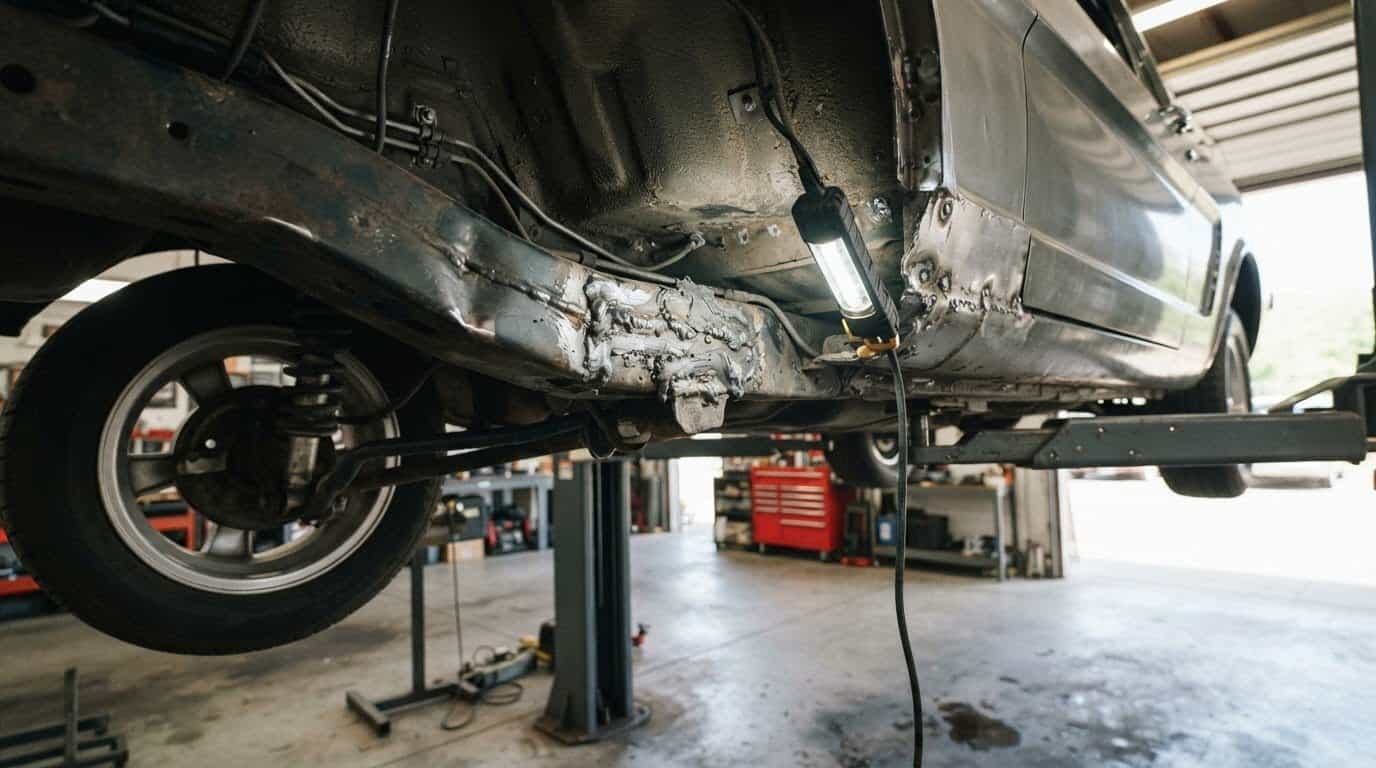
Examine the underside for kinked or welded frame rails, fresh undercoating limited to one area, and rust near structural joints. These clues can point to repairs or concealed damage. Look for paint bubbling around bodywork, which can indicate underlying metal damage, and note exposed metal that could corrode.
Check for paint transfer, too. According to the National Institute of Standards and Technology (NIST), abraded or smeared paint transfer can indicate forcible contact, such as one vehicle striking another.
- Use a light to inspect the frame rails, floor, and suspension mounting areas. Compare the left and right sides for bends, creases, or repairs limited to one section. Severe collisions can bend the frame and damage crumple zones designed to absorb impact. Frame damage can reduce crash protection and contribute to later mechanical problems.
-
Arrange a Professional Inspection
Arrange a professional pre-purchase inspection before deciding on a vehicle with unexplained repairs, structural clues, or unusual test-drive symptoms. A trained inspector can use frame-measuring equipment and a paint-thickness gauge to uncover issues a visual check may miss. A vehicle history report can flag reported accidents, title issues, and total-loss records, but it may not show every collision.
Ask the inspector to check for airbag-module errors and whether the airbags, seatbelts, and sensors function properly. These checks matter when crash repairs are suspected.
- Consider the inspector’s findings alongside visible damage and available history. A professional inspection can reveal hidden or unreported damage that a report doesn’t capture. Prioritize structural measurements, frame condition, and safety-system findings over cosmetic marks. If the frame is bent or poorly repaired, occupant protection and future mechanical reliability may be affected.

Evaluating accident severity and repair quality
Repaired structural damage can leave a classic car less able to protect occupants in another crash. A bent or poorly repaired frame can also contribute to future mechanical problems, so judge the repair, not just the accident history.
- Separate cosmetic repairs from structural work. A replaced trim piece or repainted panel is different from evidence of frame straightening or welded frame rails. Compare repair locations with damage clues elsewhere on the vehicle. Several repairs concentrated around one impact area may help explain how the collision affected the body.
- Look closely at previous repairs for fit, finish, and consistency. Notice uneven seams, rough welds, fresh undercoating limited to one area, or replacement headlights and trim that don’t match. These details can indicate rushed or incomplete work. A clean exterior alone doesn’t establish that structural repairs were done correctly.
- Use inspection findings to judge repair quality. Frame measurements, structural inspection, and checks of current mechanical condition help distinguish sound repairs from unresolved damage. Pay close attention to frame alignment and suspension behavior. If the vehicle pulls during a test drive or has unexplained clunks, consider those symptoms alongside the locations of previous repairs.
- Weigh the evidence before deciding. Consider the accident’s apparent severity, repair quality, current condition, price, and professional inspection results. A car with a reported accident may still be reliable if the impact was minor and qualified professionals repaired it properly. Conversely, poorly executed structural work can affect safety, reliability, and resale value.
- Turn your findings into a clear project plan. If the classic’s history includes repairs, use the inspection results to decide whether restoration or modification remains practical. Plan your classic-car project with the known condition and repair needs in view.
Restomod Academy
Restomod Academy helps classic-car enthusiasts turn inspection findings into informed restoration and modification plans. When accident history or repair quality affects your project decisions, use its educational resources to build your understanding before choosing a direction.
The Ultimate Restomod Guide offers guidance for planning a classic-car transformation, while Restomod Consulting Services and Premium Project Blueprints can support project decisions and build planning. Use your inspection findings to identify the questions that matter most, such as how existing structural repairs affect your intended upgrades.
Contact Restomod Academy to discuss your classic-car project and the next steps you’re considering.
Turn Your Findings Into a Clear Project Direction
Learning how to tell if a classic car has been in a major accident is one part of deciding its future. Let the inspection guide your next steps: whether the car suits your plans, what deserves attention first, and how much of its original character you want to preserve. A thoughtful plan can connect the vehicle’s history with the build you want to create.
Before moving forward, write down your priorities. You might aim to preserve an original finish, improve everyday reliability, or blend vintage character with modern performance. Keep the intended use in mind as you set the project’s scope, so each choice serves a purpose rather than adding work without a clear benefit.
If you want guidance shaping those priorities into a restoration or modification plan, start a conversation with Restomod Academy. Bring your questions and the direction you’re considering, then take the next step with care and confidence.
Frequently Asked Questions
Do Vehicle History Reports Catch Everything?
No. A vehicle history report can show only information that was reported or recorded, so cash-paid repairs may be absent. Treat the report as one piece of evidence, not a complete account of the car’s past. Compare it with the vehicle’s condition and available service records. If the report and physical evidence tell different stories, investigate the discrepancy before deciding.
How Do You Check the Paint for Repairs?
Inspect the finish in daylight and compare panels from similar angles. Note differences in color, gloss, or texture, then look for overspray on trim, seals, and under-hood edges. A paint-thickness gauge can help compare readings across panels. Record the readings beside each panel on a simple sketch; a cluster of higher readings may identify a repair area more clearly than one reading alone.
Should You Buy a Used Car That Has Been in an Accident?
Yes, if the accident was minor, repairs were completed properly, and the car’s present condition suits your needs. Before committing, review available repair records and compare them with the inspection findings. Consider your intended use, restoration plans, and tolerance for prior repairs. A documented, well-repaired car can be a sound project, while unresolved structural concerns call for caution before purchase.
What should I check first when assessing car damage?
Start with signs that could affect the car’s structure or safe operation, rather than cosmetic marks. For example, note frame damage, a shifted suspension component, or an airbag warning light that stays on after startup. Photograph each concern and its location. This creates a clear record for a more detailed inspection and helps keep minor cosmetic flaws from distracting you from serious findings.
When to Seek a Professional Inspection?
Arrange a professional inspection before buying if repairs are unexplained, structural damage is suspected, or the car behaves unusually on a test drive. It’s especially valuable when you can’t assess the frame or safety systems yourself. Ask for written findings that distinguish visible defects from measured concerns. That record gives you a better basis for deciding whether to proceed, negotiate, or walk away.
How can I inspect a classic car’s frame for collision damage or repairs?
Look along accessible frame rails for bends, kinks, welds, or undercoating that appears fresh in one localized area. Don’t rely on appearance alone: a professional can use a frame-measuring system to detect alignment problems a visual inspection may miss. Don’t crawl beneath a vehicle unless it’s safely supported. Note any suspicious area and include it in a professional inspection.
Can a clean vehicle history report rule out a major crash? No. Learning how to tell if a classic car has been in a major accident means looking beyond the report. It may flag reported collisions and title issues, but cash-paid repairs that were never reported may not appear.
Checking the car’s history is sensible, but the body and its details can tell you more. Uneven panel gaps, mismatched paint, signs of frame repair, and the way the car behaves on a test drive can all help reveal past damage.
Inspect the car methodically, checking panel alignment, dents and paint, concealed problem areas, and the quality of previous repairs. Then weigh the clues together: an accident history alone doesn’t show how severe the impact was or whether the repair was done well.
Key Takeaways
- Compare panel gaps, door movement, and component alignment to spot clues that may point to body or structural damage.
- Use daylight to assess paint and surface marks, and note damage location and dimensions as part of your inspection.
- Look beyond the exterior for frame, suspension, and other hidden issues; a professional inspection can reveal problems that are easy to miss.
- Judge a car by the severity of the impact, the quality of its repairs, and its current condition, not accident history alone.
What Do Uneven Panel Gaps Tell You?
Signs of major accident damage can include uneven panel gaps, sticking doors, shifted suspension parts, and tire wear along one edge. To learn how to tell if a classic car has been in a major accident, look for several clues together. One misaligned panel may simply have been removed and refitted.
- Compare the gaps around both doors, fenders, hood, and trunk. Step back and view each side from the same angle. A door gap that narrows sharply near its hinge while the opposite side stays even may indicate body movement or repair. Record where you see the difference rather than judging one gap alone.
- Open and close each door, then operate the hood and trunk. A door that catches or needs extra force can point to a structural issue. Check hinges and mounting brackets for visible bends. A kink near a hinge, together with uneven gaps, merits closer attention than a latch that simply needs adjustment.
- Check how the headlights and taillights sit when viewed from the front and rear. A tilted lamp or a replacement that differs from its counterpart may indicate earlier collision repairs. Also check the nearby fender and hood alignment. Several mismatches around one corner are a stronger clue than one unusual component.
- Inspect all four tires for wear concentrated along one edge. Uneven wear can indicate an alignment problem or impact-related suspension damage, such as a slightly bent control arm. Look underneath for suspension components that appear shifted. Note which tire shows wear and whether irregular panels are on the same side.
- During a test drive, notice pulling, clunks over bumps, or unusual steering vibration. Driving at about 60 mph can reveal vibration associated with a bent rim or suspension part. Knocking, squeaking, or grinding adds another warning. Knowing how to tell if a classic car has been in a major accident means treating these symptoms as clues, not proof.
Classifying dents, scratches, creases, and paint damage
Record each mark’s type, size, location, and finish before judging its cause. Mismatched paint, overspray, thick coatings, and replacement parts can reveal repairs, but no single clue proves a major collision.
-
Look for Repaint and Paint Mismatch Clues
View each panel in daylight, then compare its color and shine with neighboring panels. A fender that looks duller than the door, or a different shade across the hood, may have been repainted after damage. Check window seals, trim, and under-hood edges for overspray. Paint on these surfaces suggests work beyond the factory finish.
Classify visible damage, too. A shallow dent differs from a sharp crease, while a scratch may affect only the coating or expose metal. Note the mark’s length, width, and distance from a panel edge or body line. Cracked paint around a dent can indicate impact; exposed metal can corrode if left untreated.
-
Check Paint Thickness and Replacement Parts
Use a paint thickness gauge across multiple panels, comparing readings rather than relying on one spot. A consistent factory finish is given as an example range of 4-6 mils. If most panels read 5 mils but one measures 12 mils, that panel may have extra paint or filler from repairs. Treat the difference as a clue, not a complete repair record.
Compare headlights, taillights, trim, and other visible components side by side. A replacement headlight or mismatched trim piece may indicate collision repairs. Look for differences in aging, finish, or fit around the part, then note the adjoining panel. These clues can help identify replaced parts without assuming every replacement followed a major crash.
- Assess the marks alongside repair history and the car’s condition. A reported accident can reduce resale value compared with a similar car with a clean history. Paint and bodywork clues alone cannot establish insurability; insurers assess vehicles under their own terms. For a useful record, photograph each mark and note its dimensions and position, such as a crease near a wheel arch.
Where Else Should You Look for Hidden Damage?
Frame-measurement costs depend on the inspection’s scope and equipment.
-
Inspect Paint, Frame, and Undercarriage
Examine the underside for kinked or welded frame rails, fresh undercoating limited to one area, and rust near structural joints. These clues can point to repairs or concealed damage. Look for paint bubbling around bodywork, which can indicate underlying metal damage, and note exposed metal that could corrode.
Check for paint transfer, too. According to the National Institute of Standards and Technology (NIST), abraded or smeared paint transfer can indicate forcible contact, such as one vehicle striking another.
- Use a light to inspect the frame rails, floor, and suspension mounting areas. Compare the left and right sides for bends, creases, or repairs limited to one section. Severe collisions can bend the frame and damage crumple zones designed to absorb impact. Frame damage can reduce crash protection and contribute to later mechanical problems.
-
Arrange a Professional Inspection
Arrange a professional pre-purchase inspection before deciding on a vehicle with unexplained repairs, structural clues, or unusual test-drive symptoms. A trained inspector can use frame-measuring equipment and a paint-thickness gauge to uncover issues a visual check may miss. A vehicle history report can flag reported accidents, title issues, and total-loss records, but it may not show every collision.
Ask the inspector to check for airbag-module errors and whether the airbags, seatbelts, and sensors function properly. These checks matter when crash repairs are suspected.
- Consider the inspector’s findings alongside visible damage and available history. A professional inspection can reveal hidden or unreported damage that a report doesn’t capture. Prioritize structural measurements, frame condition, and safety-system findings over cosmetic marks. If the frame is bent or poorly repaired, occupant protection and future mechanical reliability may be affected.
Evaluating accident severity and repair quality
Repaired structural damage can leave a classic car less able to protect occupants in another crash. A bent or poorly repaired frame can also contribute to future mechanical problems, so judge the repair, not just the accident history.
- Separate cosmetic repairs from structural work. A replaced trim piece or repainted panel is different from evidence of frame straightening or welded frame rails. Compare repair locations with damage clues elsewhere on the vehicle. Several repairs concentrated around one impact area may help explain how the collision affected the body.
- Look closely at previous repairs for fit, finish, and consistency. Notice uneven seams, rough welds, fresh undercoating limited to one area, or replacement headlights and trim that don’t match. These details can indicate rushed or incomplete work. A clean exterior alone doesn’t establish that structural repairs were done correctly.
- Use inspection findings to judge repair quality. Frame measurements, structural inspection, and checks of current mechanical condition help distinguish sound repairs from unresolved damage. Pay close attention to frame alignment and suspension behavior. If the vehicle pulls during a test drive or has unexplained clunks, consider those symptoms alongside the locations of previous repairs.
- Weigh the evidence before deciding. Consider the accident’s apparent severity, repair quality, current condition, price, and professional inspection results. A car with a reported accident may still be reliable if the impact was minor and qualified professionals repaired it properly. Conversely, poorly executed structural work can affect safety, reliability, and resale value.
- Turn your findings into a clear project plan. If the classic’s history includes repairs, use the inspection results to decide whether restoration or modification remains practical. Plan your classic-car project with the known condition and repair needs in view.
Restomod Academy
Restomod Academy helps classic-car enthusiasts turn inspection findings into informed restoration and modification plans. When accident history or repair quality affects your project decisions, use its educational resources to build your understanding before choosing a direction.
The Ultimate Restomod Guide offers guidance for planning a classic-car transformation, while Restomod Consulting Services and Premium Project Blueprints can support project decisions and build planning. Use your inspection findings to identify the questions that matter most, such as how existing structural repairs affect your intended upgrades.
Contact Restomod Academy to discuss your classic-car project and the next steps you’re considering.
Turn Your Findings Into a Clear Project Direction
Learning how to tell if a classic car has been in a major accident is one part of deciding its future. Let the inspection guide your next steps: whether the car suits your plans, what deserves attention first, and how much of its original character you want to preserve. A thoughtful plan can connect the vehicle’s history with the build you want to create.
Before moving forward, write down your priorities. You might aim to preserve an original finish, improve everyday reliability, or blend vintage character with modern performance. Keep the intended use in mind as you set the project’s scope, so each choice serves a purpose rather than adding work without a clear benefit.
If you want guidance shaping those priorities into a restoration or modification plan, start a conversation with Restomod Academy. Bring your questions and the direction you’re considering, then take the next step with care and confidence.
Frequently Asked Questions
Do Vehicle History Reports Catch Everything?
No. A vehicle history report can show only information that was reported or recorded, so cash-paid repairs may be absent. Treat the report as one piece of evidence, not a complete account of the car’s past. Compare it with the vehicle’s condition and available service records. If the report and physical evidence tell different stories, investigate the discrepancy before deciding.
How Do You Check the Paint for Repairs?
Inspect the finish in daylight and compare panels from similar angles. Note differences in color, gloss, or texture, then look for overspray on trim, seals, and under-hood edges. A paint-thickness gauge can help compare readings across panels. Record the readings beside each panel on a simple sketch; a cluster of higher readings may identify a repair area more clearly than one reading alone.
Should You Buy a Used Car That Has Been in an Accident?
Yes, if the accident was minor, repairs were completed properly, and the car’s present condition suits your needs. Before committing, review available repair records and compare them with the inspection findings. Consider your intended use, restoration plans, and tolerance for prior repairs. A documented, well-repaired car can be a sound project, while unresolved structural concerns call for caution before purchase.
What should I check first when assessing car damage?
Start with signs that could affect the car’s structure or safe operation, rather than cosmetic marks. For example, note frame damage, a shifted suspension component, or an airbag warning light that stays on after startup. Photograph each concern and its location. This creates a clear record for a more detailed inspection and helps keep minor cosmetic flaws from distracting you from serious findings.
When to Seek a Professional Inspection?
Arrange a professional inspection before buying if repairs are unexplained, structural damage is suspected, or the car behaves unusually on a test drive. It’s especially valuable when you can’t assess the frame or safety systems yourself. Ask for written findings that distinguish visible defects from measured concerns. That record gives you a better basis for deciding whether to proceed, negotiate, or walk away.
How can I inspect a classic car’s frame for collision damage or repairs?
Look along accessible frame rails for bends, kinks, welds, or undercoating that appears fresh in one localized area. Don’t rely on appearance alone: a professional can use a frame-measuring system to detect alignment problems a visual inspection may miss. Don’t crawl beneath a vehicle unless it’s safely supported. Note any suspicious area and include it in a professional inspection.