
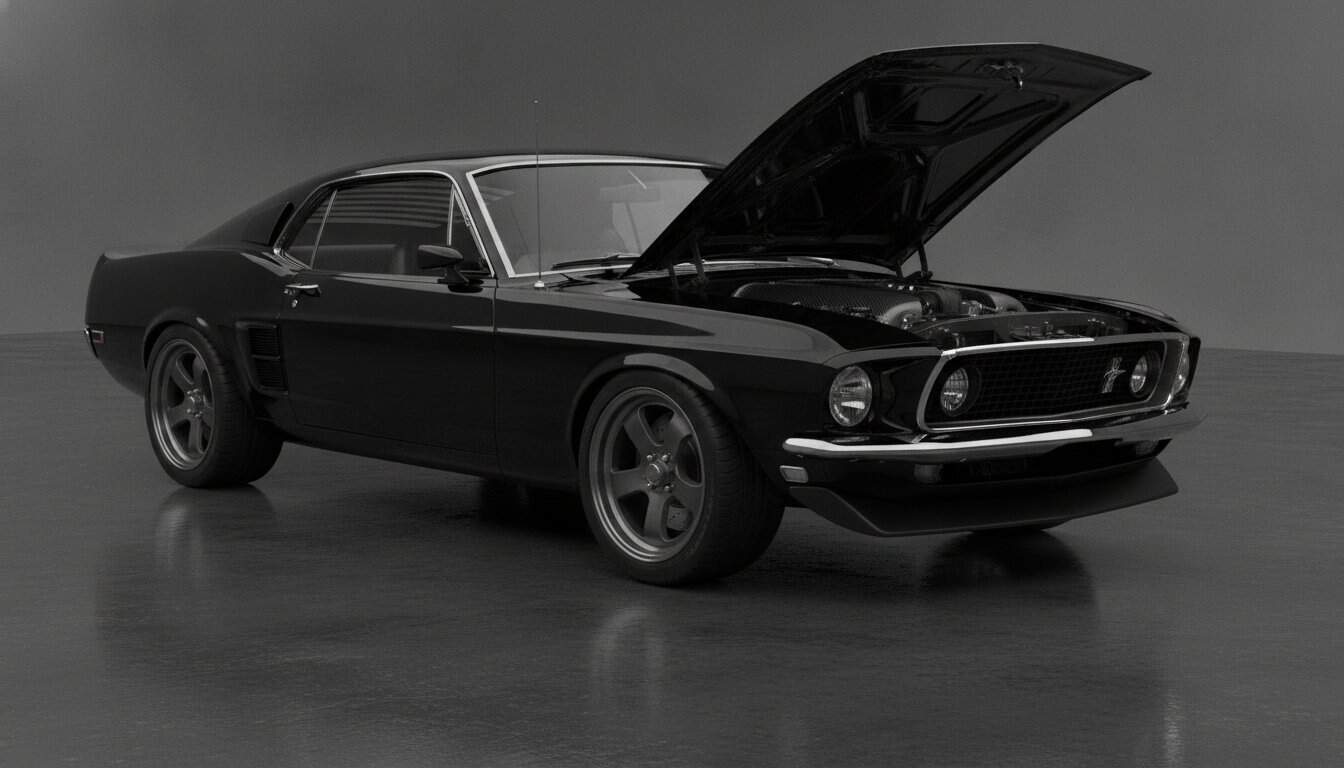
What if the most successful part of your build isn’t the highest horsepower figure on a dyno sheet, but the confidence you feel when carving a mountain road at sunset? Many builders start with a garage full of ambition only to stall when the complexity of modern fuel injection or the fear of creating an undrivable monster sets in. It’s a common anxiety to worry that too much power might compromise the safety of your classic frame or that your chosen muscle car restomod ideas won’t deliver the reliability you need for a weekend trip. You want the legendary silhouette of a vintage machine without the temperamental cold starts and vague steering that often come with it.
This guide serves as your roadmap, offering a curated selection of upgrades that bridge the gap between heritage and high performance. You’ll discover how to prioritize your project, from selecting a compliant Gen 4 Coyote or LS3 crate engine to installing precision coilover systems that make a sixty-year-old car handle like a modern sports coupe. We will break down the most effective engine, suspension, and interior modifications to ensure your project delivers both emotional reward and mechanical precision. Get ready to transform your vision into a balanced, road-ready masterpiece that honors its history while embracing the future.
Key Takeaways
- Identify the most reliable engine swaps and drivetrain packages to ensure your build delivers modern cold-start reliability and federal emissions compliance.
- Learn how geometry corrections and disc brake conversions turn traditional straight-line performance into a predictable, corner-carving experience on modern roads.
- Discover a curated list of muscle car restomod ideas that blend contemporary ergonomics and cabin technology with timeless heritage aesthetics.
- Understand the importance of a comprehensive project roadmap and why maintaining a 20 percent contingency fund is vital for a successful, stress-free restoration.
Modern Powerplants and Drivetrain Evolution
The heart of your build is the power source. While a period-correct block has its charms, the modern restomod philosophy focuses on the intersection of heritage and usability. This approach is rooted in the Conservation and restoration of road vehicles, where the goal shifts from static preservation to dynamic performance. As you explore various muscle car restomod ideas, you’ll find that modern engines offer superior fuel mapping and cold-start reliability that old carburetors simply can’t match. You want a car that fires up instantly on a chilly morning and idles smoothly in traffic.
Crate Engine Convenience vs Custom Swaps
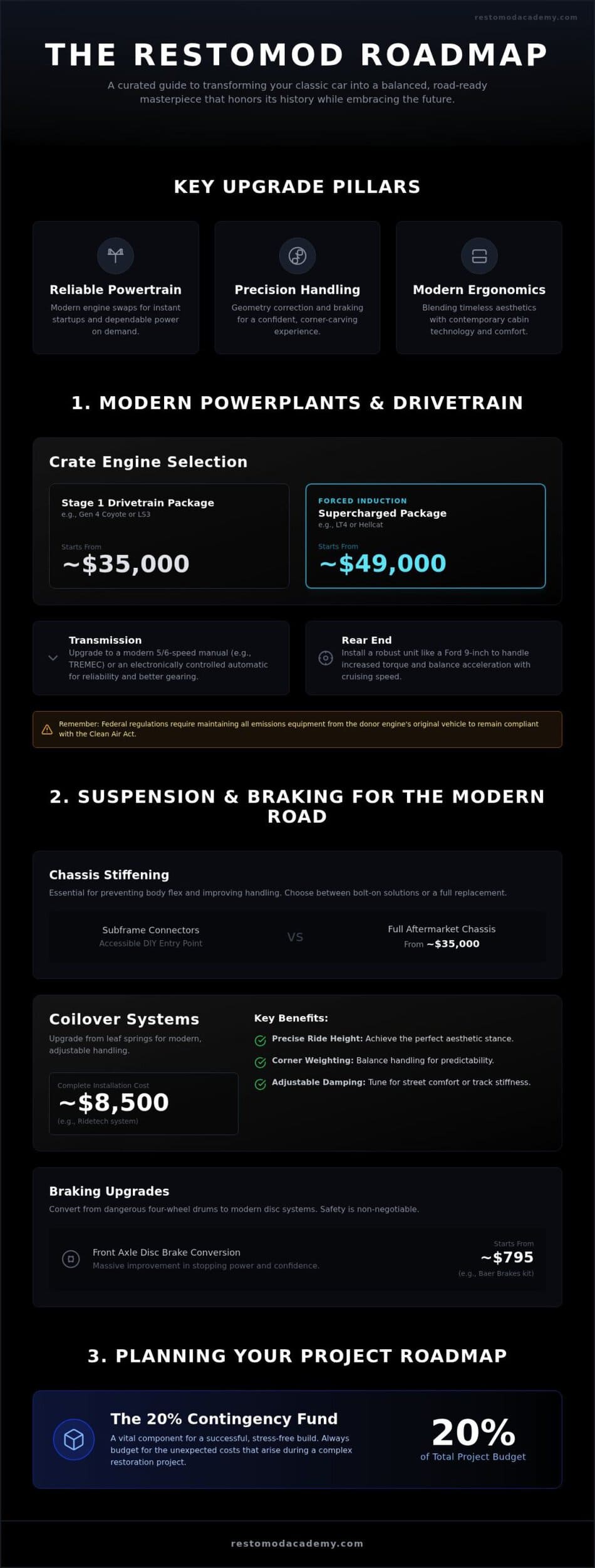
Choosing between a turn-key crate engine and a custom swap is a pivotal decision that dictates your project timeline. A crate engine offers the peace of mind of a manufacturer warranty and a simplified installation process. For many builders, a stage 1 drivetrain package including an LS3 or Gen 4 Coyote starts at approximately $35,000. If you crave the visceral thrill of forced induction, supercharged options like the LT4 or Hellcat begin around $49,000. The LS engine remains a favorite because of its compact size and massive aftermarket support. Use our definitive guide to an LS engine swap to plan your wiring and mounting solutions. Be aware that federal regulations now require you to maintain all emissions equipment from the donor engine’s original vehicle to remain compliant with the Clean Air Act.
Transmission and Rear End Selection
Don’t pair a 500-horsepower engine with a factory three-speed transmission. You must upgrade your drivetrain to handle increased torque loads without failure. Installing a modern 5 or 6-speed manual, such as a TREMEC unit, allows for comfortable highway cruising RPMs while keeping the engine in its power band. If you prefer an automatic, modern electronically controlled transmissions offer paddle shift capabilities that provide a true pro-touring feel. Complete your setup by selecting a robust rear end, like a Ford 9-inch, with a gear ratio that balances snappy acceleration with reasonable top speeds. This mechanical synergy ensures your muscle car restomod ideas translate into a car that is as fast as it is reliable.
Suspension and Braking for the Modern Road
Safety starts with stopping power before you ever add significant horsepower. Most vintage machines were built for the drag strip or the interstate, prioritizing straight-line speed over lateral grip. When you start exploring muscle car restomod ideas, remember that a car that can’t turn or stop is a liability, not a joy. You must prioritize geometry corrections to ensure your vehicle feels planted and predictable at highway speeds. Stiffening the chassis with subframe connectors or a full aftermarket chassis is essential for preventing the body flex common in old steel. A full chassis from a company like Roadster Shop starts at $35,000, but bolt-on stiffeners offer a more accessible entry point for the DIY builder.
A deep Understanding Resto-Mods reveals that the primary goal is often creating a machine that behaves like a modern sports car. Achieving this requires moving beyond the limitations of factory suspension designs. While some might claim custom suspension is only for professional shops, modern bolt-on kits allow DIY builders to achieve professional results in their own garages.
Precision Handling with Coilover Systems
Upgrade your leaf and coil springs to a modern coilover system. Coilovers are superior because they offer precise control over the car’s dynamics. Adjustable damping allows you to tune the ride for a local track day or a comfortable cruise to a car show. A complete Ridetech coilover installation starts at approximately $8,500. These systems provide several key benefits:
- Precise ride height adjustment for the perfect aesthetic stance.
- Corner weighting capabilities to balance the car’s handling.
- Adjustable damping to switch between street comfort and track stiffness.
Pair these with tubular control arms to modernize your steering feel and alignment settings. For a deeper dive into specific kits, consult our suspension upgrades for cars guide. These components work together to eliminate the boaty feel typical of sixty-year-old suspension geometry.
Big Brake Kits and Master Cylinder Upgrades
Convert your dangerous four-wheel drums to modern disc systems immediately. Safety is non-negotiable. A front axle disc brake conversion kit from a brand like Baer Brakes can start as low as $795, providing a massive leap in confidence. Don’t forget the master cylinder; a dual-reservoir unit is vital to prevent total brake failure if one line develops a leak. If you plan on using high-performance multi-piston calipers, you’ll likely need to step up to 18-inch or 20-inch wheels to provide the necessary clearance. This transition from manual drums to power-assisted discs is the single most important safety upgrade for any muscle car restomod ideas project. If you’re feeling overwhelmed by the technical specs, our recommended gear section can help you narrow down the best hardware for your specific build.
Interior Refinement and Modern Cabin Tech
The interior is where you connect with your machine. While the engine bay gets the glory at car shows, the cabin is where you spend your time, so you must prioritize ergonomics and comfort. A successful build doesn’t just look fast; it feels refined. Many builders make the mistake of focusing solely on aesthetics, but the most effective muscle car restomod ideas address the sensory experience of driving. This means tackling the heat and noise that classic muscle cars are notorious for. High-performance sound deadening and thermal barriers are essential upgrades that transform a tinny, rattling cabin into a solid, luxury environment. Many of the builds featured in Top Gear’s best restomods of 2024 demonstrate this balance, where the vintage soul remains intact while the driver enjoys contemporary refinement.
Digital Dashes and Vintage Gauges
Precision is the hallmark of a modern build. Integrating digital dash displays into classic gauge pods allows you to monitor critical data from your engine management system without cluttering the dashboard with aftermarket pods. You can track everything from air-fuel ratios to transmission temperatures in real time. If you prefer a traditional look, consider gauges equipped with modern internal stepper motors. These provide the accuracy of 2026 technology while maintaining a period-correct 1960s face. GPS-based speedometers are another vital upgrade, as they ensure your speed reading is perfectly accurate regardless of changes to your tire size or rear-end gear ratio. This combination of visual heritage and mechanical precision is a cornerstone of professional-level projects.
Climate Control and Audio Integration
Don’t let the weather dictate when you drive your classic. Installing a modern climate control kit is a game changer for year-round usability. These compact units are designed to fit neatly behind the dash, replacing bulky factory heaters with powerful air conditioning and heating that often utilizes your original sliders or knobs for a seamless look. Audio integration follows a similar philosophy of hidden tech. You can keep your factory AM radio in the dash for the aesthetic while a hidden Bluetooth controller handles your music through high-quality speakers tucked into original locations. For those looking to source the right components, our recommended gear section highlights the best hardware for these stealthy upgrades. Remember that a custom interior typically ranges from $6,000 to $18,000, and investing in quality materials ensures your cabin remains a comfortable sanctuary for years to come.
Exterior Aesthetics and Functional Body Mods
Prioritize the silhouette of your machine before you ever open a paint catalog. While some enthusiasts think a restomod is just a fancy paint job, the true character of a build is defined by the quality of its metalwork and the intentionality of its lines. You want to create a look that feels both timeless and aggressive. The most successful muscle car restomod ideas often lean toward clean, understated modifications that emphasize the vehicle’s original design language while hinting at the modern performance hidden beneath the hood. Clean lines almost always beat radical body kits when you consider long-term value and aesthetic staying power. A build that respects factory proportions while perfecting the gaps and surfaces will always stand out in a crowd of over-styled competitors.
Subtle vs Radical Body Modifications
Focus on the details that streamline the car’s appearance. Shaving door handles and tucking the bumpers tight to the body are classic techniques that provide a smooth, modern look without compromising the car’s identity. If your build includes the high-performance 20-inch wheels and massive tires we discussed in the braking section, you might need a widebody conversion or subtle fender flares to provide the necessary clearance and grip. These modifications are not just for show; they allow you to utilize the full potential of your modern suspension. For those ready to dive into the heavy lifting, our classic car bodywork guide provides the technical foundations for custom metal fabrication and engine bay smoothing. Taking the time to hide wiring and plumbing in the engine bay creates a jewelry-box effect that rewards anyone who looks under the hood.
Advanced Lighting and Trim Ideas
Modernize your visibility to match your new top speeds. LED headlight conversions are a mandatory safety upgrade, providing a crisp, modern beam pattern that factory sealed beams can’t match. This simple swap allows you to drive with confidence after the sun goes down. At the rear, sequential LED taillights offer a modern signature look that honors the heritage of cars like the Mustang and Cougar while using 2026 technology for better brightness and reliability. Consider your trim finishes carefully. While chrome is traditional, powder coating your trim in a satin or matte finish can provide a contemporary, durable look that resists the elements better than old-school plating. This approach creates a cohesive aesthetic that tells the world your car is a precision-engineered machine, not a museum piece. If you’re ready to finalize your design plan, our Premium Project Blueprints offer the structured guidance you need to execute these muscle car restomod ideas with professional results.
Planning Your Project Roadmap
Commit to a plan before you ever pick up a wrench. A successful build is the result of disciplined execution, not just a collection of expensive parts. Many enthusiasts stall mid-project because they underestimate the complexity or the financial commitment required to see their muscle car restomod ideas through to completion. You must build a comprehensive project roadmap to maintain momentum. Statistically, a DIY restomod build often requires at least $100,000, and that doesn’t include the initial purchase of the donor car. To stay on track, you must include a 20 percent contingency fund in your budget. This buffer protects you when you discover hidden rust or encounter unexpected compatibility issues during assembly.
Choose your donor car with extreme care. This is the most important financial decision you’ll make. Starting with a solid, rust-free foundation might cost more upfront, but it’ll save you thousands in labor and metal fabrication later. Focus on one system at a time. Complete the suspension before moving to the drivetrain, and finish the wiring before you install the interior. This methodical approach prevents project fatigue and ensures that each phase receives the technical precision it deserves.
Setting Your Build Goals
Define the primary mission of your car early. Is it a daily driver that needs modern air conditioning and highway gears, or a track-focused machine where every ounce of weight matters? Creating a tiered list of must-have features versus nice-to-have luxuries will help you make difficult decisions when the budget gets tight. If you’re building a “show queen,” you might prioritize a $15,000 custom upholstery job, whereas a driver-focused build would benefit more from an $8,500 coilover system. For a detailed timeline and step-by-step breakdown of the process, review our restomod project planning guide. It’ll help you organize your labor and keep your garage from becoming a graveyard of unfinished dreams.
Sourcing Parts and Expertise
Invest in quality components from the start to avoid doing the job twice. We’ve vetted the industry’s top performers to help you find the right hardware on our recommended gear page. While the DIY spirit is at the core of this community, you must know when to call in a professional. With nationwide labor rates for specialized restomod shops averaging $132 per hour, it’s often more cost-effective to handle the assembly yourself while outsourcing specialized tasks like final paint or ECU tuning. Joining a community of builders provides access to shared technical knowledge that can save you weeks of troubleshooting. Your journey from enthusiast to creator is a marathon; use the right tools and guidance to cross the finish line with a machine you’re proud to drive.
Take the Wheel and Build Your Legacy
You have explored the essential muscle car restomod ideas that define a modern masterpiece, from high-revving crate engines to the precision of coilover suspension. A successful project is more than a list of parts; it’s a deliberate marriage of classic character and contemporary engineering. By focusing on one system at a time and maintaining a clear project roadmap, you ensure that your journey in the garage is as rewarding as the first turn of the key. Precision and patience are your best tools in this transformation, and for those who find inspiration in the resilience required for such journeys, we invite you to discover I’m Still Rolling Podcast.
Don’t let the complexity of modern technology stall your ambition. With the expert guidance of seasoned enthusiast Brook Walsh and our comprehensive performance parts reviews, you have the framework to overcome any mechanical hurdle. The satisfaction of a finished project is within your reach. Download The Ultimate Restomod Guide to start your build today and transition from a passive admirer to an active creator. Your vintage machine is waiting for its second life. Grab your tools, trust the process, and begin the transformation.
Frequently Asked Questions
What is the best muscle car to start a restomod project with?
Popular models like the 1967 to 1969 Camaro, 1965 to 1970 Mustang, or 1970 to 1972 Chevelle are ideal due to massive aftermarket support. These cars have bolt-on solutions for almost every system, making them perfect for testing your muscle car restomod ideas. Choosing a model with high parts availability reduces the need for custom fabrication, which keeps your project moving toward the finish line.
How much does a typical muscle car restomod cost in 2026?
A high-quality DIY build typically starts at $100,000, excluding the donor car’s purchase price. If you outsource the labor to a professional shop at the national average rate of $132 per hour, costs can quickly climb past $250,000. Professional, high-end builds often range from $500,000 to over $1 million, depending on the level of bespoke engineering and luxury materials used in the cabin.
Will restomodding my car decrease its resale value?
Modernizing a common classic usually increases its value and marketability, though it may hurt the value of rare, numbers-matching survivors. Most buyers in 2026 prioritize reliability and performance over strict originality. A well-executed build with documented high-quality parts often fetches a higher price than a standard restoration because it offers a superior driving experience that appeals to a much broader audience of enthusiasts.
What is the most difficult part of a restomod build for a beginner?
Wiring and electronic fuel injection integration are often the most challenging hurdles for novice builders. Modern engines require complex wiring harnesses and ECU tuning to function correctly. You must also ensure that the cooling and fuel systems are upgraded to support the modern powerplant’s requirements. Methodical planning and following a structured guide can help you navigate these technical tasks without becoming overwhelmed by the complexity.
Can I daily drive a restomod muscle car?
You can reliably daily drive a restomod if you prioritize modern climate control, sound deadening, and fuel injection during the assembly phase. Modern crate engines like the LS3 or Coyote offer the same turn-key reliability as a new vehicle. Adding features like power steering, power disc brakes, and an overdrive transmission makes the car comfortable and safe enough for modern traffic conditions and long commutes.
Which engine swap is the most reliable for a classic car?
The Chevrolet LS3 and Ford Gen 4 Coyote V8 are currently the most reliable and popular choices for builders. These powerplants are valued for their consistent performance and extensive aftermarket support. They provide a perfect platform for your muscle car restomod ideas because they offer modern fuel mapping and cold-start reliability. Always remember to retain the donor engine’s emissions equipment to remain compliant with federal EPA regulations.
How do I choose between a pro-touring build and a standard restomod?
Choose a pro-touring build if you want your classic to handle like a modern sports car on a road course. This style focuses heavily on suspension geometry, massive brakes, and aggressive wheel fitment for maximum grip. A standard restomod is better if your goal is a comfortable, stylish cruiser that simply starts and stops better than it did originally. Your decision should align with how you plan to use the car.
Is it cheaper to buy a finished restomod or build one myself?
It’s often cheaper to buy a finished car than to build one from scratch, especially when you factor in the value of your labor. You can frequently find high-quality builds for less than the total cost of parts and professional labor combined. However, building it yourself allows for total customization and the satisfaction of knowing every bolt is tight. Use your budget and timeline to decide which path fits your goals.
What if the most successful part of your build isn’t the highest horsepower figure on a dyno sheet, but the confidence you feel when carving a mountain road at sunset? Many builders start with a garage full of ambition only to stall when the complexity of modern fuel injection or the fear of creating an undrivable monster sets in. It’s a common anxiety to worry that too much power might compromise the safety of your classic frame or that your chosen muscle car restomod ideas won’t deliver the reliability you need for a weekend trip. You want the legendary silhouette of a vintage machine without the temperamental cold starts and vague steering that often come with it.
This guide serves as your roadmap, offering a curated selection of upgrades that bridge the gap between heritage and high performance. You’ll discover how to prioritize your project, from selecting a compliant Gen 4 Coyote or LS3 crate engine to installing precision coilover systems that make a sixty-year-old car handle like a modern sports coupe. We will break down the most effective engine, suspension, and interior modifications to ensure your project delivers both emotional reward and mechanical precision. Get ready to transform your vision into a balanced, road-ready masterpiece that honors its history while embracing the future.
Key Takeaways
- Identify the most reliable engine swaps and drivetrain packages to ensure your build delivers modern cold-start reliability and federal emissions compliance.
- Learn how geometry corrections and disc brake conversions turn traditional straight-line performance into a predictable, corner-carving experience on modern roads.
- Discover a curated list of muscle car restomod ideas that blend contemporary ergonomics and cabin technology with timeless heritage aesthetics.
- Understand the importance of a comprehensive project roadmap and why maintaining a 20 percent contingency fund is vital for a successful, stress-free restoration.
Modern Powerplants and Drivetrain Evolution
The heart of your build is the power source. While a period-correct block has its charms, the modern restomod philosophy focuses on the intersection of heritage and usability. This approach is rooted in the Conservation and restoration of road vehicles, where the goal shifts from static preservation to dynamic performance. As you explore various muscle car restomod ideas, you’ll find that modern engines offer superior fuel mapping and cold-start reliability that old carburetors simply can’t match. You want a car that fires up instantly on a chilly morning and idles smoothly in traffic.
Crate Engine Convenience vs Custom Swaps
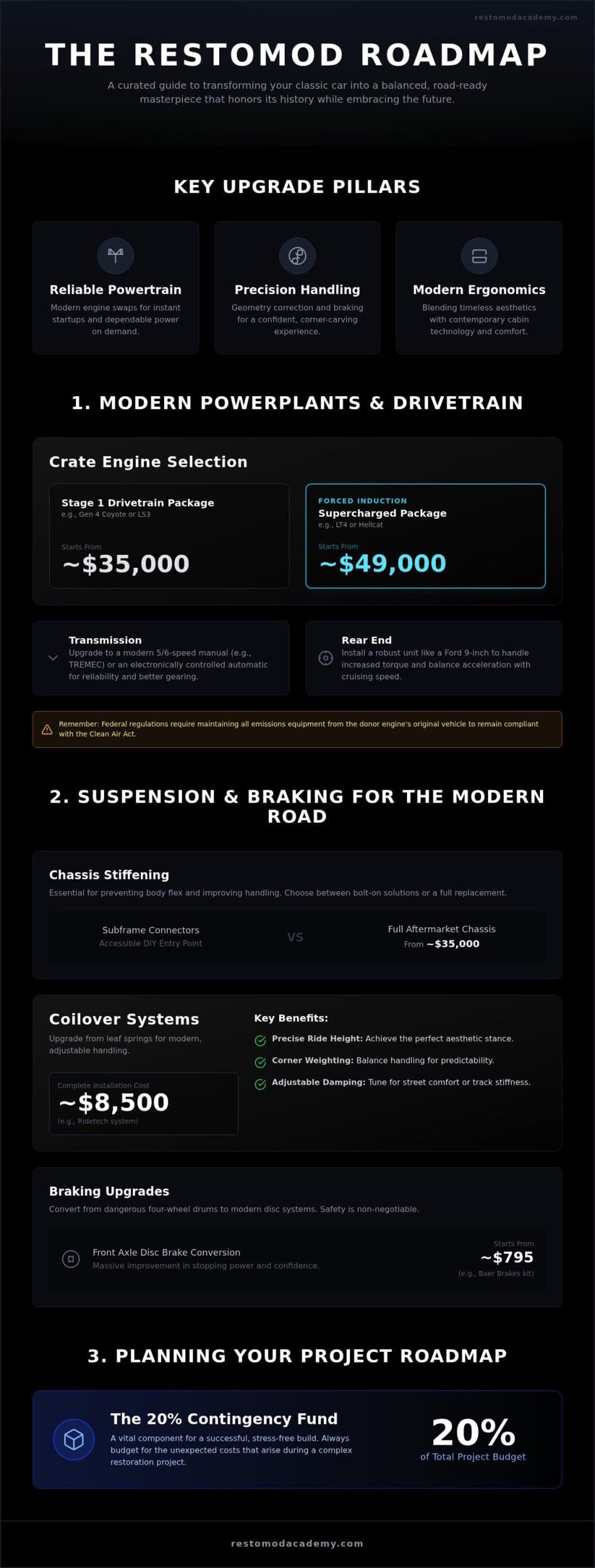
Choosing between a turn-key crate engine and a custom swap is a pivotal decision that dictates your project timeline. A crate engine offers the peace of mind of a manufacturer warranty and a simplified installation process. For many builders, a stage 1 drivetrain package including an LS3 or Gen 4 Coyote starts at approximately $35,000. If you crave the visceral thrill of forced induction, supercharged options like the LT4 or Hellcat begin around $49,000. The LS engine remains a favorite because of its compact size and massive aftermarket support. Use our definitive guide to an LS engine swap to plan your wiring and mounting solutions. Be aware that federal regulations now require you to maintain all emissions equipment from the donor engine’s original vehicle to remain compliant with the Clean Air Act.
Transmission and Rear End Selection
Don’t pair a 500-horsepower engine with a factory three-speed transmission. You must upgrade your drivetrain to handle increased torque loads without failure. Installing a modern 5 or 6-speed manual, such as a TREMEC unit, allows for comfortable highway cruising RPMs while keeping the engine in its power band. If you prefer an automatic, modern electronically controlled transmissions offer paddle shift capabilities that provide a true pro-touring feel. Complete your setup by selecting a robust rear end, like a Ford 9-inch, with a gear ratio that balances snappy acceleration with reasonable top speeds. This mechanical synergy ensures your muscle car restomod ideas translate into a car that is as fast as it is reliable.
Suspension and Braking for the Modern Road
Safety starts with stopping power before you ever add significant horsepower. Most vintage machines were built for the drag strip or the interstate, prioritizing straight-line speed over lateral grip. When you start exploring muscle car restomod ideas, remember that a car that can’t turn or stop is a liability, not a joy. You must prioritize geometry corrections to ensure your vehicle feels planted and predictable at highway speeds. Stiffening the chassis with subframe connectors or a full aftermarket chassis is essential for preventing the body flex common in old steel. A full chassis from a company like Roadster Shop starts at $35,000, but bolt-on stiffeners offer a more accessible entry point for the DIY builder.
A deep Understanding Resto-Mods reveals that the primary goal is often creating a machine that behaves like a modern sports car. Achieving this requires moving beyond the limitations of factory suspension designs. While some might claim custom suspension is only for professional shops, modern bolt-on kits allow DIY builders to achieve professional results in their own garages.
Precision Handling with Coilover Systems
Upgrade your leaf and coil springs to a modern coilover system. Coilovers are superior because they offer precise control over the car’s dynamics. Adjustable damping allows you to tune the ride for a local track day or a comfortable cruise to a car show. A complete Ridetech coilover installation starts at approximately $8,500. These systems provide several key benefits:
- Precise ride height adjustment for the perfect aesthetic stance.
- Corner weighting capabilities to balance the car’s handling.
- Adjustable damping to switch between street comfort and track stiffness.
Pair these with tubular control arms to modernize your steering feel and alignment settings. For a deeper dive into specific kits, consult our suspension upgrades for cars guide. These components work together to eliminate the boaty feel typical of sixty-year-old suspension geometry.
Big Brake Kits and Master Cylinder Upgrades
Convert your dangerous four-wheel drums to modern disc systems immediately. Safety is non-negotiable. A front axle disc brake conversion kit from a brand like Baer Brakes can start as low as $795, providing a massive leap in confidence. Don’t forget the master cylinder; a dual-reservoir unit is vital to prevent total brake failure if one line develops a leak. If you plan on using high-performance multi-piston calipers, you’ll likely need to step up to 18-inch or 20-inch wheels to provide the necessary clearance. This transition from manual drums to power-assisted discs is the single most important safety upgrade for any muscle car restomod ideas project. If you’re feeling overwhelmed by the technical specs, our recommended gear section can help you narrow down the best hardware for your specific build.
Interior Refinement and Modern Cabin Tech
The interior is where you connect with your machine. While the engine bay gets the glory at car shows, the cabin is where you spend your time, so you must prioritize ergonomics and comfort. A successful build doesn’t just look fast; it feels refined. Many builders make the mistake of focusing solely on aesthetics, but the most effective muscle car restomod ideas address the sensory experience of driving. This means tackling the heat and noise that classic muscle cars are notorious for. High-performance sound deadening and thermal barriers are essential upgrades that transform a tinny, rattling cabin into a solid, luxury environment. Many of the builds featured in Top Gear’s best restomods of 2024 demonstrate this balance, where the vintage soul remains intact while the driver enjoys contemporary refinement.
Digital Dashes and Vintage Gauges
Precision is the hallmark of a modern build. Integrating digital dash displays into classic gauge pods allows you to monitor critical data from your engine management system without cluttering the dashboard with aftermarket pods. You can track everything from air-fuel ratios to transmission temperatures in real time. If you prefer a traditional look, consider gauges equipped with modern internal stepper motors. These provide the accuracy of 2026 technology while maintaining a period-correct 1960s face. GPS-based speedometers are another vital upgrade, as they ensure your speed reading is perfectly accurate regardless of changes to your tire size or rear-end gear ratio. This combination of visual heritage and mechanical precision is a cornerstone of professional-level projects.
Climate Control and Audio Integration
Don’t let the weather dictate when you drive your classic. Installing a modern climate control kit is a game changer for year-round usability. These compact units are designed to fit neatly behind the dash, replacing bulky factory heaters with powerful air conditioning and heating that often utilizes your original sliders or knobs for a seamless look. Audio integration follows a similar philosophy of hidden tech. You can keep your factory AM radio in the dash for the aesthetic while a hidden Bluetooth controller handles your music through high-quality speakers tucked into original locations. For those looking to source the right components, our recommended gear section highlights the best hardware for these stealthy upgrades. Remember that a custom interior typically ranges from $6,000 to $18,000, and investing in quality materials ensures your cabin remains a comfortable sanctuary for years to come.
Exterior Aesthetics and Functional Body Mods
Prioritize the silhouette of your machine before you ever open a paint catalog. While some enthusiasts think a restomod is just a fancy paint job, the true character of a build is defined by the quality of its metalwork and the intentionality of its lines. You want to create a look that feels both timeless and aggressive. The most successful muscle car restomod ideas often lean toward clean, understated modifications that emphasize the vehicle’s original design language while hinting at the modern performance hidden beneath the hood. Clean lines almost always beat radical body kits when you consider long-term value and aesthetic staying power. A build that respects factory proportions while perfecting the gaps and surfaces will always stand out in a crowd of over-styled competitors.
Subtle vs Radical Body Modifications
Focus on the details that streamline the car’s appearance. Shaving door handles and tucking the bumpers tight to the body are classic techniques that provide a smooth, modern look without compromising the car’s identity. If your build includes the high-performance 20-inch wheels and massive tires we discussed in the braking section, you might need a widebody conversion or subtle fender flares to provide the necessary clearance and grip. These modifications are not just for show; they allow you to utilize the full potential of your modern suspension. For those ready to dive into the heavy lifting, our classic car bodywork guide provides the technical foundations for custom metal fabrication and engine bay smoothing. Taking the time to hide wiring and plumbing in the engine bay creates a jewelry-box effect that rewards anyone who looks under the hood.
Advanced Lighting and Trim Ideas
Modernize your visibility to match your new top speeds. LED headlight conversions are a mandatory safety upgrade, providing a crisp, modern beam pattern that factory sealed beams can’t match. This simple swap allows you to drive with confidence after the sun goes down. At the rear, sequential LED taillights offer a modern signature look that honors the heritage of cars like the Mustang and Cougar while using 2026 technology for better brightness and reliability. Consider your trim finishes carefully. While chrome is traditional, powder coating your trim in a satin or matte finish can provide a contemporary, durable look that resists the elements better than old-school plating. This approach creates a cohesive aesthetic that tells the world your car is a precision-engineered machine, not a museum piece. If you’re ready to finalize your design plan, our Premium Project Blueprints offer the structured guidance you need to execute these muscle car restomod ideas with professional results.
Planning Your Project Roadmap
Commit to a plan before you ever pick up a wrench. A successful build is the result of disciplined execution, not just a collection of expensive parts. Many enthusiasts stall mid-project because they underestimate the complexity or the financial commitment required to see their muscle car restomod ideas through to completion. You must build a comprehensive project roadmap to maintain momentum. Statistically, a DIY restomod build often requires at least $100,000, and that doesn’t include the initial purchase of the donor car. To stay on track, you must include a 20 percent contingency fund in your budget. This buffer protects you when you discover hidden rust or encounter unexpected compatibility issues during assembly.
Choose your donor car with extreme care. This is the most important financial decision you’ll make. Starting with a solid, rust-free foundation might cost more upfront, but it’ll save you thousands in labor and metal fabrication later. Focus on one system at a time. Complete the suspension before moving to the drivetrain, and finish the wiring before you install the interior. This methodical approach prevents project fatigue and ensures that each phase receives the technical precision it deserves.
Setting Your Build Goals
Define the primary mission of your car early. Is it a daily driver that needs modern air conditioning and highway gears, or a track-focused machine where every ounce of weight matters? Creating a tiered list of must-have features versus nice-to-have luxuries will help you make difficult decisions when the budget gets tight. If you’re building a “show queen,” you might prioritize a $15,000 custom upholstery job, whereas a driver-focused build would benefit more from an $8,500 coilover system. For a detailed timeline and step-by-step breakdown of the process, review our restomod project planning guide. It’ll help you organize your labor and keep your garage from becoming a graveyard of unfinished dreams.
Sourcing Parts and Expertise
Invest in quality components from the start to avoid doing the job twice. We’ve vetted the industry’s top performers to help you find the right hardware on our recommended gear page. While the DIY spirit is at the core of this community, you must know when to call in a professional. With nationwide labor rates for specialized restomod shops averaging $132 per hour, it’s often more cost-effective to handle the assembly yourself while outsourcing specialized tasks like final paint or ECU tuning. Joining a community of builders provides access to shared technical knowledge that can save you weeks of troubleshooting. Your journey from enthusiast to creator is a marathon; use the right tools and guidance to cross the finish line with a machine you’re proud to drive.
Take the Wheel and Build Your Legacy
You have explored the essential muscle car restomod ideas that define a modern masterpiece, from high-revving crate engines to the precision of coilover suspension. A successful project is more than a list of parts; it’s a deliberate marriage of classic character and contemporary engineering. By focusing on one system at a time and maintaining a clear project roadmap, you ensure that your journey in the garage is as rewarding as the first turn of the key. Precision and patience are your best tools in this transformation.
Don’t let the complexity of modern technology stall your ambition. With the expert guidance of seasoned enthusiast Brook Walsh and our comprehensive performance parts reviews, you have the framework to overcome any mechanical hurdle. The satisfaction of a finished project is within your reach. Download The Ultimate Restomod Guide to start your build today and transition from a passive admirer to an active creator. Your vintage machine is waiting for its second life. Grab your tools, trust the process, and begin the transformation.
Frequently Asked Questions
What is the best muscle car to start a restomod project with?
Popular models like the 1967 to 1969 Camaro, 1965 to 1970 Mustang, or 1970 to 1972 Chevelle are ideal due to massive aftermarket support. These cars have bolt-on solutions for almost every system, making them perfect for testing your muscle car restomod ideas. Choosing a model with high parts availability reduces the need for custom fabrication, which keeps your project moving toward the finish line.
How much does a typical muscle car restomod cost in 2026?
A high-quality DIY build typically starts at $100,000, excluding the donor car’s purchase price. If you outsource the labor to a professional shop at the national average rate of $132 per hour, costs can quickly climb past $250,000. Professional, high-end builds often range from $500,000 to over $1 million, depending on the level of bespoke engineering and luxury materials used in the cabin.
Will restomodding my car decrease its resale value?
Modernizing a common classic usually increases its value and marketability, though it may hurt the value of rare, numbers-matching survivors. Most buyers in 2026 prioritize reliability and performance over strict originality. A well-executed build with documented high-quality parts often fetches a higher price than a standard restoration because it offers a superior driving experience that appeals to a much broader audience of enthusiasts.
What is the most difficult part of a restomod build for a beginner?
Wiring and electronic fuel injection integration are often the most challenging hurdles for novice builders. Modern engines require complex wiring harnesses and ECU tuning to function correctly. You must also ensure that the cooling and fuel systems are upgraded to support the modern powerplant’s requirements. Methodical planning and following a structured guide can help you navigate these technical tasks without becoming overwhelmed by the complexity.
Can I daily drive a restomod muscle car?
You can reliably daily drive a restomod if you prioritize modern climate control, sound deadening, and fuel injection during the assembly phase. Modern crate engines like the LS3 or Coyote offer the same turn-key reliability as a new vehicle. Adding features like power steering, power disc brakes, and an overdrive transmission makes the car comfortable and safe enough for modern traffic conditions and long commutes.
Which engine swap is the most reliable for a classic car?
The Chevrolet LS3 and Ford Gen 4 Coyote V8 are currently the most reliable and popular choices for builders. These powerplants are valued for their consistent performance and extensive aftermarket support. They provide a perfect platform for your muscle car restomod ideas because they offer modern fuel mapping and cold-start reliability. Always remember to retain the donor engine’s emissions equipment to remain compliant with federal EPA regulations.
How do I choose between a pro-touring build and a standard restomod?
Choose a pro-touring build if you want your classic to handle like a modern sports car on a road course. This style focuses heavily on suspension geometry, massive brakes, and aggressive wheel fitment for maximum grip. A standard restomod is better if your goal is a comfortable, stylish cruiser that simply starts and stops better than it did originally. Your decision should align with how you plan to use the car.
Is it cheaper to buy a finished restomod or build one myself?
It’s often cheaper to buy a finished car than to build one from scratch, especially when you factor in the value of your labor. You can frequently find high-quality builds for less than the total cost of parts and professional labor combined. However, building it yourself allows for total customization and the satisfaction of knowing every bolt is tight. Use your budget and timeline to decide which path fits your goals.