

Can a classic deliver its familiar sound and style on the Monday commute, not just a weekend cruise? The pros and cons of a daily driver restomod depend on more than modern parts. They come down to whether the car’s systems suit your routine, roads, and tolerance for hands-on upkeep.
The appeal is clear: keep the lines and character you love while making regular driving more comfortable and usable. But daily use brings demands that occasional drives may not reveal. Traffic, weather, repeated starts, and longer periods behind the wheel can expose weak points. A long list of upgrades won’t automatically make a classic reliable.
This guide will help you assess whether daily use fits your car and ownership style. We’ll weigh comfort and character against maintenance and downtime, then look at the systems that matter most, including the drivetrain, cooling, fuel delivery, electrical, and brakes. Use the framework to set priorities before choosing upgrades or starting a build.
Key Takeaways
- Define what daily use means for your routine, and distinguish it from weekend cruising or occasional touring.
- Prioritize systems that work together, including the drivetrain, cooling, electrical, and chassis, while treating comfort upgrades as a separate set of needs.
- Weigh the pros and cons of a daily driver restomod honestly: character and personalization can come with maintenance demands and practical compromises.
- Assess your driving conditions, comfort needs, maintenance tolerance, and acceptable downtime before committing to daily use.
- Document the car’s intended job, system priorities, maintenance approach, and backup plan before selecting parts.
What does daily-driver use really ask of a restomod?
A daily-driver restomod is a modified classic intended for frequent, routine road use, not simply a vintage car with modern parts. The defining question is what the car needs to do: handle your commute, errands, or regular trips in the conditions you actually face. In short, it’s a classic built around routine use, not occasional appearance.
That intended use shapes the build. Upgrades can make an older car more usable, but they can’t guarantee the convenience or reliability of a modern vehicle. A restomod still requires an owner who understands its systems, keeps up with maintenance, and can manage the possibility of a breakdown or repair disrupting plans. For a broader explanation of the term, see what a restomod means. Restomodding also sits between preserving a car’s original character and updating it, as the overview of automotive restoration describes.
For another perspective on evaluating a restomod, watch this video:
Daily driver, weekend car, or touring build?
Start with the pattern of use. A commuter may make short trips several days a week, sit in traffic, encounter rain or temperature swings, and need practical parking. A weekend car can stay garaged between outings and avoid poor weather. A touring build may see regular use too, but its journeys are longer and planned around the drive rather than a fixed daily schedule.
Those patterns create different demands. Repeated cold starts, stop-and-go traffic, and exposure to the elements test a classic differently from a relaxed cruise on a clear day. A mixed-use car may fall between the extremes: perhaps it handles errands and occasional commutes but isn’t relied on for every essential trip. Define that middle ground before choosing upgrades. It helps determine which problems to solve first and which features can wait.
What does the owner expect from everyday use?
Set your expectations before assessing the car. Do you need it to start reliably for a particular trip, behave predictably in traffic, and remain comfortable across your regular journeys? Consider what you’ll accept in exchange for the sound, feel, and presence of a classic. Modernized components may help, but they don’t erase the car’s age or make every drive effortless.
Be honest about your own tolerance, too. Routine checks, troubleshooting, and occasional schedule disruption may be part of ownership. If a delayed trip would create a serious problem, decide what backup transportation you can use. That practical calculation helps reveal whether the pros and cons of a daily driver restomod fit your life, not just your vision for the build.
Which systems make a daily-driver restomod more usable?
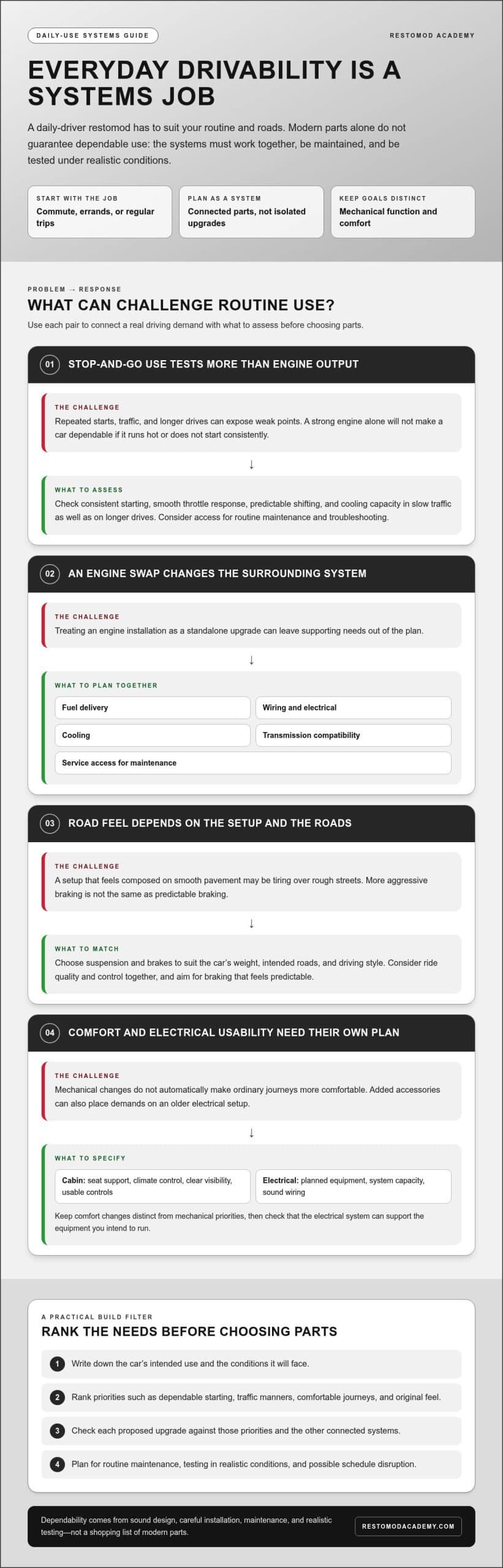
Everyday drivability depends on several systems working together. A strong engine won’t make a car dependable if it runs hot in traffic, the electrical system can’t support its equipment, or the chassis feels unsettled on the roads you use. System integration matters more than any single upgrade: each component needs to suit the others and the car’s intended job.
Think of reliability as the result of sound design, careful installation, routine maintenance, and testing under realistic conditions, not as a shopping list of modern parts. A build intended for stop-and-go commuting needs a different assessment from one designed mainly for open-road drives. Comfort changes can make trips more pleasant, while mechanical changes affect how the car starts, moves, stops, and handles. Keep those goals distinct as you plan.
Drivetrain and supporting systems
Evaluate the whole driving experience, not just engine output. Consider whether the car starts consistently, responds smoothly to the throttle, and shifts predictably in the conditions you expect to face. Cooling capacity matters in slow traffic as well as on longer drives. Also consider whether key components are accessible for routine maintenance and troubleshooting.
An engine swap affects the systems around it. Fuel delivery, wiring, cooling, transmission compatibility, and access for servicing all belong in the plan. Treat the change as an integrated project rather than a standalone engine installation. For a deeper look at drivetrain planning, explore the definitive guide to an LS engine swap.
Handling, braking, cabin comfort, and electrical usability
Suspension and brake choices should match the car’s weight, intended roads, and driving style. A setup that feels composed on smooth pavement may be tiring over rough streets; braking should feel predictable, not simply more aggressive. Consider ride quality and control together. The guide to recommended restomod gear offers a related resource for planning your build.
Daily comfort is a separate design task. Seat support, climate control, clear visibility, and easy-to-use controls can shape how willing you are to take the car on ordinary trips. Electrical capacity and sound wiring matter when adding accessories or modern convenience features. List the equipment you plan to run and consider the demands it places on the system instead of assuming an older setup can support every addition.
Before choosing parts, write down the intended use and rank what matters most: dependable starting, traffic manners, comfortable journeys, or a particular balance of original feel and modern function. Then check each proposed upgrade against that priority list. This makes the pros and cons of a daily driver restomod concrete and keeps the build focused on your needs.
The pros and cons of a daily driver restomod, weighed honestly
A restomod can bring classic styling and a more usable driving experience together, but neither outcome is automatic. Modern components don’t make an older car behave exactly like a new one. The result depends on choosing compatible systems, integrating them well, completing the work carefully, and maintaining the car consistently.
Compare the potential rewards with the ownership realities they bring:
| Potential benefit | Practical limitation |
|---|---|
| Classic design with selected modern conveniences | New features may not remove older-car noise, weather exposure, or other comfort limits. |
| A more engaging drive with familiar mechanical character | That character can also mean more sound, effort, or sensitivity to traffic conditions. |
| Personalized details and system choices | Each modification needs to serve a clear purpose and work with the rest of the build. |
| Upgrades that support regular use | Added components can bring new maintenance needs and troubleshooting complexity. |
| A classic that gets driven more often | Use still depends on the car’s condition, build quality, maintenance, and your tolerance for downtime. |
The everyday advantages worth considering
The appeal is real: keep the lines, sound, and mechanical feel that drew you to the car while choosing updates that address how you want to drive it. Supportive seats may matter on a regular commute; improved lighting or more usable controls may suit frequent evening trips. Well-chosen upgrades can make the car more rewarding to use, especially when they fit your routine and work with the rest of the build.
Personalization is most valuable when it solves a specific problem. Instead of adding features simply because they’re available, identify what would make your actual journeys more comfortable, confident, or enjoyable. A focused build can preserve the qualities you love while making deliberate compromises where daily use calls for them.
The compromises that can change the answer
Regular use means living with upkeep, parts research, and the possibility of troubleshooting. A fault may take the car off the road and disrupt plans, so consider how much downtime you can accept. These realities don’t make every modified classic unreliable, just as age alone doesn’t tell you how a particular car will perform. Condition, workmanship, maintenance, and testing all matter.
Your environment matters, too. Traffic, rough pavement, weather, parking, cabin noise, and limited comfort can shape each trip, with the impact varying by car and build. Extensive modifications can make systems harder to integrate or service, and may change the original character that matters to you. The best answer isn’t the most modern parts list. It’s a considered balance between usability and the classic experience you want to keep.
How to decide whether a daily-driver restomod fits your life
Make the decision with your actual week in mind, not an idealized Sunday drive. The pros and cons of a daily driver restomod look different for someone making short trips in mild weather than for an owner who needs transportation through traffic and changing seasons. Use this self-assessment to turn expectations into practical build priorities.
- Map your routine. Note how often you’d drive the car, how long your usual journeys are, and whether you expect it to handle short commutes, longer trips, or both.
- Picture the conditions. Consider stop-and-go traffic, rough roads, seasonal weather, and where the car will be parked. Frequent congestion may make cooling and predictable low-speed behavior more important than performance on open roads.
- Name your comfort needs. Identify specific frustrations to address, such as limited seat support, poor visibility, difficult-to-use controls, or a cabin that’s uncomfortable in the weather you encounter. Prioritize features that solve those real problems.
- Set your maintenance tolerance. Decide how much routine inspection and troubleshooting you’re willing to do, and how much downtime you can accept. If the car is unavailable, identify a realistic backup for work, appointments, and other essential journeys.
- Rank your build priorities. Order safety, dependable operation, serviceability, comfort, character, and hands-on involvement by importance. This makes it easier to distinguish essential systems work from cosmetic or performance upgrades that can wait.
Match the build to your routine
A short commute can involve repeated starts and little time for the car to warm up. Longer journeys put more emphasis on sustained comfort and confidence, while seasonal driving brings weather exposure into the equation. Frequent stop-and-go use creates its own demands. Choose equipment to address the conditions you actually face, not every scenario you can imagine.
Build a fallback into the plan. If the classic needs maintenance or an unexpected repair, know which other transport you can use and how long you could manage without the car. A backup plan doesn’t diminish the project; it makes daily reliance a considered choice rather than a gamble.
Set priorities before choosing modifications
Write down the intended use, ranked priorities, acceptable downtime, and compromises you’re willing to make. Mark each proposed modification as essential or optional, then revisit the list as the project develops. New discoveries can change the plan, but a written purpose helps keep attractive extras from crowding out safety, service access, or dependable operation.
For structured background as you shape the project, explore the fundamentals of restomods before settling on a build direction.
Plan a daily-driver restomod around ownership, not just the build
Before choosing parts, define the job the car needs to do. A daily-driver project should reflect your actual journeys, comfort expectations, maintenance capacity, and tolerance for downtime. That plan keeps the build focused on ownership instead of letting a string of appealing upgrades determine how the car will be used.
Build a realistic ownership plan
Put the intended use in writing. Note the trips you expect to make, the seasons and conditions you’ll drive in, the comfort features you consider essential, and the maintenance you’re prepared to handle. Be specific: a car used for regular errands has different priorities from one reserved for longer trips in fair weather.
Sequence the work with care. Address safety and core mechanical needs before convenience features or appearance changes. Then record the systems and components chosen, along with relevant service information and maintenance tasks. Clear records make it easier to understand the car’s setup, plan upkeep, and keep future work consistent.
Document the compromises, too. You might accept a firmer ride to preserve a particular handling feel, or limit seasonal use to reduce exposure to conditions the car isn’t intended to handle. Revisit these decisions as the project develops. If your intended use changes, your priorities may need to change with it.
Turn research into a confident next step
Thoughtful planning won’t make ownership trouble-free, but it can help you make informed choices about the build and the demands that come with it. Restomod Academy’s guides, product reviews, and tutorials help builders learn about the process and compare options. Its Ultimate Restomod Guide, consulting services, and premium project blueprints provide further resources for shaping a project around a particular build.
The pros and cons of a daily driver restomod ultimately depend on how well the finished car fits the life you expect it to serve. Keep your intended use, system priorities, maintenance approach, and acceptable compromises together in a practical project brief. Then take the next step with a clear purpose: explore Restomod Academy and The Ultimate Restomod Guide.
Make the Build Fit the Miles Ahead
The pros and cons of a daily driver restomod come down to fit: the car’s systems, comfort, and maintenance needs must match the way you’ll actually use it. Modern upgrades can improve usability, but they don’t erase the character or upkeep of a classic. Set clear priorities, plan for downtime, and include safety and dependable operation in the build from the start.
Then turn that plan into informed choices. Restomod Academy, founded by automotive enthusiast Brook Walsh, offers guides, product reviews, and tutorials for beginner and experienced builders. Use these resources to explore the process and shape a project around your driving needs, one decision at a time.
Explore Restomod Academy’s guides and plan your build. Take the next step with purpose, using The Ultimate Restomod Guide to help organize your project around the miles ahead.
Frequently Asked Questions
Is a restomod reliable enough to drive every day?
It can be, but reliability depends on the condition of the base car, the quality and integration of its modifications, ongoing maintenance, and how you use it. Don’t assume a restomod will behave like a new car. Assess the drivetrain, cooling, electrical, braking, and chassis systems as a whole. Before relying on it for essential trips, consider how much downtime you could manage and whether your routine leaves room for hands-on ownership.
Can you use a classic car as a daily driver?
Yes, some owners use classics regularly, but the experience varies with the car, its condition, modifications, and the owner’s expectations. Think through your commute, weather exposure, parking, cabin comfort, and willingness to maintain and troubleshoot an older vehicle. A restomod may add useful modern features, but it still needs a plan suited to its systems and your routine. Keep a backup option for journeys you can’t afford to miss.
What are the main pros of a daily-driver restomod?
The main appeal is pairing classic styling and character with selected upgrades intended to make regular driving more comfortable or manageable. You can tailor the build to your needs, and a familiar, well-planned setup may make routine journeys more engaging. These are possibilities, not guarantees. The pros and cons of a daily driver restomod depend on the choices made, and upgrades don’t ensure modern-car convenience, predictable maintenance, or trouble-free operation.
What are the disadvantages of daily-driving a restomod?
Potential drawbacks include maintenance demands, troubleshooting, parts research, and downtime, along with comfort or practicality compromises compared with a modern vehicle. Modifications can also add integration work if connected systems aren’t planned together. The extent of these tradeoffs varies by car and build. Consider how the car handles your traffic, weather, and regular journeys, then decide whether its character and the satisfaction of driving it are worth the extra involvement in your everyday routine.
Is a restomod safer than an original classic car?
Safety depends on the specific vehicle, its condition, its equipment, and the quality of its modifications. A modernization may address a particular need, but one upgraded component doesn’t prove the whole car is safe. Nor is a restomod automatically safer than every original classic or equivalent to a modern vehicle. Evaluate the car as a complete system, including how its components work together, and make safety a priority throughout planning, assembly, and testing.
Can you daily-drive a restomod in bad weather?
It depends on the car’s condition and equipment, including its tires, visibility, and cabin comfort, as well as the roads and weather you expect to encounter. A build intended for fair-weather cruising may not suit regular use in rain, cold, or other challenging conditions. Define your expected driving environment before planning upgrades. Be prepared to use another vehicle when conditions exceed what your classic and its setup are intended to handle.
What should you upgrade first on a daily-driver restomod?
Start by assessing the car’s condition and defining how you intend to use it. Prioritize sound fundamentals, dependable operation, and safety-related needs before optional comfort or appearance upgrades. There’s no universal first modification: drivetrain, chassis, braking, electrical, and cabin decisions are connected. Plan them in relation to one another and the car’s intended use. A clear sequence helps keep attractive extras from taking priority over work that supports safe, usable driving.
Can a classic deliver its familiar sound and style on the Monday commute, not just a weekend cruise? The pros and cons of a daily driver restomod depend on more than modern parts. They come down to whether the car’s systems suit your routine, roads, and tolerance for hands-on upkeep.
The appeal is clear: keep the lines and character you love while making regular driving more comfortable and usable. But daily use brings demands that occasional drives may not reveal. Traffic, weather, repeated starts, and longer periods behind the wheel can expose weak points. A long list of upgrades won’t automatically make a classic reliable.
This guide will help you assess whether daily use fits your car and ownership style. We’ll weigh comfort and character against maintenance and downtime, then look at the systems that matter most, including the drivetrain, cooling, fuel delivery, electrical, and brakes. Use the framework to set priorities before choosing upgrades or starting a build.
Key Takeaways
- Define what daily use means for your routine, and distinguish it from weekend cruising or occasional touring.
- Prioritize systems that work together, including the drivetrain, cooling, electrical, and chassis, while treating comfort upgrades as a separate set of needs.
- Weigh the pros and cons of a daily driver restomod honestly: character and personalization can come with maintenance demands and practical compromises.
- Assess your driving conditions, comfort needs, maintenance tolerance, and acceptable downtime before committing to daily use.
- Document the car’s intended job, system priorities, maintenance approach, and backup plan before selecting parts.
What does daily-driver use really ask of a restomod?
A daily-driver restomod is a modified classic intended for frequent, routine road use, not simply a vintage car with modern parts. The defining question is what the car needs to do: handle your commute, errands, or regular trips in the conditions you actually face. In short, it’s a classic built around routine use, not occasional appearance.
That intended use shapes the build. Upgrades can make an older car more usable, but they can’t guarantee the convenience or reliability of a modern vehicle. A restomod still requires an owner who understands its systems, keeps up with maintenance, and can manage the possibility of a breakdown or repair disrupting plans. For a broader explanation of the term, see what a restomod means. Restomodding also sits between preserving a car’s original character and updating it, as the overview of automotive restoration describes.
For another perspective on evaluating a restomod, watch this video:
Daily driver, weekend car, or touring build?
Start with the pattern of use. A commuter may make short trips several days a week, sit in traffic, encounter rain or temperature swings, and need practical parking. A weekend car can stay garaged between outings and avoid poor weather. A touring build may see regular use too, but its journeys are longer and planned around the drive rather than a fixed daily schedule.
Those patterns create different demands. Repeated cold starts, stop-and-go traffic, and exposure to the elements test a classic differently from a relaxed cruise on a clear day. A mixed-use car may fall between the extremes: perhaps it handles errands and occasional commutes but isn’t relied on for every essential trip. Define that middle ground before choosing upgrades. It helps determine which problems to solve first and which features can wait.
What does the owner expect from everyday use?
Set your expectations before assessing the car. Do you need it to start reliably for a particular trip, behave predictably in traffic, and remain comfortable across your regular journeys? Consider what you’ll accept in exchange for the sound, feel, and presence of a classic. Modernized components may help, but they don’t erase the car’s age or make every drive effortless.
Be honest about your own tolerance, too. Routine checks, troubleshooting, and occasional schedule disruption may be part of ownership. If a delayed trip would create a serious problem, decide what backup transportation you can use. That practical calculation helps reveal whether the pros and cons of a daily driver restomod fit your life, not just your vision for the build.
Which systems make a daily-driver restomod more usable?
Everyday drivability depends on several systems working together. A strong engine won’t make a car dependable if it runs hot in traffic, the electrical system can’t support its equipment, or the chassis feels unsettled on the roads you use. System integration matters more than any single upgrade: each component needs to suit the others and the car’s intended job.
Think of reliability as the result of sound design, careful installation, routine maintenance, and testing under realistic conditions, not as a shopping list of modern parts. A build intended for stop-and-go commuting needs a different assessment from one designed mainly for open-road drives. Comfort changes can make trips more pleasant, while mechanical changes affect how the car starts, moves, stops, and handles. Keep those goals distinct as you plan.
Drivetrain and supporting systems
Evaluate the whole driving experience, not just engine output. Consider whether the car starts consistently, responds smoothly to the throttle, and shifts predictably in the conditions you expect to face. Cooling capacity matters in slow traffic as well as on longer drives. Also consider whether key components are accessible for routine maintenance and troubleshooting.
An engine swap affects the systems around it. Fuel delivery, wiring, cooling, transmission compatibility, and access for servicing all belong in the plan. Treat the change as an integrated project rather than a standalone engine installation. For a deeper look at drivetrain planning, explore the definitive guide to an LS engine swap.
Handling, braking, cabin comfort, and electrical usability
Suspension and brake choices should match the car’s weight, intended roads, and driving style. A setup that feels composed on smooth pavement may be tiring over rough streets; braking should feel predictable, not simply more aggressive. Consider ride quality and control together. The guide to recommended restomod gear offers a related resource for planning your build.
Daily comfort is a separate design task. Seat support, climate control, clear visibility, and easy-to-use controls can shape how willing you are to take the car on ordinary trips. Electrical capacity and sound wiring matter when adding accessories or modern convenience features. List the equipment you plan to run and consider the demands it places on the system instead of assuming an older setup can support every addition.
Before choosing parts, write down the intended use and rank what matters most: dependable starting, traffic manners, comfortable journeys, or a particular balance of original feel and modern function. Then check each proposed upgrade against that priority list. This makes the pros and cons of a daily driver restomod concrete and keeps the build focused on your needs.
The pros and cons of a daily driver restomod, weighed honestly
A restomod can bring classic styling and a more usable driving experience together, but neither outcome is automatic. Modern components don’t make an older car behave exactly like a new one. The result depends on choosing compatible systems, integrating them well, completing the work carefully, and maintaining the car consistently.
Compare the potential rewards with the ownership realities they bring:
| Potential benefit | Practical limitation |
|---|---|
| Classic design with selected modern conveniences | New features may not remove older-car noise, weather exposure, or other comfort limits. |
| A more engaging drive with familiar mechanical character | That character can also mean more sound, effort, or sensitivity to traffic conditions. |
| Personalized details and system choices | Each modification needs to serve a clear purpose and work with the rest of the build. |
| Upgrades that support regular use | Added components can bring new maintenance needs and troubleshooting complexity. |
| A classic that gets driven more often | Use still depends on the car’s condition, build quality, maintenance, and your tolerance for downtime. |
The everyday advantages worth considering
The appeal is real: keep the lines, sound, and mechanical feel that drew you to the car while choosing updates that address how you want to drive it. Supportive seats may matter on a regular commute; improved lighting or more usable controls may suit frequent evening trips. Well-chosen upgrades can make the car more rewarding to use, especially when they fit your routine and work with the rest of the build.
Personalization is most valuable when it solves a specific problem. Instead of adding features simply because they’re available, identify what would make your actual journeys more comfortable, confident, or enjoyable. A focused build can preserve the qualities you love while making deliberate compromises where daily use calls for them.
The compromises that can change the answer
Regular use means living with upkeep, parts research, and the possibility of troubleshooting. A fault may take the car off the road and disrupt plans, so consider how much downtime you can accept. These realities don’t make every modified classic unreliable, just as age alone doesn’t tell you how a particular car will perform. Condition, workmanship, maintenance, and testing all matter.
Your environment matters, too. Traffic, rough pavement, weather, parking, cabin noise, and limited comfort can shape each trip, with the impact varying by car and build. Extensive modifications can make systems harder to integrate or service, and may change the original character that matters to you. The best answer isn’t the most modern parts list. It’s a considered balance between usability and the classic experience you want to keep.
How to decide whether a daily-driver restomod fits your life
Make the decision with your actual week in mind, not an idealized Sunday drive. The pros and cons of a daily driver restomod look different for someone making short trips in mild weather than for an owner who needs transportation through traffic and changing seasons. Use this self-assessment to turn expectations into practical build priorities.
- Map your routine. Note how often you’d drive the car, how long your usual journeys are, and whether you expect it to handle short commutes, longer trips, or both.
- Picture the conditions. Consider stop-and-go traffic, rough roads, seasonal weather, and where the car will be parked. Frequent congestion may make cooling and predictable low-speed behavior more important than performance on open roads.
- Name your comfort needs. Identify specific frustrations to address, such as limited seat support, poor visibility, difficult-to-use controls, or a cabin that’s uncomfortable in the weather you encounter. Prioritize features that solve those real problems.
- Set your maintenance tolerance. Decide how much routine inspection and troubleshooting you’re willing to do, and how much downtime you can accept. If the car is unavailable, identify a realistic backup for work, appointments, and other essential journeys.
- Rank your build priorities. Order safety, dependable operation, serviceability, comfort, character, and hands-on involvement by importance. This makes it easier to distinguish essential systems work from cosmetic or performance upgrades that can wait.
Match the build to your routine
A short commute can involve repeated starts and little time for the car to warm up. Longer journeys put more emphasis on sustained comfort and confidence, while seasonal driving brings weather exposure into the equation. Frequent stop-and-go use creates its own demands. Choose equipment to address the conditions you actually face, not every scenario you can imagine.
Build a fallback into the plan. If the classic needs maintenance or an unexpected repair, know which other transport you can use and how long you could manage without the car. A backup plan doesn’t diminish the project; it makes daily reliance a considered choice rather than a gamble.
Set priorities before choosing modifications
Write down the intended use, ranked priorities, acceptable downtime, and compromises you’re willing to make. Mark each proposed modification as essential or optional, then revisit the list as the project develops. New discoveries can change the plan, but a written purpose helps keep attractive extras from crowding out safety, service access, or dependable operation.
For structured background as you shape the project, explore the fundamentals of restomods before settling on a build direction.
Plan a daily-driver restomod around ownership, not just the build
Before choosing parts, define the job the car needs to do. A daily-driver project should reflect your actual journeys, comfort expectations, maintenance capacity, and tolerance for downtime. That plan keeps the build focused on ownership instead of letting a string of appealing upgrades determine how the car will be used.
Build a realistic ownership plan
Put the intended use in writing. Note the trips you expect to make, the seasons and conditions you’ll drive in, the comfort features you consider essential, and the maintenance you’re prepared to handle. Be specific: a car used for regular errands has different priorities from one reserved for longer trips in fair weather.
Sequence the work with care. Address safety and core mechanical needs before convenience features or appearance changes. Then record the systems and components chosen, along with relevant service information and maintenance tasks. Clear records make it easier to understand the car’s setup, plan upkeep, and keep future work consistent.
Document the compromises, too. You might accept a firmer ride to preserve a particular handling feel, or limit seasonal use to reduce exposure to conditions the car isn’t intended to handle. Revisit these decisions as the project develops. If your intended use changes, your priorities may need to change with it.
Turn research into a confident next step
Thoughtful planning won’t make ownership trouble-free, but it can help you make informed choices about the build and the demands that come with it. Restomod Academy’s guides, product reviews, and tutorials help builders learn about the process and compare options. Its Ultimate Restomod Guide, consulting services, and premium project blueprints provide further resources for shaping a project around a particular build.
The pros and cons of a daily driver restomod ultimately depend on how well the finished car fits the life you expect it to serve. Keep your intended use, system priorities, maintenance approach, and acceptable compromises together in a practical project brief. Then take the next step with a clear purpose: explore Restomod Academy and The Ultimate Restomod Guide.
Make the Build Fit the Miles Ahead
The pros and cons of a daily driver restomod come down to fit: the car’s systems, comfort, and maintenance needs must match the way you’ll actually use it. Modern upgrades can improve usability, but they don’t erase the character or upkeep of a classic. Set clear priorities, plan for downtime, and include safety and dependable operation in the build from the start.
Then turn that plan into informed choices. Restomod Academy, founded by automotive enthusiast Brook Walsh, offers guides, product reviews, and tutorials for beginner and experienced builders. Use these resources to explore the process and shape a project around your driving needs, one decision at a time.
Explore Restomod Academy’s guides and plan your build. Take the next step with purpose, using The Ultimate Restomod Guide to help organize your project around the miles ahead.
Frequently Asked Questions
Is a restomod reliable enough to drive every day?
It can be, but reliability depends on the condition of the base car, the quality and integration of its modifications, ongoing maintenance, and how you use it. Don’t assume a restomod will behave like a new car. Assess the drivetrain, cooling, electrical, braking, and chassis systems as a whole. Before relying on it for essential trips, consider how much downtime you could manage and whether your routine leaves room for hands-on ownership.
Can you use a classic car as a daily driver?
Yes, some owners use classics regularly, but the experience varies with the car, its condition, modifications, and the owner’s expectations. Think through your commute, weather exposure, parking, cabin comfort, and willingness to maintain and troubleshoot an older vehicle. A restomod may add useful modern features, but it still needs a plan suited to its systems and your routine. Keep a backup option for journeys you can’t afford to miss.
What are the main pros of a daily-driver restomod?
The main appeal is pairing classic styling and character with selected upgrades intended to make regular driving more comfortable or manageable. You can tailor the build to your needs, and a familiar, well-planned setup may make routine journeys more engaging. These are possibilities, not guarantees. The pros and cons of a daily driver restomod depend on the choices made, and upgrades don’t ensure modern-car convenience, predictable maintenance, or trouble-free operation.
What are the disadvantages of daily-driving a restomod?
Potential drawbacks include maintenance demands, troubleshooting, parts research, and downtime, along with comfort or practicality compromises compared with a modern vehicle. Modifications can also add integration work if connected systems aren’t planned together. The extent of these tradeoffs varies by car and build. Consider how the car handles your traffic, weather, and regular journeys, then decide whether its character and the satisfaction of driving it are worth the extra involvement in your everyday routine.
Is a restomod safer than an original classic car?
Safety depends on the specific vehicle, its condition, its equipment, and the quality of its modifications. A modernization may address a particular need, but one upgraded component doesn’t prove the whole car is safe. Nor is a restomod automatically safer than every original classic or equivalent to a modern vehicle. Evaluate the car as a complete system, including how its components work together, and make safety a priority throughout planning, assembly, and testing.
Can you daily-drive a restomod in bad weather?
It depends on the car’s condition and equipment, including its tires, visibility, and cabin comfort, as well as the roads and weather you expect to encounter. A build intended for fair-weather cruising may not suit regular use in rain, cold, or other challenging conditions. Define your expected driving environment before planning upgrades. Be prepared to use another vehicle when conditions exceed what your classic and its setup are intended to handle.
What should you upgrade first on a daily-driver restomod?
Start by assessing the car’s condition and defining how you intend to use it. Prioritize sound fundamentals, dependable operation, and safety-related needs before optional comfort or appearance upgrades. There’s no universal first modification: drivetrain, chassis, braking, electrical, and cabin decisions are connected. Plan them in relation to one another and the car’s intended use. A clear sequence helps keep attractive extras from taking priority over work that supports safe, usable driving.