
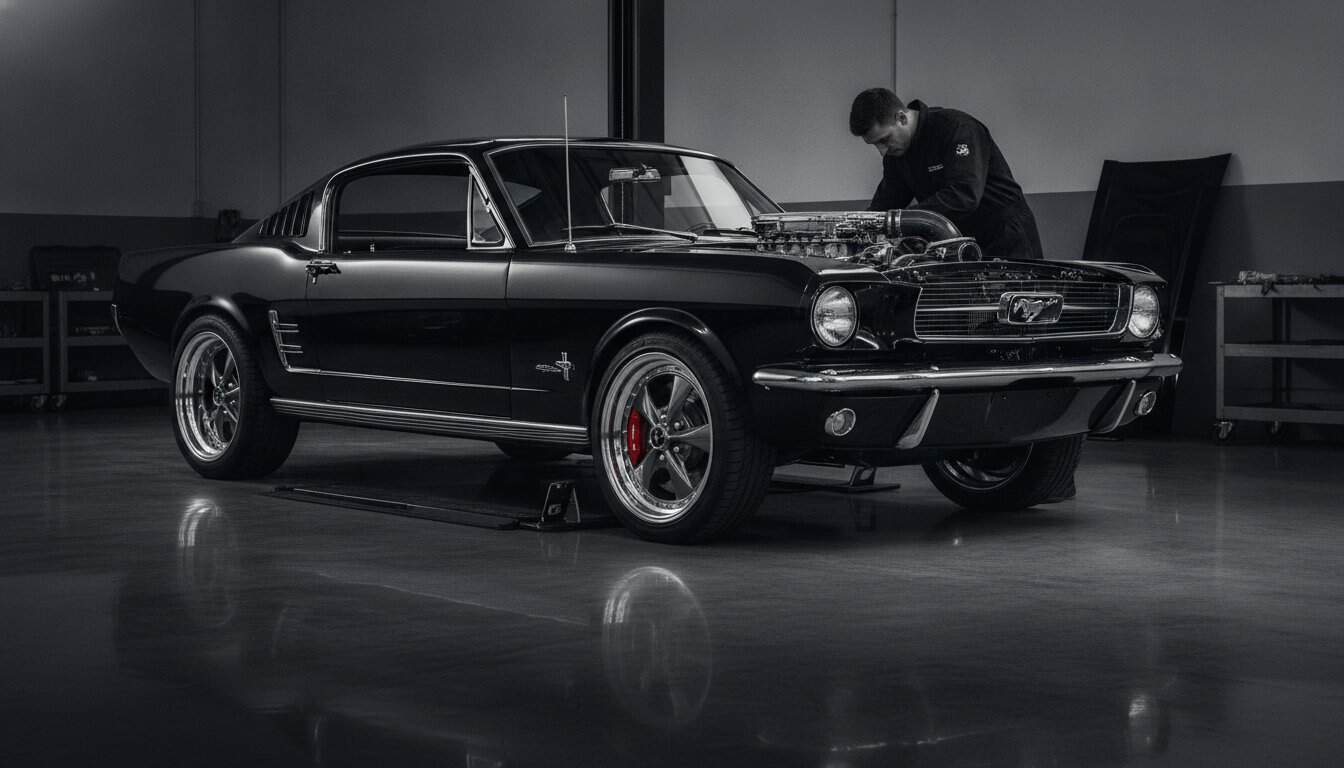
The most expensive mistake in any build isn’t a blown budget; it’s a donor car that lacks the structural integrity to survive modern performance upgrades. You want the grit of vintage steel and the silhouette of a legend, but you also deserve the turn-key precision of a modern fuel-injected engine. It’s natural to worry about buying a rust bucket or getting stranded by a lack of replacement parts. Identifying the easiest cars to restomod for beginners is the first step toward ensuring your garage time leads to a reliable, high-value machine rather than a permanent collection of parts on the floor.
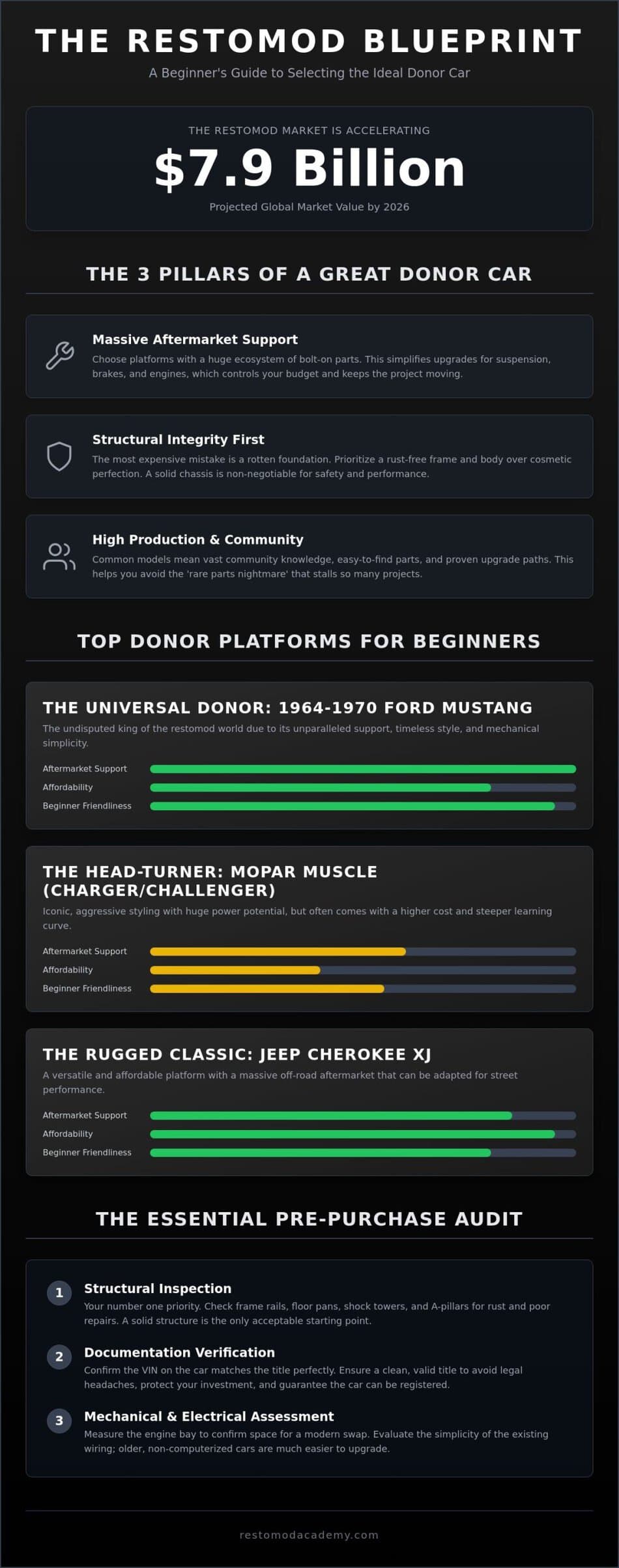
With the global restomod market projected to reach 7.9 billion dollars in 2026, there has never been a better time to transition from an admirer to a creator. This guide will help you discover the most rewarding classic cars for modern upgrades and teach you how to select a foundation that balances heritage style with mechanical potential. We will preview the top platforms, including the iconic 1965 Ford Mustang and the rugged Jeep Cherokee XJ, while providing a methodical framework for evaluating your next project car.
Key Takeaways
- Master the art of selecting a donor vehicle by prioritizing mechanical adaptability and robust aftermarket support over mere rarity.
- Identify the easiest cars to restomod for beginners, such as the first-generation Ford Mustang, which offers a massive ecosystem of bolt-on performance parts.
- Protect your investment by conducting a rigorous structural integrity audit to identify hidden rust before committing to a purchase.
- Ensure your project remains street legal and valuable by meticulously verifying VIN and title documentation during the evaluation process.
- Transition from a passive admirer to an active creator by utilizing structured blueprints to plan every phase of your build.
Defining the Foundation: What Makes the Best Cars to Restomod
Start your journey by looking past the paint and chrome. A true restomod foundation must offer a balance of aesthetic soul and mechanical adaptability. You aren’t just buying a car; you’re buying a canvas for modern performance. Before you scour the classifieds, understand the core principles of Defining Restomodding. This philosophy prioritizes drivability and safety over factory originality. If you want to understand what is a restomod in a practical sense, it’s the marriage of 1960s style with 2020s reliability. Identifying the easiest cars to restomod for beginners is about finding this balance before you ever buy a donor vehicle.
Choose a high-production vehicle rather than a rare museum piece. Common cars provide a predictable structural starting point and a wealth of shared knowledge from the builder community. Rare models often suffer from a lack of replacement glass, trim, and body panels; this can turn a fun project into a sourcing nightmare. By selecting a popular model, you ensure that every mechanical hurdle you face has likely been solved and documented by someone else. This community support reduces the complexity of engine swaps and suspension tuning.
To better understand the mechanical advantages of specific platforms, watch this helpful video:
The Aftermarket Ecosystem Advantage
Prioritize vehicles supported by a massive aftermarket. Companies like Holley and Heidts have invested millions into engineering bolt-on kits for popular vintage models. This ecosystem is the primary reason why some vehicles are considered the easiest cars to restomod for beginners. These kits allow you to upgrade suspension, steering, and braking systems without the need for advanced welding or custom fabrication. When parts are readily available at multiple price points, you maintain control over your budget and your timeline. A project that sits for months waiting for a custom-machined bracket is a project that often goes unfinished.
Mechanical Simplicity vs. Modern Potential
Evaluate the physical dimensions of your potential donor engine bay. You need a space with enough volume to comfortably house modern powerplants, such as an LS or Coyote V8, without intrusive structural modifications. Consider the electrical system as well. Vehicles with straightforward 12-volt architectures are much simpler to modernize with electronic fuel injection and digital gauges. While many novices prefer the simplicity of body-on-frame trucks, early unibody cars can also be excellent candidates if the chassis is sound. The goal is to find a vehicle that doesn’t fight your upgrades, but rather embraces them through logical engineering and ample space for innovation.
The Timeless Legends: American Muscle and Pony Cars
American muscle defines the very spirit of the restomod movement. These cars offer the perfect blend of aggressive, nostalgic styling and engine bays designed to swallow massive powerplants. While the market is vast, certain platforms stand out because they offer a clear, documented path from a rusted shell to a high-performance street machine. Choosing one of these legends ensures you aren’t just building a car; you’re joining a community with decades of collective wisdom and a parts catalog that never ends. For many enthusiasts, these represent the easiest cars to restomod for beginners because the trial and error has already been done by those who came before you.
While the visual impact of a 1969 Dodge Charger or Challenger is undeniable, be prepared for a higher entry cost. Mopar projects often command a premium due to their relative rarity compared to Ford or GM counterparts. If your heart is set on the Pentastar, prioritize finding a car with complete trim and glass. Customizing the drivetrain is straightforward, but hunting down obscure interior bits can stall a novice build for months. To streamline the search for these rare vehicles, AutoDream provides a smart marketplace that connects buyers and sellers across 15 different countries. Stick to the high-volume legends if you want to keep your project moving toward the finish line.
The Ford Mustang: A Universal Donor
The 1964 to 1970 Ford Mustang remains the undisputed king of the restomod world. As of early 2026, a 1965 to 1966 hardtop project car can still be found for under $10,000, while a complete, drivable example averages around $22,500. This accessibility makes it a prime candidate for your first build. You can easily integrate a modern Coyote V8 engine or install an independent rear suspension kit to transform the handling from a floaty vintage cruiser to a precision instrument. If you encounter a donor with terminal rust, you can even purchase a full reproduction steel body. This level of support is why the Mustang is frequently cited as one of the easiest cars to restomod for beginners who want a guaranteed result. To ensure you don’t overlook critical steps in your acquisition, consult The Ultimate Restomod Guide before signing a title.
The GM A-Body and F-Body Platforms
Chevrolet’s F-body, specifically the first and second-generation Camaro, offers an incredible entry point for builders focused on modern performance. These cars are the natural home for the LS engine, which remains the most popular swap in 2026 due to its reliability and compact size. If you are planning a powertrain upgrade, study the definitive guide to an LS engine swap to understand the clearance and wiring requirements. Beyond the Camaro, the GM A-body platform, which includes the Chevelle and GTO, provides a rugged chassis that handles modern horsepower increases with ease. These cars are versatile; they can be built as aggressive pro-touring track stars or comfortable, long-distance luxury cruisers with modern air conditioning and overdrive transmissions.
European and JDM Contenders: Precision Meets Modern Power
While American iron dominates the domestic scene, the global market offers precision-engineered alternatives that prioritize handling and technical sophistication. The shift from strict originality to modern drivability has opened the door for European and Japanese classics to take center stage. These platforms often require a more surgical approach than a leaf-sprung muscle car, but the rewards are found in a driving experience that feels connected and refined. For those who value a balance of light weight and high-revving performance, these are some of the easiest cars to restomod for beginners who want to look beyond the traditional pony car.
The BMW E30 3-Series and the classic Land Rover Defender round out the list of versatile contenders. The E30 provides a boxy, 80s aesthetic that pairs beautifully with modern M-series engine swaps, offering a German take on the pro-touring philosophy. Meanwhile, the Defender has become the go-to choice for those seeking a rugged, luxury off-road experience. Both vehicles benefit from a robust global parts network, ensuring your project doesn’t stall due to a lack of available hardware. Whether you seek the mud or the apex, these foundations support a wide range of creative intent.
The Air-Cooled Porsche 911
The air-cooled Porsche 911, specifically the G-Body (1974-1989) and the 964, represents the pinnacle of high-end restomodding. While the entry price is higher than a project Mustang, the structural integrity of these German machines is legendary. The challenge lies in preserving the distinct mechanical soul of the flat-six engine while integrating modern climate control or LED lighting. When selecting upgrades, consult our product reviews for suspension components that maintain the car’s poise while offering modern adjustability. This platform rewards those who appreciate meticulous assembly and the satisfaction of achieving mechanical precision.
Japanese Domestic Market (JDM) Icons
Japanese Domestic Market icons have transitioned from used cars to blue-chip collectibles, offering a unique blend of reliability and style. The Datsun 240Z, 260Z, and 280Z are standout candidates, offering a sleek silhouette and an engine bay that easily accepts modern turbocharged four-cylinders or even the ubiquitous LS V8. If you are working with a tighter budget, the Mazda MX-5 Miata “NA” (1990-1997) is an excellent entry point. In 2026, clean, drivable examples typically range from $10,000 to $16,600. The Miata’s simple mechanicals and massive enthusiast community make it one of the easiest cars to restomod for beginners who want to focus on track-day performance. Be cautious with later icons like the Nissan Skyline or Toyota Supra; their complex, electronic-heavy systems can be intimidating for a first-time builder compared to the mechanical simplicity of a Z-car.
Assessing Your Project: How to Evaluate a Potential Donor
Evaluate the completeness of the vehicle before discussing the price. It’s a common mistake to focus solely on the engine. In reality, a missing chrome trim piece or a specific dashboard bezel is often harder to source than a modern crate engine. While professional restorations can range from $20,000 to over $120,000, your DIY budget must account for these small, high cost items that quickly add up during the assembly phase. A complete car with a blown motor is almost always a better value than a running car missing its interior and glass.
The Rust and Metalwork Inspection
Audit the floor pans, cowl vents, and frame rails with a high powered flashlight and a magnet. Rust is the silent killer of timelines and budgets. If the cowl is rotted through, you’re looking at a complex dashboard removal and extensive welding that can break a novice builder’s spirit. Knowing when to walk away is just as important as knowing when to buy. If the structural integrity is compromised beyond your current skill level or equipment, it’s no longer one of the easiest cars to restomod for beginners. Focus your energy on finding a dry, solid shell that allows you to spend your time on performance upgrades rather than structural repair.
Balancing Rarity and Modifiability
Respect the history of the machine, but don’t be paralyzed by it. Modifying a numbers matching, rare survivor can be an ethical and economic minefield. Often, the best restomod foundations are the plain jane base models that were produced in the hundreds of thousands. These cars offer the same aesthetic soul without the guilt of cutting into a piece of automotive history. Use our guide on what is a restomod to define your specific build philosophy before you pull the trigger on a purchase. Choosing a common model also ensures you’ll have access to a wider variety of bolt-on modernization kits.
To ensure your project starts on solid ground and avoids costly structural surprises, secure our Premium Project Blueprints to guide your inspection and planning process.
Launching Your Build with Restomod Academy
Transition from the research phase to the first turn of the wrench with the confidence of a seasoned builder. You’ve identified the easiest cars to restomod for beginners and audited your donor vehicle; now the real work begins in the garage. This is where your theoretical knowledge meets the cold reality of vintage steel. Success in the workshop isn’t just about owning the right tools. It’s about following a methodical process that respects the heritage of the machine while demanding the precision of modern performance.
Avoid the common rookie mistakes that stall so many projects by utilizing the Ultimate Restomod Guide as your primary mentor. From misaligned engine mounts to incompatible wiring harnesses, most project failures result from poor planning rather than a lack of effort. By following a structured roadmap, you ensure that every hour spent under the hood moves you closer to a reliable, high-performance machine. You aren’t just building a car. You’re developing a technical skillset that bridges the gap between old-world craftsmanship and contemporary engineering.
Your Roadmap to a Modernized Classic
Follow our step-by-step educational modules designed to guide you through every stage of the build. If you find yourself stuck on a complex engineering hurdle, our Restomod Consulting Services provide the expert insight needed to save you thousands in wasted parts and labor. Before you begin the teardown, consult our list of recommended gear to ensure your shop is properly equipped. Having the right specialized tools can be the difference between a frustrating afternoon and a perfect mechanical assembly.
Finalizing Your Vision
Choose a theme that reflects your personal style, whether it’s the aggressive stance of a Pro-Touring machine or the refined comfort of a Luxury GT. By joining our community of builders, you align yourself with enthusiasts who prioritize reliability and safety above all else. Our Premium Project Blueprints offer the technical depth required for advanced engine and suspension swaps, giving you the precision needed to execute your design vision. There is an immense emotional reward in preserving automotive heritage through the lens of modern technology. The first time you turn the key and hear a modern fuel-injected engine roar to life inside a classic silhouette, the satisfaction will be undeniable. It’s the pride of a finished project and the unique character of a machine you built with your own hands.
Start Your Build with Precision
Building a restomod is a transformative journey that begins long before you pick up a wrench. You now understand that the most successful projects rely on a foundation of robust aftermarket support and verified structural integrity. Whether you choose a legendary pony car or a precision-engineered European classic, your success depends on a methodical approach to inspection and planning. Identifying the easiest cars to restomod for beginners is your first victory in a series of rewarding technical challenges.
Don’t let the complexity of modern engine swaps or electrical upgrades stall your progress. With expert guidance from Brook Walsh and access to an authoritative restoration community, you can navigate every mechanical hurdle with confidence. Utilize our Premium Project Blueprints to ensure your vision of modern reliability and vintage style becomes a reality. Download The Ultimate Restomod Guide and start your build today.
Your garage is waiting. Embrace the meticulous process of restoration, and soon you’ll experience the unmatched pride of driving a machine that carries both history and your own creative legacy.
Frequently Asked Questions
What is the cheapest car to restomod for a beginner?
The Mazda Miata NA and the Jeep Cherokee XJ are currently the most affordable entry points for novice builders. While classic muscle cars command a high premium, these 1990s icons offer low acquisition costs and massive aftermarket support. They represent some of the easiest cars to restomod for beginners who want to master mechanical systems without a massive financial hurdle. Focus on finding a vehicle with a clean title and minimal rust to keep your initial investment productive.
Is it better to buy a finished restomod or build one yourself?
Build the car yourself if you value the emotional reward of craftsmanship and total mechanical intimacy. Buying a finished project saves time, but it often hides shortcuts taken by previous owners that you’ll have to fix later. When you turn every bolt, you gain a deep understanding of the machine’s structural and electrical integrity. This hands-on journey transitions you from a passive admirer to an active creator, which is the core philosophy of our academy.
Does restomodding a classic car decrease its future resale value?
Restomodding typically increases the resale value of common base-model classics by making them safer and more drivable for modern collectors. While you should leave a rare, numbers-matching survivor in its factory state, a standard coupe or truck benefits from performance enhancements. In 2026, the market share for restomod builds has grown to nearly 40 percent of the restoration industry. Modern buyers prioritize reliability and contemporary technology over the limitations of vintage engineering.
Which engine is the easiest to swap into a classic car project?
The GM LS-series V8 remains the undisputed king of engine swaps due to its compact dimensions and universal mounting kits. You can find documented swap paths for almost any chassis, from vintage trucks to European coupes. Major manufacturers offer standalone wiring harnesses and fuel systems that eliminate the guesswork of electronic integration. This engine is a staple in the easiest cars to restomod for beginners because it provides a predictable, reliable path to modern horsepower.
How much should I expect to spend on a quality restomod donor car?
Budget between $8,000 and $20,000 for a solid donor vehicle that serves as a healthy foundation. While it’s tempting to buy a $2,000 project, the cost of extensive metalwork and sourcing missing trim usually exceeds the price of a cleaner car. For example, a solid 1960s Beetle or a drivable Miata typically averages between $10,000 and $16,200. Investing more upfront for a rust-free shell saves you hundreds of hours of labor during the restoration phase.
Can I restomod a car to be an everyday reliable daily driver?
You can absolutely transform a vintage machine into a reliable daily driver by prioritizing modern fuel injection and cooling upgrades. Replace the original carburetor with an EFI system and install a high-capacity aluminum radiator to handle modern stop-and-go traffic. When you combine these with an overdrive transmission and upgraded weather stripping, you create a classic that starts every morning with modern precision. This blend of heritage style and daily utility is the ultimate goal of a successful build.
What are the most important safety upgrades for a restomod build?
Install four-wheel disc brakes and a dual-reservoir master cylinder before focusing on horsepower. Vintage drum brakes aren’t designed for the speeds or traffic density of modern roads. You should also upgrade to three-point seat belts and install high-visibility LED lighting for better safety during night driving. These modifications ensure that your car stops and handles as well as it looks, protecting both your investment and your life on the open road.
How do I find a reputable shop to help with my restomod project?
Seek out specialized shops with a documented portfolio of completed builds and a clean, organized workspace. A reputable builder offers transparent, staged billing and maintains a clear line of communication regarding your project’s timeline. Interview the lead technician to ensure they respect your vision and value the structural integrity of the machine. Building a relationship with a professional mentor can help you navigate the most complex technical stages of your first build.
The most expensive mistake in any build isn’t a blown budget; it’s a donor car that lacks the structural integrity to survive modern performance upgrades. You want the grit of vintage steel and the silhouette of a legend, but you also deserve the turn-key precision of a modern fuel-injected engine. It’s natural to worry about buying a rust bucket or getting stranded by a lack of replacement parts. Identifying the easiest cars to restomod for beginners is the first step toward ensuring your garage time leads to a reliable, high-value machine rather than a permanent collection of parts on the floor.
With the global restomod market projected to reach 7.9 billion dollars in 2026, there has never been a better time to transition from an admirer to a creator. This guide will help you discover the most rewarding classic cars for modern upgrades and teach you how to select a foundation that balances heritage style with mechanical potential. We will preview the top platforms, including the iconic 1965 Ford Mustang and the rugged Jeep Cherokee XJ, while providing a methodical framework for evaluating your next project car.
Key Takeaways
- Master the art of selecting a donor vehicle by prioritizing mechanical adaptability and robust aftermarket support over mere rarity.
- Identify the easiest cars to restomod for beginners, such as the first-generation Ford Mustang, which offers a massive ecosystem of bolt-on performance parts.
- Protect your investment by conducting a rigorous structural integrity audit to identify hidden rust before committing to a purchase.
- Ensure your project remains street legal and valuable by meticulously verifying VIN and title documentation during the evaluation process.
- Transition from a passive admirer to an active creator by utilizing structured blueprints to plan every phase of your build.
Defining the Foundation: What Makes the Best Cars to Restomod
Start your journey by looking past the paint and chrome. A true restomod foundation must offer a balance of aesthetic soul and mechanical adaptability. You aren’t just buying a car; you’re buying a canvas for modern performance. Before you scour the classifieds, understand the core principles of Defining Restomodding. This philosophy prioritizes drivability and safety over factory originality. If you want to understand what is a restomod in a practical sense, it’s the marriage of 1960s style with 2020s reliability. Identifying the easiest cars to restomod for beginners is about finding this balance before you ever buy a donor vehicle.
Choose a high-production vehicle rather than a rare museum piece. Common cars provide a predictable structural starting point and a wealth of shared knowledge from the builder community. Rare models often suffer from a lack of replacement glass, trim, and body panels; this can turn a fun project into a sourcing nightmare. By selecting a popular model, you ensure that every mechanical hurdle you face has likely been solved and documented by someone else. This community support reduces the complexity of engine swaps and suspension tuning.
To better understand the mechanical advantages of specific platforms, watch this helpful video:
The Aftermarket Ecosystem Advantage
Prioritize vehicles supported by a massive aftermarket. Companies like Holley and Heidts have invested millions into engineering bolt-on kits for popular vintage models. This ecosystem is the primary reason why some vehicles are considered the easiest cars to restomod for beginners. These kits allow you to upgrade suspension, steering, and braking systems without the need for advanced welding or custom fabrication. When parts are readily available at multiple price points, you maintain control over your budget and your timeline. A project that sits for months waiting for a custom-machined bracket is a project that often goes unfinished.
Mechanical Simplicity vs. Modern Potential
Evaluate the physical dimensions of your potential donor engine bay. You need a space with enough volume to comfortably house modern powerplants, such as an LS or Coyote V8, without intrusive structural modifications. Consider the electrical system as well. Vehicles with straightforward 12-volt architectures are much simpler to modernize with electronic fuel injection and digital gauges. While many novices prefer the simplicity of body-on-frame trucks, early unibody cars can also be excellent candidates if the chassis is sound. The goal is to find a vehicle that doesn’t fight your upgrades, but rather embraces them through logical engineering and ample space for innovation.
The Timeless Legends: American Muscle and Pony Cars
American muscle defines the very spirit of the restomod movement. These cars offer the perfect blend of aggressive, nostalgic styling and engine bays designed to swallow massive powerplants. While the market is vast, certain platforms stand out because they offer a clear, documented path from a rusted shell to a high-performance street machine. Choosing one of these legends ensures you aren’t just building a car; you’re joining a community with decades of collective wisdom and a parts catalog that never ends. For many enthusiasts, these represent the easiest cars to restomod for beginners because the trial and error has already been done by those who came before you.
While the visual impact of a 1969 Dodge Charger or Challenger is undeniable, be prepared for a higher entry cost. Mopar projects often command a premium due to their relative rarity compared to Ford or GM counterparts. If your heart is set on the Pentastar, prioritize finding a car with complete trim and glass. Customizing the drivetrain is straightforward, but hunting down obscure interior bits can stall a novice build for months. To streamline the search for these rare vehicles, AutoDream provides a smart marketplace that connects buyers and sellers across 15 different countries. Stick to the high-volume legends if you want to keep your project moving toward the finish line.
The Ford Mustang: A Universal Donor
The 1964 to 1970 Ford Mustang remains the undisputed king of the restomod world. As of early 2026, a 1965 to 1966 hardtop project car can still be found for under $10,000, while a complete, drivable example averages around $22,500. This accessibility makes it a prime candidate for your first build. You can easily integrate a modern Coyote V8 engine or install an independent rear suspension kit to transform the handling from a floaty vintage cruiser to a precision instrument. If you encounter a donor with terminal rust, you can even purchase a full reproduction steel body. This level of support is why the Mustang is frequently cited as one of the easiest cars to restomod for beginners who want a guaranteed result. To ensure you don’t overlook critical steps in your acquisition, consult The Ultimate Restomod Guide before signing a title.
The GM A-Body and F-Body Platforms
Chevrolet’s F-body, specifically the first and second-generation Camaro, offers an incredible entry point for builders focused on modern performance. These cars are the natural home for the LS engine, which remains the most popular swap in 2026 due to its reliability and compact size. If you are planning a powertrain upgrade, study the definitive guide to an LS engine swap to understand the clearance and wiring requirements. Beyond the Camaro, the GM A-body platform, which includes the Chevelle and GTO, provides a rugged chassis that handles modern horsepower increases with ease. These cars are versatile; they can be built as aggressive pro-touring track stars or comfortable, long-distance luxury cruisers with modern air conditioning and overdrive transmissions.
European and JDM Contenders: Precision Meets Modern Power
While American iron dominates the domestic scene, the global market offers precision-engineered alternatives that prioritize handling and technical sophistication. The shift from strict originality to modern drivability has opened the door for European and Japanese classics to take center stage. These platforms often require a more surgical approach than a leaf-sprung muscle car, but the rewards are found in a driving experience that feels connected and refined. For those who value a balance of light weight and high-revving performance, these are some of the easiest cars to restomod for beginners who want to look beyond the traditional pony car.
The BMW E30 3-Series and the classic Land Rover Defender round out the list of versatile contenders. The E30 provides a boxy, 80s aesthetic that pairs beautifully with modern M-series engine swaps, offering a German take on the pro-touring philosophy. Meanwhile, the Defender has become the go-to choice for those seeking a rugged, luxury off-road experience. Both vehicles benefit from a robust global parts network, ensuring your project doesn’t stall due to a lack of available hardware. Whether you seek the mud or the apex, these foundations support a wide range of creative intent.
The Air-Cooled Porsche 911
The air-cooled Porsche 911, specifically the G-Body (1974-1989) and the 964, represents the pinnacle of high-end restomodding. While the entry price is higher than a project Mustang, the structural integrity of these German machines is legendary. The challenge lies in preserving the distinct mechanical soul of the flat-six engine while integrating modern climate control or LED lighting. When selecting upgrades, consult our product reviews for suspension components that maintain the car’s poise while offering modern adjustability. This platform rewards those who appreciate meticulous assembly and the satisfaction of achieving mechanical precision.
Japanese Domestic Market (JDM) Icons
Japanese Domestic Market icons have transitioned from used cars to blue-chip collectibles, offering a unique blend of reliability and style. The Datsun 240Z, 260Z, and 280Z are standout candidates, offering a sleek silhouette and an engine bay that easily accepts modern turbocharged four-cylinders or even the ubiquitous LS V8. If you are working with a tighter budget, the Mazda MX-5 Miata “NA” (1990-1997) is an excellent entry point. In 2026, clean, drivable examples typically range from $10,000 to $16,600. The Miata’s simple mechanicals and massive enthusiast community make it one of the easiest cars to restomod for beginners who want to focus on track-day performance. Be cautious with later icons like the Nissan Skyline or Toyota Supra; their complex, electronic-heavy systems can be intimidating for a first-time builder compared to the mechanical simplicity of a Z-car.
Assessing Your Project: How to Evaluate a Potential Donor
Evaluate the completeness of the vehicle before discussing the price. It’s a common mistake to focus solely on the engine. In reality, a missing chrome trim piece or a specific dashboard bezel is often harder to source than a modern crate engine. While professional restorations can range from $20,000 to over $120,000, your DIY budget must account for these small, high cost items that quickly add up during the assembly phase. A complete car with a blown motor is almost always a better value than a running car missing its interior and glass.
The Rust and Metalwork Inspection
Audit the floor pans, cowl vents, and frame rails with a high powered flashlight and a magnet. Rust is the silent killer of timelines and budgets. If the cowl is rotted through, you’re looking at a complex dashboard removal and extensive welding that can break a novice builder’s spirit. Knowing when to walk away is just as important as knowing when to buy. If the structural integrity is compromised beyond your current skill level or equipment, it’s no longer one of the easiest cars to restomod for beginners. Focus your energy on finding a dry, solid shell that allows you to spend your time on performance upgrades rather than structural repair.
Balancing Rarity and Modifiability
Respect the history of the machine, but don’t be paralyzed by it. Modifying a numbers matching, rare survivor can be an ethical and economic minefield. Often, the best restomod foundations are the plain jane base models that were produced in the hundreds of thousands. These cars offer the same aesthetic soul without the guilt of cutting into a piece of automotive history. Use our guide on what is a restomod to define your specific build philosophy before you pull the trigger on a purchase. Choosing a common model also ensures you’ll have access to a wider variety of bolt-on modernization kits.
To ensure your project starts on solid ground and avoids costly structural surprises, secure our Premium Project Blueprints to guide your inspection and planning process.
Launching Your Build with Restomod Academy
Transition from the research phase to the first turn of the wrench with the confidence of a seasoned builder. You’ve identified the easiest cars to restomod for beginners and audited your donor vehicle; now the real work begins in the garage. This is where your theoretical knowledge meets the cold reality of vintage steel. Success in the workshop isn’t just about owning the right tools. It’s about following a methodical process that respects the heritage of the machine while demanding the precision of modern performance.
Avoid the common rookie mistakes that stall so many projects by utilizing the Ultimate Restomod Guide as your primary mentor. From misaligned engine mounts to incompatible wiring harnesses, most project failures result from poor planning rather than a lack of effort. By following a structured roadmap, you ensure that every hour spent under the hood moves you closer to a reliable, high-performance machine. You aren’t just building a car. You’re developing a technical skillset that bridges the gap between old-world craftsmanship and contemporary engineering.
Your Roadmap to a Modernized Classic
Follow our step-by-step educational modules designed to guide you through every stage of the build. If you find yourself stuck on a complex engineering hurdle, our Restomod Consulting Services provide the expert insight needed to save you thousands in wasted parts and labor. Before you begin the teardown, consult our list of recommended gear to ensure your shop is properly equipped. Having the right specialized tools can be the difference between a frustrating afternoon and a perfect mechanical assembly.
Finalizing Your Vision
Choose a theme that reflects your personal style, whether it’s the aggressive stance of a Pro-Touring machine or the refined comfort of a Luxury GT. By joining our community of builders, you align yourself with enthusiasts who prioritize reliability and safety above all else. Our Premium Project Blueprints offer the technical depth required for advanced engine and suspension swaps, giving you the precision needed to execute your design vision. There is an immense emotional reward in preserving automotive heritage through the lens of modern technology. The first time you turn the key and hear a modern fuel-injected engine roar to life inside a classic silhouette, the satisfaction will be undeniable. It’s the pride of a finished project and the unique character of a machine you built with your own hands.
Start Your Build with Precision
Building a restomod is a transformative journey that begins long before you pick up a wrench. You now understand that the most successful projects rely on a foundation of robust aftermarket support and verified structural integrity. Whether you choose a legendary pony car or a precision-engineered European classic, your success depends on a methodical approach to inspection and planning. Identifying the easiest cars to restomod for beginners is your first victory in a series of rewarding technical challenges.
Don’t let the complexity of modern engine swaps or electrical upgrades stall your progress. With expert guidance from Brook Walsh and access to an authoritative restoration community, you can navigate every mechanical hurdle with confidence. Utilize our Premium Project Blueprints to ensure your vision of modern reliability and vintage style becomes a reality. Download The Ultimate Restomod Guide and start your build today.
Your garage is waiting. Embrace the meticulous process of restoration, and soon you’ll experience the unmatched pride of driving a machine that carries both history and your own creative legacy.
Frequently Asked Questions
What is the cheapest car to restomod for a beginner?
The Mazda Miata NA and the Jeep Cherokee XJ are currently the most affordable entry points for novice builders. While classic muscle cars command a high premium, these 1990s icons offer low acquisition costs and massive aftermarket support. They represent some of the easiest cars to restomod for beginners who want to master mechanical systems without a massive financial hurdle. Focus on finding a vehicle with a clean title and minimal rust to keep your initial investment productive.
Is it better to buy a finished restomod or build one yourself?
Build the car yourself if you value the emotional reward of craftsmanship and total mechanical intimacy. Buying a finished project saves time, but it often hides shortcuts taken by previous owners that you’ll have to fix later. When you turn every bolt, you gain a deep understanding of the machine’s structural and electrical integrity. This hands-on journey transitions you from a passive admirer to an active creator, which is the core philosophy of our academy.
Does restomodding a classic car decrease its future resale value?
Restomodding typically increases the resale value of common base-model classics by making them safer and more drivable for modern collectors. While you should leave a rare, numbers-matching survivor in its factory state, a standard coupe or truck benefits from performance enhancements. In 2026, the market share for restomod builds has grown to nearly 40 percent of the restoration industry. Modern buyers prioritize reliability and contemporary technology over the limitations of vintage engineering.
Which engine is the easiest to swap into a classic car project?
The GM LS-series V8 remains the undisputed king of engine swaps due to its compact dimensions and universal mounting kits. You can find documented swap paths for almost any chassis, from vintage trucks to European coupes. Major manufacturers offer standalone wiring harnesses and fuel systems that eliminate the guesswork of electronic integration. This engine is a staple in the easiest cars to restomod for beginners because it provides a predictable, reliable path to modern horsepower.
How much should I expect to spend on a quality restomod donor car?
Budget between $8,000 and $20,000 for a solid donor vehicle that serves as a healthy foundation. While it’s tempting to buy a $2,000 project, the cost of extensive metalwork and sourcing missing trim usually exceeds the price of a cleaner car. For example, a solid 1960s Beetle or a drivable Miata typically averages between $10,000 and $16,200. Investing more upfront for a rust-free shell saves you hundreds of hours of labor during the restoration phase.
Can I restomod a car to be an everyday reliable daily driver?
You can absolutely transform a vintage machine into a reliable daily driver by prioritizing modern fuel injection and cooling upgrades. Replace the original carburetor with an EFI system and install a high-capacity aluminum radiator to handle modern stop-and-go traffic. When you combine these with an overdrive transmission and upgraded weather stripping, you create a classic that starts every morning with modern precision. This blend of heritage style and daily utility is the ultimate goal of a successful build.
What are the most important safety upgrades for a restomod build?
Install four-wheel disc brakes and a dual-reservoir master cylinder before focusing on horsepower. Vintage drum brakes aren’t designed for the speeds or traffic density of modern roads. You should also upgrade to three-point seat belts and install high-visibility LED lighting for better safety during night driving. These modifications ensure that your car stops and handles as well as it looks, protecting both your investment and your life on the open road.
How do I find a reputable shop to help with my restomod project?
Seek out specialized shops with a documented portfolio of completed builds and a clean, organized workspace. A reputable builder offers transparent, staged billing and maintains a clear line of communication regarding your project’s timeline. Interview the lead technician to ensure they respect your vision and value the structural integrity of the machine. Building a relationship with a professional mentor can help you navigate the most complex technical stages of your first build.