
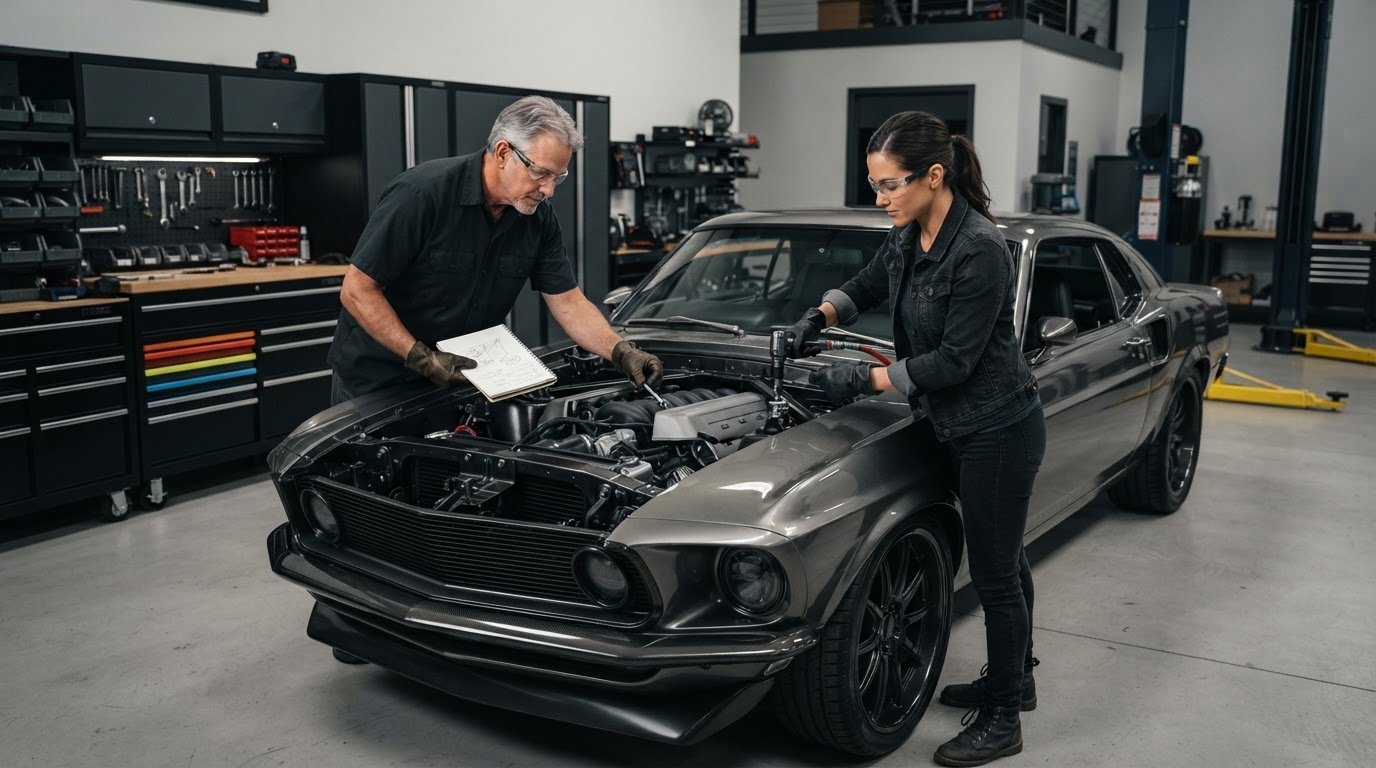
What if the most valuable part of a restomod isn’t the finished car, but the confidence you build together along the way? Building a restomod as a father-daughter project can turn different experience levels into an advantage: one person may bring mechanical know-how, while the other brings fresh questions and a new perspective. It’s natural to worry that the work will feel overwhelming or fall unevenly on one set of shoulders. A thoughtful plan helps make the garage a place to learn side by side.
This guide will help you choose a manageable project scope, divide tasks so both of you can contribute meaningfully, and make steady progress without cutting corners on safety. You’ll learn how to set shared goals, start with approachable jobs, and recognize when a task calls for experienced help. We’ll also cover how to keep momentum when time is limited and the build takes longer than expected. The aim is a reliable classic with modern touches, and the practical skills and shared pride that come from creating it together.
Key Takeaways
- Agree on what you want to preserve, change, and learn before choosing a car or setting the build direction.
- Choose a first milestone by matching its skill demands, safety needs, tools, and clear finish line to your shared experience.
- When building a restomod as a father-daughter project, divide responsibilities by interest and learning goals, not gender, and give both builders meaningful decisions.
- Use a repeatable workshop rhythm: prepare, research, inspect, plan, work, check, and document, with hazards understood before each task.
- Track progress through visible learning and work milestones, then revisit priorities when new information changes what the project can reasonably accomplish.
Building a Restomod Together: Start With the Shared Goal
A classic car carries its own character: the lines, the sounds, and the details that make it worth keeping. A restomod adds modern usability while retaining some of that heritage, giving a family project both a practical purpose and a connection to the past. The strongest builds begin with conversation, not a parts list. For building a restomod as a father-daughter project, shared decisions and hands-on learning matter as much as the finished car.
Use this definition to set the tone: A family restomod project is a shared effort to make decisions about a classic car and learn by working on it together. That means both builders help shape the goal, even if their experience levels differ. If you need common terminology, start with this guide to what a restomod is. For broader context on vehicle restoration, consider how preservation and modification can lead to different project choices.
Agree on what the finished car should be
Talk about how you want to use the car. Will it be driven regularly, taken on occasional outings, or enjoyed mostly as a weekend project? Then ask each other what you want to learn, preserve, change, and enjoy. One builder might value a familiar body style, while the other wants improved comfort or easier starting. Neither preference needs to win by default.
Write down two lists: features to keep original and changes you’re considering. Record decisions and open questions together. A shared project notebook or document can prevent one person from assuming the other agrees about paint, interior, engine, or how much modification feels right. Leave room to revisit choices as you learn more about the car.
Choose a project that fits both builders
A complete transformation can involve structural repairs, mechanical upgrades, bodywork, and interior changes. That’s different from a bounded first build, such as inspecting and improving one system before deciding what comes next. Match your starting scope to the car’s condition, your combined skills, the tools you can access, and the workspace available. A hidden rust problem or unfamiliar repair can change what’s realistic, so inspect before committing to a long wish list.
Choose a first milestone with a clear finish line. For example, you might document the car’s condition and agree on a plan for one repair or upgrade, rather than promising to modernize everything at once. A manageable milestone gives both builders a chance to contribute, learn, and judge whether the next step fits. Keep the larger vision, but let the first decision be one you can understand and complete together.
Choose a Restomod Scope You Can Learn and Finish Together
Keep the agreed vision, but resist treating every dream upgrade as part of the first phase. A restomod doesn’t require an engine swap, extensive fabrication, or a complete teardown. Choose the smallest scope that delivers the experience you both want. A focused first milestone can teach you how the car is assembled and how you work together, without turning the project into a chain of half-finished jobs.
Compare potential milestones using the same practical questions:
- Skills: What does the task require, and what can each person learn with suitable guidance?
- Safety: Are there hazards or procedures you need to understand before starting?
- Tools and space: Do you have the right equipment and a workspace suited to the work?
- Finish line: Can you describe what completed, checked work looks like?
For example, documenting the car’s condition or addressing a clearly understood maintenance need may be a more appropriate first step than dismantling major systems. Keep budget and timing estimates at planning level for now. A project-planning roadmap can help organize the broader sequence, but confirm the car’s condition and the work involved before relying on early estimates.
Select a car and starting point together
Consider which models you both know, whether you can research their parts and service information, and whether the car’s condition suits your combined skills. Look closely at the body and structure, not just the visible styling or whether the engine runs. Also consider whether your workspace can accommodate the work you’re proposing. If the car’s condition is unclear, or you can’t confidently assess the repairs it may need, seek a professional assessment before committing to modifications.
Separate must-haves from future ambitions
Sort proposed changes into three groups: first-stage work, possible later upgrades, and features to leave untouched. Then test each idea against the car’s agreed purpose. Engine work may not be necessary if reliability or drivability can be improved another way. Suspension changes should support how you intend to use the car, while interior upgrades should respect the features you’ve chosen to preserve.
If you decide an engine swap is essential to the goal, research its scope before making it the first task. Restomod Academy’s LS engine swap guide can help you explore that specific path. Otherwise, leave the larger upgrade on the future list and start with work that both builders can understand, plan, and bring to a clear finish.
Share the Work: Build Skills Without Assigning Stereotypes
Make the division of labor about curiosity, experience, and learning goals, not assumptions about who should handle which part of a car. One builder might enjoy researching wiring diagrams; the other might want to learn how to measure, clean components, or use hand tools. Both can take on meaningful work, and both should have a voice in decisions that shape the build.
For building a restomod as a father-daughter project, think of each task as a chance to contribute and grow. Start by naming what each person already knows and what they’d like to learn next. Then match the task to the skill level and risk involved. Researching parts, labeling removed hardware, documenting the car’s condition, and measuring components can all be valuable contributions. For unfamiliar mechanical work, begin with a clear explanation and demonstration. Practice together, follow appropriate procedures, and pause if either person is unsure how to proceed.
Match tasks to experience and learning goals
Agree on who will lead each task, but don’t let “lead” mean “work alone.” The person with more experience can explain the process while the other handles a suitable step, then switch roles when practical. Rotate responsibilities through planning, inspection, documentation, and hands-on work so each builder gets a broader feel for the project. Ask each other, “What’s one skill you want to develop next?” Use the answer to shape the next session.
Set a brief check-in before or after work. Ask what’s clear, what feels frustrating, and whether the task still fits the plan. These conversations catch unclear ownership early. They also make it easier to adjust when a repair takes a different turn than expected.
Make decisions a shared part of the build
Before buying parts or making an irreversible change, compare options together. Discuss what each choice changes, how it supports the car’s purpose, and what information you still need. If one person has more technical experience, use it to explain trade-offs, not to close the conversation. Expertise is most useful when it helps both builders make an informed choice.
Keep a shared project log with completed work, decisions, open questions, and who’s taking the next step. When you disagree, return to the purpose you agreed on rather than turning the discussion into a contest over who knows more. You might discover that neither option fits the original goal, or that more research is needed. That’s progress too. A thoughtful pause can protect the car, the plan, and the teamwork that makes the build worthwhile.
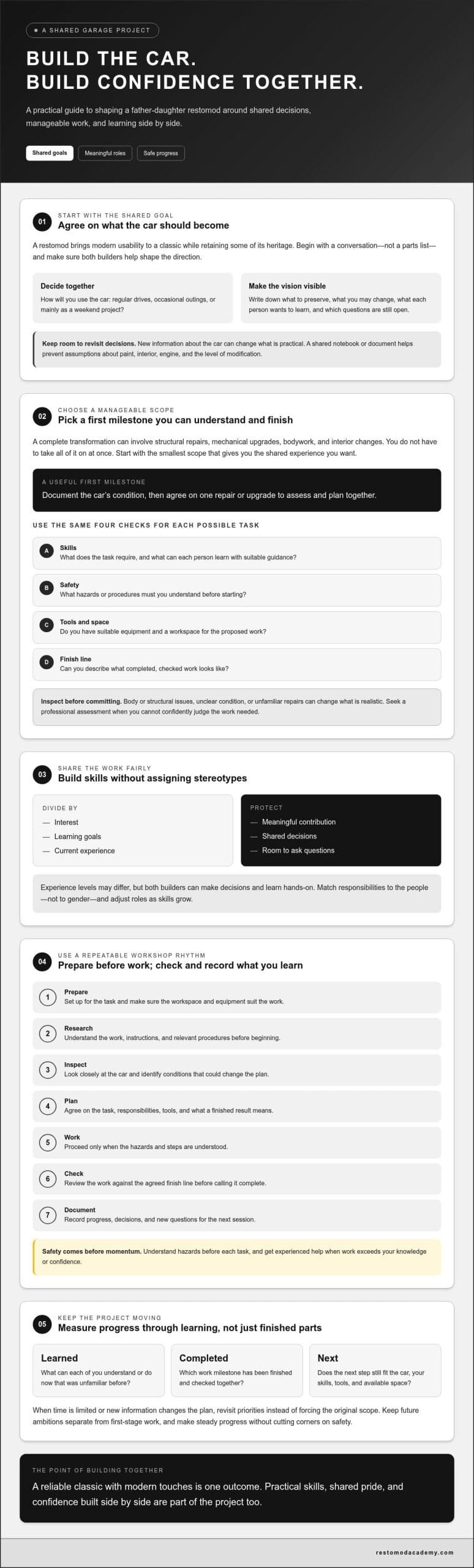
Build Safely With a Clear, Step-by-Step Workshop Rhythm
A steady workshop rhythm makes a complex build easier to learn and safer to share. Before each task, move through the same sequence: prepare, research, inspect, plan, work, check, and document. This keeps enthusiasm from outrunning understanding. Before touching a component, make sure you both know what the task involves, what hazards may be present, and which instructions apply. A task that affects brakes, steering, suspension, or other safety-critical systems deserves particular care and qualified help if either builder lacks the experience to assess or complete it.
If the task or a hazard is unclear, stop work and get guidance before continuing. Pausing is part of doing careful work, not a failure to make progress.
Prepare the workspace and tools before starting
Begin each session by clearing the work area, setting out only the tools you need, and agreeing on how you’ll communicate before work begins. Check that tools and equipment are suitable for the task, follow their instructions, and use protective equipment appropriate to the work. Don’t improvise around unfamiliar equipment or rely on memory when task-specific guidance is available. For help thinking through workshop essentials, review recommended workshop gear.
Make the session goal specific and achievable, such as inspecting a component or documenting how an assembly is put together. If the goal grows as you work, pause and decide together whether the new task belongs in this session.
Break each work session into verifiable steps
Research the procedure before disassembly or modification, then inspect what’s actually in front of you. A manual or reliable task-specific reference can help you understand the intended sequence. As you go, label removed parts, photograph assemblies from useful angles, and record measurements when they’ll help with reassembly. These simple records give both builders a shared reference and reduce dependence on memory.
Check the work against the instructions and agreed plan before moving on. If something doesn’t fit, looks damaged, or differs from what you expected, don’t force the next step. Consult an experienced professional when a task exceeds either person’s competence, especially if an error could affect safe vehicle operation. End the session by documenting what’s complete, what remains, and any questions to resolve before work resumes.
Build your workshop routine alongside your technical knowledge. For structured support as you plan and learn, explore the Ultimate Restomod Guide.
Keep the Father-Daughter Restomod Moving From First Milestone to First Drive
A long build stays encouraging when progress is visible before the car is road-ready. Mark milestones that recognize the work behind the transformation, not just major mechanical changes. Completing a condition report, learning to use a tool correctly, finishing an agreed repair, or checking an assembly together all count. These stages show that the project is advancing and that both of you are gaining skills along the way.
Track progress and protect the shared experience
Keep a photo log alongside your project notes. Add what was completed, what each person contributed, and what skill either of you practiced or learned. During regular check-ins, decide together whether to continue, pause, simplify, or delegate the next task. If new findings reveal additional repairs or change what’s feasible, revisit the priorities rather than pushing ahead with an outdated plan.
Celebrate completed stages, even if the milestone is “we found the source of the problem” rather than “the car is finished.” Setbacks are information, not personal failures. A part that doesn’t fit or a repair that proves more involved can prompt a better plan. That flexibility helps keep building a restomod as a father-daughter project rewarding for both people, instead of turning every delay into a test of commitment.
Use structured guidance when the build needs it
A project roadmap can keep research, decisions, and work stages connected. Use it to note what you know, what you still need to confirm, and what must happen before moving to the next phase. Revisit it when the car’s condition or your goals change. The roadmap is a planning aid, not a reason to continue with work that exceeds your skills.
Before the first drive, arrange for an appropriately qualified person to inspect the work and assess whether the car is ready for road use. Treat that check as a milestone in its own right. It gives your family a chance to verify the build carefully before enjoying the result together.
Structured learning can also support your research and planning, but it can’t replace hands-on experience or qualified help for unfamiliar work. If you’d like a resource to guide your next decisions, explore the Ultimate Restomod Guide as an optional companion to the project. The real achievement is more than a classic with modern touches. It’s the confidence, practical knowledge, and shared memories built one careful stage at a time.
Start Building Your Shared Restomod Story
A successful family build starts with a goal you both believe in, a scope that fits your experience and workspace, and tasks that give each person room to contribute and learn. As building a restomod as a father-daughter project unfolds, steady check-ins and careful workshop habits can keep the work safe, the decisions shared, and the momentum alive.
Remember that progress isn’t measured only by the first drive. Research, new skills, thoughtful decisions, and completed milestones all become part of the car’s story. When the project calls for more structure, Restomod Academy offers educational guides, reviews, and tutorials, including The Ultimate Restomod Guide, as optional planning and learning support.
Explore The Ultimate Restomod Guide and take your next project step together. Keep the scope manageable, stay curious, and enjoy the satisfaction of making a classic your own, one careful stage at a time.
Frequently Asked Questions
Can a beginner build a restomod with their daughter?
Yes, beginners can build a restomod together by starting with a manageable scope and learning one task at a time. Building a restomod as a father-daughter project doesn’t require both people to arrive with mechanical experience. Begin with research, documenting the car’s condition, or another clearly understood task. Use reliable, task-specific instructions, work within your abilities, and bring in qualified help for unfamiliar or safety-critical work.
What is a good first project for a father-daughter car build?
A good first project has a clear finish line, fits your available tools and workspace, and lets both builders take part. You might begin by documenting the vehicle’s condition, researching a known issue, or completing a well-understood task suited to your experience. Before choosing, inspect the car and agree on how you’ll verify the work is complete. Avoid starting with a large teardown or complicated modification just because it sounds exciting.
How do you divide work on a father-daughter restomod?
Divide work according to interest, experience, and what each person wants to learn, not gender. One builder might research parts or record measurements while the other leads a hands-on task, then you can switch roles where practical. Give both people responsibility for decisions as well as suitable work. Demonstrate unfamiliar steps before practice, and use brief check-ins to clarify ownership, raise concerns, and adjust the plan together.
Is building a restomod safe for a family project?
It can be approached responsibly if you understand each task’s hazards and safe procedures before starting. Prepare the workspace, use appropriate protective equipment, follow tool instructions, and don’t guess when something is unclear. Keep beginners supervised during unfamiliar work. If a task affects a safety-critical system or exceeds either builder’s experience, pause and consult a qualified professional. Before driving the finished car, arrange an inspection by an appropriately qualified person.
How long does it take to build a restomod together?
There’s no fixed timeline: the duration depends on the car’s condition, the scope you choose, your available workspace, and how much time you can devote to learning and building. Repairs or new findings may also change the plan. Rather than promise a finish date, set achievable milestones and review them together. Track completed work and open questions so you can adjust priorities without treating a delay as a failed project.
What should a father and daughter decide before starting a restomod?
Agree on how you hope to use the car and what matters most to each of you. List the features you want to preserve, the changes you’re considering, and what you’d each like to learn. Choose a manageable first stage that suits the car’s condition, your skills, tools, and workspace. Record decisions and unanswered questions together, so assumptions don’t quietly become part of the build plan.
Do we need to swap the engine to build a restomod?
No, an engine swap isn’t required. A restomod can combine a classic car’s character with selected updates, and the right changes depend on your shared goals and the vehicle’s condition. Decide whether engine work supports how you plan to use the car before making it part of the scope. You can focus on other suitable improvements, preserve the existing engine, or keep an engine swap as a later possibility.
What if the most valuable part of a restomod isn’t the finished car, but the confidence you build together along the way? Building a restomod as a father-daughter project can turn different experience levels into an advantage: one person may bring mechanical know-how, while the other brings fresh questions and a new perspective. It’s natural to worry that the work will feel overwhelming or fall unevenly on one set of shoulders. A thoughtful plan helps make the garage a place to learn side by side.
This guide will help you choose a manageable project scope, divide tasks so both of you can contribute meaningfully, and make steady progress without cutting corners on safety. You’ll learn how to set shared goals, start with approachable jobs, and recognize when a task calls for experienced help. We’ll also cover how to keep momentum when time is limited and the build takes longer than expected. The aim is a reliable classic with modern touches, and the practical skills and shared pride that come from creating it together.
Key Takeaways
- Agree on what you want to preserve, change, and learn before choosing a car or setting the build direction.
- Choose a first milestone by matching its skill demands, safety needs, tools, and clear finish line to your shared experience.
- When building a restomod as a father-daughter project, divide responsibilities by interest and learning goals, not gender, and give both builders meaningful decisions.
- Use a repeatable workshop rhythm: prepare, research, inspect, plan, work, check, and document, with hazards understood before each task.
- Track progress through visible learning and work milestones, then revisit priorities when new information changes what the project can reasonably accomplish.
Building a Restomod Together: Start With the Shared Goal
A classic car carries its own character: the lines, the sounds, and the details that make it worth keeping. A restomod adds modern usability while retaining some of that heritage, giving a family project both a practical purpose and a connection to the past. The strongest builds begin with conversation, not a parts list. For building a restomod as a father-daughter project, shared decisions and hands-on learning matter as much as the finished car.
Use this definition to set the tone: A family restomod project is a shared effort to make decisions about a classic car and learn by working on it together. That means both builders help shape the goal, even if their experience levels differ. If you need common terminology, start with this guide to what a restomod is. For broader context on vehicle restoration, consider how preservation and modification can lead to different project choices.
Agree on what the finished car should be
Talk about how you want to use the car. Will it be driven regularly, taken on occasional outings, or enjoyed mostly as a weekend project? Then ask each other what you want to learn, preserve, change, and enjoy. One builder might value a familiar body style, while the other wants improved comfort or easier starting. Neither preference needs to win by default.
Write down two lists: features to keep original and changes you’re considering. Record decisions and open questions together. A shared project notebook or document can prevent one person from assuming the other agrees about paint, interior, engine, or how much modification feels right. Leave room to revisit choices as you learn more about the car.
Choose a project that fits both builders
A complete transformation can involve structural repairs, mechanical upgrades, bodywork, and interior changes. That’s different from a bounded first build, such as inspecting and improving one system before deciding what comes next. Match your starting scope to the car’s condition, your combined skills, the tools you can access, and the workspace available. A hidden rust problem or unfamiliar repair can change what’s realistic, so inspect before committing to a long wish list.
Choose a first milestone with a clear finish line. For example, you might document the car’s condition and agree on a plan for one repair or upgrade, rather than promising to modernize everything at once. A manageable milestone gives both builders a chance to contribute, learn, and judge whether the next step fits. Keep the larger vision, but let the first decision be one you can understand and complete together.
Choose a Restomod Scope You Can Learn and Finish Together
Keep the agreed vision, but resist treating every dream upgrade as part of the first phase. A restomod doesn’t require an engine swap, extensive fabrication, or a complete teardown. Choose the smallest scope that delivers the experience you both want. A focused first milestone can teach you how the car is assembled and how you work together, without turning the project into a chain of half-finished jobs.
Compare potential milestones using the same practical questions:
- Skills: What does the task require, and what can each person learn with suitable guidance?
- Safety: Are there hazards or procedures you need to understand before starting?
- Tools and space: Do you have the right equipment and a workspace suited to the work?
- Finish line: Can you describe what completed, checked work looks like?
For example, documenting the car’s condition or addressing a clearly understood maintenance need may be a more appropriate first step than dismantling major systems. Keep budget and timing estimates at planning level for now. A project-planning roadmap can help organize the broader sequence, but confirm the car’s condition and the work involved before relying on early estimates.
Select a car and starting point together
Consider which models you both know, whether you can research their parts and service information, and whether the car’s condition suits your combined skills. Look closely at the body and structure, not just the visible styling or whether the engine runs. Also consider whether your workspace can accommodate the work you’re proposing. If the car’s condition is unclear, or you can’t confidently assess the repairs it may need, seek a professional assessment before committing to modifications.
Separate must-haves from future ambitions
Sort proposed changes into three groups: first-stage work, possible later upgrades, and features to leave untouched. Then test each idea against the car’s agreed purpose. Engine work may not be necessary if reliability or drivability can be improved another way. Suspension changes should support how you intend to use the car, while interior upgrades should respect the features you’ve chosen to preserve.
If you decide an engine swap is essential to the goal, research its scope before making it the first task. Restomod Academy’s LS engine swap guide can help you explore that specific path. Otherwise, leave the larger upgrade on the future list and start with work that both builders can understand, plan, and bring to a clear finish.
Share the Work: Build Skills Without Assigning Stereotypes
Make the division of labor about curiosity, experience, and learning goals, not assumptions about who should handle which part of a car. One builder might enjoy researching wiring diagrams; the other might want to learn how to measure, clean components, or use hand tools. Both can take on meaningful work, and both should have a voice in decisions that shape the build.
For building a restomod as a father-daughter project, think of each task as a chance to contribute and grow. Start by naming what each person already knows and what they’d like to learn next. Then match the task to the skill level and risk involved. Researching parts, labeling removed hardware, documenting the car’s condition, and measuring components can all be valuable contributions. For unfamiliar mechanical work, begin with a clear explanation and demonstration. Practice together, follow appropriate procedures, and pause if either person is unsure how to proceed.
Match tasks to experience and learning goals
Agree on who will lead each task, but don’t let “lead” mean “work alone.” The person with more experience can explain the process while the other handles a suitable step, then switch roles when practical. Rotate responsibilities through planning, inspection, documentation, and hands-on work so each builder gets a broader feel for the project. Ask each other, “What’s one skill you want to develop next?” Use the answer to shape the next session.
Set a brief check-in before or after work. Ask what’s clear, what feels frustrating, and whether the task still fits the plan. These conversations catch unclear ownership early. They also make it easier to adjust when a repair takes a different turn than expected.
Make decisions a shared part of the build
Before buying parts or making an irreversible change, compare options together. Discuss what each choice changes, how it supports the car’s purpose, and what information you still need. If one person has more technical experience, use it to explain trade-offs, not to close the conversation. Expertise is most useful when it helps both builders make an informed choice.
Keep a shared project log with completed work, decisions, open questions, and who’s taking the next step. When you disagree, return to the purpose you agreed on rather than turning the discussion into a contest over who knows more. You might discover that neither option fits the original goal, or that more research is needed. That’s progress too. A thoughtful pause can protect the car, the plan, and the teamwork that makes the build worthwhile.
Build Safely With a Clear, Step-by-Step Workshop Rhythm
A steady workshop rhythm makes a complex build easier to learn and safer to share. Before each task, move through the same sequence: prepare, research, inspect, plan, work, check, and document. This keeps enthusiasm from outrunning understanding. Before touching a component, make sure you both know what the task involves, what hazards may be present, and which instructions apply. A task that affects brakes, steering, suspension, or other safety-critical systems deserves particular care and qualified help if either builder lacks the experience to assess or complete it.
If the task or a hazard is unclear, stop work and get guidance before continuing. Pausing is part of doing careful work, not a failure to make progress.
Prepare the workspace and tools before starting
Begin each session by clearing the work area, setting out only the tools you need, and agreeing on how you’ll communicate before work begins. Check that tools and equipment are suitable for the task, follow their instructions, and use protective equipment appropriate to the work. Don’t improvise around unfamiliar equipment or rely on memory when task-specific guidance is available. For help thinking through workshop essentials, review recommended workshop gear.
Make the session goal specific and achievable, such as inspecting a component or documenting how an assembly is put together. If the goal grows as you work, pause and decide together whether the new task belongs in this session.
Break each work session into verifiable steps
Research the procedure before disassembly or modification, then inspect what’s actually in front of you. A manual or reliable task-specific reference can help you understand the intended sequence. As you go, label removed parts, photograph assemblies from useful angles, and record measurements when they’ll help with reassembly. These simple records give both builders a shared reference and reduce dependence on memory.
Check the work against the instructions and agreed plan before moving on. If something doesn’t fit, looks damaged, or differs from what you expected, don’t force the next step. Consult an experienced professional when a task exceeds either person’s competence, especially if an error could affect safe vehicle operation. End the session by documenting what’s complete, what remains, and any questions to resolve before work resumes.
Build your workshop routine alongside your technical knowledge. For structured support as you plan and learn, explore the Ultimate Restomod Guide.
Keep the Father-Daughter Restomod Moving From First Milestone to First Drive
A long build stays encouraging when progress is visible before the car is road-ready. Mark milestones that recognize the work behind the transformation, not just major mechanical changes. Completing a condition report, learning to use a tool correctly, finishing an agreed repair, or checking an assembly together all count. These stages show that the project is advancing and that both of you are gaining skills along the way.
Track progress and protect the shared experience
Keep a photo log alongside your project notes. Add what was completed, what each person contributed, and what skill either of you practiced or learned. During regular check-ins, decide together whether to continue, pause, simplify, or delegate the next task. If new findings reveal additional repairs or change what’s feasible, revisit the priorities rather than pushing ahead with an outdated plan.
Celebrate completed stages, even if the milestone is “we found the source of the problem” rather than “the car is finished.” Setbacks are information, not personal failures. A part that doesn’t fit or a repair that proves more involved can prompt a better plan. That flexibility helps keep building a restomod as a father-daughter project rewarding for both people, instead of turning every delay into a test of commitment.
Use structured guidance when the build needs it
A project roadmap can keep research, decisions, and work stages connected. Use it to note what you know, what you still need to confirm, and what must happen before moving to the next phase. Revisit it when the car’s condition or your goals change. The roadmap is a planning aid, not a reason to continue with work that exceeds your skills.
Before the first drive, arrange for an appropriately qualified person to inspect the work and assess whether the car is ready for road use. Treat that check as a milestone in its own right. It gives your family a chance to verify the build carefully before enjoying the result together.
Structured learning can also support your research and planning, but it can’t replace hands-on experience or qualified help for unfamiliar work. If you’d like a resource to guide your next decisions, explore the Ultimate Restomod Guide as an optional companion to the project. The real achievement is more than a classic with modern touches. It’s the confidence, practical knowledge, and shared memories built one careful stage at a time.
Start Building Your Shared Restomod Story
A successful family build starts with a goal you both believe in, a scope that fits your experience and workspace, and tasks that give each person room to contribute and learn. As building a restomod as a father-daughter project unfolds, steady check-ins and careful workshop habits can keep the work safe, the decisions shared, and the momentum alive.
Remember that progress isn’t measured only by the first drive. Research, new skills, thoughtful decisions, and completed milestones all become part of the car’s story. When the project calls for more structure, Restomod Academy offers educational guides, reviews, and tutorials, including The Ultimate Restomod Guide, as optional planning and learning support.
Explore The Ultimate Restomod Guide and take your next project step together. Keep the scope manageable, stay curious, and enjoy the satisfaction of making a classic your own, one careful stage at a time.
Frequently Asked Questions
Can a beginner build a restomod with their daughter?
Yes, beginners can build a restomod together by starting with a manageable scope and learning one task at a time. Building a restomod as a father-daughter project doesn’t require both people to arrive with mechanical experience. Begin with research, documenting the car’s condition, or another clearly understood task. Use reliable, task-specific instructions, work within your abilities, and bring in qualified help for unfamiliar or safety-critical work.
What is a good first project for a father-daughter car build?
A good first project has a clear finish line, fits your available tools and workspace, and lets both builders take part. You might begin by documenting the vehicle’s condition, researching a known issue, or completing a well-understood task suited to your experience. Before choosing, inspect the car and agree on how you’ll verify the work is complete. Avoid starting with a large teardown or complicated modification just because it sounds exciting.
How do you divide work on a father-daughter restomod?
Divide work according to interest, experience, and what each person wants to learn, not gender. One builder might research parts or record measurements while the other leads a hands-on task, then you can switch roles where practical. Give both people responsibility for decisions as well as suitable work. Demonstrate unfamiliar steps before practice, and use brief check-ins to clarify ownership, raise concerns, and adjust the plan together.
Is building a restomod safe for a family project?
It can be approached responsibly if you understand each task’s hazards and safe procedures before starting. Prepare the workspace, use appropriate protective equipment, follow tool instructions, and don’t guess when something is unclear. Keep beginners supervised during unfamiliar work. If a task affects a safety-critical system or exceeds either builder’s experience, pause and consult a qualified professional. Before driving the finished car, arrange an inspection by an appropriately qualified person.
How long does it take to build a restomod together?
There’s no fixed timeline: the duration depends on the car’s condition, the scope you choose, your available workspace, and how much time you can devote to learning and building. Repairs or new findings may also change the plan. Rather than promise a finish date, set achievable milestones and review them together. Track completed work and open questions so you can adjust priorities without treating a delay as a failed project.
What should a father and daughter decide before starting a restomod?
Agree on how you hope to use the car and what matters most to each of you. List the features you want to preserve, the changes you’re considering, and what you’d each like to learn. Choose a manageable first stage that suits the car’s condition, your skills, tools, and workspace. Record decisions and unanswered questions together, so assumptions don’t quietly become part of the build plan.
Do we need to swap the engine to build a restomod?
No, an engine swap isn’t required. A restomod can combine a classic car’s character with selected updates, and the right changes depend on your shared goals and the vehicle’s condition. Decide whether engine work supports how you plan to use the car before making it part of the scope. You can focus on other suitable improvements, preserve the existing engine, or keep an engine swap as a later possibility.