
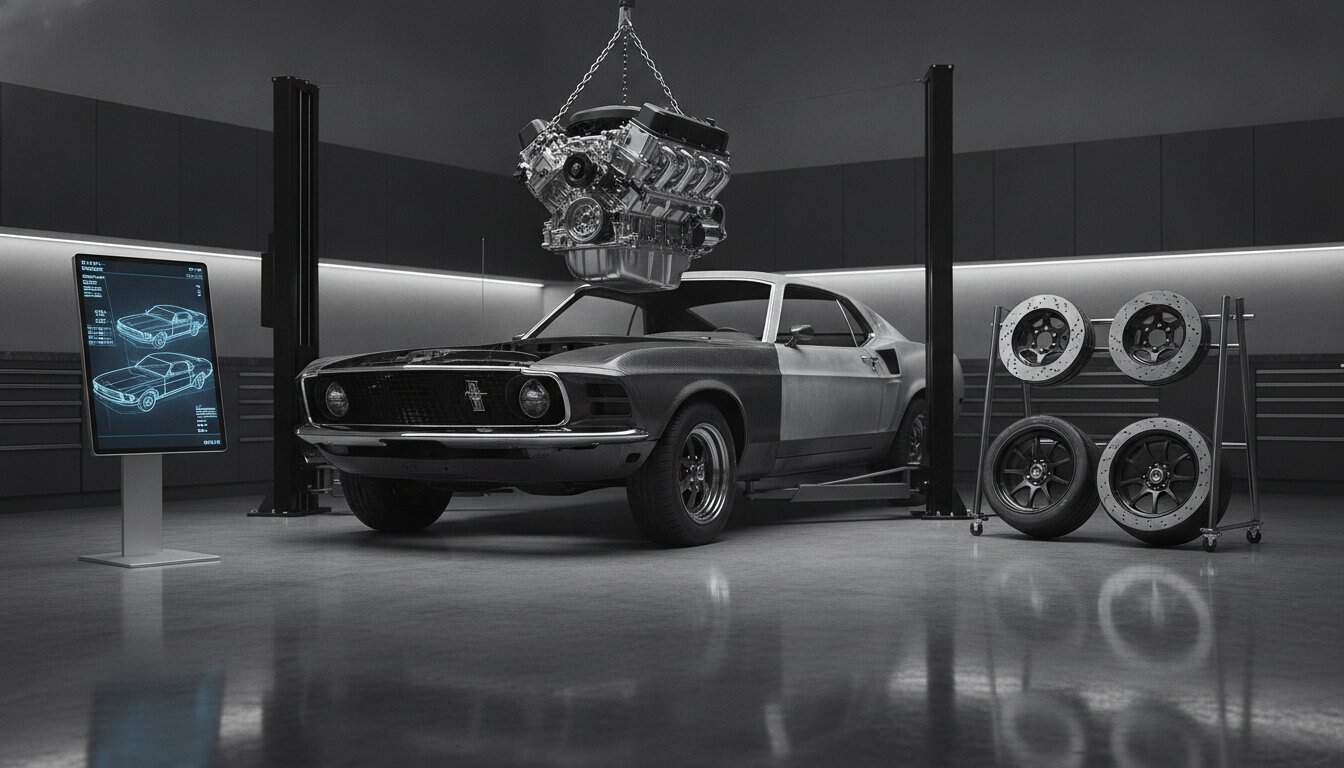
The dream of a vintage silhouette powered by a modern heart often dies in the garage when the reality of a six-figure invoice hits the floor. It’s a harsh truth that many enthusiasts face, but the fear of a project becoming a bottomless money pit shouldn’t stop you from creating something legendary. You’ve likely spent hours worrying about part compatibility or underestimating the professional labor rates that now average $132 per hour nationwide. I understand that anxiety because I’ve seen how easily a build can spiral without a disciplined roadmap. Understanding the true cost to build a restomod is about more than just tallying receipts; it’s about mastering the modular equation of parts, labor, and hidden expenses.
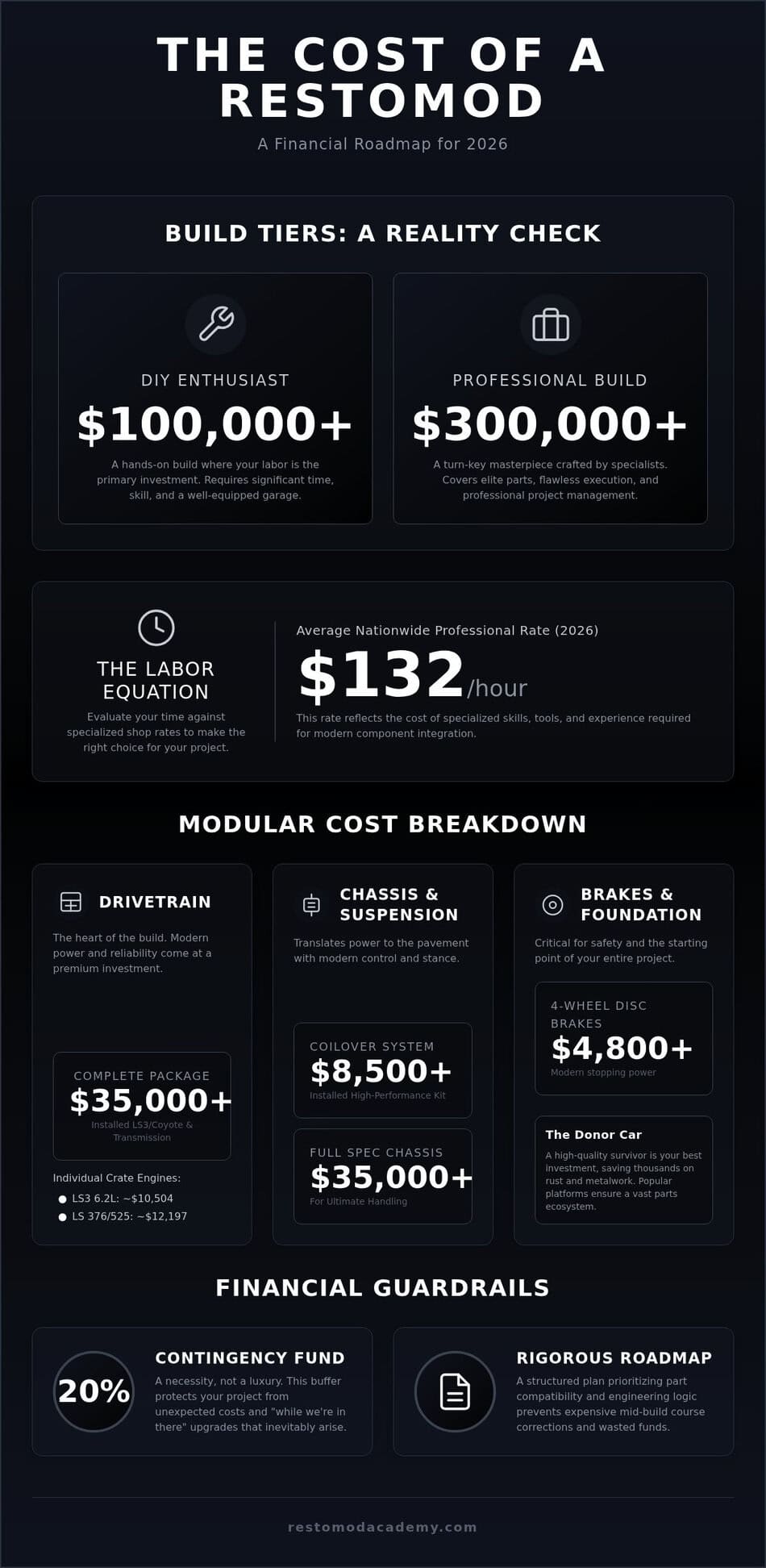
This guide will pull back the curtain on the financial landscape of 2026 to give you total control over your project. You’ll learn the realistic price ranges for different build levels, from $100,000 DIY efforts to $300,000 professional masterpieces. We will explore the specific costs of essential components, such as $35,000 drivetrain packages and $8,500 suspension systems. By the end, you’ll have a clear strategy to prioritize safety and performance while avoiding the common financial pitfalls that stall so many creative journeys.
Key Takeaways
- Define the financial reality of your project by learning the current cost to build a restomod across three distinct tiers of professional and personal involvement.
- Master the modular budgeting approach to accurately price high-impact systems like modern crate engines and performance chassis upgrades.
- Evaluate the labor equation by comparing the value of your own garage hours against current 2026 specialized shop rates.
- Establish a rigorous project roadmap that prioritizes part compatibility and engineering logic to prevent expensive mid-build course corrections.
- Discover how structured guidance and blueprints can save thousands of dollars by eliminating the trial-and-error approach to classic car modernization.
Understanding the Total Cost to Build a Restomod
Approach your project with the mindset of a lead engineer. The total cost to build a restomod is a complex tripod consisting of the donor vehicle, high-performance modern components, and the specialized labor required to integrate them. While a standard restoration aims to return a car to its factory-original state, a restomod pushes the boundaries of performance and reliability. You can find a clear Restomod definition that highlights this distinction; it is the art of blending heritage aesthetics with contemporary technology.
Success in 2026 requires acknowledging that the cost to build a restomod has shifted due to global supply chain adjustments and rising material costs. Every professional builder will tell you that a twenty percent contingency fund is not a luxury; it is a necessity. This buffer protects you from the inevitable “while we are in there” expenses that arise when decades-old metal meets modern engineering. Without this financial cushion, a project risks stalling in the middle of the most rewarding phase of the assembly.
The Donor Car: Your Project Foundation
Choose your starting point wisely. A rough project car might have an attractive entry price, but hidden structural damage or extensive rust can easily double your initial investment before you even touch the drivetrain. If you’re a first-time builder, look for high-quality original survivors. These vehicles often require less metalwork, which is one of the most expensive and time-consuming phases of any build. Selecting a popular platform like the Ford Mustang or a Chevy C10 truck ensures a vast ecosystem of compatible parts, which helps keep your budget predictable and your progress steady.
Restomod vs. Restoration: A Financial Comparison
Expect to pay a premium for modern performance. While OEM replacement parts for a 1960s muscle car are relatively affordable, high-end restomod components like independent rear suspension or fuel-injected crate engines carry a higher price tag. However, the long-term value proposition is undeniable. A car that starts every morning, handles like a modern sports car, and stops with precision is a vehicle you’ll actually drive. For a deeper look at these differences, read our guide on Restomod Meaning: More Than Just a Restoration. In the 2026 market, buyers and enthusiasts alike prioritize this blend of nostalgic character and modern reliability over rigid factory perfection.
Modular Cost Breakdown: Pricing the Build by System
Build your budget with the same precision you use to torque head bolts. To manage the overall cost to build a restomod, you must view the vehicle as a collection of modular systems rather than one overwhelming expense. This approach allows you to prioritize safety and performance based on your specific goals. Whether you are aiming for a weekend cruiser or a track-ready beast, understanding the current 2026 market rates for these components is the first step toward a successful build. By breaking the project into manageable blocks, you maintain control over the financial landscape of your garage.
Engine Swaps and Transmission Options
Modern power requires a modern investment. For many, the choice boils down to the reliability of a crate engine versus the potential savings of a salvaged powerplant. A Chevrolet Performance LS3 6.2L currently prices around $10,504, while a more aggressive LS 376/525 long block sits near $12,197. If you opt for a complete drivetrain package including the engine and transmission, expect starting costs around $35,000 for an installed LS3 or Coyote V8. These modern six-speed gearboxes offer a level of refinement and fuel efficiency that vintage units simply cannot match. For a deeper technical dive into these powerplants, consult The Definitive Guide to an LS Engine Swap.
Suspension and Braking Systems
Stopping and turning are as vital as going fast. A high-performance suspension transformation, such as a Ridetech coilover system, typically starts at $8,500 installed. If you are pursuing the ultimate in handling and stance, a full Roadstershop Spec Chassis begins at $35,000. Do not cut corners on the braking system; a four-wheel Wilwood disc conversion starts at $4,800 and provides the modern clamping force necessary for today’s traffic speeds. Budgeting for power steering racks and modern columns will further bridge the gap between vintage aesthetics and contemporary control. Precision in these areas ensures your classic handles the raw power of its new heart with grace.
Interior Comfort and Modern Tech
A restomod should be a place where you want to spend time, not just a machine you admire from the outside. Integrating a modern climate control system is essential for year-round drivability and comfort. Budgeting for high-quality sound deadening and modern audio creates a luxury cabin experience that honors the original design while embracing 2026 technology. Digital instrumentation and custom upholstery can add significant cost, but they are the touchpoints that define the character of your machine. Before you buy your first component, review our recommended gear to ensure your workshop is equipped for these meticulous tasks. This methodical planning turns an intimidating project into an achievable, shared adventure among enthusiasts.
DIY vs. Professional Shop: The Labor Equation
Deciding who turns the wrenches is the most significant variable in the cost to build a restomod. In the 2026 market, the national average for independent shop labor sits at $132 per hour, with high-end restoration facilities often commanding $135 or more for specialized fabrication. If you live in a major metropolitan area like Los Angeles or New York, those rates can climb between $160 and $200 per hour. While these numbers might seem daunting, professional shops provide more than just manual labor; they offer project management and engineering expertise that prevents the costly “redo” cycles that plague many home builds.
A full professional build typically starts at a minimum of $300,000, reflecting the 4,000 to 5,000 hours of meticulous work required for a concours-level result. For the enthusiast with more time than liquid capital, the DIY route can bring that entry point down to approximately $100,000. However, you must be honest about your skill level and the value of your own time. A multi-year project requires a massive emotional and chronological investment. Many successful builders choose a hybrid strategy, performing the mechanical assembly and interior work themselves while outsourcing specialized tasks like paint, bodywork, and final EFI tuning to the pros.
The Real Cost of a DIY Build
Building in your own garage isn’t free. You must budget for a professional-grade environment before the first bolt is turned. Essential shop tools such as MIG or TIG welders, two-post lifts, and modern diagnostic equipment can easily add $10,000 to $20,000 to your initial investment. To ensure you’re investing in the right equipment, review our Recommended Gear for Restomod Builders. Beyond the hardware, there is the financial risk of learning as you go. Ruining a $10,000 crate engine through a simple wiring error or a botched initial startup is a setback that can break a project’s momentum and budget.
Outsourcing Specialized Tasks
Know when to step back and let a specialist take the lead. High-quality paint and metal fabrication are the two areas where professional intervention pays the highest dividends in long-term value. A top-tier paint job in 2026 involves hundreds of hours of block sanding and precision masking that most DIYers struggle to replicate. For a deeper look at what this phase entails, see our Classic Car Bodywork Guide: The Art of Restomod Metal Fabrication. Additionally, modern wiring harnesses and ECU tuning are common outsourcing points. These systems are the central nervous system of your restomod, and having them configured by a pro ensures the modern reliability you’re paying for.
Creating a Realistic Restomod Budget Roadmap
Map your journey with absolute precision before you strike the first match of your project. To master the cost to build a restomod, you must transition from a dreamer to a project manager. Start by defining your build philosophy. Are you creating a daily driver with modern air conditioning or a weekend warrior with a track-tuned suspension? Once your goals are set, research part compatibility with obsessive detail. Buying a high-performance transmission only to realize it won’t fit your chosen tunnel without extensive fabrication is an expensive lesson you can avoid. Create a phase-based budget that allows you to manage cash flow without draining your savings in a single month. Sourcing parts through reputable retailers ensures you have the technical support and warranty protection needed when complex engineering hurdles arise. Finally, track every single cent. Whether it is a $5,000 brake kit or a $5 bag of grade-8 bolts, seeing the total investment in real time keeps your project grounded.
Phasing Your Build for Financial Success
Prioritize your spending by addressing the chassis and safety systems before moving to high-cost power upgrades. A 500-horsepower engine is useless if your frame cannot handle the torque or your brakes cannot stop the mass. Buying components in stages also allows you to take advantage of seasonal sales, which can significantly lower the overall cost to build a restomod over time. For a detailed breakdown of this sequence, explore our guide on Restomod Project Planning: The Ultimate Roadmap for Modernizing Classics. This methodical approach ensures that your machine remains safe and drivable through every stage of its evolution.
Avoiding Common Financial Pitfalls
Guard against scope creep with a disciplined mind. It is tempting to add just one more feature, but these incremental changes are what turn a structured build into a financial disaster. Cheap parts often carry a hidden tax; they frequently fail early or require extra fabrication to fit correctly, costing you twice as much in the long run. Establish a hard limit on your donor car purchase price. Every dollar saved on the initial vehicle is a dollar that can be invested in superior modern technology. If you want to eliminate the guesswork and protect your investment, start your journey with our Premium Project Blueprints to ensure your budget remains as precise as your engine tolerances.
How Restomod Academy Saves You Money and Time
Invest in your knowledge before you invest in your chassis. While we have detailed the significant financial commitment required for these projects, the hidden cost to build a restomod often lies in the errors made by unguided builders. A single misordered part or a botched wiring integration can easily exceed the price of professional guidance. At Restomod Academy, we believe that every enthusiast has the potential to become a creator, provided they have a reliable roadmap. Our flagship offering, The Ultimate Restomod Guide, acts as your digital mentor. It breaks down complex technical tasks into achievable, logical steps that respect both your time and your budget. By following our structured modules, you avoid the common mistakes that lead to project stagnation.
Precision matters in every phase of the build. Beyond our guides, we offer Restomod Consulting Services to help you navigate specific engineering hurdles that might otherwise stall your progress. Whether you are struggling with component clearance or EFI tuning, having an expert eye on your plan can prevent thousands of dollars in wasted labor. Our Premium Project Blueprints provide a proven path to success, ensuring that the components you purchase work in harmony from day one. You also gain access to a community of like-minded builders who share real-world cost-saving tips and vendor recommendations, turning a solitary struggle into a shared adventure.
Education as a Financial Investment
Think of education as a high-performance tool for your workshop. When professional labor rates average $132 per hour, even a few hours of trial and error can be devastating to your bottom line. A small investment in The Ultimate Restomod Guide can save thousands in avoided mistakes and redundant parts purchases. These guides provide the clarity needed to handle daunting technical tasks with confidence. By following a roadmap designed by seasoned mentors, you eliminate the guesswork that often turns a passionate project into a financial burden. This structured learning approach ensures that every dollar you spend moves you closer to the pride of a finished machine.
Your Next Steps Toward a Modern Classic
Start your journey with a focus on precision and patience. Leverage our product reviews to find the best value in the aftermarket industry without sacrificing quality or safety. If you are feeling overwhelmed by the financial landscape, book a session through our Restomod Consulting Services to vet your budget and build plan with a professional. We are here to empower you to transition from a passive admirer to an active creator. Grab your tools, trust the process, and remember that with the right guidance, any mechanical hurdle can be overcome. Your modern classic is waiting to be built; let us help you do it right the first time.
Start Your Build with Precision
Mastering the cost to build a restomod is about more than just numbers on a spreadsheet; it’s about the discipline of engineering and the joy of creation. You’ve already navigated the complexities of modular budgeting and the 2026 labor market. Whether you choose the grit of a DIY build or the precision of a professional shop, your success depends on a realistic roadmap and a commitment to quality over shortcuts. Every challenge you face in the garage is a valuable learning opportunity that brings you one step closer to the character and reliability of a modern classic.
You don’t have to face these technical hurdles alone. With the authoritative guidance of Brook Walsh and our comprehensive project blueprints, you can join an expert community of builders dedicated to mechanical excellence. Stop dreaming about the finished machine and take the first step toward the workshop today. Download The Ultimate Restomod Guide and start your build today. Your journey into the world of custom building is just beginning, and with the right strategy, you’ll create something truly legendary. Grab your tools and trust the process.
Frequently Asked Questions
What is the average starting cost for a basic restomod project?
An entry-level boutique restomod typically starts between $65,000 and $180,000. This range assumes you’re starting with a solid donor and focusing on essential upgrades like a modern drivetrain and improved braking. While the total cost to build a restomod can fluctuate based on your performance goals, this baseline covers the parts and specialized labor required to achieve a reliable, modern driving experience.
Is it cheaper to build a restomod or buy one already finished?
Buying a finished car is usually more cost-effective than building one from scratch. When you purchase a completed project, you’re often paying a fraction of the original builder’s labor investment. However, building your own allows for absolute precision in component selection and the pride of personal creation. You must weigh the immediate gratification of a purchase against the educational reward of the assembly process.
What are the most expensive parts of a restomod build?
The drivetrain and the chassis represent the most significant financial investments in any build. A modern supercharged engine package can start at $49,000, while a precision-engineered aftermarket chassis begins around $35,000. These systems form the backbone of your project’s performance and safety. Allocating your funds here ensures that your machine handles modern power with the grace of a contemporary sports car.
How can I save money on my restomod project without sacrificing safety?
Save money by performing your own disassembly and non-critical assembly tasks while leaving specialized engineering to the pros. You can reduce the cost to build a restomod by sourcing high-quality salvaged parts for non-wear items like seats or trim pieces. Never compromise on your braking or steering systems. Focus your budget on the mechanical heart of the car and consider mid-range interior finishes that you can upgrade later.
Do restomod cars appreciate in value enough to cover the build cost?
High-end restomods often appreciate in value, but they rarely return the full cost of a professional build immediately. The market in 2026 highly prizes drivability and modern reliability, which helps these cars maintain a higher resale floor than traditional restorations. View your project as an investment in a lifestyle and a unique piece of rolling art rather than a simple financial flip.
How much should I budget for a professional paint and body job in 2026?
Budget between $20,000 and $50,000 for a professional-grade paint and body job. This estimate covers the hundreds of hours required for precision block sanding and modern multi-stage coatings. If your donor car requires extensive metal fabrication to repair rust, those costs will increase quickly. High-quality bodywork is the most visible indicator of a build’s quality, so it’s a phase that rewards patience and investment.
Does an LS swap cost more than rebuilding an original engine?
An LS swap generally costs more upfront than a traditional engine rebuild but offers superior long-term value. While a basic rebuild might keep your initial expenses lower, a complete LS3 package starts near $35,000 when you include the wiring, ECU, and modern transmission. The trade-off is a massive gain in reliability, fuel efficiency, and raw power. You’re paying for a car that starts every time you turn the key.
How long does it typically take to complete a restomod project?
A comprehensive build typically requires between 1,500 and 5,000 labor hours to reach completion. Professional shops can often finish a project within 12 to 24 months due to dedicated staff and specialized equipment. For the DIY builder working on weekends, expect the journey to span three to five years. This methodical pace allows you to master each technical stage and ensures the precision required for a safe, high-performance machine.
The dream of a vintage silhouette powered by a modern heart often dies in the garage when the reality of a six-figure invoice hits the floor. It’s a harsh truth that many enthusiasts face, but the fear of a project becoming a bottomless money pit shouldn’t stop you from creating something legendary. You’ve likely spent hours worrying about part compatibility or underestimating the professional labor rates that now average $132 per hour nationwide. I understand that anxiety because I’ve seen how easily a build can spiral without a disciplined roadmap. Understanding the true cost to build a restomod is about more than just tallying receipts; it’s about mastering the modular equation of parts, labor, and hidden expenses.
This guide will pull back the curtain on the financial landscape of 2026 to give you total control over your project. You’ll learn the realistic price ranges for different build levels, from $100,000 DIY efforts to $300,000 professional masterpieces. We will explore the specific costs of essential components, such as $35,000 drivetrain packages and $8,500 suspension systems. By the end, you’ll have a clear strategy to prioritize safety and performance while avoiding the common financial pitfalls that stall so many creative journeys.
Key Takeaways
- Define the financial reality of your project by learning the current cost to build a restomod across three distinct tiers of professional and personal involvement.
- Master the modular budgeting approach to accurately price high-impact systems like modern crate engines and performance chassis upgrades.
- Evaluate the labor equation by comparing the value of your own garage hours against current 2026 specialized shop rates.
- Establish a rigorous project roadmap that prioritizes part compatibility and engineering logic to prevent expensive mid-build course corrections.
- Discover how structured guidance and blueprints can save thousands of dollars by eliminating the trial-and-error approach to classic car modernization.
Understanding the Total Cost to Build a Restomod
Approach your project with the mindset of a lead engineer. The total cost to build a restomod is a complex tripod consisting of the donor vehicle, high-performance modern components, and the specialized labor required to integrate them. While a standard restoration aims to return a car to its factory-original state, a restomod pushes the boundaries of performance and reliability. You can find a clear Restomod definition that highlights this distinction; it is the art of blending heritage aesthetics with contemporary technology.
Success in 2026 requires acknowledging that the cost to build a restomod has shifted due to global supply chain adjustments and rising material costs. Every professional builder will tell you that a twenty percent contingency fund is not a luxury; it is a necessity. This buffer protects you from the inevitable “while we are in there” expenses that arise when decades-old metal meets modern engineering. Without this financial cushion, a project risks stalling in the middle of the most rewarding phase of the assembly.
The Donor Car: Your Project Foundation
Choose your starting point wisely. A rough project car might have an attractive entry price, but hidden structural damage or extensive rust can easily double your initial investment before you even touch the drivetrain. If you’re a first-time builder, look for high-quality original survivors. These vehicles often require less metalwork, which is one of the most expensive and time-consuming phases of any build. Selecting a popular platform like the Ford Mustang or a Chevy C10 truck ensures a vast ecosystem of compatible parts, which helps keep your budget predictable and your progress steady.
Restomod vs. Restoration: A Financial Comparison
Expect to pay a premium for modern performance. While OEM replacement parts for a 1960s muscle car are relatively affordable, high-end restomod components like independent rear suspension or fuel-injected crate engines carry a higher price tag. However, the long-term value proposition is undeniable. A car that starts every morning, handles like a modern sports car, and stops with precision is a vehicle you’ll actually drive. For a deeper look at these differences, read our guide on Restomod Meaning: More Than Just a Restoration. In the 2026 market, buyers and enthusiasts alike prioritize this blend of nostalgic character and modern reliability over rigid factory perfection.
Modular Cost Breakdown: Pricing the Build by System
Build your budget with the same precision you use to torque head bolts. To manage the overall cost to build a restomod, you must view the vehicle as a collection of modular systems rather than one overwhelming expense. This approach allows you to prioritize safety and performance based on your specific goals. Whether you are aiming for a weekend cruiser or a track-ready beast, understanding the current 2026 market rates for these components is the first step toward a successful build. By breaking the project into manageable blocks, you maintain control over the financial landscape of your garage.
Engine Swaps and Transmission Options
Modern power requires a modern investment. For many, the choice boils down to the reliability of a crate engine versus the potential savings of a salvaged powerplant. A Chevrolet Performance LS3 6.2L currently prices around $10,504, while a more aggressive LS 376/525 long block sits near $12,197. If you opt for a complete drivetrain package including the engine and transmission, expect starting costs around $35,000 for an installed LS3 or Coyote V8. These modern six-speed gearboxes offer a level of refinement and fuel efficiency that vintage units simply cannot match. For a deeper technical dive into these powerplants, consult The Definitive Guide to an LS Engine Swap.
Suspension and Braking Systems
Stopping and turning are as vital as going fast. A high-performance suspension transformation, such as a Ridetech coilover system, typically starts at $8,500 installed. If you are pursuing the ultimate in handling and stance, a full Roadstershop Spec Chassis begins at $35,000. Do not cut corners on the braking system; a four-wheel Wilwood disc conversion starts at $4,800 and provides the modern clamping force necessary for today’s traffic speeds. Budgeting for power steering racks and modern columns will further bridge the gap between vintage aesthetics and contemporary control. Precision in these areas ensures your classic handles the raw power of its new heart with grace.
Interior Comfort and Modern Tech
A restomod should be a place where you want to spend time, not just a machine you admire from the outside. Integrating a modern climate control system is essential for year-round drivability and comfort. Budgeting for high-quality sound deadening and modern audio creates a luxury cabin experience that honors the original design while embracing 2026 technology. Digital instrumentation and custom upholstery can add significant cost, but they are the touchpoints that define the character of your machine. Before you buy your first component, review our recommended gear to ensure your workshop is equipped for these meticulous tasks. This methodical planning turns an intimidating project into an achievable, shared adventure among enthusiasts.
DIY vs. Professional Shop: The Labor Equation
Deciding who turns the wrenches is the most significant variable in the cost to build a restomod. In the 2026 market, the national average for independent shop labor sits at $132 per hour, with high-end restoration facilities often commanding $135 or more for specialized fabrication. If you live in a major metropolitan area like Los Angeles or New York, those rates can climb between $160 and $200 per hour. While these numbers might seem daunting, professional shops provide more than just manual labor; they offer project management and engineering expertise that prevents the costly “redo” cycles that plague many home builds.
A full professional build typically starts at a minimum of $300,000, reflecting the 4,000 to 5,000 hours of meticulous work required for a concours-level result. For the enthusiast with more time than liquid capital, the DIY route can bring that entry point down to approximately $100,000. However, you must be honest about your skill level and the value of your own time. A multi-year project requires a massive emotional and chronological investment. Many successful builders choose a hybrid strategy, performing the mechanical assembly and interior work themselves while outsourcing specialized tasks like paint, bodywork, and final EFI tuning to the pros.
The Real Cost of a DIY Build
Building in your own garage isn’t free. You must budget for a professional-grade environment before the first bolt is turned. Essential shop tools such as MIG or TIG welders, two-post lifts, and modern diagnostic equipment can easily add $10,000 to $20,000 to your initial investment. To ensure you’re investing in the right equipment, review our Recommended Gear for Restomod Builders. Beyond the hardware, there is the financial risk of learning as you go. Ruining a $10,000 crate engine through a simple wiring error or a botched initial startup is a setback that can break a project’s momentum and budget.
Outsourcing Specialized Tasks
Know when to step back and let a specialist take the lead. High-quality paint and metal fabrication are the two areas where professional intervention pays the highest dividends in long-term value. A top-tier paint job in 2026 involves hundreds of hours of block sanding and precision masking that most DIYers struggle to replicate. For a deeper look at what this phase entails, see our Classic Car Bodywork Guide: The Art of Restomod Metal Fabrication. Additionally, modern wiring harnesses and ECU tuning are common outsourcing points. These systems are the central nervous system of your restomod, and having them configured by a pro ensures the modern reliability you’re paying for.
Creating a Realistic Restomod Budget Roadmap
Map your journey with absolute precision before you strike the first match of your project. To master the cost to build a restomod, you must transition from a dreamer to a project manager. Start by defining your build philosophy. Are you creating a daily driver with modern air conditioning or a weekend warrior with a track-tuned suspension? Once your goals are set, research part compatibility with obsessive detail. Buying a high-performance transmission only to realize it won’t fit your chosen tunnel without extensive fabrication is an expensive lesson you can avoid. Create a phase-based budget that allows you to manage cash flow without draining your savings in a single month. Sourcing parts through reputable retailers ensures you have the technical support and warranty protection needed when complex engineering hurdles arise. Finally, track every single cent. Whether it is a $5,000 brake kit or a $5 bag of grade-8 bolts, seeing the total investment in real time keeps your project grounded.
Phasing Your Build for Financial Success
Prioritize your spending by addressing the chassis and safety systems before moving to high-cost power upgrades. A 500-horsepower engine is useless if your frame cannot handle the torque or your brakes cannot stop the mass. Buying components in stages also allows you to take advantage of seasonal sales, which can significantly lower the overall cost to build a restomod over time. For a detailed breakdown of this sequence, explore our guide on Restomod Project Planning: The Ultimate Roadmap for Modernizing Classics. This methodical approach ensures that your machine remains safe and drivable through every stage of its evolution.
Avoiding Common Financial Pitfalls
Guard against scope creep with a disciplined mind. It is tempting to add just one more feature, but these incremental changes are what turn a structured build into a financial disaster. Cheap parts often carry a hidden tax; they frequently fail early or require extra fabrication to fit correctly, costing you twice as much in the long run. Establish a hard limit on your donor car purchase price. Every dollar saved on the initial vehicle is a dollar that can be invested in superior modern technology. If you want to eliminate the guesswork and protect your investment, start your journey with our Premium Project Blueprints to ensure your budget remains as precise as your engine tolerances.
How Restomod Academy Saves You Money and Time
Invest in your knowledge before you invest in your chassis. While we have detailed the significant financial commitment required for these projects, the hidden cost to build a restomod often lies in the errors made by unguided builders. A single misordered part or a botched wiring integration can easily exceed the price of professional guidance. At Restomod Academy, we believe that every enthusiast has the potential to become a creator, provided they have a reliable roadmap. Our flagship offering, The Ultimate Restomod Guide, acts as your digital mentor. It breaks down complex technical tasks into achievable, logical steps that respect both your time and your budget. By following our structured modules, you avoid the common mistakes that lead to project stagnation.
Precision matters in every phase of the build. Beyond our guides, we offer Restomod Consulting Services to help you navigate specific engineering hurdles that might otherwise stall your progress. Whether you are struggling with component clearance or EFI tuning, having an expert eye on your plan can prevent thousands of dollars in wasted labor. Our Premium Project Blueprints provide a proven path to success, ensuring that the components you purchase work in harmony from day one. You also gain access to a community of like-minded builders who share real-world cost-saving tips and vendor recommendations, turning a solitary struggle into a shared adventure.
Education as a Financial Investment
Think of education as a high-performance tool for your workshop. When professional labor rates average $132 per hour, even a few hours of trial and error can be devastating to your bottom line. A small investment in The Ultimate Restomod Guide can save thousands in avoided mistakes and redundant parts purchases. These guides provide the clarity needed to handle daunting technical tasks with confidence. By following a roadmap designed by seasoned mentors, you eliminate the guesswork that often turns a passionate project into a financial burden. This structured learning approach ensures that every dollar you spend moves you closer to the pride of a finished machine.
Your Next Steps Toward a Modern Classic
Start your journey with a focus on precision and patience. Leverage our product reviews to find the best value in the aftermarket industry without sacrificing quality or safety. If you are feeling overwhelmed by the financial landscape, book a session through our Restomod Consulting Services to vet your budget and build plan with a professional. We are here to empower you to transition from a passive admirer to an active creator. Grab your tools, trust the process, and remember that with the right guidance, any mechanical hurdle can be overcome. Your modern classic is waiting to be built; let us help you do it right the first time.
Start Your Build with Precision
Mastering the cost to build a restomod is about more than just numbers on a spreadsheet; it’s about the discipline of engineering and the joy of creation. You’ve already navigated the complexities of modular budgeting and the 2026 labor market. Whether you choose the grit of a DIY build or the precision of a professional shop, your success depends on a realistic roadmap and a commitment to quality over shortcuts. Every challenge you face in the garage is a valuable learning opportunity that brings you one step closer to the character and reliability of a modern classic.
You don’t have to face these technical hurdles alone. With the authoritative guidance of Brook Walsh and our comprehensive project blueprints, you can join an expert community of builders dedicated to mechanical excellence. Stop dreaming about the finished machine and take the first step toward the workshop today. Download The Ultimate Restomod Guide and start your build today. Your journey into the world of custom building is just beginning, and with the right strategy, you’ll create something truly legendary. Grab your tools and trust the process.
Frequently Asked Questions
What is the average starting cost for a basic restomod project?
An entry-level boutique restomod typically starts between $65,000 and $180,000. This range assumes you’re starting with a solid donor and focusing on essential upgrades like a modern drivetrain and improved braking. While the total cost to build a restomod can fluctuate based on your performance goals, this baseline covers the parts and specialized labor required to achieve a reliable, modern driving experience.
Is it cheaper to build a restomod or buy one already finished?
Buying a finished car is usually more cost-effective than building one from scratch. When you purchase a completed project, you’re often paying a fraction of the original builder’s labor investment. However, building your own allows for absolute precision in component selection and the pride of personal creation. You must weigh the immediate gratification of a purchase against the educational reward of the assembly process.
What are the most expensive parts of a restomod build?
The drivetrain and the chassis represent the most significant financial investments in any build. A modern supercharged engine package can start at $49,000, while a precision-engineered aftermarket chassis begins around $35,000. These systems form the backbone of your project’s performance and safety. Allocating your funds here ensures that your machine handles modern power with the grace of a contemporary sports car.
How can I save money on my restomod project without sacrificing safety?
Save money by performing your own disassembly and non-critical assembly tasks while leaving specialized engineering to the pros. You can reduce the cost to build a restomod by sourcing high-quality salvaged parts for non-wear items like seats or trim pieces. Never compromise on your braking or steering systems. Focus your budget on the mechanical heart of the car and consider mid-range interior finishes that you can upgrade later.
Do restomod cars appreciate in value enough to cover the build cost?
High-end restomods often appreciate in value, but they rarely return the full cost of a professional build immediately. The market in 2026 highly prizes drivability and modern reliability, which helps these cars maintain a higher resale floor than traditional restorations. View your project as an investment in a lifestyle and a unique piece of rolling art rather than a simple financial flip.
How much should I budget for a professional paint and body job in 2026?
Budget between $20,000 and $50,000 for a professional-grade paint and body job. This estimate covers the hundreds of hours required for precision block sanding and modern multi-stage coatings. If your donor car requires extensive metal fabrication to repair rust, those costs will increase quickly. High-quality bodywork is the most visible indicator of a build’s quality, so it’s a phase that rewards patience and investment.
Does an LS swap cost more than rebuilding an original engine?
An LS swap generally costs more upfront than a traditional engine rebuild but offers superior long-term value. While a basic rebuild might keep your initial expenses lower, a complete LS3 package starts near $35,000 when you include the wiring, ECU, and modern transmission. The trade-off is a massive gain in reliability, fuel efficiency, and raw power. You’re paying for a car that starts every time you turn the key.
How long does it typically take to complete a restomod project?
A comprehensive build typically requires between 1,500 and 5,000 labor hours to reach completion. Professional shops can often finish a project within 12 to 24 months due to dedicated staff and specialized equipment. For the DIY builder working on weekends, expect the journey to span three to five years. This methodical pace allows you to master each technical stage and ensures the precision required for a safe, high-performance machine.