
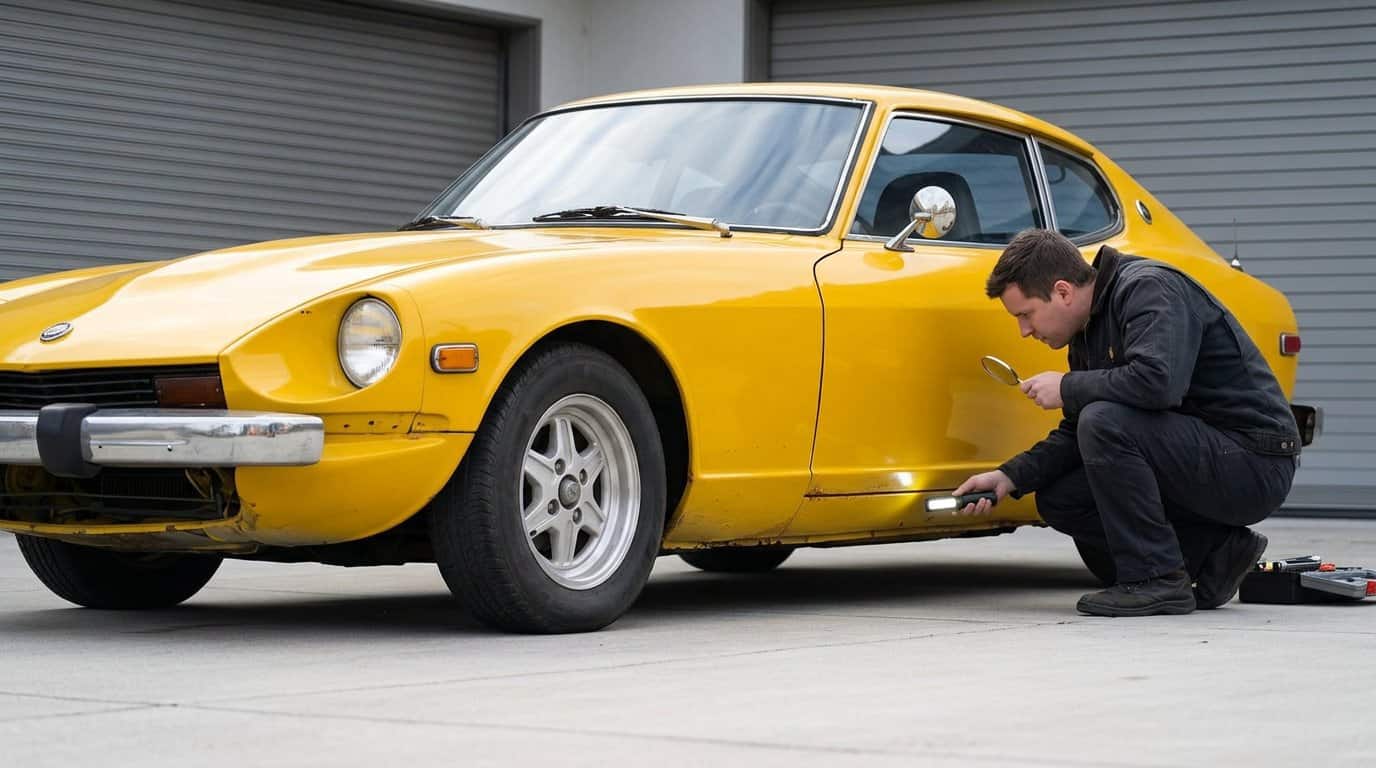
The best-looking Datsun 240Z project may be the wrong one to buy. Knowing what to look for when buying a Datsun 240Z project starts with the body: inspect the floor pans, frame rails, rocker panels, battery area, wheel arches, hatch and suspension mounting points for corrosion. A sound foundation is usually a better starting point than shiny paint hiding structural rust.
It makes sense to be drawn to an early car’s details and the promise of a rewarding build, but condition and authenticity shape the decision as much as collector appeal. This guide explains how to assess rust and repair scope, recognize early 240Z models, and use auction results as context rather than a guarantee of what any project is worth. You’ll also get a practical way to weigh the shell, missing parts and mechanical work before deciding whether a particular car deserves your time, budget and workshop space.
Key Takeaways
- Prioritize a solid body over fresh-looking paint, and weigh corrosion repairs against the time and budget you can commit.
- Use production years and Series 1 details to assess a car’s identity, then consider how originality fits your build goals.
- Compare auction results as examples of how condition and presentation shape value, not as a guaranteed price for your project.
- Assess the shell, parts, and mechanical recommissioning needs together before deciding whether the car is worth pursuing.
1. Rust-prone areas and replacement sheet metal
Start beneath the paint. The Datsun 240Z’s S30 body commonly corrodes at the floor pans, frame rails, rocker panels, battery area, wheel arches, hatch area, and suspension mounting points. Inspect the spare tire well and rear hatch seams, too, where trapped moisture can hide beneath trim or coverings.
Where does a Datsun 240Z commonly rust, and how can buyers inspect those areas? Check the floor pans, battery box, frame rails, rocker panels, wheel arches, hatch, spare tire well, and suspension mounts. Use a bright flashlight to examine both sides of seams, then look for bubbling paint, layered patches, fresh undercoating, and mismatched welds.
Give the floors special attention. Lift loose carpet and inspect the metal around the seat mounts and footwells. Soft spots, holes, or rough patch edges can signal deeper corrosion. Compare both sides of the shell, since uneven repairs may conceal previous damage.
How can you check the frame rails, floors, strut towers, and unibody for structural damage? Inspect rails and floor seams for perforation, buckling, cracked welds, or plates covering rust. Check strut tower areas and suspension mounting points for distortion or repairs that interrupt the original seams. A straightedge can reveal uneven surfaces, but it cannot replace a close inspection.
Bring a flashlight, inspection mirror, magnet, and screwdriver. Use the mirror to view hidden seams, and gently probe only exposed or already damaged areas. Don’t puncture sound metal or scrape away finishes without permission. Photograph suspect spots and compare the left and right sides.
How much does a Datsun 240Z restoration typically cost, and which parts are hardest to find? The budget depends chiefly on corrosion extent, replacement sheet metal, repair access, and how much work the project needs. Some Series 1 parts, including emblems, the choke lever, and ashtrays, are becoming difficult to obtain.
Prioritize the soundest body, not the freshest paint. Before buying, weigh the repair scope against your available time and budget. Extensive structural rust can outweigh a cosmetically attractive shell.
2. 240Z model years and Series 1 identification
Start with the production window: the Datsun 240Z was produced from 1970 through 1973, while the S30 generation continued through the end of the 1978 model year. Series I cars were built from October 1969 through January 1971. Cars built through the middle of 1971 are also described as Series 1, so the label can depend on how a seller uses the term.
Don’t identify an early car by one badge or trim piece. Compare its production information, chassis identification, body details, and surviving records as a group. Series I examples are especially sought after, but parts can be difficult to source. Early-specific items may include emblems, the choke lever, and ashtrays. A missing part matters differently to a preservation-minded buyer than to someone planning modifications.
Check the identification number stamped on the car against its data plate and title. Compare the recorded year with the claimed model year, and note any mismatch before negotiating. A registration date alone doesn’t establish the production date. If a plate looks disturbed or the stamping appears altered, pause and investigate the car’s identity. A straight panel or fresh paint is not proof of originality.
Build a simple identity record during the inspection: photograph the VIN, data plate, and key distinguishing details, then write down the seller’s claimed year and series and compare them with available paperwork. Inspect the battery tray and surrounding area for repairs that may have disturbed nearby identification or original finishes. This is not a stand-alone dating method, but it can show where closer examination is needed.
For a project, decide whether early-series authenticity is central to your goal. A later 240Z may suit a driver-focused build, while an early example with verifiable identity may better fit an originality-led restoration. Make the distinction before valuing the shell or planning parts, because model year, series, condition, and completeness all shape the project’s direction.

3. Collector interest and auction prices
Collector demand for the Datsun 240Z spans affordable projects and carefully finished cars. Top examples have crossed the six-figure price barrier, but auction results show why one headline figure cannot value every shell. A running car, an unfinished build, and a restored example are different purchases.
Recent sales illustrate that range. Treat them as individual transactions, not a price promise for the car in front of you.
Compare each result with the project you’re considering. Note the year, body condition, originality, completeness, and quality of previous work. A polished auction car may bear little resemblance to a 240Z missing trim or needing extensive mechanical attention. Collector interest can reward authenticity, while a modified build may appeal to a different buyer.
Inspect the interior closely, too. Check the seats for torn upholstery, collapsed cushions, loose seams, and secure mounting. Slide each seat through its range and make sure the tracks move without binding. Inspect the dashboard, door panels, carpets, gauges, and small trim pieces. Even a nearly complete cabin may need careful restoration.
Parts availability changes the project calculation. Some Series 1 components are becoming difficult to obtain, so missing original pieces can complicate a stock-focused restoration. Record what comes with the car, including seats, trim, gauges, and hardware. Separate parts that can be repaired from pieces that need replacement, then consider how that list fits your intended build.
Use auction prices as context, not as your budget. The strongest comparison is a car with similar condition, completeness, and restoration direction. A low purchase figure can lose its appeal if the interior and missing parts demand more time and work than your project plan allows.
4. Finding and buying a Datsun 240Z project
Set a build goal before making an offer: a driving restoration, a stock rebuild, or a modified street car. That choice shapes how you assess a running L24, included parts, and work still needed. Knowing what to look for when buying a Datsun 240Z project means matching the car’s condition to the build you actually want, rather than relying on the seller’s description.
Compare the title with the car’s VIN and make sure the paperwork supports the sale. State inspection and emissions requirements vary, so identify the rules that apply to registration and intended use in the car’s state. Keep the title, bill of sale, and repair records together. A mismatch between the title, VIN, or seller’s account deserves attention before you commit.
Inspect the L24 cold, if possible. Look for fluid leaks, damaged hoses, unusual noise, and exhaust smoke after startup. Check the oil and coolant for signs of contamination, then watch the temperature during operation. A running engine still needs assessment; condition and repair needs affect whether it suits your project plan.
Test the drivetrain only when the car can be operated safely. During a drive, note whether the transmission engages gears smoothly, the clutch slips, or the differential makes unusual noise. Check the steering for excessive play and the suspension for clunks or uneven response. Confirm the brakes stop predictably. Don’t drive a project with questionable braking or steering.
For a car that has sat for 10 to 15 years, recommissioning may involve the hydraulics, fuel tank, and oil before driving. Factor that work into your decision. Use the findings to separate immediate repairs from later upgrades.
What to look for when buying a Datsun 240Z project comes down to how its paperwork, mechanical condition, completeness, and intended use fit together. If the inspection supports the purchase but the build sequence feels unclear, use Premium Project Blueprints to organize the work into a practical plan.
Restomod Academy: Premium Project Blueprints
Restomod Academy’s Premium Project Blueprints can help turn a Datsun 240Z purchase decision into a clear restoration plan. Use them when you’ve assessed the shell, parts, and mechanical needs, and want to map the work into practical stages.
For broader guidance on combining classic character with modern upgrades, The Ultimate Restomod Guide offers a foundation for shaping your build. Restomod Consulting Services can provide project-specific direction, such as weighing originality against modifications or setting priorities for a complex restoration.
Choose support that fits your next decision, whether you’re still planning or ready to organize the work. Contact Restomod Academy to discuss your project.
Give the Project a Clear Direction
The best answer to what to look for when buying a Datsun 240Z project is a build you can define before turning a wrench. Choose the experience you want from the finished car, then let that vision guide decisions about originality, modifications, and which work comes first. A clear direction helps keep each choice connected to the car you’re creating.
Before work begins, write down your priorities and the next practical milestone. Keep notes as the project develops, so new discoveries inform the plan instead of pulling it in a dozen directions. The craft is in the details, but steady progress comes from knowing why each detail matters to your goal.
If you’d like guidance shaping your next steps, contact Restomod Academy. Bring your ideas, questions, and intended build direction, then take the next step with care. A thoughtful plan can turn an old Z into a rewarding project built around your own hands and vision.
Frequently Asked Questions
How do you verify a Datsun 240Z’s year, VIN, title, and matching engine or transmission?
Compare the VIN on the car and identification plate with the title, then check the claimed year against production details and available records. Assess engine and transmission originality separately: inspect their identification marks and compare them with documentation or ownership records. Don’t assume a drivetrain is original simply because it fits. A replacement engine or gearbox can still suit a project, but it changes the car’s originality.
What are typical prices for Datsun 240Z project cars in the United States by condition?
Auction results show a wide spread, not fixed price bands by condition. Compare each car’s condition and completeness before using a result as a reference.
What Datsun 240Z model-year differences and common problems should buyers know?
U.S.-market 1973 Datsun 240Zs used flat-top Hitachi carburetors as part of emissions-related changes, while earlier cars may have different original equipment. The later 260Z offers another comparison: its 2.6-liter engine produced 139 horsepower and 157 lb-ft of torque. Across 240Z projects, inspect for body corrosion and worn mechanical components, then confirm that the car’s year and equipment fit your restoration goals.
What paperwork and state inspection or emissions rules apply to buying and restoring a classic Datsun 240Z?
Compare the title with the car’s VIN and make sure the paperwork supports the sale. Keep the title, bill of sale, and repair records together. State inspection and emissions requirements vary, so identify the rules that apply to registration and intended use in the car’s state.
The best-looking Datsun 240Z project may be the wrong one to buy. Knowing what to look for when buying a Datsun 240Z project starts with the body: inspect the floor pans, frame rails, rocker panels, battery area, wheel arches, hatch and suspension mounting points for corrosion. A sound foundation is usually a better starting point than shiny paint hiding structural rust.
It makes sense to be drawn to an early car’s details and the promise of a rewarding build, but condition and authenticity shape the decision as much as collector appeal. This guide explains how to assess rust and repair scope, recognize early 240Z models, and use auction results as context rather than a guarantee of what any project is worth. You’ll also get a practical way to weigh the shell, missing parts and mechanical work before deciding whether a particular car deserves your time, budget and workshop space.
Key Takeaways
- Prioritize a solid body over fresh-looking paint, and weigh corrosion repairs against the time and budget you can commit.
- Use production years and Series 1 details to assess a car’s identity, then consider how originality fits your build goals.
- Compare auction results as examples of how condition and presentation shape value, not as a guaranteed price for your project.
- Assess the shell, parts, and mechanical recommissioning needs together before deciding whether the car is worth pursuing.
1. Rust-prone areas and replacement sheet metal
Start beneath the paint. The Datsun 240Z’s S30 body commonly corrodes at the floor pans, frame rails, rocker panels, battery area, wheel arches, hatch area, and suspension mounting points. Inspect the spare tire well and rear hatch seams, too, where trapped moisture can hide beneath trim or coverings.
Where does a Datsun 240Z commonly rust, and how can buyers inspect those areas? Check the floor pans, battery box, frame rails, rocker panels, wheel arches, hatch, spare tire well, and suspension mounts. Use a bright flashlight to examine both sides of seams, then look for bubbling paint, layered patches, fresh undercoating, and mismatched welds.
Give the floors special attention. Lift loose carpet and inspect the metal around the seat mounts and footwells. Soft spots, holes, or rough patch edges can signal deeper corrosion. Compare both sides of the shell, since uneven repairs may conceal previous damage.
How can you check the frame rails, floors, strut towers, and unibody for structural damage? Inspect rails and floor seams for perforation, buckling, cracked welds, or plates covering rust. Check strut tower areas and suspension mounting points for distortion or repairs that interrupt the original seams. A straightedge can reveal uneven surfaces, but it cannot replace a close inspection.
Bring a flashlight, inspection mirror, magnet, and screwdriver. Use the mirror to view hidden seams, and gently probe only exposed or already damaged areas. Don’t puncture sound metal or scrape away finishes without permission. Photograph suspect spots and compare the left and right sides.
How much does a Datsun 240Z restoration typically cost, and which parts are hardest to find? The budget depends chiefly on corrosion extent, replacement sheet metal, repair access, and how much work the project needs. Some Series 1 parts, including emblems, the choke lever, and ashtrays, are becoming difficult to obtain.
Prioritize the soundest body, not the freshest paint. Before buying, weigh the repair scope against your available time and budget. Extensive structural rust can outweigh a cosmetically attractive shell.
2. 240Z model years and Series 1 identification
Start with the production window: the Datsun 240Z was produced from 1970 through 1973, while the S30 generation continued through the end of the 1978 model year. Series I cars were built from October 1969 through January 1971. Cars built through the middle of 1971 are also described as Series 1, so the label can depend on how a seller uses the term.
Don’t identify an early car by one badge or trim piece. Compare its production information, chassis identification, body details, and surviving records as a group. Series I examples are especially sought after, but parts can be difficult to source. Early-specific items may include emblems, the choke lever, and ashtrays. A missing part matters differently to a preservation-minded buyer than to someone planning modifications.
Check the identification number stamped on the car against its data plate and title. Compare the recorded year with the claimed model year, and note any mismatch before negotiating. A registration date alone doesn’t establish the production date. If a plate looks disturbed or the stamping appears altered, pause and investigate the car’s identity. A straight panel or fresh paint is not proof of originality.
Build a simple identity record during the inspection: photograph the VIN, data plate, and key distinguishing details, then write down the seller’s claimed year and series and compare them with available paperwork. Inspect the battery tray and surrounding area for repairs that may have disturbed nearby identification or original finishes. This is not a stand-alone dating method, but it can show where closer examination is needed.
For a project, decide whether early-series authenticity is central to your goal. A later 240Z may suit a driver-focused build, while an early example with verifiable identity may better fit an originality-led restoration. Make the distinction before valuing the shell or planning parts, because model year, series, condition, and completeness all shape the project’s direction.
3. Collector interest and auction prices
Collector demand for the Datsun 240Z spans affordable projects and carefully finished cars. Top examples have crossed the six-figure price barrier, but auction results show why one headline figure cannot value every shell. A running car, an unfinished build, and a restored example are different purchases.
Recent sales illustrate that range. Treat them as individual transactions, not a price promise for the car in front of you.
Compare each result with the project you’re considering. Note the year, body condition, originality, completeness, and quality of previous work. A polished auction car may bear little resemblance to a 240Z missing trim or needing extensive mechanical attention. Collector interest can reward authenticity, while a modified build may appeal to a different buyer.
Inspect the interior closely, too. Check the seats for torn upholstery, collapsed cushions, loose seams, and secure mounting. Slide each seat through its range and make sure the tracks move without binding. Inspect the dashboard, door panels, carpets, gauges, and small trim pieces. Even a nearly complete cabin may need careful restoration.
Parts availability changes the project calculation. Some Series 1 components are becoming difficult to obtain, so missing original pieces can complicate a stock-focused restoration. Record what comes with the car, including seats, trim, gauges, and hardware. Separate parts that can be repaired from pieces that need replacement, then consider how that list fits your intended build.
Use auction prices as context, not as your budget. The strongest comparison is a car with similar condition, completeness, and restoration direction. A low purchase figure can lose its appeal if the interior and missing parts demand more time and work than your project plan allows.
4. Finding and buying a Datsun 240Z project
Set a build goal before making an offer: a driving restoration, a stock rebuild, or a modified street car. That choice shapes how you assess a running L24, included parts, and work still needed. Knowing what to look for when buying a Datsun 240Z project means matching the car’s condition to the build you actually want, rather than relying on the seller’s description.
Compare the title with the car’s VIN and make sure the paperwork supports the sale. State inspection and emissions requirements vary, so identify the rules that apply to registration and intended use in the car’s state. Keep the title, bill of sale, and repair records together. A mismatch between the title, VIN, or seller’s account deserves attention before you commit.
Inspect the L24 cold, if possible. Look for fluid leaks, damaged hoses, unusual noise, and exhaust smoke after startup. Check the oil and coolant for signs of contamination, then watch the temperature during operation. A running engine still needs assessment; condition and repair needs affect whether it suits your project plan.
Test the drivetrain only when the car can be operated safely. During a drive, note whether the transmission engages gears smoothly, the clutch slips, or the differential makes unusual noise. Check the steering for excessive play and the suspension for clunks or uneven response. Confirm the brakes stop predictably. Don’t drive a project with questionable braking or steering.
For a car that has sat for 10 to 15 years, recommissioning may involve the hydraulics, fuel tank, and oil before driving. Factor that work into your decision. Use the findings to separate immediate repairs from later upgrades.
What to look for when buying a Datsun 240Z project comes down to how its paperwork, mechanical condition, completeness, and intended use fit together. If the inspection supports the purchase but the build sequence feels unclear, use Premium Project Blueprints to organize the work into a practical plan.
Restomod Academy: Premium Project Blueprints
Restomod Academy’s Premium Project Blueprints can help turn a Datsun 240Z purchase decision into a clear restoration plan. Use them when you’ve assessed the shell, parts, and mechanical needs, and want to map the work into practical stages.
For broader guidance on combining classic character with modern upgrades, The Ultimate Restomod Guide offers a foundation for shaping your build. Restomod Consulting Services can provide project-specific direction, such as weighing originality against modifications or setting priorities for a complex restoration.
Choose support that fits your next decision, whether you’re still planning or ready to organize the work. Contact Restomod Academy to discuss your project.
Give the Project a Clear Direction
The best answer to what to look for when buying a Datsun 240Z project is a build you can define before turning a wrench. Choose the experience you want from the finished car, then let that vision guide decisions about originality, modifications, and which work comes first. A clear direction helps keep each choice connected to the car you’re creating.
Before work begins, write down your priorities and the next practical milestone. Keep notes as the project develops, so new discoveries inform the plan instead of pulling it in a dozen directions. The craft is in the details, but steady progress comes from knowing why each detail matters to your goal.
If you’d like guidance shaping your next steps, contact Restomod Academy. Bring your ideas, questions, and intended build direction, then take the next step with care. A thoughtful plan can turn an old Z into a rewarding project built around your own hands and vision.
Frequently Asked Questions
How do you verify a Datsun 240Z’s year, VIN, title, and matching engine or transmission?
Compare the VIN on the car and identification plate with the title, then check the claimed year against production details and available records. Assess engine and transmission originality separately: inspect their identification marks and compare them with documentation or ownership records. Don’t assume a drivetrain is original simply because it fits. A replacement engine or gearbox can still suit a project, but it changes the car’s originality.
What are typical prices for Datsun 240Z project cars in the United States by condition?
Auction results show a wide spread, not fixed price bands by condition. Compare each car’s condition and completeness before using a result as a reference.
What Datsun 240Z model-year differences and common problems should buyers know?
U.S.-market 1973 Datsun 240Zs used flat-top Hitachi carburetors as part of emissions-related changes, while earlier cars may have different original equipment. The later 260Z offers another comparison: its 2.6-liter engine produced 139 horsepower and 157 lb-ft of torque. Across 240Z projects, inspect for body corrosion and worn mechanical components, then confirm that the car’s year and equipment fit your restoration goals.
What paperwork and state inspection or emissions rules apply to buying and restoring a classic Datsun 240Z?
Compare the title with the car’s VIN and make sure the paperwork supports the sale. Keep the title, bill of sale, and repair records together. State inspection and emissions requirements vary, so identify the rules that apply to registration and intended use in the car’s state.