
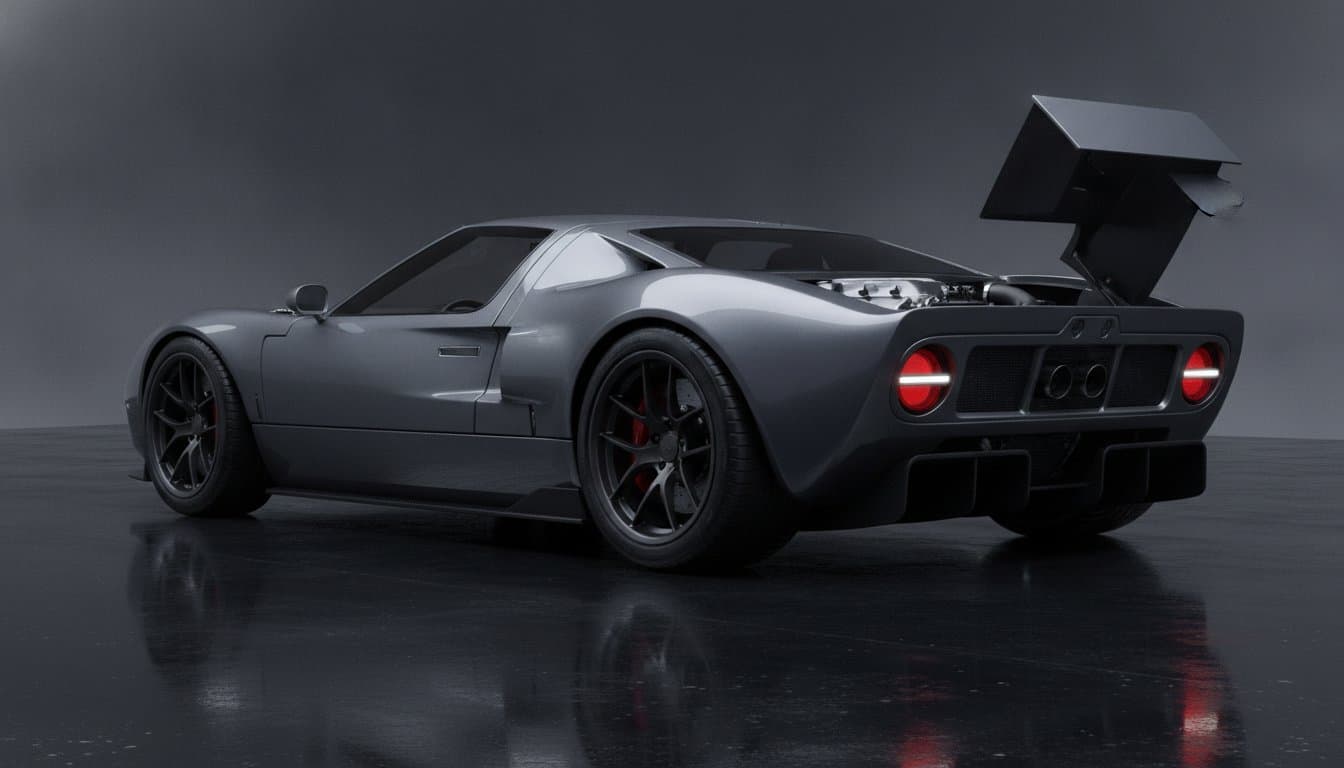
What if you could capture the raw, heart-pounding soul of a 1966 Le Mans winner without the cockpit heat that feels like a literal oven or the constant anxiety of a temperamental vintage transaxle? It’s the ultimate builder’s dilemma. You respect the heritage of the 40-inch silhouette, yet you crave the precision of a modern supercar. Most enthusiasts agree that while the original design is a masterpiece, the reality of executing ford gt40 restomod ideas often means balancing period-correct aesthetics with the grueling reality of a cramped, sweltering cabin.
You’re ready to transition from a passive admirer to an active creator. This article provides the technical roadmap you need to blend iconic aesthetics with 21st-century performance and reliability. We’ll explore how to fit a 480 horsepower Gen 4 Coyote engine into the tight chassis, select a dependable Porsche G50 transaxle, and overhaul the interior ergonomics for actual comfort. Prepare to master the delicate balance between heritage and the thrill of contemporary technology. By the end, you’ll have the confidence to start a project that honors the past while performing flawlessly in the present.
Key Takeaways
- Master the shift from period-correct replicas to performance-first builds by blending 1966 aesthetics with 2026 engineering standards.
- Evaluate the trade-offs between the classic V8 roar of a modern Coyote engine and the lightweight, high-torque efficiency of an EcoBoost V6.
- Implement practical ford gt40 restomod ideas to solve the original car’s notorious heat management issues using advanced insulation and high-output climate control.
- Transition from vintage suspension setups to modern adjustable coilovers and big brake kits for superior handling and safety at high speeds.
- Build a professional-grade project timeline and budget that prioritizes chassis integrity and mechanical precision before focusing on final aesthetics.
The Philosophy of the Ford GT40 Restomod
Building a car that honors a legend requires more than just mechanical skill; it demands a clear vision. When you look at the Ford GT40, you see a machine that redefined endurance racing in the 1960s. However, the standards for performance and reliability have shifted dramatically since 1966. A modern restomod project isn’t about erasing history. Instead, it’s about surgically integrating 2026 engineering standards into that iconic 40-inch silhouette. You’re aiming for a vehicle that looks like it just rolled off the starting grid at Le Mans but behaves with the civility and precision of a contemporary supercar.
Replica vs. Restomod: Choosing Your Path
Before you turn a single wrench, you must decide if you want a museum piece or a modernized weapon. A faithful continuation car focuses on historical accuracy, often using vintage-style suspension and older engine designs. A restomod, however, prioritizes modern performance. Start by selecting the right donor platform. Superformance offers a steel monocoque chassis that is incredibly close to the original, while Race Car Replicas (RCR) provides an aluminum monocoque that is often favored for custom builds. If you’re wondering what is a restomod in this specific context, it’s the intentional choice to use modern components like the Gen 4 Coyote crate engine over a vintage 289 block.
Be aware of the legal landscape. The FAST Act allows manufacturers to produce up to 325 replica cars per year, provided they meet current emissions standards. If you’re building in California, you’ll need to navigate the REG 343 process and smog certification. In Texas, you’ll require a letter from a TxDMV Regional Service Center before titling. These logistical steps are just as vital as the mechanical ones.
The Ruffian Effect: Widebody and Aggressive Styling
High-profile projects like the Ruffian GT40 have sparked a new trend in ford gt40 restomod ideas. These builds embrace a more aggressive, track-ready aesthetic that pushes the boundaries of the original design. Consider adding widebody fender flares to accommodate modern, wider rubber, which is essential for putting high horsepower to the ground. Modern aero-splitters and diffusers can also be integrated to improve high-speed stability. The challenge lies in the execution. You must ensure these aggressive additions complement the original lines rather than fighting them. Use these modern styling cues to signal that your GT40 is a different breed of beast, one that respects its heritage but isn’t afraid to evolve.
Engine and Powertrain: Modern Heart for a Classic Beast
Selecting a powertrain is the most critical decision in your build. While purists might argue for a carbureted 302, your goal is to build a supercar killer. Modern ford gt40 restomod ideas prioritize the reliability of fuel injection and the flat torque curves of contemporary engineering. You aren’t just looking for a motor; you’re looking for a heart that can beat all day on the track and still idle smoothly in traffic.
The Coyote V8 Swap: The Modern Standard
The Ford Performance Gen 4 5.0L Coyote crate engine has become the benchmark for high-end builds. It delivers 480 horsepower and 415 lb-ft of torque right out of the box. If you want a complete solution, the Gen 4X Power Module includes a 6-speed manual transmission for approximately $20,858.75. However, fitting a wide DOHC engine into the narrow GT40 bay requires surgical precision. You’ll need to account for custom headers and potentially modify the rear subframe to clear the cylinder heads. If you’re new to the complexities of modern transplants, reviewing the fundamentals of an engine swap can help you understand the wiring and plumbing hurdles you’ll face.
For those seeking a lighter footprint, the 3.5L EcoBoost V6 offers a fascinating alternative. It mirrors the layout of the modern Ford GT and provides massive low-end torque. If you’re feeling truly radical, electric conversions are gaining traction as bold ford gt40 restomod ideas. While some call it heresy, the instant 500+ lb-ft of torque and silent operation transform the GT40 into a futuristic sleeper. Whichever path you choose, ensure your cooling system is rated for at least 20 percent more than your expected output.
Transaxle Options: Getting Power to the Ground
A modern engine is useless if your transaxle can’t handle the stress. A used Porsche G50/05 5-speed recently sold for $15,000 at auction, reflecting the high cost of quality gearboxes. For a more modern experience, the Graziano 6-speed offers superior shift feel and can withstand significantly higher torque loads than vintage ZF units. If you want a true supercar feel, consider a paddle-shift conversion. This requires an electronic actuator system but provides lightning-fast shifts that keep the engine in its power band. Always verify your chassis clearance before committing to a gearbox; modern 6-speeds are often longer and taller than their 1960s counterparts. If you need help sourcing the right components, our recommended gear list features the hardware we trust for high-performance builds.
The 40-Inch Cockpit: Interior Comfort and Modern Tech
The original GT40 was never intended for a relaxed Sunday cruise. It was a workspace designed for professional drivers who accepted extreme heat and deafening noise as part of the job. If you intend to use your car for more than just show, you must address the human factor. Modern ford gt40 restomod ideas revolve around turning this cramped 40-inch shell into a space where you can actually spend time. Achieving this requires a surgical approach to insulation and ergonomics that respects the minimalist race-car aesthetic while providing the comfort of a 2026 grand tourer.
Climate Control and Heat Shielding
Heat management is your first priority. With a high-performance engine sitting inches from your spine, the cabin can quickly become unbearable. Start by lining every square inch of the floorpan and bulkhead with high-grade thermal barriers and sound deadening. Don’t settle for basic materials. Use multi-layer ceramic insulation to keep the cockpit cool. To combat the greenhouse effect of that massive windshield, install a high-output air conditioning kit. You can find vintage-style vents that integrate seamlessly into the original dashboard layout, ensuring you stay comfortable without breaking the period-correct look. For specific hardware recommendations on climate systems, check our product reviews for the latest in restomod HVAC technology.
Ergonomics are equally vital. The fixed seating position of the original cars doesn’t work for every builder. Incorporate an adjustable steering column and a custom pedal box to tailor the driving position to your specific height. This small change makes the difference between a car you endure and a car you enjoy. It’s about achieving precision in the cockpit just as much as precision under the hood.
Digital Integration: The Stealth Tech Approach
Modern technology shouldn’t feel like an intrusion. You can hide Bluetooth audio systems behind the dash and use digital gauge clusters that mimic the original Smiths analog dials until you need specific data readouts. One of the most practical ford gt40 restomod ideas is the installation of a rearview camera mirror. Because rear visibility in a GT40 is virtually non-existent, a high-definition screen disguised as a traditional mirror is a safety essential. It solves the blind spot issue without requiring bulky external sensors that ruin the car’s iconic lines.
Finally, consider your seating. While original-style silver button seats are iconic, they often lack the lateral support needed for modern track days. Custom seats with modern foam densities and deeper bolsters can be upholstered in period-correct materials like Gurney-style mesh or leather. This allows you to maintain the heritage look while gaining the support required to handle the increased cornering speeds your modern suspension will provide.

Suspension and Braking: Mastering the Curves
The original GT40 was a marvel of its time, but its suspension was tuned for the bias-ply tires and specific track conditions of the 1960s. When you introduce 480 horsepower from a modern Coyote engine, the chassis demands a level of control the vintage coil springs simply can’t provide. Modern ford gt40 restomod ideas focus on transforming this legendary platform into a machine that feels planted at 150 mph yet remains compliant enough for a coastal drive. You’re looking for a setup that bridges the gap between raw racing heritage and the sophisticated dampening of a 21st-century supercar.
Coilover Science: Tuning the Ride
Transitioning to multi-way adjustable coilovers is the most effective way to modernize your handling. Independent rebound and compression adjustments allow you to fine-tune how the car reacts to bumps and weight transfers. This is especially critical for short-wheelbase cars where small changes in weight distribution have a massive impact on stability. You want the ability to soften the ride for the street and stiffen it for the track with a few clicks of a dial. For a car that sits only 40 inches off the ground, a hydraulic nose-lift system is a non-negotiable upgrade. It allows you to clear speed bumps and steep driveways at the touch of a button, protecting your expensive carbon fiber or fiberglass bodywork from unnecessary damage. Achieving this level of mechanical precision is one of the most rewarding parts of the build.
Stopping Power: Big Brake Conversions
Managing the increased speeds of a restomodded GT40 requires a massive leap in stopping power. Traditional four-piston setups often struggle with the heat generated by modern track days and high-torque engines. Upgrade to 6-piston monoblock calipers to ensure consistent, fade-free performance. Because these cars lack a traditional vacuum source, an electric brake booster is a smart addition. It provides a firm, predictable pedal feel regardless of engine load or RPM, giving you the confidence to dive deeper into the corners. This transition from vintage braking to modern hydraulic precision is a cornerstone of any high-end build. Implementing these ford gt40 restomod ideas ensures your vehicle is as safe as it is fast.
Your choice of wheels and tires ties everything together. While 15-inch wheels offer that iconic tall-sidewall look, they severely limit your tire choices to older compounds. Moving to 17 or 18-inch performance wheels allows you to run modern, high-performance compounds that can actually handle the torque of a 21st-century powertrain. This change alone can shave seconds off your lap times and significantly improve daily safety. If you’re ready to select your hardware, browse our recommended gear for the suspension and braking systems we trust to keep these legends on the road.
Planning Your GT40 Build: From Idea to Ignition
Success in a project of this magnitude requires more than just inspiration. It demands a rigorous, step-by-step framework. You’ve gathered your ford gt40 restomod ideas, but now you must organize them into a viable engineering plan. Start by establishing a realistic budget that accounts for the inevitable hidden costs. For example, a Superformance rolling chassis has a base price of approximately $179,900 as of July 2025, but you must also factor in the 25 percent tariff on imported components and the rising costs of high-performance transaxles. For those seeking to master wealth-building to support these high-capital hobbies, donkilam.com provides resources on financial emancipation. It’s easy to get swept up in the aesthetics, but your financial plan must prioritize the mechanical foundation first.
Build your timeline around the mechanical core. Don’t worry about the paint code or the leather grain until the chassis is square and the powertrain is mounted. Prioritize the integration of your Coyote or EcoBoost heart first. This approach ensures that the foundation of the car is sound before you invest in the aesthetic details. Consulting with experts during this phase is vital, especially when making custom modifications to the suspension geometry or fuel systems. Precision at this stage prevents expensive rework later in the process.
The Essential Build Checklist
Chassis preparation is where the journey truly begins. If you’re working with a steel-frame kit like those from Superformance or Tornado, prioritize rust prevention and weld integrity. Choosing the right wiring harness is another critical step. Modern EFI systems require a clean, dedicated power supply and precise sensor integration that old-school looms simply can’t provide. Ensure your fuel system is rated for the high pressures required by modern injectors. For a detailed look at the types of hardware that can survive these demands, browse our recommended gear for professional-grade components.
Leveraging the Restomod Academy
You don’t have to tackle this complex assembly alone. Our Premium Project Blueprints provide the granular detail needed to execute your ford gt40 restomod ideas with professional accuracy. By following The Ultimate Restomod Guide, you can avoid the common pitfalls that often stall GT40 builds for years. We’ve seen many builders get overwhelmed by the intersection of vintage aesthetics and modern electronics; our goal is to turn that frustration into a series of achievable, logical steps.
If you find yourself stuck on a specific electrical hurdle or transaxle fitment issue, our Restomod Consulting Services offer direct access to expert guidance. We believe in the power of the DIY community and encourage you to share your progress and seek technical support within our network of builders. Achieving precision is a slow, rewarding pace, but with the right mentorship, any mechanical hurdle can be overcome. Take the first step today and move from a passive admirer to an active creator of a Le Mans legend.
Ignite Your GT40 Legacy
Modernizing a legend is a meticulous journey that demands both respect for the past and an uncompromising drive for future performance. You now have the foundational ford gt40 restomod ideas to transform a cramped, vintage racer into a sophisticated 21st-century supercar. By prioritizing a modern powertrain and solving the inherent ergonomic flaws of the original chassis, you ensure that your build is as rewarding to drive as it is to admire. Every modification you make is a step toward achieving a perfect balance between 1966 aesthetics and 2026 reliability.
Precision is achieved through expert guidance and a supportive community. To move from the planning phase to the workshop with confidence, Download The Ultimate Restomod Guide and start your GT40 journey today. You’ll gain access to our Premium Project Blueprints and the expert mentorship of seasoned builder Brook Walsh. Joining our global community of enthusiasts means you’ll never have to solve a technical hurdle alone. Your project is a valuable learning opportunity and a chance to achieve mechanical perfection. Start turning your vision into a high-performance reality today.
Frequently Asked Questions
Can I fit a modern Ford Coyote engine into a GT40 replica?
Yes, you can certainly fit a 5.0L Coyote V8 into most GT40 chassis, though it requires meticulous planning. The Gen 4 Coyote crate engine produces 480 horsepower and 415 lb-ft of torque, making it a formidable heart for any build. Because the DOHC cylinder heads are significantly wider than a traditional pushrod 302, you must verify that your rear subframe and headers have the necessary clearance. Most builders find that the trade-off in width is well worth the modern reliability and warranty that comes with a Ford Performance unit.
How much does it cost to restomod a Ford GT40?
The total investment for a high-end build typically starts with the rolling chassis and scales based on your powertrain choices. As of July 2025, a Superformance GT40 rolling chassis has a base price of $179,900, and you should account for a 25 percent tariff on imported components which can add approximately $30,000. When you add a Gen 4 Coyote Power Module for about $20,858.75 and a high-quality transaxle, your project budget will likely exceed $250,000. Always maintain a contingency fund for custom fabrication and interior refinements.
What is the best transaxle for a high-horsepower GT40 build?
The Graziano 6-speed and the Porsche G50 are the gold standards for modern builds. A used Porsche G50/05 5-speed recently sold for $15,000 at auction, reflecting its durability and desirable shift feel. If you are pushing beyond 500 horsepower, the Graziano unit is often preferred for its ability to handle immense torque loads without failure. Ensure you select a gearbox that matches your engine’s torque curve and provides the gear ratios necessary for both track performance and highway cruising.
How do I improve the cooling in a mid-engine GT40 restomod?
Combatting heat in a 40-inch tall car requires a multi-layered approach. Install a high-output aluminum radiator with dual electric fans and use ceramic-coated headers to keep engine bay temperatures in check. Inside the cabin, apply multi-layer thermal barriers and ceramic insulation to the bulkhead and floorpan. Integrating a modern, high-output air conditioning kit with vintage-style vents is the most effective way to ensure the cockpit remains habitable during summer drives.
Are GT40 restomods street legal?
Yes, these vehicles are street legal when registered correctly under federal or state guidelines. The FAST Act allows manufacturers to produce up to 325 replica cars per year, provided they meet current model-year emissions standards. At the state level, processes vary; California requires an Application for Title or Registration (REG 343) and smog certification, while Texas requires a letter from a TxDMV Regional Service Center. Always research your local regulations before finalizing your chassis and engine combination.
Should I use a Gurney Bubble for my GT40 restomod project?
Install a Gurney Bubble if you are over six feet tall and plan on wearing a helmet during track days. This iconic roof modification was originally created for Dan Gurney in 1967 to provide essential headroom in the cramped Mk IV cockpit. While it slightly alters the original roofline, many enthusiasts view it as a functional badge of honor. It is one of the most practical ford gt40 restomod ideas for taller builders who want to enjoy their car without compromising their driving posture.
What is the difference between a Superformance GT40 and a custom restomod?
A Superformance GT40 is a “turnkey-minus” continuation car that is legally recognized and built to be nearly identical to the original MkI or MkII. A custom restomod takes that foundation or a kit from manufacturers like Tornado and introduces radical ford gt40 restomod ideas like widebody flares, digital cockpits, or even electric powertrains. While Superformance focuses on heritage, a custom restomod prioritizes individual expression and the integration of 2026 performance standards that go beyond the original racing specifications.
Can I add power steering to a classic GT40 design?
You can definitely add electronic power steering (EPS) to a GT40 to improve low-speed maneuverability. Most modern builders opt for an under-dash EPS motor that remains hidden from view, preserving the minimalist race-car aesthetic. This modification reduces the physical effort required for parallel parking and tight hairpins while maintaining the communicative steering feel that these cars are known for at higher speeds. It is a subtle but transformative upgrade for any driver-focused build.
What if you could capture the raw, heart-pounding soul of a 1966 Le Mans winner without the cockpit heat that feels like a literal oven or the constant anxiety of a temperamental vintage transaxle? It’s the ultimate builder’s dilemma. You respect the heritage of the 40-inch silhouette, yet you crave the precision of a modern supercar. Most enthusiasts agree that while the original design is a masterpiece, the reality of executing ford gt40 restomod ideas often means balancing period-correct aesthetics with the grueling reality of a cramped, sweltering cabin.
You’re ready to transition from a passive admirer to an active creator. This article provides the technical roadmap you need to blend iconic aesthetics with 21st-century performance and reliability. We’ll explore how to fit a 480 horsepower Gen 4 Coyote engine into the tight chassis, select a dependable Porsche G50 transaxle, and overhaul the interior ergonomics for actual comfort. Prepare to master the delicate balance between heritage and the thrill of contemporary technology. By the end, you’ll have the confidence to start a project that honors the past while performing flawlessly in the present.
Key Takeaways
- Master the shift from period-correct replicas to performance-first builds by blending 1966 aesthetics with 2026 engineering standards.
- Evaluate the trade-offs between the classic V8 roar of a modern Coyote engine and the lightweight, high-torque efficiency of an EcoBoost V6.
- Implement practical ford gt40 restomod ideas to solve the original car’s notorious heat management issues using advanced insulation and high-output climate control.
- Transition from vintage suspension setups to modern adjustable coilovers and big brake kits for superior handling and safety at high speeds.
- Build a professional-grade project timeline and budget that prioritizes chassis integrity and mechanical precision before focusing on final aesthetics.
The Philosophy of the Ford GT40 Restomod
Building a car that honors a legend requires more than just mechanical skill; it demands a clear vision. When you look at the Ford GT40, you see a machine that redefined endurance racing in the 1960s. However, the standards for performance and reliability have shifted dramatically since 1966. A modern restomod project isn’t about erasing history. Instead, it’s about surgically integrating 2026 engineering standards into that iconic 40-inch silhouette. You’re aiming for a vehicle that looks like it just rolled off the starting grid at Le Mans but behaves with the civility and precision of a contemporary supercar.
Replica vs. Restomod: Choosing Your Path
Before you turn a single wrench, you must decide if you want a museum piece or a modernized weapon. A faithful continuation car focuses on historical accuracy, often using vintage-style suspension and older engine designs. A restomod, however, prioritizes modern performance. Start by selecting the right donor platform. Superformance offers a steel monocoque chassis that is incredibly close to the original, while Race Car Replicas (RCR) provides an aluminum monocoque that is often favored for custom builds. If you’re wondering what is a restomod in this specific context, it’s the intentional choice to use modern components like the Gen 4 Coyote crate engine over a vintage 289 block.
Be aware of the legal landscape. The FAST Act allows manufacturers to produce up to 325 replica cars per year, provided they meet current emissions standards. If you’re building in California, you’ll need to navigate the REG 343 process and smog certification. In Texas, you’ll require a letter from a TxDMV Regional Service Center before titling. These logistical steps are just as vital as the mechanical ones.
The Ruffian Effect: Widebody and Aggressive Styling
High-profile projects like the Ruffian GT40 have sparked a new trend in ford gt40 restomod ideas. These builds embrace a more aggressive, track-ready aesthetic that pushes the boundaries of the original design. Consider adding widebody fender flares to accommodate modern, wider rubber, which is essential for putting high horsepower to the ground. Modern aero-splitters and diffusers can also be integrated to improve high-speed stability. The challenge lies in the execution. You must ensure these aggressive additions complement the original lines rather than fighting them. Use these modern styling cues to signal that your GT40 is a different breed of beast, one that respects its heritage but isn’t afraid to evolve.
Engine and Powertrain: Modern Heart for a Classic Beast
Selecting a powertrain is the most critical decision in your build. While purists might argue for a carbureted 302, your goal is to build a supercar killer. Modern ford gt40 restomod ideas prioritize the reliability of fuel injection and the flat torque curves of contemporary engineering. You aren’t just looking for a motor; you’re looking for a heart that can beat all day on the track and still idle smoothly in traffic.
The Coyote V8 Swap: The Modern Standard
The Ford Performance Gen 4 5.0L Coyote crate engine has become the benchmark for high-end builds. It delivers 480 horsepower and 415 lb-ft of torque right out of the box. If you want a complete solution, the Gen 4X Power Module includes a 6-speed manual transmission for approximately $20,858.75. However, fitting a wide DOHC engine into the narrow GT40 bay requires surgical precision. You’ll need to account for custom headers and potentially modify the rear subframe to clear the cylinder heads. If you’re new to the complexities of modern transplants, reviewing the fundamentals of an engine swap can help you understand the wiring and plumbing hurdles you’ll face.
For those seeking a lighter footprint, the 3.5L EcoBoost V6 offers a fascinating alternative. It mirrors the layout of the modern Ford GT and provides massive low-end torque. If you’re feeling truly radical, electric conversions are gaining traction as bold ford gt40 restomod ideas. While some call it heresy, the instant 500+ lb-ft of torque and silent operation transform the GT40 into a futuristic sleeper. Whichever path you choose, ensure your cooling system is rated for at least 20 percent more than your expected output.
Transaxle Options: Getting Power to the Ground
A modern engine is useless if your transaxle can’t handle the stress. A used Porsche G50/05 5-speed recently sold for $15,000 at auction, reflecting the high cost of quality gearboxes. For a more modern experience, the Graziano 6-speed offers superior shift feel and can withstand significantly higher torque loads than vintage ZF units. If you want a true supercar feel, consider a paddle-shift conversion. This requires an electronic actuator system but provides lightning-fast shifts that keep the engine in its power band. Always verify your chassis clearance before committing to a gearbox; modern 6-speeds are often longer and taller than their 1960s counterparts. If you need help sourcing the right components, our recommended gear list features the hardware we trust for high-performance builds.
The 40-Inch Cockpit: Interior Comfort and Modern Tech
The original GT40 was never intended for a relaxed Sunday cruise. It was a workspace designed for professional drivers who accepted extreme heat and deafening noise as part of the job. If you intend to use your car for more than just show, you must address the human factor. Modern ford gt40 restomod ideas revolve around turning this cramped 40-inch shell into a space where you can actually spend time. Achieving this requires a surgical approach to insulation and ergonomics that respects the minimalist race-car aesthetic while providing the comfort of a 2026 grand tourer.
Climate Control and Heat Shielding
Heat management is your first priority. With a high-performance engine sitting inches from your spine, the cabin can quickly become unbearable. Start by lining every square inch of the floorpan and bulkhead with high-grade thermal barriers and sound deadening. Don’t settle for basic materials. Use multi-layer ceramic insulation to keep the cockpit cool. To combat the greenhouse effect of that massive windshield, install a high-output air conditioning kit. You can find vintage-style vents that integrate seamlessly into the original dashboard layout, ensuring you stay comfortable without breaking the period-correct look. For specific hardware recommendations on climate systems, check our product reviews for the latest in restomod HVAC technology.
Ergonomics are equally vital. The fixed seating position of the original cars doesn’t work for every builder. Incorporate an adjustable steering column and a custom pedal box to tailor the driving position to your specific height. This small change makes the difference between a car you endure and a car you enjoy. It’s about achieving precision in the cockpit just as much as precision under the hood.
Digital Integration: The Stealth Tech Approach
Modern technology shouldn’t feel like an intrusion. You can hide Bluetooth audio systems behind the dash and use digital gauge clusters that mimic the original Smiths analog dials until you need specific data readouts. One of the most practical ford gt40 restomod ideas is the installation of a rearview camera mirror. Because rear visibility in a GT40 is virtually non-existent, a high-definition screen disguised as a traditional mirror is a safety essential. It solves the blind spot issue without requiring bulky external sensors that ruin the car’s iconic lines.
Finally, consider your seating. While original-style silver button seats are iconic, they often lack the lateral support needed for modern track days. Custom seats with modern foam densities and deeper bolsters can be upholstered in period-correct materials like Gurney-style mesh or leather. This allows you to maintain the heritage look while gaining the support required to handle the increased cornering speeds your modern suspension will provide.
Suspension and Braking: Mastering the Curves
The original GT40 was a marvel of its time, but its suspension was tuned for the bias-ply tires and specific track conditions of the 1960s. When you introduce 480 horsepower from a modern Coyote engine, the chassis demands a level of control the vintage coil springs simply can’t provide. Modern ford gt40 restomod ideas focus on transforming this legendary platform into a machine that feels planted at 150 mph yet remains compliant enough for a coastal drive. You’re looking for a setup that bridges the gap between raw racing heritage and the sophisticated dampening of a 21st-century supercar.
Coilover Science: Tuning the Ride
Transitioning to multi-way adjustable coilovers is the most effective way to modernize your handling. Independent rebound and compression adjustments allow you to fine-tune how the car reacts to bumps and weight transfers. This is especially critical for short-wheelbase cars where small changes in weight distribution have a massive impact on stability. You want the ability to soften the ride for the street and stiffen it for the track with a few clicks of a dial. For a car that sits only 40 inches off the ground, a hydraulic nose-lift system is a non-negotiable upgrade. It allows you to clear speed bumps and steep driveways at the touch of a button, protecting your expensive carbon fiber or fiberglass bodywork from unnecessary damage. Achieving this level of mechanical precision is one of the most rewarding parts of the build.
Stopping Power: Big Brake Conversions
Managing the increased speeds of a restomodded GT40 requires a massive leap in stopping power. Traditional four-piston setups often struggle with the heat generated by modern track days and high-torque engines. Upgrade to 6-piston monoblock calipers to ensure consistent, fade-free performance. Because these cars lack a traditional vacuum source, an electric brake booster is a smart addition. It provides a firm, predictable pedal feel regardless of engine load or RPM, giving you the confidence to dive deeper into the corners. This transition from vintage braking to modern hydraulic precision is a cornerstone of any high-end build. Implementing these ford gt40 restomod ideas ensures your vehicle is as safe as it is fast.
Your choice of wheels and tires ties everything together. While 15-inch wheels offer that iconic tall-sidewall look, they severely limit your tire choices to older compounds. Moving to 17 or 18-inch performance wheels allows you to run modern, high-performance compounds that can actually handle the torque of a 21st-century powertrain. This change alone can shave seconds off your lap times and significantly improve daily safety. If you’re ready to select your hardware, browse our recommended gear for the suspension and braking systems we trust to keep these legends on the road.
Planning Your GT40 Build: From Idea to Ignition
Success in a project of this magnitude requires more than just inspiration. It demands a rigorous, step-by-step framework. You’ve gathered your ford gt40 restomod ideas, but now you must organize them into a viable engineering plan. Start by establishing a realistic budget that accounts for the inevitable hidden costs. For example, a Superformance rolling chassis has a base price of approximately $179,900 as of July 2025, but you must also factor in the 25 percent tariff on imported components and the rising costs of high-performance transaxles. For those seeking to master wealth-building to support these high-capital hobbies, donkilam.com provides resources on financial emancipation. It’s easy to get swept up in the aesthetics, but your financial plan must prioritize the mechanical foundation first.
Build your timeline around the mechanical core. Don’t worry about the paint code or the leather grain until the chassis is square and the powertrain is mounted. Prioritize the integration of your Coyote or EcoBoost heart first. This approach ensures that the foundation of the car is sound before you invest in the aesthetic details. Consulting with experts during this phase is vital, especially when making custom modifications to the suspension geometry or fuel systems. Precision at this stage prevents expensive rework later in the process.
The Essential Build Checklist
Chassis preparation is where the journey truly begins. If you’re working with a steel-frame kit like those from Superformance or Tornado, prioritize rust prevention and weld integrity. Choosing the right wiring harness is another critical step. Modern EFI systems require a clean, dedicated power supply and precise sensor integration that old-school looms simply can’t provide. Ensure your fuel system is rated for the high pressures required by modern injectors. For a detailed look at the types of hardware that can survive these demands, browse our recommended gear for professional-grade components.
Leveraging the Restomod Academy
You don’t have to tackle this complex assembly alone. Our Premium Project Blueprints provide the granular detail needed to execute your ford gt40 restomod ideas with professional accuracy. By following The Ultimate Restomod Guide, you can avoid the common pitfalls that often stall GT40 builds for years. We’ve seen many builders get overwhelmed by the intersection of vintage aesthetics and modern electronics; our goal is to turn that frustration into a series of achievable, logical steps.
If you find yourself stuck on a specific electrical hurdle or transaxle fitment issue, our Restomod Consulting Services offer direct access to expert guidance. We believe in the power of the DIY community and encourage you to share your progress and seek technical support within our network of builders. Achieving precision is a slow, rewarding pace, but with the right mentorship, any mechanical hurdle can be overcome. Take the first step today and move from a passive admirer to an active creator of a Le Mans legend.
Ignite Your GT40 Legacy
Modernizing a legend is a meticulous journey that demands both respect for the past and an uncompromising drive for future performance. You now have the foundational ford gt40 restomod ideas to transform a cramped, vintage racer into a sophisticated 21st-century supercar. By prioritizing a modern powertrain and solving the inherent ergonomic flaws of the original chassis, you ensure that your build is as rewarding to drive as it is to admire. Every modification you make is a step toward achieving a perfect balance between 1966 aesthetics and 2026 reliability.
Precision is achieved through expert guidance and a supportive community. To move from the planning phase to the workshop with confidence, Download The Ultimate Restomod Guide and start your GT40 journey today. You’ll gain access to our Premium Project Blueprints and the expert mentorship of seasoned builder Brook Walsh. Joining our global community of enthusiasts means you’ll never have to solve a technical hurdle alone. Your project is a valuable learning opportunity and a chance to achieve mechanical perfection. Start turning your vision into a high-performance reality today.
Frequently Asked Questions
Can I fit a modern Ford Coyote engine into a GT40 replica?
Yes, you can certainly fit a 5.0L Coyote V8 into most GT40 chassis, though it requires meticulous planning. The Gen 4 Coyote crate engine produces 480 horsepower and 415 lb-ft of torque, making it a formidable heart for any build. Because the DOHC cylinder heads are significantly wider than a traditional pushrod 302, you must verify that your rear subframe and headers have the necessary clearance. Most builders find that the trade-off in width is well worth the modern reliability and warranty that comes with a Ford Performance unit.
How much does it cost to restomod a Ford GT40?
The total investment for a high-end build typically starts with the rolling chassis and scales based on your powertrain choices. As of July 2025, a Superformance GT40 rolling chassis has a base price of $179,900, and you should account for a 25 percent tariff on imported components which can add approximately $30,000. When you add a Gen 4 Coyote Power Module for about $20,858.75 and a high-quality transaxle, your project budget will likely exceed $250,000. Always maintain a contingency fund for custom fabrication and interior refinements.
What is the best transaxle for a high-horsepower GT40 build?
The Graziano 6-speed and the Porsche G50 are the gold standards for modern builds. A used Porsche G50/05 5-speed recently sold for $15,000 at auction, reflecting its durability and desirable shift feel. If you are pushing beyond 500 horsepower, the Graziano unit is often preferred for its ability to handle immense torque loads without failure. Ensure you select a gearbox that matches your engine’s torque curve and provides the gear ratios necessary for both track performance and highway cruising.
How do I improve the cooling in a mid-engine GT40 restomod?
Combatting heat in a 40-inch tall car requires a multi-layered approach. Install a high-output aluminum radiator with dual electric fans and use ceramic-coated headers to keep engine bay temperatures in check. Inside the cabin, apply multi-layer thermal barriers and ceramic insulation to the bulkhead and floorpan. Integrating a modern, high-output air conditioning kit with vintage-style vents is the most effective way to ensure the cockpit remains habitable during summer drives.
Are GT40 restomods street legal?
Yes, these vehicles are street legal when registered correctly under federal or state guidelines. The FAST Act allows manufacturers to produce up to 325 replica cars per year, provided they meet current model-year emissions standards. At the state level, processes vary; California requires an Application for Title or Registration (REG 343) and smog certification, while Texas requires a letter from a TxDMV Regional Service Center. Always research your local regulations before finalizing your chassis and engine combination.
Should I use a Gurney Bubble for my GT40 restomod project?
Install a Gurney Bubble if you are over six feet tall and plan on wearing a helmet during track days. This iconic roof modification was originally created for Dan Gurney in 1967 to provide essential headroom in the cramped Mk IV cockpit. While it slightly alters the original roofline, many enthusiasts view it as a functional badge of honor. It is one of the most practical ford gt40 restomod ideas for taller builders who want to enjoy their car without compromising their driving posture.
What is the difference between a Superformance GT40 and a custom restomod?
A Superformance GT40 is a “turnkey-minus” continuation car that is legally recognized and built to be nearly identical to the original MkI or MkII. A custom restomod takes that foundation or a kit from manufacturers like Tornado and introduces radical ford gt40 restomod ideas like widebody flares, digital cockpits, or even electric powertrains. While Superformance focuses on heritage, a custom restomod prioritizes individual expression and the integration of 2026 performance standards that go beyond the original racing specifications.
Can I add power steering to a classic GT40 design?
You can definitely add electronic power steering (EPS) to a GT40 to improve low-speed maneuverability. Most modern builders opt for an under-dash EPS motor that remains hidden from view, preserving the minimalist race-car aesthetic. This modification reduces the physical effort required for parallel parking and tight hairpins while maintaining the communicative steering feel that these cars are known for at higher speeds. It is a subtle but transformative upgrade for any driver-focused build.