
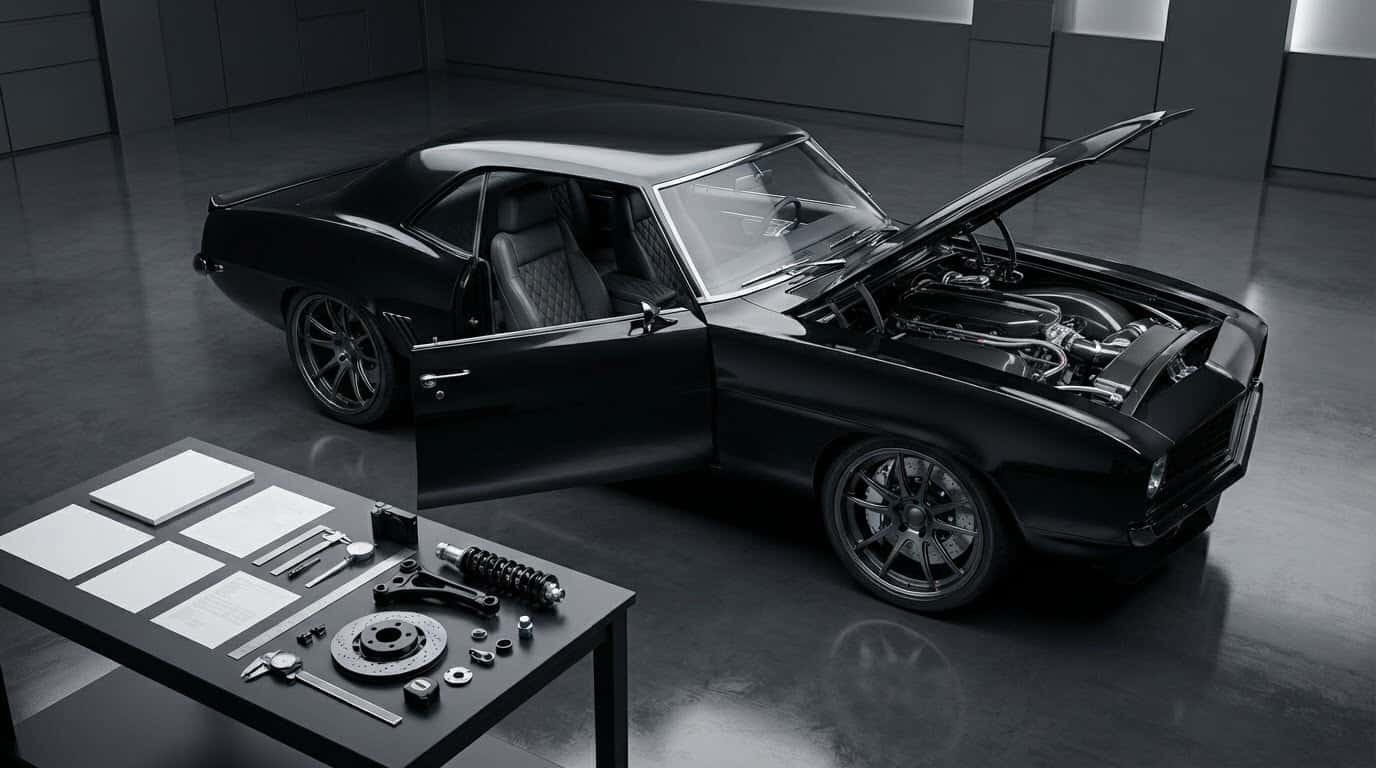
A classic can keep its heritage silhouette while carrying a very different insurance profile under the skin. Understanding how modifications affect classic car insurance rates means looking beyond the parts list: upgrades may influence how an insurer assesses risk, considers the car’s value, and applies coverage to the finished build.
It’s reasonable to wonder whether an engine swap, upgraded brakes, custom interior, or fresh paint will change your premium. The effect depends on the modification and the policy, so don’t assume every upgrade has the same result. A clear record of the work gives you a more precise starting point for discussing the car.
This guide explains which changes an insurer may consider, how modifications can affect valuation and coverage, and what to gather before reviewing your policy. Use the practical steps below to document parts, labor, and the build process, so you can clearly describe your car’s modern improvements and character.
Key Takeaways
- Learn how modifications affect classic car insurance rates by considering the change, the vehicle, and the policy together.
- Sort upgrades by what they may affect, from performance and handling to appearance and replacement value.
- Understand why a modification may affect your premium, coverage, eligibility, or valuation, or produce no visible change.
- Create a useful record by listing changes, gathering supporting documents, photographing the work, and reviewing policy wording.
- Make insurance questions part of your build roadmap, alongside project scope, budget, and documentation.
How classic car modifications can affect insurance rates and coverage
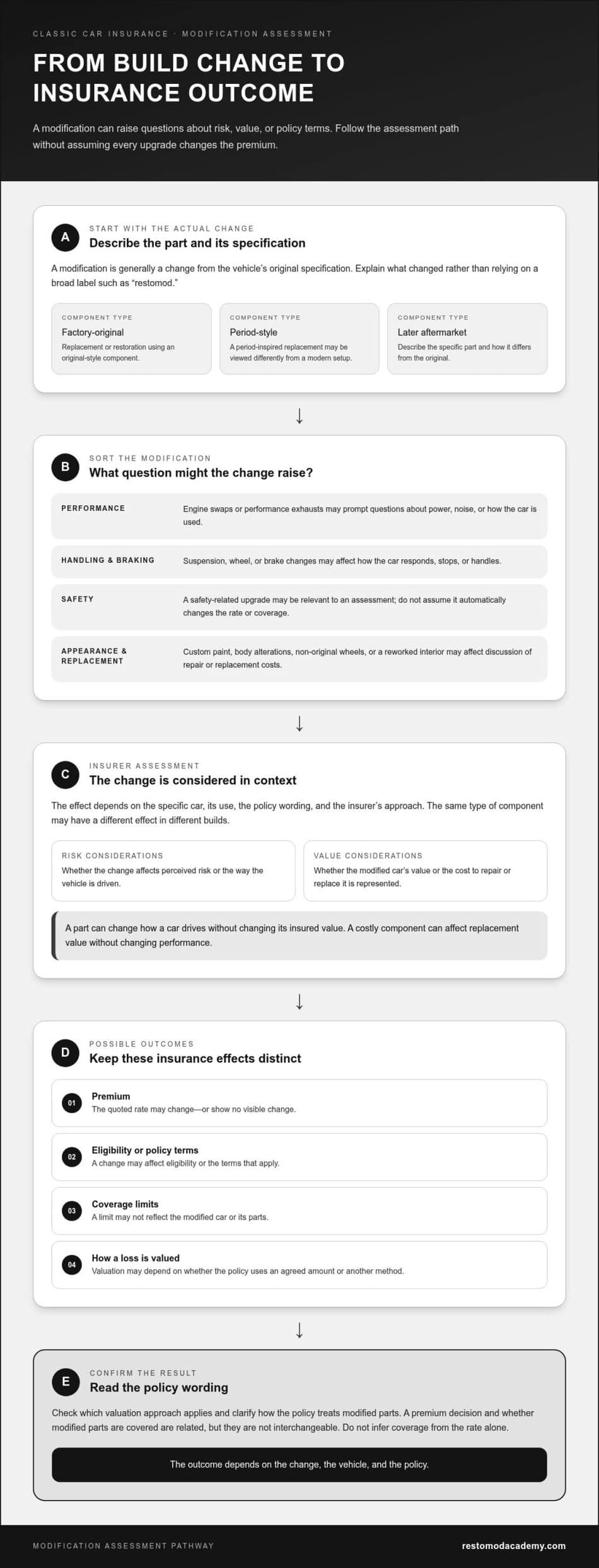
An upgrade can change more than how your classic looks or drives. It may affect how an insurer assesses the car, what coverage applies, or how its value is considered after a loss. That doesn’t mean every change raises the premium. To understand how modifications affect classic car insurance rates, separate these possible outcomes rather than treating “insurance impact” as one result.
For insurance discussions, a modification is generally a change from the vehicle’s original specification. Policies may define or categorize changes differently, so don’t assume one definition applies everywhere. A period-style component, a factory-original replacement, and a modern aftermarket part may each be viewed differently depending on the policy and vehicle. The broad range of custom-car styles and changes is outlined in Understanding Custom Car Modifications.
What counts as a classic-car modification?
Think in systems, not just standout upgrades. Changes may involve the engine, suspension, brakes, wheels, paint, or interior. An engine replacement that differs from the original specification may prompt different questions from a restoration using a factory-style component. A period-inspired wheel may also be assessed differently from a modern setup that changes the car’s performance or fitment.
Factory-original parts, period-style replacements, and later aftermarket components don’t automatically fall into the same category. A restomod can combine heritage styling with contemporary engineering, so describe the actual change rather than relying on a broad label. If you’re weighing what makes a build a restomod, the restomod definition and approach can help frame the project.
Does every modification automatically increase a premium?
No. There’s no universal premium outcome for every vehicle or policy. An insurer may consider what changed and whether it affects perceived risk or the car’s value. The same type of component may have a different effect in different builds, and a modification may prompt questions without changing the quoted rate.
Keep four outcomes distinct: a premium change, a change in eligibility or policy terms, a coverage limit that may not reflect the modified car, and a change in how a loss is valued. For example, a policy may treat the vehicle’s value differently depending on whether it uses an agreed amount or another valuation method. Read the policy wording to understand which approach applies instead of assuming the premium tells the whole story.
Modifications may affect insurance differently depending on risk, value, and policy terms. Describe each change accurately and understand how the policy treats it. A premium decision and whether modified parts are covered are related, but they aren’t interchangeable. Don’t infer coverage from the rate alone. Use the policy wording and the insurer’s explanation to clarify what the terms mean for your build.
Which classic-car modifications may change an insurer’s assessment?
Consider what question each modification raises, not just the name of the part. An insurer may consider whether a change affects performance, handling, safety, appearance, or the cost of repairing or replacing the vehicle. The answer depends on the specific car, its use, the policy wording, and the insurer’s approach. That’s why how modifications affect classic car insurance rates can’t be reduced to a rule that every upgrade raises the premium.
A part can change how a car drives without changing its insured value. A costly component can also affect replacement value without changing the car’s performance.
Engine, brake, and suspension changes
Engine swaps and performance exhausts may prompt questions about power, noise, or how the car is used. Brake conversions and suspension upgrades can alter stopping or handling characteristics, which may also be relevant to an assessment. Explain what changed and why. Don’t assume that an upgrade designed to improve control will automatically lower the rate or broaden coverage.
A major engine swap can reshape the whole build, from its driving character to the systems needed to support it. If you’re planning one, the classic-car LS engine swap guide can help you think through the project as an integrated system, not an isolated part.
Wheels, paint, interiors, and other visible upgrades
Appearance changes can raise a different set of questions. Custom paint, non-original wheels, body alterations, and a reworked interior may not change horsepower, but distinctive or costly materials can affect discussions about what it would take to repair or replace the finished car. A one-off paint finish or carefully crafted cabin may represent work that a standard description of the model doesn’t capture.
Describe the work clearly. Note whether a component is factory-original, period-style, or a later aftermarket addition, and keep the details tied to the car. Forbes’ guide to classic car insurance provides broader context on specialized cover, but your policy’s terms determine how an assessment applies. A visual upgrade doesn’t automatically mean a premium increase or a particular endorsement.
Sort changes by the question they raise
Group modifications by their purpose and potential relevance. This makes the build easier to explain:
- Performance: Engine swaps or exhaust changes that may alter power or sound.
- Handling and braking: Suspension, wheel, or brake changes that affect how the car responds.
- Safety: Upgrades that may improve a system, without assuming a discount or coverage change.
- Appearance and replacement value: Paint, body, and interior work that may affect repair or replacement needs.
Use these categories to prepare, not to predict the insurer’s decision. A build record that identifies each component and its role gives you a clearer starting point for the insurance conversation.
Do modifications automatically raise classic car insurance rates?
No. A modification doesn’t guarantee a higher premium, and there’s no universal formula for predicting its effect on a particular quote. An insurer could adjust the rate, ask whether the vehicle still fits the policy’s eligibility criteria, review how its value is determined, or make no visible change. These are separate outcomes, so a steady premium doesn’t automatically mean every added part is covered or reflected in the vehicle’s valuation.
Think of how modifications affect classic car insurance rates as an assessment with several moving parts. A change that affects performance may lead to questions about risk or use. A costly custom component may lead to a valuation discussion. The outcome depends on the insurer’s criteria and policy wording, not on a guaranteed industry-wide rule.
Premium, eligibility, and coverage are different questions
A premium is the price of the policy. Eligibility concerns whether the vehicle fits the insurer’s requirements for that type of cover. Coverage concerns what the policy protects and the limits or conditions that apply. An insurer may consider these questions separately. A modification could affect eligibility or coverage terms without producing an obvious rate change.
For added parts, review the policy wording and applicable limits rather than inferring protection from the premium. Treat examples as possibilities, not promises about your individual quote. The policy wording and insurer’s assessment determine how the terms apply to your car.
- Rate: The insurer may ask whether the change affects the vehicle’s assessed risk or use. Have a clear description of the modification and its purpose ready.
- Eligibility: The insurer may consider whether the modified vehicle still fits the policy’s criteria. Prepare current vehicle details and a summary of the build.
- Coverage: The policy may address added or altered parts in specific ways. Review its wording and gather parts information and invoices.
- Valuation: The insurer may ask whether the stated value reflects the completed build. Build records, receipts, and an appraisal, where available, can support that discussion.
How actual cash value and agreed value differ
Actual cash value is a value determined under the policy at the time of a loss. The method and policy terms matter, so don’t assume it will match the amount spent on a restoration or the figure you have in mind. Agreed value, where offered, is a value established with the insurer in advance. It gives both parties a stated valuation to refer to, subject to the policy’s terms.
For a modified classic, organized build documentation and an appraisal can support a conversation about value. They don’t guarantee a particular settlement, but they help show what changed and what went into the finished car. Keep valuation separate from the premium question: a documented increase in build value may prompt a review even if the rate outcome isn’t predictable.
How to document classic-car modifications before discussing insurance
A well-organized build file turns a long list of upgrades into a clear account of what changed, how the work was done, and what the finished car includes. That makes it easier to prepare for an insurance conversation, especially when the car no longer matches a standard example of its model. Since how modifications affect classic car insurance rates depends on the vehicle and policy, assemble accurate records before trying to predict a premium.
Build the file as the project progresses instead of trying to reconstruct it at the end. Keep a digital copy and a backup of important documents.
- Inventory each change. List the component or system, what changed, and whether it differs from the car’s original specification. Group entries as mechanical, safety-related, exterior, or interior work. Note who completed each job, whether it was owner-installed or shop work, and the installation date if known.
- Gather supporting records. Collect invoices, receipts, parts descriptions, work orders, and restoration-shop estimates where available. Add notes explaining the purpose of a change and relevant details, such as the component replaced or the related work completed.
- Photograph the work. Keep dated images of the vehicle before, during, and after significant work when possible. Capture useful context, including an overall view of the car, the completed area, and details that help identify a component. Store the images with the matching inventory entry or invoice.
- Review the policy wording. Before discussing the build, note how the policy describes modifications, valuation, coverage limits, and updates. Ask the insurer how and when changes should be reported or policy details updated. Procedures and terms vary, so get guidance for your particular policy rather than relying on another owner’s experience.
Build a clear modification inventory
Make each entry specific and easy to scan. “Suspension changed” is less useful than identifying the system or parts involved and who performed the work. Separate completed work from planned changes so it’s clear which details describe the car as it is now. For owner-built work, add concise notes while the steps are fresh. For shop work, keep the paperwork alongside your own summary.
Prepare evidence for a valuation and policy review
Gather the records with a short description of how the finished build differs from a standard example of the same vehicle. Include receipts and appraisal documents if available, but don’t treat any one document as a guaranteed valuation or settlement. A practical record also supports project planning: budgets and build notes connect spending to completed work. Keep them in the same project file so they’re useful for planning as well as an insurance discussion.
Build a stronger project plan with Restomod Academy’s practical restomod guidance, and make documentation part of the process from the first change onward.
Plan your restomod with insurance questions in the build roadmap
Put insurance planning beside the build scope, budget, and documentation from the start. A project can evolve as you select parts and develop new ideas, so an early conversation about a proposed change can help clarify what information the insurer needs and how policy updates should be handled. That’s more useful than leaving insurance paperwork until after the final test drive.
A restomod blends a classic vehicle’s character with modern components, but each build has its own direction. If you’re still defining that balance, this guide to what makes a restomod distinct can help clarify the project’s goals before major decisions are locked in. Those goals also give you a practical starting point for discussing the planned work.
Add insurance checkpoints to the project sequence
Build insurance questions into decision points, especially before a major change such as an engine swap. Share the plan with your insurer while it’s still a proposal, and ask how and when the policy should be updated. The timing and process depend on the policy, so don’t assume another owner’s schedule applies to your car.
Keep your modification inventory current as parts, costs, and project scope shift. Revisit the policy discussion if the vehicle’s use, value, or build changes materially. A change in intended use may matter separately from a new component, while a larger-than-planned build may call for a fresh valuation conversation. Treat these as prompts to review the policy, not as predictions of a rate or coverage outcome.
Make the next insurance conversation more useful
Before speaking with the insurer, gather a concise snapshot of the car and project. Include the vehicle’s basic details, completed changes, proposed work, and available supporting records. Keep the explanation plain and specific: identify what is original, what has changed, and what you expect the completed vehicle to be like.
Use the conversation to clarify three points: how the policy addresses modified parts, what valuation approach applies, and how to report changes as the build progresses. Review the relevant policy wording beforehand and note any terms you want explained. Clear questions keep the discussion focused on your vehicle rather than broad assumptions about how modifications affect classic car insurance rates.
Review your policy, update your project notes, and share accurate information about the build and proposed changes. Sound planning can reduce uncertainty without taking the joy out of the work. For practical ideas to support the wider restomod process, explore Restomod Academy’s project guidance as you shape your roadmap.
Build with confidence at every stage
Your next insurance conversation can become part of the build, not a hurdle waiting at the finish line. Revisit your plans whenever the scope shifts, and keep your project records aligned with the car you’re creating. That steady habit makes it easier to explain how modifications affect classic car insurance rates while keeping your attention on the craft.
Good planning supports more than the insurance discussion. It can help you manage project stress, keep budgeting decisions grounded, and learn alongside other builders who understand the satisfaction of getting the details right. Restomod Academy shares practical, solution-focused guidance for classic-car builders, including ideas to help make the next step feel manageable.
Explore practical guidance for your restomod project and keep building with care, curiosity, and confidence.
Frequently Asked Questions
How much can modifications raise classic car insurance rates?
There’s no fixed increase that applies to every modified classic. A quote may depend on the type of change, the vehicle’s assessed value, its use, and the insurer’s policy terms. A performance change, for example, could prompt different questions from a custom interior. Ask for an explanation of any quote change and compare it with the coverage and valuation being offered, not just the premium.
Can upgraded brakes lower classic car insurance premiums?
They may be considered as part of an insurer’s assessment, but upgraded brakes don’t guarantee a lower premium. The effect may depend on the vehicle, brake system, policy, and how the insurer evaluates the change. Keep records identifying the components and work completed. Then ask whether the upgrade changes the quote, policy terms, or neither. Don’t assume a safety-focused improvement earns a discount.
Is a period-correct modification treated differently from a modern upgrade?
It may be, but there’s no universal rule. A period-style component could preserve the car’s original character more closely than a modern upgrade while still differing from its factory specification. An insurer may consider the part, its effect on the vehicle, and the policy’s definitions. Describe the component accurately, including whether it’s original, period-style, or a later aftermarket part, rather than relying on the label “period-correct.”
What happens if I forget to tell my insurer about a modification?
Consequences depend on the policy, the change, and the applicable rules where you live, so don’t assume a claim will automatically be denied or unaffected. Contact your insurer promptly, explain what changed and when, and ask how to update the vehicle’s details. Keep a record of the conversation and any revised policy documents. Accurate, timely communication gives you a clearer understanding of your current terms.
Does a classic-car policy cover aftermarket parts automatically?
Don’t assume aftermarket parts are automatically covered just because the car has a classic-car policy. The policy wording may define what’s included, how parts are valued, and whether limits or conditions apply. A custom audio system or replacement engine, for example, may be treated differently from standard equipment. Review the relevant terms and ask the insurer how they apply to the parts on your vehicle.
Do I need an appraisal after modifying a classic car?
Not necessarily. An appraisal may be useful if extensive work has made the vehicle’s value harder to estimate from standard examples, but whether one is needed depends on the insurer and policy. Before arranging one, ask what valuation information the insurer uses and whether an appraisal would support its review. Keep it alongside invoices and build records so the assessment reflects the completed car, not only its original specification.
Can reversible modifications still affect classic car insurance?
Yes, they can be relevant while installed, even if you can return the car to its previous configuration later. A removable engine component, wheel setup, or interior change may still affect how the vehicle is described or assessed in its current state. Tell the insurer what’s fitted now and explain whether the change is temporary. If you remove it, update your records and clarify whether the policy details should change.
A classic can keep its heritage silhouette while carrying a very different insurance profile under the skin. Understanding how modifications affect classic car insurance rates means looking beyond the parts list: upgrades may influence how an insurer assesses risk, considers the car’s value, and applies coverage to the finished build.
It’s reasonable to wonder whether an engine swap, upgraded brakes, custom interior, or fresh paint will change your premium. The effect depends on the modification and the policy, so don’t assume every upgrade has the same result. A clear record of the work gives you a more precise starting point for discussing the car.
This guide explains which changes an insurer may consider, how modifications can affect valuation and coverage, and what to gather before reviewing your policy. Use the practical steps below to document parts, labor, and the build process, so you can clearly describe your car’s modern improvements and character.
Key Takeaways
- Learn how modifications affect classic car insurance rates by considering the change, the vehicle, and the policy together.
- Sort upgrades by what they may affect, from performance and handling to appearance and replacement value.
- Understand why a modification may affect your premium, coverage, eligibility, or valuation, or produce no visible change.
- Create a useful record by listing changes, gathering supporting documents, photographing the work, and reviewing policy wording.
- Make insurance questions part of your build roadmap, alongside project scope, budget, and documentation.
How classic car modifications can affect insurance rates and coverage
An upgrade can change more than how your classic looks or drives. It may affect how an insurer assesses the car, what coverage applies, or how its value is considered after a loss. That doesn’t mean every change raises the premium. To understand how modifications affect classic car insurance rates, separate these possible outcomes rather than treating “insurance impact” as one result.
For insurance discussions, a modification is generally a change from the vehicle’s original specification. Policies may define or categorize changes differently, so don’t assume one definition applies everywhere. A period-style component, a factory-original replacement, and a modern aftermarket part may each be viewed differently depending on the policy and vehicle. The broad range of custom-car styles and changes is outlined in Understanding Custom Car Modifications.
What counts as a classic-car modification?
Think in systems, not just standout upgrades. Changes may involve the engine, suspension, brakes, wheels, paint, or interior. An engine replacement that differs from the original specification may prompt different questions from a restoration using a factory-style component. A period-inspired wheel may also be assessed differently from a modern setup that changes the car’s performance or fitment.
Factory-original parts, period-style replacements, and later aftermarket components don’t automatically fall into the same category. A restomod can combine heritage styling with contemporary engineering, so describe the actual change rather than relying on a broad label. If you’re weighing what makes a build a restomod, the restomod definition and approach can help frame the project.
Does every modification automatically increase a premium?
No. There’s no universal premium outcome for every vehicle or policy. An insurer may consider what changed and whether it affects perceived risk or the car’s value. The same type of component may have a different effect in different builds, and a modification may prompt questions without changing the quoted rate.
Keep four outcomes distinct: a premium change, a change in eligibility or policy terms, a coverage limit that may not reflect the modified car, and a change in how a loss is valued. For example, a policy may treat the vehicle’s value differently depending on whether it uses an agreed amount or another valuation method. Read the policy wording to understand which approach applies instead of assuming the premium tells the whole story.
Modifications may affect insurance differently depending on risk, value, and policy terms. Describe each change accurately and understand how the policy treats it. A premium decision and whether modified parts are covered are related, but they aren’t interchangeable. Don’t infer coverage from the rate alone. Use the policy wording and the insurer’s explanation to clarify what the terms mean for your build.
Which classic-car modifications may change an insurer’s assessment?
Consider what question each modification raises, not just the name of the part. An insurer may consider whether a change affects performance, handling, safety, appearance, or the cost of repairing or replacing the vehicle. The answer depends on the specific car, its use, the policy wording, and the insurer’s approach. That’s why how modifications affect classic car insurance rates can’t be reduced to a rule that every upgrade raises the premium.
A part can change how a car drives without changing its insured value. A costly component can also affect replacement value without changing the car’s performance.
Engine, brake, and suspension changes
Engine swaps and performance exhausts may prompt questions about power, noise, or how the car is used. Brake conversions and suspension upgrades can alter stopping or handling characteristics, which may also be relevant to an assessment. Explain what changed and why. Don’t assume that an upgrade designed to improve control will automatically lower the rate or broaden coverage.
A major engine swap can reshape the whole build, from its driving character to the systems needed to support it. If you’re planning one, the classic-car LS engine swap guide can help you think through the project as an integrated system, not an isolated part.
Wheels, paint, interiors, and other visible upgrades
Appearance changes can raise a different set of questions. Custom paint, non-original wheels, body alterations, and a reworked interior may not change horsepower, but distinctive or costly materials can affect discussions about what it would take to repair or replace the finished car. A one-off paint finish or carefully crafted cabin may represent work that a standard description of the model doesn’t capture.
Describe the work clearly. Note whether a component is factory-original, period-style, or a later aftermarket addition, and keep the details tied to the car. Forbes’ guide to classic car insurance provides broader context on specialized cover, but your policy’s terms determine how an assessment applies. A visual upgrade doesn’t automatically mean a premium increase or a particular endorsement.
Sort changes by the question they raise
Group modifications by their purpose and potential relevance. This makes the build easier to explain:
- Performance: Engine swaps or exhaust changes that may alter power or sound.
- Handling and braking: Suspension, wheel, or brake changes that affect how the car responds.
- Safety: Upgrades that may improve a system, without assuming a discount or coverage change.
- Appearance and replacement value: Paint, body, and interior work that may affect repair or replacement needs.
Use these categories to prepare, not to predict the insurer’s decision. A build record that identifies each component and its role gives you a clearer starting point for the insurance conversation.
Do modifications automatically raise classic car insurance rates?
No. A modification doesn’t guarantee a higher premium, and there’s no universal formula for predicting its effect on a particular quote. An insurer could adjust the rate, ask whether the vehicle still fits the policy’s eligibility criteria, review how its value is determined, or make no visible change. These are separate outcomes, so a steady premium doesn’t automatically mean every added part is covered or reflected in the vehicle’s valuation.
Think of how modifications affect classic car insurance rates as an assessment with several moving parts. A change that affects performance may lead to questions about risk or use. A costly custom component may lead to a valuation discussion. The outcome depends on the insurer’s criteria and policy wording, not on a guaranteed industry-wide rule.
Premium, eligibility, and coverage are different questions
A premium is the price of the policy. Eligibility concerns whether the vehicle fits the insurer’s requirements for that type of cover. Coverage concerns what the policy protects and the limits or conditions that apply. An insurer may consider these questions separately. A modification could affect eligibility or coverage terms without producing an obvious rate change.
For added parts, review the policy wording and applicable limits rather than inferring protection from the premium. Treat examples as possibilities, not promises about your individual quote. The policy wording and insurer’s assessment determine how the terms apply to your car.
- Rate: The insurer may ask whether the change affects the vehicle’s assessed risk or use. Have a clear description of the modification and its purpose ready.
- Eligibility: The insurer may consider whether the modified vehicle still fits the policy’s criteria. Prepare current vehicle details and a summary of the build.
- Coverage: The policy may address added or altered parts in specific ways. Review its wording and gather parts information and invoices.
- Valuation: The insurer may ask whether the stated value reflects the completed build. Build records, receipts, and an appraisal, where available, can support that discussion.
How actual cash value and agreed value differ
Actual cash value is a value determined under the policy at the time of a loss. The method and policy terms matter, so don’t assume it will match the amount spent on a restoration or the figure you have in mind. Agreed value, where offered, is a value established with the insurer in advance. It gives both parties a stated valuation to refer to, subject to the policy’s terms.
For a modified classic, organized build documentation and an appraisal can support a conversation about value. They don’t guarantee a particular settlement, but they help show what changed and what went into the finished car. Keep valuation separate from the premium question: a documented increase in build value may prompt a review even if the rate outcome isn’t predictable.
How to document classic-car modifications before discussing insurance
A well-organized build file turns a long list of upgrades into a clear account of what changed, how the work was done, and what the finished car includes. That makes it easier to prepare for an insurance conversation, especially when the car no longer matches a standard example of its model. Since how modifications affect classic car insurance rates depends on the vehicle and policy, assemble accurate records before trying to predict a premium.
Build the file as the project progresses instead of trying to reconstruct it at the end. Keep a digital copy and a backup of important documents.
- Inventory each change. List the component or system, what changed, and whether it differs from the car’s original specification. Group entries as mechanical, safety-related, exterior, or interior work. Note who completed each job, whether it was owner-installed or shop work, and the installation date if known.
- Gather supporting records. Collect invoices, receipts, parts descriptions, work orders, and restoration-shop estimates where available. Add notes explaining the purpose of a change and relevant details, such as the component replaced or the related work completed.
- Photograph the work. Keep dated images of the vehicle before, during, and after significant work when possible. Capture useful context, including an overall view of the car, the completed area, and details that help identify a component. Store the images with the matching inventory entry or invoice.
- Review the policy wording. Before discussing the build, note how the policy describes modifications, valuation, coverage limits, and updates. Ask the insurer how and when changes should be reported or policy details updated. Procedures and terms vary, so get guidance for your particular policy rather than relying on another owner’s experience.
Build a clear modification inventory
Make each entry specific and easy to scan. “Suspension changed” is less useful than identifying the system or parts involved and who performed the work. Separate completed work from planned changes so it’s clear which details describe the car as it is now. For owner-built work, add concise notes while the steps are fresh. For shop work, keep the paperwork alongside your own summary.
Prepare evidence for a valuation and policy review
Gather the records with a short description of how the finished build differs from a standard example of the same vehicle. Include receipts and appraisal documents if available, but don’t treat any one document as a guaranteed valuation or settlement. A practical record also supports project planning: budgets and build notes connect spending to completed work. Keep them in the same project file so they’re useful for planning as well as an insurance discussion.
Build a stronger project plan with Restomod Academy’s practical restomod guidance, and make documentation part of the process from the first change onward.
Plan your restomod with insurance questions in the build roadmap
Put insurance planning beside the build scope, budget, and documentation from the start. A project can evolve as you select parts and develop new ideas, so an early conversation about a proposed change can help clarify what information the insurer needs and how policy updates should be handled. That’s more useful than leaving insurance paperwork until after the final test drive.
A restomod blends a classic vehicle’s character with modern components, but each build has its own direction. If you’re still defining that balance, this guide to what makes a restomod distinct can help clarify the project’s goals before major decisions are locked in. Those goals also give you a practical starting point for discussing the planned work.
Add insurance checkpoints to the project sequence
Build insurance questions into decision points, especially before a major change such as an engine swap. Share the plan with your insurer while it’s still a proposal, and ask how and when the policy should be updated. The timing and process depend on the policy, so don’t assume another owner’s schedule applies to your car.
Keep your modification inventory current as parts, costs, and project scope shift. Revisit the policy discussion if the vehicle’s use, value, or build changes materially. A change in intended use may matter separately from a new component, while a larger-than-planned build may call for a fresh valuation conversation. Treat these as prompts to review the policy, not as predictions of a rate or coverage outcome.
Make the next insurance conversation more useful
Before speaking with the insurer, gather a concise snapshot of the car and project. Include the vehicle’s basic details, completed changes, proposed work, and available supporting records. Keep the explanation plain and specific: identify what is original, what has changed, and what you expect the completed vehicle to be like.
Use the conversation to clarify three points: how the policy addresses modified parts, what valuation approach applies, and how to report changes as the build progresses. Review the relevant policy wording beforehand and note any terms you want explained. Clear questions keep the discussion focused on your vehicle rather than broad assumptions about how modifications affect classic car insurance rates.
Review your policy, update your project notes, and share accurate information about the build and proposed changes. Sound planning can reduce uncertainty without taking the joy out of the work. For practical ideas to support the wider restomod process, explore Restomod Academy’s project guidance as you shape your roadmap.
Build with confidence at every stage
Your next insurance conversation can become part of the build, not a hurdle waiting at the finish line. Revisit your plans whenever the scope shifts, and keep your project records aligned with the car you’re creating. That steady habit makes it easier to explain how modifications affect classic car insurance rates while keeping your attention on the craft.
Good planning supports more than the insurance discussion. It can help you manage project stress, keep budgeting decisions grounded, and learn alongside other builders who understand the satisfaction of getting the details right. Restomod Academy shares practical, solution-focused guidance for classic-car builders, including ideas to help make the next step feel manageable.
Explore practical guidance for your restomod project and keep building with care, curiosity, and confidence.
Frequently Asked Questions
How much can modifications raise classic car insurance rates?
There’s no fixed increase that applies to every modified classic. A quote may depend on the type of change, the vehicle’s assessed value, its use, and the insurer’s policy terms. A performance change, for example, could prompt different questions from a custom interior. Ask for an explanation of any quote change and compare it with the coverage and valuation being offered, not just the premium.
Can upgraded brakes lower classic car insurance premiums?
They may be considered as part of an insurer’s assessment, but upgraded brakes don’t guarantee a lower premium. The effect may depend on the vehicle, brake system, policy, and how the insurer evaluates the change. Keep records identifying the components and work completed. Then ask whether the upgrade changes the quote, policy terms, or neither. Don’t assume a safety-focused improvement earns a discount.
Is a period-correct modification treated differently from a modern upgrade?
It may be, but there’s no universal rule. A period-style component could preserve the car’s original character more closely than a modern upgrade while still differing from its factory specification. An insurer may consider the part, its effect on the vehicle, and the policy’s definitions. Describe the component accurately, including whether it’s original, period-style, or a later aftermarket part, rather than relying on the label “period-correct.”
What happens if I forget to tell my insurer about a modification?
Consequences depend on the policy, the change, and the applicable rules where you live, so don’t assume a claim will automatically be denied or unaffected. Contact your insurer promptly, explain what changed and when, and ask how to update the vehicle’s details. Keep a record of the conversation and any revised policy documents. Accurate, timely communication gives you a clearer understanding of your current terms.
Does a classic-car policy cover aftermarket parts automatically?
Don’t assume aftermarket parts are automatically covered just because the car has a classic-car policy. The policy wording may define what’s included, how parts are valued, and whether limits or conditions apply. A custom audio system or replacement engine, for example, may be treated differently from standard equipment. Review the relevant terms and ask the insurer how they apply to the parts on your vehicle.
Do I need an appraisal after modifying a classic car?
Not necessarily. An appraisal may be useful if extensive work has made the vehicle’s value harder to estimate from standard examples, but whether one is needed depends on the insurer and policy. Before arranging one, ask what valuation information the insurer uses and whether an appraisal would support its review. Keep it alongside invoices and build records so the assessment reflects the completed car, not only its original specification.
Can reversible modifications still affect classic car insurance?
Yes, they can be relevant while installed, even if you can return the car to its previous configuration later. A removable engine component, wheel setup, or interior change may still affect how the vehicle is described or assessed in its current state. Tell the insurer what’s fitted now and explain whether the change is temporary. If you remove it, update your records and clarify whether the policy details should change.