A Ford frame is a classic starting point, not a rule. Choosing a donor car for a rat rod build can lead to a non-Ford chassis, provided the frame and body can be made to work together. Pre-war Ford frames from 1928 through 1948 remain common choices, but the right donor is the one that supports your design without turning every fitment into a major fabrication job.
It’s easy to focus on a nameplate or rugged silhouette and overlook the structure underneath. Start with the frame, then assess the body shape, condition, and compatibility as a complete package. This guide covers popular makes and models, non-Ford frame options, and practical checks for choosing a solid foundation for your build.
Key Takeaways
- A non-Ford frame can work when its dimensions and mounting points suit the body, though some combinations demand substantial fabrication.
- Compare familiar vintage candidates, including Model A and Model T coupes and pre-1955 Chevy or Ford trucks, against your build’s intended shape.
- Choose a body that retains its essential form; surface patina is different from damage that undermines the structure.
- Judge each donor as a complete starting point, weighing its frame, body style, and condition before committing to a project.
Can I build a rat rod on a non-Ford frame?
A non-Ford frame can support a rat rod body when the dimensions and mounting points align. Choose the chassis to suit your intended body, and plan any adaptations before fabrication begins.
-
Choose a Donor Frame Before a Body
Start with the frame if you’re building around a chassis rather than a complete car. Its wheelbase, track width, suspension layout, and condition will influence which coupe or truck body fits. This approach can simplify planning, but don’t choose a frame on appearance alone. Confirm that it can accommodate your intended body and powertrain without extensive structural changes.
-
Compare Ford and Alternative Domestic Frames
Consider pre-war Ford frames from 1928 through 1948, a familiar rat rod foundation with traditional-style front suspension components available for those model years. A non-Ford domestic frame can also work; its suitability depends on dimensions, condition, and how its mounts meet the body. For example, a 1982 Nissan/Toyota 720 pickup frame has been estimated at 42 inches wide at the cab, a measurement to compare against the body’s cab width.
-
Check Frame Dimensions Against the Intended Body
Measure the frame and body at matching points, including wheelbase, cab width, axle position, and mounting locations. A 1929 Ford body on a 1932 Ford frame is a documented pairing with known dimensions. By contrast, a 1932 Ford body on a 1940 truck frame can require heavy modifications to both. Adapt mounts only after establishing alignment, clearance, and suspension geometry.
- Choose between a car, truck, or bare chassis by first deciding on the body style and assessing the frame condition. A complete donor provides more components, while a chassis-first project gives you greater freedom to choose a body.
- For U.S. titling, registration, and insurance, requirements depend on the state and the donor’s title records. Keep ownership and build documentation together, since vehicle identity and construction details matter for paperwork and coverage.
- Donor cost depends on completeness, condition, rarity, and title status. Weigh these factors against the fabrication and replacement work required rather than judging by the asking price alone.
- Assess reusable parts individually. Axles, suspension pieces, steering components, wheels, and body panels may suit the build, but reuse only parts that fit the planned layout and are in sound condition.
- Check engine and transmission fit together and against the frame, including mount locations, available clearance, and driveline alignment. A compact Small Block Chevy 350 is a common rat rod engine option with extensive aftermarket support.
- Search locally through salvage yards, estate or farm auctions, classifieds, and car clubs. Look by make, model, body style, or frame, then compare nearby candidates for condition and completeness.
Common rat rod donor makes and models
Start with familiar vintage body styles, then narrow your options by shape, condition, and the character you want.
- Shortlist 1930s-era Fords, especially the Model A, when you want a recognizable early coupe profile. Ford Model A and Model T coupes are established donor-body choices. Compare the roofline, cowl, and proportions of available cars before settling on a specific model. Those details shape the finished silhouette, while the individual body’s condition determines how much repair and fabrication it needs.
- Consider a 1930s-1950s pickup if a cab-and-bed outline suits your design. Pre-1955 Chevy and Ford trucks are also suitable donor bodies. Look closely at cab shape, windshield frame, and bed proportions; these features give the build its visual identity. Choose a truck body that fits the stance and layout you have in mind, rather than choosing by make alone.
- Keep the search focused on American cars manufactured before 1960, a typical rat rod starting point. Within that broad group, compare Ford coupes and Chevy or Ford trucks by body style first. Make and model help identify the vehicle, but they don’t tell you whether a particular example has usable structure. Evaluate the actual donor, not just its badge or reputation.
- Sort candidates by the kind of project each body supports. A Model A or Model T coupe offers a compact coupe shape, while a vintage pickup has a distinct cab profile. Write down your preferred silhouette, then compare candidate bodies against it. This straightforward filter helps keep an attractive but mismatched donor from steering the project away from its intended look.
- Use make and model as a starting point, not a guarantee of fit or quality. Two examples of the same Ford or Chevy model can differ greatly in condition and completeness. Inspect the specific body, note missing or damaged panels, and consider how its shape works with your planned chassis. Let those practical findings guide your choice.

Donor-car condition and body shape
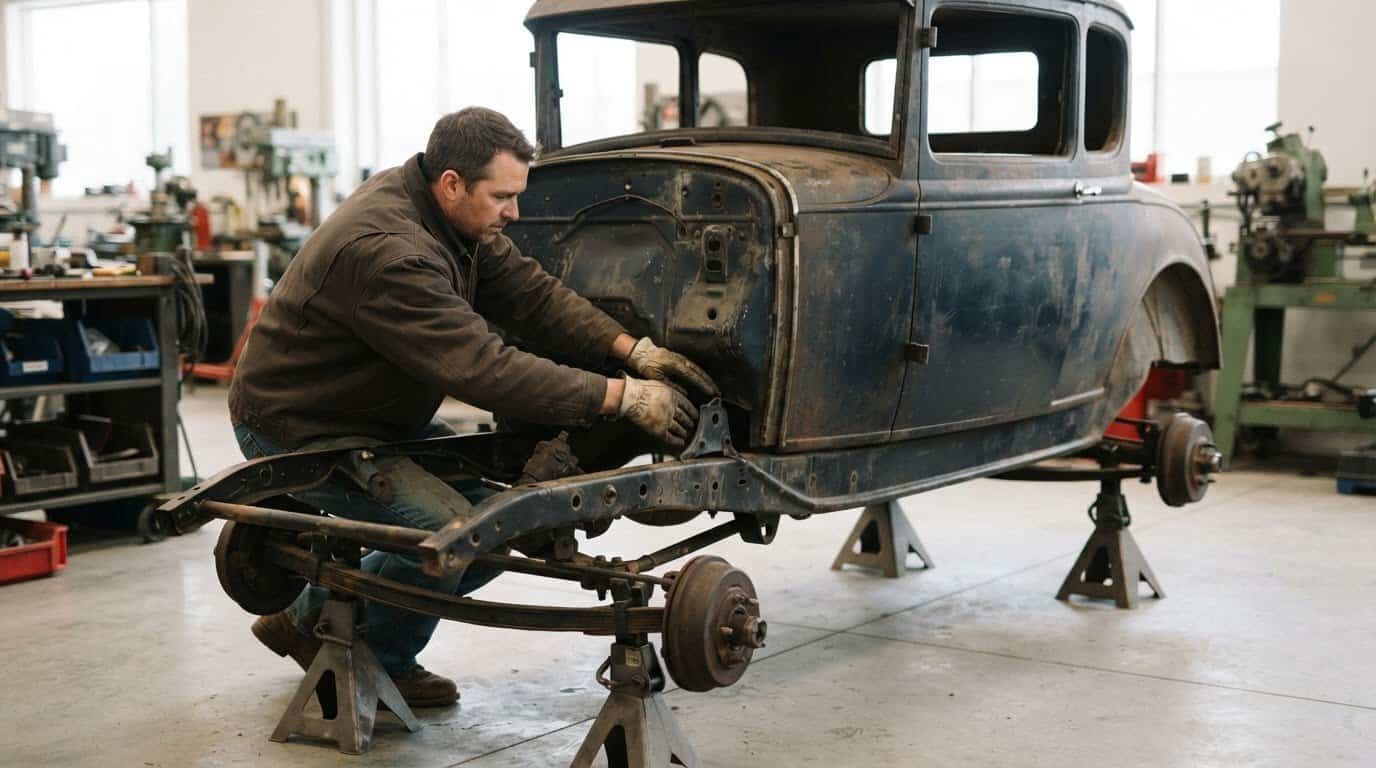
Judge the actual shell, not its patina or reputation. A useful donor should retain its essential shape without severe rust compromising the structure.
- Inspect the body from several angles before deciding. Look for sagging lines, distorted panels, and openings that no longer appear square. A coupe with faded paint may retain its original shape, while a shiny truck cab can hide damage beneath fresh coatings. Focus on the shell’s form, not surface appearance alone.
- Check for rust around the floor, lower body, cab corners, and panel joints. Surface corrosion is different from perforation or missing metal that affects the body’s essential form. A rusty fender may be replaceable, but widespread deterioration around the floor and door openings can turn a straightforward body fit into extensive metalwork.
- Check whether the doors, hood, and deck lid align with their openings. Uneven gaps or doors that bind can indicate shifted or distorted bodywork. Compare both sides: a sagging door opening paired with a twisted rocker panel deserves closer attention than isolated dents on one outer panel.
- Assess the silhouette you want before accepting missing or altered body sections. A chopped roof, removed fenders, or shortened bed can create a distinctive look, but each change affects the original outline. Decide whether those modifications suit your design, then distinguish intentional styling from accidental damage that compromises the body’s essential shape.
- Make a simple condition list as you inspect the donor. Record structural rust, damaged openings, missing panels, and body sections that remain straight. Compare candidates by noting which one preserves its cab shape and needs fewer major repairs. Choose the shell that delivers the profile you want with manageable correction work.
- Match the condition to your fabrication skills and project direction. A mostly intact body gives you a clearer starting point for shaping the final stance. If the donor already has extensive cuts or repairs, identify how they affect the roofline, doors, and overall proportions before building around it.
Popular vintage donor vehicles
Compare vintage candidates by the shape they contribute and the fabrication each body requires. Choosing a donor car for a rat rod build starts with the silhouette you want to create.
- Evaluate a Ford Model A for its compact, recognizable coupe proportions. Its roof, cowl, and upright windshield give a finished build a strong early-Ford character. Inspect each candidate rather than assuming every Model A offers the same starting point. The right proportions can give your design a clear visual anchor.
- Consider a Ford Model T if you want a distinct early-Ford profile. Compare its body lines with the Model A before committing. Their shared heritage doesn’t make their silhouettes interchangeable. Sketch the stance and outline you’re aiming for, then use that comparison to decide which model better supports your concept.
- Assess vintage Chevy and Ford pickups for a cab-forward look and a truck’s distinctive presence. Pre-1955 examples offer a useful category to explore, but cab and bed proportions vary. Decide whether the bed belongs in your design. Its length and relationship to the cab will influence the completed vehicle’s overall balance.
- Broaden your shortlist to American cars manufactured before 1960, then sort candidates by body style. A coupe and a pickup establish different visual foundations. For choosing a donor car for a rat rod build, compare the actual vehicle’s completeness and the fabrication its body needs, not just its nameplate.
- Rank candidates against your intended design instead of chasing a famous name. Note what each body contributes and where it diverges from your preferred outline. A less familiar domestic vehicle may suit the project better than a celebrated model. If an LS-powered build is part of your direction, use this LS engine swap guide to consider how the powertrain plan fits your donor choice.
Restomod Academy
Restomod Academy helps builders turn donor-car decisions into a workable classic-car project plan. Use its educational resources to consider how body style, frame choice, condition, and modern upgrades fit together before fabrication begins.
For a broader foundation, The Ultimate Restomod Guide covers principles for modifying classic vehicles. Restomod Consulting Services can help you work through project-specific decisions, while Premium Project Blueprints offer plans for builders who want a defined direction. These resources can help when you’ve narrowed your donor choices but need to connect the vehicle’s character with the build you have in mind.
Bring your project questions to Restomod Academy and contact the team to discuss your next step.
Turn Your Donor Choice Into a Build Plan
Before committing to a vehicle, turn your design into a clear project brief. Write down the body style you want, the chassis direction you’re considering, and the fabrication work you’re prepared to take on. This gives you a practical way to judge each candidate against your goals instead of letting a striking silhouette make the decision for you.
Choosing a donor car for a rat rod build is only the first design decision. Next, create a coherent plan for how the vehicle’s character and your intended modifications will work together. If you’re weighing competing ideas or want help connecting a donor to a broader classic-car project, Restomod Academy offers resources for the planning process.
Take the next step with a clear question about your build, then contact Restomod Academy to discuss it. Your first choice doesn’t have to define every detail; thoughtful planning gives you room to build with purpose and make the finished rat rod your own.
Frequently Asked Questions
What makes a good donor car for a rat rod build?
A good donor has a body and starting structure that suit your design without adding avoidable repair work. Judge the whole vehicle as a system: note which components remain usable, which need replacement, and what fabrication the body requires. A complete but weathered pickup, for example, may be more practical than a stripped shell that needs extensive reconstruction.
Which donor car models are best for rat rod builds?
Ford Model A and Model T coupes, along with vintage Chevy and Ford pickups, are established choices. The best fit depends on the shape you want: a coupe creates a compact profile, while a pickup gives the build a distinct cab-and-bed outline. Compare individual vehicles, not just model names, because completeness and body condition can vary substantially.
What donor car years and frame styles work best for a rat rod?
American cars built before 1960 are common starting points, and pre-war Ford frames from 1928 through 1948 are familiar chassis choices. A non-Ford frame can also work if its dimensions suit the intended body and planned layout. Treat the year and make as a shortlist, then judge the specific chassis and body combination rather than assuming every pairing will fit easily.
What should you inspect before buying a rat rod donor car?
Consider the shell, frame, and included components separately. Check for distorted body lines, deteriorated metal, missing panels, and signs of previous repairs. Note whether doors and other openings align, then record what the donor includes. A written list makes candidates easier to compare and can reveal whether the option requiring less work is actually the better fit.
How do frame condition, rust, and title status affect donor car selection?
Frame damage or serious corrosion can require structural repairs before bodywork begins, so assess the chassis separately from visible surface rust. Title status also affects project planning: a donor without a title may require an application for a bonded title or a custom-built vehicle title. Requirements vary by jurisdiction, so include paperwork alongside condition in your decision.
A Ford frame is a classic starting point, not a rule. Choosing a donor car for a rat rod build can lead to a non-Ford chassis, provided the frame and body can be made to work together. Pre-war Ford frames from 1928 through 1948 remain common choices, but the right donor is the one that supports your design without turning every fitment into a major fabrication job.
It’s easy to focus on a nameplate or rugged silhouette and overlook the structure underneath. Start with the frame, then assess the body shape, condition, and compatibility as a complete package. This guide covers popular makes and models, non-Ford frame options, and practical checks for choosing a solid foundation for your build.
Key Takeaways
- A non-Ford frame can work when its dimensions and mounting points suit the body, though some combinations demand substantial fabrication.
- Compare familiar vintage candidates, including Model A and Model T coupes and pre-1955 Chevy or Ford trucks, against your build’s intended shape.
- Choose a body that retains its essential form; surface patina is different from damage that undermines the structure.
- Judge each donor as a complete starting point, weighing its frame, body style, and condition before committing to a project.
Can I build a rat rod on a non-Ford frame?
A non-Ford frame can support a rat rod body when the dimensions and mounting points align. Choose the chassis to suit your intended body, and plan any adaptations before fabrication begins.
-
Choose a Donor Frame Before a Body
Start with the frame if you’re building around a chassis rather than a complete car. Its wheelbase, track width, suspension layout, and condition will influence which coupe or truck body fits. This approach can simplify planning, but don’t choose a frame on appearance alone. Confirm that it can accommodate your intended body and powertrain without extensive structural changes.
-
Compare Ford and Alternative Domestic Frames
Consider pre-war Ford frames from 1928 through 1948, a familiar rat rod foundation with traditional-style front suspension components available for those model years. A non-Ford domestic frame can also work; its suitability depends on dimensions, condition, and how its mounts meet the body. For example, a 1982 Nissan/Toyota 720 pickup frame has been estimated at 42 inches wide at the cab, a measurement to compare against the body’s cab width.
-
Check Frame Dimensions Against the Intended Body
Measure the frame and body at matching points, including wheelbase, cab width, axle position, and mounting locations. A 1929 Ford body on a 1932 Ford frame is a documented pairing with known dimensions. By contrast, a 1932 Ford body on a 1940 truck frame can require heavy modifications to both. Adapt mounts only after establishing alignment, clearance, and suspension geometry.
- Choose between a car, truck, or bare chassis by first deciding on the body style and assessing the frame condition. A complete donor provides more components, while a chassis-first project gives you greater freedom to choose a body.
- For U.S. titling, registration, and insurance, requirements depend on the state and the donor’s title records. Keep ownership and build documentation together, since vehicle identity and construction details matter for paperwork and coverage.
- Donor cost depends on completeness, condition, rarity, and title status. Weigh these factors against the fabrication and replacement work required rather than judging by the asking price alone.
- Assess reusable parts individually. Axles, suspension pieces, steering components, wheels, and body panels may suit the build, but reuse only parts that fit the planned layout and are in sound condition.
- Check engine and transmission fit together and against the frame, including mount locations, available clearance, and driveline alignment. A compact Small Block Chevy 350 is a common rat rod engine option with extensive aftermarket support.
- Search locally through salvage yards, estate or farm auctions, classifieds, and car clubs. Look by make, model, body style, or frame, then compare nearby candidates for condition and completeness.
Common rat rod donor makes and models
Start with familiar vintage body styles, then narrow your options by shape, condition, and the character you want.
- Shortlist 1930s-era Fords, especially the Model A, when you want a recognizable early coupe profile. Ford Model A and Model T coupes are established donor-body choices. Compare the roofline, cowl, and proportions of available cars before settling on a specific model. Those details shape the finished silhouette, while the individual body’s condition determines how much repair and fabrication it needs.
- Consider a 1930s-1950s pickup if a cab-and-bed outline suits your design. Pre-1955 Chevy and Ford trucks are also suitable donor bodies. Look closely at cab shape, windshield frame, and bed proportions; these features give the build its visual identity. Choose a truck body that fits the stance and layout you have in mind, rather than choosing by make alone.
- Keep the search focused on American cars manufactured before 1960, a typical rat rod starting point. Within that broad group, compare Ford coupes and Chevy or Ford trucks by body style first. Make and model help identify the vehicle, but they don’t tell you whether a particular example has usable structure. Evaluate the actual donor, not just its badge or reputation.
- Sort candidates by the kind of project each body supports. A Model A or Model T coupe offers a compact coupe shape, while a vintage pickup has a distinct cab profile. Write down your preferred silhouette, then compare candidate bodies against it. This straightforward filter helps keep an attractive but mismatched donor from steering the project away from its intended look.
- Use make and model as a starting point, not a guarantee of fit or quality. Two examples of the same Ford or Chevy model can differ greatly in condition and completeness. Inspect the specific body, note missing or damaged panels, and consider how its shape works with your planned chassis. Let those practical findings guide your choice.
Donor-car condition and body shape
Judge the actual shell, not its patina or reputation. A useful donor should retain its essential shape without severe rust compromising the structure.
- Inspect the body from several angles before deciding. Look for sagging lines, distorted panels, and openings that no longer appear square. A coupe with faded paint may retain its original shape, while a shiny truck cab can hide damage beneath fresh coatings. Focus on the shell’s form, not surface appearance alone.
- Check for rust around the floor, lower body, cab corners, and panel joints. Surface corrosion is different from perforation or missing metal that affects the body’s essential form. A rusty fender may be replaceable, but widespread deterioration around the floor and door openings can turn a straightforward body fit into extensive metalwork.
- Check whether the doors, hood, and deck lid align with their openings. Uneven gaps or doors that bind can indicate shifted or distorted bodywork. Compare both sides: a sagging door opening paired with a twisted rocker panel deserves closer attention than isolated dents on one outer panel.
- Assess the silhouette you want before accepting missing or altered body sections. A chopped roof, removed fenders, or shortened bed can create a distinctive look, but each change affects the original outline. Decide whether those modifications suit your design, then distinguish intentional styling from accidental damage that compromises the body’s essential shape.
- Make a simple condition list as you inspect the donor. Record structural rust, damaged openings, missing panels, and body sections that remain straight. Compare candidates by noting which one preserves its cab shape and needs fewer major repairs. Choose the shell that delivers the profile you want with manageable correction work.
- Match the condition to your fabrication skills and project direction. A mostly intact body gives you a clearer starting point for shaping the final stance. If the donor already has extensive cuts or repairs, identify how they affect the roofline, doors, and overall proportions before building around it.
Popular vintage donor vehicles
Compare vintage candidates by the shape they contribute and the fabrication each body requires. Choosing a donor car for a rat rod build starts with the silhouette you want to create.
- Evaluate a Ford Model A for its compact, recognizable coupe proportions. Its roof, cowl, and upright windshield give a finished build a strong early-Ford character. Inspect each candidate rather than assuming every Model A offers the same starting point. The right proportions can give your design a clear visual anchor.
- Consider a Ford Model T if you want a distinct early-Ford profile. Compare its body lines with the Model A before committing. Their shared heritage doesn’t make their silhouettes interchangeable. Sketch the stance and outline you’re aiming for, then use that comparison to decide which model better supports your concept.
- Assess vintage Chevy and Ford pickups for a cab-forward look and a truck’s distinctive presence. Pre-1955 examples offer a useful category to explore, but cab and bed proportions vary. Decide whether the bed belongs in your design. Its length and relationship to the cab will influence the completed vehicle’s overall balance.
- Broaden your shortlist to American cars manufactured before 1960, then sort candidates by body style. A coupe and a pickup establish different visual foundations. For choosing a donor car for a rat rod build, compare the actual vehicle’s completeness and the fabrication its body needs, not just its nameplate.
- Rank candidates against your intended design instead of chasing a famous name. Note what each body contributes and where it diverges from your preferred outline. A less familiar domestic vehicle may suit the project better than a celebrated model. If an LS-powered build is part of your direction, use this LS engine swap guide to consider how the powertrain plan fits your donor choice.
Restomod Academy
Restomod Academy helps builders turn donor-car decisions into a workable classic-car project plan. Use its educational resources to consider how body style, frame choice, condition, and modern upgrades fit together before fabrication begins.
For a broader foundation, The Ultimate Restomod Guide covers principles for modifying classic vehicles. Restomod Consulting Services can help you work through project-specific decisions, while Premium Project Blueprints offer plans for builders who want a defined direction. These resources can help when you’ve narrowed your donor choices but need to connect the vehicle’s character with the build you have in mind.
Bring your project questions to Restomod Academy and contact the team to discuss your next step.
Turn Your Donor Choice Into a Build Plan
Before committing to a vehicle, turn your design into a clear project brief. Write down the body style you want, the chassis direction you’re considering, and the fabrication work you’re prepared to take on. This gives you a practical way to judge each candidate against your goals instead of letting a striking silhouette make the decision for you.
Choosing a donor car for a rat rod build is only the first design decision. Next, create a coherent plan for how the vehicle’s character and your intended modifications will work together. If you’re weighing competing ideas or want help connecting a donor to a broader classic-car project, Restomod Academy offers resources for the planning process.
Take the next step with a clear question about your build, then contact Restomod Academy to discuss it. Your first choice doesn’t have to define every detail; thoughtful planning gives you room to build with purpose and make the finished rat rod your own.
Frequently Asked Questions
What makes a good donor car for a rat rod build?
A good donor has a body and starting structure that suit your design without adding avoidable repair work. Judge the whole vehicle as a system: note which components remain usable, which need replacement, and what fabrication the body requires. A complete but weathered pickup, for example, may be more practical than a stripped shell that needs extensive reconstruction.
Which donor car models are best for rat rod builds?
Ford Model A and Model T coupes, along with vintage Chevy and Ford pickups, are established choices. The best fit depends on the shape you want: a coupe creates a compact profile, while a pickup gives the build a distinct cab-and-bed outline. Compare individual vehicles, not just model names, because completeness and body condition can vary substantially.
What donor car years and frame styles work best for a rat rod?
American cars built before 1960 are common starting points, and pre-war Ford frames from 1928 through 1948 are familiar chassis choices. A non-Ford frame can also work if its dimensions suit the intended body and planned layout. Treat the year and make as a shortlist, then judge the specific chassis and body combination rather than assuming every pairing will fit easily.
What should you inspect before buying a rat rod donor car?
Consider the shell, frame, and included components separately. Check for distorted body lines, deteriorated metal, missing panels, and signs of previous repairs. Note whether doors and other openings align, then record what the donor includes. A written list makes candidates easier to compare and can reveal whether the option requiring less work is actually the better fit.
How do frame condition, rust, and title status affect donor car selection?
Frame damage or serious corrosion can require structural repairs before bodywork begins, so assess the chassis separately from visible surface rust. Title status also affects project planning: a donor without a title may require an application for a bonded title or a custom-built vehicle title. Requirements vary by jurisdiction, so include paperwork alongside condition in your decision.