
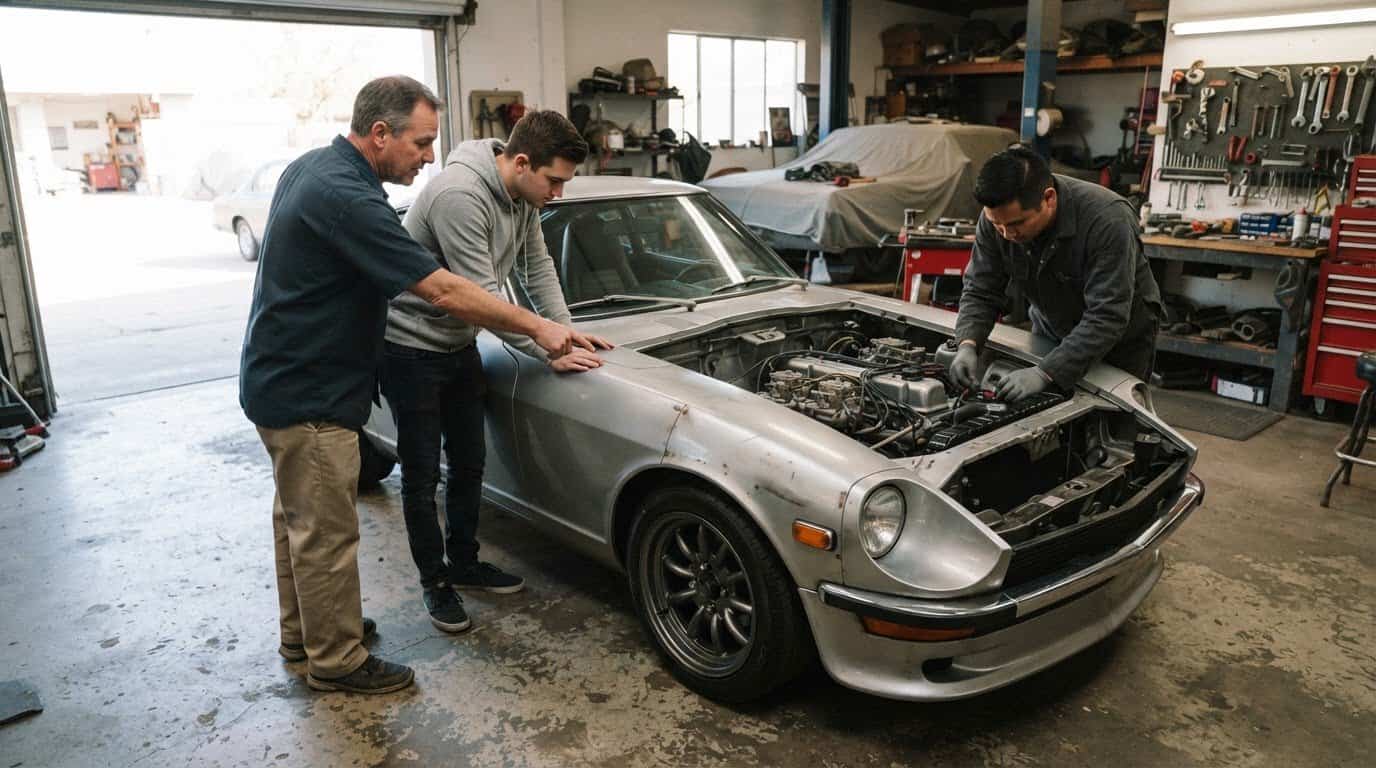
A flawless paint job can’t tell you whether the title tells the car’s full story. The most useful questions to ask the owner of a for-sale restomod start with an independent inspection, especially when the car has extensive modifications or limited documentation. Ask about the build, its ownership and auction history, and whether the title status matches the vehicle’s history.
It’s natural to focus first on the engine, transmission, suspension, and how the car feels on the road. But a confident test drive can’t replace clear records or an independent specialist’s assessment. The details behind the build matter as much as its classic lines and modern upgrades.
Use this guide to work through the conversation in a practical order: inspection scope, provenance and auction records, test-drive questions, previous ownership, and title status. You’ll learn what each answer can reveal, which documents help establish the car’s history, and why title rules vary by jurisdiction. Take your time. A careful review helps you understand what you’re buying before you commit.
Key Takeaways
- Arrange an independent inspection to assess the restomod’s condition and the quality of its modifications.
- Use build records and auction history to piece together the car’s provenance and changes over time.
- Make the test drive a focused check of how the engine, transmission, brakes, and other systems behave.
- Clarify ownership records and title status before moving forward, since title rules vary by jurisdiction.
1. Should I request an independent inspection?
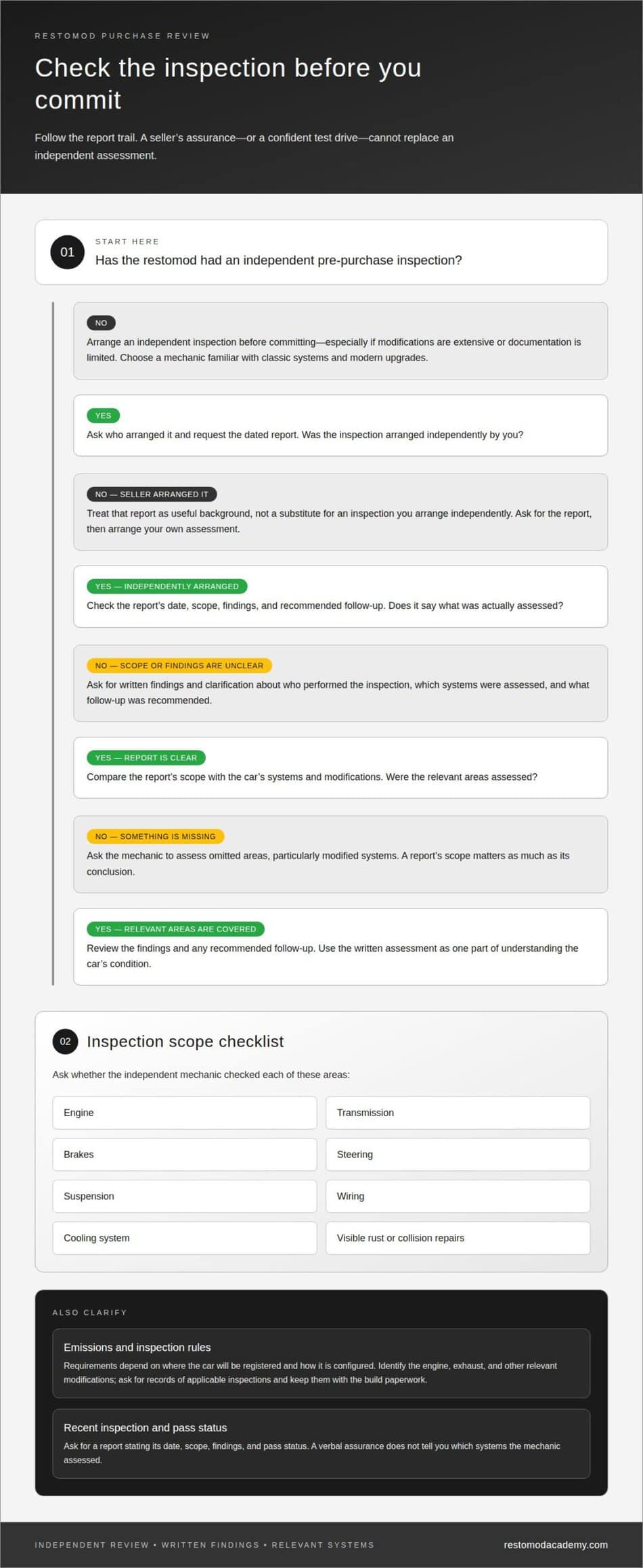
Yes. Arrange an independent pre-purchase inspection before committing, especially if the modifications are extensive or documentation is limited. Choose a mechanic familiar with classic systems and modern upgrades. Questions to ask the owner of a for-sale restomod should start with whether an independent mechanic has inspected the car and whether you can review the dated report. The report’s scope matters as much as its conclusion.
Ask what the inspection covered: the engine, transmission, brakes, steering, suspension, wiring, cooling system, and any visible rust or collision repairs. Request written findings, including recommended follow-up. A seller may have had the car inspected shortly before listing it. Treat that report as useful background, not a substitute for an inspection you arrange independently. Use questions to ask the owner of a for-sale restomod to clarify who performed the inspection and whether the modified systems were assessed.
What emissions and inspection rules apply in your state? Requirements depend on where you’ll register the car and how it’s configured. Identify the engine, exhaust, and other relevant modifications, then ask the seller for records of applicable inspections. Keep those documents with the build paperwork.
Has the restomod passed a recent independent mechanical inspection? Ask for a report stating the date, scope, findings, and pass status. A verbal assurance doesn’t tell you which systems the mechanic assessed.
How is a restomod valued, and how do modifications affect resale price? Condition, workmanship, parts, documentation, and buyer demand all shape its appeal. A modification may attract a particular enthusiast, but its build cost doesn’t necessarily determine resale value.
What insurance coverage and agreed-value appraisal does a restomod need? Gather build records, receipts, and photographs to support an appraisal of the car’s configuration and condition. Ask the insurer how it evaluates those materials and which policy terms apply.
2. Vehicle provenance and auction history
Ask the seller to trace the vehicle’s history from its original configuration through each major modification. A dated build binder can bring together invoices, photographs, service records, and previous sale documents. Compare the VIN on the vehicle with the VIN on its title and supporting records. A former owner’s show appearances may help explain the car’s public history, but they don’t prove its mechanical condition.
For auction history, ask where and when the car was listed, whether it sold, and what disclosures accompanied the listing. Request archived descriptions and photographs if available. Compare the auction details with the car’s current equipment: an engine swap, paint change, or altered interior may show how the build evolved. If an earlier listing mentioned damage or unfinished work, ask for invoices or repair records that explain what happened afterward.
Build a timeline of accidents and service using dated repair orders, maintenance receipts, and any insurance or auction documents the seller can provide. Ask directly about collision repairs, flood exposure, and major component replacements. The National Highway Traffic Safety Administration database lets you search by VIN for vehicle safety recalls. Recall information is one part of a vehicle’s history, not a complete service record.
Ask how many previous owners the seller knows about and whether ownership paperwork supports that account. A detailed binder can make gaps easier to spot, while mismatched dates or unexplained changes deserve clarification. Consumer Reports’ February 2026 title guidance describes a rebuilt title as following a previous salvage title associated with significant damage, such as a crash, fire, or flood. Ask whether the title history includes that designation and how it aligns with auction records. If financing is part of your purchase, organize the title and provenance documents for the lender’s review. A clear chain of records gives you a stronger basis for understanding the car’s history and negotiating from the facts.
3. Test drives
Plan a route that lets you experience the restomod at different speeds and on varied surfaces. Ask the seller how the car behaves in traffic, on open roads, and over rough pavement. If you’ll use it for weekend cruising, assess comfort and drivability. If you expect spirited drives, pay close attention to steering response and braking feel. Confirm that the seller permits a test drive before arranging your visit, and bring your questions.
Start with the engine. Notice how it starts, idles, and responds to gentle throttle, then watch the gauges as it warms up. Listen for unusual knocks, rattles, or changes in exhaust tone. Ask which engine and supporting components were installed and how the owner uses them. A useful answer connects the car’s behavior to its actual setup rather than relying on broad performance claims.
During the drive, test each system under ordinary conditions. Check whether the transmission shifts smoothly, the brakes respond consistently, and the car tracks straight on a level road. Feel for vibration through the steering wheel, hesitation under acceleration, or suspension noises over bumps. While parked, test the lights, indicators, wipers, and other controls. Don’t rush these checks to focus only on acceleration.
Afterward, ask the seller whether the car behaved as expected and whether any symptoms appear only when it’s hot. Compare the answers with the service records and history report, remembering that documents can’t show how the car feels on today’s route. If the owner says a modification causes a particular sound or handling trait, ask when it began and what work addressed it. Record your observations immediately, then decide whether they suit your intended use. A test drive is most useful when it turns the seller’s description into specific, observable answers.
4. Ownership and title status
Before discussing price or transfer, ask whose name is on the current title and whether that person is selling the restomod. In a private sale, match the seller’s identity to the ownership documents and ask who will complete the title transfer. If a relative, business, or estate is involved, clarify the seller’s authority and which documents support the transaction. A mismatch can delay the paperwork or point to an ownership gap that needs explanation.
Ask the owner to describe the title status in plain terms, then compare the answer with the document itself. Look for a clean, salvage, or rebuilt designation, and ask what repairs or events led to any branded status. The title history should make sense alongside the car’s ownership timeline and repair records. Don’t assume a polished restoration erases past damage or title history.
Registration paperwork varies by jurisdiction. A bill of sale is required to register a vehicle in New Mexico and most other states. Before arranging the transfer, ask which documents the buyer and seller need for the relevant registration office. Title rules vary, so confirm the applicable requirements with the relevant authority, insurer, and registration office. Keep copies of the signed bill of sale and transfer documents with the restomod’s records.
Ask whether the title is available now, whether the seller’s name matches its ownership record, and whether any document remains outstanding. Clear answers help distinguish an ordinary private sale from a transaction with unresolved paperwork. If the owner says a title issue is being corrected, ask what step remains and which office is handling it. Resolve those details before completing payment or taking possession. For support thinking through a restomod’s ownership and build history, get guidance on your purchase questions.
Restomod Academy
Restomod Academy can help you make sense of a seller’s answers, records, and inspection findings. Use The Ultimate Restomod Guide to build your knowledge of restomod systems and modifications, or turn to Restomod Consulting Services for guidance as you assess a specific project or purchase. If buying inspires you to build a restomod yourself, Premium Project Blueprints can support your planning.
Bring questions about the vehicle’s configuration, documentation, or next steps into your learning process. A considered decision starts with understanding how classic components and modern upgrades work together. Contact Restomod Academy to discuss guidance for your restomod questions.
Make the Next Move With Confidence
Make your decision about more than the excitement of seeing a classic shape brought to life. Think about how you want to use the car, what kind of ownership experience you’re ready for, and whether this particular build fits that vision. The questions to ask the owner of a for-sale restomod should help you decide based on your priorities, not pressure from the moment.
If you’re still weighing what the answers mean for your plans, take time to organize your thoughts before moving forward. A clearer picture of your goals can help you decide what deserves attention and what trade-offs you’re comfortable making. For guidance as you consider your next step, contact Restomod Academy.
A thoughtful decision brings you closer to enjoying a classic car’s character with the performance and feel you want. Keep asking, keep learning, and move forward with purpose.
Frequently Asked Questions
Should I request an independent inspection?
Yes, especially if the build includes complex wiring, custom fabrication, or major drivetrain changes. Ask the inspector to document workmanship details such as harness routing, mounting points, fluid leaks, and connections between modified and original systems. Close-up photographs can help you understand the findings later. Have the seller arrange access, but choose an inspector with no stake in the sale.
Can I Take the Car for a Test Drive?
Yes, ask to drive the car and agree on the route and conditions beforehand. If the seller prefers to ride along, clarify who will drive and how the route will work. Include ordinary streets and a stretch where the car can safely reach a steady cruising speed. If a drive isn’t possible, ask why and treat that limitation as an unresolved part of your decision.
Why is the Owner Selling the Car?
Ask the owner to explain the reason for selling in their own words, then consider whether it fits the car’s timeline. A change in priorities or a move may explain the sale; a recent repair or unfinished project may call for more detail. Listen for clear, consistent answers rather than trying to infer intent. The explanation provides context, not proof of the car’s condition.
How many people have owned this car?
Ask how many previous owners the seller can identify and whether any periods of ownership are unclear. Then review the dates in the available documents to understand how long each person kept the vehicle. Frequent changes don’t automatically indicate a problem, but a succession of short ownership periods can prompt useful follow-up questions about the build and its upkeep.
Has the car been in any accidents?
Ask about collisions, body damage, and repairs, including incidents the seller may not describe as accidents. For example, a replaced quarter panel or repaired frame section deserves an explanation of when the work happened and what documentation remains. Compare the account with photographs or repair paperwork. A vehicle history report can add context, but it isn’t a complete record of every event.
How often did you change the oil?
Ask the owner to show oil-change dates and mileage in service records, rather than relying only on memory. The right interval depends on the engine, oil specification, and driving conditions. For cars made before 2007, general guidance is every 3,000 to 5,000 miles, depending on driving conditions. A restomod with a different engine may need a schedule suited to that engine.
A flawless paint job can’t tell you whether the title tells the car’s full story. The most useful questions to ask the owner of a for-sale restomod start with an independent inspection, especially when the car has extensive modifications or limited documentation. Ask about the build, its ownership and auction history, and whether the title status matches the vehicle’s history.
It’s natural to focus first on the engine, transmission, suspension, and how the car feels on the road. But a confident test drive can’t replace clear records or an independent specialist’s assessment. The details behind the build matter as much as its classic lines and modern upgrades.
Use this guide to work through the conversation in a practical order: inspection scope, provenance and auction records, test-drive questions, previous ownership, and title status. You’ll learn what each answer can reveal, which documents help establish the car’s history, and why title rules vary by jurisdiction. Take your time. A careful review helps you understand what you’re buying before you commit.
Key Takeaways
- Arrange an independent inspection to assess the restomod’s condition and the quality of its modifications.
- Use build records and auction history to piece together the car’s provenance and changes over time.
- Make the test drive a focused check of how the engine, transmission, brakes, and other systems behave.
- Clarify ownership records and title status before moving forward, since title rules vary by jurisdiction.
1. Should I request an independent inspection?
Yes. Arrange an independent pre-purchase inspection before committing, especially if the modifications are extensive or documentation is limited. Choose a mechanic familiar with classic systems and modern upgrades. Questions to ask the owner of a for-sale restomod should start with whether an independent mechanic has inspected the car and whether you can review the dated report. The report’s scope matters as much as its conclusion.
Ask what the inspection covered: the engine, transmission, brakes, steering, suspension, wiring, cooling system, and any visible rust or collision repairs. Request written findings, including recommended follow-up. A seller may have had the car inspected shortly before listing it. Treat that report as useful background, not a substitute for an inspection you arrange independently. Use questions to ask the owner of a for-sale restomod to clarify who performed the inspection and whether the modified systems were assessed.
What emissions and inspection rules apply in your state? Requirements depend on where you’ll register the car and how it’s configured. Identify the engine, exhaust, and other relevant modifications, then ask the seller for records of applicable inspections. Keep those documents with the build paperwork.
Has the restomod passed a recent independent mechanical inspection? Ask for a report stating the date, scope, findings, and pass status. A verbal assurance doesn’t tell you which systems the mechanic assessed.
How is a restomod valued, and how do modifications affect resale price? Condition, workmanship, parts, documentation, and buyer demand all shape its appeal. A modification may attract a particular enthusiast, but its build cost doesn’t necessarily determine resale value.
What insurance coverage and agreed-value appraisal does a restomod need? Gather build records, receipts, and photographs to support an appraisal of the car’s configuration and condition. Ask the insurer how it evaluates those materials and which policy terms apply.
2. Vehicle provenance and auction history
Ask the seller to trace the vehicle’s history from its original configuration through each major modification. A dated build binder can bring together invoices, photographs, service records, and previous sale documents. Compare the VIN on the vehicle with the VIN on its title and supporting records. A former owner’s show appearances may help explain the car’s public history, but they don’t prove its mechanical condition.
For auction history, ask where and when the car was listed, whether it sold, and what disclosures accompanied the listing. Request archived descriptions and photographs if available. Compare the auction details with the car’s current equipment: an engine swap, paint change, or altered interior may show how the build evolved. If an earlier listing mentioned damage or unfinished work, ask for invoices or repair records that explain what happened afterward.
Build a timeline of accidents and service using dated repair orders, maintenance receipts, and any insurance or auction documents the seller can provide. Ask directly about collision repairs, flood exposure, and major component replacements. The National Highway Traffic Safety Administration database lets you search by VIN for vehicle safety recalls. Recall information is one part of a vehicle’s history, not a complete service record.
Ask how many previous owners the seller knows about and whether ownership paperwork supports that account. A detailed binder can make gaps easier to spot, while mismatched dates or unexplained changes deserve clarification. Consumer Reports’ February 2026 title guidance describes a rebuilt title as following a previous salvage title associated with significant damage, such as a crash, fire, or flood. Ask whether the title history includes that designation and how it aligns with auction records. If financing is part of your purchase, organize the title and provenance documents for the lender’s review. A clear chain of records gives you a stronger basis for understanding the car’s history and negotiating from the facts.
3. Test drives
Plan a route that lets you experience the restomod at different speeds and on varied surfaces. Ask the seller how the car behaves in traffic, on open roads, and over rough pavement. If you’ll use it for weekend cruising, assess comfort and drivability. If you expect spirited drives, pay close attention to steering response and braking feel. Confirm that the seller permits a test drive before arranging your visit, and bring your questions.
Start with the engine. Notice how it starts, idles, and responds to gentle throttle, then watch the gauges as it warms up. Listen for unusual knocks, rattles, or changes in exhaust tone. Ask which engine and supporting components were installed and how the owner uses them. A useful answer connects the car’s behavior to its actual setup rather than relying on broad performance claims.
During the drive, test each system under ordinary conditions. Check whether the transmission shifts smoothly, the brakes respond consistently, and the car tracks straight on a level road. Feel for vibration through the steering wheel, hesitation under acceleration, or suspension noises over bumps. While parked, test the lights, indicators, wipers, and other controls. Don’t rush these checks to focus only on acceleration.
Afterward, ask the seller whether the car behaved as expected and whether any symptoms appear only when it’s hot. Compare the answers with the service records and history report, remembering that documents can’t show how the car feels on today’s route. If the owner says a modification causes a particular sound or handling trait, ask when it began and what work addressed it. Record your observations immediately, then decide whether they suit your intended use. A test drive is most useful when it turns the seller’s description into specific, observable answers.
4. Ownership and title status
Before discussing price or transfer, ask whose name is on the current title and whether that person is selling the restomod. In a private sale, match the seller’s identity to the ownership documents and ask who will complete the title transfer. If a relative, business, or estate is involved, clarify the seller’s authority and which documents support the transaction. A mismatch can delay the paperwork or point to an ownership gap that needs explanation.
Ask the owner to describe the title status in plain terms, then compare the answer with the document itself. Look for a clean, salvage, or rebuilt designation, and ask what repairs or events led to any branded status. The title history should make sense alongside the car’s ownership timeline and repair records. Don’t assume a polished restoration erases past damage or title history.
Registration paperwork varies by jurisdiction. A bill of sale is required to register a vehicle in New Mexico and most other states. Before arranging the transfer, ask which documents the buyer and seller need for the relevant registration office. Title rules vary, so confirm the applicable requirements with the relevant authority, insurer, and registration office. Keep copies of the signed bill of sale and transfer documents with the restomod’s records.
Ask whether the title is available now, whether the seller’s name matches its ownership record, and whether any document remains outstanding. Clear answers help distinguish an ordinary private sale from a transaction with unresolved paperwork. If the owner says a title issue is being corrected, ask what step remains and which office is handling it. Resolve those details before completing payment or taking possession. For support thinking through a restomod’s ownership and build history, get guidance on your purchase questions.
Restomod Academy
Restomod Academy can help you make sense of a seller’s answers, records, and inspection findings. Use The Ultimate Restomod Guide to build your knowledge of restomod systems and modifications, or turn to Restomod Consulting Services for guidance as you assess a specific project or purchase. If buying inspires you to build a restomod yourself, Premium Project Blueprints can support your planning.
Bring questions about the vehicle’s configuration, documentation, or next steps into your learning process. A considered decision starts with understanding how classic components and modern upgrades work together. Contact Restomod Academy to discuss guidance for your restomod questions.
Make the Next Move With Confidence
Make your decision about more than the excitement of seeing a classic shape brought to life. Think about how you want to use the car, what kind of ownership experience you’re ready for, and whether this particular build fits that vision. The questions to ask the owner of a for-sale restomod should help you decide based on your priorities, not pressure from the moment.
If you’re still weighing what the answers mean for your plans, take time to organize your thoughts before moving forward. A clearer picture of your goals can help you decide what deserves attention and what trade-offs you’re comfortable making. For guidance as you consider your next step, contact Restomod Academy.
A thoughtful decision brings you closer to enjoying a classic car’s character with the performance and feel you want. Keep asking, keep learning, and move forward with purpose.
Frequently Asked Questions
Should I request an independent inspection?
Yes, especially if the build includes complex wiring, custom fabrication, or major drivetrain changes. Ask the inspector to document workmanship details such as harness routing, mounting points, fluid leaks, and connections between modified and original systems. Close-up photographs can help you understand the findings later. Have the seller arrange access, but choose an inspector with no stake in the sale.
Can I Take the Car for a Test Drive?
Yes, ask to drive the car and agree on the route and conditions beforehand. If the seller prefers to ride along, clarify who will drive and how the route will work. Include ordinary streets and a stretch where the car can safely reach a steady cruising speed. If a drive isn’t possible, ask why and treat that limitation as an unresolved part of your decision.
Why is the Owner Selling the Car?
Ask the owner to explain the reason for selling in their own words, then consider whether it fits the car’s timeline. A change in priorities or a move may explain the sale; a recent repair or unfinished project may call for more detail. Listen for clear, consistent answers rather than trying to infer intent. The explanation provides context, not proof of the car’s condition.
How many people have owned this car?
Ask how many previous owners the seller can identify and whether any periods of ownership are unclear. Then review the dates in the available documents to understand how long each person kept the vehicle. Frequent changes don’t automatically indicate a problem, but a succession of short ownership periods can prompt useful follow-up questions about the build and its upkeep.
Has the car been in any accidents?
Ask about collisions, body damage, and repairs, including incidents the seller may not describe as accidents. For example, a replaced quarter panel or repaired frame section deserves an explanation of when the work happened and what documentation remains. Compare the account with photographs or repair paperwork. A vehicle history report can add context, but it isn’t a complete record of every event.
How often did you change the oil?
Ask the owner to show oil-change dates and mileage in service records, rather than relying only on memory. The right interval depends on the engine, oil specification, and driving conditions. For cars made before 2007, general guidance is every 3,000 to 5,000 miles, depending on driving conditions. A restomod with a different engine may need a schedule suited to that engine.