
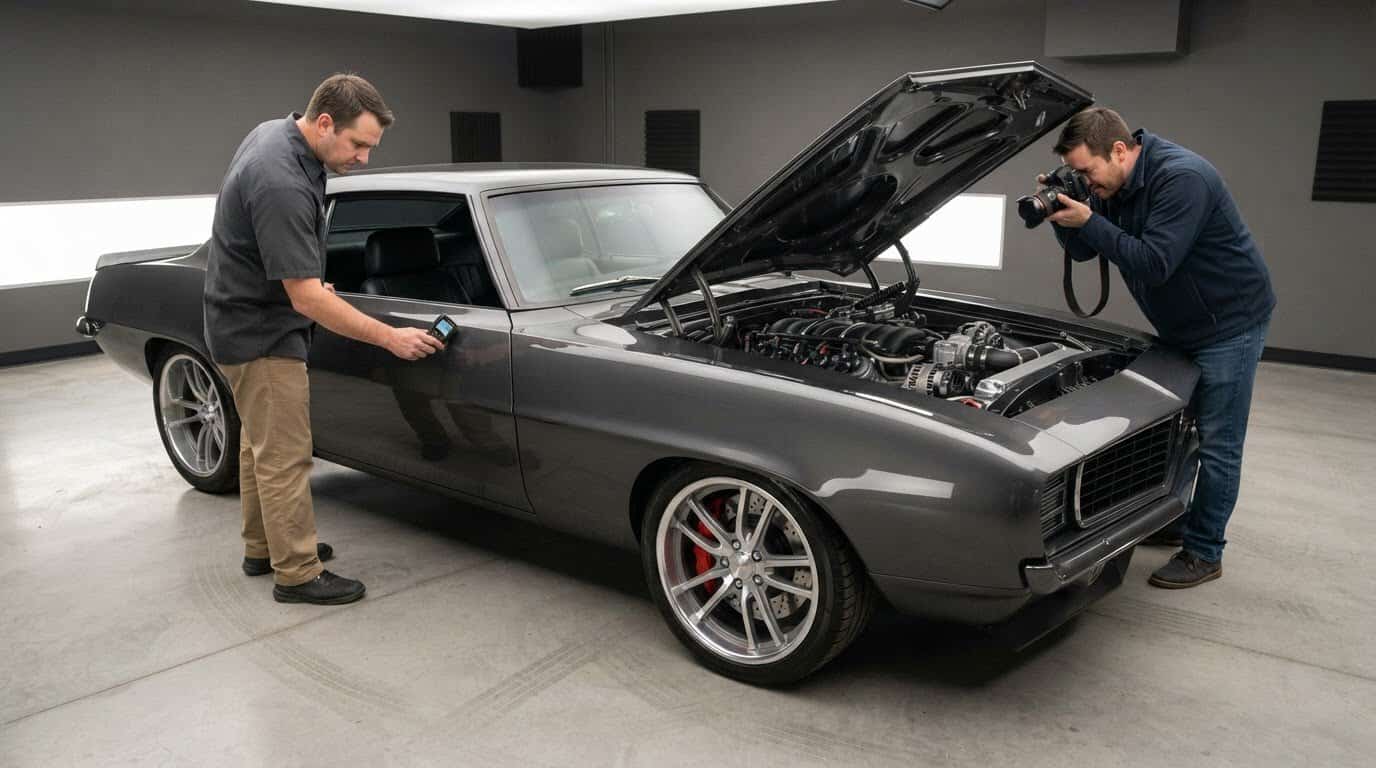
A restomod’s value depends on more than the money spent building it. To understand how to get a restomod appraised, organize the build records and arrange an in-person inspection with an appraiser experienced in classic and modified vehicles. The appraisal should document the car’s condition, components, workmanship, and supporting evidence, then use relevant market data to establish a value for insurance or sale.
A detailed record of the craftsmanship and modern upgrades can help show what sets your car apart. A photo-documented appraisal can support insurance discussions, while a sale appraisal gives buyers a clearer view of the vehicle and how its value was determined. Owner-built cars can also be appraised: organized receipts and build details help explain the work, but the amount invested alone does not determine market value. Here’s how to prepare for an inspection, what the appraiser evaluates, and how professional-shop and owner-built projects are assessed.
Key Takeaways
- Use a detailed, photo-documented appraisal to support insurance discussions and present your restomod clearly when selling.
- Gather build invoices, parts and labor receipts, title information, and service records to help document the vehicle’s history and work.
- Prepare for an inspection of the car’s condition, components, and workmanship, followed by research into relevant market data.
- Whether a custom shop or the owner completed the build, assess value from the finished vehicle and comparable sales, not the project spend alone.
Why have a Restomod appraised?
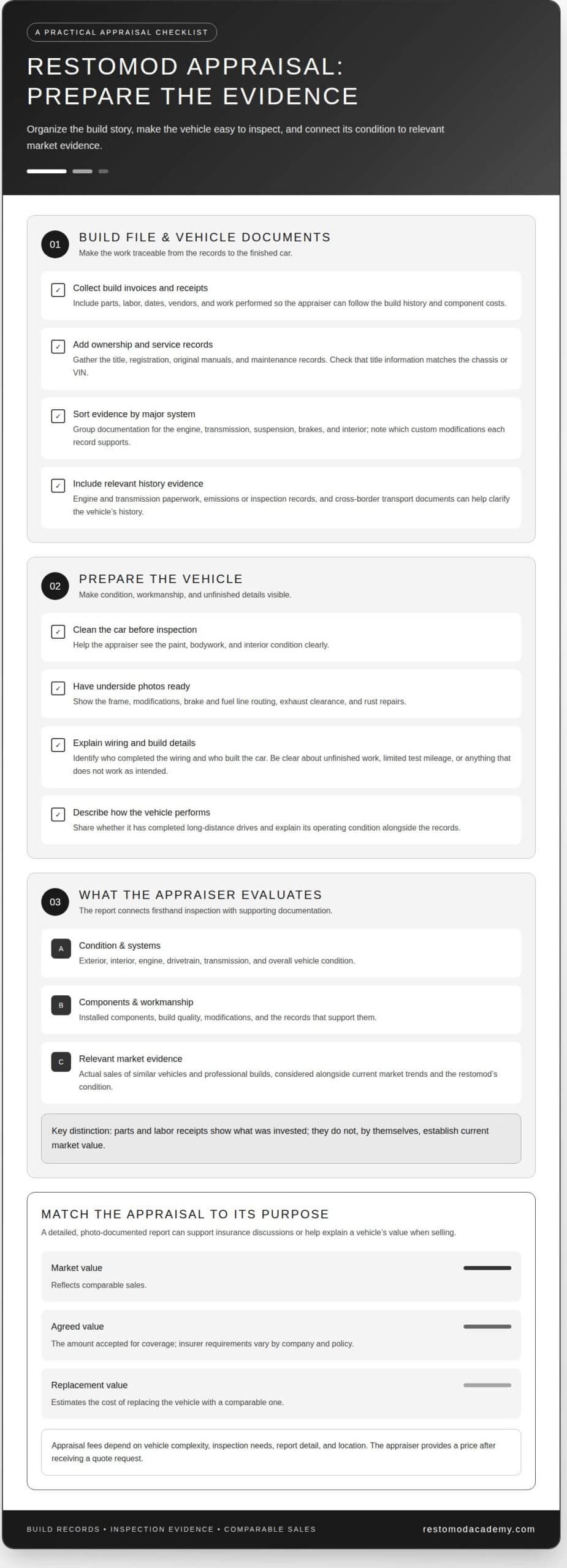
An appraisal documents a restomod’s condition and supports insurance or resale decisions. Market value reflects comparable sales; agreed value is the amount accepted for coverage; replacement value estimates the cost of replacing the vehicle with a comparable one.
Appraisal fees depend on the vehicle’s complexity, inspection needs, report detail, and location. The appraiser provides a price after receiving a quote request.
- Choose an appraiser experienced with classic and modified vehicles. Consider professionals certified by a recognized organization such as the American Society of Appraisers (ASA) or International Vehicle Appraisers Network (IVAN). Their familiarity with custom components helps them assess work that standard classic-car comparisons may overlook.
- Request a detailed, photo-documented report for insurance use. It should describe the vehicle’s condition, modifications, components, and supporting records, giving an insurer evidence to review after a loss. Requirements for using a certified appraisal to support agreed-value coverage vary by company and policy.
- Build the documentation around the policy you need. Agreed-value insurers typically require thorough records and proof of build quality. Include clear photographs, receipts, invoices, and descriptions of major upgrades so the valuation connects the finished car to its documented investment.
- Use the same report to prepare for resale. A buyer can see how the appraiser evaluated the vehicle, rather than relying only on the asking price or build cost. For example, a restomod built from a classic platform can combine original character with modern components; learn more about what defines a restomod.
- Review the report’s purpose and valuation before submitting it. An insurer may use an appraisal to consider agreed coverage, while a sale appraisal helps explain the asking value. Keep the report with the vehicle’s records, and update it when substantial changes affect condition or equipment.
Can you appraise a vehicle built by a professional custom shop?
An appraiser can assess a professionally built restomod by inspecting its workmanship, components, condition, records, and market data. Missing receipts, unclear builder details, undocumented wiring, and limited test miles can make the assessment less conclusive; shop invoices alone don’t establish market value.
-
Assemble Build Records and Vehicle Documents
Gather the shop’s build invoices, parts receipts, and labor records before the inspection. Invoices that identify dates, vendors, and work performed help establish the vehicle’s build history and component replacement costs. Include the title, registration, original manuals, and maintenance records. Check that the title information matches the vehicle’s chassis or VIN, and organize documents so the appraiser can connect each modification to the finished car.
-
Document Vehicle History and Components
Organize records for the engine, transmission, suspension, brakes, and interior, and note which custom modifications each document supports. Engine and transmission paperwork, emissions or inspection records, and cross-border transport documents can help clarify the car’s history. Receipts show what was purchased or installed, but the amount invested does not automatically equal current market value. The appraiser considers the actual components, build quality, condition, and relevant market data.
-
Prepare the Vehicle for Appraisal
Clean the vehicle so its paint, bodywork, and interior condition are visible. Make underside photographs available, especially around the frame, modifications, brake and fuel lines, exhaust clearance, and rust repairs. Point out wiring work and explain any unfinished details rather than leaving them undocumented. Messy wiring, vague builder information, missing receipts, or little test mileage can raise concerns during an evaluation. For LS-powered builds, organize engine-swap details with the LS engine swap guide.
Appraisal inspection and research process
To understand how to get a restomod appraised, arrange an inspection so the appraiser can assess the car, its records, and its condition firsthand. The valuation weighs that evidence against relevant market data and sales of similar vehicles.
-
Check Condition and Mechanical Systems
Prepare the vehicle for a systematic inspection of its exterior, interior, engine, and drivetrain. The appraiser evaluates condition alongside workmanship and installed components, including the transmission and modifications. For an online purchase, ask the seller for clear underside photos showing the frame, brake and fuel line routing, exhaust clearance, and rust repairs. Also request photos of the paint, bodywork, and interior details to reveal wear or unfinished work.
-
Research and Calculate Vehicle Value
Compare the build sheet and vehicle condition with actual sales of similar professional builds. The appraiser weighs those sales against current market trends, the quality and supportability of components, and the restomod’s overall condition. Parts and labor receipts alone don’t establish market value. For insurance, use the completed appraisal to inform an agreed-value discussion with the insurer. A sound approach to how to get a restomod appraised connects the documented build with relevant comparisons.
- Give the appraiser organized records and explain how the car performs. Identify who completed the wiring, whether the vehicle has completed long-distance drives, and what still doesn’t work as intended. These details help connect inspection findings with the build documentation. If buying remotely, use photos and the inspection report to assess the vehicle before committing, rather than treating polished exterior images as proof of its underside condition.
Professional and owner-built vehicle appraisals
Appraisers can evaluate professionally built and owner-built restomods, including pro-street cars, by examining the finished vehicle and its market context.
- Describe the build accurately. A restomod combines a classic vehicle with modern upgrades, while a pro-street build follows a distinct custom performance direction. Give the appraiser the build sheet and identify the builder, engine, drivetrain, chassis work, and other major changes. These details help explain how the vehicle differs from an original classic and which comparable sales may be relevant.
- Review the vehicle’s identity and history. The title should clearly correspond with the chassis or VIN so the appraiser can connect the paperwork to the car being assessed. Share available registrations, maintenance history, and records of upgrades or renovations. For a collector considering a purchase, consistent documentation helps establish the vehicle’s provenance and provides context for its current condition.
- Consider the whole vehicle, not just its most impressive upgrade. An appraiser evaluates the exterior, interior, engine, and drivetrain, alongside the quality of the work and supporting records. A powerful engine or specialized chassis can influence buyer interest, but neither automatically sets market value. Build-sheet details and actual sales of similar professional builds provide useful context for assessing the complete restomod.
- Schedule a reappraisal when the vehicle or its purpose changes. Consider one before selling, after completing restoration work, or when renewing insurance. Market conditions can shift, and upgrades, renovations, or changing condition can affect value over time. If you’re planning a build and want help weighing project decisions, explore Restomod Consulting Services for guidance tailored to restomod projects.
Restomod Academy
Restomod Academy helps builders make informed decisions as they plan, document, and refine a project ahead of an insurance or sale appraisal. The Ultimate Restomod Guide offers educational support for understanding the build process, while Restomod Consulting Services can help you work through project-specific decisions. Premium Project Blueprints provide structured plans for shaping a build with intention.
Use these resources when mapping out modifications, setting a project’s direction, or weighing how your choices may affect its finished configuration. A thoughtful build plan can make the vehicle’s components and workmanship easier to explain during an appraisal. For guidance on your restomod project, contact Restomod Academy.
Move Your Build Forward With Confidence
An appraisal can mark a useful turning point, not just provide a figure for an insurance file or sale listing. Treat it as a snapshot of your restomod’s current condition and an opportunity to make deliberate choices about its next stage. If you’re still planning upgrades, consider how each change affects the vehicle’s character, documentation, and appeal to future buyers. If the build is complete, keep its history organized as the car continues to evolve.
Knowing how to get a restomod appraised gives you a clearer framework for preparing the vehicle and understanding the report. The next step may be refining your project plan, strengthening your records, or thinking through how to present the car’s distinctive blend of heritage and modern engineering. For guidance as you shape that path, contact Restomod Academy to discuss your appraisal. Keep building with care, and let each considered decision add purpose to the machine you’re creating.
Frequently Asked Questions
Can I use standard car valuation sites for my restomod?
Use standard valuation sites as a starting reference, not as a complete restomod assessment. Their estimates may not reflect a custom chassis, modern drivetrain, or specialized finish. Compare an estimate with sales of genuinely similar modified vehicles, then consider how differences in condition and build quality affect the comparison. A specialist appraisal provides a vehicle-specific assessment instead of relying on a broad category estimate.
Does an appraisal include the money I spent building the vehicle?
An appraisal can consider documented spending, but your total investment isn’t automatically the vehicle’s market value. Receipts help identify installed parts and completed work; they don’t prove that buyers will pay the same amount. For example, a costly one-off modification may have less appeal than a supported component. Keep spending records, but treat them as evidence about the build, not as a guaranteed sale figure.
Should I update my appraisal after major modifications?
Consider an updated appraisal after a major upgrade or restoration changes the vehicle’s equipment, condition, or workmanship. A new engine or drivetrain can alter the build’s appeal, while repairs may change how its condition is assessed. Keep a dated record of completed work and new components. An updated report can better represent the car’s current state when you revisit insurance coverage or prepare to sell.
What information and documents does a restomod appraiser need?
Prepare the vehicle’s title and registration, along with records that explain its identity and history. Build invoices, parts receipts, maintenance records, and engine and transmission documents help connect the finished car to the work completed. Include inspection or emissions documents and transport paperwork when relevant. Clear photos can also show details that may not be obvious during a brief walk-around, such as underbody changes or repair areas.
How do appraisers value custom parts, labor, and modifications?
Appraisers assess how installed components, workmanship, condition, and documentation contribute to the complete vehicle. Parts and labor records help establish what was used and what work was performed, while comparable sales provide context for market value. A modification’s cost alone doesn’t determine its contribution. A well-integrated upgrade may support buyer interest, while a highly personal change can narrow the pool of interested buyers.
What type of appraiser specializes in restomods and custom cars?
Look for a classic-vehicle appraiser experienced in evaluating modified cars, custom builds, and their supporting records. Familiarity with vintage platforms and modern components helps the appraiser assess the vehicle as a complete build. The American Society of Appraisers (ASA) and International Vehicle Appraisers Network (IVAN) are examples of recognized organizations whose certified appraisers may work in this area. Match the appraiser’s expertise to the purpose of your appraisal.
A restomod’s value depends on more than the money spent building it. To understand how to get a restomod appraised, organize the build records and arrange an in-person inspection with an appraiser experienced in classic and modified vehicles. The appraisal should document the car’s condition, components, workmanship, and supporting evidence, then use relevant market data to establish a value for insurance or sale.
A detailed record of the craftsmanship and modern upgrades can help show what sets your car apart. A photo-documented appraisal can support insurance discussions, while a sale appraisal gives buyers a clearer view of the vehicle and how its value was determined. Owner-built cars can also be appraised: organized receipts and build details help explain the work, but the amount invested alone does not determine market value. Here’s how to prepare for an inspection, what the appraiser evaluates, and how professional-shop and owner-built projects are assessed.
Key Takeaways
- Use a detailed, photo-documented appraisal to support insurance discussions and present your restomod clearly when selling.
- Gather build invoices, parts and labor receipts, title information, and service records to help document the vehicle’s history and work.
- Prepare for an inspection of the car’s condition, components, and workmanship, followed by research into relevant market data.
- Whether a custom shop or the owner completed the build, assess value from the finished vehicle and comparable sales, not the project spend alone.
Why have a Restomod appraised?
An appraisal documents a restomod’s condition and supports insurance or resale decisions. Market value reflects comparable sales; agreed value is the amount accepted for coverage; replacement value estimates the cost of replacing the vehicle with a comparable one.
Appraisal fees depend on the vehicle’s complexity, inspection needs, report detail, and location. The appraiser provides a price after receiving a quote request.
- Choose an appraiser experienced with classic and modified vehicles. Consider professionals certified by a recognized organization such as the American Society of Appraisers (ASA) or International Vehicle Appraisers Network (IVAN). Their familiarity with custom components helps them assess work that standard classic-car comparisons may overlook.
- Request a detailed, photo-documented report for insurance use. It should describe the vehicle’s condition, modifications, components, and supporting records, giving an insurer evidence to review after a loss. Requirements for using a certified appraisal to support agreed-value coverage vary by company and policy.
- Build the documentation around the policy you need. Agreed-value insurers typically require thorough records and proof of build quality. Include clear photographs, receipts, invoices, and descriptions of major upgrades so the valuation connects the finished car to its documented investment.
- Use the same report to prepare for resale. A buyer can see how the appraiser evaluated the vehicle, rather than relying only on the asking price or build cost. For example, a restomod built from a classic platform can combine original character with modern components; learn more about what defines a restomod.
- Review the report’s purpose and valuation before submitting it. An insurer may use an appraisal to consider agreed coverage, while a sale appraisal helps explain the asking value. Keep the report with the vehicle’s records, and update it when substantial changes affect condition or equipment.
Can you appraise a vehicle built by a professional custom shop?
An appraiser can assess a professionally built restomod by inspecting its workmanship, components, condition, records, and market data. Missing receipts, unclear builder details, undocumented wiring, and limited test miles can make the assessment less conclusive; shop invoices alone don’t establish market value.
-
Assemble Build Records and Vehicle Documents
Gather the shop’s build invoices, parts receipts, and labor records before the inspection. Invoices that identify dates, vendors, and work performed help establish the vehicle’s build history and component replacement costs. Include the title, registration, original manuals, and maintenance records. Check that the title information matches the vehicle’s chassis or VIN, and organize documents so the appraiser can connect each modification to the finished car.
-
Document Vehicle History and Components
Organize records for the engine, transmission, suspension, brakes, and interior, and note which custom modifications each document supports. Engine and transmission paperwork, emissions or inspection records, and cross-border transport documents can help clarify the car’s history. Receipts show what was purchased or installed, but the amount invested does not automatically equal current market value. The appraiser considers the actual components, build quality, condition, and relevant market data.
-
Prepare the Vehicle for Appraisal
Clean the vehicle so its paint, bodywork, and interior condition are visible. Make underside photographs available, especially around the frame, modifications, brake and fuel lines, exhaust clearance, and rust repairs. Point out wiring work and explain any unfinished details rather than leaving them undocumented. Messy wiring, vague builder information, missing receipts, or little test mileage can raise concerns during an evaluation. For LS-powered builds, organize engine-swap details with the LS engine swap guide.
Appraisal inspection and research process
To understand how to get a restomod appraised, arrange an inspection so the appraiser can assess the car, its records, and its condition firsthand. The valuation weighs that evidence against relevant market data and sales of similar vehicles.
-
Check Condition and Mechanical Systems
Prepare the vehicle for a systematic inspection of its exterior, interior, engine, and drivetrain. The appraiser evaluates condition alongside workmanship and installed components, including the transmission and modifications. For an online purchase, ask the seller for clear underside photos showing the frame, brake and fuel line routing, exhaust clearance, and rust repairs. Also request photos of the paint, bodywork, and interior details to reveal wear or unfinished work.
-
Research and Calculate Vehicle Value
Compare the build sheet and vehicle condition with actual sales of similar professional builds. The appraiser weighs those sales against current market trends, the quality and supportability of components, and the restomod’s overall condition. Parts and labor receipts alone don’t establish market value. For insurance, use the completed appraisal to inform an agreed-value discussion with the insurer. A sound approach to how to get a restomod appraised connects the documented build with relevant comparisons.
- Give the appraiser organized records and explain how the car performs. Identify who completed the wiring, whether the vehicle has completed long-distance drives, and what still doesn’t work as intended. These details help connect inspection findings with the build documentation. If buying remotely, use photos and the inspection report to assess the vehicle before committing, rather than treating polished exterior images as proof of its underside condition.
Professional and owner-built vehicle appraisals
Appraisers can evaluate professionally built and owner-built restomods, including pro-street cars, by examining the finished vehicle and its market context.
- Describe the build accurately. A restomod combines a classic vehicle with modern upgrades, while a pro-street build follows a distinct custom performance direction. Give the appraiser the build sheet and identify the builder, engine, drivetrain, chassis work, and other major changes. These details help explain how the vehicle differs from an original classic and which comparable sales may be relevant.
- Review the vehicle’s identity and history. The title should clearly correspond with the chassis or VIN so the appraiser can connect the paperwork to the car being assessed. Share available registrations, maintenance history, and records of upgrades or renovations. For a collector considering a purchase, consistent documentation helps establish the vehicle’s provenance and provides context for its current condition.
- Consider the whole vehicle, not just its most impressive upgrade. An appraiser evaluates the exterior, interior, engine, and drivetrain, alongside the quality of the work and supporting records. A powerful engine or specialized chassis can influence buyer interest, but neither automatically sets market value. Build-sheet details and actual sales of similar professional builds provide useful context for assessing the complete restomod.
- Schedule a reappraisal when the vehicle or its purpose changes. Consider one before selling, after completing restoration work, or when renewing insurance. Market conditions can shift, and upgrades, renovations, or changing condition can affect value over time. If you’re planning a build and want help weighing project decisions, explore Restomod Consulting Services for guidance tailored to restomod projects.
Restomod Academy
Restomod Academy helps builders make informed decisions as they plan, document, and refine a project ahead of an insurance or sale appraisal. The Ultimate Restomod Guide offers educational support for understanding the build process, while Restomod Consulting Services can help you work through project-specific decisions. Premium Project Blueprints provide structured plans for shaping a build with intention.
Use these resources when mapping out modifications, setting a project’s direction, or weighing how your choices may affect its finished configuration. A thoughtful build plan can make the vehicle’s components and workmanship easier to explain during an appraisal. For guidance on your restomod project, contact Restomod Academy.
Move Your Build Forward With Confidence
An appraisal can mark a useful turning point, not just provide a figure for an insurance file or sale listing. Treat it as a snapshot of your restomod’s current condition and an opportunity to make deliberate choices about its next stage. If you’re still planning upgrades, consider how each change affects the vehicle’s character, documentation, and appeal to future buyers. If the build is complete, keep its history organized as the car continues to evolve.
Knowing how to get a restomod appraised gives you a clearer framework for preparing the vehicle and understanding the report. The next step may be refining your project plan, strengthening your records, or thinking through how to present the car’s distinctive blend of heritage and modern engineering. For guidance as you shape that path, contact Restomod Academy to discuss your appraisal. Keep building with care, and let each considered decision add purpose to the machine you’re creating.
Frequently Asked Questions
Can I use standard car valuation sites for my restomod?
Use standard valuation sites as a starting reference, not as a complete restomod assessment. Their estimates may not reflect a custom chassis, modern drivetrain, or specialized finish. Compare an estimate with sales of genuinely similar modified vehicles, then consider how differences in condition and build quality affect the comparison. A specialist appraisal provides a vehicle-specific assessment instead of relying on a broad category estimate.
Does an appraisal include the money I spent building the vehicle?
An appraisal can consider documented spending, but your total investment isn’t automatically the vehicle’s market value. Receipts help identify installed parts and completed work; they don’t prove that buyers will pay the same amount. For example, a costly one-off modification may have less appeal than a supported component. Keep spending records, but treat them as evidence about the build, not as a guaranteed sale figure.
Should I update my appraisal after major modifications?
Consider an updated appraisal after a major upgrade or restoration changes the vehicle’s equipment, condition, or workmanship. A new engine or drivetrain can alter the build’s appeal, while repairs may change how its condition is assessed. Keep a dated record of completed work and new components. An updated report can better represent the car’s current state when you revisit insurance coverage or prepare to sell.
What information and documents does a restomod appraiser need?
Prepare the vehicle’s title and registration, along with records that explain its identity and history. Build invoices, parts receipts, maintenance records, and engine and transmission documents help connect the finished car to the work completed. Include inspection or emissions documents and transport paperwork when relevant. Clear photos can also show details that may not be obvious during a brief walk-around, such as underbody changes or repair areas.
How do appraisers value custom parts, labor, and modifications?
Appraisers assess how installed components, workmanship, condition, and documentation contribute to the complete vehicle. Parts and labor records help establish what was used and what work was performed, while comparable sales provide context for market value. A modification’s cost alone doesn’t determine its contribution. A well-integrated upgrade may support buyer interest, while a highly personal change can narrow the pool of interested buyers.
What type of appraiser specializes in restomods and custom cars?
Look for a classic-vehicle appraiser experienced in evaluating modified cars, custom builds, and their supporting records. Familiarity with vintage platforms and modern components helps the appraiser assess the vehicle as a complete build. The American Society of Appraisers (ASA) and International Vehicle Appraisers Network (IVAN) are examples of recognized organizations whose certified appraisers may work in this area. Match the appraiser’s expertise to the purpose of your appraisal.