
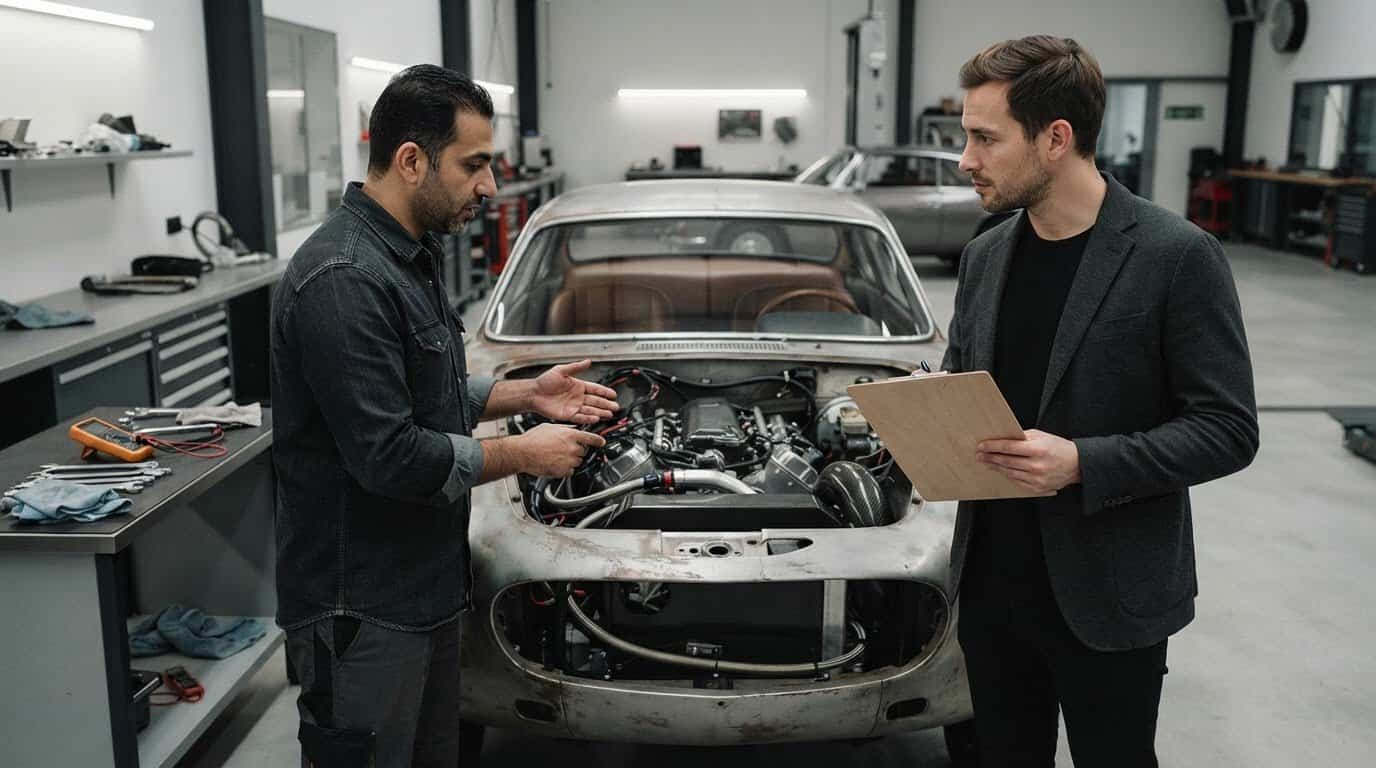
A project car’s asking price should reflect what’s finished, what remains to be done, and the risks that may be hidden. When negotiating the price of a partially finished project car, inspect its condition, estimate the cost and effort to complete the build, and compare it with similar vehicles. Then make an offer you can support with evidence, not enthusiasm alone.
A classic body, partly assembled engine, or carefully chosen components can make a project look full of promise. But unfinished work brings expense and uncertainty. Judge the car as it stands, rather than paying for the seller’s vision of what it could become.
This guide explains how to inspect a project, find useful comparisons, set a realistic target, and make a firm, respectful offer. You’ll also learn how to use documented repair needs in the discussion and when walking away is the better choice for your build and budget.
Key Takeaways
- Inspect the car carefully and use documented defects or unfinished work to support your offer.
- Compare vehicles with closely matching specifications and condition before setting your target price.
- Separate the car’s current value from the time, parts, and labor needed to complete your build.
- Prepare a clear offer, stay focused on the total price, and be ready to walk away if the deal doesn’t fit.
Pre-purchase inspections and repair negotiations
Inspect the car before discussing price, then connect each documented defect to the work still required. Keep the inspection findings, paperwork, and seller’s terms in view throughout the negotiation.
-
Inspect the Car and Identify Needed Repairs
Arrange an independent pre-purchase inspection and ask the seller for access to the car and its records. Check the body, frame, engine, transmission, brakes, wiring, and incomplete assemblies; compare installed parts with any build notes. Photograph defects and record which components are missing. A written inspection gives you specific repair points to discuss rather than relying on a seller’s description. Private sellers may accept a lower sale price for mechanical problems; dealerships will usually handle repairs.
-
Estimate Remaining Parts and Labor
List every unfinished system, separating required repairs from upgrades you’ve chosen for your build. Estimate parts, machine work, paint and bodywork, upholstery, electrical work, tires, and transport. Get estimates for specialist labor and include missing hardware or components shown in the build plan. Don’t automatically add a part’s original purchase cost to the asking price. Assess its condition, fit, and usefulness, then account for installation and remaining work. Your offer should reflect the car’s present condition and documented completion costs.
Estimate parts, specialist labor, repairs, finishing work, and any costs to move or store the car. Keep optional upgrades separate from the work needed to complete the project.
-
Assess Risks of an Unfinished Project
Verify the VIN against the title and vehicle, review ownership records, and ask for documentation resolving any listed lien. What risks are common? Missing parts, undocumented modifications, hidden damage, and unclear ownership can derail a build or complicate resale. Review the buyer’s order against the agreed itemized out-the-door price. According to the Federal Trade Commission, its car-buying guide can help you research add-ons. For timing, dealerships may pursue monthly quotas near month-end; the final five days of December have historically brought some of their deepest discounts. Those timing pressures may not apply to a private seller.
Researching comparable vehicles and setting a target
Set your target using comparable vehicles, the project’s current condition, and the full terms of the deal. Make sure your comparisons are consistent before you offer.
-
Research Comparable Sales and Valuation Tools
Shortlist 2-4 vehicles matching the project’s year, make, model, trim, and configuration. In the United States, compare completed auction results, classified listings, and vehicle valuation tools; distinguish asking prices from recorded sale results. Prices can vary by thousands of dollars when those details differ. What tools help price project cars? Use several sources, then prioritize examples with similar condition, equipment, and location. Don’t let a restored example set the value of an incomplete shell.
-
Compare Running, Unfinished, and Completed Values
Separate the car’s present condition from its potential. Compare running examples, unfinished builds, and completed vehicles of the same model, noting which systems work and which components are missing. To value a partially finished project, start with the closest unfinished comparables, then adjust for documented repairs, usable parts, and the labor needed to reach your intended configuration. A running car generally supports a stronger comparison than a non-running project. A completed car shows potential, not present value. Make, model, condition, trim, accessories, and local demand all affect comparisons.
-
Compare Written Offers and the Full Deal
Request itemized out-the-door quotes from multiple sellers for the same vehicle, with a 24-48 hour response window. A negoti-auction invites several dealerships to submit their best written out-the-door price. Compare purchase price, fees, add-ons, financing terms, and total payable amount, not monthly payments alone. For a private project-car sale, use written messages to record the offered price and included parts. What is the same car worth running, unfinished, or completed? Its value changes with condition and completeness; use matching sales, not an unsupported fixed figure.
- Get trade-in quotes from more than one source and assess them separately from the project car’s price. Record each offer, then evaluate the combined deal without letting a stronger trade-in figure conceal a higher purchase cost. Set your target using the closest comparable sales, then account for the project’s documented completion costs. Keep your maximum separate from your opening offer, and support both with comparison notes and written quotes.

Haggling or making a take-it-or-leave-it offer
When negotiating the price of a partially finished project car, let the evidence shape your tone and offer. Decide what you can justify before the conversation begins, and keep the discussion focused on the car’s current condition.
- Present your offer with a concise explanation based on the inspection findings, missing components, and documented unfinished work. For example, point to an incomplete wiring harness or an untested engine, then explain how each affects the car’s usefulness today. Don’t criticize the seller’s choices or treat your preferred upgrades as defects. Your strongest case is the difference between the car as it stands and the work needed for your intended build.
- If you’re inexperienced or want a clear boundary, make a reasonable take-it-or-leave-it offer. State the amount in writing, specify what the sale includes, and make the conditions clear. Base the offer on comparable vehicles and the car’s documented condition, not an arbitrary discount. Don’t call it final if you expect to keep bargaining. Clear terms make your position credible and help both sides decide whether further discussion makes sense.
- Listen to the seller’s counteroffer and respond to the specific difference. If the seller places a high value on an installed component, ask about its make, condition, and supporting records. If the price can’t change, discuss a concrete alternative, such as including documented spare parts or completing an agreed repair before the sale. Record revised terms in writing, then compare the full offer with your target instead of reacting to one concession.
- Set your walk-away point before meeting the seller, and stick to it. Consider the purchase terms alongside the project’s known obligations. If pressure or new information changes the deal, pause before deciding. Be prepared to leave if the terms don’t work. A disciplined approach to negotiating the price of a partially finished project car means choosing one that fits your budget, skills, and intended build, rather than stretching for a particular chassis.
Preparing for a car-price negotiation
Prepare your numbers before meeting the seller. A written plan keeps the discussion focused on the car, financing, and terms.
- Before visiting a dealership, compare the vehicle’s MSRP and invoice price as context, not as substitutes for project-car comparables. For an unfinished build, note how its condition and remaining work differ from a new or complete vehicle. Bring your comparison notes so you can explain your position clearly.
- Arrange financing preapproval through a bank or credit union before shopping. Ask the dealer to beat that rate, comparing offers with the same loan term. A lower monthly payment can conceal a longer loan, so assess the interest rate, loan length, and total amount paid. Keep financing separate from the agreed vehicle price during the discussion.
- Choose your visit with the negotiation setting in mind. December may be favorable because dealerships can pursue annual sales goals and clear inventory. Weekdays or bad-weather days may mean fewer dealership visitors and more personalized attention. Make your offer early in the week, and avoid letting a busy showroom rush your review of the terms.
- Prepare a written negotiation sheet with your target, maximum, inspection findings, and questions. Mark essential terms, such as the final price, included components, and agreed repairs. For example, distinguish a spare engine included in the sale from one that still needs assembly. Use the same checklist for each seller, and record every change to the offer.
- Give yourself time to review dealership paperwork. If you feel pressured or worn down, consider returning the next day to sign. Before signing, compare the buyer’s order with the itemized out-the-door price you agreed on. Review each fee and add-on, and ask for corrections if the paperwork doesn’t match the negotiated terms. Leave with a clear record of the final deal.
Restomod Academy: The Ultimate Restomod Guide
Restomod Academy’s The Ultimate Restomod Guide can help you turn purchase research into a considered restoration plan. Use it to think through how an unfinished classic could fit a restomod vision, from preserving its heritage character to planning modern upgrades. A clear direction also helps you judge whether the remaining work suits your skills and goals.
For more focused planning, Restomod Academy’s consulting services and Premium Project Blueprints can help you develop your build approach. They’re useful after you’ve assessed the car and are ready to move from evaluating the deal to shaping the project.
Explore Restomod Academy’s resources or contact Restomod Academy to discuss your next step.
Turn the Right Deal Into a Build Worth Finishing
The purchase is only the beginning. Once the keys are yours, your choices about priorities, parts, and workmanship will shape the car’s character alongside its original design. Set a clear direction before buying components or changing systems. A thoughtful plan keeps the build aligned with your intended use, whether you’re preserving period character, adding modern performance, or blending both.
That same discipline matters when negotiating the price of a partially finished project car. Let your decision reflect not just the excitement of bringing a classic back to life, but the time and care you’re ready to invest after the sale. If you want support shaping that next stage, contact Restomod Academy and take the next step toward a build that feels distinctly yours.
Frequently Asked Questions
What mechanical and structural issues should you inspect before buying a project car?
Focus on structural areas and systems that can conceal costly damage. Inspect frame rails, floor pans, rocker panels, and suspension mounting points for corrosion, cracks, or poorly finished repairs. Check panel gaps for signs of collision damage, and look over wiring splices, fuel lines, and brake lines. When possible, ask to see a cold start and compare the assembly with build records or parts documentation.
How do you negotiate the price of a project car with missing parts or incomplete work?
Make a written inventory of missing components and unfinished tasks, then consider how each affects the car’s current usefulness. For example, check whether a dismantled engine includes its intake, accessories, and hardware instead of treating it as a complete assembly. Attach photos to your notes and refer to the relevant items in your offer. State which loose parts are included in the sale to avoid confusion at pickup.
What documents and bill of sale terms should be used when buying a project car?
Use a written bill of sale that identifies the buyer and seller, the vehicle by VIN, the agreed price, payment terms, and sale date. List included parts separately, especially loose components, spares, and removed original pieces. Record known incomplete work and attach a signed inventory if the parts list is lengthy. Keep copies of the title paperwork, lien-related documents, payment record, and signed agreement together for your ownership records.
A project car’s asking price should reflect what’s finished, what remains to be done, and the risks that may be hidden. When negotiating the price of a partially finished project car, inspect its condition, estimate the cost and effort to complete the build, and compare it with similar vehicles. Then make an offer you can support with evidence, not enthusiasm alone.
A classic body, partly assembled engine, or carefully chosen components can make a project look full of promise. But unfinished work brings expense and uncertainty. Judge the car as it stands, rather than paying for the seller’s vision of what it could become.
This guide explains how to inspect a project, find useful comparisons, set a realistic target, and make a firm, respectful offer. You’ll also learn how to use documented repair needs in the discussion and when walking away is the better choice for your build and budget.
Key Takeaways
- Inspect the car carefully and use documented defects or unfinished work to support your offer.
- Compare vehicles with closely matching specifications and condition before setting your target price.
- Separate the car’s current value from the time, parts, and labor needed to complete your build.
- Prepare a clear offer, stay focused on the total price, and be ready to walk away if the deal doesn’t fit.
Pre-purchase inspections and repair negotiations
Inspect the car before discussing price, then connect each documented defect to the work still required. Keep the inspection findings, paperwork, and seller’s terms in view throughout the negotiation.
-
Inspect the Car and Identify Needed Repairs
Arrange an independent pre-purchase inspection and ask the seller for access to the car and its records. Check the body, frame, engine, transmission, brakes, wiring, and incomplete assemblies; compare installed parts with any build notes. Photograph defects and record which components are missing. A written inspection gives you specific repair points to discuss rather than relying on a seller’s description. Private sellers may accept a lower sale price for mechanical problems; dealerships will usually handle repairs.
-
Estimate Remaining Parts and Labor
List every unfinished system, separating required repairs from upgrades you’ve chosen for your build. Estimate parts, machine work, paint and bodywork, upholstery, electrical work, tires, and transport. Get estimates for specialist labor and include missing hardware or components shown in the build plan. Don’t automatically add a part’s original purchase cost to the asking price. Assess its condition, fit, and usefulness, then account for installation and remaining work. Your offer should reflect the car’s present condition and documented completion costs.
Estimate parts, specialist labor, repairs, finishing work, and any costs to move or store the car. Keep optional upgrades separate from the work needed to complete the project.
-
Assess Risks of an Unfinished Project
Verify the VIN against the title and vehicle, review ownership records, and ask for documentation resolving any listed lien. What risks are common? Missing parts, undocumented modifications, hidden damage, and unclear ownership can derail a build or complicate resale. Review the buyer’s order against the agreed itemized out-the-door price. According to the Federal Trade Commission, its car-buying guide can help you research add-ons. For timing, dealerships may pursue monthly quotas near month-end; the final five days of December have historically brought some of their deepest discounts. Those timing pressures may not apply to a private seller.
Researching comparable vehicles and setting a target
Set your target using comparable vehicles, the project’s current condition, and the full terms of the deal. Make sure your comparisons are consistent before you offer.
-
Research Comparable Sales and Valuation Tools
Shortlist 2-4 vehicles matching the project’s year, make, model, trim, and configuration. In the United States, compare completed auction results, classified listings, and vehicle valuation tools; distinguish asking prices from recorded sale results. Prices can vary by thousands of dollars when those details differ. What tools help price project cars? Use several sources, then prioritize examples with similar condition, equipment, and location. Don’t let a restored example set the value of an incomplete shell.
-
Compare Running, Unfinished, and Completed Values
Separate the car’s present condition from its potential. Compare running examples, unfinished builds, and completed vehicles of the same model, noting which systems work and which components are missing. To value a partially finished project, start with the closest unfinished comparables, then adjust for documented repairs, usable parts, and the labor needed to reach your intended configuration. A running car generally supports a stronger comparison than a non-running project. A completed car shows potential, not present value. Make, model, condition, trim, accessories, and local demand all affect comparisons.
-
Compare Written Offers and the Full Deal
Request itemized out-the-door quotes from multiple sellers for the same vehicle, with a 24-48 hour response window. A negoti-auction invites several dealerships to submit their best written out-the-door price. Compare purchase price, fees, add-ons, financing terms, and total payable amount, not monthly payments alone. For a private project-car sale, use written messages to record the offered price and included parts. What is the same car worth running, unfinished, or completed? Its value changes with condition and completeness; use matching sales, not an unsupported fixed figure.
- Get trade-in quotes from more than one source and assess them separately from the project car’s price. Record each offer, then evaluate the combined deal without letting a stronger trade-in figure conceal a higher purchase cost. Set your target using the closest comparable sales, then account for the project’s documented completion costs. Keep your maximum separate from your opening offer, and support both with comparison notes and written quotes.
Haggling or making a take-it-or-leave-it offer
When negotiating the price of a partially finished project car, let the evidence shape your tone and offer. Decide what you can justify before the conversation begins, and keep the discussion focused on the car’s current condition.
- Present your offer with a concise explanation based on the inspection findings, missing components, and documented unfinished work. For example, point to an incomplete wiring harness or an untested engine, then explain how each affects the car’s usefulness today. Don’t criticize the seller’s choices or treat your preferred upgrades as defects. Your strongest case is the difference between the car as it stands and the work needed for your intended build.
- If you’re inexperienced or want a clear boundary, make a reasonable take-it-or-leave-it offer. State the amount in writing, specify what the sale includes, and make the conditions clear. Base the offer on comparable vehicles and the car’s documented condition, not an arbitrary discount. Don’t call it final if you expect to keep bargaining. Clear terms make your position credible and help both sides decide whether further discussion makes sense.
- Listen to the seller’s counteroffer and respond to the specific difference. If the seller places a high value on an installed component, ask about its make, condition, and supporting records. If the price can’t change, discuss a concrete alternative, such as including documented spare parts or completing an agreed repair before the sale. Record revised terms in writing, then compare the full offer with your target instead of reacting to one concession.
- Set your walk-away point before meeting the seller, and stick to it. Consider the purchase terms alongside the project’s known obligations. If pressure or new information changes the deal, pause before deciding. Be prepared to leave if the terms don’t work. A disciplined approach to negotiating the price of a partially finished project car means choosing one that fits your budget, skills, and intended build, rather than stretching for a particular chassis.
Preparing for a car-price negotiation
Prepare your numbers before meeting the seller. A written plan keeps the discussion focused on the car, financing, and terms.
- Before visiting a dealership, compare the vehicle’s MSRP and invoice price as context, not as substitutes for project-car comparables. For an unfinished build, note how its condition and remaining work differ from a new or complete vehicle. Bring your comparison notes so you can explain your position clearly.
- Arrange financing preapproval through a bank or credit union before shopping. Ask the dealer to beat that rate, comparing offers with the same loan term. A lower monthly payment can conceal a longer loan, so assess the interest rate, loan length, and total amount paid. Keep financing separate from the agreed vehicle price during the discussion.
- Choose your visit with the negotiation setting in mind. December may be favorable because dealerships can pursue annual sales goals and clear inventory. Weekdays or bad-weather days may mean fewer dealership visitors and more personalized attention. Make your offer early in the week, and avoid letting a busy showroom rush your review of the terms.
- Prepare a written negotiation sheet with your target, maximum, inspection findings, and questions. Mark essential terms, such as the final price, included components, and agreed repairs. For example, distinguish a spare engine included in the sale from one that still needs assembly. Use the same checklist for each seller, and record every change to the offer.
- Give yourself time to review dealership paperwork. If you feel pressured or worn down, consider returning the next day to sign. Before signing, compare the buyer’s order with the itemized out-the-door price you agreed on. Review each fee and add-on, and ask for corrections if the paperwork doesn’t match the negotiated terms. Leave with a clear record of the final deal.
Restomod Academy: The Ultimate Restomod Guide
Restomod Academy’s The Ultimate Restomod Guide can help you turn purchase research into a considered restoration plan. Use it to think through how an unfinished classic could fit a restomod vision, from preserving its heritage character to planning modern upgrades. A clear direction also helps you judge whether the remaining work suits your skills and goals.
For more focused planning, Restomod Academy’s consulting services and Premium Project Blueprints can help you develop your build approach. They’re useful after you’ve assessed the car and are ready to move from evaluating the deal to shaping the project.
Explore Restomod Academy’s resources or contact Restomod Academy to discuss your next step.
Turn the Right Deal Into a Build Worth Finishing
The purchase is only the beginning. Once the keys are yours, your choices about priorities, parts, and workmanship will shape the car’s character alongside its original design. Set a clear direction before buying components or changing systems. A thoughtful plan keeps the build aligned with your intended use, whether you’re preserving period character, adding modern performance, or blending both.
That same discipline matters when negotiating the price of a partially finished project car. Let your decision reflect not just the excitement of bringing a classic back to life, but the time and care you’re ready to invest after the sale. If you want support shaping that next stage, contact Restomod Academy and take the next step toward a build that feels distinctly yours.
Frequently Asked Questions
What mechanical and structural issues should you inspect before buying a project car?
Focus on structural areas and systems that can conceal costly damage. Inspect frame rails, floor pans, rocker panels, and suspension mounting points for corrosion, cracks, or poorly finished repairs. Check panel gaps for signs of collision damage, and look over wiring splices, fuel lines, and brake lines. When possible, ask to see a cold start and compare the assembly with build records or parts documentation.
How do you negotiate the price of a project car with missing parts or incomplete work?
Make a written inventory of missing components and unfinished tasks, then consider how each affects the car’s current usefulness. For example, check whether a dismantled engine includes its intake, accessories, and hardware instead of treating it as a complete assembly. Attach photos to your notes and refer to the relevant items in your offer. State which loose parts are included in the sale to avoid confusion at pickup.
What documents and bill of sale terms should be used when buying a project car?
Use a written bill of sale that identifies the buyer and seller, the vehicle by VIN, the agreed price, payment terms, and sale date. List included parts separately, especially loose components, spares, and removed original pieces. Record known incomplete work and attach a signed inventory if the parts list is lengthy. Keep copies of the title paperwork, lien-related documents, payment record, and signed agreement together for your ownership records.