
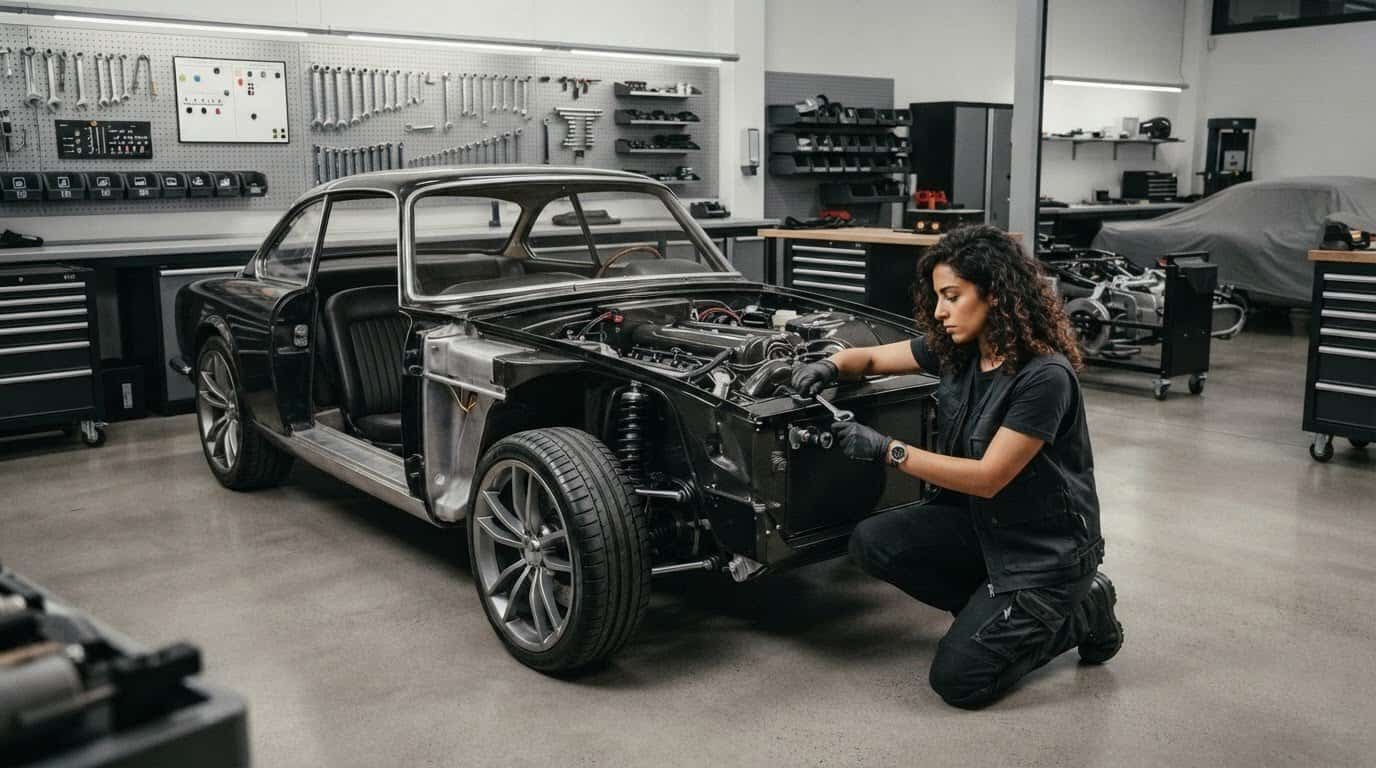
What if you didn’t need to feel inspired every time you stepped into the workshop? Learning how to stay motivated during a multi-year car project starts with accepting that enthusiasm will rise and fall. When the finished car still feels years away, work and family compete for your time, or an unresolved decision leaves the build stalled, that dip can feel like failure. It isn’t. A long restoration moves forward through small, deliberate steps, not constant excitement.
Reconnect with what made the car matter to you, then make the next task clear enough to finish and visible enough to feel rewarding. This article will help you set manageable goals, track progress, and find encouragement from fellow builders without turning the project into another source of pressure. You’ll also learn how to restart when the plan changes or momentum fades. The aim isn’t to rush a classic machine back onto the road. It’s to keep building with purpose, one satisfying workshop session at a time.
Key Takeaways
- A motivation dip means the next step feels hard to engage with, not that the project has stopped mattering.
- Break distant goals into visible milestones so the work between teardown and first drive is easier to recognize.
- Choose solo tasks, shared workshop sessions, or task tracking based on what helps you work consistently.
- For how to stay motivated during a multi-year car project, identify the blocker, choose a manageable task, and note what changed.
- Practical guidance and fellow-builder support can help you keep learning and moving forward without demanding constant enthusiasm.
Why motivation fades during a multi-year car project
Enthusiasm can change during a demanding build. One week, you’re eager to sort the wiring; the next, the car sits untouched while work, family, or a difficult decision takes priority. That shift isn’t proof you’ve failed or stopped caring. A motivation dip simply means it’s harder to engage with the next step right now.
Long projects also separate effort from visible reward. You can spend a full session cleaning components, measuring mounts, or tracing a fault and still see a car that looks much the same. That gap can make progress feel smaller than it is. Motivation may come from the finished result or from enjoying the work itself; the distinction is outlined in Understanding Motivation: Intrinsic and Extrinsic Factors.
A motivation dip makes the next step feel harder; a build obstacle makes that step unclear, unavailable, or impractical. Treating those as different problems helps you respond constructively instead of adding pressure. Learning how to stay motivated during a multi-year car project begins with identifying which kind of difficulty you’re facing.
How to tell a motivation dip from a build problem
Before deciding you’ve lost interest, name what’s getting in the way. Is your energy low? Is a decision about the build unresolved? Is your available time limited, or does the task depend on a tool, information, or help you don’t currently have? Several factors can overlap, and no single explanation fits every stalled project.
The answer points to a more useful response. Low energy may call for a shorter session; an unresolved choice may call for gathering information and comparing options. If time is tight, choose a task that fits the window you have. If a practical constraint blocks progress, write down what would remove it. Naming the obstacle turns a vague sense of being stuck into a specific issue you can address.
Why the finish line can feel distant
A completed car is easy to picture, but a complex build is made up of many jobs that don’t all change its appearance. If you judge every session by how close it brings you to the first drive, careful work on a component or a decision may seem insignificant. Those steps still contribute to making the finished machine cohesive and reliable.
Unresolved decisions can make the whole project feel enormous. “Finish the interior” is daunting; deciding which interior task needs attention next is more manageable. Break the broad goal into visible pieces, such as inspecting a component, documenting what needs repair, or settling one design choice. Then reconnect with the reason you chose this car: its lines, its history, or the idea of shaping it into a machine that feels like yours. You don’t have to feel that original excitement every day. Remembering what matters can help you find a sensible next move when enthusiasm is quieter.
What makes motivation difficult to sustain across years of work
A finished car is easy to picture, but it can be a poor measure of progress from one workshop session to the next. Much of a build happens in stages: inspection, planning, preparation, fitting, and adjustment. A day spent resolving a small issue may be essential, even if the car looks unchanged when you close the garage door. If the only sign of success is a dramatic transformation, steady work can feel like no work at all.
Time outside the garage matters, too. Work, family commitments, health, and other responsibilities can change how often you get to the project. A routine that worked for a while may stop fitting your life, and gaps between sessions can make it harder to pick up where you left off. That isn’t a lack of commitment. It means your approach needs to account for the time you actually have, not an ideal schedule you can’t reliably maintain.
When the outcome is years away, visible progress gives today’s effort somewhere to land. Keep a simple record of completed tasks and decisions so you can see progress, including during stages that don’t change the car’s appearance.
When the project’s scope keeps expanding
New ideas are part of the pleasure of building a car, especially when a component or design detail suggests another possibility. But each addition can bring more research, decisions, and work before existing tasks are complete. Separate what the car needs to meet your core goals from upgrades you’d enjoy but can postpone. If priorities blur, return to the character you want the car to have, whether that means preserving its heritage feel or blending classic lines with modern performance.
When progress is hard to see
Preparation often leaves little visible evidence. Researching a choice, sorting notes, or completing one part of a larger job may feel less rewarding than seeing a major component installed. Record what you completed, what you decided, and what still needs attention. A brief log or dated photo can help you notice work that memory tends to overlook without making the project seem closer to completion than it is.
Use that record to make the next session easier to start. Instead of reopening every decision, leave yourself a short note about where you stopped and what information or action comes next. This handoff is especially useful when workshop time is irregular. It reduces the effort needed to reorient yourself, so even a short session can have a clear purpose.
There’s no single schedule or build path that suits every enthusiast. A practical way to think about how to stay motivated during a multi-year car project is to match your goals to your real capacity, then make progress visible enough to recognize. For a focused next step, explore practical restomod project guidance and keep your plan grounded in the car you set out to build.
Which motivation strategies fit your project and working style?
Choose a system that supports the way you actually work, not one that looks impressive on paper. A focused solo session can suit careful measuring or researching a part. Working alongside someone may make it easier to start, talk through a choice, or enjoy time in the garage. Support doesn’t have to mean another pair of hands: company, encouragement, and shared knowledge can all help.
Tracking can help too, especially if progress is hard to recall between sessions. The right format depends on what you need to see: a major milestone, a short task list, or a few notes about what changed. Use the comparison below as a starting point, then adapt it to your build.
| Approach | When it may help | Possible limitation |
|---|---|---|
| Solo task | You need quiet focus or want to work at your own pace. | It can feel isolating if you’re craving company or feedback. |
| Shared workshop session | You’d enjoy encouragement, conversation, or another perspective. | Coordinating time can take effort, and some jobs need uninterrupted focus. |
| Milestone tracking | A larger phase, such as completing a system, gives you a clear marker. | Milestones may feel far apart during detailed work. |
| Flexible task list | You want to capture small actions and adjust as the build evolves. | A long list can become another source of pressure. |
Solo progress or time with fellow builders?
Working alone gives you flexibility. You can use a spare window to sort parts, study a component, or focus on a job that benefits from concentration. A shared session can bring a different kind of momentum: a trusted friend might keep you company while you organize the work or offer another perspective as you weigh options. Choose support to suit the task and your preferences. You don’t need to turn every garage visit into a group project.
Milestones or flexible task lists?
Milestones mark outcomes, such as finishing a defined stage of assembly. They’re satisfying when the build has clear phases, but may not reflect the smaller decisions and preparation in between. A flexible task list can capture those incremental actions and change as new information emerges. For example, you might note that you reviewed a fit, documented an issue, or settled a design choice. These are meaningful steps, even if they don’t transform the car at once.
Try a format that makes it easier to see your effort, then notice how it feels to use. If tracking starts to feel like a scorecard, simplify it: keep only the next few tasks or record completed work without setting deadlines. The best approach to how to stay motivated during a multi-year car project is one you can return to without dread. Let the method serve the build, not the other way around.

How to restart a stalled car project with one practical next step
Restarting doesn’t require solving the whole build. It requires finding a useful action you can take with the time, tools, and knowledge available now. Pause long enough to understand what stopped you, then move through this sequence:
- Pause. Set aside the pressure to make up for lost time. Look at the car, your notes, and the work already completed.
- Identify the blocker. Is a decision unresolved? Is a tool or piece of information missing, or does the task feel too large for the time you have?
- Choose one manageable task. Define a piece of work you can start and finish, such as organizing the notes for one system, checking a measurement, or documenting an issue that needs attention.
- Record what changed. Note what you completed, what you learned, and what the next action could be. You’ll have a clearer place to begin next time.
A useful next task is specific, feasible with what you have, and connected to the build. Completing it gives you a natural point to reassess. You can choose another task, gather information, or adjust your plan. Progress doesn’t require deciding the entire project’s direction in one sitting.
Make the next workshop session easier to begin
Before you leave the car for a break, write down the first action for your return. “Continue the build” leaves too much to figure out; “review the notes for the next assembly decision” gives you a starting point. Where practical, leave the immediate work area ready for that task, with relevant notes or tools easy to find. A clear overall plan can also connect these small actions to the build’s broader structure.
Review progress without adding pressure
Use your notes to recognize completed tasks and decisions, not to grade your performance. If your available time changes, reduce the size of the next task. If new information changes the direction of the build, update the plan. A progress record is useful because it shows what has moved forward and what remains unresolved, not because it sets a deadline or promises a finish date.
Keep the next step modest enough to begin and meaningful enough to matter. That rhythm can make how to stay motivated during a multi-year car project feel less like a test of constant enthusiasm and more like a series of workable choices. For help turning those choices into a clearer project plan, explore Restomod Academy’s practical project guidance.
Keep a long car project moving with practical guidance and community
A multi-year build doesn’t require constant excitement. Some sessions will feel absorbing; others may involve sorting details, learning a system, or reconnecting with the work after a break. Steady engagement matters more than trying to hold on to one feeling throughout the project. Practical learning can help you understand a challenge and choose a response, while fellow builders can offer perspective and remind you that you’re not figuring everything out alone.
These forms of support work well together. You might use guidance to clarify a decision, then share what you’re working through with someone who understands the commitment of a long build. Neither needs to replace your judgment or turn the project into a race. Both can help make the next move feel more grounded.
Use practical advice when frustration becomes the main obstacle
Project-car frustration can build when decisions accumulate or progress feels hard to read. In that moment, look for guidance that helps you name the challenge and identify a workable next action, rather than expecting one article to resolve every part of the build. Restomod Academy covers project-car burnout and frustration, making those topics a useful place to start when the project feels heavier than usual. Take what applies, then adapt the next step to your car and circumstances.
Learning can also turn a frustrating task into a chance to understand the machine more deeply. If a plan isn’t working, pause to clarify what you know, what remains uncertain, and what information would help you move forward. Reaching a considered decision is progress, too.
Find encouragement among fellow restomod builders
Long builds can feel solitary, especially when the people around you don’t share your interest in the details. Fellow builders may recognize why a small breakthrough matters, help you see a choice from another angle, or simply listen while you talk through what’s holding up the work. Support doesn’t have to mean asking someone to take over a task. Sometimes shared understanding is enough to make returning to the project feel more inviting.
Restomod Academy also covers finding a community of fellow restomod builders. Treat that as a reminder to seek conversation and shared perspective alongside practical learning. You can exchange lessons, discuss the character you want your car to retain, and celebrate decisions that bring the build closer to your vision without comparing timelines.
If you’re thinking about how to stay motivated during a multi-year car project, keep the goal simple: stay connected to the work in a way that fits your life. Choose a useful next step, learn as the build teaches you, and let encouragement be support rather than pressure. Explore practical restomod guidance for a grounded way to keep learning as your project takes shape.
Keep the next chapter of your build within reach
Your project doesn’t need to advance in a straight line to remain meaningful. Give yourself room to adjust as your time, priorities, and ideas change. A pause can be part of a long build; what matters is having a way to reconnect with the work when you’re ready. That’s a practical foundation for how to stay motivated during a multi-year car project: keep the project aligned with your reasons for building, and let your next move fit the life you have now.
For fresh perspective, Restomod Academy covers project-car burnout and frustration, along with finding a community of fellow restomod builders. Its practical, step-by-step articles can help you think through a challenge and choose a useful direction, without assuming every build follows the same path.
Explore Restomod Academy’s practical restomod guidance, then bring one idea back to your own garage. Your classic doesn’t need constant attention to keep taking shape. Keep learning, stay connected to what makes the build yours, and return when you’re ready for the next step.
Frequently Asked Questions
Is it normal to lose motivation during a long car project?
Yes, enthusiasm can shift as a build moves from exciting early changes into quieter stages that demand patience. A motivation dip isn’t a diagnosis or proof you’ve failed. Start by asking what feels difficult now: perhaps a design choice is unsettled, your available time has changed, or recent work hasn’t been easy to notice. Then make one adjustment that fits the cause. That’s a more workable approach to how to stay motivated during a multi-year car project than trying to feel excited on demand.
Can taking a break help you return to a project car?
Yes, a deliberate pause can give you room to reconsider priorities without feeling pushed to work before you’re ready. Before stepping away, leave a short note describing the car’s current state, any open question, and a useful first action for your return. That might be reviewing a parts decision or checking your project notes. The pause itself doesn’t guarantee motivation will return, but a clear handoff can make it easier to reorient when you choose to come back.
How do you stay connected to a car project when you cannot work on it regularly?
Stay familiar with the build in small, low-pressure ways that don’t require hands-on work. You could review reference photos to remember how a component was arranged, update a list of unanswered questions, or read material related to a system you’ll tackle later. These activities aren’t a substitute for workshop time, and they don’t have to become another obligation. They can simply help you return with useful context instead of having to reconstruct every detail from memory.
What should you do if a car project has been untouched for years?
Begin with a calm review before committing to new work. Look at the car’s present condition, revisit why you began the project, and note which decisions remain open. Don’t assume the old plan still fits or that you know what the car needs. Choose one safe, manageable action suited to its current state, such as organizing records or documenting what you can observe. That first review helps you decide what deserves attention next without presuming a finish date.
How can you talk to family or friends about a project that is taking a long time?
Explain what the car means to you, what currently affects progress, and what kind of support would genuinely help. You might value encouragement, company in the garage, or simply a chance to talk through a decision. Be honest about what you know and what remains uncertain. Avoid promising a completion date to ease the conversation; a realistic explanation gives others a clearer picture without turning the build into a deadline you didn’t choose.
Should you change your original plan if the build no longer feels right?
Revisiting the plan can make sense if your interests, constraints, or understanding of the car have changed. Before deciding, ask whether the new direction reflects what you want now or is mainly a way to avoid one difficult task. Write down what the change would affect, including decisions or work already tied to the original direction. That gives you a chance to consider the trade-offs deliberately. There’s no universally correct build path; choose one that still feels meaningful and workable.
What if you didn’t need to feel inspired every time you stepped into the workshop? Learning how to stay motivated during a multi-year car project starts with accepting that enthusiasm will rise and fall. When the finished car still feels years away, work and family compete for your time, or an unresolved decision leaves the build stalled, that dip can feel like failure. It isn’t. A long restoration moves forward through small, deliberate steps, not constant excitement.
Reconnect with what made the car matter to you, then make the next task clear enough to finish and visible enough to feel rewarding. This article will help you set manageable goals, track progress, and find encouragement from fellow builders without turning the project into another source of pressure. You’ll also learn how to restart when the plan changes or momentum fades. The aim isn’t to rush a classic machine back onto the road. It’s to keep building with purpose, one satisfying workshop session at a time.
Key Takeaways
- A motivation dip means the next step feels hard to engage with, not that the project has stopped mattering.
- Break distant goals into visible milestones so the work between teardown and first drive is easier to recognize.
- Choose solo tasks, shared workshop sessions, or task tracking based on what helps you work consistently.
- For how to stay motivated during a multi-year car project, identify the blocker, choose a manageable task, and note what changed.
- Practical guidance and fellow-builder support can help you keep learning and moving forward without demanding constant enthusiasm.
Why motivation fades during a multi-year car project
Enthusiasm can change during a demanding build. One week, you’re eager to sort the wiring; the next, the car sits untouched while work, family, or a difficult decision takes priority. That shift isn’t proof you’ve failed or stopped caring. A motivation dip simply means it’s harder to engage with the next step right now.
Long projects also separate effort from visible reward. You can spend a full session cleaning components, measuring mounts, or tracing a fault and still see a car that looks much the same. That gap can make progress feel smaller than it is. Motivation may come from the finished result or from enjoying the work itself; the distinction is outlined in Understanding Motivation: Intrinsic and Extrinsic Factors.
A motivation dip makes the next step feel harder; a build obstacle makes that step unclear, unavailable, or impractical. Treating those as different problems helps you respond constructively instead of adding pressure. Learning how to stay motivated during a multi-year car project begins with identifying which kind of difficulty you’re facing.
How to tell a motivation dip from a build problem
Before deciding you’ve lost interest, name what’s getting in the way. Is your energy low? Is a decision about the build unresolved? Is your available time limited, or does the task depend on a tool, information, or help you don’t currently have? Several factors can overlap, and no single explanation fits every stalled project.
The answer points to a more useful response. Low energy may call for a shorter session; an unresolved choice may call for gathering information and comparing options. If time is tight, choose a task that fits the window you have. If a practical constraint blocks progress, write down what would remove it. Naming the obstacle turns a vague sense of being stuck into a specific issue you can address.
Why the finish line can feel distant
A completed car is easy to picture, but a complex build is made up of many jobs that don’t all change its appearance. If you judge every session by how close it brings you to the first drive, careful work on a component or a decision may seem insignificant. Those steps still contribute to making the finished machine cohesive and reliable.
Unresolved decisions can make the whole project feel enormous. “Finish the interior” is daunting; deciding which interior task needs attention next is more manageable. Break the broad goal into visible pieces, such as inspecting a component, documenting what needs repair, or settling one design choice. Then reconnect with the reason you chose this car: its lines, its history, or the idea of shaping it into a machine that feels like yours. You don’t have to feel that original excitement every day. Remembering what matters can help you find a sensible next move when enthusiasm is quieter.
What makes motivation difficult to sustain across years of work
A finished car is easy to picture, but it can be a poor measure of progress from one workshop session to the next. Much of a build happens in stages: inspection, planning, preparation, fitting, and adjustment. A day spent resolving a small issue may be essential, even if the car looks unchanged when you close the garage door. If the only sign of success is a dramatic transformation, steady work can feel like no work at all.
Time outside the garage matters, too. Work, family commitments, health, and other responsibilities can change how often you get to the project. A routine that worked for a while may stop fitting your life, and gaps between sessions can make it harder to pick up where you left off. That isn’t a lack of commitment. It means your approach needs to account for the time you actually have, not an ideal schedule you can’t reliably maintain.
When the outcome is years away, visible progress gives today’s effort somewhere to land. Keep a simple record of completed tasks and decisions so you can see progress, including during stages that don’t change the car’s appearance.
When the project’s scope keeps expanding
New ideas are part of the pleasure of building a car, especially when a component or design detail suggests another possibility. But each addition can bring more research, decisions, and work before existing tasks are complete. Separate what the car needs to meet your core goals from upgrades you’d enjoy but can postpone. If priorities blur, return to the character you want the car to have, whether that means preserving its heritage feel or blending classic lines with modern performance.
When progress is hard to see
Preparation often leaves little visible evidence. Researching a choice, sorting notes, or completing one part of a larger job may feel less rewarding than seeing a major component installed. Record what you completed, what you decided, and what still needs attention. A brief log or dated photo can help you notice work that memory tends to overlook without making the project seem closer to completion than it is.
Use that record to make the next session easier to start. Instead of reopening every decision, leave yourself a short note about where you stopped and what information or action comes next. This handoff is especially useful when workshop time is irregular. It reduces the effort needed to reorient yourself, so even a short session can have a clear purpose.
There’s no single schedule or build path that suits every enthusiast. A practical way to think about how to stay motivated during a multi-year car project is to match your goals to your real capacity, then make progress visible enough to recognize. For a focused next step, explore practical restomod project guidance and keep your plan grounded in the car you set out to build.
Which motivation strategies fit your project and working style?
Choose a system that supports the way you actually work, not one that looks impressive on paper. A focused solo session can suit careful measuring or researching a part. Working alongside someone may make it easier to start, talk through a choice, or enjoy time in the garage. Support doesn’t have to mean another pair of hands: company, encouragement, and shared knowledge can all help.
Tracking can help too, especially if progress is hard to recall between sessions. The right format depends on what you need to see: a major milestone, a short task list, or a few notes about what changed. Use the comparison below as a starting point, then adapt it to your build.
| Approach | When it may help | Possible limitation |
|---|---|---|
| Solo task | You need quiet focus or want to work at your own pace. | It can feel isolating if you’re craving company or feedback. |
| Shared workshop session | You’d enjoy encouragement, conversation, or another perspective. | Coordinating time can take effort, and some jobs need uninterrupted focus. |
| Milestone tracking | A larger phase, such as completing a system, gives you a clear marker. | Milestones may feel far apart during detailed work. |
| Flexible task list | You want to capture small actions and adjust as the build evolves. | A long list can become another source of pressure. |
Solo progress or time with fellow builders?
Working alone gives you flexibility. You can use a spare window to sort parts, study a component, or focus on a job that benefits from concentration. A shared session can bring a different kind of momentum: a trusted friend might keep you company while you organize the work or offer another perspective as you weigh options. Choose support to suit the task and your preferences. You don’t need to turn every garage visit into a group project.
Milestones or flexible task lists?
Milestones mark outcomes, such as finishing a defined stage of assembly. They’re satisfying when the build has clear phases, but may not reflect the smaller decisions and preparation in between. A flexible task list can capture those incremental actions and change as new information emerges. For example, you might note that you reviewed a fit, documented an issue, or settled a design choice. These are meaningful steps, even if they don’t transform the car at once.
Try a format that makes it easier to see your effort, then notice how it feels to use. If tracking starts to feel like a scorecard, simplify it: keep only the next few tasks or record completed work without setting deadlines. The best approach to how to stay motivated during a multi-year car project is one you can return to without dread. Let the method serve the build, not the other way around.
How to restart a stalled car project with one practical next step
Restarting doesn’t require solving the whole build. It requires finding a useful action you can take with the time, tools, and knowledge available now. Pause long enough to understand what stopped you, then move through this sequence:
- Pause. Set aside the pressure to make up for lost time. Look at the car, your notes, and the work already completed.
- Identify the blocker. Is a decision unresolved? Is a tool or piece of information missing, or does the task feel too large for the time you have?
- Choose one manageable task. Define a piece of work you can start and finish, such as organizing the notes for one system, checking a measurement, or documenting an issue that needs attention.
- Record what changed. Note what you completed, what you learned, and what the next action could be. You’ll have a clearer place to begin next time.
A useful next task is specific, feasible with what you have, and connected to the build. Completing it gives you a natural point to reassess. You can choose another task, gather information, or adjust your plan. Progress doesn’t require deciding the entire project’s direction in one sitting.
Make the next workshop session easier to begin
Before you leave the car for a break, write down the first action for your return. “Continue the build” leaves too much to figure out; “review the notes for the next assembly decision” gives you a starting point. Where practical, leave the immediate work area ready for that task, with relevant notes or tools easy to find. A clear overall plan can also connect these small actions to the build’s broader structure.
Review progress without adding pressure
Use your notes to recognize completed tasks and decisions, not to grade your performance. If your available time changes, reduce the size of the next task. If new information changes the direction of the build, update the plan. A progress record is useful because it shows what has moved forward and what remains unresolved, not because it sets a deadline or promises a finish date.
Keep the next step modest enough to begin and meaningful enough to matter. That rhythm can make how to stay motivated during a multi-year car project feel less like a test of constant enthusiasm and more like a series of workable choices. For help turning those choices into a clearer project plan, explore Restomod Academy’s practical project guidance.
Keep a long car project moving with practical guidance and community
A multi-year build doesn’t require constant excitement. Some sessions will feel absorbing; others may involve sorting details, learning a system, or reconnecting with the work after a break. Steady engagement matters more than trying to hold on to one feeling throughout the project. Practical learning can help you understand a challenge and choose a response, while fellow builders can offer perspective and remind you that you’re not figuring everything out alone.
These forms of support work well together. You might use guidance to clarify a decision, then share what you’re working through with someone who understands the commitment of a long build. Neither needs to replace your judgment or turn the project into a race. Both can help make the next move feel more grounded.
Use practical advice when frustration becomes the main obstacle
Project-car frustration can build when decisions accumulate or progress feels hard to read. In that moment, look for guidance that helps you name the challenge and identify a workable next action, rather than expecting one article to resolve every part of the build. Restomod Academy covers project-car burnout and frustration, making those topics a useful place to start when the project feels heavier than usual. Take what applies, then adapt the next step to your car and circumstances.
Learning can also turn a frustrating task into a chance to understand the machine more deeply. If a plan isn’t working, pause to clarify what you know, what remains uncertain, and what information would help you move forward. Reaching a considered decision is progress, too.
Find encouragement among fellow restomod builders
Long builds can feel solitary, especially when the people around you don’t share your interest in the details. Fellow builders may recognize why a small breakthrough matters, help you see a choice from another angle, or simply listen while you talk through what’s holding up the work. Support doesn’t have to mean asking someone to take over a task. Sometimes shared understanding is enough to make returning to the project feel more inviting.
Restomod Academy also covers finding a community of fellow restomod builders. Treat that as a reminder to seek conversation and shared perspective alongside practical learning. You can exchange lessons, discuss the character you want your car to retain, and celebrate decisions that bring the build closer to your vision without comparing timelines.
If you’re thinking about how to stay motivated during a multi-year car project, keep the goal simple: stay connected to the work in a way that fits your life. Choose a useful next step, learn as the build teaches you, and let encouragement be support rather than pressure. Explore practical restomod guidance for a grounded way to keep learning as your project takes shape.
Keep the next chapter of your build within reach
Your project doesn’t need to advance in a straight line to remain meaningful. Give yourself room to adjust as your time, priorities, and ideas change. A pause can be part of a long build; what matters is having a way to reconnect with the work when you’re ready. That’s a practical foundation for how to stay motivated during a multi-year car project: keep the project aligned with your reasons for building, and let your next move fit the life you have now.
For fresh perspective, Restomod Academy covers project-car burnout and frustration, along with finding a community of fellow restomod builders. Its practical, step-by-step articles can help you think through a challenge and choose a useful direction, without assuming every build follows the same path.
Explore Restomod Academy’s practical restomod guidance, then bring one idea back to your own garage. Your classic doesn’t need constant attention to keep taking shape. Keep learning, stay connected to what makes the build yours, and return when you’re ready for the next step.
Frequently Asked Questions
Is it normal to lose motivation during a long car project?
Yes, enthusiasm can shift as a build moves from exciting early changes into quieter stages that demand patience. A motivation dip isn’t a diagnosis or proof you’ve failed. Start by asking what feels difficult now: perhaps a design choice is unsettled, your available time has changed, or recent work hasn’t been easy to notice. Then make one adjustment that fits the cause. That’s a more workable approach to how to stay motivated during a multi-year car project than trying to feel excited on demand.
Can taking a break help you return to a project car?
Yes, a deliberate pause can give you room to reconsider priorities without feeling pushed to work before you’re ready. Before stepping away, leave a short note describing the car’s current state, any open question, and a useful first action for your return. That might be reviewing a parts decision or checking your project notes. The pause itself doesn’t guarantee motivation will return, but a clear handoff can make it easier to reorient when you choose to come back.
How do you stay connected to a car project when you cannot work on it regularly?
Stay familiar with the build in small, low-pressure ways that don’t require hands-on work. You could review reference photos to remember how a component was arranged, update a list of unanswered questions, or read material related to a system you’ll tackle later. These activities aren’t a substitute for workshop time, and they don’t have to become another obligation. They can simply help you return with useful context instead of having to reconstruct every detail from memory.
What should you do if a car project has been untouched for years?
Begin with a calm review before committing to new work. Look at the car’s present condition, revisit why you began the project, and note which decisions remain open. Don’t assume the old plan still fits or that you know what the car needs. Choose one safe, manageable action suited to its current state, such as organizing records or documenting what you can observe. That first review helps you decide what deserves attention next without presuming a finish date.
How can you talk to family or friends about a project that is taking a long time?
Explain what the car means to you, what currently affects progress, and what kind of support would genuinely help. You might value encouragement, company in the garage, or simply a chance to talk through a decision. Be honest about what you know and what remains uncertain. Avoid promising a completion date to ease the conversation; a realistic explanation gives others a clearer picture without turning the build into a deadline you didn’t choose.
Should you change your original plan if the build no longer feels right?
Revisiting the plan can make sense if your interests, constraints, or understanding of the car have changed. Before deciding, ask whether the new direction reflects what you want now or is mainly a way to avoid one difficult task. Write down what the change would affect, including decisions or work already tied to the original direction. That gives you a chance to consider the trade-offs deliberately. There’s no universally correct build path; choose one that still feels meaningful and workable.