
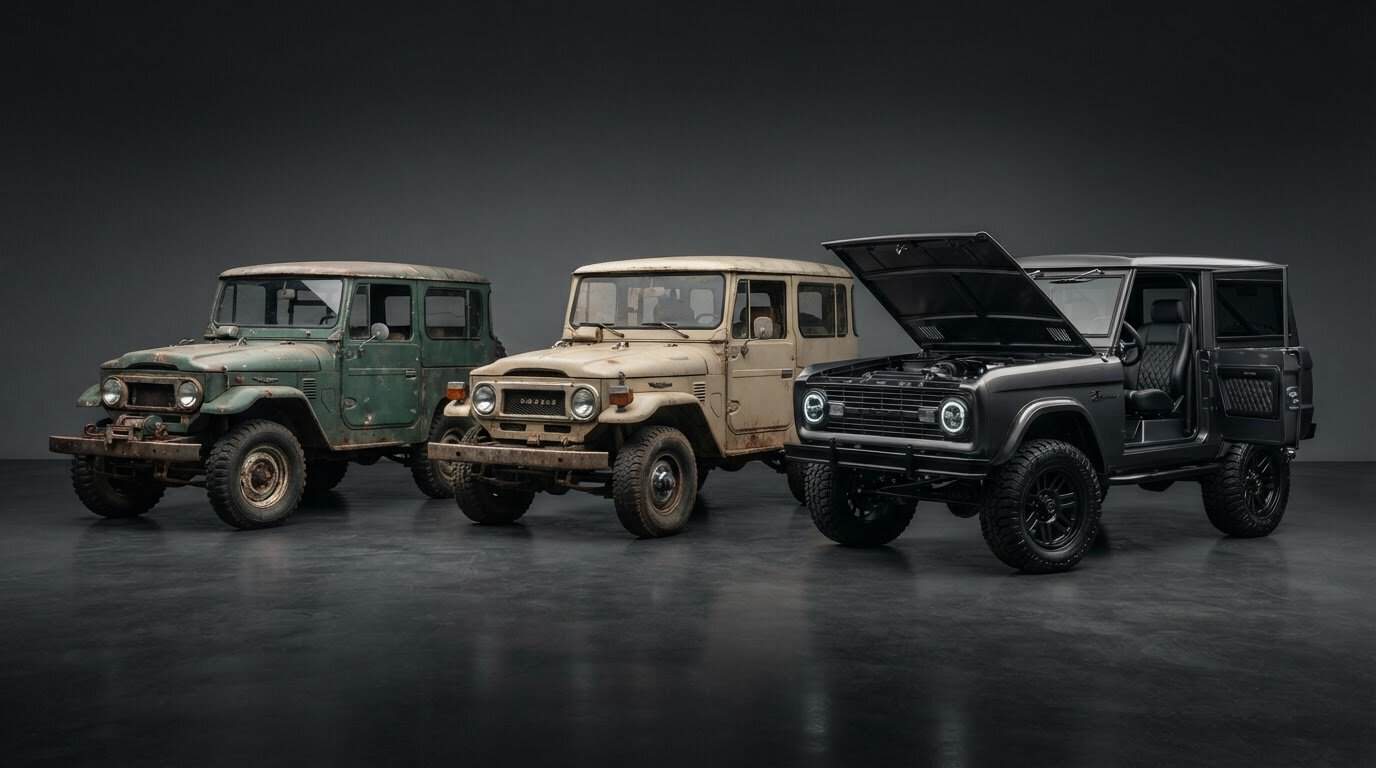
The Scout with the strongest story may be the wrong starting point for your build. An early Scout 80 or 800 has a distinct vintage character, while a Scout II may better suit a different set of priorities. The right choice isn’t simply the one that looks best in the driveway; it’s the one whose condition, character, and needs align with how you plan to use it. This international scout restomod buyer’s guide will help you make that call with a clear head.
It’s easy to be drawn in by a classic profile or a promising engine, then discover that hidden rust, missing parts, or unfinished repairs change the project. Before you commit, compare each candidate’s generation and configuration, inspect its body and structure, and document what needs attention. Then match your intended use to a practical build direction, whether you’re aiming for a characterful weekend driver or a more extensively modernized Scout. The steps below help you plan around the vehicle you actually have, rather than the one you imagine finding.
Key Takeaways
- Match a Scout’s generation and body style to the way you plan to drive and build it.
- Use a structured walkaround to assess identity, completeness, and visible condition, then record concerns with photos and notes.
- Separate preservation, reliability, comfort, and capability goals before choosing modifications.
- This international scout restomod buyer’s guide helps you shape a staged project plan and distinguish essential work from optional upgrades.
- Use a final decision checklist to identify unanswered questions before assumptions become costly commitments.
Which International Scout Is the Right Restomod Starting Point?
Choose the International Scout whose character and configuration fit the way you intend to use it. A Scout for occasional cruising may call for a different balance of originality and comfort than one intended for open-air drives or off-road use. Narrow your shortlist by generation, body style, and top configuration, then compare each candidate’s condition and the amount of work it appears to need. This international scout restomod buyer’s guide starts with the vehicle’s intended role, not the romance of a particular badge.
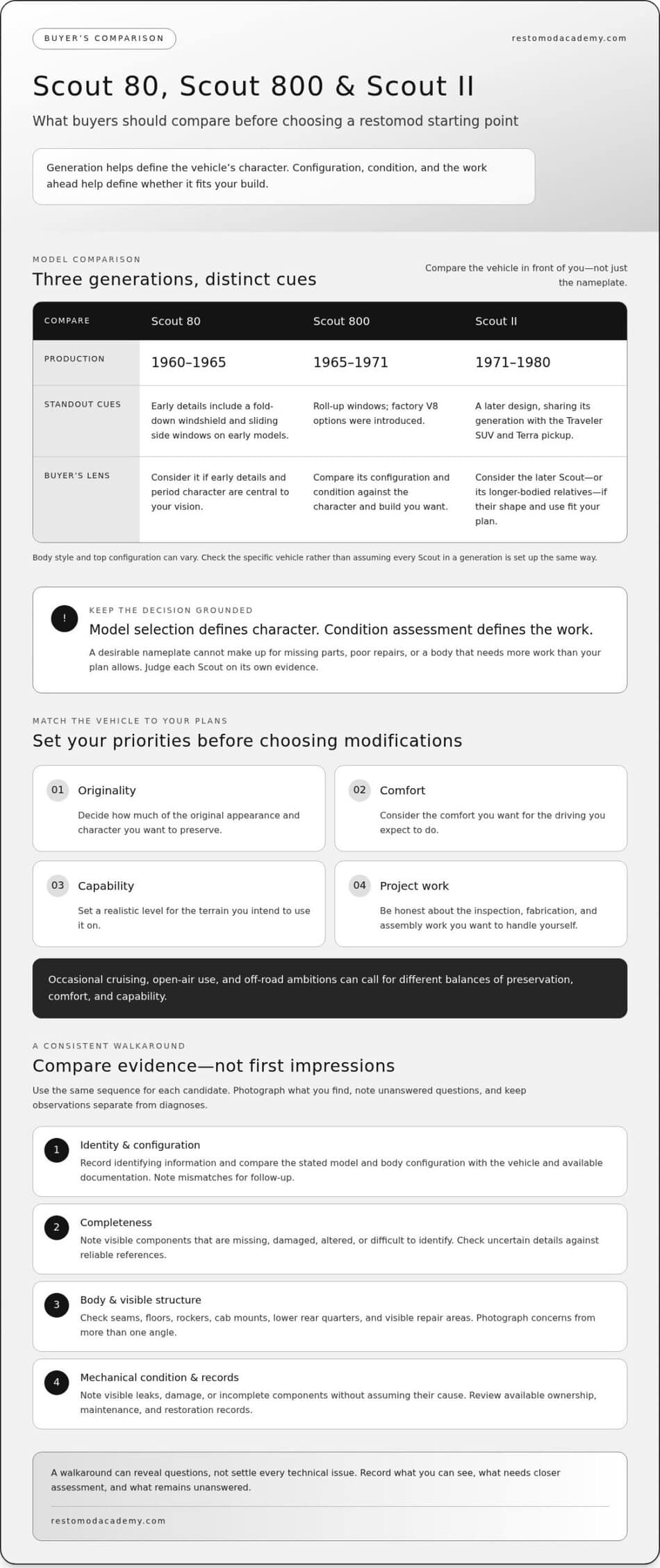
Before inspecting a candidate, use this buyer-focused walkaround to help you assess its condition.
Scout 80, Scout 800, and Scout II: What Should Buyers Compare?
The Scout 80, produced from 1960 to 1965, has early details such as a fold-down windshield and sliding side windows on early models. The Scout 800 followed from 1965 to 1971, bringing roll-up windows and the introduction of factory V8 options. The Scout II, produced from 1971 to 1980, has a later design and shares its generation with the longer Traveler SUV and Terra pickup. For more model background, consult this overview of the history of the International Scout.
These differences help you picture the build, but they don’t make the decision for you. Earlier models may appeal if period character is central to your vision; a later Scout or one of its longer-bodied relatives may better match the shape and use you have in mind. Compare each vehicle’s actual body and top configuration rather than assuming every Scout in a generation is set up the same way.
Model selection defines the character of the project; condition assessment defines the work required to make it real. A desirable nameplate can’t make up for missing parts, poor repairs, or a body that needs more work than your plan allows. Judge each Scout on its own evidence.
How Will You Use Your International Scout Restomod?
Picture a normal day with the finished vehicle. Occasional cruising, open-air use, and off-road ambitions lead to different choices about comfort, preservation, and capability. The restomod concept combines a classic vehicle’s character with selected modern improvements, but the right balance is personal. Decide which qualities matter before choosing modifications.
- Rank originality against the changes you’re willing to make.
- Decide how much comfort matters for the driving you expect to do.
- Set a realistic level of capability for your intended terrain.
- Be honest about the inspection, fabrication, and assembly work you want to handle yourself.
Use those priorities to narrow the shortlist. If you want a mostly original appearance, a heavily altered candidate may work against that goal. If you’re planning substantial modernization, look for a Scout whose configuration supports that direction and whose condition leaves room for the work ahead.
What to Inspect Before Buying an International Scout
Give every candidate the same deliberate walkaround. Begin with identity and completeness, then check the body and visible structure, observe mechanical condition, and review available records. Using the same sequence for each Scout makes it easier to compare evidence instead of letting fresh paint, a strong first impression, or an appealing story drive the decision.
Bring a phone, a light, and a way to take notes. Photograph the vehicle as you find it, including areas that look sound as well as places that raise questions. Record what you can see without treating an observation as a diagnosis. A surface blemish is evidence of a blemish; it doesn’t, by itself, tell you what lies beneath.
- Confirm identity and configuration. Record identifying information and compare the stated model and body configuration with the vehicle and available documentation. Note any mismatch for follow-up rather than trying to resolve it from appearance alone.
- Check completeness. Walk around the Scout and note missing, damaged, or altered visible components. Compare what’s present with the stated configuration, using reliable references when details are uncertain.
- Survey the body and structure. Look methodically at seams, floors, rockers, cab mounts, lower rear quarters, and areas where repairs or moisture may be apparent. Photograph concerns from more than one angle.
- Observe mechanical condition and paperwork. Note visible leaks, damage, or incomplete components without assuming their cause. Review available ownership, maintenance, and restoration records, and write down what remains unanswered.
Check the Body, Structure, and Signs of Previous Repairs
Move around the vehicle in a consistent direction, checking panel edges, seams, floor areas, and visible repair work. Look for differences in surface texture, alignment, paint finish, or material that deserve closer attention. Treat these as clues to document, not proof of hidden damage or a particular repair history.
Cosmetic appeal can’t establish the condition underneath. A clean exterior may still leave structural questions unanswered, while imperfect paint doesn’t automatically make a Scout a poor project. Photograph each concern, note its location, and separate what you can see from what still needs a closer assessment.
Assess Completeness, Mechanical Condition, and Documentation
Compare major visible components with the Scout’s stated model and configuration. Note what appears present, altered, incomplete, or difficult to identify. Keep those observations separate from conclusions about originality or function; a walkaround can highlight questions, but it can’t settle every technical issue.
Review available records and note which details they support and which they leave unclear. If a key point remains uncertain, avoid treating an assumption as a fact when deciding whether the vehicle fits your project. A clear condition record turns a hopeful impression into a decision you can explain and revisit.
A clear condition record helps you compare what each Scout needs, not just how each one looks. Keep your photos and notes together so they can guide the next inspection and your project plan. Restomod Academy shares practical guidance on project-car challenges, budgeting, and build decisions at Restomod Academy.
Which Scout Restomod Priorities Should Shape Your Build?
Set your build priorities before choosing parts or committing to major changes. Preservation, reliability, comfort, and capability are separate goals, and they can point toward different donor vehicles and different levels of modification. Rank them honestly. A Scout chosen for its original character may call for a lighter touch; one intended for regular use may lead you to consider broader mechanical updates.
Use your ranking to guide decisions as the project takes shape. If originality leads, record the details you want to preserve and make each proposed change earn its place. If reliability or comfort ranks higher, identify the systems that matter for your intended driving rather than assuming a dramatic transformation is necessary. This international scout restomod buyer’s guide is a decision framework, not a recipe for one ideal build.
Original Character or Modernized Driving Experience?
Keeping heritage details and changing how a Scout drives aren’t mutually exclusive, but each choice affects the project. Decide which visible features, materials, or mechanical elements give the vehicle its character for you. Then identify where you’re open to modernization. For example, you might preserve the cabin’s period feel while prioritizing dependable operation, or accept more visible changes to create a different driving experience.
Make a short “preserve, improve, open to change” list before evaluating a donor. It helps you recognize when a vehicle’s existing alterations support your goals and when they would require undoing work. Neither a mostly original approach nor a more extensive restomod is automatically better; the right direction is the one you can carry through with care.
How Should Powertrain and Capability Fit the Intended Use?
Start with the driving, not the engine. Describe where you expect to go, how often you’ll use the Scout, and what you want it to feel like behind the wheel. Then consider whether the current powertrain suits that purpose or whether a change belongs in the plan. An engine swap involves more than choosing an engine; it can affect other systems, packaging, and the sequence of work. Keep those connections in view as you define the scope.
Apply the same discipline to capability. A plan for occasional road use doesn’t call for the same decisions as one shaped around more demanding terrain. Write down the outcome you want, then identify the supporting work that may be involved. Avoid choosing an upgrade in isolation; consider how it fits with the rest of the build.
- Preservation: Prioritize the features and details that make this Scout feel authentic to you.
- Reliability: Identify the systems that need attention for the way you’ll actually use it.
- Comfort: Decide which improvements matter during the drives you plan to take.
- Capability: Define the terrain and use case before considering supporting changes.
Finally, compare your priorities with the donor’s condition and existing configuration. A sound candidate that already aligns with your goals can keep the project focused; a mismatch may add work without improving the result you care about. Rank the priorities, note the tradeoffs, and let that list steer your next decisions.
How to Set a Realistic International Scout Restomod Project Scope
A workable scope connects the Scout you’re considering to the vehicle you want to build. Don’t begin with a wish list of upgrades. First decide how you’ll use the finished vehicle, then let its observed condition and your priorities shape the sequence of work. This keeps the project grounded and makes it easier to separate essential repairs from changes that can wait.
Use this four-step process to turn your ideas into a plan:
- Define the use. Describe the driving you expect to do, the experience you want, and the conditions the Scout will face. Plain language is enough: for example, “occasional local drives with a mostly original appearance.”
- Assess the condition. Bring together inspection notes, photographs, available records, and unresolved technical questions. Label what you’ve observed separately from what still needs assessment.
- Rank the work. Sort items into must-haves, useful improvements, and optional changes. Keep foundational needs distinct from preferences that can be reconsidered later.
- Set project stages. Group related work into a sequence, leaving room to revise it as new findings clarify the vehicle’s needs. Record the next decision, not just the final vision.
Turn Your Intended Use into a Prioritized Build Brief
Write a short brief describing when and where you’ll drive, what you want the Scout to feel like, and which qualities matter most. Translate those answers into ranked priorities such as preservation, reliability, comfort, or capability. Avoid prescribing a universal parts list; the same goal can lead to different choices depending on the vehicle and the work you’re prepared to take on.
Add two clear categories: what must remain original and what can change. Perhaps the exterior character is non-negotiable, while you’re open to altering other areas to suit your driving goals. This brief gives you a reference point when new ideas appear, helping you decide whether a proposed change supports the build or expands it without solving a real need.
Break the Project into Manageable Decisions
Think in stages: assessment, foundational work, system choices, and finishing decisions. The order matters because later choices may depend on what you learn earlier. For example, further inspection may reveal work that changes the sequence or makes an optional upgrade less practical. Revise the scope when new evidence appears instead of forcing the original plan to fit.
Keep one project record for the brief, inspection findings, decisions, assumptions, open questions, and revised stages. Mark each item as confirmed, pending, or optional. That simple habit can prevent a guess from quietly becoming a requirement and gives you a clear place to resume after a pause.
Plan for the learning curve, setbacks, and frustration that can come with a long build. Set manageable milestones and recognize completed stages, not just the finished Scout. Let evidence and priorities set the pace. For practical advice on project-car stress and keeping a build moving, explore Restomod Academy’s project guidance.
Make Your International Scout Restomod Buying Decision with Confidence
A confident purchase isn’t about finding a Scout with no flaws. It’s about understanding what you’re taking on and choosing a vehicle that supports the build you’ve defined. Use the checklist below to bring your intended use, condition evidence, priorities, and readiness together before you commit.
Use a Final Scout Purchase Checklist
Review each point using your notes and records, not memory or first impressions:
- Fit: Does this Scout’s variant and configuration suit your intended use and the character you want to preserve?
- Condition: Have you recorded visible concerns, and do you understand which issues still need a closer assessment?
- Evidence: Have you reviewed available ownership, maintenance, or restoration records and noted what they do not establish?
- Priorities: Does the proposed work support your main goals, with foundational needs separated from optional changes?
- Readiness: Does the project fit the time, skills, tools, and support you can realistically bring to it?
Don’t dismiss an unanswered question as a minor detail just because you’re excited about the vehicle. If an assumption could change the scope, pause and look for evidence before deciding. A short delay can help you distinguish a manageable unknown from a risk that changes whether the project fits.
What to Do After Choosing Your Scout
Once you’ve made your decision, bring the project information into one reference point. Keep photographs, inspection notes, available records, research, and decisions together. Mark open questions clearly, and note why you chose a particular direction. This record will help you stay consistent as the build evolves and new information comes to light.
Then choose one practical next task. It might be organizing the inspection findings, confirming a project priority, or planning the first stage of work. You don’t need to solve every modification before you begin. A clear next step turns a big vision into steady progress while leaving room to learn and adjust responsibly.
Share progress and questions with fellow builders when it’s useful, and keep the conversation grounded in what you’ve observed and decided. A community can offer perspective, but your project record and goals remain the guide for your choices.
The best starting point is the Scout that supports your defined build, not simply the one with the most compelling story. Use this international scout restomod buyer’s guide to make the decision deliberately, then let the vehicle’s evidence shape the work ahead. For practical guidance as you plan your next step, explore the Restomod Academy home page.
Take the First Step Toward Your Scout Build
A Scout project takes shape through a series of considered choices, and your next step doesn’t need to solve everything. Choose one useful action: organize your project notes, clarify a goal, or map the first stage of work. Small, deliberate decisions can turn enthusiasm into momentum while leaving room to learn as the build develops.
Use this international scout restomod buyer’s guide as a reference when new questions arise, and keep refining your plan as you gain hands-on experience. Restomod Academy shares practical, step-by-step guidance for classic-car builders, including advice on project-car stress, budgeting, tool selection, and connecting with fellow builders.
Explore Restomod Academy’s practical restomod guidance and choose one next step for your build.
Frequently Asked Questions
What International Scout is the best starting point for a restomod?
The best starting point is the Scout that fits your intended use and the level of work you can take on. In this international scout restomod buyer’s guide, the key is to compare candidates against your own priorities, not to treat one model as the automatic winner. If retaining a certain body style matters most, make it a firm selection criterion before weighing other details.
What should I look for when buying an International Scout?
Look for a vehicle whose visible condition, completeness, and available history you can assess clearly. During an initial viewing, use a simple record with three labels: observed, needs assessment, and unknown. A noise or altered panel goes under observed; its cause may need assessment. This keeps early impressions separate from conclusions and helps you identify unanswered questions before making a commitment.
Is a Scout 80, Scout 800, or Scout II better for a restomod?
None is universally better. The right generation depends on the character you want and the specific vehicle available to you. Make a side-by-side comparison based on the details you care about, such as body configuration, completeness, and the amount of work needed to reach your goal. If two candidates are close, write down the tradeoffs rather than letting a model name make the decision for you.
Can you build an International Scout restomod for everyday driving?
Yes, an everyday-use build can be planned, but the goal should be a coordinated vehicle rather than a single upgrade. Think through how the engine, transmission, brakes, steering, suspension, lighting, and cabin will work together for your intended driving. The right plan depends on the donor’s condition and your expectations. Evaluate the finished systems and address issues before relying on the Scout regularly.
How do I choose between keeping a Scout original and modifying it?
Start by deciding which features carry personal or historical value for you, then separate them from areas you’re willing to change. A useful test is to describe your preferred finished Scout without naming parts: should it look period-correct, feel more comfortable, or serve a different purpose? Use that description to judge proposed modifications. If a change doesn’t support your priorities, leave it off the initial plan.
What should I decide before starting an International Scout restomod?
Decide how you plan to use the vehicle, what should remain original, which outcomes matter most, and what time and skills you can commit. Also choose how you’ll track decisions and open questions. A project document can keep research, photos, and notes in one place, making it easier to revisit choices after a pause. Start with one defined task, then refine the plan as you learn.
The Scout with the strongest story may be the wrong starting point for your build. An early Scout 80 or 800 has a distinct vintage character, while a Scout II may better suit a different set of priorities. The right choice isn’t simply the one that looks best in the driveway; it’s the one whose condition, character, and needs align with how you plan to use it. This international scout restomod buyer’s guide will help you make that call with a clear head.
It’s easy to be drawn in by a classic profile or a promising engine, then discover that hidden rust, missing parts, or unfinished repairs change the project. Before you commit, compare each candidate’s generation and configuration, inspect its body and structure, and document what needs attention. Then match your intended use to a practical build direction, whether you’re aiming for a characterful weekend driver or a more extensively modernized Scout. The steps below help you plan around the vehicle you actually have, rather than the one you imagine finding.
Key Takeaways
- Match a Scout’s generation and body style to the way you plan to drive and build it.
- Use a structured walkaround to assess identity, completeness, and visible condition, then record concerns with photos and notes.
- Separate preservation, reliability, comfort, and capability goals before choosing modifications.
- This international scout restomod buyer’s guide helps you shape a staged project plan and distinguish essential work from optional upgrades.
- Use a final decision checklist to identify unanswered questions before assumptions become costly commitments.
Which International Scout Is the Right Restomod Starting Point?
Choose the International Scout whose character and configuration fit the way you intend to use it. A Scout for occasional cruising may call for a different balance of originality and comfort than one intended for open-air drives or off-road use. Narrow your shortlist by generation, body style, and top configuration, then compare each candidate’s condition and the amount of work it appears to need. This international scout restomod buyer’s guide starts with the vehicle’s intended role, not the romance of a particular badge.
Before inspecting a candidate, use this buyer-focused walkaround to help you assess its condition.
Scout 80, Scout 800, and Scout II: What Should Buyers Compare?
The Scout 80, produced from 1960 to 1965, has early details such as a fold-down windshield and sliding side windows on early models. The Scout 800 followed from 1965 to 1971, bringing roll-up windows and the introduction of factory V8 options. The Scout II, produced from 1971 to 1980, has a later design and shares its generation with the longer Traveler SUV and Terra pickup. For more model background, consult this overview of the history of the International Scout.
These differences help you picture the build, but they don’t make the decision for you. Earlier models may appeal if period character is central to your vision; a later Scout or one of its longer-bodied relatives may better match the shape and use you have in mind. Compare each vehicle’s actual body and top configuration rather than assuming every Scout in a generation is set up the same way.
Model selection defines the character of the project; condition assessment defines the work required to make it real. A desirable nameplate can’t make up for missing parts, poor repairs, or a body that needs more work than your plan allows. Judge each Scout on its own evidence.
How Will You Use Your International Scout Restomod?
Picture a normal day with the finished vehicle. Occasional cruising, open-air use, and off-road ambitions lead to different choices about comfort, preservation, and capability. The restomod concept combines a classic vehicle’s character with selected modern improvements, but the right balance is personal. Decide which qualities matter before choosing modifications.
- Rank originality against the changes you’re willing to make.
- Decide how much comfort matters for the driving you expect to do.
- Set a realistic level of capability for your intended terrain.
- Be honest about the inspection, fabrication, and assembly work you want to handle yourself.
Use those priorities to narrow the shortlist. If you want a mostly original appearance, a heavily altered candidate may work against that goal. If you’re planning substantial modernization, look for a Scout whose configuration supports that direction and whose condition leaves room for the work ahead.
What to Inspect Before Buying an International Scout
Give every candidate the same deliberate walkaround. Begin with identity and completeness, then check the body and visible structure, observe mechanical condition, and review available records. Using the same sequence for each Scout makes it easier to compare evidence instead of letting fresh paint, a strong first impression, or an appealing story drive the decision.
Bring a phone, a light, and a way to take notes. Photograph the vehicle as you find it, including areas that look sound as well as places that raise questions. Record what you can see without treating an observation as a diagnosis. A surface blemish is evidence of a blemish; it doesn’t, by itself, tell you what lies beneath.
- Confirm identity and configuration. Record identifying information and compare the stated model and body configuration with the vehicle and available documentation. Note any mismatch for follow-up rather than trying to resolve it from appearance alone.
- Check completeness. Walk around the Scout and note missing, damaged, or altered visible components. Compare what’s present with the stated configuration, using reliable references when details are uncertain.
- Survey the body and structure. Look methodically at seams, floors, rockers, cab mounts, lower rear quarters, and areas where repairs or moisture may be apparent. Photograph concerns from more than one angle.
- Observe mechanical condition and paperwork. Note visible leaks, damage, or incomplete components without assuming their cause. Review available ownership, maintenance, and restoration records, and write down what remains unanswered.
Check the Body, Structure, and Signs of Previous Repairs
Move around the vehicle in a consistent direction, checking panel edges, seams, floor areas, and visible repair work. Look for differences in surface texture, alignment, paint finish, or material that deserve closer attention. Treat these as clues to document, not proof of hidden damage or a particular repair history.
Cosmetic appeal can’t establish the condition underneath. A clean exterior may still leave structural questions unanswered, while imperfect paint doesn’t automatically make a Scout a poor project. Photograph each concern, note its location, and separate what you can see from what still needs a closer assessment.
Assess Completeness, Mechanical Condition, and Documentation
Compare major visible components with the Scout’s stated model and configuration. Note what appears present, altered, incomplete, or difficult to identify. Keep those observations separate from conclusions about originality or function; a walkaround can highlight questions, but it can’t settle every technical issue.
Review available records and note which details they support and which they leave unclear. If a key point remains uncertain, avoid treating an assumption as a fact when deciding whether the vehicle fits your project. A clear condition record turns a hopeful impression into a decision you can explain and revisit.
A clear condition record helps you compare what each Scout needs, not just how each one looks. Keep your photos and notes together so they can guide the next inspection and your project plan. Restomod Academy shares practical guidance on project-car challenges, budgeting, and build decisions at Restomod Academy.
Which Scout Restomod Priorities Should Shape Your Build?
Set your build priorities before choosing parts or committing to major changes. Preservation, reliability, comfort, and capability are separate goals, and they can point toward different donor vehicles and different levels of modification. Rank them honestly. A Scout chosen for its original character may call for a lighter touch; one intended for regular use may lead you to consider broader mechanical updates.
Use your ranking to guide decisions as the project takes shape. If originality leads, record the details you want to preserve and make each proposed change earn its place. If reliability or comfort ranks higher, identify the systems that matter for your intended driving rather than assuming a dramatic transformation is necessary. This international scout restomod buyer’s guide is a decision framework, not a recipe for one ideal build.
Original Character or Modernized Driving Experience?
Keeping heritage details and changing how a Scout drives aren’t mutually exclusive, but each choice affects the project. Decide which visible features, materials, or mechanical elements give the vehicle its character for you. Then identify where you’re open to modernization. For example, you might preserve the cabin’s period feel while prioritizing dependable operation, or accept more visible changes to create a different driving experience.
Make a short “preserve, improve, open to change” list before evaluating a donor. It helps you recognize when a vehicle’s existing alterations support your goals and when they would require undoing work. Neither a mostly original approach nor a more extensive restomod is automatically better; the right direction is the one you can carry through with care.
How Should Powertrain and Capability Fit the Intended Use?
Start with the driving, not the engine. Describe where you expect to go, how often you’ll use the Scout, and what you want it to feel like behind the wheel. Then consider whether the current powertrain suits that purpose or whether a change belongs in the plan. An engine swap involves more than choosing an engine; it can affect other systems, packaging, and the sequence of work. Keep those connections in view as you define the scope.
Apply the same discipline to capability. A plan for occasional road use doesn’t call for the same decisions as one shaped around more demanding terrain. Write down the outcome you want, then identify the supporting work that may be involved. Avoid choosing an upgrade in isolation; consider how it fits with the rest of the build.
- Preservation: Prioritize the features and details that make this Scout feel authentic to you.
- Reliability: Identify the systems that need attention for the way you’ll actually use it.
- Comfort: Decide which improvements matter during the drives you plan to take.
- Capability: Define the terrain and use case before considering supporting changes.
Finally, compare your priorities with the donor’s condition and existing configuration. A sound candidate that already aligns with your goals can keep the project focused; a mismatch may add work without improving the result you care about. Rank the priorities, note the tradeoffs, and let that list steer your next decisions.
How to Set a Realistic International Scout Restomod Project Scope
A workable scope connects the Scout you’re considering to the vehicle you want to build. Don’t begin with a wish list of upgrades. First decide how you’ll use the finished vehicle, then let its observed condition and your priorities shape the sequence of work. This keeps the project grounded and makes it easier to separate essential repairs from changes that can wait.
Use this four-step process to turn your ideas into a plan:
- Define the use. Describe the driving you expect to do, the experience you want, and the conditions the Scout will face. Plain language is enough: for example, “occasional local drives with a mostly original appearance.”
- Assess the condition. Bring together inspection notes, photographs, available records, and unresolved technical questions. Label what you’ve observed separately from what still needs assessment.
- Rank the work. Sort items into must-haves, useful improvements, and optional changes. Keep foundational needs distinct from preferences that can be reconsidered later.
- Set project stages. Group related work into a sequence, leaving room to revise it as new findings clarify the vehicle’s needs. Record the next decision, not just the final vision.
Turn Your Intended Use into a Prioritized Build Brief
Write a short brief describing when and where you’ll drive, what you want the Scout to feel like, and which qualities matter most. Translate those answers into ranked priorities such as preservation, reliability, comfort, or capability. Avoid prescribing a universal parts list; the same goal can lead to different choices depending on the vehicle and the work you’re prepared to take on.
Add two clear categories: what must remain original and what can change. Perhaps the exterior character is non-negotiable, while you’re open to altering other areas to suit your driving goals. This brief gives you a reference point when new ideas appear, helping you decide whether a proposed change supports the build or expands it without solving a real need.
Break the Project into Manageable Decisions
Think in stages: assessment, foundational work, system choices, and finishing decisions. The order matters because later choices may depend on what you learn earlier. For example, further inspection may reveal work that changes the sequence or makes an optional upgrade less practical. Revise the scope when new evidence appears instead of forcing the original plan to fit.
Keep one project record for the brief, inspection findings, decisions, assumptions, open questions, and revised stages. Mark each item as confirmed, pending, or optional. That simple habit can prevent a guess from quietly becoming a requirement and gives you a clear place to resume after a pause.
Plan for the learning curve, setbacks, and frustration that can come with a long build. Set manageable milestones and recognize completed stages, not just the finished Scout. Let evidence and priorities set the pace. For practical advice on project-car stress and keeping a build moving, explore Restomod Academy’s project guidance.
Make Your International Scout Restomod Buying Decision with Confidence
A confident purchase isn’t about finding a Scout with no flaws. It’s about understanding what you’re taking on and choosing a vehicle that supports the build you’ve defined. Use the checklist below to bring your intended use, condition evidence, priorities, and readiness together before you commit.
Use a Final Scout Purchase Checklist
Review each point using your notes and records, not memory or first impressions:
- Fit: Does this Scout’s variant and configuration suit your intended use and the character you want to preserve?
- Condition: Have you recorded visible concerns, and do you understand which issues still need a closer assessment?
- Evidence: Have you reviewed available ownership, maintenance, or restoration records and noted what they do not establish?
- Priorities: Does the proposed work support your main goals, with foundational needs separated from optional changes?
- Readiness: Does the project fit the time, skills, tools, and support you can realistically bring to it?
Don’t dismiss an unanswered question as a minor detail just because you’re excited about the vehicle. If an assumption could change the scope, pause and look for evidence before deciding. A short delay can help you distinguish a manageable unknown from a risk that changes whether the project fits.
What to Do After Choosing Your Scout
Once you’ve made your decision, bring the project information into one reference point. Keep photographs, inspection notes, available records, research, and decisions together. Mark open questions clearly, and note why you chose a particular direction. This record will help you stay consistent as the build evolves and new information comes to light.
Then choose one practical next task. It might be organizing the inspection findings, confirming a project priority, or planning the first stage of work. You don’t need to solve every modification before you begin. A clear next step turns a big vision into steady progress while leaving room to learn and adjust responsibly.
Share progress and questions with fellow builders when it’s useful, and keep the conversation grounded in what you’ve observed and decided. A community can offer perspective, but your project record and goals remain the guide for your choices.
The best starting point is the Scout that supports your defined build, not simply the one with the most compelling story. Use this international scout restomod buyer’s guide to make the decision deliberately, then let the vehicle’s evidence shape the work ahead. For practical guidance as you plan your next step, explore the Restomod Academy home page.
Take the First Step Toward Your Scout Build
A Scout project takes shape through a series of considered choices, and your next step doesn’t need to solve everything. Choose one useful action: organize your project notes, clarify a goal, or map the first stage of work. Small, deliberate decisions can turn enthusiasm into momentum while leaving room to learn as the build develops.
Use this international scout restomod buyer’s guide as a reference when new questions arise, and keep refining your plan as you gain hands-on experience. Restomod Academy shares practical, step-by-step guidance for classic-car builders, including advice on project-car stress, budgeting, tool selection, and connecting with fellow builders.
Explore Restomod Academy’s practical restomod guidance and choose one next step for your build.
Frequently Asked Questions
What International Scout is the best starting point for a restomod?
The best starting point is the Scout that fits your intended use and the level of work you can take on. In this international scout restomod buyer’s guide, the key is to compare candidates against your own priorities, not to treat one model as the automatic winner. If retaining a certain body style matters most, make it a firm selection criterion before weighing other details.
What should I look for when buying an International Scout?
Look for a vehicle whose visible condition, completeness, and available history you can assess clearly. During an initial viewing, use a simple record with three labels: observed, needs assessment, and unknown. A noise or altered panel goes under observed; its cause may need assessment. This keeps early impressions separate from conclusions and helps you identify unanswered questions before making a commitment.
Is a Scout 80, Scout 800, or Scout II better for a restomod?
None is universally better. The right generation depends on the character you want and the specific vehicle available to you. Make a side-by-side comparison based on the details you care about, such as body configuration, completeness, and the amount of work needed to reach your goal. If two candidates are close, write down the tradeoffs rather than letting a model name make the decision for you.
Can you build an International Scout restomod for everyday driving?
Yes, an everyday-use build can be planned, but the goal should be a coordinated vehicle rather than a single upgrade. Think through how the engine, transmission, brakes, steering, suspension, lighting, and cabin will work together for your intended driving. The right plan depends on the donor’s condition and your expectations. Evaluate the finished systems and address issues before relying on the Scout regularly.
How do I choose between keeping a Scout original and modifying it?
Start by deciding which features carry personal or historical value for you, then separate them from areas you’re willing to change. A useful test is to describe your preferred finished Scout without naming parts: should it look period-correct, feel more comfortable, or serve a different purpose? Use that description to judge proposed modifications. If a change doesn’t support your priorities, leave it off the initial plan.
What should I decide before starting an International Scout restomod?
Decide how you plan to use the vehicle, what should remain original, which outcomes matter most, and what time and skills you can commit. Also choose how you’ll track decisions and open questions. A project document can keep research, photos, and notes in one place, making it easier to revisit choices after a pause. Start with one defined task, then refine the plan as you learn.