
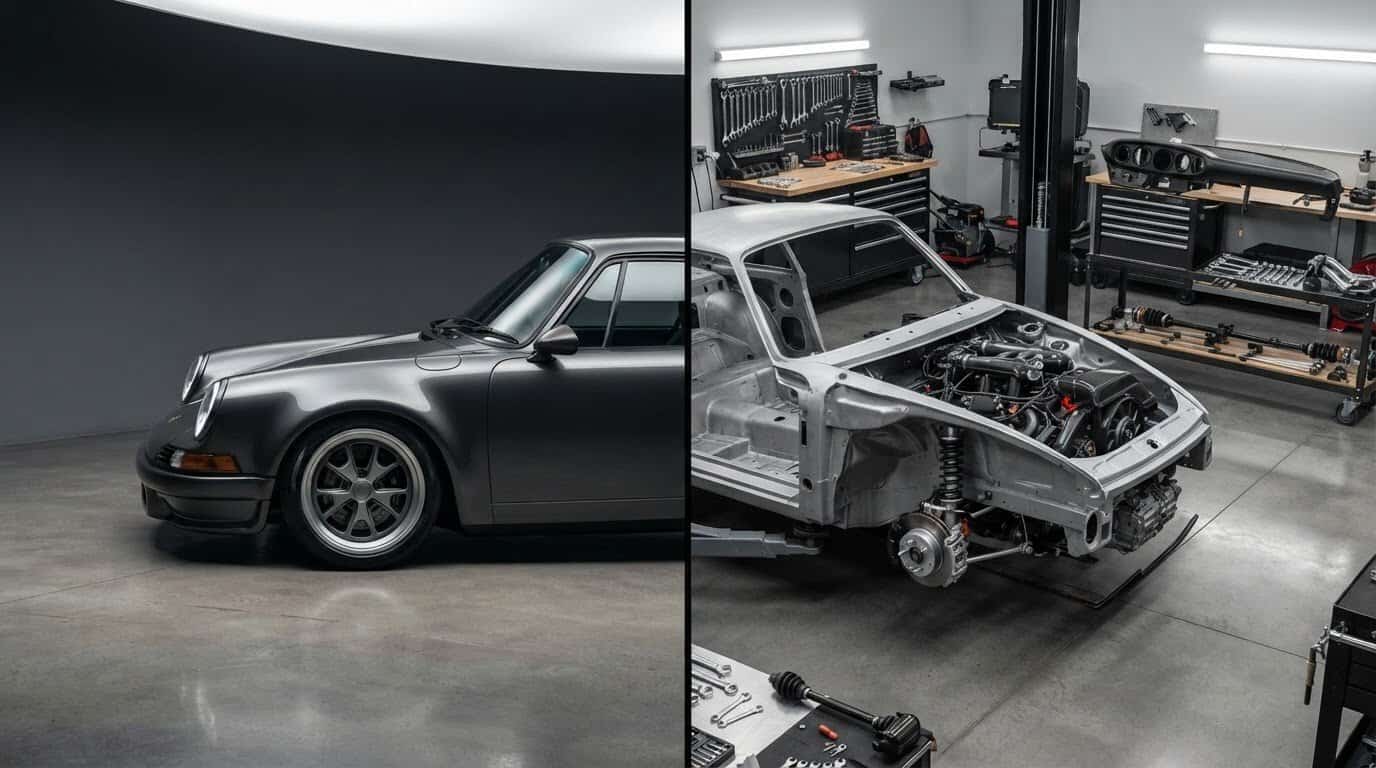
A finished restomod isn’t automatically a bad investment. It’s usually better viewed as an investment in the driving experience than as a path to short-term appreciation. Whether buying a finished restomod is a bad investment depends on build quality, market appeal, and how well the upgrades suit your priorities. Buying finished gets you on the road sooner; building gives you more control but takes time, budget, and careful planning.
It’s natural to compare the purchase price with what you might recover at resale. But a classic’s value also depends on its documentation, workmanship, originality, and demand for that particular mix of heritage and modern performance.
This comparison helps you weigh buying against building by looking at cost drivers, resale prospects, upkeep, and the tradeoffs of each route. It also explains why upgrades work best when they improve usability without erasing the character that made the car worth saving.
Key Takeaways
- Compare a finished build with a DIY plan by weighing workmanship, documentation, and how easily you can explain the car’s history to a future buyer.
- Look beyond the purchase price: ongoing maintenance, storage, insurance, and post-delivery refinements all shape ownership costs.
- Set a realistic time and budget plan before taking on a home build, including room for unexpected work and the value of your own labor.
- Choose upgrades that improve drivability while preserving the classic character you want, then use a structured guide or blueprint to plan the build.
Do DIY restomods have good resale value compared to professional builds?
DIY restomods can sell well, but buyers also weigh execution, documentation, originality, and demand for the specific vehicle.
Professional Build Resale Appeal
A professional build can be easier to assess when receipts, component lists, inspection records, and build photos document the work. Restomod prices depend on the donor car, upgrades, and workmanship; a quality build can cost more than a comparable original classic. There’s no simple price comparison with new performance cars, since models and specifications differ. Completed professional vehicles may also be easier to finance than unfinished restorations.
Originality and Collector Value
Collectors who prioritize matching numbers, period-correct parts, or concours judging may prefer an original car or traditional restoration. A restomod trades some originality for modern performance, comfort, or an updated interior, which can narrow its pool of future buyers. A finished restomod may retain value when build quality and demand align, but appreciation isn’t assured. Rarity and historical significance may make preserving an original configuration more compelling.
Provenance and Resale Value
Keep the original VIN and title with the vehicle: they anchor its identity and support buyer confidence. Build photos, receipts, parts lists, inspection records, and clear records of changes make its history easier to follow. This documentation helps explain what the purchase price reflects. Whether buying a finished restomod is a bad investment depends partly on demand, build quality, and the builder’s reputation.
At auction or in a private sale, hidden defects and incomplete records are risks. Inspect the car and review its documentation before bidding or agreeing to buy. Agreed-value insurance typically reflects the actual build cost, while U.S. taxes and registration requirements depend on the buyer’s location and the vehicle’s status.
| Option | Resale appeal | Best fit |
|---|---|---|
| Professional build | Documented work | Buyers seeking a finished car |
| DIY build | Quality and records vary | Owners who value hands-on work |
| Original classic | Originality matters | Collectors and concours enthusiasts |
Choose by matching the car’s documentation and modifications to the buyers you expect to reach; understanding what defines a restomod can help clarify that distinction.
Maintenance, warranty, service, storage, and insurance
Plan for more than the first drive: modern components still need scheduled maintenance, and a custom build may combine systems with different service needs. Records of the car’s history also help you understand its upkeep.
In the United States, modern systems can make emissions and inspection compliance easier to manage. Registration and emissions requirements depend on state rules and the vehicle’s configuration, so factor them into the purchase decision.
Maintenance and Reliability
Modern engines, transmissions, and replacement components can support predictable driving, but reliability depends on correct installation and continued care. Follow the builder’s maintenance schedule, retain service receipts, and track changes to fluids, brakes, tires, and electrical systems. A professional build’s first 500 miles are described as its break-in period, so follow its specific instructions before regular driving.
Warranty and Service
Warranty coverage and service access vary by build. Ask who assembled the vehicle, which components were replaced or upgraded, what testing was completed, and what support applies if a fault appears. A knowledgeable service team and a network familiar with the installed engine and drivetrain can make repairs more straightforward than relying on general shops unfamiliar with the custom setup.
Include storage, specialty collector car insurance, routine maintenance, and post-delivery refinements in your ownership plan. Proper detailing and consistent care help protect finishes and mechanical systems, especially if you drive the car regularly. Keep policy and build records together, including component information and inspection documents, so the vehicle’s agreed value reflects its actual build cost.
Before choosing upgrades or planning ownership, clarify what defines a restomod and how its modern systems shape maintenance and driving expectations.

Opportunity cost of a home-built project
A DIY restomod spends more than money: it commits your garage, weekends, and attention until the car is road-ready. A focused hobbyist may invest about 2,000 hours over three to five years. Compare that commitment with buying a completed build, which lets you drive sooner but gives you less control over each detail.
Budget for the whole sequence, not just the donor and engine. Home-built projects can exceed initial estimates by 40 to 60 percent. Rust repair, wiring, paint, interior work, and custom fabrication can each expand the scope. Price your own labor honestly, even if no cash changes hands. Those hours could otherwise go toward paid work, family time, or driving.
Time also affects completion and resale. Industry sentiment cited for DIY restorations suggests roughly 70 percent are sold unfinished. A stalled project ties up money and garage space, while buyers may discount incomplete work they must assess and finish. Set a defined scope before teardown, then divide it into stages: chassis, drivetrain, suspension and brakes, electrical work, interior, and road testing.
Professional timelines provide a useful comparison, not a promise for every car. Custom restomod builds may take 12 to 24 months or longer, while show-quality builds can involve 4,000 to 5,000 hours of specialized labor. A home builder gains confidence and control by learning each system, but must coordinate parts, tools, and fabrication—often relying on platforms like BreakerYard.com to track down specific donor components and replacement parts. Choose a donor with a sound structure; rust and hidden damage can divert effort from upgrades buyers value.
Build if the work itself matters to you. If your priority is driving a finished vehicle, compare the full project cost and realistic schedule with those of a completed example. A written scope, staged budget, and time set aside for the work help keep a build moving without sacrificing the finish quality that supports resale.
Modern upgrades and classic character
A restomod works best when each upgrade makes a classic easier to use without erasing its character. An updated engine can improve drivability, while modern suspension and brakes help the chassis manage that power. The goal isn’t to make every vintage vehicle feel new. Choose systems that suit the car and how you plan to drive it.
Start with balance. A powerful engine paired with original brakes, tired suspension, or vague steering can make a car feel mismatched. Treat the drivetrain, suspension, brakes, and steering as a connected package. If the build adds power, for example, plan braking and handling upgrades around the vehicle’s intended use, not just the engine’s output.
Comfort upgrades can also shape ownership. Air conditioning, a custom interior, and a modern sound system may make longer drives more enjoyable, but visible changes can narrow appeal among buyers who prefer original details. Decide which features matter most, then preserve the body lines, trim, and cabin details that give the classic its identity.
- Inspect wiring for clean routing, secure connections, and integration with the car’s existing systems.
- Compare panel gaps, paint finish, interior fitment, and door feel for consistent execution.
- On an electric conversion, assess battery integration, thermal management, and the effect on weight balance and driving feel.
These details reveal whether modern technology feels integrated or simply grafted onto an old shell. A well-chosen compromise preserves vintage character while adding reliability and comfort. Before buying or planning a build, learn how a restomod combines classic character with modern systems, then use that distinction to judge whether each upgrade belongs in your project.
Restomod Academy: The Ultimate Restomod Guide
Restomod Academy helps you turn the buy-versus-build decision into a practical project plan. Use The Ultimate Restomod Guide to understand the systems and tradeoffs involved. When you need help weighing a specific vehicle, build scope, or ownership goal, consider Restomod Consulting Services.
If you’ve chosen the DIY route, Premium Project Blueprints can help organize the design and decisions before work begins. A clear plan helps you align modern upgrades with the classic character you want to preserve, rather than adding components without a defined purpose.
Choose the resource that fits your next step, whether you’re evaluating a finished car or planning your own build. Visit restomodacademy.com to explore the available guidance.
Choose the Path That Gets You Behind the Wheel
Before you commit, define what you want the car to do in your life. Is it a weekend cruiser, a long-distance tourer, or a hands-on workshop project? Let that purpose guide your choice of vehicle and upgrades, as well as the time you’re willing to invest. It also gives you a clear standard for deciding whether a finished build fits or creating one yourself is part of the reward.
So, is buying a finished restomod a bad investment? It can be the right choice when the completed car matches your priorities and you value driving it more than controlling every build decision. Building makes more sense when you enjoy the process and are ready to manage the work. Choose deliberately, and let the classic’s character guide each modern decision.
For help shaping your next step, explore Restomod Academy’s guidance. Then turn your enthusiasm into a clear plan and a car you’ll be proud to drive.
Frequently Asked Questions
How Much Does a Restomod Cost?
The scope explains the spread. A straightforward drivetrain and comfort refresh differs greatly from bespoke engineering, extensive fabrication, and show-level finishing. Compare complete build scopes, not headline prices alone.
Are Restomods a Good Investment?
Restomods can be rewarding purchases, but they aren’t a dependable path to financial appreciation. Resale depends on the car’s desirability, the quality of the work, and how many buyers share its design choices. A restrained build on a popular model may appeal to a broader audience than a highly personalized one. Decide first whether you value driving the car, then consider potential resale separately.
How much should I expect to pay for a quality restomod?
“Quality” describes workmanship and integration, not a fixed price tier. Careful fabrication, a well-finished interior, and balanced mechanical upgrades matter at any scope. Define the intended use and essential upgrades before comparing quotes or asking prices. This makes it easier to separate necessary work from personal extras.
Is it better to commission a build or buy an available restomod?
Buy an available restomod if you want to assess a complete vehicle and begin driving sooner. Commission a build if a particular combination of engine, interior, and appearance matters more than immediate use. Custom builds can take time. Set your priorities first: ownership timing, control over specifications, and willingness to make decisions throughout the build should determine the route.
How can buyers verify a restomod’s build quality, parts, and provenance?
Match the build records to the vehicle, then look for consistency across photographs, receipts, component lists, and inspection documents. Compare listed parts with what’s installed, noting brands, model identifiers, and visible modifications. A test drive can reveal how the engine, transmission, steering, and brakes work together. Have a qualified inspector assess the structure and workmanship, especially in areas hidden by trim or coatings.
What are common mechanical and electrical problems with finished restomods?
Look for poorly integrated wiring, unreliable electrical connections, and aftermarket components that appear grafted onto the original systems. Mechanical concerns include mismatched engine, suspension, brake, or steering upgrades that may affect road manners. During inspection, test lights and instruments, observe a cold start, and assess braking and handling on a road test. Ask how the builder tested each system.
A finished restomod isn’t automatically a bad investment. It’s usually better viewed as an investment in the driving experience than as a path to short-term appreciation. Whether buying a finished restomod is a bad investment depends on build quality, market appeal, and how well the upgrades suit your priorities. Buying finished gets you on the road sooner; building gives you more control but takes time, budget, and careful planning.
It’s natural to compare the purchase price with what you might recover at resale. But a classic’s value also depends on its documentation, workmanship, originality, and demand for that particular mix of heritage and modern performance.
This comparison helps you weigh buying against building by looking at cost drivers, resale prospects, upkeep, and the tradeoffs of each route. It also explains why upgrades work best when they improve usability without erasing the character that made the car worth saving.
Key Takeaways
- Compare a finished build with a DIY plan by weighing workmanship, documentation, and how easily you can explain the car’s history to a future buyer.
- Look beyond the purchase price: ongoing maintenance, storage, insurance, and post-delivery refinements all shape ownership costs.
- Set a realistic time and budget plan before taking on a home build, including room for unexpected work and the value of your own labor.
- Choose upgrades that improve drivability while preserving the classic character you want, then use a structured guide or blueprint to plan the build.
Do DIY restomods have good resale value compared to professional builds?
DIY restomods can sell well, but buyers also weigh execution, documentation, originality, and demand for the specific vehicle.
Professional Build Resale Appeal
A professional build can be easier to assess when receipts, component lists, inspection records, and build photos document the work. Restomod prices depend on the donor car, upgrades, and workmanship; a quality build can cost more than a comparable original classic. There’s no simple price comparison with new performance cars, since models and specifications differ. Completed professional vehicles may also be easier to finance than unfinished restorations.
Originality and Collector Value
Collectors who prioritize matching numbers, period-correct parts, or concours judging may prefer an original car or traditional restoration. A restomod trades some originality for modern performance, comfort, or an updated interior, which can narrow its pool of future buyers. A finished restomod may retain value when build quality and demand align, but appreciation isn’t assured. Rarity and historical significance may make preserving an original configuration more compelling.
Provenance and Resale Value
Keep the original VIN and title with the vehicle: they anchor its identity and support buyer confidence. Build photos, receipts, parts lists, inspection records, and clear records of changes make its history easier to follow. This documentation helps explain what the purchase price reflects. Whether buying a finished restomod is a bad investment depends partly on demand, build quality, and the builder’s reputation.
At auction or in a private sale, hidden defects and incomplete records are risks. Inspect the car and review its documentation before bidding or agreeing to buy. Agreed-value insurance typically reflects the actual build cost, while U.S. taxes and registration requirements depend on the buyer’s location and the vehicle’s status.
| Option | Resale appeal | Best fit |
|---|---|---|
| Professional build | Documented work | Buyers seeking a finished car |
| DIY build | Quality and records vary | Owners who value hands-on work |
| Original classic | Originality matters | Collectors and concours enthusiasts |
Choose by matching the car’s documentation and modifications to the buyers you expect to reach; understanding what defines a restomod can help clarify that distinction.
Maintenance, warranty, service, storage, and insurance
Plan for more than the first drive: modern components still need scheduled maintenance, and a custom build may combine systems with different service needs. Records of the car’s history also help you understand its upkeep.
In the United States, modern systems can make emissions and inspection compliance easier to manage. Registration and emissions requirements depend on state rules and the vehicle’s configuration, so factor them into the purchase decision.
Maintenance and Reliability
Modern engines, transmissions, and replacement components can support predictable driving, but reliability depends on correct installation and continued care. Follow the builder’s maintenance schedule, retain service receipts, and track changes to fluids, brakes, tires, and electrical systems. A professional build’s first 500 miles are described as its break-in period, so follow its specific instructions before regular driving.
Warranty and Service
Warranty coverage and service access vary by build. Ask who assembled the vehicle, which components were replaced or upgraded, what testing was completed, and what support applies if a fault appears. A knowledgeable service team and a network familiar with the installed engine and drivetrain can make repairs more straightforward than relying on general shops unfamiliar with the custom setup.
Include storage, specialty collector car insurance, routine maintenance, and post-delivery refinements in your ownership plan. Proper detailing and consistent care help protect finishes and mechanical systems, especially if you drive the car regularly. Keep policy and build records together, including component information and inspection documents, so the vehicle’s agreed value reflects its actual build cost.
Before choosing upgrades or planning ownership, clarify what defines a restomod and how its modern systems shape maintenance and driving expectations.
Opportunity cost of a home-built project
A DIY restomod spends more than money: it commits your garage, weekends, and attention until the car is road-ready. A focused hobbyist may invest about 2,000 hours over three to five years. Compare that commitment with buying a completed build, which lets you drive sooner but gives you less control over each detail.
Budget for the whole sequence, not just the donor and engine. Home-built projects can exceed initial estimates by 40 to 60 percent. Rust repair, wiring, paint, interior work, and custom fabrication can each expand the scope. Price your own labor honestly, even if no cash changes hands. Those hours could otherwise go toward paid work, family time, or driving.
Time also affects completion and resale. Industry sentiment cited for DIY restorations suggests roughly 70 percent are sold unfinished. A stalled project ties up money and garage space, while buyers may discount incomplete work they must assess and finish. Set a defined scope before teardown, then divide it into stages: chassis, drivetrain, suspension and brakes, electrical work, interior, and road testing.
Professional timelines provide a useful comparison, not a promise for every car. Custom restomod builds may take 12 to 24 months or longer, while show-quality builds can involve 4,000 to 5,000 hours of specialized labor. A home builder gains confidence and control by learning each system, but must coordinate parts, tools, and fabrication. Choose a donor with a sound structure; rust and hidden damage can divert effort from upgrades buyers value.
Build if the work itself matters to you. If your priority is driving a finished vehicle, compare the full project cost and realistic schedule with those of a completed example. A written scope, staged budget, and time set aside for the work help keep a build moving without sacrificing the finish quality that supports resale.
Modern upgrades and classic character
A restomod works best when each upgrade makes a classic easier to use without erasing its character. An updated engine can improve drivability, while modern suspension and brakes help the chassis manage that power. The goal isn’t to make every vintage vehicle feel new. Choose systems that suit the car and how you plan to drive it.
Start with balance. A powerful engine paired with original brakes, tired suspension, or vague steering can make a car feel mismatched. Treat the drivetrain, suspension, brakes, and steering as a connected package. If the build adds power, for example, plan braking and handling upgrades around the vehicle’s intended use, not just the engine’s output.
Comfort upgrades can also shape ownership. Air conditioning, a custom interior, and a modern sound system may make longer drives more enjoyable, but visible changes can narrow appeal among buyers who prefer original details. Decide which features matter most, then preserve the body lines, trim, and cabin details that give the classic its identity.
- Inspect wiring for clean routing, secure connections, and integration with the car’s existing systems.
- Compare panel gaps, paint finish, interior fitment, and door feel for consistent execution.
- On an electric conversion, assess battery integration, thermal management, and the effect on weight balance and driving feel.
These details reveal whether modern technology feels integrated or simply grafted onto an old shell. A well-chosen compromise preserves vintage character while adding reliability and comfort. Before buying or planning a build, learn how a restomod combines classic character with modern systems, then use that distinction to judge whether each upgrade belongs in your project.
Restomod Academy: The Ultimate Restomod Guide
Restomod Academy helps you turn the buy-versus-build decision into a practical project plan. Use The Ultimate Restomod Guide to understand the systems and tradeoffs involved. When you need help weighing a specific vehicle, build scope, or ownership goal, consider Restomod Consulting Services.
If you’ve chosen the DIY route, Premium Project Blueprints can help organize the design and decisions before work begins. A clear plan helps you align modern upgrades with the classic character you want to preserve, rather than adding components without a defined purpose.
Choose the resource that fits your next step, whether you’re evaluating a finished car or planning your own build. Visit restomodacademy.com to explore the available guidance.
Choose the Path That Gets You Behind the Wheel
Before you commit, define what you want the car to do in your life. Is it a weekend cruiser, a long-distance tourer, or a hands-on workshop project? Let that purpose guide your choice of vehicle and upgrades, as well as the time you’re willing to invest. It also gives you a clear standard for deciding whether a finished build fits or creating one yourself is part of the reward.
So, is buying a finished restomod a bad investment? It can be the right choice when the completed car matches your priorities and you value driving it more than controlling every build decision. Building makes more sense when you enjoy the process and are ready to manage the work. Choose deliberately, and let the classic’s character guide each modern decision.
For help shaping your next step, explore Restomod Academy’s guidance. Then turn your enthusiasm into a clear plan and a car you’ll be proud to drive.
Frequently Asked Questions
How Much Does a Restomod Cost?
The scope explains the spread. A straightforward drivetrain and comfort refresh differs greatly from bespoke engineering, extensive fabrication, and show-level finishing. Compare complete build scopes, not headline prices alone.
Are Restomods a Good Investment?
Restomods can be rewarding purchases, but they aren’t a dependable path to financial appreciation. Resale depends on the car’s desirability, the quality of the work, and how many buyers share its design choices. A restrained build on a popular model may appeal to a broader audience than a highly personalized one. Decide first whether you value driving the car, then consider potential resale separately.
How much should I expect to pay for a quality restomod?
“Quality” describes workmanship and integration, not a fixed price tier. Careful fabrication, a well-finished interior, and balanced mechanical upgrades matter at any scope. Define the intended use and essential upgrades before comparing quotes or asking prices. This makes it easier to separate necessary work from personal extras.
Is it better to commission a build or buy an available restomod?
Buy an available restomod if you want to assess a complete vehicle and begin driving sooner. Commission a build if a particular combination of engine, interior, and appearance matters more than immediate use. Custom builds can take time. Set your priorities first: ownership timing, control over specifications, and willingness to make decisions throughout the build should determine the route.
How can buyers verify a restomod’s build quality, parts, and provenance?
Match the build records to the vehicle, then look for consistency across photographs, receipts, component lists, and inspection documents. Compare listed parts with what’s installed, noting brands, model identifiers, and visible modifications. A test drive can reveal how the engine, transmission, steering, and brakes work together. Have a qualified inspector assess the structure and workmanship, especially in areas hidden by trim or coatings.
What are common mechanical and electrical problems with finished restomods?
Look for poorly integrated wiring, unreliable electrical connections, and aftermarket components that appear grafted onto the original systems. Mechanical concerns include mismatched engine, suspension, brake, or steering upgrades that may affect road manners. During inspection, test lights and instruments, observe a cold start, and assess braking and handling on a road test. Ask how the builder tested each system.