
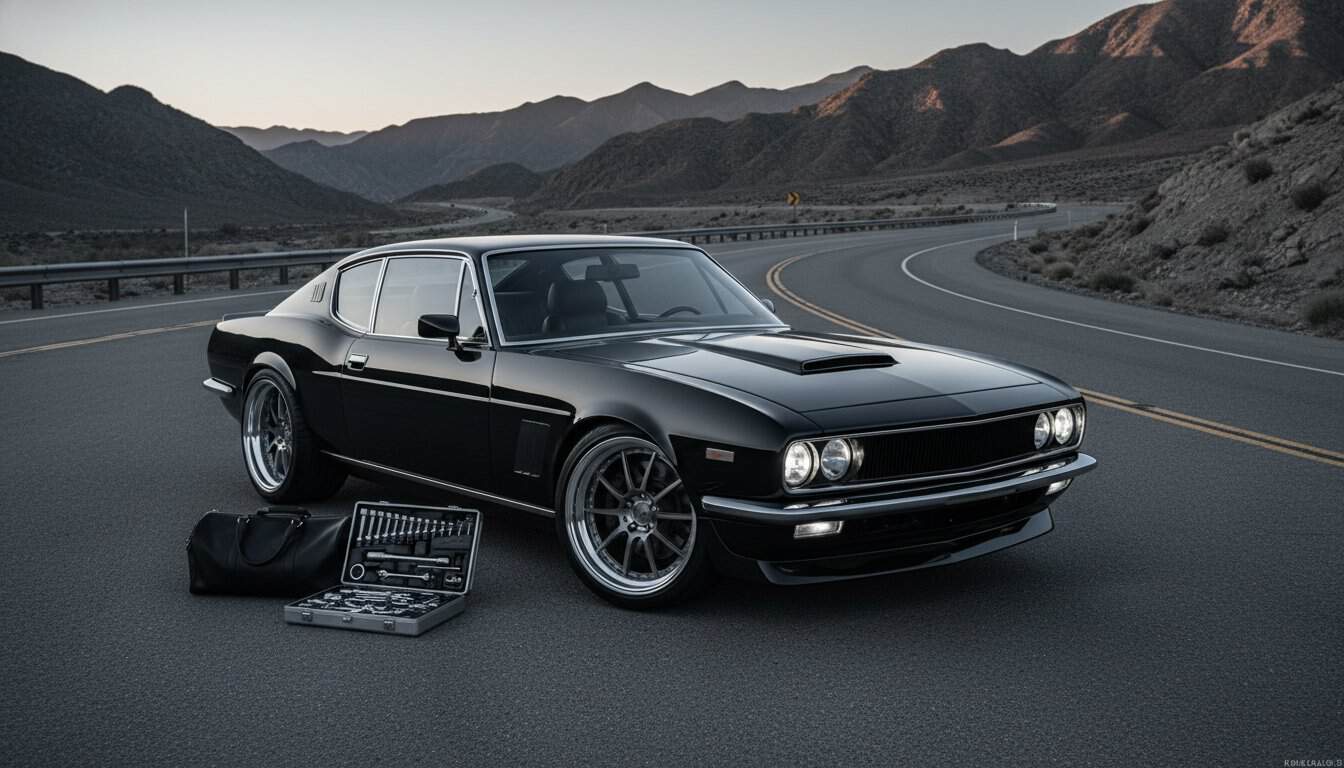
What if the most intimidating part of a thousand-mile journey wasn’t the distance, but the mechanical mystery sitting under your hood? You shouldn’t have to white-knuckle your steering wheel every time you leave city limits. You likely agree that there’s an unmatched soul in a vintage engine, yet the anxiety surrounding long distance driving in a classic car often keeps your pride and joy parked in the garage. While the global market for these machines is projected to reach 40.8 billion dollars in 2025, many enthusiasts remain tethered to their local neighborhoods out of fear.
I’m here to show you that cross-country travel can be as reliable as a modern daily drive when you apply the right technical precision. This guide will teach you how to build resilience into your machine through a methodical pre-trip checklist and strategic modern upgrades. We’ll cover essential cooling and braking enhancements, the impact of the May 2026 E15 fuel waivers on your vintage system, and the specific tools you need to pack for total peace of mind. It’s time to stop being a passive admirer and start creating a machine built for the long haul.
Key Takeaways
- Establish a 500-mile local testing baseline to flush out mechanical gremlins before they manifest on the open highway.
- Transition from vintage limitations to modern reliability by integrating systems like Electronic Fuel Injection and overdrive transmissions for smoother high-speed cruising.
- Combat the hidden enemy of vibration by performing a systematic nut and bolt audit as part of your preparation for long distance driving in a classic car.
- Build a dedicated travel-ready toolkit focused on high-priority spares, such as ignition modules and specific belts, to maintain your momentum during unexpected roadside challenges.
- Develop a driver’s intuition for identifying developing mechanical issues early, allowing you to address problems before they escalate into a trip-ending failure.
Assessing Your Classic Car for Long Distance Reliability
Preparing for long distance driving in a classic car requires more than a simple oil change; it demands a philosophy of engineering excellence. We embrace a restomod approach that preserves the heritage of the machine while integrating modern components capable of handling 2026 highway speeds. When we ask What is a classic car?, we are discussing a mechanical system designed for a different era of infrastructure. To bridge the gap between nostalgia and the modern interstate, you must transition from a passive owner to an active builder who understands the specific limits of vintage iron.
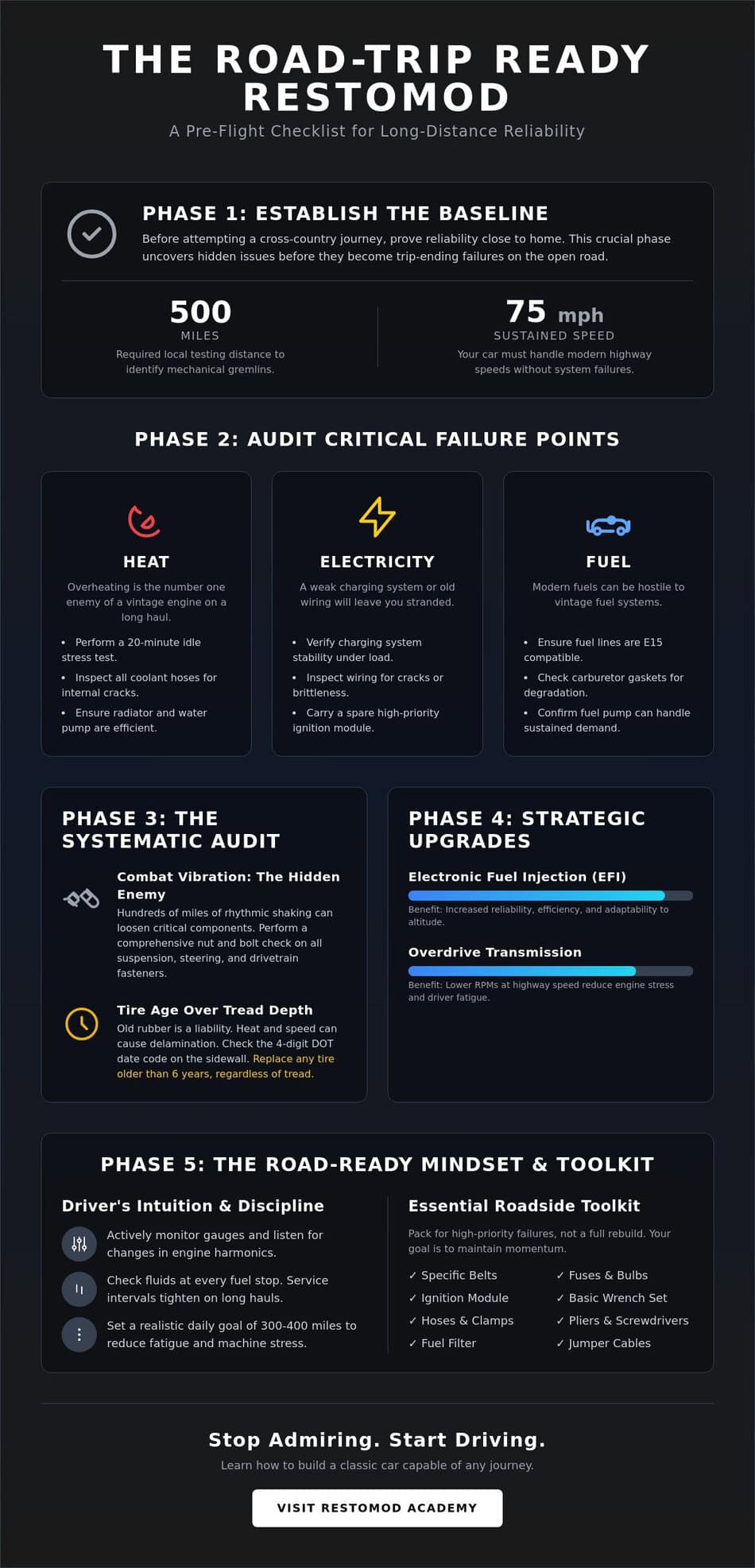
There is a massive chasm between a car that is “running” and one that is “road-trip ready.” A running car gets you to the local Saturday morning meetup. A road-trip ready machine can sustain 75 mph for six hours straight without the temperature needle creeping toward the red or the charging system failing. Before you even think about packing a suitcase, establish a 500-mile local baseline. Drive the car in varied conditions, from stop-and-go traffic to sustained highway bursts. If a component is going to fail, you want it to happen ten miles from your garage, not two hundred miles into a desert crossing.
To better understand the nuances of preparing your vintage machine for the road, watch this helpful video:
The Mental Shift: Classic vs. Modern Expectations
Driving a vintage machine is a sensory experience that requires your full attention. Unlike a modern SUV that isolates you from the road, a classic demands that you actively monitor your gauges and listen for changes in engine harmonics. You must accept that service intervals are tighter during a long haul. Check your fluids at every fuel stop. Set a realistic daily mileage goal of 300 to 400 miles. Pushing for 600 miles or more in a non-overdrive car increases driver fatigue and places unnecessary stress on an aging cooling system.
Identifying Critical Failure Points Before You Leave
Focus your attention on the big three road-trip killers: heat, electricity, and fuel. Perform a stress test on your cooling system by idling in a driveway for twenty minutes on a warm day. If the temperature doesn’t stabilize, your radiator or water pump isn’t ready for the mountains. Inspect every rubber component. Hoses and belts that look fine on the surface often have internal cracks that fail under the sustained heat of a long trip. With the 2026 emergency waivers allowing E15 gasoline sales throughout the summer, ensure your fuel lines and carburetor gaskets are compatible with higher ethanol content to prevent chemical degradation during long distance driving in a classic car.
The Pre-Trip Mechanical Audit: A Systematic Approach
Successful long distance driving in a classic car depends on a transition from casual maintenance to a professional audit. While the baseline test identifies immediate failures, a systematic shop inspection prevents the slow degradation that turns a road trip into a rescue mission. Vibration is your primary adversary. Over hundreds of miles, the rhythmic shaking of a vintage chassis can loosen fasteners that have stayed put for years. Perform a comprehensive nut and bolt check. Touch every critical fastener on the suspension, steering, and drivetrain with a wrench to ensure they meet factory torque specifications. This methodical approach ensures your machine is as resilient as it is beautiful.
Fluid analysis goes beyond the dipstick. Smell your transmission fluid for a burnt odor and inspect your oil for the milky signs of moisture or the shimmer of metal shavings. Tires require even closer scrutiny. Tread depth is a deceptive metric for vintage rubber. Locate the four-digit DOT date code on the sidewall. If your tires are more than six years old, they are a liability, regardless of how much tread remains. Heat and high speed cause old rubber to delaminate, a risk you shouldn’t take when you’re miles from help during your long distance driving in a classic car. Safety starts where the rubber meets the road.
Cooling and Electrical Systems: The Summer Road Trip Killers
Flush your radiator to remove internal scale buildup that inhibits heat transfer; a clean appearance doesn’t guarantee efficiency on long climbs. Simultaneously, test your alternator output while the engine is hot and all accessories are running. Brittle wiring and loose grounds cause most roadside stalls. If you’re planning a major build, modern powertrain integration provides the ultimate reliability for summer travel.
Braking and Suspension: Ensuring Safety Over Hundreds of Miles
Inspect brake lines for swelling and ensure your fluid is fresh to prevent boiling on mountain passes. Many enthusiasts choose modern upgrades for classic cars like disc conversions for consistent stopping power. This is a core part of the restomod philosophy that prioritizes safety. Check ball joints and bushings for play that causes highway wander. Finally, repack wheel bearings with fresh grease. To ensure you have the right tools, review our list of recommended gear for the shop.
Modern Upgrades That Transform the Long-Distance Experience
To truly master long distance driving in a classic car, you must look beyond mere maintenance and embrace the transformative power of modern engineering. While a perfectly tuned carburetor has its place at a local show, it often falters when faced with the 5,000-foot elevation changes and varying humidity of a cross-country trek. Transitioning to Electronic Fuel Injection (EFI) provides your vintage engine with a digital brain capable of real-time atmospheric adaptation. This shift ensures crisp throttle response and reliable hot starts, regardless of whether you’re climbing a mountain pass or idling through a humid valley.
Modernizing your drivetrain isn’t just about performance; it’s about preserving your sanity and your machine’s longevity. Most vintage transmissions were designed for an era when highway speeds topped out at 55 mph. Sustaining 75 mph with a three-speed automatic often forces the engine to scream at 3,500 RPM for hours. This creates excessive heat and vibration that eventually finds the weakest link in your system. Integrating an overdrive transmission, such as a modern 5-speed manual or a 4-speed automatic, drops those cruising RPMs into a comfortable range. You’ll notice an immediate improvement in fuel economy and a significant reduction in engine wear, making the journey as rewarding as the destination.
EFI and Overdrive: The Keys to Highway Comfort
If you’re seeking the ultimate in reliability, the definitive guide to an LS engine swap offers a roadmap for integrating a modern powertrain into a classic chassis. This specific upgrade provides factory-level reliability with parts availability found at any local auto store. Beyond the engine, consider the mechanical advantage of a 0.68 or 0.70 overdrive ratio. This isn’t just about saving money at the pump; it’s about reducing the acoustic fatigue that wears a driver down over an eight-hour stint.
Interior Ergonomics and Climate Control
The psychology of a long drive changes the moment you address cabin noise and temperature. Applying high-quality sound deadening to the floor pans and doors transforms a tinny cockpit into a composed environment where you can actually hear your passenger. This is a core tenet of the restomod philosophy: improving the user experience without erasing the car’s character. Complement this with a modern climate control system designed for vintage applications. Staying cool behind the wheel prevents the physical exhaustion that leads to lapses in judgment during long distance driving in a classic car.
The Essential Roadside Toolkit and Emergency Strategy
Transitioning from the controlled environment of your workshop to the unpredictable reality of the shoulder is a test of your mechanical foresight. Long distance driving in a classic car is a rewarding challenge, but it demands a specialized approach to roadside resilience. You must distinguish between your shop kit and your travel kit. While your garage is filled with specialty pullers and pneumatic tools, your travel bag must be a surgical collection of high-impact essentials. A well-organized kit doesn’t just provide the means to fix a problem; it provides the psychological calm needed to diagnose an issue without panic.
Select your spares based on the critical failure points we identified earlier: heat, electricity, and fuel. Carry a spare ignition module or a set of points, two quarts of your specific high-zinc oil, and a gallon of pre-mixed coolant. Modern gas stations rarely stock the ZDDP-rich lubricants older flat-tappet engines require. Given the 2026 emergency waivers allowing E15 gasoline sales, carrying a few feet of fuel-injection rated hose and a spare fuel filter is a mandatory precaution. These small items take up little space but are often the only things standing between you and a flatbed tow truck.
Building a Restoration-Grade Travel Kit
Your toolkit should prioritize multi-use items and high-quality sockets that match your car’s specific fasteners. Include a digital multimeter; it is the most powerful tool you can carry for diagnosing charging system failures or parasitic draws on the fly. Pack a “Get Home” bag within your kit containing rescue tape, heavy-duty zip ties, and a stick of steel-reinforced epoxy putty. These items allow for temporary repairs to cooling hoses or minor leaks that can get you to the next town safely. For a complete list of the hardware I trust on the road, check our recommended gear for vintage travel.
The ‘What If’ Plan: Insurance, Towing, and Parts Sourcing
Mastering long distance driving in a classic car means preparing for the scenario where a roadside fix isn’t possible. Verify that your insurance policy includes a flatbed towing provision with adequate mileage coverage. Many modern tow operators lack experience with vintage suspensions, so specify a flatbed to avoid damage to your drivetrain or chrome. Before you leave, use digital enthusiast communities to identify specialized shops along your route. Having a list of “safe” stops and local experts in your phone turns a potential disaster into a manageable detour. Reliability is a system, and your emergency plan is the final, vital component of that system.
Mastering the Open Road: Driving Techniques and Route Planning
Long distance driving in a classic car requires a fundamental shift in how you perceive the map. While modern GPS algorithms prioritize the shortest route, a vintage machine thrives on the path of least resistance. Interstates are often the enemy of the classic traveler; they subject your car to high speed aerodynamic stress and relentless vibration while offering little in the way of scenery or escape routes. Choosing secondary highways with lower speed limits reduces the load on your cooling system and allows you to maintain a pace that is respectful to your drivetrain. This isn’t just about preservation; it’s about enjoying the tactile feedback of the steering and the mechanical harmony of the engine without the high-pressure environment of the modern commute.
Your daily ritual begins before you ever turn the key. The morning walkaround is a non-negotiable habit for any multi-day trip. Inspect the ground beneath your car for fresh puddles of oil, coolant, or brake fluid. Check your tire pressures while the rubber is still cold to ensure you aren’t losing air to a slow leak. This five-minute inspection provides the early warning signs of a developing issue, allowing you to tighten a hose clamp or top off a reservoir before a minor drip becomes a major failure. It is this level of attention to detail that separates the successful traveler from the stranded spectator.
Strategic Route Planning for Vintage Machines
Plan your fuel stops with precision. With the 2026 emergency waivers allowing E15 gasoline sales throughout the summer, you must be vigilant about finding high-octane, ethanol-free fuel whenever possible to protect your seals and gaskets. Use terrain to your advantage. If your route involves a significant mountain climb, time your ascent for the cooler morning hours to give your radiator a fighting chance against the grade. This strategic approach is a key part of the restomod philosophy, where we use modern intelligence to manage vintage hardware. Always keep a log of your fuel range to avoid the stress of running low in remote areas where specialized parts or help might be hours away.
Monitoring Your Machine: The Art of the Gauges
Establish a normal baseline for your oil pressure and water temperature during the first hour of your trip. Every car has its own mechanical signature; knowing what “normal” looks like for your specific engine allows you to spot a needle movement before it reaches the danger zone. If the temperature begins to creep, don’t wait for the steam. Turn on the heater to pull heat from the engine block and find a safe place to pull over. This proactive management is what makes long distance driving in a classic car a sustainable adventure. By combining the right recommended gear with a mentor’s mindset, you can navigate any mechanical hurdle with confidence. The open road is no longer a source of anxiety; it’s a canvas for your technical skill and a testament to the machine you’ve built.
Take the Wheel with Total Confidence
You’ve learned that reliability isn’t a factory setting; it’s a deliberate result of your own labor and technical foresight. By moving from a passive owner to an active creator, you ensure that long distance driving in a classic car becomes a series of rewarding milestones rather than a gamble against mechanical failure. You now have the framework to audit your systems, integrate modern performance upgrades, and navigate the open road with a mentor’s precision.
The journey doesn’t stop with a single trip. If you’re ready to transform your vintage machine into a bulletproof cross-country traveler, it’s time to leverage professional expertise. Get the Ultimate Restomod Guide to build a cross-country capable machine and access the premium project blueprints used by our dedicated DIY community. With expert guidance from Brook Walsh, you’ll bridge the gap between heritage style and modern resilience. Pick up your tools and start your pre-trip audit today. The horizon is waiting, and your car is ready to meet it.
Frequently Asked Questions
Is it safe to drive a 50-year-old car 1,000 miles?
Yes, driving a vintage machine over long distances is safe provided you have transitioned the vehicle from a local cruiser to a road-trip ready machine. You must perform a systematic audit of the steering, suspension, and braking systems to ensure they can handle sustained highway speeds. Reliability isn’t about the age of the iron; it’s about the precision of the maintenance and the quality of the modern components you’ve integrated.
What are the most common parts that fail on classic car road trips?
Mechanical failures usually cluster around the big three: heat, electricity, and fuel. Specifically, you should watch for failing ignition modules, ruptured radiator hoses, and worn fan belts. Fuel pumps also struggle with the heat soak common in modern traffic. Carrying a dedicated travel kit with these specific spares allows you to address these high-probability issues on the shoulder and keep your journey moving forward without a tow.
Should I upgrade to disc brakes before a long-distance drive?
Upgrade to front disc brakes if your route includes mountain passes or heavy metropolitan traffic. While original drum brakes are adequate for a single stop, they suffer from heat fade during repeated use or long descents. Modern disc conversions provide the consistent stopping power and heat dissipation required for safety on today’s crowded interstates. This is a foundational step in building a machine capable of handling the rigors of the open road.
How often should I check the oil and fluids during a vintage road trip?
Check your oil, coolant, and brake fluid at every fuel stop during long distance driving in a classic car. Vintage engines naturally consume more oil than modern powerplants, and a small leak can quickly become a catastrophe under the stress of a six-hour highway stint. Opening the hood frequently also allows you to use your senses to detect early warning signs, such as the smell of burning oil or the hiss of a pinhole coolant leak.
Can I use regular unleaded gas in my classic car for long distances?
Avoid using regular unleaded gasoline unless your engine has been specifically modified with hardened valve seats and adjusted timing. In summer 2026, the EPA has issued emergency waivers for E15 gasoline, which contains 15 percent ethanol. This higher ethanol content can quickly degrade vintage rubber fuel lines and carburetor gaskets. Always search for high-octane, ethanol-free fuel to preserve your fuel system’s integrity during long distance driving in a classic car.
What is the best way to find a mechanic for a classic car if I break down?
Use digital enthusiast communities and model-specific forums rather than relying on generic search engine results for local garages. Most modern technicians are trained on diagnostic software and may lack the specialized knowledge required to tune a carburetor or adjust points. Pre-identify specialized shops along your route before you leave. Connecting with local car clubs in remote areas often leads you to the most skilled independent mechanics who understand vintage iron.
How do I keep my classic car engine cool in heavy traffic?
Install a high-efficiency aluminum radiator and a thermostatically controlled electric fan to manage temperatures when airflow is low. Original mechanical fans often fail to pull enough air during prolonged idling in summer heat. If you see the needle creeping up, shift into neutral and increase the engine RPM slightly to speed up the water pump and fan. Turning on the interior heater can also act as a secondary radiator to pull vital heat away from the engine block.
Is an LS swap worth it for someone who only does occasional road trips?
An LS swap is absolutely worth the investment if you value the peace of mind that comes with factory-level reliability and modern fuel economy. This upgrade transforms a temperamental vintage engine into a turn-key powerhouse that starts every time, regardless of altitude or temperature. For the occasional traveler, the benefit lies in the massive aftermarket support and the fact that any local parts store will stock the sensors or belts you might need in an emergency.
What if the most intimidating part of a thousand-mile journey wasn’t the distance, but the mechanical mystery sitting under your hood? You shouldn’t have to white-knuckle your steering wheel every time you leave city limits. You likely agree that there’s an unmatched soul in a vintage engine, yet the anxiety surrounding long distance driving in a classic car often keeps your pride and joy parked in the garage. While the global market for these machines is projected to reach 40.8 billion dollars in 2025, many enthusiasts remain tethered to their local neighborhoods out of fear.
I’m here to show you that cross-country travel can be as reliable as a modern daily drive when you apply the right technical precision. This guide will teach you how to build resilience into your machine through a methodical pre-trip checklist and strategic modern upgrades. We’ll cover essential cooling and braking enhancements, the impact of the May 2026 E15 fuel waivers on your vintage system, and the specific tools you need to pack for total peace of mind. It’s time to stop being a passive admirer and start creating a machine built for the long haul.
Key Takeaways
- Establish a 500-mile local testing baseline to flush out mechanical gremlins before they manifest on the open highway.
- Transition from vintage limitations to modern reliability by integrating systems like Electronic Fuel Injection and overdrive transmissions for smoother high-speed cruising.
- Combat the hidden enemy of vibration by performing a systematic nut and bolt audit as part of your preparation for long distance driving in a classic car.
- Build a dedicated travel-ready toolkit focused on high-priority spares, such as ignition modules and specific belts, to maintain your momentum during unexpected roadside challenges.
- Develop a driver’s intuition for identifying developing mechanical issues early, allowing you to address problems before they escalate into a trip-ending failure.
Assessing Your Classic Car for Long Distance Reliability
Preparing for long distance driving in a classic car requires more than a simple oil change; it demands a philosophy of engineering excellence. We embrace a restomod approach that preserves the heritage of the machine while integrating modern components capable of handling 2026 highway speeds. When we ask What is a classic car?, we are discussing a mechanical system designed for a different era of infrastructure. To bridge the gap between nostalgia and the modern interstate, you must transition from a passive owner to an active builder who understands the specific limits of vintage iron.
There is a massive chasm between a car that is “running” and one that is “road-trip ready.” A running car gets you to the local Saturday morning meetup. A road-trip ready machine can sustain 75 mph for six hours straight without the temperature needle creeping toward the red or the charging system failing. Before you even think about packing a suitcase, establish a 500-mile local baseline. Drive the car in varied conditions, from stop-and-go traffic to sustained highway bursts. If a component is going to fail, you want it to happen ten miles from your garage, not two hundred miles into a desert crossing.
To better understand the nuances of preparing your vintage machine for the road, watch this helpful video:
The Mental Shift: Classic vs. Modern Expectations
Driving a vintage machine is a sensory experience that requires your full attention. Unlike a modern SUV that isolates you from the road, a classic demands that you actively monitor your gauges and listen for changes in engine harmonics. You must accept that service intervals are tighter during a long haul. Check your fluids at every fuel stop. Set a realistic daily mileage goal of 300 to 400 miles. Pushing for 600 miles or more in a non-overdrive car increases driver fatigue and places unnecessary stress on an aging cooling system.
Identifying Critical Failure Points Before You Leave
Focus your attention on the big three road-trip killers: heat, electricity, and fuel. Perform a stress test on your cooling system by idling in a driveway for twenty minutes on a warm day. If the temperature doesn’t stabilize, your radiator or water pump isn’t ready for the mountains. Inspect every rubber component. Hoses and belts that look fine on the surface often have internal cracks that fail under the sustained heat of a long trip. With the 2026 emergency waivers allowing E15 gasoline sales throughout the summer, ensure your fuel lines and carburetor gaskets are compatible with higher ethanol content to prevent chemical degradation during long distance driving in a classic car.
The Pre-Trip Mechanical Audit: A Systematic Approach
Successful long distance driving in a classic car depends on a transition from casual maintenance to a professional audit. While the baseline test identifies immediate failures, a systematic shop inspection prevents the slow degradation that turns a road trip into a rescue mission. Vibration is your primary adversary. Over hundreds of miles, the rhythmic shaking of a vintage chassis can loosen fasteners that have stayed put for years. Perform a comprehensive nut and bolt check. Touch every critical fastener on the suspension, steering, and drivetrain with a wrench to ensure they meet factory torque specifications. This methodical approach ensures your machine is as resilient as it is beautiful.
Fluid analysis goes beyond the dipstick. Smell your transmission fluid for a burnt odor and inspect your oil for the milky signs of moisture or the shimmer of metal shavings. Tires require even closer scrutiny. Tread depth is a deceptive metric for vintage rubber. Locate the four-digit DOT date code on the sidewall. If your tires are more than six years old, they are a liability, regardless of how much tread remains. Heat and high speed cause old rubber to delaminate, a risk you shouldn’t take when you’re miles from help during your long distance driving in a classic car. Safety starts where the rubber meets the road.
Cooling and Electrical Systems: The Summer Road Trip Killers
Flush your radiator to remove internal scale buildup that inhibits heat transfer; a clean appearance doesn’t guarantee efficiency on long climbs. Simultaneously, test your alternator output while the engine is hot and all accessories are running. Brittle wiring and loose grounds cause most roadside stalls. If you’re planning a major build, modern powertrain integration provides the ultimate reliability for summer travel.
Braking and Suspension: Ensuring Safety Over Hundreds of Miles
Inspect brake lines for swelling and ensure your fluid is fresh to prevent boiling on mountain passes. Many enthusiasts choose modern upgrades for classic cars like disc conversions for consistent stopping power. This is a core part of the restomod philosophy that prioritizes safety. Check ball joints and bushings for play that causes highway wander. Finally, repack wheel bearings with fresh grease. To ensure you have the right tools, review our list of recommended gear for the shop.
Modern Upgrades That Transform the Long-Distance Experience
To truly master long distance driving in a classic car, you must look beyond mere maintenance and embrace the transformative power of modern engineering. While a perfectly tuned carburetor has its place at a local show, it often falters when faced with the 5,000-foot elevation changes and varying humidity of a cross-country trek. Transitioning to Electronic Fuel Injection (EFI) provides your vintage engine with a digital brain capable of real-time atmospheric adaptation. This shift ensures crisp throttle response and reliable hot starts, regardless of whether you’re climbing a mountain pass or idling through a humid valley.
Modernizing your drivetrain isn’t just about performance; it’s about preserving your sanity and your machine’s longevity. Most vintage transmissions were designed for an era when highway speeds topped out at 55 mph. Sustaining 75 mph with a three-speed automatic often forces the engine to scream at 3,500 RPM for hours. This creates excessive heat and vibration that eventually finds the weakest link in your system. Integrating an overdrive transmission, such as a modern 5-speed manual or a 4-speed automatic, drops those cruising RPMs into a comfortable range. You’ll notice an immediate improvement in fuel economy and a significant reduction in engine wear, making the journey as rewarding as the destination.
EFI and Overdrive: The Keys to Highway Comfort
If you’re seeking the ultimate in reliability, the definitive guide to an LS engine swap offers a roadmap for integrating a modern powertrain into a classic chassis. This specific upgrade provides factory-level reliability with parts availability found at any local auto store. Beyond the engine, consider the mechanical advantage of a 0.68 or 0.70 overdrive ratio. This isn’t just about saving money at the pump; it’s about reducing the acoustic fatigue that wears a driver down over an eight-hour stint.
Interior Ergonomics and Climate Control
The psychology of a long drive changes the moment you address cabin noise and temperature. Applying high-quality sound deadening to the floor pans and doors transforms a tinny cockpit into a composed environment where you can actually hear your passenger. This is a core tenet of the restomod philosophy: improving the user experience without erasing the car’s character. Complement this with a modern climate control system designed for vintage applications. Staying cool behind the wheel prevents the physical exhaustion that leads to lapses in judgment during long distance driving in a classic car.
The Essential Roadside Toolkit and Emergency Strategy
Transitioning from the controlled environment of your workshop to the unpredictable reality of the shoulder is a test of your mechanical foresight. Long distance driving in a classic car is a rewarding challenge, but it demands a specialized approach to roadside resilience. You must distinguish between your shop kit and your travel kit. While your garage is filled with specialty pullers and pneumatic tools, your travel bag must be a surgical collection of high-impact essentials. A well-organized kit doesn’t just provide the means to fix a problem; it provides the psychological calm needed to diagnose an issue without panic.
Select your spares based on the critical failure points we identified earlier: heat, electricity, and fuel. Carry a spare ignition module or a set of points, two quarts of your specific high-zinc oil, and a gallon of pre-mixed coolant. Modern gas stations rarely stock the ZDDP-rich lubricants older flat-tappet engines require. Given the 2026 emergency waivers allowing E15 gasoline sales, carrying a few feet of fuel-injection rated hose and a spare fuel filter is a mandatory precaution. These small items take up little space but are often the only things standing between you and a flatbed tow truck.
Building a Restoration-Grade Travel Kit
Your toolkit should prioritize multi-use items and high-quality sockets that match your car’s specific fasteners. Include a digital multimeter; it is the most powerful tool you can carry for diagnosing charging system failures or parasitic draws on the fly. Pack a “Get Home” bag within your kit containing rescue tape, heavy-duty zip ties, and a stick of steel-reinforced epoxy putty. These items allow for temporary repairs to cooling hoses or minor leaks that can get you to the next town safely. For a complete list of the hardware I trust on the road, check our recommended gear for vintage travel.
The ‘What If’ Plan: Insurance, Towing, and Parts Sourcing
Mastering long distance driving in a classic car means preparing for the scenario where a roadside fix isn’t possible. Verify that your insurance policy includes a flatbed towing provision with adequate mileage coverage. Many modern tow operators lack experience with vintage suspensions, so specify a flatbed to avoid damage to your drivetrain or chrome. Before you leave, use digital enthusiast communities to identify specialized shops along your route. Having a list of “safe” stops and local experts in your phone turns a potential disaster into a manageable detour. Reliability is a system, and your emergency plan is the final, vital component of that system.
Mastering the Open Road: Driving Techniques and Route Planning
Long distance driving in a classic car requires a fundamental shift in how you perceive the map. While modern GPS algorithms prioritize the shortest route, a vintage machine thrives on the path of least resistance. Interstates are often the enemy of the classic traveler; they subject your car to high speed aerodynamic stress and relentless vibration while offering little in the way of scenery or escape routes. Choosing secondary highways with lower speed limits reduces the load on your cooling system and allows you to maintain a pace that is respectful to your drivetrain. This isn’t just about preservation; it’s about enjoying the tactile feedback of the steering and the mechanical harmony of the engine without the high-pressure environment of the modern commute.
Your daily ritual begins before you ever turn the key. The morning walkaround is a non-negotiable habit for any multi-day trip. Inspect the ground beneath your car for fresh puddles of oil, coolant, or brake fluid. Check your tire pressures while the rubber is still cold to ensure you aren’t losing air to a slow leak. This five-minute inspection provides the early warning signs of a developing issue, allowing you to tighten a hose clamp or top off a reservoir before a minor drip becomes a major failure. It is this level of attention to detail that separates the successful traveler from the stranded spectator.
Strategic Route Planning for Vintage Machines
Plan your fuel stops with precision. With the 2026 emergency waivers allowing E15 gasoline sales throughout the summer, you must be vigilant about finding high-octane, ethanol-free fuel whenever possible to protect your seals and gaskets. Use terrain to your advantage. If your route involves a significant mountain climb, time your ascent for the cooler morning hours to give your radiator a fighting chance against the grade. This strategic approach is a key part of the restomod philosophy, where we use modern intelligence to manage vintage hardware. Always keep a log of your fuel range to avoid the stress of running low in remote areas where specialized parts or help might be hours away.
Monitoring Your Machine: The Art of the Gauges
Establish a normal baseline for your oil pressure and water temperature during the first hour of your trip. Every car has its own mechanical signature; knowing what “normal” looks like for your specific engine allows you to spot a needle movement before it reaches the danger zone. If the temperature begins to creep, don’t wait for the steam. Turn on the heater to pull heat from the engine block and find a safe place to pull over. This proactive management is what makes long distance driving in a classic car a sustainable adventure. By combining the right recommended gear with a mentor’s mindset, you can navigate any mechanical hurdle with confidence. The open road is no longer a source of anxiety; it’s a canvas for your technical skill and a testament to the machine you’ve built.
Take the Wheel with Total Confidence
You’ve learned that reliability isn’t a factory setting; it’s a deliberate result of your own labor and technical foresight. By moving from a passive owner to an active creator, you ensure that long distance driving in a classic car becomes a series of rewarding milestones rather than a gamble against mechanical failure. You now have the framework to audit your systems, integrate modern performance upgrades, and navigate the open road with a mentor’s precision.
The journey doesn’t stop with a single trip. If you’re ready to transform your vintage machine into a bulletproof cross-country traveler, it’s time to leverage professional expertise. Get the Ultimate Restomod Guide to build a cross-country capable machine and access the premium project blueprints used by our dedicated DIY community. With expert guidance from Brook Walsh, you’ll bridge the gap between heritage style and modern resilience. Pick up your tools and start your pre-trip audit today. The horizon is waiting, and your car is ready to meet it.
Frequently Asked Questions
Is it safe to drive a 50-year-old car 1,000 miles?
Yes, driving a vintage machine over long distances is safe provided you have transitioned the vehicle from a local cruiser to a road-trip ready machine. You must perform a systematic audit of the steering, suspension, and braking systems to ensure they can handle sustained highway speeds. Reliability isn’t about the age of the iron; it’s about the precision of the maintenance and the quality of the modern components you’ve integrated.
What are the most common parts that fail on classic car road trips?
Mechanical failures usually cluster around the big three: heat, electricity, and fuel. Specifically, you should watch for failing ignition modules, ruptured radiator hoses, and worn fan belts. Fuel pumps also struggle with the heat soak common in modern traffic. Carrying a dedicated travel kit with these specific spares allows you to address these high-probability issues on the shoulder and keep your journey moving forward without a tow.
Should I upgrade to disc brakes before a long-distance drive?
Upgrade to front disc brakes if your route includes mountain passes or heavy metropolitan traffic. While original drum brakes are adequate for a single stop, they suffer from heat fade during repeated use or long descents. Modern disc conversions provide the consistent stopping power and heat dissipation required for safety on today’s crowded interstates. This is a foundational step in building a machine capable of handling the rigors of the open road.
How often should I check the oil and fluids during a vintage road trip?
Check your oil, coolant, and brake fluid at every fuel stop during long distance driving in a classic car. Vintage engines naturally consume more oil than modern powerplants, and a small leak can quickly become a catastrophe under the stress of a six-hour highway stint. Opening the hood frequently also allows you to use your senses to detect early warning signs, such as the smell of burning oil or the hiss of a pinhole coolant leak.
Can I use regular unleaded gas in my classic car for long distances?
Avoid using regular unleaded gasoline unless your engine has been specifically modified with hardened valve seats and adjusted timing. In summer 2026, the EPA has issued emergency waivers for E15 gasoline, which contains 15 percent ethanol. This higher ethanol content can quickly degrade vintage rubber fuel lines and carburetor gaskets. Always search for high-octane, ethanol-free fuel to preserve your fuel system’s integrity during long distance driving in a classic car.
What is the best way to find a mechanic for a classic car if I break down?
Use digital enthusiast communities and model-specific forums rather than relying on generic search engine results for local garages. Most modern technicians are trained on diagnostic software and may lack the specialized knowledge required to tune a carburetor or adjust points. Pre-identify specialized shops along your route before you leave. Connecting with local car clubs in remote areas often leads you to the most skilled independent mechanics who understand vintage iron.
How do I keep my classic car engine cool in heavy traffic?
Install a high-efficiency aluminum radiator and a thermostatically controlled electric fan to manage temperatures when airflow is low. Original mechanical fans often fail to pull enough air during prolonged idling in summer heat. If you see the needle creeping up, shift into neutral and increase the engine RPM slightly to speed up the water pump and fan. Turning on the interior heater can also act as a secondary radiator to pull vital heat away from the engine block.
Is an LS swap worth it for someone who only does occasional road trips?
An LS swap is absolutely worth the investment if you value the peace of mind that comes with factory-level reliability and modern fuel economy. This upgrade transforms a temperamental vintage engine into a turn-key powerhouse that starts every time, regardless of altitude or temperature. For the occasional traveler, the benefit lies in the massive aftermarket support and the fact that any local parts store will stock the sensors or belts you might need in an emergency.