
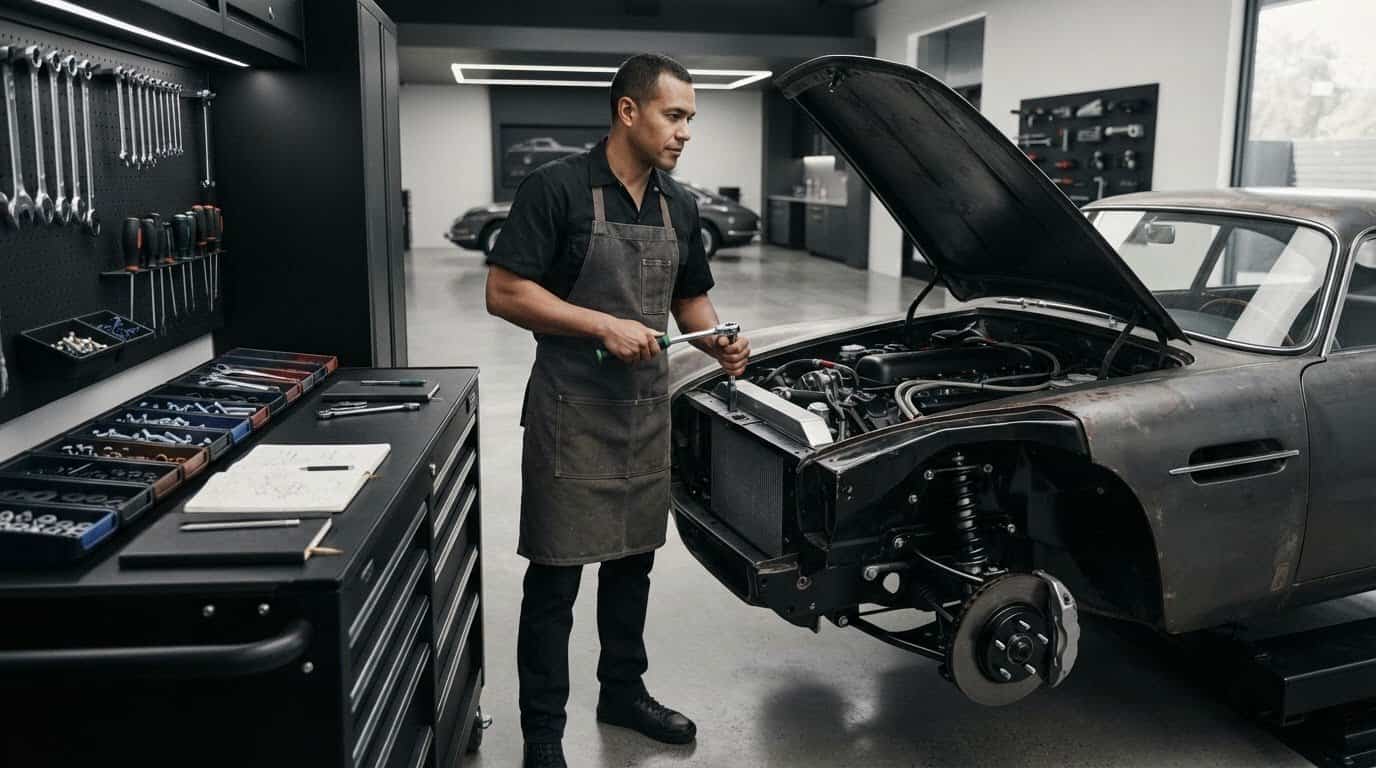
What if a successful first car build isn’t the fastest or flashiest one, but the one you can keep moving forward? It’s easy to picture the finished classic: the right stance, a strong-running engine, and details that make it yours. Then teardown reveals hidden work, a small repair grows into a bigger job, and the original plan starts to shift. Managing expectations for your first car build helps you treat those surprises as part of the process, not proof you’re in over your head.
You’re right to expect a learning curve. A build rarely follows a perfectly straight line, especially when you’re discovering what the car needs as you go. The key is to define what success means to you before the project’s scope expands. Maybe it’s a safe, reliable driver with its vintage character intact. Start with that goal, then let each decision serve it.
This guide will help you set a personal vision, keep the work manageable, and respond calmly when plans change. You’ll also learn how to use mistakes and delays as practical lessons, so the build keeps progressing without losing the reason you started: bringing a piece of automotive heritage back to life with your own hands.
Key Takeaways
- Set a personal definition of success that fits your priorities, effort, and vision for the car.
- Understand why a project’s true condition and unfamiliar tasks can make the work less predictable than it first appears.
- Use a simple check-in to decide whether a snag is temporary or a reason to rethink the project’s direction.
- Managing expectations for your first car build starts with pausing when plans change, then choosing a practical next step.
- Define what “done” means for the current phase so new upgrade ideas don’t keep moving the finish line.
Why managing expectations matters on your first car build
Starting your first classic-car build is thrilling. You can picture the finished car, hear the engine settle into a steady idle, and imagine the satisfaction of driving something you helped bring back to life. It’s also natural to wonder what’s waiting beneath the paint or which jobs will take more learning than expected. Managing expectations for your first car build means keeping your vision connected to the effort you can give and the realities you uncover as work progresses.
That doesn’t mean lowering your standards or losing the excitement. It means making room for new information and treating the build as more than a route to a finished car. You’ll make decisions, gain skills, and learn how the car’s systems fit together. Those are meaningful results, even while the final goal is still taking shape.
For a look at the hands-on side of project work, watch this bumper-install example:
Turn the dream build into a personal definition of success
Before choosing parts, ask what you want the car to give you. Is the goal a dependable driver, a chance to learn mechanical skills, careful preservation of original details, or a combination of all three? Your answer shapes which jobs come first and which upgrades can wait.
Write down the outcomes that matter most, then separate them from ideas that would be nice but aren’t essential. A refreshed interior might be central to your vision; a more powerful engine may be optional. This distinction helps contain the scope when appealing upgrades compete for attention. Set goals around your own use and priorities, not a finished build online that may reflect someone else’s time, resources, or taste.
“A manageable first build is one whose goals fit your priorities, whose next steps you can choose deliberately, and whose direction can adapt as you learn.”
Recognize the difference between a restomod and a restoration
A restoration generally focuses on repairing or returning a car to a condition that respects its original design. A restomod combines classic styling with selected modern components, which can alter how the car performs, feels, or functions. Neither approach is automatically better. The right one depends on what you want to preserve and what you want to change.
Decide which features carry the car’s heritage for you, such as its exterior lines or cabin character, and where you’re open to modernization. A modernized drivetrain, for example, reflects a different priority from preserving the original mechanical setup. Understanding how design choices interact also brings the broader Automotive Engineering Principles into view. With your direction clear, each decision has a purpose instead of becoming another appealing modification.
What makes a first car build harder to predict than it looks
A project can look straightforward from the outside: repair a section of bodywork, refresh a worn system, then move on to the next job. But you often understand a car’s condition more fully as components come off and surfaces become accessible. One repair may reveal adjacent work that wasn’t visible before. That doesn’t mean every car hides a major problem. It means the plan needs room for discoveries instead of assuming the first inspection told the whole story.
“Treat your initial build plan as a working guide: keep its priorities clear, but let new evidence shape the route.”
Expect discoveries to reshape the original plan
Imagine removing trim to address a small patch of corrosion and finding that the surrounding area needs closer inspection. Or taking apart a mechanical assembly and discovering wear that changes the repair. Pause before adding every newly visible task to the immediate to-do list. Record what you found, what it affects, and whether it changes a priority you already set.
Then compare the discovery with the purpose of the build. Does the work affect safety, reliability, or a feature you consider essential? Is it necessary now, or can it wait for a later phase? These questions turn a surprise into a decision instead of an automatic expansion of the project. If the details are unclear, gather information before committing to a new approach. Careful assessment is part of the work.
Make room for the beginner learning curve
A first build involves more than turning fasteners. You may need to research how a system works, learn unfamiliar terminology, and practice a technique before feeling confident. Even a task that looks simple in a video can require careful preparation and attention to how parts fit together on your car. The pace depends on the work, your experience, and the time you can give it, so don’t treat someone else’s schedule as a benchmark.
If a repair doesn’t go as planned, resist the urge to label yourself incapable. Ask what the result is telling you. Did you miss a step, misunderstand a component, or need a clearer reference? Stop if you’re unsure about a procedure that could affect safe operation. Review reliable information, note what you’ve learned, and return to the task with a better-informed method. Mistakes can be useful feedback when you respond thoughtfully.
Notice when the scope is quietly expanding
Scope creep happens when new jobs and upgrades keep joining the project without a fresh look at your priorities, available effort, or original goal. A discovered repair may be necessary; a newly tempting upgrade may not be. Before adding work, ask whether it supports the build you set out to create, what it would displace, and whether you’re ready to take it on. Managing expectations for your first car build means making those trade-offs consciously, not treating every idea as a commitment.
Keep a separate list for future possibilities. That way, you can capture inspiration without derailing the work already underway. For practical guidance on managing project-car stress and choosing useful tools as a beginner, explore Restomod Academy resources for classic-car builders.
How to tell a normal project setback from a sign to reassess
A frustrating moment doesn’t automatically mean your build is headed in the wrong direction. A part may not fit as expected, a task may need more research, or the next step may be unclear. A setback is usually a specific obstacle you can investigate and address. Reassessment becomes useful when new work keeps pulling the car away from your priorities, or the project no longer fits the time, space, and energy you can give it.
“Pausing to reassess is not abandoning your build; it’s choosing a more deliberate way to keep it aligned with what matters.”
Spot the difference between a setback and scope drift
Look at the pattern, not just the latest snag. A single repair problem may call for more information or a revised method. Scope drift is different: tasks and upgrades accumulate until the original definition of success is hard to recognize. Ask whether each new job supports a priority you’ve already named, or whether it’s an appealing detour that can wait.
| Sign | Question to ask | Constructive next response |
|---|---|---|
| A specific repair is proving difficult | What information or step is missing? | Pause, review the process, and identify one clear action to move forward. |
| New upgrades keep joining the plan | Does this support an essential build priority? | Record the idea separately and decide whether it belongs in a later phase. |
| The project repeatedly feels too large | Has the scope outgrown the capacity I have right now? | Narrow the active work or break it into more manageable phases. |
| Your original goal no longer feels right | What do I want from the car now? | Revisit the definition of success and adjust the plan to reflect your priorities. |
Check capacity before pushing through frustration
Take an honest inventory of your available time, workspace, energy, and other commitments. A plan that once felt reasonable can become hard to sustain when those conditions change. That isn’t a personal failing. It’s useful information about how the project needs to fit into your life.
If the work feels unmanageable, narrow the active scope or stage jobs so you can focus on one practical piece at a time. Persistent frustration is a cue to review what’s weighing on you: an unclear task, too many competing priorities, or a mismatch between the build and your current capacity. Choose a manageable reset rather than pressuring yourself to push through or quit.
Managing expectations for your first car build includes making room for honest check-ins. A plan can change while the purpose of the project remains intact. Use your original priorities as a reference, then decide whether to continue as planned, adjust the scope, or set a task aside. For practical guidance on project-car frustration and finding a community of fellow builders, explore Restomod Academy’s classic-car build resources.
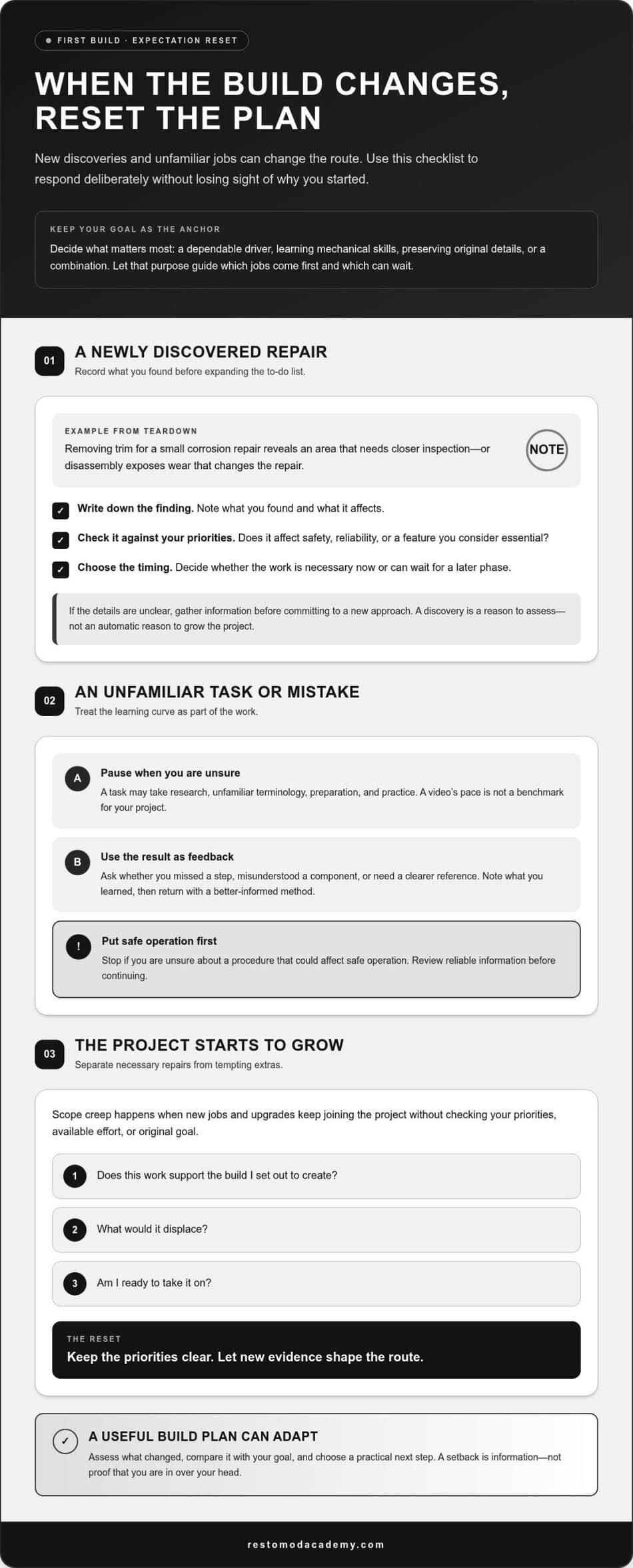
A practical reset for expectations when your build changes
A change in the work can make the whole project feel uncertain. Instead of rewriting the entire plan in the heat of the moment, use a short reset to turn new information into a clear decision. The aim isn’t to account for every possible problem in advance. It’s to choose a next step that reflects what you know now and still serves the kind of car you want to build.
- Pause. Give yourself time to understand the change before committing to extra work or abandoning the current approach.
- Record what changed. Note what you discovered, what it affects, and what questions remain. Keep observations separate from assumptions.
- Revisit your priorities. Compare the new information with the use and character you want from the car.
- Adjust the scope. Decide what belongs in the current phase, what can wait, and what no longer fits.
- Choose one next action. Make it specific enough to begin, such as inspecting an affected area more closely or identifying the information needed to make a decision.
Make the next action visible. “Sort out the body” is too broad to show progress; “document the area that needs attention” gives you a concrete place to start. That small shift can restore momentum without pretending the full project is suddenly simple. A practical checklist can help you keep the next decisions clear and manageable.
Revisit the build’s scope without losing its character
Compare each new task with your original definition of success and the car’s intended use. You might classify it as essential to this phase, valuable for a later phase, or optional. Those categories depend on your priorities, not a universal checklist. Staging upgrades lets you preserve the larger vision while giving the work in front of you a clear boundary.
Keep communication clear when a restoration shop is involved
If a shop is working on the car, discuss the change calmly and specifically. Review the agreed work, describe the newly identified need, and explain what you understand may change. Ask focused questions about the work being considered, then record the decisions and any open questions. A shared written summary helps everyone stay aligned on the current scope without relying on memory or assumptions.
Managing expectations for your first car build means treating a revised plan as a tool, not a verdict on your ability. The car’s character can remain intact even when the route changes; what matters is making each adjustment deliberately. For practical guidance on discussing changed work and final bills with a restoration shop, explore Restomod Academy’s project-building resources.
Build with patience, support, and a definition of done
A classic-car project can always suggest another improvement. Once one repair is finished, a fresh idea may appear for the cabin, suspension, paint, or drivetrain. Without a finish line for the current phase, that steady stream of possibilities can make real progress feel invisible. Set a practical endpoint for the work you’re doing now, then let future plans stay future plans.
Managing expectations for your first car build means recognizing that a defined finish line is not a promise never to change the car again. It’s a way to see what you’ve completed, learn from the work, and decide what comes next with a clear head.
Choose a finish line that fits the build’s purpose
Ask what needs to be complete for the car to meet your current goal. If this phase is about making the interior usable, define which repairs or installations are necessary to call that phase complete. If you’re focused on preserving original character, decide which details matter most before adding unrelated upgrades. Your finish line should reflect your purpose, not an idealized image of a flawless car.
Mark the phase complete when its agreed work is done, while leaving room for future improvements. Take a moment to appreciate what you accomplished: a sound repair, a better understanding of a system, or a detail that brings the car closer to your vision. Another builder’s pace or finished car isn’t the measure of your progress. Your own priorities are.
Use support to keep perspective
Build alongside people who understand project-car work when you can. A conversation with fellow builders can offer perspective, help you put a challenge into words, or remind you that learning is part of working on an unfamiliar machine. You don’t need to compare solutions or follow someone else’s build path. Use the exchange to clarify your own next decision.
For a specific obstacle, seek practical, step-by-step guidance and focus on the question in front of you. Write down what you’ve tried, what you observed, and what remains unclear. That simple record can make it easier to ask a focused question and apply what you learn. Keep safety in view, too: pause and find reliable guidance if you’re uncertain about work that affects how the car operates.
Progress on a first build isn’t always dramatic. Sometimes it’s a finished task, a better-informed choice, or the confidence to approach the next job with more care. Give yourself room to learn, recognize completed phases, and keep the car’s character in sight. For practical support on building a community of fellow restomod builders, explore practical restomod guidance at your own pace.
Keep the Next Step Within Reach
Your first build doesn’t need to prove anything to anyone. Let it reflect what you value in the car and what you’re ready to learn. When the bigger vision feels distant, choose one useful action that brings the project forward, whether that’s clarifying a decision, practicing a skill, or sharing a question with another builder.
Managing expectations for your first car build is an ongoing practice, not a test you pass before turning a wrench. Your priorities can evolve as your knowledge grows, and each considered choice helps you build with more purpose. Practical guidance can also help you think through project planning, build stress, and the perspective fellow enthusiasts bring.
Explore Restomod Academy’s practical guides on project-car stress, beginner tools, and building without a garage as you plan your next step. Keep learning, move at a pace that works for you, and take pride in the classic car you’re shaping one thoughtful step at a time.
Frequently Asked Questions
Is it normal for a first car build to take longer than expected?
Yes, a first build can take longer than you initially picture because you’re learning as well as working on the car. Researching an unfamiliar system, preparing a work area, or waiting until you understand a repair can all affect your pace. Rather than measuring progress by how quickly another builder finishes, keep a simple record of completed tasks and lessons learned. It helps you see movement even when the car isn’t ready to drive.
Can I change my car build plan after work has started?
Yes, you can revise your plan as you learn more about the car or your own goals. Before changing direction, write down what prompted the change and which parts of the original vision it affects. For example, you might decide to preserve an original component after realizing it matters more to the car’s character than a planned upgrade. Make sure any revised work is clear to everyone involved before proceeding.
What should I do if my project car build feels overwhelming?
Step back and identify what’s creating the pressure. Is the next task unclear, are too many jobs open at once, or have other commitments reduced the time you can give the car? Pick one small action, such as labeling a removed component or writing down a question to research. If frustration continues, talk it through with a fellow builder. Managing expectations for your first car build includes adjusting your approach without treating difficulty as failure.
Do I need to finish every planned upgrade before my car is complete?
No, planned upgrades don’t all have to be finished before you can consider a phase complete. Decide what “complete” means for the current purpose, such as finishing a specific repair or making an interior usable. Keep other ideas on a separate future-work list. This helps distinguish unfinished essential work from optional improvements and gives you a clear way to recognize progress without claiming the car can never be improved further.
How should I discuss a changed estimate with a restoration shop?
Ask for a calm, specific conversation about what the original estimate covered and what new work has been identified. Request a clear explanation of how the new findings affect the proposed work and revised estimate. Share your priorities, including which work you want addressed now and what you may defer. After the discussion, write down the updated scope and any decisions so you and the shop have a shared reference.
Can I build a project car without a garage?
Yes, some builders work on project cars without a dedicated garage, but it helps to plan how each task will fit your available space. Think through where the car can be kept, where tools and removed parts can be organized, and which jobs need more room than you have. Break work into manageable stages and keep components labeled. Restomod Academy’s practical guidance on building a restomod without a garage can help you plan around your setup.
What if a successful first car build isn’t the fastest or flashiest one, but the one you can keep moving forward? It’s easy to picture the finished classic: the right stance, a strong-running engine, and details that make it yours. Then teardown reveals hidden work, a small repair grows into a bigger job, and the original plan starts to shift. Managing expectations for your first car build helps you treat those surprises as part of the process, not proof you’re in over your head.
You’re right to expect a learning curve. A build rarely follows a perfectly straight line, especially when you’re discovering what the car needs as you go. The key is to define what success means to you before the project’s scope expands. Maybe it’s a safe, reliable driver with its vintage character intact. Start with that goal, then let each decision serve it.
This guide will help you set a personal vision, keep the work manageable, and respond calmly when plans change. You’ll also learn how to use mistakes and delays as practical lessons, so the build keeps progressing without losing the reason you started: bringing a piece of automotive heritage back to life with your own hands.
Key Takeaways
- Set a personal definition of success that fits your priorities, effort, and vision for the car.
- Understand why a project’s true condition and unfamiliar tasks can make the work less predictable than it first appears.
- Use a simple check-in to decide whether a snag is temporary or a reason to rethink the project’s direction.
- Managing expectations for your first car build starts with pausing when plans change, then choosing a practical next step.
- Define what “done” means for the current phase so new upgrade ideas don’t keep moving the finish line.
Why managing expectations matters on your first car build
Starting your first classic-car build is thrilling. You can picture the finished car, hear the engine settle into a steady idle, and imagine the satisfaction of driving something you helped bring back to life. It’s also natural to wonder what’s waiting beneath the paint or which jobs will take more learning than expected. Managing expectations for your first car build means keeping your vision connected to the effort you can give and the realities you uncover as work progresses.
That doesn’t mean lowering your standards or losing the excitement. It means making room for new information and treating the build as more than a route to a finished car. You’ll make decisions, gain skills, and learn how the car’s systems fit together. Those are meaningful results, even while the final goal is still taking shape.
For a look at the hands-on side of project work, watch this bumper-install example:
Turn the dream build into a personal definition of success
Before choosing parts, ask what you want the car to give you. Is the goal a dependable driver, a chance to learn mechanical skills, careful preservation of original details, or a combination of all three? Your answer shapes which jobs come first and which upgrades can wait.
Write down the outcomes that matter most, then separate them from ideas that would be nice but aren’t essential. A refreshed interior might be central to your vision; a more powerful engine may be optional. This distinction helps contain the scope when appealing upgrades compete for attention. Set goals around your own use and priorities, not a finished build online that may reflect someone else’s time, resources, or taste.
“A manageable first build is one whose goals fit your priorities, whose next steps you can choose deliberately, and whose direction can adapt as you learn.”
Recognize the difference between a restomod and a restoration
A restoration generally focuses on repairing or returning a car to a condition that respects its original design. A restomod combines classic styling with selected modern components, which can alter how the car performs, feels, or functions. Neither approach is automatically better. The right one depends on what you want to preserve and what you want to change.
Decide which features carry the car’s heritage for you, such as its exterior lines or cabin character, and where you’re open to modernization. A modernized drivetrain, for example, reflects a different priority from preserving the original mechanical setup. Understanding how design choices interact also brings the broader Automotive Engineering Principles into view. With your direction clear, each decision has a purpose instead of becoming another appealing modification.
What makes a first car build harder to predict than it looks
A project can look straightforward from the outside: repair a section of bodywork, refresh a worn system, then move on to the next job. But you often understand a car’s condition more fully as components come off and surfaces become accessible. One repair may reveal adjacent work that wasn’t visible before. That doesn’t mean every car hides a major problem. It means the plan needs room for discoveries instead of assuming the first inspection told the whole story.
“Treat your initial build plan as a working guide: keep its priorities clear, but let new evidence shape the route.”
Expect discoveries to reshape the original plan
Imagine removing trim to address a small patch of corrosion and finding that the surrounding area needs closer inspection. Or taking apart a mechanical assembly and discovering wear that changes the repair. Pause before adding every newly visible task to the immediate to-do list. Record what you found, what it affects, and whether it changes a priority you already set.
Then compare the discovery with the purpose of the build. Does the work affect safety, reliability, or a feature you consider essential? Is it necessary now, or can it wait for a later phase? These questions turn a surprise into a decision instead of an automatic expansion of the project. If the details are unclear, gather information before committing to a new approach. Careful assessment is part of the work.
Make room for the beginner learning curve
A first build involves more than turning fasteners. You may need to research how a system works, learn unfamiliar terminology, and practice a technique before feeling confident. Even a task that looks simple in a video can require careful preparation and attention to how parts fit together on your car. The pace depends on the work, your experience, and the time you can give it, so don’t treat someone else’s schedule as a benchmark.
If a repair doesn’t go as planned, resist the urge to label yourself incapable. Ask what the result is telling you. Did you miss a step, misunderstand a component, or need a clearer reference? Stop if you’re unsure about a procedure that could affect safe operation. Review reliable information, note what you’ve learned, and return to the task with a better-informed method. Mistakes can be useful feedback when you respond thoughtfully.
Notice when the scope is quietly expanding
Scope creep happens when new jobs and upgrades keep joining the project without a fresh look at your priorities, available effort, or original goal. A discovered repair may be necessary; a newly tempting upgrade may not be. Before adding work, ask whether it supports the build you set out to create, what it would displace, and whether you’re ready to take it on. Managing expectations for your first car build means making those trade-offs consciously, not treating every idea as a commitment.
Keep a separate list for future possibilities. That way, you can capture inspiration without derailing the work already underway. For practical guidance on managing project-car stress and choosing useful tools as a beginner, explore Restomod Academy resources for classic-car builders.
How to tell a normal project setback from a sign to reassess
A frustrating moment doesn’t automatically mean your build is headed in the wrong direction. A part may not fit as expected, a task may need more research, or the next step may be unclear. A setback is usually a specific obstacle you can investigate and address. Reassessment becomes useful when new work keeps pulling the car away from your priorities, or the project no longer fits the time, space, and energy you can give it.
“Pausing to reassess is not abandoning your build; it’s choosing a more deliberate way to keep it aligned with what matters.”
Spot the difference between a setback and scope drift
Look at the pattern, not just the latest snag. A single repair problem may call for more information or a revised method. Scope drift is different: tasks and upgrades accumulate until the original definition of success is hard to recognize. Ask whether each new job supports a priority you’ve already named, or whether it’s an appealing detour that can wait.
| Sign | Question to ask | Constructive next response |
|---|---|---|
| A specific repair is proving difficult | What information or step is missing? | Pause, review the process, and identify one clear action to move forward. |
| New upgrades keep joining the plan | Does this support an essential build priority? | Record the idea separately and decide whether it belongs in a later phase. |
| The project repeatedly feels too large | Has the scope outgrown the capacity I have right now? | Narrow the active work or break it into more manageable phases. |
| Your original goal no longer feels right | What do I want from the car now? | Revisit the definition of success and adjust the plan to reflect your priorities. |
Check capacity before pushing through frustration
Take an honest inventory of your available time, workspace, energy, and other commitments. A plan that once felt reasonable can become hard to sustain when those conditions change. That isn’t a personal failing. It’s useful information about how the project needs to fit into your life.
If the work feels unmanageable, narrow the active scope or stage jobs so you can focus on one practical piece at a time. Persistent frustration is a cue to review what’s weighing on you: an unclear task, too many competing priorities, or a mismatch between the build and your current capacity. Choose a manageable reset rather than pressuring yourself to push through or quit.
Managing expectations for your first car build includes making room for honest check-ins. A plan can change while the purpose of the project remains intact. Use your original priorities as a reference, then decide whether to continue as planned, adjust the scope, or set a task aside. For practical guidance on project-car frustration and finding a community of fellow builders, explore Restomod Academy’s classic-car build resources.
A practical reset for expectations when your build changes
A change in the work can make the whole project feel uncertain. Instead of rewriting the entire plan in the heat of the moment, use a short reset to turn new information into a clear decision. The aim isn’t to account for every possible problem in advance. It’s to choose a next step that reflects what you know now and still serves the kind of car you want to build.
- Pause. Give yourself time to understand the change before committing to extra work or abandoning the current approach.
- Record what changed. Note what you discovered, what it affects, and what questions remain. Keep observations separate from assumptions.
- Revisit your priorities. Compare the new information with the use and character you want from the car.
- Adjust the scope. Decide what belongs in the current phase, what can wait, and what no longer fits.
- Choose one next action. Make it specific enough to begin, such as inspecting an affected area more closely or identifying the information needed to make a decision.
Make the next action visible. “Sort out the body” is too broad to show progress; “document the area that needs attention” gives you a concrete place to start. That small shift can restore momentum without pretending the full project is suddenly simple. A practical checklist can help you keep the next decisions clear and manageable.
Revisit the build’s scope without losing its character
Compare each new task with your original definition of success and the car’s intended use. You might classify it as essential to this phase, valuable for a later phase, or optional. Those categories depend on your priorities, not a universal checklist. Staging upgrades lets you preserve the larger vision while giving the work in front of you a clear boundary.
Keep communication clear when a restoration shop is involved
If a shop is working on the car, discuss the change calmly and specifically. Review the agreed work, describe the newly identified need, and explain what you understand may change. Ask focused questions about the work being considered, then record the decisions and any open questions. A shared written summary helps everyone stay aligned on the current scope without relying on memory or assumptions.
Managing expectations for your first car build means treating a revised plan as a tool, not a verdict on your ability. The car’s character can remain intact even when the route changes; what matters is making each adjustment deliberately. For practical guidance on discussing changed work and final bills with a restoration shop, explore Restomod Academy’s project-building resources.
Build with patience, support, and a definition of done
A classic-car project can always suggest another improvement. Once one repair is finished, a fresh idea may appear for the cabin, suspension, paint, or drivetrain. Without a finish line for the current phase, that steady stream of possibilities can make real progress feel invisible. Set a practical endpoint for the work you’re doing now, then let future plans stay future plans.
Managing expectations for your first car build means recognizing that a defined finish line is not a promise never to change the car again. It’s a way to see what you’ve completed, learn from the work, and decide what comes next with a clear head.
Choose a finish line that fits the build’s purpose
Ask what needs to be complete for the car to meet your current goal. If this phase is about making the interior usable, define which repairs or installations are necessary to call that phase complete. If you’re focused on preserving original character, decide which details matter most before adding unrelated upgrades. Your finish line should reflect your purpose, not an idealized image of a flawless car.
Mark the phase complete when its agreed work is done, while leaving room for future improvements. Take a moment to appreciate what you accomplished: a sound repair, a better understanding of a system, or a detail that brings the car closer to your vision. Another builder’s pace or finished car isn’t the measure of your progress. Your own priorities are.
Use support to keep perspective
Build alongside people who understand project-car work when you can. A conversation with fellow builders can offer perspective, help you put a challenge into words, or remind you that learning is part of working on an unfamiliar machine. You don’t need to compare solutions or follow someone else’s build path. Use the exchange to clarify your own next decision.
For a specific obstacle, seek practical, step-by-step guidance and focus on the question in front of you. Write down what you’ve tried, what you observed, and what remains unclear. That simple record can make it easier to ask a focused question and apply what you learn. Keep safety in view, too: pause and find reliable guidance if you’re uncertain about work that affects how the car operates.
Progress on a first build isn’t always dramatic. Sometimes it’s a finished task, a better-informed choice, or the confidence to approach the next job with more care. Give yourself room to learn, recognize completed phases, and keep the car’s character in sight. For practical support on building a community of fellow restomod builders, explore practical restomod guidance at your own pace.
Keep the Next Step Within Reach
Your first build doesn’t need to prove anything to anyone. Let it reflect what you value in the car and what you’re ready to learn. When the bigger vision feels distant, choose one useful action that brings the project forward, whether that’s clarifying a decision, practicing a skill, or sharing a question with another builder.
Managing expectations for your first car build is an ongoing practice, not a test you pass before turning a wrench. Your priorities can evolve as your knowledge grows, and each considered choice helps you build with more purpose. Practical guidance can also help you think through project planning, build stress, and the perspective fellow enthusiasts bring.
Explore Restomod Academy’s practical guides on project-car stress, beginner tools, and building without a garage as you plan your next step. Keep learning, move at a pace that works for you, and take pride in the classic car you’re shaping one thoughtful step at a time.
Frequently Asked Questions
Is it normal for a first car build to take longer than expected?
Yes, a first build can take longer than you initially picture because you’re learning as well as working on the car. Researching an unfamiliar system, preparing a work area, or waiting until you understand a repair can all affect your pace. Rather than measuring progress by how quickly another builder finishes, keep a simple record of completed tasks and lessons learned. It helps you see movement even when the car isn’t ready to drive.
Can I change my car build plan after work has started?
Yes, you can revise your plan as you learn more about the car or your own goals. Before changing direction, write down what prompted the change and which parts of the original vision it affects. For example, you might decide to preserve an original component after realizing it matters more to the car’s character than a planned upgrade. Make sure any revised work is clear to everyone involved before proceeding.
What should I do if my project car build feels overwhelming?
Step back and identify what’s creating the pressure. Is the next task unclear, are too many jobs open at once, or have other commitments reduced the time you can give the car? Pick one small action, such as labeling a removed component or writing down a question to research. If frustration continues, talk it through with a fellow builder. Managing expectations for your first car build includes adjusting your approach without treating difficulty as failure.
Do I need to finish every planned upgrade before my car is complete?
No, planned upgrades don’t all have to be finished before you can consider a phase complete. Decide what “complete” means for the current purpose, such as finishing a specific repair or making an interior usable. Keep other ideas on a separate future-work list. This helps distinguish unfinished essential work from optional improvements and gives you a clear way to recognize progress without claiming the car can never be improved further.
How should I discuss a changed estimate with a restoration shop?
Ask for a calm, specific conversation about what the original estimate covered and what new work has been identified. Request a clear explanation of how the new findings affect the proposed work and revised estimate. Share your priorities, including which work you want addressed now and what you may defer. After the discussion, write down the updated scope and any decisions so you and the shop have a shared reference.
Can I build a project car without a garage?
Yes, some builders work on project cars without a dedicated garage, but it helps to plan how each task will fit your available space. Think through where the car can be kept, where tools and removed parts can be organized, and which jobs need more room than you have. Break work into manageable stages and keep components labeled. Restomod Academy’s practical guidance on building a restomod without a garage can help you plan around your setup.