
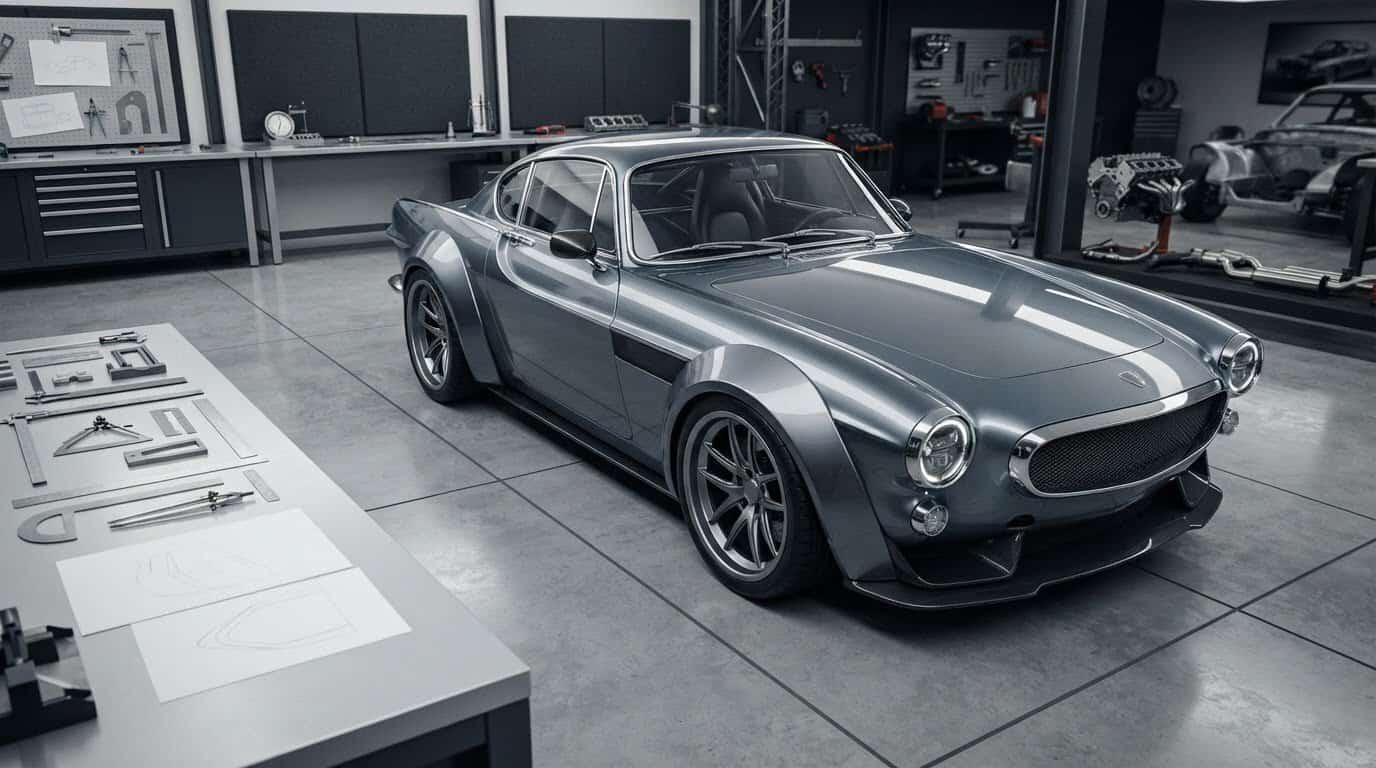
The most striking custom bodywork might start with leaving a panel untouched. Planning custom car body modifications isn’t about collecting bold ideas or parts. It’s about shaping a look that suits the car and the way you’ll use it. If you’re weighing heritage details against a more modern stance, it can be hard to tell which changes will work together and which may require extra fabrication or rework.
Start with the whole vision, not a single fender, flare, or bumper. A clear design direction gives each choice a purpose and helps you decide which original panels to retain, reshape, or replace. It also keeps practical needs in view, from everyday usability to the character you want the finished car to carry.
This guide will help you define that direction, weigh bodywork options, and set a deliberate sequence from concept through fitment and finishing. Work through one decision at a time to protect the spirit of the classic and build toward a result that feels cohesive, considered, and unmistakably yours.
Key Takeaways
- Set the car’s intended character and use before choosing parts or fabrication methods.
- Compare retaining, reshaping, and replacing panels to understand the effect on appearance, project scope, and original character.
- Use an inspection, a prioritized change list, and clear visual references to make the plan easier to follow.
- Planning custom car body modifications helps you spot unresolved choices and keep individual changes working together.
- Review the plan for visual coherence and scope before moving from concept to bodywork.
Planning Custom Car Body Modifications Starts with a Clear Build Vision
Describe the car you want to build before choosing a body kit, panel, or fabrication technique. A clear direction lets you judge each idea against the whole vehicle instead of treating every attractive part as a decision on its own. Start with three notes: how you’ll use the car, which visual references capture its character, and which bodywork changes matter most.
In a restomod, custom body modification means changing or preserving exterior forms to express a specific character while supporting the car’s intended use. A body-modification brief describes that character, its priorities, and its boundaries. A parts list names components, but doesn’t explain how they should work together.
That distinction is the foundation of planning custom car body modifications. The brief gives you a consistent way to evaluate parts and techniques without locking you into a solution before you know what result you want.
Turn a visual idea into a usable bodywork brief
Begin with the car as it sits. Note its main body lines, proportions, distinctive trim, and details that give it identity. Record what you want to preserve, even if the rest of the car will change. This helps prevent heritage features from disappearing by default as new ideas gather momentum.
Next, describe the desired stance, silhouette, and overall feel using specific references. Instead of writing “more aggressive,” identify what you mean: a lower-looking profile, broader visual presence, or cleaner, less ornamented surfaces. Use reference images to clarify the shape you have in mind, then note which details matter. That way, the finished design is less likely to become a collection of unrelated influences.
Sort proposed changes into three groups:
- Essential changes that define the intended look.
- Optional details that could refine it.
- Ideas to set aside until the main direction is settled.
This filter gives the brief focus and makes it easier to discuss the design consistently. Car tuning often involves modifications to the bodywork. For your build, the useful question is how each change supports the character you’ve described.
Set boundaries before choosing custom car modifications
Clarify the car’s intended use before committing to visual changes. A vehicle built for regular road use may call for different priorities than one intended mainly for display or occasional drives. Write down what matters most, such as retaining recognizable original features, achieving a particular silhouette, or keeping the bodywork visually restrained.
Then identify choices that may compete. A subtle, period-inspired profile and a collection of dramatic add-ons may pull the design in different directions. So might preserving original contours while planning extensive reshaping. These tensions don’t mean an idea is wrong. They’re prompts to decide which priority leads and which should yield.
Keep bodywork decisions connected to the wider build plan. The restomod approach to classic-car building brings modern goals into conversation with a car’s original character. A broader project roadmap helps place bodywork priorities alongside the rest of the build, without letting the parts list determine the design direction.
Understand Custom Body Modification Techniques Before Choosing a Direction
Choose a bodywork technique only after you can describe the change you want to see. The same goal, such as a cleaner profile or a lower-looking stance, might involve reshaping existing metal, integrating an exterior feature, or adding a component. Each path affects the car’s proportions, original character, and fabrication scope differently. No single method suits every build.
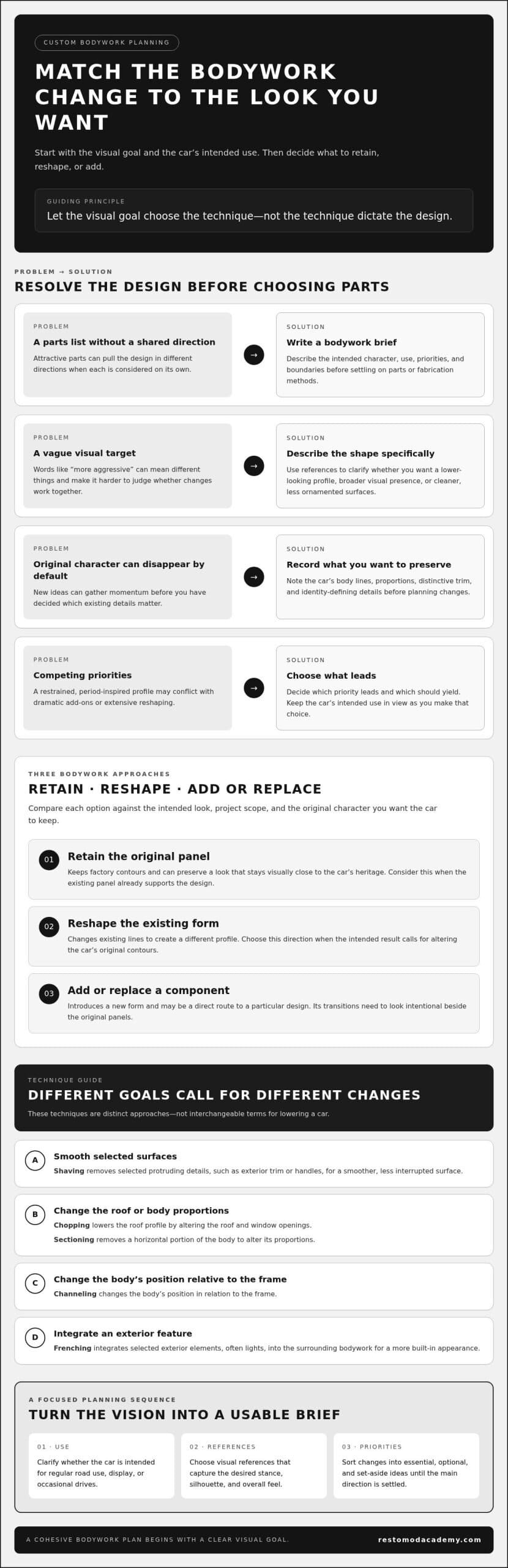
Keep this principle in mind: “Let the visual goal choose the technique, not the technique dictate the design.” That’s the practical heart of planning custom car body modifications. Understanding what each approach changes helps you ask more useful questions before committing to a direction.
Match classic custom techniques to the intended look
Traditional custom work has a vocabulary for changing a car’s lines. Shaving removes selected protruding details, such as exterior trim or handles, to create a smoother, less interrupted surface. Chopping lowers the roof profile by altering the roof and window openings. Channeling changes the body’s position relative to the frame, while sectioning removes a horizontal portion of the body to alter its proportions. These are distinct approaches, not interchangeable terms for lowering a car.
Frenching integrates selected exterior elements, often lights, into the surrounding bodywork for a more built-in appearance. Each technique leaves a different visual signature and calls for its own fabrication decisions. Consider the intended result first: smoothing a surface is not the same goal as changing the roofline or integrating a lamp. For wider context on automotive design principles such as aesthetics and aerodynamics, look beyond appearance when assessing how a change relates to the car’s form.
Decide what to retain, reshape, or add
Start by asking whether the original panel already supports the look. Retaining it preserves factory contours and can keep the design visually close to its heritage. Reshaping changes those lines to create a different profile. Adding or replacing a component introduces a new form. That may be a more direct route to a particular design, but its transitions need to look intentional beside the original panels.
A body kit or carbon part can support a build when its shape, scale, and finish suit the car’s character. It isn’t automatically the right answer. A bold add-on may compete with restrained original lines, while a carefully reshaped panel may better suit a subtle direction. Compare each option against the full silhouette and the degree of change you want, rather than choosing by material or technique alone.
For a next step, use Restomod Academy’s practical restomod planning resources to keep design choices connected to the wider project. Building familiarity with classic-car bodywork also helps you assess which approach belongs in your brief.
Compare Body Modification Approaches by Style, Scope, and Build Impact
Compare each approach against the car’s intended character, not just how dramatic it looks in a sketch. Keeping original panels, reshaping them, or adding or replacing components leads to different design and fabrication decisions. The best fit depends on the vehicle’s condition, the shape you want, and the skills and resources available for the build. A bigger visual change isn’t automatically a better-planned one.
| Approach | Visual impact | Project scope | Fabrication demands | Effect on original character |
|---|---|---|---|---|
| Retain existing panels | Subtle; preserves much of the current silhouette | May focus work on selected details and finishes | Can involve careful preparation and integration of changes; condition matters | Usually keeps more factory shape and identity visible |
| Reshape existing panels | Changes proportions or surface lines while using the existing body as a starting point | Can involve connected areas, depending on the design | Requires metal shaping and attention to transitions and symmetry | Can preserve some familiar forms while giving them a new expression |
| Add or replace components | Introduces a distinct new shape or more pronounced detail | May require coordinating the component with surrounding panels | Fit, alignment, and transitions need to be considered together | Can shift the car’s character, depending on the component’s scale and style |
When preserving original lines supports the build
Selective changes can refresh a car while keeping the features that make it recognizable. A builder might retain the original fender shape and window profile while changing a few exterior details. Name those non-negotiable features in the brief before evaluating alternatives. Restraint doesn’t guarantee simpler work, but it can keep the design focused when each new idea is measured against the lines you’ve chosen to preserve.
When reshaping or adding components changes the scope
More visible changes can affect how several body areas relate. A reshaped fender, for example, may need to flow naturally into the door and adjacent panels. An added component needs to look intentional where it meets the existing body. Include fit and finish in the plan, rather than leaving them as details to resolve after choosing a look. Sketch competing concepts side by side to spot clashing proportions or styling cues before they become fabrication decisions.
Use the comparison to make trade-offs explicit: what visual change matters, what original character should remain, and what level of bodywork the project can support. That’s the practical discipline behind planning custom car body modifications. Revisit your chosen approach against the whole silhouette. An individual feature may look appealing on its own but feel out of place on the finished car.
Build a Practical Plan for Custom Car Bodywork Before Work Begins
A useful bodywork plan turns a design direction into decisions you can inspect, discuss, and revise before fabrication begins. Ground it in the car’s actual condition. Existing repairs, altered panels, and uneven gaps may affect what’s practical, so record what you see before settling the scope.
Use this sequence: define the brief, inspect and record the body, prioritize the changes, then document decisions and open questions.
Document the starting condition and desired changes
Make a clear record before work starts. Photograph the car from consistent angles, including front, rear, both sides, and three-quarter views. Add close-ups of distinctive body lines, panel edges, existing modifications, and visible condition concerns. These images provide a reference point and help keep later conversations focused on the same areas.
Then map each proposed change to a specific panel or feature. “Revise the front” is too broad to guide a decision. “Change the front fender profile while retaining the hood line” is more useful because it identifies both the intended change and a boundary. Pair photographs with simple sketches or marked-up reference images. Label what should change, what should remain, and which reference detail you’re borrowing. A reference is a communication tool, not a guarantee that the exact shape will suit your car.
Keep a separate list of unresolved questions. If you’re unsure whether a detail should be reshaped or replaced, mark it as undecided rather than letting an assumption quietly become part of the plan.
Sequence decisions to reduce avoidable rework
Organize related changes together. If several proposed modifications affect the same fender or adjoining panels, review them as a group so their shapes and transitions can be considered together. Prioritize decisions that influence the overall body form before smaller decorative details. This creates a logical order without assuming every project will follow identical fabrication steps.
- Define the brief. State the intended character, use, features to preserve, and essential bodywork changes.
- Inspect the body. Record visible condition, previous alterations, and areas that may affect the planned work.
- Prioritize changes. Separate must-haves from optional details, and group changes that affect the same area.
- Document decisions. Keep annotated photos, sketches, references, and unresolved questions together as the working plan.
Resolve major shape and fit decisions before planning paint color, finish, or other finishing details. Paint planning matters, but it’s a separate layer of the project. First establish what bodywork is intended and how the forms meet. Restomod Academy’s practical guides on project planning, tools, and build challenges can help you keep working through the project one step at a time.
Good planning custom car body modifications means making the next decision visible before committing to it. Use Restomod Academy’s restomod planning resources to keep your project plan deliberate and organized.
Move from a Bodywork Plan to a More Coherent Restomod Build
A bodywork plan is ready for a final review when its choices make sense together, not just as individual modifications. Step back from the details and assess the whole car. Does each change support the intended character? Do the proportions still feel balanced? Is the scope clear enough to guide the next decisions, with open questions marked rather than quietly treated as settled?
Review the plan before committing to the full scope
Use this short review to catch gaps before moving forward:
- Visual coherence: Check that each proposed change supports the same design direction and sits comfortably within the car’s overall proportions.
- Scope: Confirm which panels or exterior features are affected and whether related changes have been considered together.
- Priorities: Separate essential changes from optional details so the core intent remains clear if the plan needs refinement.
- Open decisions: Identify questions that still need thought, such as whether to retain or change a particular line.
Don’t mistake an unresolved choice for a planning failure. Mark it clearly, note what needs to be weighed, and keep it visible in the project record. That prevents an early assumption from being mistaken for a deliberate decision later.
Keep the body plan connected to the whole restomod
Bodywork is one part of a broader build. The exterior’s character should feel at home alongside the car’s modernization goals, even as decisions about the engine, suspension, and interior are handled in their own planning guides. Consider a change to the silhouette as part of the complete vehicle, not as an isolated styling choice.
If you’re weighing how heritage and updates belong together, the guide to what makes a restomod provides broader context for the build concept. Use that perspective to keep the body plan aligned with the reason you chose to modernize the car while preserving the character that drew you to it.
Keep one shared project record as the plan evolves. Bring together reference images, marked-up photos, sketches, chosen changes, and notes on decisions. Label revisions clearly so you can tell which direction is current and why it changed. This record also gives everyone involved a consistent reference, reducing the chance that “subtle,” “lower,” or “cleaner” means something different to each person.
That’s the lasting value of planning custom car body modifications: the choices stay connected from first concept through the finished build. Keep moving at a deliberate pace, and explore Restomod Academy’s practical restomod guides when you’re ready for another useful step.
Carry Your Build Vision Into the Workshop
A strong plan isn’t a promise that every detail will stay fixed. It gives you a sound direction to return to as the car reveals what it needs and your ideas develop. Keep decisions visible, make changes deliberately, and let each new choice serve the character you’re building toward. That’s how planning custom car body modifications becomes a practical skill, not just a task before the tools come out.
Keep learning as the project progresses. Restomod Academy shares practical advice on project planning, tools, and build challenges, with community as part of the learning journey. Use these guides to think through each stage, whether you’re refining a design decision or preparing for the next part of your build.
Explore practical restomod guides and take your next step with a clearer plan. A considered direction helps your classic take shape while leaving room for the work to make the vision your own.
Frequently Asked Questions
How do I start planning custom body modifications for a classic car?
Start by deciding how you’ll use the car and what visual impression should lead. Before researching components, make a side-profile outline and sketch the roof, wheel openings, and front and rear treatments you imagine. Compare the drawing with the actual car from a distance. This quick scale check can reveal a feature that dominates the concept or a change that doesn’t support it.
Can I modify a classic car body and still preserve its original character?
Yes. Choose which elements carry the car’s identity and keep them recognizable. That might be a distinctive roofline, grille shape, or the relationship between the hood and fenders. For example, a restomod could introduce a more contemporary finish while keeping a recognizable side profile. Compare the car with period images or other reference material to see which cues still read clearly after the proposed changes.
What should I document before planning bodywork on a project car?
Alongside overall photos, record details that can affect how body panels meet: uneven gaps, misaligned edges, missing trim, and parts that don’t sit flush. Note visible previous alterations, even if you don’t know how they were done. Label images by viewpoint and panel, then keep observations separate from proposed changes. This makes it easier to distinguish the car’s existing condition from the design you’re considering.
Should I choose a body kit before deciding on the car’s design?
No. Decide what shape and character you want before settling on a kit. A component can look appealing on its own but feel oversized or stylistically out of place against the car’s existing lines. As a quick concept test, place a tracing or digital outline of the part over a side-view image. Compare its edges and proportions with nearby features before treating it as part of the design.
How can I avoid changing my mind halfway through a custom bodywork project?
Give new ideas a review step rather than accepting or rejecting them on impulse. Before changing an agreed direction, write down what prompted the change, which neighboring panels or details it could affect, and whether it improves the overall design. Update the relevant sketch or reference image and compare it with the current plan. This lets you refine the concept while making the consequences of each revision visible.
Do custom body modifications have to follow a traditional custom-car style?
No. Traditional techniques and styling can provide inspiration, but your design can combine heritage cues with a personal interpretation. You might retain the car’s familiar profile while using cleaner surfaces, or draw on a visual influence that isn’t tied to a particular custom-car era. Focus on consistency: repeat a few compatible shapes or details so the finished car feels considered rather than like a mix of unrelated ideas.
The most striking custom bodywork might start with leaving a panel untouched. Planning custom car body modifications isn’t about collecting bold ideas or parts. It’s about shaping a look that suits the car and the way you’ll use it. If you’re weighing heritage details against a more modern stance, it can be hard to tell which changes will work together and which may require extra fabrication or rework.
Start with the whole vision, not a single fender, flare, or bumper. A clear design direction gives each choice a purpose and helps you decide which original panels to retain, reshape, or replace. It also keeps practical needs in view, from everyday usability to the character you want the finished car to carry.
This guide will help you define that direction, weigh bodywork options, and set a deliberate sequence from concept through fitment and finishing. Work through one decision at a time to protect the spirit of the classic and build toward a result that feels cohesive, considered, and unmistakably yours.
Key Takeaways
- Set the car’s intended character and use before choosing parts or fabrication methods.
- Compare retaining, reshaping, and replacing panels to understand the effect on appearance, project scope, and original character.
- Use an inspection, a prioritized change list, and clear visual references to make the plan easier to follow.
- Planning custom car body modifications helps you spot unresolved choices and keep individual changes working together.
- Review the plan for visual coherence and scope before moving from concept to bodywork.
Planning Custom Car Body Modifications Starts with a Clear Build Vision
Describe the car you want to build before choosing a body kit, panel, or fabrication technique. A clear direction lets you judge each idea against the whole vehicle instead of treating every attractive part as a decision on its own. Start with three notes: how you’ll use the car, which visual references capture its character, and which bodywork changes matter most.
In a restomod, custom body modification means changing or preserving exterior forms to express a specific character while supporting the car’s intended use. A body-modification brief describes that character, its priorities, and its boundaries. A parts list names components, but doesn’t explain how they should work together.
That distinction is the foundation of planning custom car body modifications. The brief gives you a consistent way to evaluate parts and techniques without locking you into a solution before you know what result you want.
Turn a visual idea into a usable bodywork brief
Begin with the car as it sits. Note its main body lines, proportions, distinctive trim, and details that give it identity. Record what you want to preserve, even if the rest of the car will change. This helps prevent heritage features from disappearing by default as new ideas gather momentum.
Next, describe the desired stance, silhouette, and overall feel using specific references. Instead of writing “more aggressive,” identify what you mean: a lower-looking profile, broader visual presence, or cleaner, less ornamented surfaces. Use reference images to clarify the shape you have in mind, then note which details matter. That way, the finished design is less likely to become a collection of unrelated influences.
Sort proposed changes into three groups:
- Essential changes that define the intended look.
- Optional details that could refine it.
- Ideas to set aside until the main direction is settled.
This filter gives the brief focus and makes it easier to discuss the design consistently. Car tuning often involves modifications to the bodywork. For your build, the useful question is how each change supports the character you’ve described.
Set boundaries before choosing custom car modifications
Clarify the car’s intended use before committing to visual changes. A vehicle built for regular road use may call for different priorities than one intended mainly for display or occasional drives. Write down what matters most, such as retaining recognizable original features, achieving a particular silhouette, or keeping the bodywork visually restrained.
Then identify choices that may compete. A subtle, period-inspired profile and a collection of dramatic add-ons may pull the design in different directions. So might preserving original contours while planning extensive reshaping. These tensions don’t mean an idea is wrong. They’re prompts to decide which priority leads and which should yield.
Keep bodywork decisions connected to the wider build plan. The restomod approach to classic-car building brings modern goals into conversation with a car’s original character. A broader project roadmap helps place bodywork priorities alongside the rest of the build, without letting the parts list determine the design direction.
Understand Custom Body Modification Techniques Before Choosing a Direction
Choose a bodywork technique only after you can describe the change you want to see. The same goal, such as a cleaner profile or a lower-looking stance, might involve reshaping existing metal, integrating an exterior feature, or adding a component. Each path affects the car’s proportions, original character, and fabrication scope differently. No single method suits every build.
Keep this principle in mind: “Let the visual goal choose the technique, not the technique dictate the design.” That’s the practical heart of planning custom car body modifications. Understanding what each approach changes helps you ask more useful questions before committing to a direction.
Match classic custom techniques to the intended look
Traditional custom work has a vocabulary for changing a car’s lines. Shaving removes selected protruding details, such as exterior trim or handles, to create a smoother, less interrupted surface. Chopping lowers the roof profile by altering the roof and window openings. Channeling changes the body’s position relative to the frame, while sectioning removes a horizontal portion of the body to alter its proportions. These are distinct approaches, not interchangeable terms for lowering a car.
Frenching integrates selected exterior elements, often lights, into the surrounding bodywork for a more built-in appearance. Each technique leaves a different visual signature and calls for its own fabrication decisions. Consider the intended result first: smoothing a surface is not the same goal as changing the roofline or integrating a lamp. For wider context on automotive design principles such as aesthetics and aerodynamics, look beyond appearance when assessing how a change relates to the car’s form.
Decide what to retain, reshape, or add
Start by asking whether the original panel already supports the look. Retaining it preserves factory contours and can keep the design visually close to its heritage. Reshaping changes those lines to create a different profile. Adding or replacing a component introduces a new form. That may be a more direct route to a particular design, but its transitions need to look intentional beside the original panels.
A body kit or carbon part can support a build when its shape, scale, and finish suit the car’s character. It isn’t automatically the right answer. A bold add-on may compete with restrained original lines, while a carefully reshaped panel may better suit a subtle direction. Compare each option against the full silhouette and the degree of change you want, rather than choosing by material or technique alone.
For a next step, use Restomod Academy’s practical restomod planning resources to keep design choices connected to the wider project. Building familiarity with classic-car bodywork also helps you assess which approach belongs in your brief.
Compare Body Modification Approaches by Style, Scope, and Build Impact
Compare each approach against the car’s intended character, not just how dramatic it looks in a sketch. Keeping original panels, reshaping them, or adding or replacing components leads to different design and fabrication decisions. The best fit depends on the vehicle’s condition, the shape you want, and the skills and resources available for the build. A bigger visual change isn’t automatically a better-planned one.
| Approach | Visual impact | Project scope | Fabrication demands | Effect on original character |
|---|---|---|---|---|
| Retain existing panels | Subtle; preserves much of the current silhouette | May focus work on selected details and finishes | Can involve careful preparation and integration of changes; condition matters | Usually keeps more factory shape and identity visible |
| Reshape existing panels | Changes proportions or surface lines while using the existing body as a starting point | Can involve connected areas, depending on the design | Requires metal shaping and attention to transitions and symmetry | Can preserve some familiar forms while giving them a new expression |
| Add or replace components | Introduces a distinct new shape or more pronounced detail | May require coordinating the component with surrounding panels | Fit, alignment, and transitions need to be considered together | Can shift the car’s character, depending on the component’s scale and style |
When preserving original lines supports the build
Selective changes can refresh a car while keeping the features that make it recognizable. A builder might retain the original fender shape and window profile while changing a few exterior details. Name those non-negotiable features in the brief before evaluating alternatives. Restraint doesn’t guarantee simpler work, but it can keep the design focused when each new idea is measured against the lines you’ve chosen to preserve.
When reshaping or adding components changes the scope
More visible changes can affect how several body areas relate. A reshaped fender, for example, may need to flow naturally into the door and adjacent panels. An added component needs to look intentional where it meets the existing body. Include fit and finish in the plan, rather than leaving them as details to resolve after choosing a look. Sketch competing concepts side by side to spot clashing proportions or styling cues before they become fabrication decisions.
Use the comparison to make trade-offs explicit: what visual change matters, what original character should remain, and what level of bodywork the project can support. That’s the practical discipline behind planning custom car body modifications. Revisit your chosen approach against the whole silhouette. An individual feature may look appealing on its own but feel out of place on the finished car.
Build a Practical Plan for Custom Car Bodywork Before Work Begins
A useful bodywork plan turns a design direction into decisions you can inspect, discuss, and revise before fabrication begins. Ground it in the car’s actual condition. Existing repairs, altered panels, and uneven gaps may affect what’s practical, so record what you see before settling the scope.
Use this sequence: define the brief, inspect and record the body, prioritize the changes, then document decisions and open questions.
Document the starting condition and desired changes
Make a clear record before work starts. Photograph the car from consistent angles, including front, rear, both sides, and three-quarter views. Add close-ups of distinctive body lines, panel edges, existing modifications, and visible condition concerns. These images provide a reference point and help keep later conversations focused on the same areas.
Then map each proposed change to a specific panel or feature. “Revise the front” is too broad to guide a decision. “Change the front fender profile while retaining the hood line” is more useful because it identifies both the intended change and a boundary. Pair photographs with simple sketches or marked-up reference images. Label what should change, what should remain, and which reference detail you’re borrowing. A reference is a communication tool, not a guarantee that the exact shape will suit your car.
Keep a separate list of unresolved questions. If you’re unsure whether a detail should be reshaped or replaced, mark it as undecided rather than letting an assumption quietly become part of the plan.
Sequence decisions to reduce avoidable rework
Organize related changes together. If several proposed modifications affect the same fender or adjoining panels, review them as a group so their shapes and transitions can be considered together. Prioritize decisions that influence the overall body form before smaller decorative details. This creates a logical order without assuming every project will follow identical fabrication steps.
- Define the brief. State the intended character, use, features to preserve, and essential bodywork changes.
- Inspect the body. Record visible condition, previous alterations, and areas that may affect the planned work.
- Prioritize changes. Separate must-haves from optional details, and group changes that affect the same area.
- Document decisions. Keep annotated photos, sketches, references, and unresolved questions together as the working plan.
Resolve major shape and fit decisions before planning paint color, finish, or other finishing details. Paint planning matters, but it’s a separate layer of the project. First establish what bodywork is intended and how the forms meet. Restomod Academy’s practical guides on project planning, tools, and build challenges can help you keep working through the project one step at a time.
Good planning custom car body modifications means making the next decision visible before committing to it. Use Restomod Academy’s restomod planning resources to keep your project plan deliberate and organized.
Move from a Bodywork Plan to a More Coherent Restomod Build
A bodywork plan is ready for a final review when its choices make sense together, not just as individual modifications. Step back from the details and assess the whole car. Does each change support the intended character? Do the proportions still feel balanced? Is the scope clear enough to guide the next decisions, with open questions marked rather than quietly treated as settled?
Review the plan before committing to the full scope
Use this short review to catch gaps before moving forward:
- Visual coherence: Check that each proposed change supports the same design direction and sits comfortably within the car’s overall proportions.
- Scope: Confirm which panels or exterior features are affected and whether related changes have been considered together.
- Priorities: Separate essential changes from optional details so the core intent remains clear if the plan needs refinement.
- Open decisions: Identify questions that still need thought, such as whether to retain or change a particular line.
Don’t mistake an unresolved choice for a planning failure. Mark it clearly, note what needs to be weighed, and keep it visible in the project record. That prevents an early assumption from being mistaken for a deliberate decision later.
Keep the body plan connected to the whole restomod
Bodywork is one part of a broader build. The exterior’s character should feel at home alongside the car’s modernization goals, even as decisions about the engine, suspension, and interior are handled in their own planning guides. Consider a change to the silhouette as part of the complete vehicle, not as an isolated styling choice.
If you’re weighing how heritage and updates belong together, the guide to what makes a restomod provides broader context for the build concept. Use that perspective to keep the body plan aligned with the reason you chose to modernize the car while preserving the character that drew you to it.
Keep one shared project record as the plan evolves. Bring together reference images, marked-up photos, sketches, chosen changes, and notes on decisions. Label revisions clearly so you can tell which direction is current and why it changed. This record also gives everyone involved a consistent reference, reducing the chance that “subtle,” “lower,” or “cleaner” means something different to each person.
That’s the lasting value of planning custom car body modifications: the choices stay connected from first concept through the finished build. Keep moving at a deliberate pace, and explore Restomod Academy’s practical restomod guides when you’re ready for another useful step.
Carry Your Build Vision Into the Workshop
A strong plan isn’t a promise that every detail will stay fixed. It gives you a sound direction to return to as the car reveals what it needs and your ideas develop. Keep decisions visible, make changes deliberately, and let each new choice serve the character you’re building toward. That’s how planning custom car body modifications becomes a practical skill, not just a task before the tools come out.
Keep learning as the project progresses. Restomod Academy shares practical advice on project planning, tools, and build challenges, with community as part of the learning journey. Use these guides to think through each stage, whether you’re refining a design decision or preparing for the next part of your build.
Explore practical restomod guides and take your next step with a clearer plan. A considered direction helps your classic take shape while leaving room for the work to make the vision your own.
Frequently Asked Questions
How do I start planning custom body modifications for a classic car?
Start by deciding how you’ll use the car and what visual impression should lead. Before researching components, make a side-profile outline and sketch the roof, wheel openings, and front and rear treatments you imagine. Compare the drawing with the actual car from a distance. This quick scale check can reveal a feature that dominates the concept or a change that doesn’t support it.
Can I modify a classic car body and still preserve its original character?
Yes. Choose which elements carry the car’s identity and keep them recognizable. That might be a distinctive roofline, grille shape, or the relationship between the hood and fenders. For example, a restomod could introduce a more contemporary finish while keeping a recognizable side profile. Compare the car with period images or other reference material to see which cues still read clearly after the proposed changes.
What should I document before planning bodywork on a project car?
Alongside overall photos, record details that can affect how body panels meet: uneven gaps, misaligned edges, missing trim, and parts that don’t sit flush. Note visible previous alterations, even if you don’t know how they were done. Label images by viewpoint and panel, then keep observations separate from proposed changes. This makes it easier to distinguish the car’s existing condition from the design you’re considering.
Should I choose a body kit before deciding on the car’s design?
No. Decide what shape and character you want before settling on a kit. A component can look appealing on its own but feel oversized or stylistically out of place against the car’s existing lines. As a quick concept test, place a tracing or digital outline of the part over a side-view image. Compare its edges and proportions with nearby features before treating it as part of the design.
How can I avoid changing my mind halfway through a custom bodywork project?
Give new ideas a review step rather than accepting or rejecting them on impulse. Before changing an agreed direction, write down what prompted the change, which neighboring panels or details it could affect, and whether it improves the overall design. Update the relevant sketch or reference image and compare it with the current plan. This lets you refine the concept while making the consequences of each revision visible.
Do custom body modifications have to follow a traditional custom-car style?
No. Traditional techniques and styling can provide inspiration, but your design can combine heritage cues with a personal interpretation. You might retain the car’s familiar profile while using cleaner surfaces, or draw on a visual influence that isn’t tied to a particular custom-car era. Focus on consistency: repeat a few compatible shapes or details so the finished car feels considered rather than like a mix of unrelated ideas.