
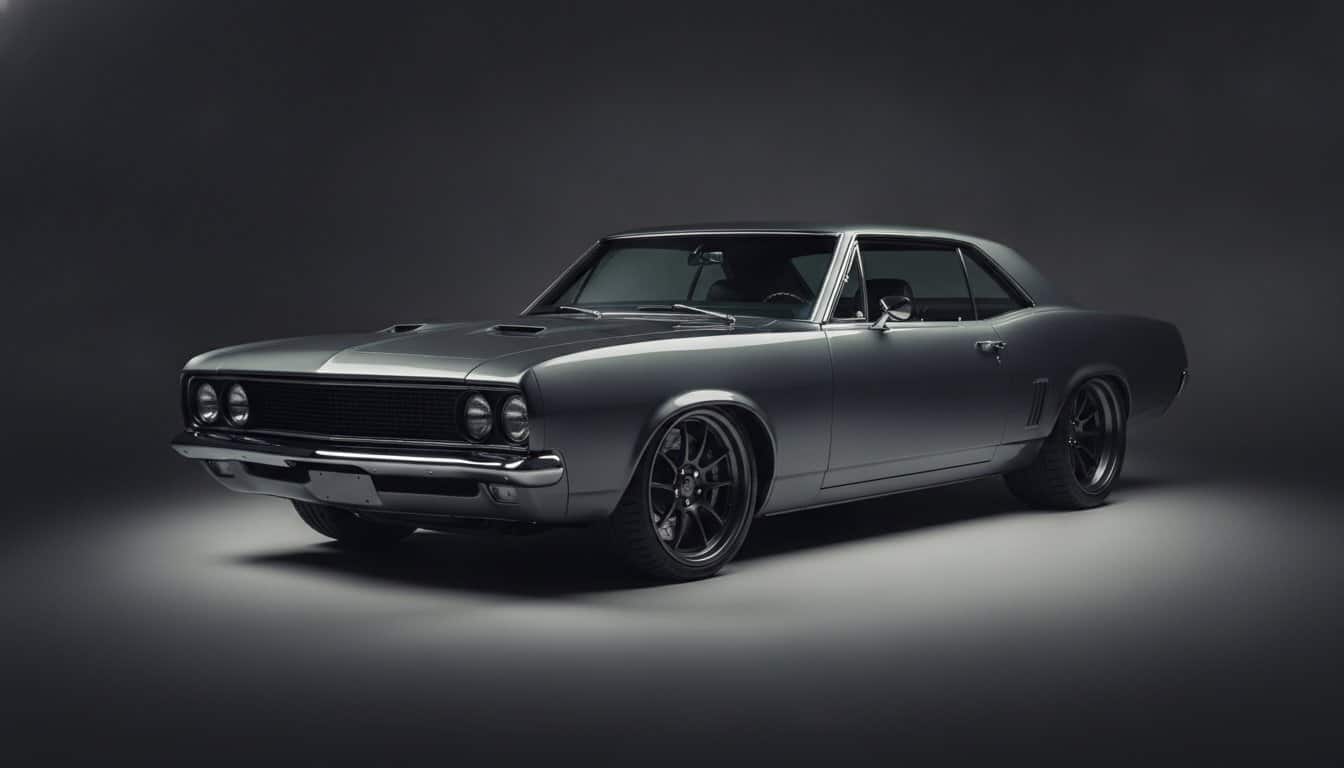
The most expensive mistake you can make in a garage isn’t buying the wrong tool; it’s building the wrong car for your goals. You’ve likely felt the frustration of weighing the pro touring vs restomod philosophies, wondering if you’re building a comfortable cruiser or a track-day titan. It’s a common point of confusion that leads many enthusiasts to overspend on parts that don’t play well together. You want the timeless silhouette of vintage iron, but you demand the surgical precision of modern engineering. That’s a high standard, but it’s one we can achieve through methodical planning and a deep respect for mechanical systems.
I’ll help you master the technical requirements and design philosophy needed to transform a vintage muscle car into a modern performance machine. This guide provides a clear technical checklist for a pro touring build, ensuring you have the confidence to choose the right platform and components. We’ll explore the ROI of performance upgrades and define exactly how to bridge the gap between heritage aesthetics and contemporary technology. Get ready to move beyond the role of a passive admirer and become an active creator of a high-performance classic that performs as well as it looks.
Key Takeaways
- Define the specific performance standards that separate a track-ready machine from a traditional restoration or a drag-focused build.
- Master the pro touring vs restomod distinction to ensure your project goals align with your desire for either a modern street cruiser or a high-performance corner carver.
- Learn the four pillars of engineering that prioritize a balanced, systemic approach over simply chasing peak horsepower numbers.
- Identify the most effective donor platforms and learn why detailed planning is the most powerful tool for protecting your budget and ensuring build success.
- Discover how structured educational resources and blueprints can replace mechanical guesswork with the precision of professional engineering.
What is a Pro-Touring Car? Defining the Performance Standard
Imagine a 1969 Camaro that doesn’t just look mean at a stoplight but out-handles a modern sports car on a winding mountain road. This is the heart of the movement. When you analyze pro touring vs restomod builds, you’re looking at a shift from mere aesthetics to uncompromising engineering. A pro touring car is a classic machine modified to excel in every performance category: acceleration, braking, and cornering. Unlike a traditional restoration that preserves every factory flaw for the sake of originality, or a Pro-Street build designed solely for straight-line speed, these cars are built to be driven hard. They are the ultimate expression of mechanical versatility, designed to be as comfortable on the highway as they are capable on the track.
The term was famously coined around 1993 by Mark Stielow and Jeff Smith. They envisioned a vehicle that could survive the rigors of a road course and still provide a reliable ride for a cross-country trip. To understand the foundation of these machines, you can explore the technical history of What is a Pro-Touring Car? which details how the movement grew from a niche hobby into a dominant force in the custom car industry. It’s about taking the soul of a vintage muscle car and giving it the heart of a modern supercar.
The Evolution of the Pro-Touring Movement
In the 1980s, the street machine era focused on big blowers and massive rear tires that struggled to turn a corner. By the early 1990s, visionary builders began prioritizing suspension geometry and weight balance. Events like One Lap of America acted as the ultimate proving ground, forcing builders to create cars that stayed cool in heavy traffic and stayed glued to the asphalt at high speeds. Today, modern technology like CAD-designed chassis and digital fuel injection has lowered the barrier to entry, allowing you to build a world-class performer in your own shop with the right guidance.
Function Over Form: The Pro-Touring Manifesto
Every bolt you turn on a pro touring build should serve a functional purpose. This is the G-Machine philosophy, where the primary goal is pulling high lateral G-forces on the skidpad. It’s not enough to have 700 horsepower if the brakes fade after two laps or the steering feels disconnected. Reliability is your greatest asset. You need a car that can handle a thousand-mile tour and then dive into an autocross session without a second thought. While you might start by asking what is a restomod, understanding the core differences in pro touring vs restomod will help you decide if you want a weekend cruiser or a track-ready weapon. It is about the pride of precision and the thrill of a machine that responds instantly to your input.
The Four Pillars of Pro-Touring Engineering
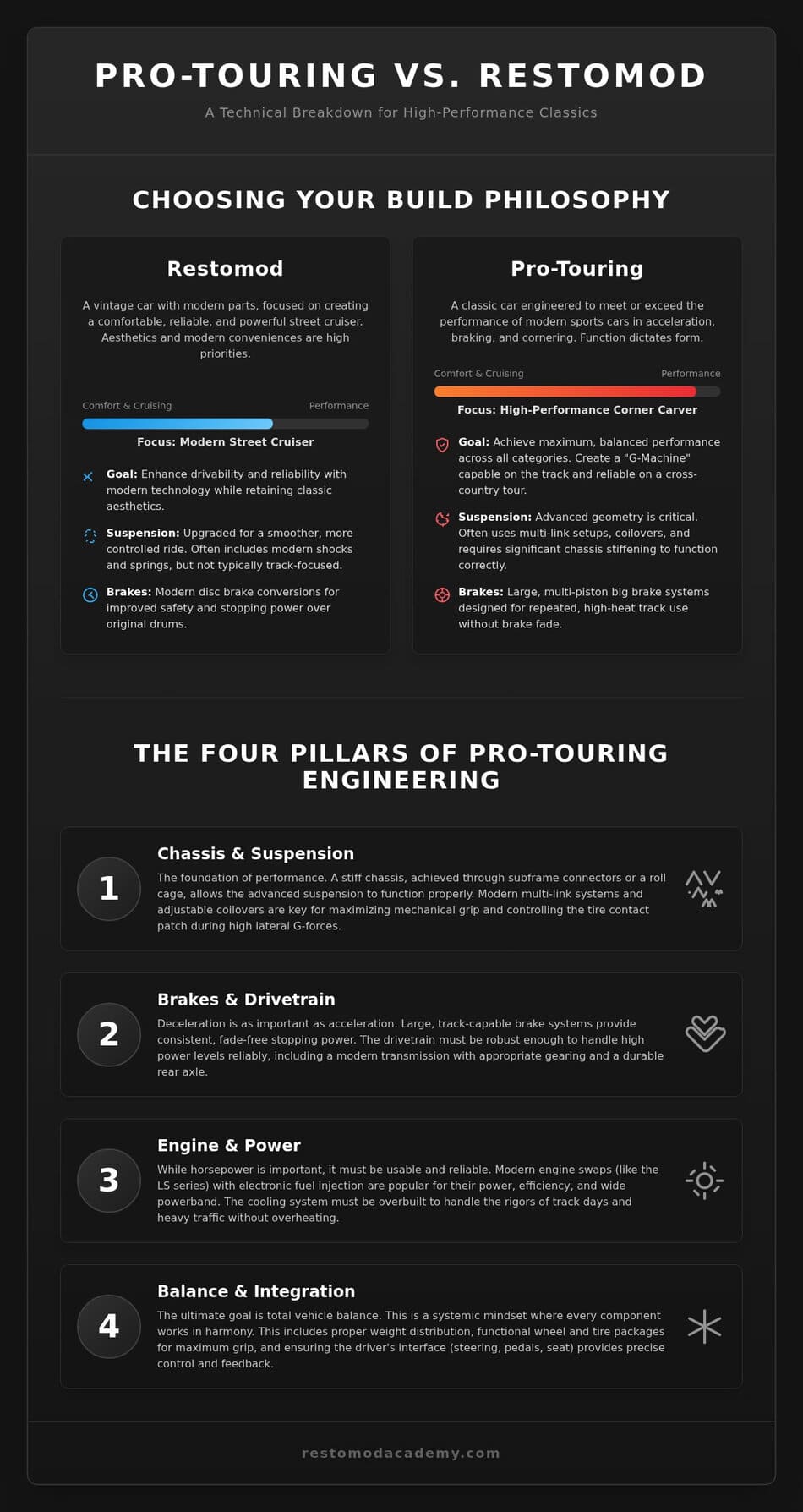
A common mistake in the garage is prioritizing raw power over total vehicle balance. Building a 1,000-horsepower engine is a wasted effort if the chassis twists under torque and the brakes fade after a single hard stop. In the technical debate of pro touring vs restomod, the pro touring approach requires a systemic mindset where every part works in harmony. This isn’t just about a list of expensive components; it’s about engineering a machine that behaves predictably at the limit. The Four Pillars of engineering provide a reliable roadmap that guides you from a bare frame to a track-ready contender. Safety and precision must be your foundation, ensuring that your vintage machine remains controllable when you push it to its mechanical boundaries.
Advanced Suspension Geometry and Chassis Stiffening
Start with the bones of the car. Vintage muscle cars were never designed for lateral G-forces, and their flexible unibody structures act like a giant spring you can’t tune. You must introduce rigidity through subframe connectors or a full roll cage to allow the suspension to do its job. Swapping out archaic leaf springs for a modern multi-link independent rear suspension changes the entire character of the vehicle. This move provides better tire contact patches and significantly improved mechanical grip. Incorporating coilovers with adjustable dampening allows you to dial in the car for specific environments, whether you’re navigating a tight autocross course or cruising the open road. To see the tools needed for these tasks, look through our recommended gear for professional-grade workshop setups.
Modern Drivetrain and Big Brake Systems
Acceleration and deceleration are two sides of the same coin. The LS engine swap has become the industry standard for a reason: it offers incredible power density and modern EFI reliability in a compact package. To manage that power, a modern drivetrain must include a versatile transmission. A Tremec 6-speed manual offers the engagement enthusiasts crave, while modern automatics with paddle shifters provide lightning-fast gear changes for competitive track use. However, going fast is useless if you can’t stop. Pro touring builds require 6-piston calipers and massive rotors that can withstand the heat of repeated high-speed braking without fading. Understanding the nuances of pro touring vs restomod helps you focus your budget on these critical systems rather than just cosmetic upgrades. If you want to ensure your build follows these engineering standards, our Premium Project Blueprints offer the exact specifications you need to succeed.
Restomod vs. Pro-Touring: Choosing Your Build Philosophy
Understanding the hierarchy of pro touring vs restomod is the first step in your journey from enthusiast to creator. Think of restomod as the broad umbrella. It covers any vintage vehicle updated with modern components to improve drivability. If you have been asking what is a restomod, you already know it is about blending the soul of the past with the reliability of the present. Pro-touring is a specialized, high-performance subset of that world. It is the difference between a car that looks the part and a car that lives for the apex. Ask yourself a fundamental question: do you want to win a trophy at a local show, or do you want to shave seconds off your lap time at a competitive autocross event?
Key Differences in Aesthetics and Amenities
A standard restomod often prioritizes a luxurious cabin experience. You might find thick layers of sound deadening, plush leather surfaces, and high-fidelity audio systems designed for long, comfortable cruises. In contrast, a pro touring build focuses on driver feedback and safety. You will swap flat factory benches for deeply bolstered seats and multi-point harnesses to keep you centered during high-speed cornering. Wheel choice is another clear indicator of intent. While a restomod might run 17-inch wheels for a classic look, a pro touring machine almost always steps up to 18-inch wheels. This size is necessary to clear massive 6-piston calipers and to fit sticky 200-treadwear tires. While both styles can include modern air conditioning, the pro touring car must integrate these features without compromising the cooling system’s ability to handle intense track heat.
Performance Benchmarks and Expectations
True pro touring machines are defined by measurable data. We look for specific metrics like stopping from 60 mph in under 110 feet or pulling over 1.0 lateral G on a skidpad. Achieving these numbers requires a specific engineering mindset. You will likely experience a stiffer ride and increased road noise compared to a comfort-oriented restomod. It is a trade-off many of us gladly make for the surgical precision of a well-tuned chassis. Be wary when browsing the classifieds or forums. The pro touring label is frequently misused to justify higher asking prices for cars that only have cosmetic upgrades. Always look past the paint. Check the suspension geometry and braking specs to ensure the engineering matches the name before you commit your hard-earned capital. Deciding on your pro touring vs restomod path early saves you from the frustration of a car that doesn’t meet your performance expectations.
Planning Your Build: From Donor Car to Track Ready
The planning phase is the most critical stage of your journey. It is where your budget is either protected by foresight or drained by impulse. When you look at the technical requirements of pro touring vs restomod, you realize that a lack of a roadmap leads to the “parts bin” syndrome. This happens when components are purchased because they were on sale, not because they work together as a cohesive system. Start with a clear vision of the finished machine. Every hour spent researching suspension geometry or drivetrain compatibility before you pick up a wrench will save you ten hours of frustration. If you are still refining your vision, reviewing what is a restomod can help you decide how far into the performance spectrum you want to go.
Selecting the Ideal Pro-Touring Platform
Your choice of a donor car dictates the ease and cost of your entire build. While it is tempting to pick an obscure classic to stand out, the reality of performance engineering favors platforms with robust aftermarket support. First-generation Camaros and Chevelles remain the gold standard because the engineering work has already been done for you. You can find bolt-in subframes and suspension kits that transform these cars into modern performers without requiring custom fabrication. Recently, we have seen a surge in pro touring trucks, specifically C10 builds. These platforms offer massive engine bays and a growing selection of chassis components that make them ideal candidates for a high-performance transformation. Before you buy, verify the availability of high-performance subframes and steering racks for that specific year and model.
Budgeting for Performance and Reliability
Success requires a “do it once, do it right” mentality. It is far cheaper to buy a premium 6-piston brake kit now than to replace a mediocre 4-piston kit after your first track day. Allocate your funds across the four pillars of engineering, prioritizing safety and chassis rigidity first. Many builders make the mistake of spending their entire budget on a high-horsepower engine, leaving nothing for the tires and suspension needed to control that power. This is where educational resources become your most valuable asset. Deciding early on your pro touring vs restomod goals ensures you don’t waste money on parts that don’t fit your end use. By understanding the mechanical systems before you buy, you avoid the expensive trial and error that plagues so many projects. If you are ready to stop guessing and start building with precision, our Premium Project Blueprints provide the technical framework to ensure every dollar you spend moves you closer to the finish line.
Mastering the Build with Restomod Academy
Building a performance machine is a deeply personal journey, but it doesn’t have to be a lonely one. You’ve likely spent countless hours scrolling through build threads and technical forums, only to find conflicting advice on everything from spring rates to fuel pump sizing. This is where many enthusiasts lose momentum and projects stall out. Transitioning from a passive admirer to an active creator requires more than just tools; it requires a structured framework that bridges the gap between forum hearsay and professional engineering. By understanding the core differences of pro touring vs restomod through a disciplined lens, you ensure that every mechanical decision you make is grounded in physics rather than internet trends.
The Ultimate Restomod Guide: Your Technical Blueprint
Stop relying on random video tutorials that leave out the critical details of assembly and safety. The Ultimate Restomod Guide serves as your comprehensive roadmap, taking you from the initial teardown to the final interior finishing. This guide is designed to empower the DIY builder, breaking down complex tasks like engine swaps and advanced suspension geometry into achievable, logical steps. Whether you’re a seasoned wrench or a beginner picking up a torque wrench for the first time, having a structured educational module ensures you maintain a high standard for quality. It’s about the satisfaction of knowing that the machine you built is as safe as it is fast. Our Premium Project Blueprints offer the precision you need to move with confidence, replacing guesswork with proven specifications.
Consulting and Community: Beyond the Basics
Even the most meticulous plans can hit a technical hurdle that feels insurmountable. This is where Restomod Consulting Services provide the expert hand you need to stay on track. We value the philosophy of personal labor, but we also recognize that precision engineering sometimes requires a knowledgeable peer to review your work. Completing a pro touring vs restomod project is about more than just the mechanical systems; it’s about the sensory and emotional rewards of hearing that engine fire for the first time or feeling the character of a vintage machine through a modern steering rack. You’re joining a community of like-minded enthusiasts who value authenticity and the pride of a finished project. Take the first step toward your high-performance future. Start your journey with The Ultimate Restomod Guide today.
Take the Wheel of Your Performance Future
Mastering the pro touring vs restomod distinction is about more than vocabulary; it’s about engineering intent. You’ve learned how the four pillars of performance transform a classic into a track-ready machine and why selecting the right donor platform is the most critical financial decision you’ll make. This journey is methodical and rewarding, but the precision of the final build makes every hour in the garage worth the effort. You don’t have to navigate these complex mechanical systems alone. Every challenge is a valuable learning opportunity when you have the right mentor by your side.
Download The Ultimate Restomod Guide and start your build today. Authored by automotive expert Brook Walsh, this resource provides the step-by-step blueprints used by thousands of DIY enthusiasts worldwide to achieve professional results. Pick up your tools with confidence and begin the transition from a passive admirer to an active creator. Your vintage masterpiece is waiting to be brought to life, and the road is calling. We’ll see you in the shop.
Common Questions About Performance Classics
What is the best car to start a pro touring build?
The best donor cars are the first-generation Chevrolet Camaro and the 1964 to 1970 Ford Mustang because they enjoy the most extensive aftermarket support. These platforms have pre-engineered subframes and suspension kits that simplify the technical transition. You can also look at A-body cars like the Chevelle or even C10 trucks. Choosing a popular model ensures you spend more time driving and less time fabricating custom brackets for your modern performance components.
How much does it cost to build a pro touring car?
A high-end build requires a significant investment in precision parts. A custom Art Morrison chassis for a classic Chevy is priced at $28,500 as of 2026, while a Roadster Shop SPEC chassis starts around $13,495. When you factor in big brake kits starting at $1,000 and 18-inch wheels that can cost $1,400 each, total costs often exceed $100,000. These figures reflect the premium nature of track-ready components compared to basic street upgrades.
Can a pro touring car be used as a daily driver?
You can absolutely use these machines as daily drivers, provided you’ve prioritized reliability and modern amenities during the assembly. Many enthusiasts include air conditioning and high-back bolstered seats to improve highway comfort. However, the stiffer spring rates and aggressive suspension geometry required for track performance will lead to a firmer ride. It’s a balance between the raw feel of a G-machine and the smoothness of a modern luxury sedan.
What is the difference between a restomod and a pro touring car?
The primary difference in pro touring vs restomod lies in the intended use and engineering focus. A restomod blends classic style with modern reliability for general street use. A pro touring car is a high-performance sub-genre designed to excel on road courses and autocross tracks. While both styles update vintage iron with new technology, the pro touring build emphasizes lateral grip, braking endurance, and functional aerodynamics over pure luxury or original aesthetics.
Do pro touring cars need a roll cage?
A roll cage is not strictly required for street-legal use, but it is highly recommended for any car seeing track time. Beyond the obvious safety benefits, a roll cage significantly increases chassis rigidity. This prevents the unibody from flexing under high cornering loads, allowing the suspension to perform with much greater precision. Most serious builders opt for a 4-point or 6-point cage that balances protection with cabin accessibility.
What are the most important suspension upgrades for pro touring?
The most critical upgrades include adjustable coilovers and a move to independent front suspension with modern geometry. You should also replace factory leaf springs with a multi-link rear setup to improve tire contact during hard acceleration and cornering. Subframe connectors are equally important as they tie the chassis together. These components work as a system to provide the predictable handling and high lateral G-forces that define a true performance machine.
Is an LS swap necessary for a pro touring build?
An LS swap is not mandatory, but it remains the gold standard because of its compact size and massive power density. You can achieve excellent results with a Ford Coyote or a Mopar Gen III Hemi, depending on your brand loyalty and platform. The goal is modern EFI reliability and a broad powerband that stays usable on both the highway and the track. Focus on the engine’s weight and cooling efficiency rather than just peak horsepower.
What tire treadwear is required for pro touring competitions?
Most pro touring competitions and autocross events require a minimum tire treadwear rating of 200. This standard ensures that the cars are running on street-legal performance tires rather than dedicated racing slicks. Tires like the Michelin Pilot Sport 4S or various Falken models are popular choices because they offer the grip needed for fast lap times while maintaining the durability required for long-distance tours and occasional rainy weather.
The most expensive mistake you can make in a garage isn’t buying the wrong tool; it’s building the wrong car for your goals. You’ve likely felt the frustration of weighing the pro touring vs restomod philosophies, wondering if you’re building a comfortable cruiser or a track-day titan. It’s a common point of confusion that leads many enthusiasts to overspend on parts that don’t play well together. You want the timeless silhouette of vintage iron, but you demand the surgical precision of modern engineering. That’s a high standard, but it’s one we can achieve through methodical planning and a deep respect for mechanical systems.
I’ll help you master the technical requirements and design philosophy needed to transform a vintage muscle car into a modern performance machine. This guide provides a clear technical checklist for a pro touring build, ensuring you have the confidence to choose the right platform and components. We’ll explore the ROI of performance upgrades and define exactly how to bridge the gap between heritage aesthetics and contemporary technology. Get ready to move beyond the role of a passive admirer and become an active creator of a high-performance classic that performs as well as it looks.
Key Takeaways
- Define the specific performance standards that separate a track-ready machine from a traditional restoration or a drag-focused build.
- Master the pro touring vs restomod distinction to ensure your project goals align with your desire for either a modern street cruiser or a high-performance corner carver.
- Learn the four pillars of engineering that prioritize a balanced, systemic approach over simply chasing peak horsepower numbers.
- Identify the most effective donor platforms and learn why detailed planning is the most powerful tool for protecting your budget and ensuring build success.
- Discover how structured educational resources and blueprints can replace mechanical guesswork with the precision of professional engineering.
What is a Pro-Touring Car? Defining the Performance Standard
Imagine a 1969 Camaro that doesn’t just look mean at a stoplight but out-handles a modern sports car on a winding mountain road. This is the heart of the movement. When you analyze pro touring vs restomod builds, you’re looking at a shift from mere aesthetics to uncompromising engineering. A pro touring car is a classic machine modified to excel in every performance category: acceleration, braking, and cornering. Unlike a traditional restoration that preserves every factory flaw for the sake of originality, or a Pro-Street build designed solely for straight-line speed, these cars are built to be driven hard. They are the ultimate expression of mechanical versatility, designed to be as comfortable on the highway as they are capable on the track.
The term was famously coined around 1993 by Mark Stielow and Jeff Smith. They envisioned a vehicle that could survive the rigors of a road course and still provide a reliable ride for a cross-country trip. To understand the foundation of these machines, you can explore the technical history of What is a Pro-Touring Car? which details how the movement grew from a niche hobby into a dominant force in the custom car industry. It’s about taking the soul of a vintage muscle car and giving it the heart of a modern supercar.
The Evolution of the Pro-Touring Movement
In the 1980s, the street machine era focused on big blowers and massive rear tires that struggled to turn a corner. By the early 1990s, visionary builders began prioritizing suspension geometry and weight balance. Events like One Lap of America acted as the ultimate proving ground, forcing builders to create cars that stayed cool in heavy traffic and stayed glued to the asphalt at high speeds. Today, modern technology like CAD-designed chassis and digital fuel injection has lowered the barrier to entry, allowing you to build a world-class performer in your own shop with the right guidance.
Function Over Form: The Pro-Touring Manifesto
Every bolt you turn on a pro touring build should serve a functional purpose. This is the G-Machine philosophy, where the primary goal is pulling high lateral G-forces on the skidpad. It’s not enough to have 700 horsepower if the brakes fade after two laps or the steering feels disconnected. Reliability is your greatest asset. You need a car that can handle a thousand-mile tour and then dive into an autocross session without a second thought. While you might start by asking what is a restomod, understanding the core differences in pro touring vs restomod will help you decide if you want a weekend cruiser or a track-ready weapon. It is about the pride of precision and the thrill of a machine that responds instantly to your input.
The Four Pillars of Pro-Touring Engineering
A common mistake in the garage is prioritizing raw power over total vehicle balance. Building a 1,000-horsepower engine is a wasted effort if the chassis twists under torque and the brakes fade after a single hard stop. In the technical debate of pro touring vs restomod, the pro touring approach requires a systemic mindset where every part works in harmony. This isn’t just about a list of expensive components; it’s about engineering a machine that behaves predictably at the limit. The Four Pillars of engineering provide a reliable roadmap that guides you from a bare frame to a track-ready contender. Safety and precision must be your foundation, ensuring that your vintage machine remains controllable when you push it to its mechanical boundaries.
Advanced Suspension Geometry and Chassis Stiffening
Start with the bones of the car. Vintage muscle cars were never designed for lateral G-forces, and their flexible unibody structures act like a giant spring you can’t tune. You must introduce rigidity through subframe connectors or a full roll cage to allow the suspension to do its job. Swapping out archaic leaf springs for a modern multi-link independent rear suspension changes the entire character of the vehicle. This move provides better tire contact patches and significantly improved mechanical grip. Incorporating coilovers with adjustable dampening allows you to dial in the car for specific environments, whether you’re navigating a tight autocross course or cruising the open road. To see the tools needed for these tasks, look through our recommended gear for professional-grade workshop setups.
Modern Drivetrain and Big Brake Systems
Acceleration and deceleration are two sides of the same coin. The LS engine swap has become the industry standard for a reason: it offers incredible power density and modern EFI reliability in a compact package. To manage that power, a modern drivetrain must include a versatile transmission. A Tremec 6-speed manual offers the engagement enthusiasts crave, while modern automatics with paddle shifters provide lightning-fast gear changes for competitive track use. However, going fast is useless if you can’t stop. Pro touring builds require 6-piston calipers and massive rotors that can withstand the heat of repeated high-speed braking without fading. Understanding the nuances of pro touring vs restomod helps you focus your budget on these critical systems rather than just cosmetic upgrades. If you want to ensure your build follows these engineering standards, our Premium Project Blueprints offer the exact specifications you need to succeed.
Restomod vs. Pro-Touring: Choosing Your Build Philosophy
Understanding the hierarchy of pro touring vs restomod is the first step in your journey from enthusiast to creator. Think of restomod as the broad umbrella. It covers any vintage vehicle updated with modern components to improve drivability. If you have been asking what is a restomod, you already know it is about blending the soul of the past with the reliability of the present. Pro-touring is a specialized, high-performance subset of that world. It is the difference between a car that looks the part and a car that lives for the apex. Ask yourself a fundamental question: do you want to win a trophy at a local show, or do you want to shave seconds off your lap time at a competitive autocross event?
Key Differences in Aesthetics and Amenities
A standard restomod often prioritizes a luxurious cabin experience. You might find thick layers of sound deadening, plush leather surfaces, and high-fidelity audio systems designed for long, comfortable cruises. In contrast, a pro touring build focuses on driver feedback and safety. You will swap flat factory benches for deeply bolstered seats and multi-point harnesses to keep you centered during high-speed cornering. Wheel choice is another clear indicator of intent. While a restomod might run 17-inch wheels for a classic look, a pro touring machine almost always steps up to 18-inch wheels. This size is necessary to clear massive 6-piston calipers and to fit sticky 200-treadwear tires. While both styles can include modern air conditioning, the pro touring car must integrate these features without compromising the cooling system’s ability to handle intense track heat.
Performance Benchmarks and Expectations
True pro touring machines are defined by measurable data. We look for specific metrics like stopping from 60 mph in under 110 feet or pulling over 1.0 lateral G on a skidpad. Achieving these numbers requires a specific engineering mindset. You will likely experience a stiffer ride and increased road noise compared to a comfort-oriented restomod. It is a trade-off many of us gladly make for the surgical precision of a well-tuned chassis. Be wary when browsing the classifieds or forums. The pro touring label is frequently misused to justify higher asking prices for cars that only have cosmetic upgrades. Always look past the paint. Check the suspension geometry and braking specs to ensure the engineering matches the name before you commit your hard-earned capital. Deciding on your pro touring vs restomod path early saves you from the frustration of a car that doesn’t meet your performance expectations.
Planning Your Build: From Donor Car to Track Ready
The planning phase is the most critical stage of your journey. It is where your budget is either protected by foresight or drained by impulse. When you look at the technical requirements of pro touring vs restomod, you realize that a lack of a roadmap leads to the “parts bin” syndrome. This happens when components are purchased because they were on sale, not because they work together as a cohesive system. Start with a clear vision of the finished machine. Every hour spent researching suspension geometry or drivetrain compatibility before you pick up a wrench will save you ten hours of frustration. If you are still refining your vision, reviewing what is a restomod can help you decide how far into the performance spectrum you want to go.
Selecting the Ideal Pro-Touring Platform
Your choice of a donor car dictates the ease and cost of your entire build. While it is tempting to pick an obscure classic to stand out, the reality of performance engineering favors platforms with robust aftermarket support. First-generation Camaros and Chevelles remain the gold standard because the engineering work has already been done for you. You can find bolt-in subframes and suspension kits that transform these cars into modern performers without requiring custom fabrication. Recently, we have seen a surge in pro touring trucks, specifically C10 builds. These platforms offer massive engine bays and a growing selection of chassis components that make them ideal candidates for a high-performance transformation. Before you buy, verify the availability of high-performance subframes and steering racks for that specific year and model.
Budgeting for Performance and Reliability
Success requires a “do it once, do it right” mentality. It is far cheaper to buy a premium 6-piston brake kit now than to replace a mediocre 4-piston kit after your first track day. Allocate your funds across the four pillars of engineering, prioritizing safety and chassis rigidity first. Many builders make the mistake of spending their entire budget on a high-horsepower engine, leaving nothing for the tires and suspension needed to control that power. This is where educational resources become your most valuable asset. Deciding early on your pro touring vs restomod goals ensures you don’t waste money on parts that don’t fit your end use. By understanding the mechanical systems before you buy, you avoid the expensive trial and error that plagues so many projects. If you are ready to stop guessing and start building with precision, our Premium Project Blueprints provide the technical framework to ensure every dollar you spend moves you closer to the finish line.
Mastering the Build with Restomod Academy
Building a performance machine is a deeply personal journey, but it doesn’t have to be a lonely one. You’ve likely spent countless hours scrolling through build threads and technical forums, only to find conflicting advice on everything from spring rates to fuel pump sizing. This is where many enthusiasts lose momentum and projects stall out. Transitioning from a passive admirer to an active creator requires more than just tools; it requires a structured framework that bridges the gap between forum hearsay and professional engineering. By understanding the core differences of pro touring vs restomod through a disciplined lens, you ensure that every mechanical decision you make is grounded in physics rather than internet trends.
The Ultimate Restomod Guide: Your Technical Blueprint
Stop relying on random video tutorials that leave out the critical details of assembly and safety. The Ultimate Restomod Guide serves as your comprehensive roadmap, taking you from the initial teardown to the final interior finishing. This guide is designed to empower the DIY builder, breaking down complex tasks like engine swaps and advanced suspension geometry into achievable, logical steps. Whether you’re a seasoned wrench or a beginner picking up a torque wrench for the first time, having a structured educational module ensures you maintain a high standard for quality. It’s about the satisfaction of knowing that the machine you built is as safe as it is fast. Our Premium Project Blueprints offer the precision you need to move with confidence, replacing guesswork with proven specifications.
Consulting and Community: Beyond the Basics
Even the most meticulous plans can hit a technical hurdle that feels insurmountable. This is where Restomod Consulting Services provide the expert hand you need to stay on track. We value the philosophy of personal labor, but we also recognize that precision engineering sometimes requires a knowledgeable peer to review your work. Completing a pro touring vs restomod project is about more than just the mechanical systems; it’s about the sensory and emotional rewards of hearing that engine fire for the first time or feeling the character of a vintage machine through a modern steering rack. You’re joining a community of like-minded enthusiasts who value authenticity and the pride of a finished project. Take the first step toward your high-performance future. Start your journey with The Ultimate Restomod Guide today.
Take the Wheel of Your Performance Future
Mastering the pro touring vs restomod distinction is about more than vocabulary; it’s about engineering intent. You’ve learned how the four pillars of performance transform a classic into a track-ready machine and why selecting the right donor platform is the most critical financial decision you’ll make. This journey is methodical and rewarding, but the precision of the final build makes every hour in the garage worth the effort. You don’t have to navigate these complex mechanical systems alone. Every challenge is a valuable learning opportunity when you have the right mentor by your side.
Download The Ultimate Restomod Guide and start your build today. Authored by automotive expert Brook Walsh, this resource provides the step-by-step blueprints used by thousands of DIY enthusiasts worldwide to achieve professional results. Pick up your tools with confidence and begin the transition from a passive admirer to an active creator. Your vintage masterpiece is waiting to be brought to life, and the road is calling. We’ll see you in the shop.
Common Questions About Performance Classics
What is the best car to start a pro touring build?
The best donor cars are the first-generation Chevrolet Camaro and the 1964 to 1970 Ford Mustang because they enjoy the most extensive aftermarket support. These platforms have pre-engineered subframes and suspension kits that simplify the technical transition. You can also look at A-body cars like the Chevelle or even C10 trucks. Choosing a popular model ensures you spend more time driving and less time fabricating custom brackets for your modern performance components.
How much does it cost to build a pro touring car?
A high-end build requires a significant investment in precision parts. A custom Art Morrison chassis for a classic Chevy is priced at $28,500 as of 2026, while a Roadster Shop SPEC chassis starts around $13,495. When you factor in big brake kits starting at $1,000 and 18-inch wheels that can cost $1,400 each, total costs often exceed $100,000. These figures reflect the premium nature of track-ready components compared to basic street upgrades.
Can a pro touring car be used as a daily driver?
You can absolutely use these machines as daily drivers, provided you’ve prioritized reliability and modern amenities during the assembly. Many enthusiasts include air conditioning and high-back bolstered seats to improve highway comfort. However, the stiffer spring rates and aggressive suspension geometry required for track performance will lead to a firmer ride. It’s a balance between the raw feel of a G-machine and the smoothness of a modern luxury sedan.
What is the difference between a restomod and a pro touring car?
The primary difference in pro touring vs restomod lies in the intended use and engineering focus. A restomod blends classic style with modern reliability for general street use. A pro touring car is a high-performance sub-genre designed to excel on road courses and autocross tracks. While both styles update vintage iron with new technology, the pro touring build emphasizes lateral grip, braking endurance, and functional aerodynamics over pure luxury or original aesthetics.
Do pro touring cars need a roll cage?
A roll cage is not strictly required for street-legal use, but it is highly recommended for any car seeing track time. Beyond the obvious safety benefits, a roll cage significantly increases chassis rigidity. This prevents the unibody from flexing under high cornering loads, allowing the suspension to perform with much greater precision. Most serious builders opt for a 4-point or 6-point cage that balances protection with cabin accessibility.
What are the most important suspension upgrades for pro touring?
The most critical upgrades include adjustable coilovers and a move to independent front suspension with modern geometry. You should also replace factory leaf springs with a multi-link rear setup to improve tire contact during hard acceleration and cornering. Subframe connectors are equally important as they tie the chassis together. These components work as a system to provide the predictable handling and high lateral G-forces that define a true performance machine.
Is an LS swap necessary for a pro touring build?
An LS swap is not mandatory, but it remains the gold standard because of its compact size and massive power density. You can achieve excellent results with a Ford Coyote or a Mopar Gen III Hemi, depending on your brand loyalty and platform. The goal is modern EFI reliability and a broad powerband that stays usable on both the highway and the track. Focus on the engine’s weight and cooling efficiency rather than just peak horsepower.
What tire treadwear is required for pro touring competitions?
Most pro touring competitions and autocross events require a minimum tire treadwear rating of 200. This standard ensures that the cars are running on street-legal performance tires rather than dedicated racing slicks. Tires like the Michelin Pilot Sport 4S or various Falken models are popular choices because they offer the grip needed for fast lap times while maintaining the durability required for long-distance tours and occasional rainy weather.