
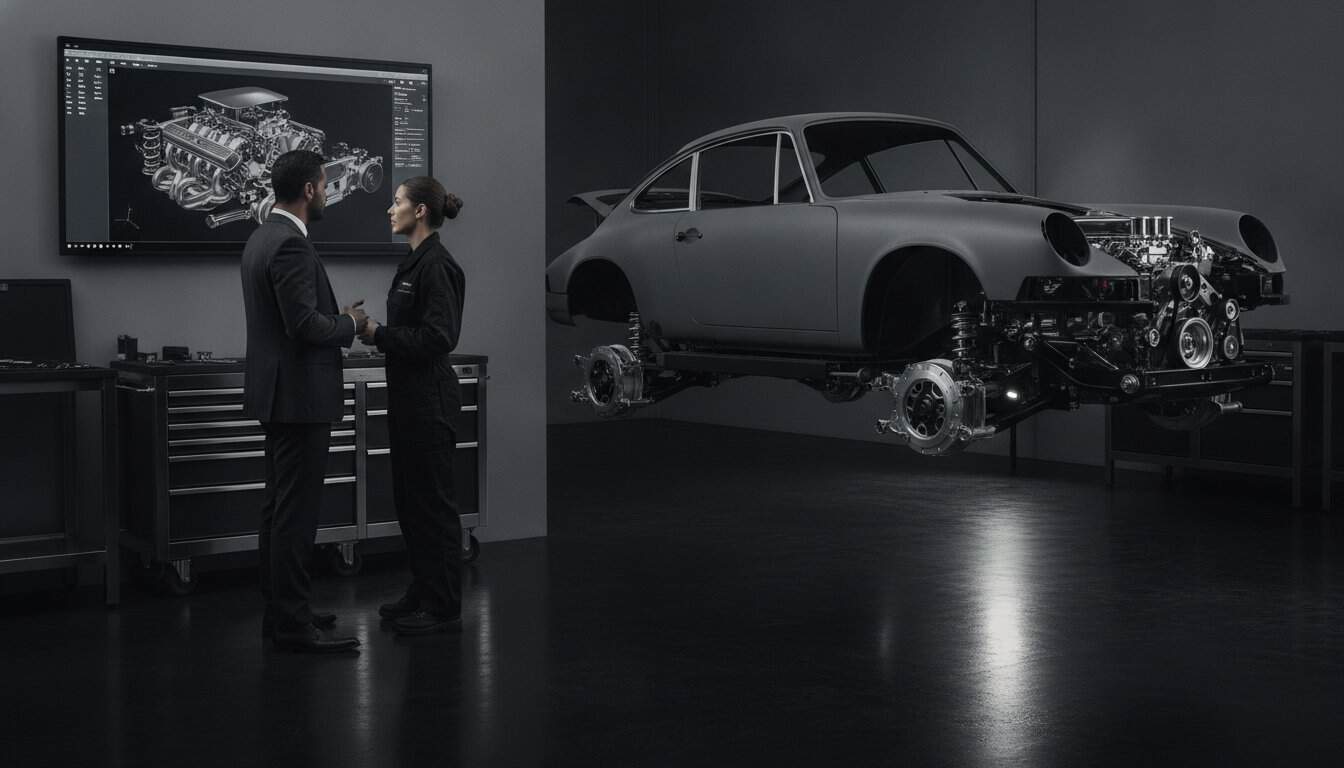
Hiring a car builder is not a retail transaction; it is a high-stakes engineering partnership where the wrong choice can leave your dream car rotting in shop jail for years. You have likely spent months or even decades envisioning the perfect blend of vintage soul and modern performance. Handing those keys over feels like a leap of faith, and that familiar knot of anxiety in your stomach is usually tied to fears of scope creep, hidden invoices, or modern fuel injection systems that never quite run right on a classic chassis.
We understand that hesitation because we value the precision and heritage of these machines as much as you do. You deserve a partner who respects the craftsmanship of the past while mastering the complexity of today’s performance technology. This guide will teach you exactly how to vet a custom shop so you can hand over your keys with total confidence and zero regrets. By mastering the specific questions to ask a potential car builder before hiring, you will transform from a passive customer into an educated project lead. We are going to walk through the technical documentation you must demand, the transparency standards that prevent budget blowouts, and the safety benchmarks that ensure your restomod is actually roadworthy.
Key Takeaways
- Protect your investment by treating the vetting process as a risk-mitigation strategy to keep your car out of shop jail.
- Master the specific technical questions to ask a potential car builder before hiring to confirm they can safely merge modern power with vintage steel.
- Learn why a fixed-price quote is often a red flag and how to navigate transparent contracts that prioritize quality over speed.
- Look past the shiny paint in a builder’s portfolio to evaluate the precision of their underlying metalwork and unfinished projects.
- Use a structured scorecard to transition from a passive admirer to an active creator who leads the project with clarity.
Why Vetting Your Custom Shop is the Most Critical Project Milestone
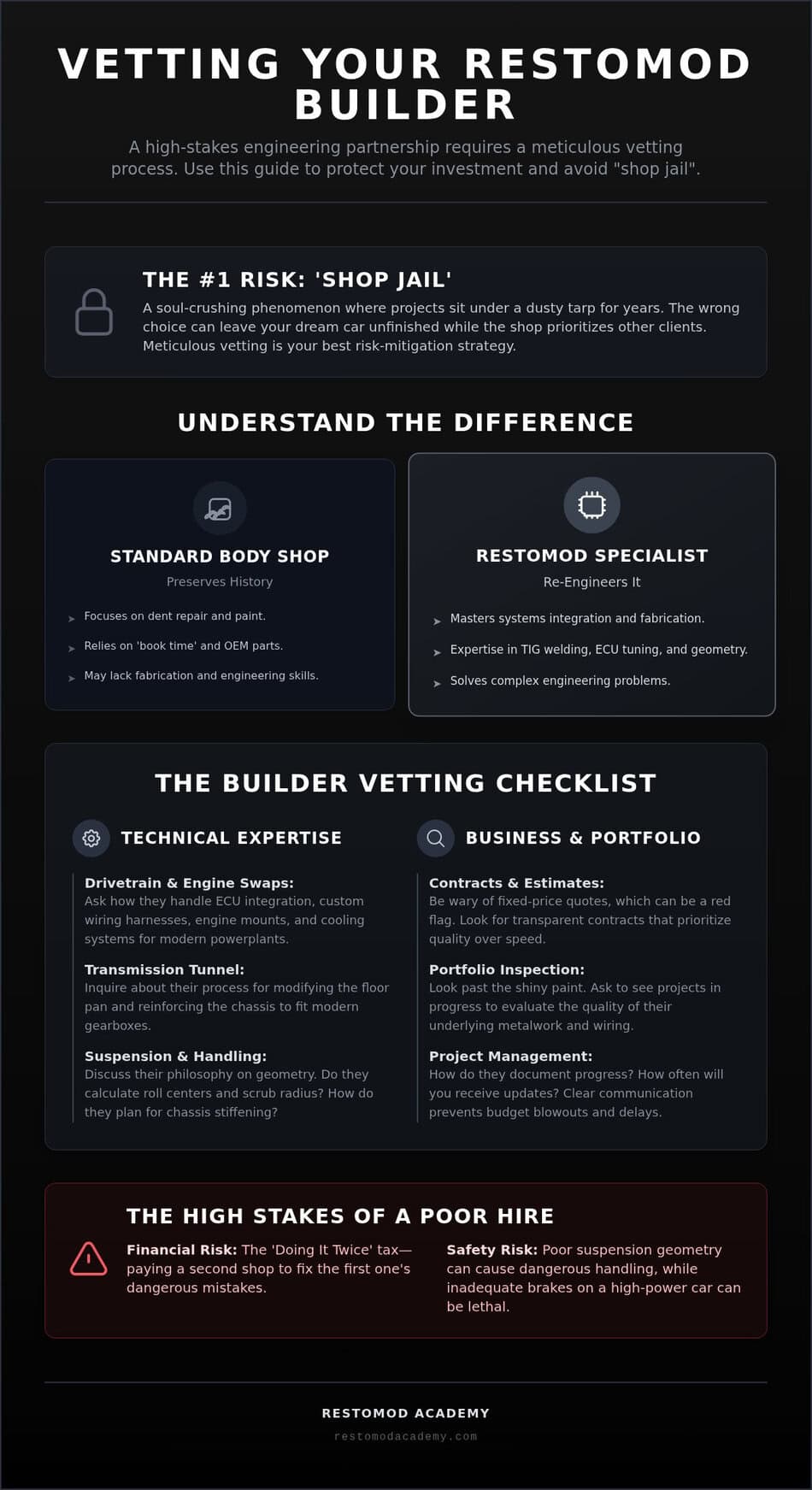
Hiring a builder is the single most important decision you will make in your automotive journey. It determines whether your car becomes a legacy you drive with pride or a expensive lesson you regret. Too many enthusiasts lose their shirts in ‘Shop Jail,’ a soul-crushing phenomenon where projects sit under a dusty tarp for years while the shop prioritizes quick insurance repairs or higher-paying clients. You are protecting your dream and your hard-earned capital by being meticulous now. There is a fundamental difference between the standard Conservation and restoration of road vehicles and a high-performance restomod. One preserves history; the other re-engineers it for the modern era. To get it right, you must understand what is a restomod and how that complexity changes the hiring process.
The Difference Between a Body Shop and a Restomod Specialist
A shop that excels at fixing a dented fender on a late-model sedan might be completely lost when asked to fabricate a custom firewall or integrate a modern wiring harness. Restomodding requires a specific set of skills and specialized tools, from TIG welding chromoly to mapping complex fuel injection curves. Standard repair shops rely on ‘book time’ and OEM parts, but custom builders deal in the unknown. This inherent uncertainty is why a ‘custom premium’ exists. You aren’t just paying for labor; you are paying for the engineering expertise required to solve problems that didn’t exist until you decided to drop a modern powertrain into a 60-year-old frame. Finding a builder who understands this intersection of classic style and modern reliability is non-negotiable.
The Financial and Safety Risks of a Poor Hire
The stakes are higher than just a bad paint job or a leaky gasket. If a builder doesn’t understand suspension geometry, you could end up with a car that suffers from terrifying bump steer or dangerous scrub radius issues. These flaws make a vehicle undrivable at highway speeds. Consider the liability of a high-horsepower engine swap if the braking and chassis systems aren’t scaled to match the new performance. Cutting corners leads to the ‘doing it twice’ tax, where you eventually pay a second shop to fix the dangerous mistakes of the first. This is why knowing the right questions to ask a potential car builder before hiring is your best defense against mechanical and financial disaster. It allows you to verify their technical logic before a single bolt is turned.
Technical Questions to Ask a Potential Car Builder Before Hiring
Transitioning from the conceptual phase to the workshop floor requires a shift in focus toward engineering precision. You aren’t just looking for a mechanic; you are searching for a systems integrator. A restomod is a complex puzzle where a modern powerplant must communicate with vintage gauges and a stiffened chassis. To ensure your vision doesn’t stall, you need to probe the builder technical depth. Using specific questions to ask a potential car builder before hiring will reveal if they truly understand the marriage of classic aesthetics and contemporary performance.
Drivetrain and Engine Swap Expertise
Modern powerplants like the LS or Coyote offer incredible reliability, but they demand sophisticated support systems. Ask your builder how they handle modern ECU integration and custom wiring harnesses. Do they use standalone systems or reworked factory looms? Inquire about their process for fabricating engine mounts and high-capacity cooling systems that can survive a summer cruise. You should also discuss the transmission tunnel. Modifying a floor pan to fit a modern six-speed gearbox often requires significant surgery and structural reinforcement to maintain cabin integrity. For a deeper dive into these complexities, consult the definitive guide to an ls engine swap before your first shop visit.
Suspension Geometry and Handling Philosophy
A high-horsepower engine is useless if the car can’t handle the corners. Don’t let a builder simply bolt on an off-the-shelf kit without explaining the geometry. Ask if they prioritize drag strip stiffness or canyon-carving agility. A balanced build requires a builder who understands roll centers and scrub radius. They should have a clear plan for chassis stiffening, such as subframe connectors or a custom X-brace, to prevent the vintage unibody from twisting under modern torque. This is where the artistry of fabrication meets the science of physics. If you want a truly refined ride, the builder must be able to explain how they will tune the damping rates for your specific vehicle weight.
Wiring and Modern Electronics Capabilities
Reliability is won or lost in the wiring. Ask if the electrical work is done in-house or by a specialist. Modern sensors are sensitive to the extreme heat of a vintage engine bay, so inquire about their heat shielding and loom routing techniques. Beyond the engine, you need a roadmap for integrating modern HVAC systems and high-fidelity audio without ruining the classic interior lines. If you feel overwhelmed by these technical hurdles, our Restomod Consulting Services can provide a second opinion on any builder’s proposed technical plan to ensure it meets your performance goals.
Navigating the Business Side: Contracts, Estimates, and Transparency
The mechanical specifications define the car performance, but the business agreement defines your peace of mind. You must approach the administrative side with the same level of scrutiny as the engine swap. Most enthusiasts get into trouble because they treat a custom build like a standard repair. This is an open ended engineering project. One of the most vital questions to ask a potential car builder before hiring centers on their pricing model. While a fixed price sounds safe, it is often a red flag in the custom world. Professional shops typically operate on a time and materials basis because custom fabrication involves too many unknowns. In 2026, national average labor rates for independent shops range from $120 to $159 per hour; knowing this helps you gauge if a shop’s quote is grounded in reality.
The Anatomy of a Restomod Build Contract
A solid contract is your roadmap. It should detail a comprehensive scope of work that outlines every major system, from the chassis to the final trim. You need to know how the shop handles change orders. If you decide to upgrade to a more aggressive camshaft or a different steering rack mid build, the process for documenting those costs must be clear. Avoid shops that demand massive upfront deposits without a defined schedule. Instead, look for a structure based on progress payments or monthly billing cycles. This keeps the builder motivated and ensures your capital is tied directly to visible milestones.
Communication Protocols and Project Management
Silence from a shop is the first sign of trouble. Demand a clear communication plan before you sign anything. You should expect regular updates, ideally through a digital photo gallery where you can see the daily progress of the metal work and assembly. Ask who your primary point of contact will be. You don’t want to play phone tag with three different technicians. Schedule milestone meetings to review the work at critical junctions, such as when the car is in bare metal or before the drivetrain is permanently set. If you are unsure about the builder’s proposed timeline, our Restomod Consulting Services can help you evaluate if their schedule is realistic or just a sales tactic.
Warranty and Post-Build Support
The project doesn’t end when the trailer arrives at your house. Every custom build requires a shakedown period to iron out minor gremlins. Ask the builder about their warranty on custom fabrication and how they handle post delivery adjustments. A reputable shop stands by their craftsmanship. They should have a plan for support if a major component fails shortly after delivery, even if you are hundreds of miles away. True partners in this journey focus on the long term reliability of the machine, not just getting it out the door.
Vetting the Portfolio: Looking Beyond the Shiny Paint
A show car under studio lights is designed to dazzle, but for a seasoned builder, the real story is told in the shadows. High quality paint can mask a multitude of fabrication sins, from excessive body filler to poorly executed structural welds. To truly evaluate a shop, you must look at their cars in the weeds. These are the projects currently on the rotisserie or mid wiring. Unfinished machines reveal the shop’s true engineering soul. Seeing how a builder handles the hidden areas, like the underside of the floor pans or the interior of the trunk, tells you everything you need to know about their commitment to longevity. This transparency is a core part of effective restomod project planning and sets the benchmark for the rest of the build.
The Reference Check: Questions for Past Clients
Don’t just ask for a list of references; ask for the contact information of clients whose projects are currently in the shop. This gives you a real time look at the builder’s consistency. When you call, focus on the business relationship. Was the final bill within 20% of the initial estimate? Custom work always has variables, but a massive overrun suggests poor planning. Ask how the builder handled the inevitable setbacks. Every build has them; what matters is whether the shop took ownership or passed the cost and frustration onto the owner. A builder who communicates through the hard parts is a builder you can trust.
Inspecting Shop Quality and Cleanliness
The state of the workshop is a direct reflection of the care that will go into your car. A messy shop with parts scattered across the floor and dust covered interiors is a major red flag. It signals a lack of organization that will inevitably lead to lost bolts and scratched trim. Look for dedicated areas for part storage and see if the cars are protected with fender covers and interior masking. To ensure you are speaking the same language as the top tier builders you visit, review our guide on what is a restomod to establish your technical expectations.
Making the Final Decision: The Restomod Academy Scorecard
Choosing a builder is the final gate between your dream and the reality of the road. By now, you have gathered technical data, reviewed portfolios, and scrutinized contracts. The decision-making process requires you to balance your gut feeling with the hard evidence you have collected. If a shop feels right but their technical answers were vague, trust the data over the handshake. Conversely, if a shop is technically brilliant but dismissive of your questions, they will likely be difficult to work with during the long, meticulous process of a custom build. You are looking for the intersection of high-level craftsmanship and professional transparency.
Don’t feel pressured to commit to a six-figure build after one meeting. We often encourage enthusiasts to start with a smaller consultation or a dedicated discovery phase. Pay the builder for a formal project plan or a detailed teardown and inspection. This low-risk engagement allows you to see how the shop handles deadlines, documentation, and communication before your car is completely disassembled. It is a trial run for the relationship that can save you years of frustration and thousands of dollars in mismanaged labor.
The Red Flags You Should Never Ignore
A builder who demands 100% of the project cost upfront is an immediate reason to walk away. This is not how the custom industry operates; it is often a sign of a business using new deposits to finish old projects. You should also be wary of a builder who refuses to share the names of their subcontractors. Whether it is an upholstery specialist or a master painter, you have a right to know who is contributing to your vehicle’s legacy. Watch out for the ‘yes man’ who promises the impossible. A professional mentor in the shop will tell you when an idea is unsafe or mechanically unsound. If they don’t challenge your assumptions with engineering logic, they aren’t protecting your investment.
Next Steps: Launching Your Project with Confidence
You are now equipped with the essential questions to ask a potential car builder before hiring. This vetting process is your armor against shop jail and mechanical failure. To prepare for your first formal shop visit, use The Ultimate Restomod Guide to define your technical goals. Setting up your own project management folder to mirror the builder’s documentation ensures that nothing falls through the cracks. When you show up as an educated client, you earn the respect of the craftsmen. They see you as a partner in the build rather than just another customer. If you need a technical second opinion on a shop’s proposal, our Restomod Consulting Services can provide the clarity you need to move forward. Trust the process you have followed, and prepare for the thrill of seeing your vision take shape on the workshop floor.
Take the Wheel of Your Custom Project
Your vision for a perfect restomod is finally within reach. By moving beyond the surface level of shiny paint and focusing on the engineering and business transparency of a shop, you have already separated yourself from the average enthusiast. You now possess the specific questions to ask a potential car builder before hiring to ensure your project stays on track and out of shop jail. Remember that a successful build is a partnership built on clear documentation and shared technical standards.
Don’t let the complexity of modern performance integration stall your progress. You can avoid the $10,000 mistakes of the uneducated owner by learning the specific language that top-tier builders respect. When you join our community of builders who value precision over shortcuts, you gain the confidence to lead your project with authority. Download the Ultimate Restomod Guide to Master Your Project Roadmap and start building the legacy your vintage machine deserves. The road is waiting, and with the right partner, your car will perform better than it ever did on the showroom floor.
Frequently Asked Questions
How much should a restomod builder charge per hour in 2026?
A fair market rate for a professional independent shop in 2026 typically ranges between $120 and $159 per hour. In states with a higher cost of living, you might see specialized rates exceeding $160 per hour. While it is tempting to look for the lowest price, remember that you are paying for specialized engineering expertise and precision fabrication that standard repair shops cannot provide.
Is it normal for a custom car build to take more than two years?
Yes, it is common for a comprehensive restomod to take two years or more to reach completion. These projects are artisanal engineering feats that require hundreds of hours for metalwork, wiring, and drivetrain integration. A high quality build cannot be rushed. Patience is a requirement for anyone transitioning from a passive admirer to an active creator of a custom machine.
Should I buy my own parts or let the builder source them?
You should almost always let the builder source the parts for your project. While 56% of consumers begin their research online, a builder knows which components actually work together in a custom application. When a builder sources the parts, they take responsibility for compatibility and warranty issues. This prevents you from being caught in the middle if a specific component fails.
What is the most common reason for restomod projects to fail?
The most common reason for failure is a lack of a clear project roadmap, which leads to shop jail and scope creep. Without a structured plan, costs spiral and the builder loses momentum. This is why mastering the specific questions to ask a potential car builder before hiring is critical. It ensures both parties share a unified vision for the final reliability and performance of the machine.
Do I need to sign a contract for a custom car restoration?
You absolutely must sign a detailed contract before any work begins on your vehicle. A professional contract defines the scope of work, payment milestones, and how change orders are handled. It transforms a vague agreement into a protected investment. These documents are essential questions to ask a potential car builder before hiring to ensure your project stays within a logical, manageable framework.
How do I find a reputable restomod shop near me?
Begin your search by visiting local specialty car shows and asking owners for honest shop recommendations. Online research is a powerful tool, as search engines and review sites are the top sources for 49% of consumers. Look for shops with a consistent portfolio of finished projects that match the specific style and performance goals you have for your own heritage machine. For those focusing on Japanese makes and high-performance maintenance, you might check out Speedy Roo Motorsports & Repair Inc as an example of an expert independent facility.
Can I hire a builder just for the metalwork and do the rest myself?
Yes, many shops are willing to perform specific modular tasks like metalwork, paint, or engine integration. This approach allows you to outsource the most daunting technical tasks while maintaining a hands on role in the final assembly. It is a smart way to manage your budget and stay connected to the rewarding, creative journey of your technical restoration project.
What should I do if my builder stops answering my calls?
Visit the shop in person immediately to assess the physical status of your vehicle and parts. Communication breakdowns are often the first sign of financial or operational trouble within a custom shop. Refer back to your contract and payment records to ensure the work completed matches the funds you have provided. If the shop remains unresponsive, you may need to arrange for the vehicle removal.
Hiring a car builder is not a retail transaction; it is a high-stakes engineering partnership where the wrong choice can leave your dream car rotting in shop jail for years. You have likely spent months or even decades envisioning the perfect blend of vintage soul and modern performance. Handing those keys over feels like a leap of faith, and that familiar knot of anxiety in your stomach is usually tied to fears of scope creep, hidden invoices, or modern fuel injection systems that never quite run right on a classic chassis.
We understand that hesitation because we value the precision and heritage of these machines as much as you do. You deserve a partner who respects the craftsmanship of the past while mastering the complexity of today’s performance technology. This guide will teach you exactly how to vet a custom shop so you can hand over your keys with total confidence and zero regrets. By mastering the specific questions to ask a potential car builder before hiring, you will transform from a passive customer into an educated project lead. We are going to walk through the technical documentation you must demand, the transparency standards that prevent budget blowouts, and the safety benchmarks that ensure your restomod is actually roadworthy.
Key Takeaways
- Protect your investment by treating the vetting process as a risk-mitigation strategy to keep your car out of shop jail.
- Master the specific technical questions to ask a potential car builder before hiring to confirm they can safely merge modern power with vintage steel.
- Learn why a fixed-price quote is often a red flag and how to navigate transparent contracts that prioritize quality over speed.
- Look past the shiny paint in a builder’s portfolio to evaluate the precision of their underlying metalwork and unfinished projects.
- Use a structured scorecard to transition from a passive admirer to an active creator who leads the project with clarity.
Why Vetting Your Custom Shop is the Most Critical Project Milestone
Hiring a builder is the single most important decision you will make in your automotive journey. It determines whether your car becomes a legacy you drive with pride or a expensive lesson you regret. Too many enthusiasts lose their shirts in ‘Shop Jail,’ a soul-crushing phenomenon where projects sit under a dusty tarp for years while the shop prioritizes quick insurance repairs or higher-paying clients. You are protecting your dream and your hard-earned capital by being meticulous now. There is a fundamental difference between the standard Conservation and restoration of road vehicles and a high-performance restomod. One preserves history; the other re-engineers it for the modern era. To get it right, you must understand what is a restomod and how that complexity changes the hiring process.
The Difference Between a Body Shop and a Restomod Specialist
A shop that excels at fixing a dented fender on a late-model sedan might be completely lost when asked to fabricate a custom firewall or integrate a modern wiring harness. Restomodding requires a specific set of skills and specialized tools, from TIG welding chromoly to mapping complex fuel injection curves. Standard repair shops rely on ‘book time’ and OEM parts, but custom builders deal in the unknown. This inherent uncertainty is why a ‘custom premium’ exists. You aren’t just paying for labor; you are paying for the engineering expertise required to solve problems that didn’t exist until you decided to drop a modern powertrain into a 60-year-old frame. Finding a builder who understands this intersection of classic style and modern reliability is non-negotiable.
The Financial and Safety Risks of a Poor Hire
The stakes are higher than just a bad paint job or a leaky gasket. If a builder doesn’t understand suspension geometry, you could end up with a car that suffers from terrifying bump steer or dangerous scrub radius issues. These flaws make a vehicle undrivable at highway speeds. Consider the liability of a high-horsepower engine swap if the braking and chassis systems aren’t scaled to match the new performance. Cutting corners leads to the ‘doing it twice’ tax, where you eventually pay a second shop to fix the dangerous mistakes of the first. This is why knowing the right questions to ask a potential car builder before hiring is your best defense against mechanical and financial disaster. It allows you to verify their technical logic before a single bolt is turned.
Technical Questions to Ask a Potential Car Builder Before Hiring
Transitioning from the conceptual phase to the workshop floor requires a shift in focus toward engineering precision. You aren’t just looking for a mechanic; you are searching for a systems integrator. A restomod is a complex puzzle where a modern powerplant must communicate with vintage gauges and a stiffened chassis. To ensure your vision doesn’t stall, you need to probe the builder technical depth. Using specific questions to ask a potential car builder before hiring will reveal if they truly understand the marriage of classic aesthetics and contemporary performance.
Drivetrain and Engine Swap Expertise
Modern powerplants like the LS or Coyote offer incredible reliability, but they demand sophisticated support systems. Ask your builder how they handle modern ECU integration and custom wiring harnesses. Do they use standalone systems or reworked factory looms? Inquire about their process for fabricating engine mounts and high-capacity cooling systems that can survive a summer cruise. You should also discuss the transmission tunnel. Modifying a floor pan to fit a modern six-speed gearbox often requires significant surgery and structural reinforcement to maintain cabin integrity. For a deeper dive into these complexities, consult the definitive guide to an ls engine swap before your first shop visit.
Suspension Geometry and Handling Philosophy
A high-horsepower engine is useless if the car can’t handle the corners. Don’t let a builder simply bolt on an off-the-shelf kit without explaining the geometry. Ask if they prioritize drag strip stiffness or canyon-carving agility. A balanced build requires a builder who understands roll centers and scrub radius. They should have a clear plan for chassis stiffening, such as subframe connectors or a custom X-brace, to prevent the vintage unibody from twisting under modern torque. This is where the artistry of fabrication meets the science of physics. If you want a truly refined ride, the builder must be able to explain how they will tune the damping rates for your specific vehicle weight.
Wiring and Modern Electronics Capabilities
Reliability is won or lost in the wiring. Ask if the electrical work is done in-house or by a specialist. Modern sensors are sensitive to the extreme heat of a vintage engine bay, so inquire about their heat shielding and loom routing techniques. Beyond the engine, you need a roadmap for integrating modern HVAC systems and high-fidelity audio without ruining the classic interior lines. If you feel overwhelmed by these technical hurdles, our Restomod Consulting Services can provide a second opinion on any builder’s proposed technical plan to ensure it meets your performance goals.
Navigating the Business Side: Contracts, Estimates, and Transparency
The mechanical specifications define the car performance, but the business agreement defines your peace of mind. You must approach the administrative side with the same level of scrutiny as the engine swap. Most enthusiasts get into trouble because they treat a custom build like a standard repair. This is an open ended engineering project. One of the most vital questions to ask a potential car builder before hiring centers on their pricing model. While a fixed price sounds safe, it is often a red flag in the custom world. Professional shops typically operate on a time and materials basis because custom fabrication involves too many unknowns. In 2026, national average labor rates for independent shops range from $120 to $159 per hour; knowing this helps you gauge if a shop’s quote is grounded in reality.
The Anatomy of a Restomod Build Contract
A solid contract is your roadmap. It should detail a comprehensive scope of work that outlines every major system, from the chassis to the final trim. You need to know how the shop handles change orders. If you decide to upgrade to a more aggressive camshaft or a different steering rack mid build, the process for documenting those costs must be clear. Avoid shops that demand massive upfront deposits without a defined schedule. Instead, look for a structure based on progress payments or monthly billing cycles. This keeps the builder motivated and ensures your capital is tied directly to visible milestones.
Communication Protocols and Project Management
Silence from a shop is the first sign of trouble. Demand a clear communication plan before you sign anything. You should expect regular updates, ideally through a digital photo gallery where you can see the daily progress of the metal work and assembly. Ask who your primary point of contact will be. You don’t want to play phone tag with three different technicians. Schedule milestone meetings to review the work at critical junctions, such as when the car is in bare metal or before the drivetrain is permanently set. If you are unsure about the builder’s proposed timeline, our Restomod Consulting Services can help you evaluate if their schedule is realistic or just a sales tactic.
Warranty and Post-Build Support
The project doesn’t end when the trailer arrives at your house. Every custom build requires a shakedown period to iron out minor gremlins. Ask the builder about their warranty on custom fabrication and how they handle post delivery adjustments. A reputable shop stands by their craftsmanship. They should have a plan for support if a major component fails shortly after delivery, even if you are hundreds of miles away. True partners in this journey focus on the long term reliability of the machine, not just getting it out the door.
Vetting the Portfolio: Looking Beyond the Shiny Paint
A show car under studio lights is designed to dazzle, but for a seasoned builder, the real story is told in the shadows. High quality paint can mask a multitude of fabrication sins, from excessive body filler to poorly executed structural welds. To truly evaluate a shop, you must look at their cars in the weeds. These are the projects currently on the rotisserie or mid wiring. Unfinished machines reveal the shop’s true engineering soul. Seeing how a builder handles the hidden areas, like the underside of the floor pans or the interior of the trunk, tells you everything you need to know about their commitment to longevity. This transparency is a core part of effective restomod project planning and sets the benchmark for the rest of the build.
When you visit a shop in person, bring a critical eye and a high powered flashlight. Examine the consistency of the panel gaps and the flow of the body lines. If the shop is proud of their work, they will have a library of metalwork photos showing the car in its barest form. You want to see clean, butt welded patches rather than overlapping metal that traps moisture and invites future rust. Using specific questions to ask a potential car builder before hiring about their metal finishing process will help you distinguish between a shop that builds for the next car show and one that builds for the next generation.
The Reference Check: Questions for Past Clients
Don’t just ask for a list of references; ask for the contact information of clients whose projects are currently in the shop. This gives you a real time look at the builder’s consistency. When you call, focus on the business relationship. Was the final bill within 20% of the initial estimate? Custom work always has variables, but a massive overrun suggests poor planning. Ask how the builder handled the inevitable setbacks. Every build has them; what matters is whether the shop took ownership or passed the cost and frustration onto the owner. A builder who communicates through the hard parts is a builder you can trust.
Inspecting Shop Quality and Cleanliness
The state of the workshop is a direct reflection of the care that will go into your car. A messy shop with parts scattered across the floor and dust covered interiors is a major red flag. It signals a lack of organization that will inevitably lead to lost bolts and scratched trim. Look for dedicated areas for part storage and see if the cars are protected with fender covers and interior masking. To ensure you are speaking the same language as the top tier builders you visit, review our guide on what is a restomod to establish your technical expectations.
Making the Final Decision: The Restomod Academy Scorecard
Choosing a builder is the final gate between your dream and the reality of the road. By now, you have gathered technical data, reviewed portfolios, and scrutinized contracts. The decision-making process requires you to balance your gut feeling with the hard evidence you have collected. If a shop feels right but their technical answers were vague, trust the data over the handshake. Conversely, if a shop is technically brilliant but dismissive of your questions, they will likely be difficult to work with during the long, meticulous process of a custom build. You are looking for the intersection of high-level craftsmanship and professional transparency.
Don’t feel pressured to commit to a six-figure build after one meeting. We often encourage enthusiasts to start with a smaller consultation or a dedicated discovery phase. Pay the builder for a formal project plan or a detailed teardown and inspection. This low-risk engagement allows you to see how the shop handles deadlines, documentation, and communication before your car is completely disassembled. It is a trial run for the relationship that can save you years of frustration and thousands of dollars in mismanaged labor.
The Red Flags You Should Never Ignore
A builder who demands 100% of the project cost upfront is an immediate reason to walk away. This is not how the custom industry operates; it is often a sign of a business using new deposits to finish old projects. You should also be wary of a builder who refuses to share the names of their subcontractors. Whether it is an upholstery specialist or a master painter, you have a right to know who is contributing to your vehicle’s legacy. Watch out for the ‘yes man’ who promises the impossible. A professional mentor in the shop will tell you when an idea is unsafe or mechanically unsound. If they don’t challenge your assumptions with engineering logic, they aren’t protecting your investment.
Next Steps: Launching Your Project with Confidence
You are now equipped with the essential questions to ask a potential car builder before hiring. This vetting process is your armor against shop jail and mechanical failure. To prepare for your first formal shop visit, use The Ultimate Restomod Guide to define your technical goals. Setting up your own project management folder to mirror the builder’s documentation ensures that nothing falls through the cracks. When you show up as an educated client, you earn the respect of the craftsmen. They see you as a partner in the build rather than just another customer. If you need a technical second opinion on a shop’s proposal, our Restomod Consulting Services can provide the clarity you need to move forward. Trust the process you have followed, and prepare for the thrill of seeing your vision take shape on the workshop floor.
Take the Wheel of Your Custom Project
Your vision for a perfect restomod is finally within reach. By moving beyond the surface level of shiny paint and focusing on the engineering and business transparency of a shop, you have already separated yourself from the average enthusiast. You now possess the specific questions to ask a potential car builder before hiring to ensure your project stays on track and out of shop jail. Remember that a successful build is a partnership built on clear documentation and shared technical standards.
Don’t let the complexity of modern performance integration stall your progress. You can avoid the $10,000 mistakes of the uneducated owner by learning the specific language that top-tier builders respect. When you join our community of builders who value precision over shortcuts, you gain the confidence to lead your project with authority. Download the Ultimate Restomod Guide to Master Your Project Roadmap and start building the legacy your vintage machine deserves. The road is waiting, and with the right partner, your car will perform better than it ever did on the showroom floor.
Frequently Asked Questions
How much should a restomod builder charge per hour in 2026?
A fair market rate for a professional independent shop in 2026 typically ranges between $120 and $159 per hour. In states with a higher cost of living, you might see specialized rates exceeding $160 per hour. While it is tempting to look for the lowest price, remember that you are paying for specialized engineering expertise and precision fabrication that standard repair shops cannot provide.
Is it normal for a custom car build to take more than two years?
Yes, it is common for a comprehensive restomod to take two years or more to reach completion. These projects are artisanal engineering feats that require hundreds of hours for metalwork, wiring, and drivetrain integration. A high quality build cannot be rushed. Patience is a requirement for anyone transitioning from a passive admirer to an active creator of a custom machine.
Should I buy my own parts or let the builder source them?
You should almost always let the builder source the parts for your project. While 56% of consumers begin their research online, a builder knows which components actually work together in a custom application. When a builder sources the parts, they take responsibility for compatibility and warranty issues. This prevents you from being caught in the middle if a specific component fails.
What is the most common reason for restomod projects to fail?
The most common reason for failure is a lack of a clear project roadmap, which leads to shop jail and scope creep. Without a structured plan, costs spiral and the builder loses momentum. This is why mastering the specific questions to ask a potential car builder before hiring is critical. It ensures both parties share a unified vision for the final reliability and performance of the machine.
Do I need to sign a contract for a custom car restoration?
You absolutely must sign a detailed contract before any work begins on your vehicle. A professional contract defines the scope of work, payment milestones, and how change orders are handled. It transforms a vague agreement into a protected investment. These documents are essential questions to ask a potential car builder before hiring to ensure your project stays within a logical, manageable framework.
How do I find a reputable restomod shop near me?
Begin your search by visiting local specialty car shows and asking owners for honest shop recommendations. Online research is a powerful tool, as search engines and review sites are the top sources for 49% of consumers. Look for shops with a consistent portfolio of finished projects that match the specific style and performance goals you have for your own heritage machine.
Can I hire a builder just for the metalwork and do the rest myself?
Yes, many shops are willing to perform specific modular tasks like metalwork, paint, or engine integration. This approach allows you to outsource the most daunting technical tasks while maintaining a hands on role in the final assembly. It is a smart way to manage your budget and stay connected to the rewarding, creative journey of your technical restoration project.
What should I do if my builder stops answering my calls?
Visit the shop in person immediately to assess the physical status of your vehicle and parts. Communication breakdowns are often the first sign of financial or operational trouble within a custom shop. Refer back to your contract and payment records to ensure the work completed matches the funds you have provided. If the shop remains unresponsive, you may need to arrange for the vehicle removal.