
What if the color you choose today is the single factor that determines whether your project becomes a timeless classic or a dated relic by next season? It’s a heavy thought, especially when you’ve poured your soul into every bolt and weld. Most builders find themselves overwhelmed by restomod paint ideas because the stakes are high and the options are nearly infinite. You want a finish that honors the heritage of the sheet metal while clearly signaling the modern performance engineering hidden beneath the hood.
It’s natural to feel a bit of hesitation when transitioning from the mechanical grit of the workshop to the precision of the paint booth. You aren’t just picking a color; you’re defining the identity of your machine. This guide delivers a clear framework to help you balance vintage aesthetics with the cutting-edge coating technologies of 2026. We will break down the distinction between OEM-plus and full custom finishes, explain how to handle the shift toward low-VOC waterborne systems, and give you the tools to execute a professional-grade finish that protects your resale value.
Key Takeaways
- Learn how to select a finish that communicates your build’s specific personality, whether you’re aiming for an aggressive track stance or a sophisticated sleeper look.
- Explore the most influential restomod paint ideas for 2026, including the rise of OEM-plus strategies and the enduring popularity of industrial solid tones.
- Master the technical differences between multi-stage candy coats and subtle pearl effects to ensure your project captures light with maximum depth and precision.
- Discover the essential pre-booth planning steps, from building a cohesive mood board to using metal spray-out cards for accurate color verification.
- Understand why meticulous surface preparation is the foundation of a show-quality finish and how to align your paint schedule with the milestones in The Ultimate Restomod Guide.
The Psychology of Restomod Paint: Why Your Choice Defines the Build
In a traditional restoration, paint is a tribute to the assembly line. In the world of restomods, however, your finish serves as the final exam of the entire build. It’s the visual handshake that tells the world your vintage machine has been re-engineered for the modern era. When exploring restomod paint ideas, you must view the color as a functional component, much like your suspension or fuel injection. It’s the primary indicator that something significant has changed beneath the surface. You are building a bridge between 1969 and 2026.
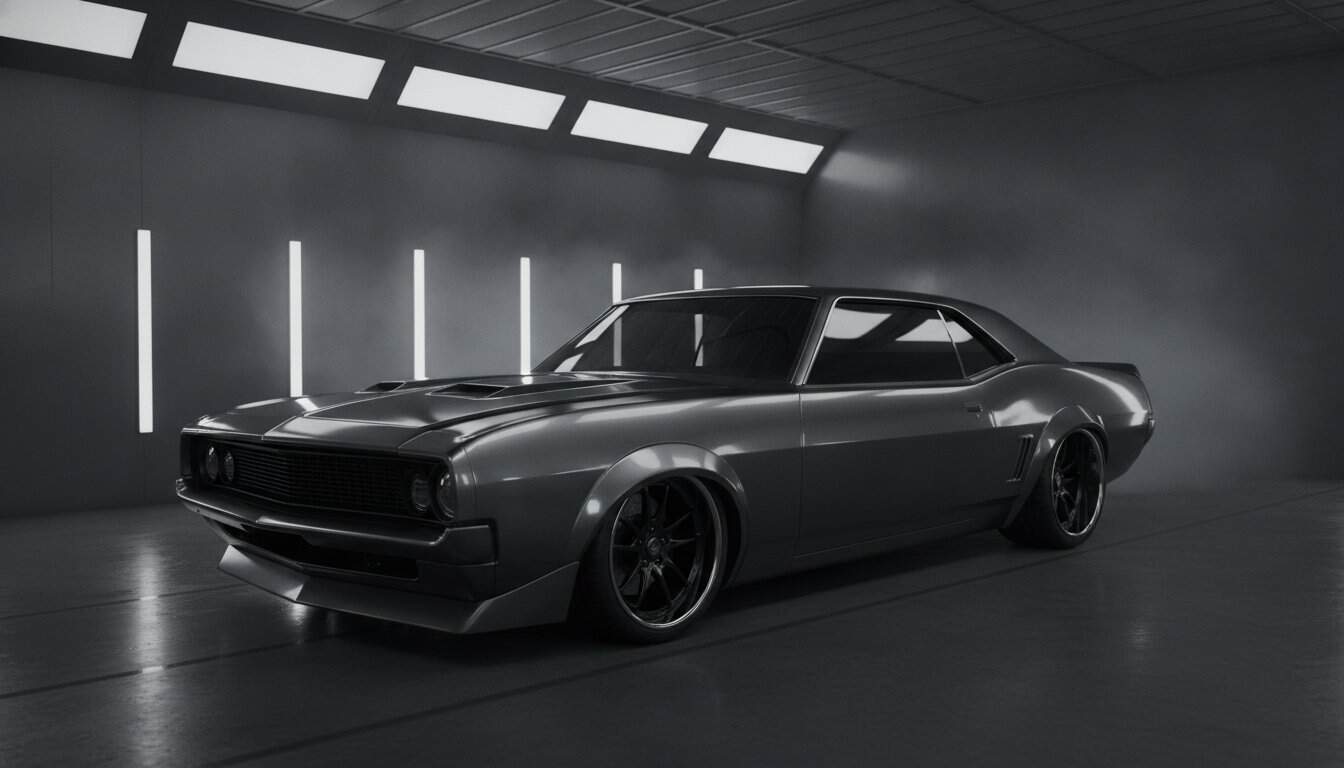
Your choice of hue sets an immediate emotional tone. A deep, non-metallic solid gray suggests a utilitarian, high-performance industrial vibe. Conversely, a multi-stage pearl or candy finish leans into elegance and craftsmanship. If you want a sleeper that hides its power until the light hits the metallic flake, that decision starts here. Understanding automotive paint basics is essential before you commit to a specific chemical system. It helps to understand what is a restomod at its core, as the paint should reflect that fundamental philosophy of modern reliability meeting classic style.
To better understand the foundational work required before the color hits the metal, watch this helpful video:
Balancing Heritage and Innovation
Respecting the lines of a classic body while utilizing 2026 coating technology requires a deliberate approach. You aren’t just looking for a color that looks good; you’re looking for a finish that highlights modern upgrades. High-contrast schemes, such as a dark charcoal body against brushed aluminum wheels and bright six-piston brake calipers, create a clear visual hierarchy. Don’t fall into the trap of choosing a safe beige or muted factory shade just to avoid risk. If your mechanical work is bold, your restomod paint ideas should be equally confident to validate that labor. Modern waterborne systems allow for a level of depth and clarity that simply didn’t exist when these cars first rolled off the line.
The Resale Reality: Custom vs. Classic
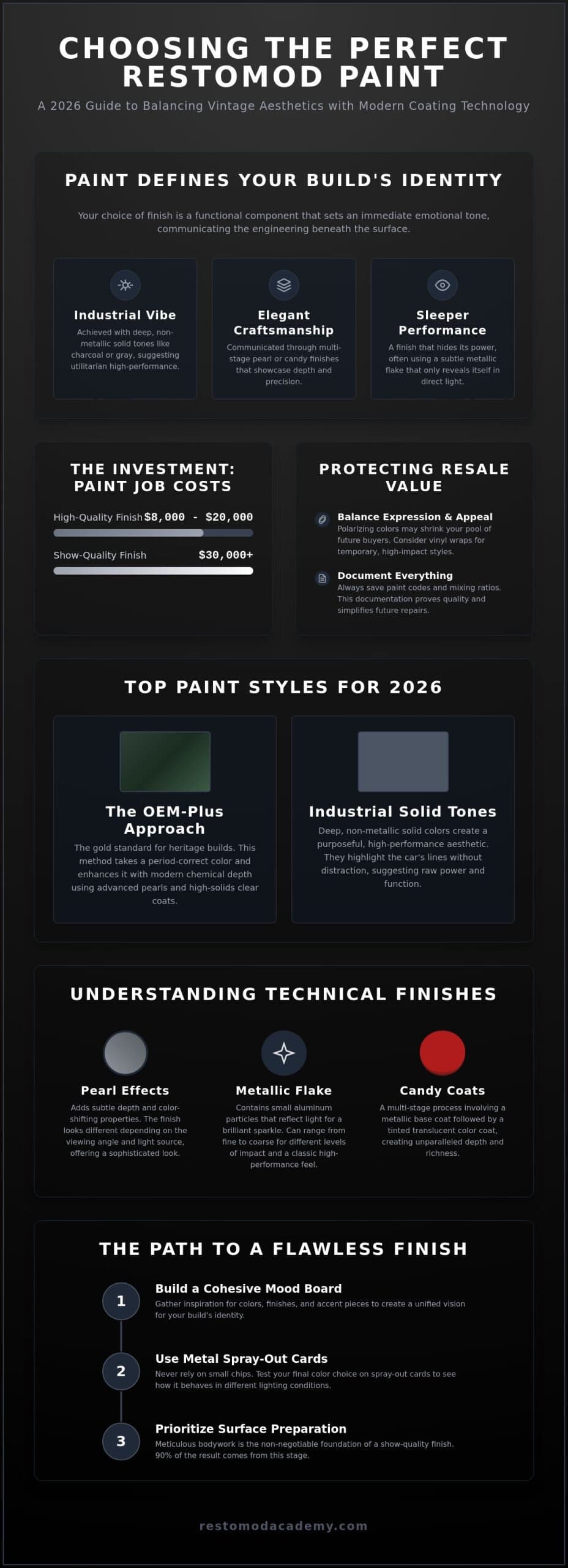
The financial side of restomodding is impossible to ignore. A high-quality paint job in 2026 typically ranges from $8,000 to $20,000, and a show-quality finish can easily exceed $30,000. Because of this investment, you must weigh personal expression against market appeal. If you choose a polarizing, high-impact neon, you might shrink your pool of future buyers. For builders who want to experiment without the permanent commitment, high-quality vinyl wraps and graphics from Signarama offer a temporary bridge. Regardless of your choice, always document your paint codes and mixing ratios. This ensures that a minor stone chip doesn’t turn into a full-car respray because the color couldn’t be matched. Professional documentation acts as a guarantee of quality for the next owner, proving the build was executed with precision.
Modern Classics: Popular Paint Styles for 2026 Restomods
Selecting a style for your project requires a vision that extends beyond the current year. In 2026, we see a clear divide between builders who want to hide their modifications and those who want to celebrate them. Your restomod paint ideas should reflect where your car sits on that spectrum. Whether you prefer the understated class of a factory evolution or the aggressive punch of a high-impact solid, the goal is to make the finish look intentional rather than accidental. A well chosen style validates the hundreds of hours you have spent on mechanical assembly.
The OEM-Plus Approach: Enhanced Factory Hues
The OEM-Plus strategy is currently the gold standard for builders who value heritage. This method involves taking a period-correct color code and injecting it with modern chemical depth. For instance, consider a vintage Ford Highland Green. By using a modern waterborne base with an advanced pearl and a high-solids clear coat, you create a finish that looks factory in the shade but reveals incredible complexity in direct sunlight. It’s a safe bet for long-term satisfaction because it never feels dated, yet it clearly outshines any original single-stage paint from the 1960s.
Stealth and Speed: The Rise of Nardo and Destroyer Grays
On the other end of the design world, industrial tones like Nardo and Destroyer Gray continue to dominate the pro-touring scene. These non-metallic solids create a primer aesthetic that signals a car built for purposeful performance. When you pair these grays with blacked-out trim and satin finishes, you modernize the silhouette instantly. Be aware that while these restomod paint ideas look incredible, satin and matte finishes require a different level of care. You can’t simply buff out a scratch; you must maintain the surface with specialized cleaners to avoid creating unwanted shiny spots on the flat finish.
We are also seeing a resurgence of high-impact 70s vibrance, such as deep oranges and purples, but with a 2026 twist. These colors are now often protected by permanent ceramic coatings that provide a liquid glass look and superior UV protection. To further modernize a classic body, many builders are utilizing two-tone executions. A contrasting roof or hood accent can break up a large surface area and make a car look lower and wider than it actually is. If you are feeling stuck between these styles, reviewing The Ultimate Restomod Guide can provide the clarity needed to finalize your design roadmap.
- OEM-Plus: Best for maintaining classic lines with a modern ‘pop’.
- Industrial Solids: Ideal for aggressive, track-focused builds.
- High-Impact Colors: Perfect for show cars that need to grab attention.
- Two-Tone Accents: A strategic way to modernize the vehicle’s proportions.
Technical Finishes: Candy, Flake, and Pearl Effects
When you move beyond the standard color palette, you enter the territory of technical finishes. These are the applications that transform a car from a clean build into a genuine showstopper. If you are researching restomod paint ideas that offer maximum visual impact, you must understand the multi-stage chemistry involved. Candy paints, for example, aren’t just a single layer. They require a metallic base coat, often silver or gold, followed by a translucent mid-coat. The result is a finish with a liquid-glass appearance that appears to change depth depending on your viewing angle.
Pearls offer a more sophisticated, subtle shift. They don’t scream for attention like a heavy metal flake, but they provide a soft flip in the color as the car moves through sunlight. For those chasing a 1970s heritage aesthetic, heavy metal flake is making a significant comeback on roofs and accent panels. However, don’t underestimate the labor involved; these larger flakes require multiple rounds of clear coat and intensive block sanding to achieve a smooth surface. If you want the absolute pinnacle of modern aesthetics, tri-coat systems are the 2026 gold standard. These systems add a third layer of specialized pigment between the base and the clear, creating a level of brilliance that a standard two-stage job simply cannot match.
Depth and Dimension: The Power of Multi-Stage Pearls
Base coats and mid-coats must be perfectly compatible to ensure the finish doesn’t delaminate over time. The interaction between these layers creates visual movement, where the car seems to change shape as you walk around it. Choosing a pearl that complements your car’s specific body lines is critical; sharper creases on a 1960s muscle car benefit from pearls that highlight transitions. In 2026, the cost of these specialized pigments has increased as manufacturers shift toward more sustainable, low-VOC formulations. You should expect to spend a larger portion of your material budget on these mid-coat pigments to achieve a professional result.
Satin and Matte: The High-Maintenance Choice
Stop believing the myth that matte or satin finishes are easier to maintain than gloss. Because you cannot buff or polish these surfaces without ruining the effect, every wash must be meticulous. Achieving a consistent satin finish across a large body panel requires a master hand with the spray gun and perfect environment control. A professional-grade satin finish should maintain a consistent 20 to 30 percent sheen level to provide a soft, velvet-like glow without reflecting direct light. This specific sheen highlights the raw architecture of the vehicle while signaling a modern, purposeful build philosophy.
Practical Planning: From Color Chips to the Spray Booth
Planning a finish requires the same methodical mindset you applied to your suspension geometry. You can’t rush the transition from raw metal to final clear coat without a cohesive strategy. Start by creating a comprehensive mood board. This should include your primary exterior hue, your leather or fabric samples for the interior, and even the powder coat color of your engine components. Coordinating these elements early prevents a visual clash that could undermine the hundreds of hours you’ve spent on mechanical assembly.
Once you have narrowed down your restomod paint ideas, order metal spray-out cards rather than relying on paper chips. Paper doesn’t reflect light the way steel or aluminum does. It also lacks the physical weight to show how a metallic or pearl finish will lay down. Before you pull the trigger on a full respray, ensure your metal is ready by following the prep steps in our Classic Car Bodywork Guide. A professional build is built on the foundation of perfect metalwork.
Testing Colors in Real-World Lighting
A two-inch paint chip is a poor representation of how a sixteen-foot muscle car will look in the wild. You need to see a larger sample on a curved surface to understand how the color shifts around a fender flare or a body line. Take your spray-out cards outside. Evaluate them in the harsh glare of high noon, the soft light of dusk, and under the fluorescent tubes of your shop. This exercise reveals the true character of the pigment and prevents surprises after the car leaves the booth. Always document the exact mix ratio and the brand of paint used. This record is your insurance policy for future repairs or modifications.
Coordinating Paint with Interior and Trim
Your paint choice doesn’t exist in a vacuum. It must coexist with your trim and upholstery. Follow the Rule of Three by limiting your palette to three primary elements: the body color, the trim finish, and the interior tone. This constraint creates a cohesive, professional look that signals quality. If you’re struggling to find the right balance, check out our Restomod Interior Ideas for expert color matching tips. Much like how ReModern Living guides homeowners in selecting furniture that balances modern aesthetics with functional support, your car’s interior should reflect a deliberate design philosophy. For a truly seamless transformation, commit to an engine-out respray. Painting the engine bay to match the body is the hallmark of a top-tier build and significantly impacts the vehicle’s valuation.
To ensure your project stays on track through every phase of the build, download The Ultimate Restomod Guide for a complete project roadmap.
Executing the Perfect Finish with Restomod Academy
The transition from conceptualizing restomod paint ideas to pulling the trigger in the spray booth is where many projects stall. Precision in the workshop means nothing if the surface preparation is rushed. You must treat the bodywork as the foundation of your build. Every pinhole in the filler and every ripple in the primer will be magnified once the final clear coat is polished to a mirror finish. If you feel overwhelmed by the technical application, this is the moment to consult with experts who understand the nuances of modern low-VOC systems.
Finding the right paint partner is just as critical as choosing the color. Look for a shop that specializes in custom work rather than high-volume collision repair. They need to understand that your project isn’t a standard insurance job; it’s a long-term investment. Using The Ultimate Restomod Guide allows you to manage this entire timeline effectively, ensuring that your paint schedule aligns with your final assembly milestones. This methodical approach prevents the heartbreak of scratching a fresh finish while trying to shoehorn an engine into a newly painted bay.
Beyond the Paint: Protection Strategies
In 2026, leaving a custom finish unprotected is a gamble you shouldn’t take. Paint Protection Film (PPF) has become a mandatory investment for high-end builds, offering a literal shield against road debris and rock chips. When you combine PPF on high-impact areas with a full ceramic coating, you lock in that deep, liquid-glass gloss for years. Most modern refinish systems require a minimum outgassing period of 60 to 90 days before you can safely apply a permanent protection film or ceramic layer. This patience ensures the solvents have fully evaporated, preventing bubbles or adhesion failure in your protective top layer.
Your Roadmap to a Professional-Grade Build
Execution is the bridge between a dream and a finished machine. Our Premium Project Blueprints take the guesswork out of complex restorations, providing you with the technical clarity needed to execute a professional-level modification. If you are struggling with the final color and trim decisions, our Restomod Consulting Services offer a direct line to seasoned mentors who have walked this path before. We focus on the intersection of heritage aesthetics and modern reliability to ensure your car stands the test of time.
Don’t let your project become another unfinished story in a dusty garage. Take control of your build’s destiny and validate your hard labor with a finish that commands respect. Join our community of active creators and download The Ultimate Restomod Guide to start your journey toward a show-quality finish today.
Seal Your Legacy in Steel and Color
Choosing your finish is the final, defining act of a long-term technical project. It’s the moment where your mechanical labor meets your creative vision. You’ve learned that the best restomod paint ideas succeed because they respect the classic architecture while utilizing the depth and durability of 2026 coating technology. By moving beyond paper chips to physical spray-out cards and planning for long-term protection with ceramic layers, you ensure your project remains a benchmark of quality for years to come.
Every decision you make should be grounded in precision and authenticity. Whether you are aiming for a stealthy industrial look or a high-impact tri-coat pearl, the roadmap to success is built on methodical preparation. Under the expert guidance of Brook Walsh, we help you bridge the gap between vintage aesthetics and modern performance reliability. It’s about taking the guesswork out of your restoration by utilizing our Premium Project Blueprints and authoritative advice. Master your build with The Ultimate Restomod Guide and transition from a passive admirer to an active creator. Step into the booth with confidence; your machine is ready for its final transformation.
Frequently Asked Questions
What is the most popular restomod paint color in 2026?
Deep metallic emerald greens and graphite grays are the standout choices for 2026. These hues provide a sophisticated bridge between the vehicle’s vintage heritage and its modern performance capabilities. You’ll often see these paired with pearl infused top coats to create a liquid glass effect in the sun. This trend moves away from the neon palettes of the past toward more relaxed, earth inspired tones that feel grounded yet high end.
Should I paint my restomod the original factory color for better resale?
Resale value in the restomod world depends more on the quality of execution than on period correct color codes. While a purist restoration demands factory colors, a restomod thrives on unique restomod paint ideas that signal modern engineering. A high quality, contemporary finish often attracts a larger pool of modern enthusiasts. Focus on choosing a color that highlights the car’s aggressive stance and upgraded wheels to maximize market appeal.
What is the difference between a single-stage and a two-stage paint job?
Single stage paint combines the pigment and the gloss agent into one single application. This was the factory standard for most classics, but it lacks the depth and UV protection of modern systems. A two stage job uses a dedicated base coat for color followed by a separate clear coat for protection and shine. Two stage systems are the preferred choice for restomods because they allow for easier buffing and long term maintenance.
Can I use modern car paint colors on a vintage classic car?
You absolutely can, and it is a highly recommended way to modernize a classic silhouette. Applying a 2026 color palette to a 1960s body creates a striking visual contrast that tells the viewer the car is more than a standard restoration. Many builders pull colors from modern supercar catalogs to give their vintage steel a high performance edge. Just ensure the color works with the car’s original body lines before you commit to the spray booth.
How much does a professional restomod paint job cost?
Expect to invest between $8,000 and $20,000 for a professional, driver quality respray in 2026. If you are chasing a concours level or show quality finish, those costs can quickly climb between $25,000 and $50,000 depending on the complexity of the bodywork. These figures cover the extensive hours of block sanding and multi stage application required for a flawless result. Don’t cut corners on the budget here; the paint is the first thing people see.
Is it better to wrap or paint a restomod project?
Paint remains the superior choice for a high end build because it offers a depth and permanence that vinyl simply cannot replicate. While a wrap is a useful tool for testing temporary restomod paint ideas, it won’t hide poor bodywork or offer the same resale value as a professional spray job. If you’ve spent years on a mechanical rebuild, don’t settle for a plastic film. Invest in a real finish that protects the metal and validates your labor.
How do I choose a paint color that matches my modern interior?
Start by ordering actual leather and fabric swatches before you finalize your exterior paint mix. You should evaluate these materials against your metal spray out cards under different lighting conditions to ensure they don’t clash. Follow the Rule of Three by limiting your palette to three primary visual elements across the entire car. This creates a cohesive, professional look that makes the transition from the exterior to the cabin feel intentional and seamless.
What is ‘Nardo Gray’ and why is it so popular for restomods?
Nardo Gray is a non metallic solid gray that has become synonymous with the pro touring and industrial build aesthetic. It’s popular because it creates a purposeful, primer like appearance that looks incredibly modern when paired with blacked out trim. This stealthy finish emphasizes the raw architecture of the classic body without the distraction of heavy metallic flake. It’s a bold choice that tells the world your car was built for the track, not just the showroom floor.
What if the color you choose today is the single factor that determines whether your project becomes a timeless classic or a dated relic by next season? It’s a heavy thought, especially when you’ve poured your soul into every bolt and weld. Most builders find themselves overwhelmed by restomod paint ideas because the stakes are high and the options are nearly infinite. You want a finish that honors the heritage of the sheet metal while clearly signaling the modern performance engineering hidden beneath the hood.
It’s natural to feel a bit of hesitation when transitioning from the mechanical grit of the workshop to the precision of the paint booth. You aren’t just picking a color; you’re defining the identity of your machine. This guide delivers a clear framework to help you balance vintage aesthetics with the cutting-edge coating technologies of 2026. We will break down the distinction between OEM-plus and full custom finishes, explain how to handle the shift toward low-VOC waterborne systems, and give you the tools to execute a professional-grade finish that protects your resale value.
Key Takeaways
- Learn how to select a finish that communicates your build’s specific personality, whether you’re aiming for an aggressive track stance or a sophisticated sleeper look.
- Explore the most influential restomod paint ideas for 2026, including the rise of OEM-plus strategies and the enduring popularity of industrial solid tones.
- Master the technical differences between multi-stage candy coats and subtle pearl effects to ensure your project captures light with maximum depth and precision.
- Discover the essential pre-booth planning steps, from building a cohesive mood board to using metal spray-out cards for accurate color verification.
- Understand why meticulous surface preparation is the foundation of a show-quality finish and how to align your paint schedule with the milestones in The Ultimate Restomod Guide.
The Psychology of Restomod Paint: Why Your Choice Defines the Build
In a traditional restoration, paint is a tribute to the assembly line. In the world of restomods, however, your finish serves as the final exam of the entire build. It’s the visual handshake that tells the world your vintage machine has been re-engineered for the modern era. When exploring restomod paint ideas, you must view the color as a functional component, much like your suspension or fuel injection. It’s the primary indicator that something significant has changed beneath the surface. You are building a bridge between 1969 and 2026.
Your choice of hue sets an immediate emotional tone. A deep, non-metallic solid gray suggests a utilitarian, high-performance industrial vibe. Conversely, a multi-stage pearl or candy finish leans into elegance and craftsmanship. If you want a sleeper that hides its power until the light hits the metallic flake, that decision starts here. Understanding automotive paint basics is essential before you commit to a specific chemical system. It helps to understand what is a restomod at its core, as the paint should reflect that fundamental philosophy of modern reliability meeting classic style.
To better understand the foundational work required before the color hits the metal, watch this helpful video:
Balancing Heritage and Innovation
Respecting the lines of a classic body while utilizing 2026 coating technology requires a deliberate approach. You aren’t just looking for a color that looks good; you’re looking for a finish that highlights modern upgrades. High-contrast schemes, such as a dark charcoal body against brushed aluminum wheels and bright six-piston brake calipers, create a clear visual hierarchy. Don’t fall into the trap of choosing a safe beige or muted factory shade just to avoid risk. If your mechanical work is bold, your restomod paint ideas should be equally confident to validate that labor. Modern waterborne systems allow for a level of depth and clarity that simply didn’t exist when these cars first rolled off the line.
The Resale Reality: Custom vs. Classic
The financial side of restomodding is impossible to ignore. A high-quality paint job in 2026 typically ranges from $8,000 to $20,000, and a show-quality finish can easily exceed $30,000. Because of this investment, you must weigh personal expression against market appeal. If you choose a polarizing, high-impact neon, you might shrink your pool of future buyers. For builders who want to experiment without the permanent commitment, high-quality vinyl wraps and graphics from Signarama offer a temporary bridge. Regardless of your choice, always document your paint codes and mixing ratios. This ensures that a minor stone chip doesn’t turn into a full-car respray because the color couldn’t be matched. Professional documentation acts as a guarantee of quality for the next owner, proving the build was executed with precision.
Modern Classics: Popular Paint Styles for 2026 Restomods
Selecting a style for your project requires a vision that extends beyond the current year. In 2026, we see a clear divide between builders who want to hide their modifications and those who want to celebrate them. Your restomod paint ideas should reflect where your car sits on that spectrum. Whether you prefer the understated class of a factory evolution or the aggressive punch of a high-impact solid, the goal is to make the finish look intentional rather than accidental. A well chosen style validates the hundreds of hours you have spent on mechanical assembly.
The OEM-Plus Approach: Enhanced Factory Hues
The OEM-Plus strategy is currently the gold standard for builders who value heritage. This method involves taking a period-correct color code and injecting it with modern chemical depth. For instance, consider a vintage Ford Highland Green. By using a modern waterborne base with an advanced pearl and a high-solids clear coat, you create a finish that looks factory in the shade but reveals incredible complexity in direct sunlight. It’s a safe bet for long-term satisfaction because it never feels dated, yet it clearly outshines any original single-stage paint from the 1960s.
Stealth and Speed: The Rise of Nardo and Destroyer Grays
On the other end of the design world, industrial tones like Nardo and Destroyer Gray continue to dominate the pro-touring scene. These non-metallic solids create a primer aesthetic that signals a car built for purposeful performance. When you pair these grays with blacked-out trim and satin finishes, you modernize the silhouette instantly. Be aware that while these restomod paint ideas look incredible, satin and matte finishes require a different level of care. You can’t simply buff out a scratch; you must maintain the surface with specialized cleaners to avoid creating unwanted shiny spots on the flat finish.
We are also seeing a resurgence of high-impact 70s vibrance, such as deep oranges and purples, but with a 2026 twist. These colors are now often protected by permanent ceramic coatings that provide a liquid glass look and superior UV protection. To further modernize a classic body, many builders are utilizing two-tone executions. A contrasting roof or hood accent can break up a large surface area and make a car look lower and wider than it actually is. If you are feeling stuck between these styles, reviewing The Ultimate Restomod Guide can provide the clarity needed to finalize your design roadmap.
- OEM-Plus: Best for maintaining classic lines with a modern ‘pop’.
- Industrial Solids: Ideal for aggressive, track-focused builds.
- High-Impact Colors: Perfect for show cars that need to grab attention.
- Two-Tone Accents: A strategic way to modernize the vehicle’s proportions.
Technical Finishes: Candy, Flake, and Pearl Effects
When you move beyond the standard color palette, you enter the territory of technical finishes. These are the applications that transform a car from a clean build into a genuine showstopper. If you are researching restomod paint ideas that offer maximum visual impact, you must understand the multi-stage chemistry involved. Candy paints, for example, aren’t just a single layer. They require a metallic base coat, often silver or gold, followed by a translucent mid-coat. The result is a finish with a liquid-glass appearance that appears to change depth depending on your viewing angle.
Pearls offer a more sophisticated, subtle shift. They don’t scream for attention like a heavy metal flake, but they provide a soft flip in the color as the car moves through sunlight. For those chasing a 1970s heritage aesthetic, heavy metal flake is making a significant comeback on roofs and accent panels. However, don’t underestimate the labor involved; these larger flakes require multiple rounds of clear coat and intensive block sanding to achieve a smooth surface. If you want the absolute pinnacle of modern aesthetics, tri-coat systems are the 2026 gold standard. These systems add a third layer of specialized pigment between the base and the clear, creating a level of brilliance that a standard two-stage job simply cannot match.
Depth and Dimension: The Power of Multi-Stage Pearls
Base coats and mid-coats must be perfectly compatible to ensure the finish doesn’t delaminate over time. The interaction between these layers creates visual movement, where the car seems to change shape as you walk around it. Choosing a pearl that complements your car’s specific body lines is critical; sharper creases on a 1960s muscle car benefit from pearls that highlight transitions. In 2026, the cost of these specialized pigments has increased as manufacturers shift toward more sustainable, low-VOC formulations. You should expect to spend a larger portion of your material budget on these mid-coat pigments to achieve a professional result.
Satin and Matte: The High-Maintenance Choice
Stop believing the myth that matte or satin finishes are easier to maintain than gloss. Because you cannot buff or polish these surfaces without ruining the effect, every wash must be meticulous. Achieving a consistent satin finish across a large body panel requires a master hand with the spray gun and perfect environment control. A professional-grade satin finish should maintain a consistent 20 to 30 percent sheen level to provide a soft, velvet-like glow without reflecting direct light. This specific sheen highlights the raw architecture of the vehicle while signaling a modern, purposeful build philosophy.
Practical Planning: From Color Chips to the Spray Booth
Planning a finish requires the same methodical mindset you applied to your suspension geometry. You can’t rush the transition from raw metal to final clear coat without a cohesive strategy. Start by creating a comprehensive mood board. This should include your primary exterior hue, your leather or fabric samples for the interior, and even the powder coat color of your engine components. Coordinating these elements early prevents a visual clash that could undermine the hundreds of hours you’ve spent on mechanical assembly.
Once you have narrowed down your restomod paint ideas, order metal spray-out cards rather than relying on paper chips. Paper doesn’t reflect light the way steel or aluminum does. It also lacks the physical weight to show how a metallic or pearl finish will lay down. Before you pull the trigger on a full respray, ensure your metal is ready by following the prep steps in our Classic Car Bodywork Guide. A professional build is built on the foundation of perfect metalwork.
Testing Colors in Real-World Lighting
A two-inch paint chip is a poor representation of how a sixteen-foot muscle car will look in the wild. You need to see a larger sample on a curved surface to understand how the color shifts around a fender flare or a body line. Take your spray-out cards outside. Evaluate them in the harsh glare of high noon, the soft light of dusk, and under the fluorescent tubes of your shop. This exercise reveals the true character of the pigment and prevents surprises after the car leaves the booth. Always document the exact mix ratio and the brand of paint used. This record is your insurance policy for future repairs or modifications.
Coordinating Paint with Interior and Trim
Your paint choice doesn’t exist in a vacuum. It must coexist with your trim and upholstery. Follow the Rule of Three by limiting your palette to three primary elements: the body color, the trim finish, and the interior tone. This constraint creates a cohesive, professional look that signals quality. If you’re struggling to find the right balance, check out our Restomod Interior Ideas for expert color matching tips. Much like how ReModern Living guides homeowners in selecting furniture that balances modern aesthetics with functional support, your car’s interior should reflect a deliberate design philosophy. For a truly seamless transformation, commit to an engine-out respray. Painting the engine bay to match the body is the hallmark of a top-tier build and significantly impacts the vehicle’s valuation.
To ensure your project stays on track through every phase of the build, download The Ultimate Restomod Guide for a complete project roadmap.
Executing the Perfect Finish with Restomod Academy
The transition from conceptualizing restomod paint ideas to pulling the trigger in the spray booth is where many projects stall. Precision in the workshop means nothing if the surface preparation is rushed. You must treat the bodywork as the foundation of your build. Every pinhole in the filler and every ripple in the primer will be magnified once the final clear coat is polished to a mirror finish. If you feel overwhelmed by the technical application, this is the moment to consult with experts who understand the nuances of modern low-VOC systems.
Finding the right paint partner is just as critical as choosing the color. Look for a shop that specializes in custom work rather than high-volume collision repair. They need to understand that your project isn’t a standard insurance job; it’s a long-term investment. Using The Ultimate Restomod Guide allows you to manage this entire timeline effectively, ensuring that your paint schedule aligns with your final assembly milestones. This methodical approach prevents the heartbreak of scratching a fresh finish while trying to shoehorn an engine into a newly painted bay.
Beyond the Paint: Protection Strategies
In 2026, leaving a custom finish unprotected is a gamble you shouldn’t take. Paint Protection Film (PPF) has become a mandatory investment for high-end builds, offering a literal shield against road debris and rock chips. When you combine PPF on high-impact areas with a full ceramic coating, you lock in that deep, liquid-glass gloss for years. Most modern refinish systems require a minimum outgassing period of 60 to 90 days before you can safely apply a permanent protection film or ceramic layer. This patience ensures the solvents have fully evaporated, preventing bubbles or adhesion failure in your protective top layer.
Your Roadmap to a Professional-Grade Build
Execution is the bridge between a dream and a finished machine. Our Premium Project Blueprints take the guesswork out of complex restorations, providing you with the technical clarity needed to execute a professional-level modification. If you are struggling with the final color and trim decisions, our Restomod Consulting Services offer a direct line to seasoned mentors who have walked this path before. We focus on the intersection of heritage aesthetics and modern reliability to ensure your car stands the test of time.
Don’t let your project become another unfinished story in a dusty garage. Take control of your build’s destiny and validate your hard labor with a finish that commands respect. Join our community of active creators and download The Ultimate Restomod Guide to start your journey toward a show-quality finish today.
Seal Your Legacy in Steel and Color
Choosing your finish is the final, defining act of a long-term technical project. It’s the moment where your mechanical labor meets your creative vision. You’ve learned that the best restomod paint ideas succeed because they respect the classic architecture while utilizing the depth and durability of 2026 coating technology. By moving beyond paper chips to physical spray-out cards and planning for long-term protection with ceramic layers, you ensure your project remains a benchmark of quality for years to come.
Every decision you make should be grounded in precision and authenticity. Whether you are aiming for a stealthy industrial look or a high-impact tri-coat pearl, the roadmap to success is built on methodical preparation. Under the expert guidance of Brook Walsh, we help you bridge the gap between vintage aesthetics and modern performance reliability. It’s about taking the guesswork out of your restoration by utilizing our Premium Project Blueprints and authoritative advice. Master your build with The Ultimate Restomod Guide and transition from a passive admirer to an active creator. Step into the booth with confidence; your machine is ready for its final transformation.
Frequently Asked Questions
What is the most popular restomod paint color in 2026?
Deep metallic emerald greens and graphite grays are the standout choices for 2026. These hues provide a sophisticated bridge between the vehicle’s vintage heritage and its modern performance capabilities. You’ll often see these paired with pearl infused top coats to create a liquid glass effect in the sun. This trend moves away from the neon palettes of the past toward more relaxed, earth inspired tones that feel grounded yet high end.
Should I paint my restomod the original factory color for better resale?
Resale value in the restomod world depends more on the quality of execution than on period correct color codes. While a purist restoration demands factory colors, a restomod thrives on unique restomod paint ideas that signal modern engineering. A high quality, contemporary finish often attracts a larger pool of modern enthusiasts. Focus on choosing a color that highlights the car’s aggressive stance and upgraded wheels to maximize market appeal.
What is the difference between a single-stage and a two-stage paint job?
Single stage paint combines the pigment and the gloss agent into one single application. This was the factory standard for most classics, but it lacks the depth and UV protection of modern systems. A two stage job uses a dedicated base coat for color followed by a separate clear coat for protection and shine. Two stage systems are the preferred choice for restomods because they allow for easier buffing and long term maintenance.
Can I use modern car paint colors on a vintage classic car?
You absolutely can, and it is a highly recommended way to modernize a classic silhouette. Applying a 2026 color palette to a 1960s body creates a striking visual contrast that tells the viewer the car is more than a standard restoration. Many builders pull colors from modern supercar catalogs to give their vintage steel a high performance edge. Just ensure the color works with the car’s original body lines before you commit to the spray booth.
How much does a professional restomod paint job cost?
Expect to invest between $8,000 and $20,000 for a professional, driver quality respray in 2026. If you are chasing a concours level or show quality finish, those costs can quickly climb between $25,000 and $50,000 depending on the complexity of the bodywork. These figures cover the extensive hours of block sanding and multi stage application required for a flawless result. Don’t cut corners on the budget here; the paint is the first thing people see.
Is it better to wrap or paint a restomod project?
Paint remains the superior choice for a high end build because it offers a depth and permanence that vinyl simply cannot replicate. While a wrap is a useful tool for testing temporary restomod paint ideas, it won’t hide poor bodywork or offer the same resale value as a professional spray job. If you’ve spent years on a mechanical rebuild, don’t settle for a plastic film. Invest in a real finish that protects the metal and validates your labor.
How do I choose a paint color that matches my modern interior?
Start by ordering actual leather and fabric swatches before you finalize your exterior paint mix. You should evaluate these materials against your metal spray out cards under different lighting conditions to ensure they don’t clash. Follow the Rule of Three by limiting your palette to three primary visual elements across the entire car. This creates a cohesive, professional look that makes the transition from the exterior to the cabin feel intentional and seamless.
What is ‘Nardo Gray’ and why is it so popular for restomods?
Nardo Gray is a non metallic solid gray that has become synonymous with the pro touring and industrial build aesthetic. It’s popular because it creates a purposeful, primer like appearance that looks incredibly modern when paired with blacked out trim. This stealthy finish emphasizes the raw architecture of the classic body without the distraction of heavy metallic flake. It’s a bold choice that tells the world your car was built for the track, not just the showroom floor.