
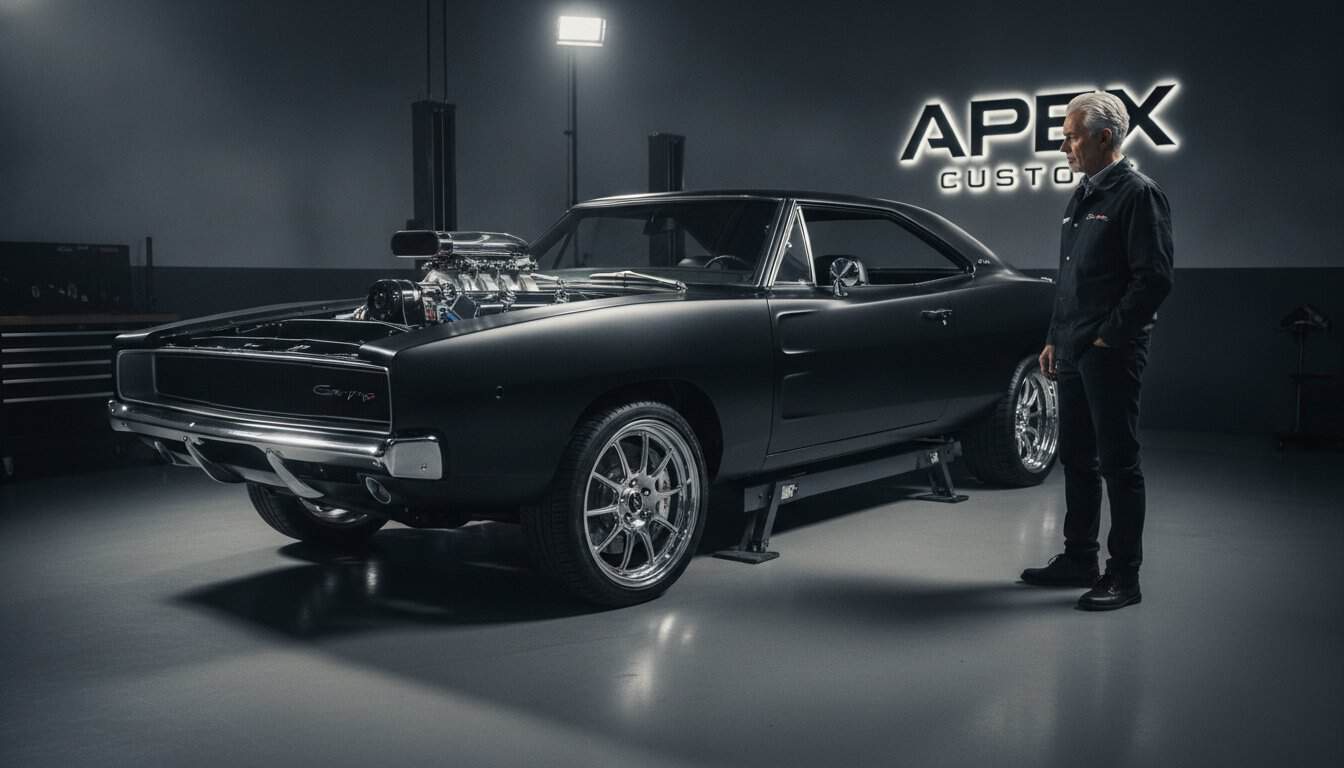
Your retirement shouldn’t be a slow fade into the background; it should be the era where you finally master the machine. Choosing a restomod project as a retirement hobby is the most effective way to sharpen your mind while building a tangible legacy that you can actually drive. You’ve likely spent decades admiring the timeless lines of a 1969 Camaro or a classic Ford Bronco, yet you might worry that the technical shift toward modern EFI systems and complex wiring is a bridge too far. It’s natural to feel a bit of hesitation when facing the costs of a $8,500 LS3 crate engine or the physical strain of long hours in the shop.
This guide will show you how to merge vintage soul with 2026 performance standards, ensuring your project becomes a reliable daily driver rather than a permanent garage fixture. You’ll learn to handle modern engine compatibility and strict EPA swap regulations with the precision of a seasoned builder. We will outline a structured path to mechanical mastery, covering everything from initial donor selection to the final turn of the key, so you can enjoy the camaraderie of the building community without the fear of project scope creep.
Key Takeaways
- Learn why choosing a restomod project as a retirement hobby provides a structured way to maintain physical dexterity and solve complex mechanical puzzles.
- Identify the most viable donor cars by prioritizing those with extensive aftermarket support to keep your build timeline realistic.
- Design a workshop environment that emphasizes ergonomic efficiency and specialized tools to protect your physical health during long assembly sessions.
- Bridge the gap between vintage aesthetics and modern reliability by integrating high-performance crate engines and advanced suspension geometry.
- Leverage a proven educational framework and consulting to bypass common planning errors and ensure your investment results in a precision machine.
Why Restomodding is the Perfect Retirement Hobby
Retirement offers the ultimate luxury: time. While others might settle into passive routines, you have the opportunity to engage in a pursuit that demands both intellectual rigor and physical precision. Choosing a restomod project as a retirement hobby provides the perfect outlet for your creative energy and mechanical curiosity. Pick up the wrench and challenge yourself to solve complex engineering puzzles that keep your neural pathways firing. You aren’t just changing oil. You’re re-engineering a piece of history to outperform its original design, ensuring your mind stays as sharp as the performance of your machine.
Cognitive Engagement and Lifelong Learning
Transitioning from a passive admirer at car shows to an active creator requires a shift in mindset. You’ll need to master the intersection of vintage aesthetics and modern technology. Understanding What is a Restomod? involves learning how to integrate modern electronic fuel injection (EFI) into a chassis designed in the 1960s. This isn’t just busy work. It’s an educational journey that forces you to learn modern wiring schematics and digital tuning. If you’re still defining the restomod philosophy for your specific build, start with the electronics.
Mastering these new skills provides a profound sense of accomplishment. Every time you successfully map an ECU or wire a digital dash, you’re proving that technical obsolescence is a choice, not a requirement. This constant learning keeps the mind elastic and focused on logical, achievable steps. It transforms the workshop into a classroom where the final exam is a reliable, modern-driving classic.
The Social Aspect of the Restomod Community
Join the conversation and don’t build in isolation. The restomod world is a vibrant ecosystem of builders who value shared knowledge. Online hubs like the Restomod Academy community provide a space to troubleshoot issues with peers who understand the specific hurdles of a retirement build. These digital connections often translate into real-world milestones, such as national shows or local meetups where your work is finally showcased. Building a restomod project as a retirement hobby connects you with a community that values authenticity over commercial acquisition.
Selecting Your Retirement Project: The Best Donor Cars
Choosing the right chassis is the most consequential decision you’ll make. It dictates your budget, your timeline, and your physical comfort in the garage. While some enthusiasts target rare exotics, a restomod project as a retirement hobby thrives on accessibility. You want a car that has a massive aftermarket following so you aren’t spending your golden years hunting through junkyards for a door handle. Research shows that staying active with hobbies as you age leads to better health outcomes, and nothing beats the thrill of a project that actually moves forward.
Evaluate the trade-off between the initial purchase price and the total restoration cost before you sign a title. In 2026, a donor car in rough condition might cost around $10,000, but a “deal” with structural rot can quickly double your bodywork expenses. Prioritize models with high modernization potential. This means the chassis should easily accept modern rack-and-pinion steering or a late-model crate engine without requiring extensive custom fabrication. Focus on vehicles that allow you to work smarter, not harder.
Top 5 Beginner-Friendly Retirement Projects
- 1964-1970 Ford Mustang: This is the gold standard for parts availability. You can practically build an entire car from a catalog, making it perfect for those who want to focus on assembly rather than hunting for obscure components.
- Chevrolet C10 Trucks: These offer incredibly spacious engine bays. This accessibility reduces the physical strain on your back and joints during the installation of an LS3 or modern wiring harness.
- 1970s F-Series Fords: These trucks provide rugged foundations. They are built like tanks and handle modern suspension upgrades with ease.
- The Chevrolet Nova: If you prefer a compact muscle car, the Nova offers massive potential in a smaller footprint. It shares many components with the Camaro, giving you a high-performance muscle car at a generally lower entry price.
- Vintage SUVs like the Ford Bronco: These are gaining massive popularity as restomod platforms. They offer a unique blend of classic style and modern off-road capability.
What to Look for in a Donor Vehicle
Focus on structural integrity above all else. Surface patina is a style choice, but structural rust in the frame or cowl is a project killer. Verify the title status and historical documentation immediately. A car without a clear paper trail is a legal headache you don’t need during your retirement. Before you pull the trigger, revisit our guide on what is a restomod to ensure the car you pick aligns with your vision for modern performance and reliability. If you feel uncertain about a specific vehicle’s potential, consider Restomod Academy consulting to avoid an expensive mechanical mistake during the planning phase.
Planning Your Build: Budget, Space, and Time
Building a restomod project as a retirement hobby is a marathon, not a sprint. You need a solid blueprint before you buy your first socket set. Scope creep happens when a simple engine swap turns into a full frame-off restoration without a documented plan. This often leads to restoration burnout, where the car sits under a tarp for years because the task became too daunting. Set a realistic schedule that allows for steady progress without exhausting your physical or financial reserves. A DIY build can easily reach $100,000 over several years, so pace your spending alongside your labor to ensure the project remains a joy rather than a burden.
Time management is just as critical as money management. Break your project into logical phases: teardown, chassis, drivetrain, and final assembly. This structure provides a sense of accomplishment at every milestone. If a task feels overwhelming, don’t hesitate to consult with experts. It’s better to invest in professional guidance than to waste months on a mechanical dead end. Remember that your goal is a finished, drivable machine, not a perpetual collection of parts on a shelf.
Budgeting for Modern Performance
Safety must lead your financial planning. While a new crate engine is an exciting purchase, it’s dangerous if your chassis can’t handle the increased torque. Allocate funds for modern disc brakes and performance suspension geometry before you chase high horsepower numbers. The “while I am in there” trap is a common budget killer. Removing the transmission often leads to replacing the clutch, then the flywheel, then the entire driveshaft. Use a restomod project planning roadmap to keep these costs in check and prevent your budget from spiraling out of control.
The Ergonomic Garage: Tools for the Mature Builder
Your workshop should be a place of precision and comfort. A retiree-friendly garage requires more than just a standard workbench. Invest in a car lift if your ceiling height allows it. This single tool transforms back-breaking undercarriage work into a comfortable assembly job by bringing the machine to your eye level. High-output LED lighting and climate control are essential for maintaining a steady pace regardless of the season. Review our list of recommended gear to find tools that prioritize ergonomic efficiency and reduce physical strain during long assembly sessions. Taking care of your body is just as important as taking care of the car.
Mastering the Technical Transition: From Vintage to Modern
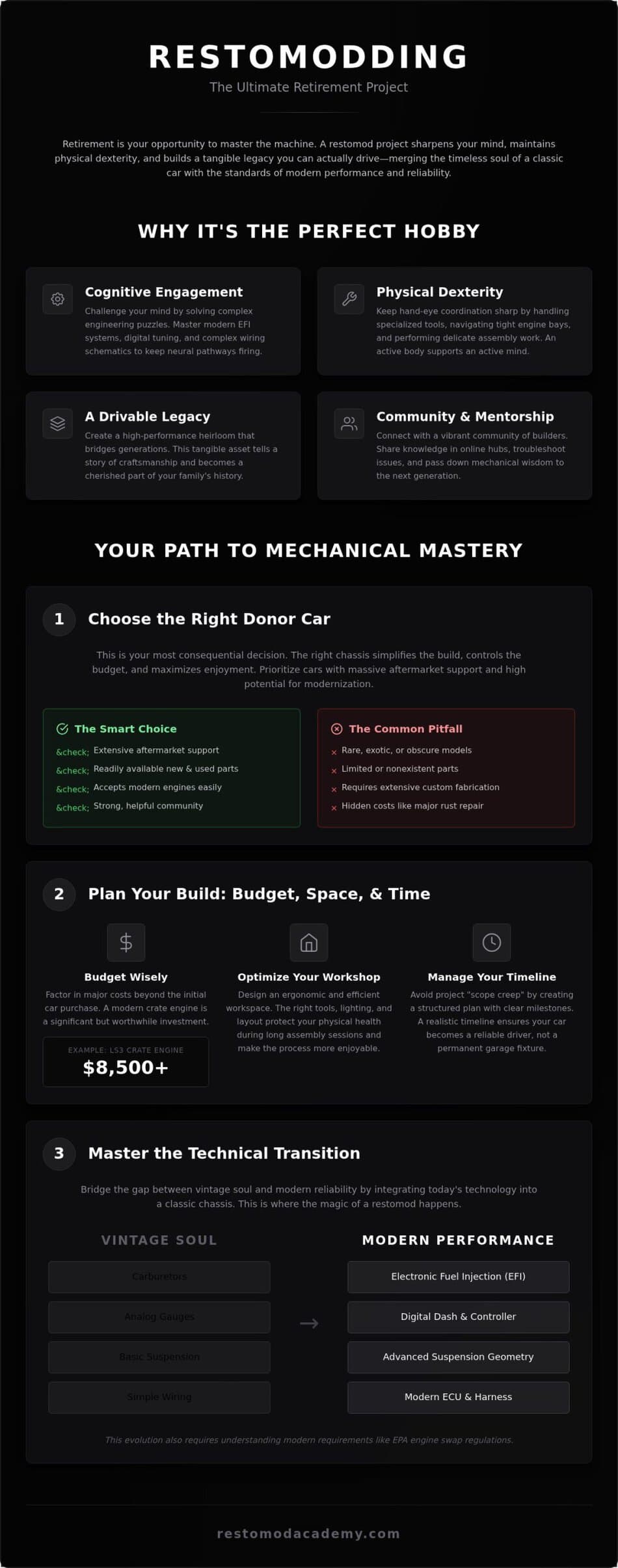
Transitioning a classic machine into a high-performance modern vehicle is where the technical artistry of your restomod project as a retirement hobby truly shines. You are moving beyond simple maintenance and entering the world of precision engineering. The goal is to replace temperamental, antiquated systems with components that offer 2026 levels of reliability and safety. This process starts with the realization that vintage aesthetics don’t have to mean vintage performance. You can have the iconic silhouette of a muscle car with the turn-key reliability of a modern daily driver.
Safety is the primary driver for these upgrades. Converting from manual drum brakes to a modern four-wheel power disc system is a non-negotiable requirement for any build pushing contemporary horsepower numbers. Likewise, replacing a steering box with a modern rack-and-pinion setup eliminates the “dead zone” in your steering wheel, giving you the confidence to navigate modern traffic. These changes don’t just make the car faster; they make it a viable vehicle for long-distance cruising and weekend adventures.
The LS Swap: The Retiree’s Best Friend
The Chevrolet LS3 crate engine is the undisputed champion of the restomod world for a reason. In 2026, a new 6.2L LS3 crate engine costs approximately $6,500 to $8,500, providing a compact and powerful 430-horsepower foundation. If you prefer a complete package, expect to invest around $10,620. This platform is favored because it fits into almost any engine bay and has an aftermarket support system that is second to none. While the computer integration and EFI wiring might seem intimidating, it’s a logical, step-by-step process that keeps your mind engaged. Master the harness by following the definitive guide to an ls engine swap to ensure your first start-up is a success.
Modern Comfort in a Classic Shell
A restomod should be as comfortable as it is powerful. Install a modern, integrated climate control system to replace the original heater box; this ensures you can enjoy your machine even in the peak of summer. Replace your old analog dials with digital gauges to get precision monitoring of your engine’s vitals, from oil pressure to coolant temperature. To truly elevate the driving experience, apply high-quality sound deadening material throughout the cabin. This reduces road noise and vibration, giving your classic car the refined interior feel of a modern luxury vehicle. If you want to ensure your technical plan is airtight before you buy parts, explore Restomod Academy consulting to get a professional review of your build sheet.
Taking the First Step with Restomod Academy
Don’t let your vision for a high-performance classic stall out in the planning phase. Embarking on a restomod project as a retirement hobby is a bold commitment to your own growth and legacy, but it shouldn’t be a solitary struggle. At Restomod Academy, we provide the educational framework needed to bridge the gap between vintage aesthetics and modern performance. Our approach focuses on removing the guesswork that often leads to abandoned projects and drained bank accounts. By following a structured path, you can maintain the pace of a methodical builder and enjoy the satisfaction of every achieved precision milestone.
Every mechanical hurdle has a logical solution, and we’ve documented those solutions through years of hands-on experience. We offer Premium Project Blueprints that serve as your specific technical map, ensuring that every component you buy is compatible with your chassis. If you feel stuck between two different suspension setups or can’t decide on the right EFI system, our Restomod Consulting Services provide the direct mentorship you need. This personalized advice is designed to help you avoid the expensive planning mistakes that often plague first-time builders. You’re investing in your retirement, so it makes sense to invest in a plan that guarantees a reliable result.
The Ultimate Restomod Guide
This isn’t just a collection of tips; it’s a comprehensive information product designed for the self-paced learner. The Ultimate Restomod Guide features digital modules that you can access directly in your garage, allowing you to move from theory to practice with total confidence. We cover the specific intersection of classic style and modern reliability, breaking down daunting tasks like wiring and fuel system plumbing into manageable steps. You’ll join a community of builders who value the labor of the workshop as much as the thrill of the first drive. This guide ensures that you spend your time turning wrenches rather than searching for answers.
Your Next Milestone
Commit to the build today by setting your first tangible project goal: the donor car search. Use the criteria we’ve discussed to find a chassis with a solid foundation and high modernization potential. Once you have a vehicle in sight, book a consultation to review your build sheet and finalize your technical roadmap. Your retirement should be an adventure defined by mastery and precision. Take the first step toward building your dream machine and let us guide you through the rewarding process of technical restoration. The road is open, and the workshop is waiting for you to begin.
Build Your Legacy One Bolt at a Time
Your retirement is the perfect season to transition from a passive admirer of classic iron to an active creator of high-performance machines. By choosing a restomod project as a retirement hobby, you are embracing a lifestyle of precision, continuous learning, and tangible accomplishment. You now have the essential roadmap to select a viable donor car, plan a sustainable budget, and master the technical transition to modern reliability. Every challenge in the workshop is an opportunity to sharpen your mind and preserve automotive history for the next generation.
Don’t let the fear of technical complexity or scope creep keep your dream car hidden under a garage tarp. You have access to expert mentorship from Brook Walsh and a vibrant DIY builder community that values the journey as much as the destination. Our comprehensive LS swap blueprints and structured educational modules ensure that every hour in the garage brings you closer to a reliable, modern-driving classic. Success is found in the methodical pace of the build.
Start your retirement build with The Ultimate Restomod Guide and transform your workshop into a center of mechanical mastery. The tools are ready and the community is waiting. It’s time to build the machine you’ve always wanted and enjoy the road ahead.
Frequently Asked Questions
Is a restomod project too physically demanding for a retiree?
Restomodding doesn’t have to be back-breaking labor if you prioritize ergonomics in your workshop. Investing in a four-post car lift or a rolling mechanic’s stool allows you to work at eye level, significantly reducing strain on your joints. By breaking the project into smaller, manageable tasks, you can maintain a steady pace without overexertion. Focus on assembly and precision work while outsourcing heavy lifting to local shops when necessary to protect your health.
How much should I realistically budget for a first-time restomod?
Budgeting for a restomod project as a retirement hobby requires a realistic look at 2026 market rates. A complete DIY build typically starts at $100,000, covering the donor car, modern drivetrain, and high-quality paint. Initial donor purchases range from $10,000 for rough examples to much higher for iconic muscle cars. Always set aside a 20 percent contingency fund for the inevitable upgrades that arise during the assembly phase of the project.
Do I need to be a professional mechanic to start a restomod project?
Professional mechanical certification isn’t a requirement, but a willingness to learn modern systems is essential. Most successful builders are enthusiasts who follow structured educational modules to bridge the gap between vintage systems and modern technology. By using detailed blueprints and consulting services, you can navigate complex tasks like EFI wiring or suspension geometry. The goal is to transition from a passive admirer to an active creator through patience and logical problem-solving.
Which classic car is the easiest for a beginner to restomod?
The 1964-1970 Ford Mustang and the Chevrolet C10 truck are the most accessible entry points for beginners. These vehicles enjoy massive aftermarket support, meaning every bracket, bolt, and wiring harness is available in modern catalogs. This availability removes the frustration of hunting for rare parts, allowing you to focus on the joy of the build. Their straightforward chassis designs make them ideal platforms for learning modern performance integration and assembly techniques.
How long does a typical restomod project take to complete?
A typical DIY restomod project usually spans two to three years of consistent effort in the garage. While professional shops might finish a build in 12 to 18 months, your timeline depends on your available workshop hours and the complexity of your modernization goals. Treat the journey as a rewarding long-term technical project rather than a race to the finish line. This deliberate pace ensures every mechanical hurdle is overcome with absolute precision and safety.
Can I really perform an engine swap in my own home garage?
Performing an engine swap at home is entirely feasible with a standard engine hoist and basic shop tools. The Chevrolet LS3 is a favorite for home builders because of its compact size and turn-key reliability. In 2026, a new LS3 crate engine package costs around $10,620 and fits into most engine bays with minimal fabrication. Following a definitive swap guide ensures that computer integration and fuel plumbing are handled correctly on your first attempt.
Will restomodding a car ruin its resale value?
Restomodding generally increases the market value of common classic cars by making them safer and more drivable. While a numbers-matching restoration is preferred for rare museum pieces, most buyers in 2026 actively seek vehicles with modern brakes, air conditioning, and fuel injection. A well-executed restomod project as a retirement hobby results in a tangible asset that combines vintage aesthetics with the performance standards today’s collectors demand. Buyers value reliability and modern driving characteristics.
Where can I find reliable parts for my specific restomod project?
Reliable components are found through established aftermarket vendors and specialized performance catalogs that focus on modernization. When selecting parts, prioritize vendors that offer detailed technical support and compatibility guarantees for your specific chassis. It is also crucial to ensure your modern engine choice complies with 2026 EPA regulations by retaining all necessary emissions equipment from the donor engine. Using a structured guide helps you identify the best performance parts while avoiding expensive mistakes.
Your retirement shouldn’t be a slow fade into the background; it should be the era where you finally master the machine. Choosing a restomod project as a retirement hobby is the most effective way to sharpen your mind while building a tangible legacy that you can actually drive. You’ve likely spent decades admiring the timeless lines of a 1969 Camaro or a classic Ford Bronco, yet you might worry that the technical shift toward modern EFI systems and complex wiring is a bridge too far. It’s natural to feel a bit of hesitation when facing the costs of a $8,500 LS3 crate engine or the physical strain of long hours in the shop.
This guide will show you how to merge vintage soul with 2026 performance standards, ensuring your project becomes a reliable daily driver rather than a permanent garage fixture. You’ll learn to handle modern engine compatibility and strict EPA swap regulations with the precision of a seasoned builder. We will outline a structured path to mechanical mastery, covering everything from initial donor selection to the final turn of the key, so you can enjoy the camaraderie of the building community without the fear of project scope creep.
Key Takeaways
- Learn why choosing a restomod project as a retirement hobby provides a structured way to maintain physical dexterity and solve complex mechanical puzzles.
- Identify the most viable donor cars by prioritizing those with extensive aftermarket support to keep your build timeline realistic.
- Design a workshop environment that emphasizes ergonomic efficiency and specialized tools to protect your physical health during long assembly sessions.
- Bridge the gap between vintage aesthetics and modern reliability by integrating high-performance crate engines and advanced suspension geometry.
- Leverage a proven educational framework and consulting to bypass common planning errors and ensure your investment results in a precision machine.
Why Restomodding is the Perfect Retirement Hobby
Retirement offers the ultimate luxury: time. While others might settle into passive routines, you have the opportunity to engage in a pursuit that demands both intellectual rigor and physical precision. Choosing a restomod project as a retirement hobby provides the perfect outlet for your creative energy and mechanical curiosity. Pick up the wrench and challenge yourself to solve complex engineering puzzles that keep your neural pathways firing. You aren’t just changing oil. You’re re-engineering a piece of history to outperform its original design, ensuring your mind stays as sharp as the performance of your machine.
Maintaining physical dexterity is a critical benefit of spending time in the workshop. The act of handling specialized tools, navigating tight engine bays, and performing delicate assembly work keeps your hand-eye coordination sharp. Beyond the personal health benefits, there is the undeniable allure of the legacy vehicle. You are creating a machine that bridges generations; a high-performance heirloom that tells a story of craftsmanship rather than just consumption. This labor of love results in a tangible asset that your family will cherish for decades.
Cognitive Engagement and Lifelong Learning
Transitioning from a passive admirer at car shows to an active creator requires a shift in mindset. You’ll need to master the intersection of vintage aesthetics and modern technology. Understanding What is a Restomod? involves learning how to integrate modern electronic fuel injection (EFI) into a chassis designed in the 1960s. This isn’t just busy work. It’s an educational journey that forces you to learn modern wiring schematics and digital tuning. If you’re still defining the restomod philosophy for your specific build, start with the electronics.
Mastering these new skills provides a profound sense of accomplishment. Every time you successfully map an ECU or wire a digital dash, you’re proving that technical obsolescence is a choice, not a requirement. This constant learning keeps the mind elastic and focused on logical, achievable steps. It transforms the workshop into a classroom where the final exam is a reliable, modern-driving classic.
The Social Aspect of the Restomod Community
Join the conversation and don’t build in isolation. The restomod world is a vibrant ecosystem of builders who value shared knowledge. Online hubs like the Restomod Academy community provide a space to troubleshoot issues with peers who understand the specific hurdles of a retirement build. These digital connections often translate into real-world milestones, such as national shows or local meetups where your work is finally showcased. Building a restomod project as a retirement hobby connects you with a community that values authenticity over commercial acquisition.
Mentorship is perhaps the most rewarding social element. Sharing your workshop with a grandchild or a younger neighbor allows you to pass down mechanical wisdom while they help you with the more physically demanding tasks. This collaboration turns a solo project into a shared adventure, cementing your role as an expert mentor in your own community. Reach out for consulting when you hit a technical wall; there’s no reason to let a wiring mystery halt your progress when a community of experts is ready to help.
Selecting Your Retirement Project: The Best Donor Cars
Choosing the right chassis is the most consequential decision you’ll make. It dictates your budget, your timeline, and your physical comfort in the garage. While some enthusiasts target rare exotics, a restomod project as a retirement hobby thrives on accessibility. You want a car that has a massive aftermarket following so you aren’t spending your golden years hunting through junkyards for a door handle. Research shows that staying active with hobbies as you age leads to better health outcomes, and nothing beats the thrill of a project that actually moves forward.
Evaluate the trade-off between the initial purchase price and the total restoration cost before you sign a title. In 2026, a donor car in rough condition might cost around $10,000, but a “deal” with structural rot can quickly double your bodywork expenses. Prioritize models with high modernization potential. This means the chassis should easily accept modern rack-and-pinion steering or a late-model crate engine without requiring extensive custom fabrication. Focus on vehicles that allow you to work smarter, not harder.
Top 5 Beginner-Friendly Retirement Projects
- 1964-1970 Ford Mustang: This is the gold standard for parts availability. You can practically build an entire car from a catalog, making it perfect for those who want to focus on assembly rather than hunting for obscure components.
- Chevrolet C10 Trucks: These offer incredibly spacious engine bays. This accessibility reduces the physical strain on your back and joints during the installation of an LS3 or modern wiring harness.
- 1970s F-Series Fords: These trucks provide rugged foundations. They are built like tanks and handle modern suspension upgrades with ease.
- The Chevrolet Nova: If you prefer a compact muscle car, the Nova offers massive potential in a smaller footprint. It shares many components with the Camaro, giving you a high-performance muscle car at a generally lower entry price.
- Vintage SUVs like the Ford Bronco: These are gaining massive popularity as restomod platforms. They offer a unique blend of classic style and modern off-road capability.
What to Look for in a Donor Vehicle
Focus on structural integrity above all else. Surface patina is a style choice, but structural rust in the frame or cowl is a project killer. Verify the title status and historical documentation immediately. A car without a clear paper trail is a legal headache you don’t need during your retirement. Before you pull the trigger, revisit our guide on what is a restomod to ensure the car you pick aligns with your vision for modern performance and reliability. If you feel uncertain about a specific vehicle’s potential, consider Restomod Academy consulting to avoid an expensive mechanical mistake during the planning phase.
Planning Your Build: Budget, Space, and Time
Building a restomod project as a retirement hobby is a marathon, not a sprint. You need a solid blueprint before you buy your first socket set. Scope creep happens when a simple engine swap turns into a full frame-off restoration without a documented plan. This often leads to restoration burnout, where the car sits under a tarp for years because the task became too daunting. Set a realistic schedule that allows for steady progress without exhausting your physical or financial reserves. A DIY build can easily reach $100,000 over several years, so pace your spending alongside your labor to ensure the project remains a joy rather than a burden.
Time management is just as critical as money management. Break your project into logical phases: teardown, chassis, drivetrain, and final assembly. This structure provides a sense of accomplishment at every milestone. If a task feels overwhelming, don’t hesitate to consult with experts. It’s better to invest in professional guidance than to waste months on a mechanical dead end. Remember that your goal is a finished, drivable machine, not a perpetual collection of parts on a shelf.
Budgeting for Modern Performance
Safety must lead your financial planning. While a new crate engine is an exciting purchase, it’s dangerous if your chassis can’t handle the increased torque. Allocate funds for modern disc brakes and performance suspension geometry before you chase high horsepower numbers. The “while I am in there” trap is a common budget killer. Removing the transmission often leads to replacing the clutch, then the flywheel, then the entire driveshaft. Use a restomod project planning roadmap to keep these costs in check and prevent your budget from spiraling out of control.
The Ergonomic Garage: Tools for the Mature Builder
Your workshop should be a place of precision and comfort. A retiree-friendly garage requires more than just a standard workbench. Invest in a car lift if your ceiling height allows it. This single tool transforms back-breaking undercarriage work into a comfortable assembly job by bringing the machine to your eye level. High-output LED lighting and climate control are essential for maintaining a steady pace regardless of the season. Review our list of recommended gear to find tools that prioritize ergonomic efficiency and reduce physical strain during long assembly sessions. Taking care of your body is just as important as taking care of the car.
Mastering the Technical Transition: From Vintage to Modern
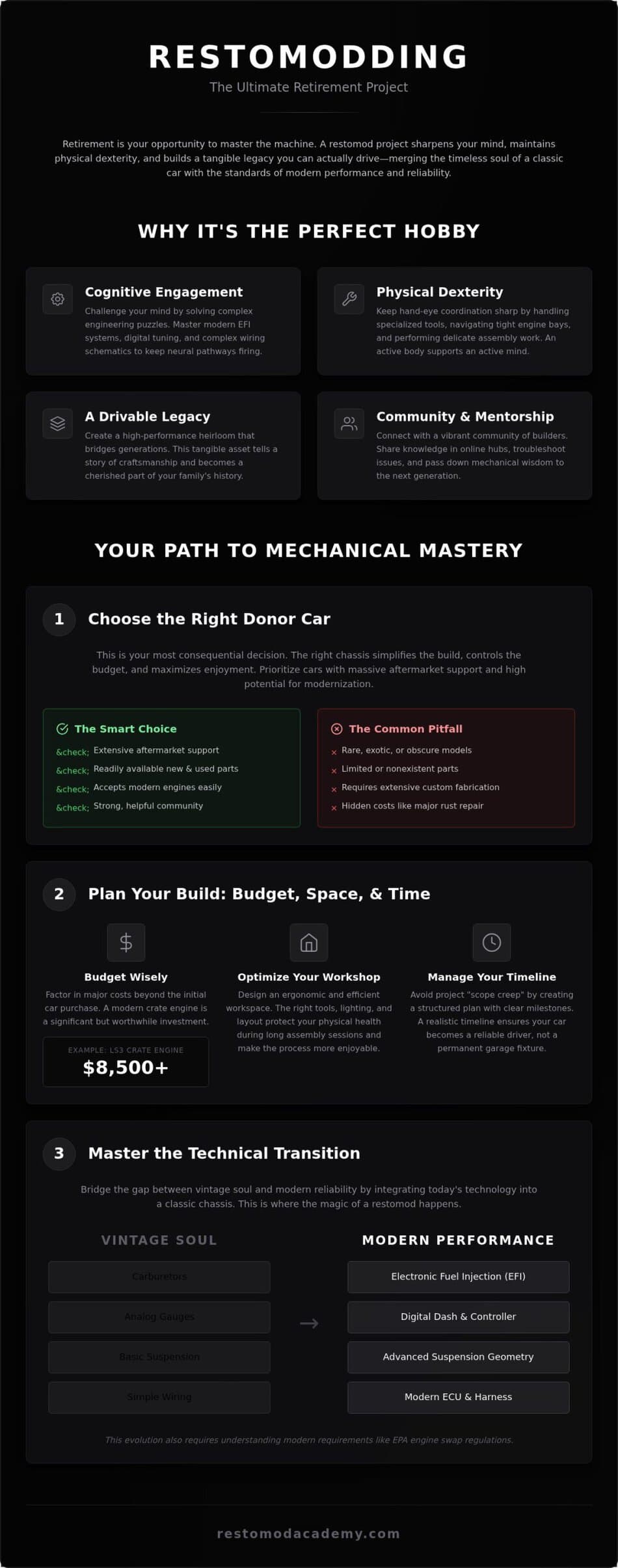
Transitioning a classic machine into a high-performance modern vehicle is where the technical artistry of your restomod project as a retirement hobby truly shines. You are moving beyond simple maintenance and entering the world of precision engineering. The goal is to replace temperamental, antiquated systems with components that offer 2026 levels of reliability and safety. This process starts with the realization that vintage aesthetics don’t have to mean vintage performance. You can have the iconic silhouette of a muscle car with the turn-key reliability of a modern daily driver.
Safety is the primary driver for these upgrades. Converting from manual drum brakes to a modern four-wheel power disc system is a non-negotiable requirement for any build pushing contemporary horsepower numbers. Likewise, replacing a steering box with a modern rack-and-pinion setup eliminates the “dead zone” in your steering wheel, giving you the confidence to navigate modern traffic. These changes don’t just make the car faster; they make it a viable vehicle for long-distance cruising and weekend adventures.
The LS Swap: The Retiree’s Best Friend
The Chevrolet LS3 crate engine is the undisputed champion of the restomod world for a reason. In 2026, a new 6.2L LS3 crate engine costs approximately $6,500 to $8,500, providing a compact and powerful 430-horsepower foundation. If you prefer a complete package, expect to invest around $10,620. This platform is favored because it fits into almost any engine bay and has an aftermarket support system that is second to none. While the computer integration and EFI wiring might seem intimidating, it’s a logical, step-by-step process that keeps your mind engaged. Master the harness by following the definitive guide to an ls engine swap to ensure your first start-up is a success.
Modern Comfort in a Classic Shell
A restomod should be as comfortable as it is powerful. Install a modern, integrated climate control system to replace the original heater box; this ensures you can enjoy your machine even in the peak of summer. Replace your old analog dials with digital gauges to get precision monitoring of your engine’s vitals, from oil pressure to coolant temperature. To truly elevate the driving experience, apply high-quality sound deadening material throughout the cabin. This reduces road noise and vibration, giving your classic car the refined interior feel of a modern luxury vehicle. If you want to ensure your technical plan is airtight before you buy parts, explore Restomod Academy consulting to get a professional review of your build sheet.
Taking the First Step with Restomod Academy
Don’t let your vision for a high-performance classic stall out in the planning phase. Embarking on a restomod project as a retirement hobby is a bold commitment to your own growth and legacy, but it shouldn’t be a solitary struggle. At Restomod Academy, we provide the educational framework needed to bridge the gap between vintage aesthetics and modern performance. Our approach focuses on removing the guesswork that often leads to abandoned projects and drained bank accounts. By following a structured path, you can maintain the pace of a methodical builder and enjoy the satisfaction of every achieved precision milestone.
Every mechanical hurdle has a logical solution, and we’ve documented those solutions through years of hands-on experience. We offer Premium Project Blueprints that serve as your specific technical map, ensuring that every component you buy is compatible with your chassis. If you feel stuck between two different suspension setups or can’t decide on the right EFI system, our Restomod Consulting Services provide the direct mentorship you need. This personalized advice is designed to help you avoid the expensive planning mistakes that often plague first-time builders. You’re investing in your retirement, so it makes sense to invest in a plan that guarantees a reliable result.
The Ultimate Restomod Guide
This isn’t just a collection of tips; it’s a comprehensive information product designed for the self-paced learner. The Ultimate Restomod Guide features digital modules that you can access directly in your garage, allowing you to move from theory to practice with total confidence. We cover the specific intersection of classic style and modern reliability, breaking down daunting tasks like wiring and fuel system plumbing into manageable steps. You’ll join a community of builders who value the labor of the workshop as much as the thrill of the first drive. This guide ensures that you spend your time turning wrenches rather than searching for answers.
Your Next Milestone
Commit to the build today by setting your first tangible project goal: the donor car search. Use the criteria we’ve discussed to find a chassis with a solid foundation and high modernization potential. Once you have a vehicle in sight, book a consultation to review your build sheet and finalize your technical roadmap. Your retirement should be an adventure defined by mastery and precision. Take the first step toward building your dream machine and let us guide you through the rewarding process of technical restoration. The road is open, and the workshop is waiting for you to begin.
Build Your Legacy One Bolt at a Time
Your retirement is the perfect season to transition from a passive admirer of classic iron to an active creator of high-performance machines. By choosing a restomod project as a retirement hobby, you are embracing a lifestyle of precision, continuous learning, and tangible accomplishment. You now have the essential roadmap to select a viable donor car, plan a sustainable budget, and master the technical transition to modern reliability. Every challenge in the workshop is an opportunity to sharpen your mind and preserve automotive history for the next generation.
Don’t let the fear of technical complexity or scope creep keep your dream car hidden under a garage tarp. You have access to expert mentorship from Brook Walsh and a vibrant DIY builder community that values the journey as much as the destination. Our comprehensive LS swap blueprints and structured educational modules ensure that every hour in the garage brings you closer to a reliable, modern-driving classic. Success is found in the methodical pace of the build.
Start your retirement build with The Ultimate Restomod Guide and transform your workshop into a center of mechanical mastery. The tools are ready and the community is waiting. It’s time to build the machine you’ve always wanted and enjoy the road ahead.
Frequently Asked Questions
Is a restomod project too physically demanding for a retiree?
Restomodding doesn’t have to be back-breaking labor if you prioritize ergonomics in your workshop. Investing in a four-post car lift or a rolling mechanic’s stool allows you to work at eye level, significantly reducing strain on your joints. By breaking the project into smaller, manageable tasks, you can maintain a steady pace without overexertion. Focus on assembly and precision work while outsourcing heavy lifting to local shops when necessary to protect your health.
How much should I realistically budget for a first-time restomod?
Budgeting for a restomod project as a retirement hobby requires a realistic look at 2026 market rates. A complete DIY build typically starts at $100,000, covering the donor car, modern drivetrain, and high-quality paint. Initial donor purchases range from $10,000 for rough examples to much higher for iconic muscle cars. Always set aside a 20 percent contingency fund for the inevitable upgrades that arise during the assembly phase of the project.
Do I need to be a professional mechanic to start a restomod project?
Professional mechanical certification isn’t a requirement, but a willingness to learn modern systems is essential. Most successful builders are enthusiasts who follow structured educational modules to bridge the gap between vintage systems and modern technology. By using detailed blueprints and consulting services, you can navigate complex tasks like EFI wiring or suspension geometry. The goal is to transition from a passive admirer to an active creator through patience and logical problem-solving.
Which classic car is the easiest for a beginner to restomod?
The 1964-1970 Ford Mustang and the Chevrolet C10 truck are the most accessible entry points for beginners. These vehicles enjoy massive aftermarket support, meaning every bracket, bolt, and wiring harness is available in modern catalogs. This availability removes the frustration of hunting for rare parts, allowing you to focus on the joy of the build. Their straightforward chassis designs make them ideal platforms for learning modern performance integration and assembly techniques.
How long does a typical restomod project take to complete?
A typical DIY restomod project usually spans two to three years of consistent effort in the garage. While professional shops might finish a build in 12 to 18 months, your timeline depends on your available workshop hours and the complexity of your modernization goals. Treat the journey as a rewarding long-term technical project rather than a race to the finish line. This deliberate pace ensures every mechanical hurdle is overcome with absolute precision and safety.
Can I really perform an engine swap in my own home garage?
Performing an engine swap at home is entirely feasible with a standard engine hoist and basic shop tools. The Chevrolet LS3 is a favorite for home builders because of its compact size and turn-key reliability. In 2026, a new LS3 crate engine package costs around $10,620 and fits into most engine bays with minimal fabrication. Following a definitive swap guide ensures that computer integration and fuel plumbing are handled correctly on your first attempt.
Will restomodding a car ruin its resale value?
Restomodding generally increases the market value of common classic cars by making them safer and more drivable. While a numbers-matching restoration is preferred for rare museum pieces, most buyers in 2026 actively seek vehicles with modern brakes, air conditioning, and fuel injection. A well-executed restomod project as a retirement hobby results in a tangible asset that combines vintage aesthetics with the performance standards today’s collectors demand. Buyers value reliability and modern driving characteristics.
Where can I find reliable parts for my specific restomod project?
Reliable components are found through established aftermarket vendors and specialized performance catalogs that focus on modernization. When selecting parts, prioritize vendors that offer detailed technical support and compatibility guarantees for your specific chassis. It is also crucial to ensure your modern engine choice complies with 2026 EPA regulations by retaining all necessary emissions equipment from the donor engine. Using a structured guide helps you identify the best performance parts while avoiding expensive mistakes.