
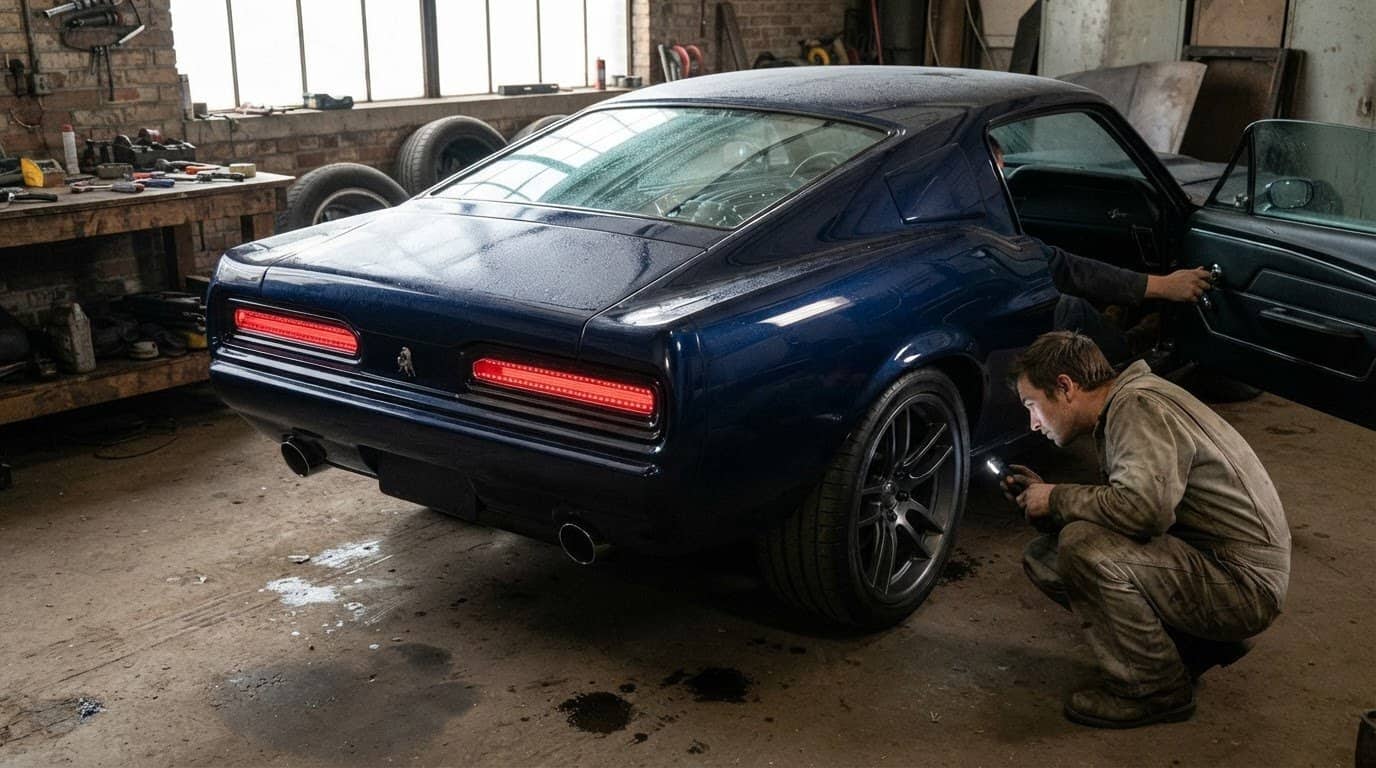
A beautiful finish can conceal a troubled build. The risks of buying a restomod sight unseen include missed cold-start problems, hidden rust, poor reassembly, and upgrades that don’t work as intended. Treat clear, live evidence of the car’s condition as essential before committing.
It’s easy to fall for the mix of vintage character and modern performance, especially when polished photos make a car look road-ready. But a restomod combines multiple systems and workmanship, neither of which is easy to judge from a listing alone.
Learn how to request a genuine cold start, focus on likely problem areas, and identify dealbreakers before emotions or deadlines take over. You’ll also learn how to respond if a seller refuses a live inspection, so you can make a measured decision and keep your next project on solid ground.
Key Takeaways
- Request a genuine cold-start video and listen for trouble, then focus your inspection on rust, reassembly, and the restomod’s modified systems.
- Set your dealbreakers before reviewing the car so attractive photos or seller pressure don’t blur your priorities.
- If a seller refuses a live inspection, treat that refusal as a reason to pause rather than a detail to overlook.
- Use build records and supporting documents to understand what was changed, how the work was completed, and what evidence is still missing.
1. Checking cold starts and known problem areas
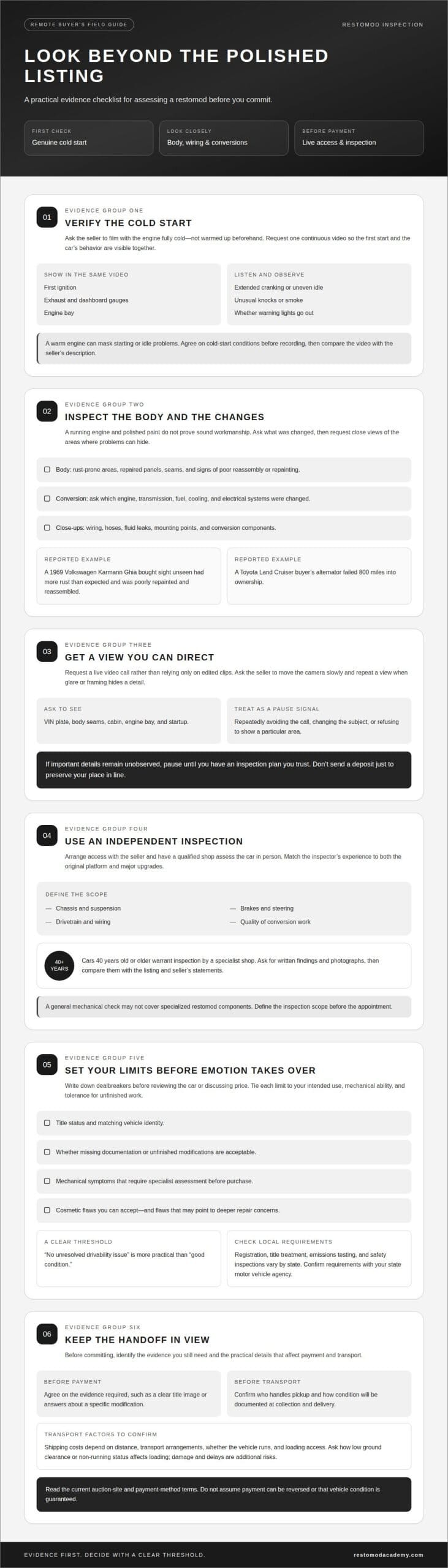
Ask the seller to start the restomod with the engine fully cold, rather than warming it before filming. Request one continuous video showing the first ignition, exhaust, dashboard gauges, and engine bay. Listen for extended cranking, an uneven idle, unusual knocks, or smoke, then check whether warning lights go out. A warm engine can mask starting or idle problems, so agree on the cold-start conditions before recording.
Check the conversion as carefully as the vintage platform. Ask which engine, transmission, fuel, cooling, and electrical systems were changed, then request close views of wiring, hoses, fluid leaks, and mounting points. A 1969 Volkswagen Karmann Ghia bought sight unseen had more rust than expected and was poorly repainted and reassembled. Another buyer’s Toyota Land Cruiser alternator failed 800 miles into ownership. These examples show why polished paint and a running engine don’t prove sound workmanship.
- Compare the cold-start video with the seller’s description of engine behavior.
- Ask for close-ups of known rust-prone areas, repaired panels, and conversion components.
- Write down unanswered mechanical concerns before deciding whether to proceed.
A collector car doesn’t need to be 15 years old to warrant a thorough inspection. The risks of buying a restomod sight unseen increase when age, modifications, and repair history make hidden faults harder to assess.
Auction-site protections and payment dispute options depend on the platform and payment method. Read the current terms before bidding or sending funds, and don’t assume a payment can be reversed or the vehicle’s condition is guaranteed.
Shipping costs depend on distance, transport arrangements, whether the vehicle runs, and loading access. Damage and delays are additional risks. Confirm who handles pickup, how the car’s condition will be documented at collection and delivery, and how low ground clearance or non-running status affects loading. Don’t treat transport as a minor detail after agreeing on the car.
Understanding what makes a car a restomod helps you identify which vintage and modern systems deserve separate scrutiny during a remote inspection.
2. Setting dealbreakers before inspection
Decide what would end the purchase before a polished listing or seller’s deadline affects your judgment. Separate non-negotiables from preferences: an unclear title may stop the deal, while worn upholstery might simply become a future project. Tie each dealbreaker to your intended use, mechanical ability, and tolerance for unfinished work.
Write down your limits before discussing price or arranging transport. For a restomod, define acceptable standards for the engine conversion, transmission behavior, wiring quality, and completeness. A car described as road-ready should meet a different standard from a project that needs ongoing fabrication. If the seller’s description conflicts with your requirements, pause instead of lowering the bar mid-negotiation.
- Set a clear condition for title status and matching vehicle identity.
- Decide whether incomplete documentation or unfinished modifications are acceptable.
- Identify mechanical symptoms that would require specialist assessment before purchase.
- Define which cosmetic flaws are tolerable and which suggest deeper repair concerns.
Make each limit specific enough to guide a decision. “Good condition” is difficult to apply consistently; “no unresolved drivability issue” gives you a practical threshold. Decide, too, whether you’ll accept a modified car without records explaining major changes. Keep preferences separate, so a desirable paint color doesn’t outweigh a serious mechanical concern.
State requirements also belong on your dealbreaker list. Registration, title treatment, emissions testing, and safety inspections vary by state and can depend on the vehicle’s age and modifications. Confirm the rules with your state motor vehicle agency before committing, and reconsider if the car cannot meet a requirement.
Finally, agree on what evidence must arrive before payment, such as a clear title image or answers about a specific modification. A firm decision framework helps you compare the seller’s claims with your requirements, without letting excitement rewrite the terms after inspection.
3. Watching for sellers who refuse a live inspection
Ask for a live video call that lets you direct the camera, rather than relying only on edited clips. A call can show the VIN plate, body seams, cabin, engine bay, and startup while you request specific views. Ask the seller to move the camera slowly and repeat a view if glare or framing obscures a detail.
Pay attention to the seller’s response. They may need to arrange a suitable time, but refusal to show the car live leaves important details unobserved. If the seller repeatedly avoids the call, changes the subject, or won’t show a particular area, pause the transaction until you have an inspection plan you trust. Don’t send a deposit just to preserve your place in line.
For a pre-purchase inspection, arrange access with the seller and have a qualified shop assess the car in person. Ask the inspector to examine the chassis, suspension, brakes, steering, drivetrain, wiring, and quality of conversion work. Request written findings and photographs, then compare them with the listing and seller’s statements. A general mechanical check may not cover specialized restomod components, so define the inspection scope before the appointment.
Cars 40 years old or older warrant inspection by a specialist shop. A 1991 Toyota Land Cruiser FJ80 buyer had Toyota specialists inspect the vehicle, illustrating the value of marque knowledge even on a later classic. Choose expertise that matches both the original platform and major upgrades, such as a replacement engine or modern fuel injection.
Follow a clear sequence: request a live call, identify areas the camera cannot show, then arrange an independent inspection before payment. If the seller refuses access and a reasonable inspection, walk away. The risks of buying a restomod sight unseen increase when no independent person can assess its condition or workmanship.
4. What documents and build records should a restomod seller provide?
Start with the vehicle’s identity and ownership paperwork. Ask for clear images of the title and VIN, along with a bill of sale or other records showing how the seller acquired the car. Compare the VIN on the title, vehicle, and build documents. Resolve any differences before proceeding, not after payment.
Build records help connect the car’s vintage foundation to its modern systems. Request invoices, parts lists, and dated photographs of major work. Look for records covering the engine, transmission, suspension, brakes, fuel system, and wiring. An invoice alone doesn’t prove installation quality, but it can identify components and the shop or builder involved.
- Ask for engine and transmission details, including model names and supporting purchase or installation records.
- Request wiring diagrams and notes for aftermarket gauges, fuel injection, or other electronic changes.
- Review photographs showing structural repairs, fabrication, and work hidden beneath finished panels.
- Collect service records, inspection documents, and receipts for recent repairs or maintenance.
Use the records to form specific questions. If an invoice lists an engine swap, ask which supporting systems changed and whether the build photographs show their installation. For an LS conversion, the LS engine swap guide can help clarify the systems involved and the details worth understanding.
Check whether the seller’s timeline makes sense. Dated invoices and photographs can show when major work happened, while gaps may leave parts of the build unexplained. Match each claimed upgrade to a record or image, and note which components lack documentation. This gives an independent inspector a focused starting point.
Keep copies of the documents alongside your inspection notes. Plan your restomod purchase with clearer build information before committing to a car whose workmanship you can’t assess in person.
The author bought a ’71 MGB sight unseen and later sold it for twice what he paid. Car shoppers should pay close attention to depreciation rather than focusing only on a vehicle’s purchase price. The author recommends directing a live video call with the seller, and says it takes ten minutes.
Restomod Academy
Restomod Academy helps enthusiasts turn inspection findings, build records, and unanswered questions into a clearer plan. Use its educational resources to understand how classic platforms and modern upgrades work together, or consider Restomod Consulting Services for guidance on a specific project. Premium Project Blueprints can support planning your own build, while The Ultimate Restomod Guide offers broader learning for the restoration and modification process.
Bring your priorities and the details you’ve gathered into your next decision. A clear understanding of the car’s condition and your goals can help you decide whether to proceed, negotiate, or walk away. To discuss your restomod plans, contact Restomod Academy.
Choose the Project With Clear Eyes
The risks of buying a restomod sight unseen are easier to manage when you treat the purchase as the start of a build relationship, not just a transaction. Every modification shapes the car’s character, maintenance needs, and ownership experience. Give yourself room to decide whether this particular machine fits your goals, skills, and appetite for continued work.
A restomod can unite the lines you love with the performance you want, but the right choice is the one you understand and feel ready to own. Let evidence, careful judgment, and your vision for the car guide the next move. If you want to explore how to approach your project, connect with Restomod Academy and keep building your knowledge with confidence.
Frequently Asked Questions
What are the biggest risks of buying a restomod sight unseen?
The biggest risks include hidden mechanical faults and a mismatch between the car’s advertised character and its actual condition. Photos can’t show how the drivetrain behaves under load, whether temperatures rise during a drive, or whether upgrades work well together. These risks of buying a restomod sight unseen also include having less leverage to resolve disagreements after delivery, so base your decision on evidence you can assess.
What should a pre-purchase inspection of a restomod include?
A useful inspection should assess both the base vehicle and how its modifications work together. Ask the inspector to evaluate startup and, where practical, conduct a road test, noting drivability, braking response, steering feel, and signs of overheating. A clear report can help reduce the risks of buying a restomod sight unseen by distinguishing observed defects from systems the inspector couldn’t test.
How much does an independent restomod inspection typically cost?
Inspection fees vary with the vehicle’s location, build complexity, and inspection scope, so there is no dependable price for every restomod. A visual assessment differs from an evaluation involving a road test, diagnostic equipment, or expertise with a particular conversion. Request an itemized estimate describing travel, testing, and the written report, then compare the work included rather than choosing by fee alone.
A beautiful finish can conceal a troubled build. The risks of buying a restomod sight unseen include missed cold-start problems, hidden rust, poor reassembly, and upgrades that don’t work as intended. Treat clear, live evidence of the car’s condition as essential before committing.
It’s easy to fall for the mix of vintage character and modern performance, especially when polished photos make a car look road-ready. But a restomod combines multiple systems and workmanship, neither of which is easy to judge from a listing alone.
Learn how to request a genuine cold start, focus on likely problem areas, and identify dealbreakers before emotions or deadlines take over. You’ll also learn how to respond if a seller refuses a live inspection, so you can make a measured decision and keep your next project on solid ground.
Key Takeaways
- Request a genuine cold-start video and listen for trouble, then focus your inspection on rust, reassembly, and the restomod’s modified systems.
- Set your dealbreakers before reviewing the car so attractive photos or seller pressure don’t blur your priorities.
- If a seller refuses a live inspection, treat that refusal as a reason to pause rather than a detail to overlook.
- Use build records and supporting documents to understand what was changed, how the work was completed, and what evidence is still missing.
1. Checking cold starts and known problem areas
Ask the seller to start the restomod with the engine fully cold, rather than warming it before filming. Request one continuous video showing the first ignition, exhaust, dashboard gauges, and engine bay. Listen for extended cranking, an uneven idle, unusual knocks, or smoke, then check whether warning lights go out. A warm engine can mask starting or idle problems, so agree on the cold-start conditions before recording.
Check the conversion as carefully as the vintage platform. Ask which engine, transmission, fuel, cooling, and electrical systems were changed, then request close views of wiring, hoses, fluid leaks, and mounting points. A 1969 Volkswagen Karmann Ghia bought sight unseen had more rust than expected and was poorly repainted and reassembled. Another buyer’s Toyota Land Cruiser alternator failed 800 miles into ownership. These examples show why polished paint and a running engine don’t prove sound workmanship.
- Compare the cold-start video with the seller’s description of engine behavior.
- Ask for close-ups of known rust-prone areas, repaired panels, and conversion components.
- Write down unanswered mechanical concerns before deciding whether to proceed.
A collector car doesn’t need to be 15 years old to warrant a thorough inspection. The risks of buying a restomod sight unseen increase when age, modifications, and repair history make hidden faults harder to assess.
Auction-site protections and payment dispute options depend on the platform and payment method. Read the current terms before bidding or sending funds, and don’t assume a payment can be reversed or the vehicle’s condition is guaranteed.
Shipping costs depend on distance, transport arrangements, whether the vehicle runs, and loading access. Damage and delays are additional risks. Confirm who handles pickup, how the car’s condition will be documented at collection and delivery, and how low ground clearance or non-running status affects loading. Don’t treat transport as a minor detail after agreeing on the car.
Understanding what makes a car a restomod helps you identify which vintage and modern systems deserve separate scrutiny during a remote inspection.
2. Setting dealbreakers before inspection
Decide what would end the purchase before a polished listing or seller’s deadline affects your judgment. Separate non-negotiables from preferences: an unclear title may stop the deal, while worn upholstery might simply become a future project. Tie each dealbreaker to your intended use, mechanical ability, and tolerance for unfinished work.
Write down your limits before discussing price or arranging transport. For a restomod, define acceptable standards for the engine conversion, transmission behavior, wiring quality, and completeness. A car described as road-ready should meet a different standard from a project that needs ongoing fabrication. If the seller’s description conflicts with your requirements, pause instead of lowering the bar mid-negotiation.
- Set a clear condition for title status and matching vehicle identity.
- Decide whether incomplete documentation or unfinished modifications are acceptable.
- Identify mechanical symptoms that would require specialist assessment before purchase.
- Define which cosmetic flaws are tolerable and which suggest deeper repair concerns.
Make each limit specific enough to guide a decision. “Good condition” is difficult to apply consistently; “no unresolved drivability issue” gives you a practical threshold. Decide, too, whether you’ll accept a modified car without records explaining major changes. Keep preferences separate, so a desirable paint color doesn’t outweigh a serious mechanical concern.
State requirements also belong on your dealbreaker list. Registration, title treatment, emissions testing, and safety inspections vary by state and can depend on the vehicle’s age and modifications. Confirm the rules with your state motor vehicle agency before committing, and reconsider if the car cannot meet a requirement.
Finally, agree on what evidence must arrive before payment, such as a clear title image or answers about a specific modification. A firm decision framework helps you compare the seller’s claims with your requirements, without letting excitement rewrite the terms after inspection.
3. Watching for sellers who refuse a live inspection
Ask for a live video call that lets you direct the camera, rather than relying only on edited clips. A call can show the VIN plate, body seams, cabin, engine bay, and startup while you request specific views. Ask the seller to move the camera slowly and repeat a view if glare or framing obscures a detail.
Pay attention to the seller’s response. They may need to arrange a suitable time, but refusal to show the car live leaves important details unobserved. If the seller repeatedly avoids the call, changes the subject, or won’t show a particular area, pause the transaction until you have an inspection plan you trust. Don’t send a deposit just to preserve your place in line.
For a pre-purchase inspection, arrange access with the seller and have a qualified shop assess the car in person. Ask the inspector to examine the chassis, suspension, brakes, steering, drivetrain, wiring, and quality of conversion work. Request written findings and photographs, then compare them with the listing and seller’s statements. A general mechanical check may not cover specialized restomod components, so define the inspection scope before the appointment.
Cars 40 years old or older warrant inspection by a specialist shop. A 1991 Toyota Land Cruiser FJ80 buyer had Toyota specialists inspect the vehicle, illustrating the value of marque knowledge even on a later classic. Choose expertise that matches both the original platform and major upgrades, such as a replacement engine or modern fuel injection.
Follow a clear sequence: request a live call, identify areas the camera cannot show, then arrange an independent inspection before payment. If the seller refuses access and a reasonable inspection, walk away. The risks of buying a restomod sight unseen increase when no independent person can assess its condition or workmanship.
4. What documents and build records should a restomod seller provide?
Start with the vehicle’s identity and ownership paperwork. Ask for clear images of the title and VIN, along with a bill of sale or other records showing how the seller acquired the car. Compare the VIN on the title, vehicle, and build documents. Resolve any differences before proceeding, not after payment.
Build records help connect the car’s vintage foundation to its modern systems. Request invoices, parts lists, and dated photographs of major work. Look for records covering the engine, transmission, suspension, brakes, fuel system, and wiring. An invoice alone doesn’t prove installation quality, but it can identify components and the shop or builder involved.
- Ask for engine and transmission details, including model names and supporting purchase or installation records.
- Request wiring diagrams and notes for aftermarket gauges, fuel injection, or other electronic changes.
- Review photographs showing structural repairs, fabrication, and work hidden beneath finished panels.
- Collect service records, inspection documents, and receipts for recent repairs or maintenance.
Use the records to form specific questions. If an invoice lists an engine swap, ask which supporting systems changed and whether the build photographs show their installation. For an LS conversion, the LS engine swap guide can help clarify the systems involved and the details worth understanding.
Check whether the seller’s timeline makes sense. Dated invoices and photographs can show when major work happened, while gaps may leave parts of the build unexplained. Match each claimed upgrade to a record or image, and note which components lack documentation. This gives an independent inspector a focused starting point.
Keep copies of the documents alongside your inspection notes. Plan your restomod purchase with clearer build information before committing to a car whose workmanship you can’t assess in person.
The author bought a ’71 MGB sight unseen and later sold it for twice what he paid. Car shoppers should pay close attention to depreciation rather than focusing only on a vehicle’s purchase price. The author recommends directing a live video call with the seller, and says it takes ten minutes.
Restomod Academy
Restomod Academy helps enthusiasts turn inspection findings, build records, and unanswered questions into a clearer plan. Use its educational resources to understand how classic platforms and modern upgrades work together, or consider Restomod Consulting Services for guidance on a specific project. Premium Project Blueprints can support planning your own build, while The Ultimate Restomod Guide offers broader learning for the restoration and modification process.
Bring your priorities and the details you’ve gathered into your next decision. A clear understanding of the car’s condition and your goals can help you decide whether to proceed, negotiate, or walk away. To discuss your restomod plans, contact Restomod Academy.
Choose the Project With Clear Eyes
The risks of buying a restomod sight unseen are easier to manage when you treat the purchase as the start of a build relationship, not just a transaction. Every modification shapes the car’s character, maintenance needs, and ownership experience. Give yourself room to decide whether this particular machine fits your goals, skills, and appetite for continued work.
A restomod can unite the lines you love with the performance you want, but the right choice is the one you understand and feel ready to own. Let evidence, careful judgment, and your vision for the car guide the next move. If you want to explore how to approach your project, connect with Restomod Academy and keep building your knowledge with confidence.
Frequently Asked Questions
What are the biggest risks of buying a restomod sight unseen?
The biggest risks include hidden mechanical faults and a mismatch between the car’s advertised character and its actual condition. Photos can’t show how the drivetrain behaves under load, whether temperatures rise during a drive, or whether upgrades work well together. These risks of buying a restomod sight unseen also include having less leverage to resolve disagreements after delivery, so base your decision on evidence you can assess.
What should a pre-purchase inspection of a restomod include?
A useful inspection should assess both the base vehicle and how its modifications work together. Ask the inspector to evaluate startup and, where practical, conduct a road test, noting drivability, braking response, steering feel, and signs of overheating. A clear report can help reduce the risks of buying a restomod sight unseen by distinguishing observed defects from systems the inspector couldn’t test.
How much does an independent restomod inspection typically cost?
Inspection fees vary with the vehicle’s location, build complexity, and inspection scope, so there is no dependable price for every restomod. A visual assessment differs from an evaluation involving a road test, diagnostic equipment, or expertise with a particular conversion. Request an itemized estimate describing travel, testing, and the written report, then compare the work included rather than choosing by fee alone.