

A great Beetle restomod doesn’t need to erase its past. The best Volkswagen Beetle restomod ideas build on the car’s air-cooled flat-four, then shape its character with gray paint and black accents, hot-rod styling, or carefully chosen modern upgrades. Start with the driving experience you want, and let that guide the build.
The Beetle’s familiar silhouette and mechanical simplicity are part of its appeal. Preserve what gives the car its character while improving how it looks or drives. This guide explores different directions, from retaining the original engine to considering a more extensive powertrain change. It also covers how stance, suspension, safety equipment, and everyday usability shape a project, helping you turn inspiration into a coherent plan rather than a collection of disconnected modifications.
Key Takeaways
- Choose whether to retain the air-cooled flat-four or pursue a major engine conversion before shaping the rest of the build.
- Plan gray paint and black accents as a coordinated look, balancing body color with trim and other details.
- For hot rod character, consider how stance, wheel placement, tire profile, roofline, and windshield work together.
- Match modern upgrades to your driving goals, and account for fabrication when a powertrain swap moves beyond the original layout.
Air-cooled flat-four engine
The 1985 Volkswagen Beetle pairs a four-cylinder flat-four with the classic air-cooled layout. Choose between refining that engine and changing the powertrain to set the build’s character.
Air-Cooled Engine Upgrades
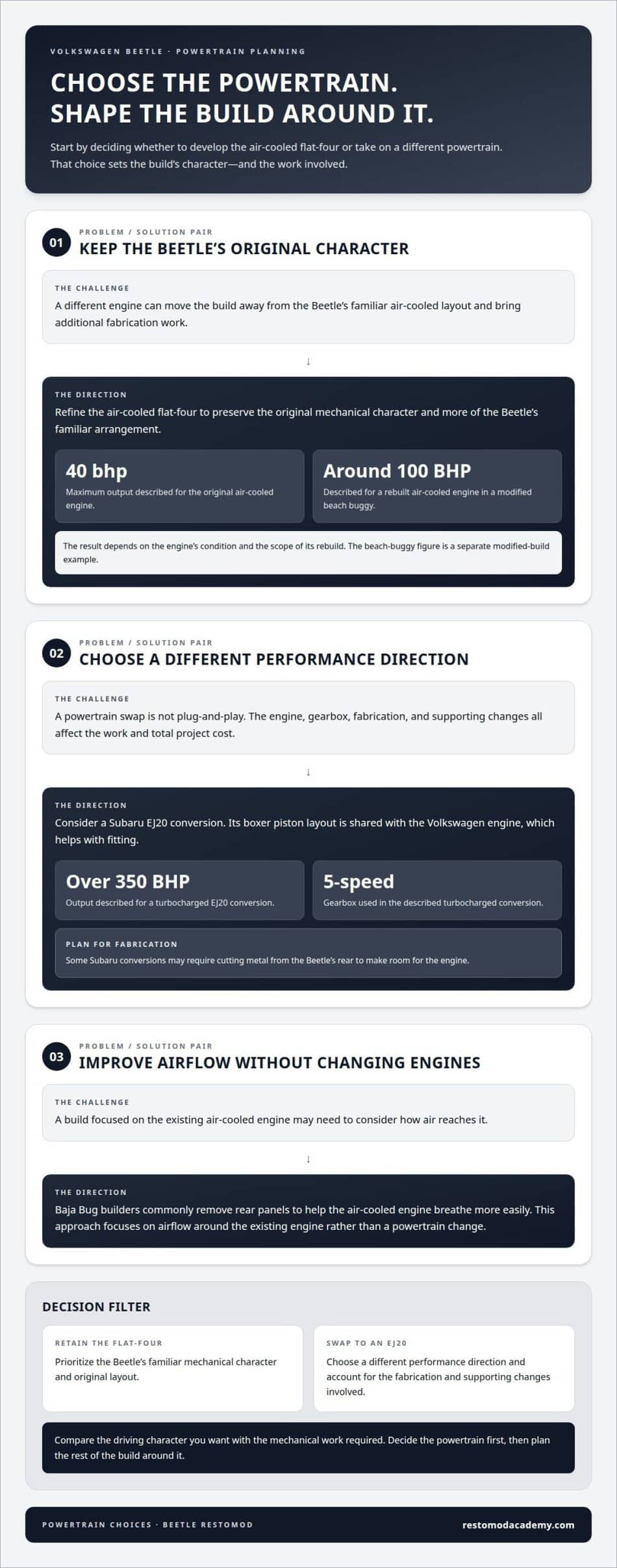
Keeping the flat-four preserves the Beetle’s original mechanical character and avoids the fabrication involved in a different engine. The original air-cooled engine is described as producing a maximum of 40 bhp, while a rebuilt air-cooled engine in a modified beach buggy should produce around 100 BHP.
Those figures show the appeal of developing the original platform, but an engine’s condition and the scope of its rebuild shape the result. A retained engine also keeps the build centered on the Beetle’s familiar layout. For a broader explanation of how classic character and modern changes work together, explore what defines a restomod build.
Engine Swap Options and Costs
A Subaru EJ20 is one swap direction: its boxer piston layout is shared with the Volkswagen engine, which helps with fitting. A turbocharged EJ20 conversion can produce over 350 BHP and use a 5-speed gearbox. That performance comes with substantial work, though; the swap isn’t plug-and-play and requires fabrication.
Some Subaru conversions may require cutting metal from the Beetle’s rear to make room for the engine. Consider the engine, gearbox, fabrication, and supporting changes when assessing the total cost. The scope of this work matters more than the engine name alone, because each change affects what it takes to integrate the powertrain.
Air-cooled upgrades generally keep more of the original arrangement, while an EJ20 swap trades that simplicity for a different performance direction. Compare the desired driving character with the mechanical work involved before choosing. That decision gives the rest of the build a clear foundation.
Baja Bug builders commonly remove rear panels to help the air-cooled engine breathe more easily. This approach focuses on airflow around the existing engine rather than changing the powertrain. Consider it alongside how much of the Beetle’s original setup you want to retain. Your priorities can guide the decision: preserve the familiar air-cooled character or pursue a different powertrain direction.
Gray exterior with black accents
A gray exterior gives a Volkswagen Beetle a restrained foundation, while black accents add contrast without hiding its familiar curves. Treat the colors as one design decision: choose the gray first, then repeat black details consistently across the exterior. Satin-looking gray with darker trim can suggest a modern custom build, while lighter gray and restrained black details keep the classic shape prominent. These are design directions, not fixed formulas.
Start with the body panels. Consider how the chosen gray looks across the Beetle’s rounded fenders, hood, and doors, then use black selectively on details such as mirrors, bumpers, or wheel centers. Repeating the same finish makes the accents feel intentional. If every trim piece gets a different treatment, the clean outline that makes the car recognizable can get lost. A simple mockup or sample panels can help you judge the balance before committing to the full paint scheme.
Next, decide whether the black should look subtle or assertive. Dark trim can outline the windows and body edges, while black wheels create a stronger visual anchor. Keep proportions in mind: a small accent draws attention to one detail, but a larger dark area changes the car’s overall visual weight. Match finishes carefully, too. Similar sheens across the trim and wheels create a more unified look than unrelated textures.
Carry the palette into the cabin rather than treating the exterior as a separate project. One listed Beetle pairs a gray exterior with a red interior, showing how a contrasting cabin color can become a deliberate part of the build. For a gray-and-black concept, consider how seat upholstery, dashboard surfaces, and steering wheel details relate to the body colors. Choose the focal point first, then keep the remaining details restrained. For help shaping a cohesive restomod direction, explore restomod planning resources.
The listed Beetle’s 4-speed manual transmission adds a mechanical detail to consider alongside the gray-and-black treatment, connecting the build’s visual choices with its driving character.
Beetle hot rod styling
A hot-rod build is one of the most distinctive Volkswagen Beetle restomod ideas. It reshapes the car’s stance and proportions while retaining its recognizable body. Plan ride height, wheel position, tire profile, roofline, and windshield as one coordinated design.
Choosing a Beetle Generation
No single model year is established as the best restomod base. Choose by the shell’s condition, the parts and fabrication your design requires, and the driving character you want. A 1985 Beetle is one restomod example; 1966 and 1968 cars, a 1977 convertible, and a 1974 Beetle offer other starting points. Inspect body and chassis condition before settling on a year.
In the U.S., emissions, inspection, registration, and insurance requirements depend on the vehicle and jurisdiction. Identify the state where the Beetle will be registered, then account for its year and modifications with the relevant state agency and insurer. These requirements shape the build plan, so address them before choosing major changes.
Restomod Styles and Build Ideas
Compare Volkswagen Beetle restomod ideas by how each changes the car’s proportions and intended use. For hot-rod proportions, lower the Beetle, widen the distance between the wheels, fit thinner tires, lower the roof, and use a smaller windshield. V8 engines are another common hot rod direction, while front-engine conversions usually use the Beetle body shell with a classic muscle-car chassis, engine, and drivetrain.
Other concepts include a Baja Bug focused on off-road use, or a restrained street build with period character. There is no single typical U.S. cost for every Beetle: the starting condition, engine choice, fabrication, finish, and labor determine the project scope.
Reliability and maintenance concerns depend on which systems you change. An engine swap adds fabrication and integration work, while a retained air-cooled engine requires attention to its condition and cooling airflow. Before sourcing components, create a project-specific parts list and define compatibility and fabrication needs. This gives the build a clear sequence and helps keep the hot-rod concept coherent.
Modern upgrades to classic cars
Modern upgrades can improve a classic car’s drivability, comfort, and reliability while preserving its iconic appearance. For a Beetle, plan suspension, brakes, and steering as connected systems rather than isolated changes.
Suspension Upgrades
Match suspension changes to the Beetle’s intended use. A road-focused build needs predictable handling, while a Baja Bug calls for more suspension travel over rough ground. Baja builders often choose longer shock absorbers, and some replace torsion-bar suspension with coilover-type springs mounted to a roll cage. These changes affect the chassis setup, so assess the full suspension layout together.
For a Baja build, a 6-point cage can be combined with safety seats and harnesses. Treat the cage, suspension, and seating as a coordinated package, rather than adding parts without considering how they work together.
Brake Upgrades
Set brake priorities according to the car’s intended use, tire setup, and powertrain. A Beetle retaining its original engine has different demands from a substantially modified build, so assess the existing system before selecting changes. Inspect the complete brake system and address worn components before deciding whether an upgrade is needed.
After making changes, evaluate pedal response and consistent braking during controlled testing. Don’t treat one upgraded component as a complete solution: the front and rear setup, tires, and vehicle balance all influence how the Beetle responds.
Steering Upgrades
Begin by assessing the steering system’s condition and the car’s intended handling. An aftermarket steering wheel is one documented Beetle modification, but changing the wheel’s appearance does not update the steering mechanism. Keep those goals distinct when planning a more modern driving feel.
Assess steering response after suspension or wheel changes, since those choices affect how the car feels through corners. A cohesive plan considers steering components, alignment, tire choice, and driver position together, rather than treating a new wheel as the whole upgrade.
Before combining upgrades, define the Beetle’s main use, then sequence suspension, braking, and steering work around that purpose. For guidance in organizing these systems into one build plan, map out your upgrade sequence.
Restomod Academy
Restomod Academy helps turn Beetle inspiration into a clearer project plan. Use The Ultimate Restomod Guide to build your understanding, Restomod Consulting Services when weighing choices, or Premium Project Blueprints to shape a build direction. These resources can help connect engine, styling, suspension, brake, and steering decisions into one coherent concept.
Turn to Restomod Academy when you’re ready to move from ideas to decisions, especially if you’re weighing an original-style build against more extensive modifications. Contact Restomod Academy to discuss your Beetle restomod project.
Put Your Build Plan in Motion
Use these Volkswagen Beetle restomod ideas as a starting point, not a checklist you have to follow exactly. Give your build a clear purpose. Decide how you want to use the car, what character you want to preserve, and which change deserves attention first. A written project brief can keep design choices connected to practical priorities as the work develops.
Keep the plan flexible where choices depend on one another. A major mechanical change can affect the supporting systems, while a visual direction can guide details throughout the cabin and exterior. Work through those relationships before committing time and materials. The result should feel deliberate, with every choice serving the same vision.
When you’re ready to turn that vision into a workable next step, contact Restomod Academy to discuss your build. Bring the idea you’re most excited about and the questions shaping your plan. A thoughtful build starts with curiosity, then gains momentum one considered decision at a time.
Frequently Asked Questions
What modern interior, safety, and technology upgrades fit a classic Beetle?
Period-style upholstery, a discreet audio system, and carefully integrated controls can modernize a classic Beetle’s cabin without overwhelming its character. Plan for safety alongside comfort: include seat and belt mounting points in the design, rather than treating them as finishing details. Map wiring before installing trim, keep essential controls accessible from the driver’s seat, and choose upgrades based on how you intend to use the car.
How do you plan and complete a Volkswagen Beetle restomod build step by step?
Start by defining the Beetle’s intended use and visual direction, then assess the body, chassis, engine, and wiring before selecting modifications. Set the project scope around the powertrain decision, and coordinate suspension, brakes, steering, and cabin changes with it. Complete structural repairs and fabrication before paint and trim. Keep a written record of decisions and work, then inspect each system and test the completed car progressively.
A great Beetle restomod doesn’t need to erase its past. The best Volkswagen Beetle restomod ideas build on the car’s air-cooled flat-four, then shape its character with gray paint and black accents, hot-rod styling, or carefully chosen modern upgrades. Start with the driving experience you want, and let that guide the build.
The Beetle’s familiar silhouette and mechanical simplicity are part of its appeal. Preserve what gives the car its character while improving how it looks or drives. This guide explores different directions, from retaining the original engine to considering a more extensive powertrain change. It also covers how stance, suspension, safety equipment, and everyday usability shape a project, helping you turn inspiration into a coherent plan rather than a collection of disconnected modifications.
Key Takeaways
- Choose whether to retain the air-cooled flat-four or pursue a major engine conversion before shaping the rest of the build.
- Plan gray paint and black accents as a coordinated look, balancing body color with trim and other details.
- For hot rod character, consider how stance, wheel placement, tire profile, roofline, and windshield work together.
- Match modern upgrades to your driving goals, and account for fabrication when a powertrain swap moves beyond the original layout.
Air-cooled flat-four engine
The 1985 Volkswagen Beetle pairs a four-cylinder flat-four with the classic air-cooled layout. Choose between refining that engine and changing the powertrain to set the build’s character.
Air-Cooled Engine Upgrades
Keeping the flat-four preserves the Beetle’s original mechanical character and avoids the fabrication involved in a different engine. The original air-cooled engine is described as producing a maximum of 40 bhp, while a rebuilt air-cooled engine in a modified beach buggy should produce around 100 BHP.
Those figures show the appeal of developing the original platform, but an engine’s condition and the scope of its rebuild shape the result. A retained engine also keeps the build centered on the Beetle’s familiar layout. For a broader explanation of how classic character and modern changes work together, explore what defines a restomod build.
Engine Swap Options and Costs
A Subaru EJ20 is one swap direction: its boxer piston layout is shared with the Volkswagen engine, which helps with fitting. A turbocharged EJ20 conversion can produce over 350 BHP and use a 5-speed gearbox. That performance comes with substantial work, though; the swap isn’t plug-and-play and requires fabrication.
Some Subaru conversions may require cutting metal from the Beetle’s rear to make room for the engine. Consider the engine, gearbox, fabrication, and supporting changes when assessing the total cost. The scope of this work matters more than the engine name alone, because each change affects what it takes to integrate the powertrain.
Air-cooled upgrades generally keep more of the original arrangement, while an EJ20 swap trades that simplicity for a different performance direction. Compare the desired driving character with the mechanical work involved before choosing. That decision gives the rest of the build a clear foundation.
Baja Bug builders commonly remove rear panels to help the air-cooled engine breathe more easily. This approach focuses on airflow around the existing engine rather than changing the powertrain. Consider it alongside how much of the Beetle’s original setup you want to retain. Your priorities can guide the decision: preserve the familiar air-cooled character or pursue a different powertrain direction.
Gray exterior with black accents
A gray exterior gives a Volkswagen Beetle a restrained foundation, while black accents add contrast without hiding its familiar curves. Treat the colors as one design decision: choose the gray first, then repeat black details consistently across the exterior. Satin-looking gray with darker trim can suggest a modern custom build, while lighter gray and restrained black details keep the classic shape prominent. These are design directions, not fixed formulas.
Start with the body panels. Consider how the chosen gray looks across the Beetle’s rounded fenders, hood, and doors, then use black selectively on details such as mirrors, bumpers, or wheel centers. Repeating the same finish makes the accents feel intentional. If every trim piece gets a different treatment, the clean outline that makes the car recognizable can get lost. A simple mockup or sample panels can help you judge the balance before committing to the full paint scheme.
Next, decide whether the black should look subtle or assertive. Dark trim can outline the windows and body edges, while black wheels create a stronger visual anchor. Keep proportions in mind: a small accent draws attention to one detail, but a larger dark area changes the car’s overall visual weight. Match finishes carefully, too. Similar sheens across the trim and wheels create a more unified look than unrelated textures.
Carry the palette into the cabin rather than treating the exterior as a separate project. One listed Beetle pairs a gray exterior with a red interior, showing how a contrasting cabin color can become a deliberate part of the build. For a gray-and-black concept, consider how seat upholstery, dashboard surfaces, and steering wheel details relate to the body colors. Choose the focal point first, then keep the remaining details restrained. For help shaping a cohesive restomod direction, explore restomod planning resources.
The listed Beetle’s 4-speed manual transmission adds a mechanical detail to consider alongside the gray-and-black treatment, connecting the build’s visual choices with its driving character.
Beetle hot rod styling
A hot-rod build is one of the most distinctive Volkswagen Beetle restomod ideas. It reshapes the car’s stance and proportions while retaining its recognizable body. Plan ride height, wheel position, tire profile, roofline, and windshield as one coordinated design.
Choosing a Beetle Generation
No single model year is established as the best restomod base. Choose by the shell’s condition, the parts and fabrication your design requires, and the driving character you want. A 1985 Beetle is one restomod example; 1966 and 1968 cars, a 1977 convertible, and a 1974 Beetle offer other starting points. Inspect body and chassis condition before settling on a year.
In the U.S., emissions, inspection, registration, and insurance requirements depend on the vehicle and jurisdiction. Identify the state where the Beetle will be registered, then account for its year and modifications with the relevant state agency and insurer. These requirements shape the build plan, so address them before choosing major changes.
Restomod Styles and Build Ideas
Compare Volkswagen Beetle restomod ideas by how each changes the car’s proportions and intended use. For hot-rod proportions, lower the Beetle, widen the distance between the wheels, fit thinner tires, lower the roof, and use a smaller windshield. V8 engines are another common hot rod direction, while front-engine conversions usually use the Beetle body shell with a classic muscle-car chassis, engine, and drivetrain.
Other concepts include a Baja Bug focused on off-road use, or a restrained street build with period character. There is no single typical U.S. cost for every Beetle: the starting condition, engine choice, fabrication, finish, and labor determine the project scope.
Reliability and maintenance concerns depend on which systems you change. An engine swap adds fabrication and integration work, while a retained air-cooled engine requires attention to its condition and cooling airflow. Before sourcing components, create a project-specific parts list and define compatibility and fabrication needs. This gives the build a clear sequence and helps keep the hot-rod concept coherent.
Modern upgrades to classic cars
Modern upgrades can improve a classic car’s drivability, comfort, and reliability while preserving its iconic appearance. For a Beetle, plan suspension, brakes, and steering as connected systems rather than isolated changes.
Suspension Upgrades
Match suspension changes to the Beetle’s intended use. A road-focused build needs predictable handling, while a Baja Bug calls for more suspension travel over rough ground. Baja builders often choose longer shock absorbers, and some replace torsion-bar suspension with coilover-type springs mounted to a roll cage. These changes affect the chassis setup, so assess the full suspension layout together.
For a Baja build, a 6-point cage can be combined with safety seats and harnesses. Treat the cage, suspension, and seating as a coordinated package, rather than adding parts without considering how they work together.
Brake Upgrades
Set brake priorities according to the car’s intended use, tire setup, and powertrain. A Beetle retaining its original engine has different demands from a substantially modified build, so assess the existing system before selecting changes. Inspect the complete brake system and address worn components before deciding whether an upgrade is needed.
After making changes, evaluate pedal response and consistent braking during controlled testing. Don’t treat one upgraded component as a complete solution: the front and rear setup, tires, and vehicle balance all influence how the Beetle responds.
Steering Upgrades
Begin by assessing the steering system’s condition and the car’s intended handling. An aftermarket steering wheel is one documented Beetle modification, but changing the wheel’s appearance does not update the steering mechanism. Keep those goals distinct when planning a more modern driving feel.
Assess steering response after suspension or wheel changes, since those choices affect how the car feels through corners. A cohesive plan considers steering components, alignment, tire choice, and driver position together, rather than treating a new wheel as the whole upgrade.
Before combining upgrades, define the Beetle’s main use, then sequence suspension, braking, and steering work around that purpose. For guidance in organizing these systems into one build plan, map out your upgrade sequence.
Restomod Academy
Restomod Academy helps turn Beetle inspiration into a clearer project plan. Use The Ultimate Restomod Guide to build your understanding, Restomod Consulting Services when weighing choices, or Premium Project Blueprints to shape a build direction. These resources can help connect engine, styling, suspension, brake, and steering decisions into one coherent concept.
Turn to Restomod Academy when you’re ready to move from ideas to decisions, especially if you’re weighing an original-style build against more extensive modifications. Contact Restomod Academy to discuss your Beetle restomod project.
Put Your Build Plan in Motion
Use these Volkswagen Beetle restomod ideas as a starting point, not a checklist you have to follow exactly. Give your build a clear purpose. Decide how you want to use the car, what character you want to preserve, and which change deserves attention first. A written project brief can keep design choices connected to practical priorities as the work develops.
Keep the plan flexible where choices depend on one another. A major mechanical change can affect the supporting systems, while a visual direction can guide details throughout the cabin and exterior. Work through those relationships before committing time and materials. The result should feel deliberate, with every choice serving the same vision.
When you’re ready to turn that vision into a workable next step, contact Restomod Academy to discuss your build. Bring the idea you’re most excited about and the questions shaping your plan. A thoughtful build starts with curiosity, then gains momentum one considered decision at a time.
Frequently Asked Questions
What modern interior, safety, and technology upgrades fit a classic Beetle?
Period-style upholstery, a discreet audio system, and carefully integrated controls can modernize a classic Beetle’s cabin without overwhelming its character. Plan for safety alongside comfort: include seat and belt mounting points in the design, rather than treating them as finishing details. Map wiring before installing trim, keep essential controls accessible from the driver’s seat, and choose upgrades based on how you intend to use the car.
How do you plan and complete a Volkswagen Beetle restomod build step by step?
Start by defining the Beetle’s intended use and visual direction, then assess the body, chassis, engine, and wiring before selecting modifications. Set the project scope around the powertrain decision, and coordinate suspension, brakes, steering, and cabin changes with it. Complete structural repairs and fabrication before paint and trim. Keep a written record of decisions and work, then inspect each system and test the completed car progressively.