
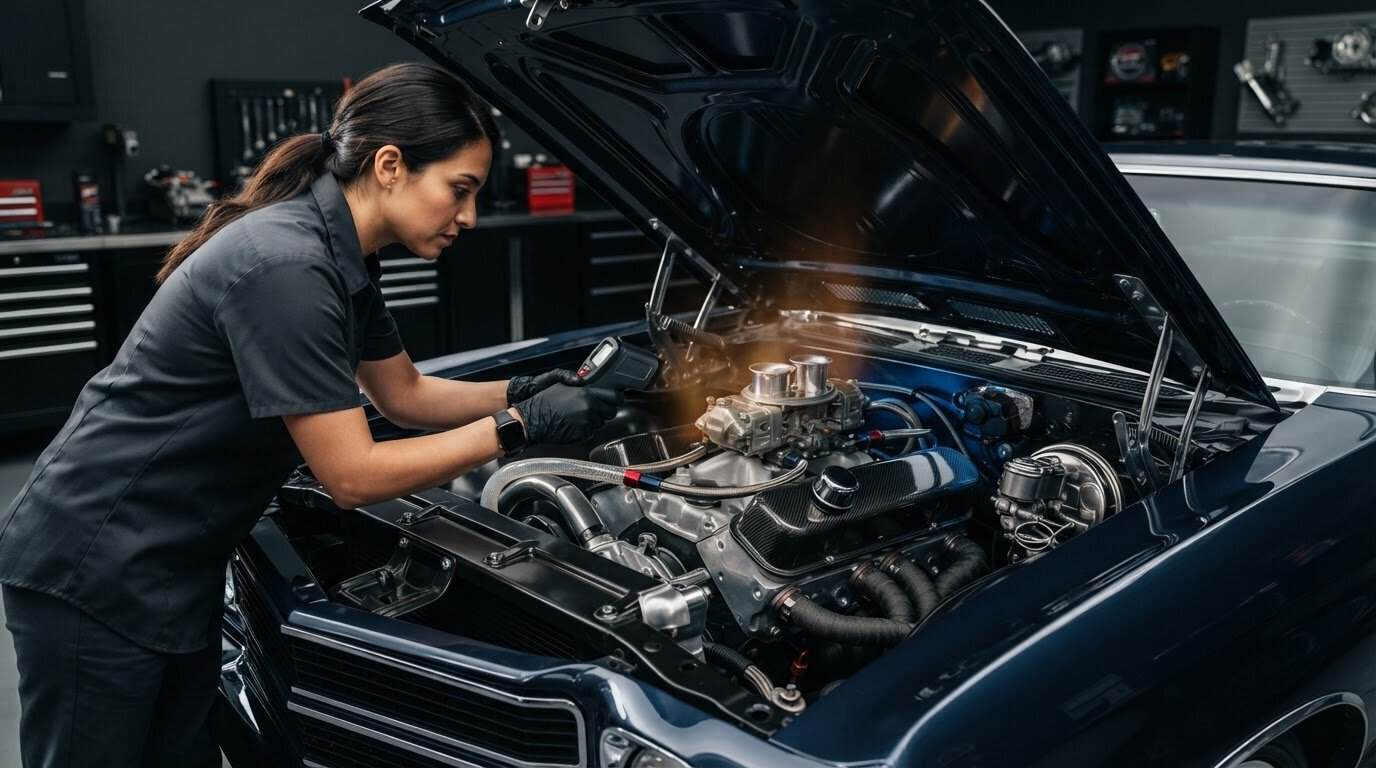
What if the same hot-start trouble points to two different problems, and replacing the fuel pump won’t fix either one? Solving heat soak and vapor lock in classic cars starts with separating the symptoms: vapor lock interrupts fuel flow when fuel vaporizes in the line, while heat soak can affect components after shutdown, when residual engine heat may boil fuel in a carburetor’s float bowls.
If your classic cranks or stumbles after a drive, it’s easy to suspect the part closest to the problem. But guessing can cost time and money, and fuel-system checks around a hot engine require care. Note when the trouble occurs and what the engine does. Those clues can help you decide whether to investigate heat transfer, fuel delivery, or another system.
This guide explains how to distinguish heat soak from vapor lock, trace likely causes in original or modified setups, and choose a targeted, safety-conscious repair. Follow the evidence before replacing parts, and use your classic’s symptoms to guide a more reliable diagnosis.
Key Takeaways
- Use when the trouble starts and how the engine behaves to guide your first checks, not to jump to a diagnosis.
- Inspect fuel routing, shielding, pump placement, and engine-bay layout as possible contributors to heat-related symptoms.
- Solving heat soak and vapor lock in classic cars starts with identifying the fuel-system setup and checking vehicle-specific service guidance.
- Compare targeted maintenance, heat-management changes, and broader fuel-system updates before choosing a fix that fits your car and its level of originality.
- Work only on cool components, change one thing at a time, and consult a qualified mechanic when a procedure or diagnosis is uncertain.
Heat Soak or Vapor Lock? Identify the Classic-Car Symptom First
A classic that cranks reluctantly after a fuel stop, hesitates under load, or stalls on a hot day might have vapor lock. Trouble that begins after shutdown may instead point to heat soak, but neither pattern confirms the cause on its own. Record when the symptom starts, how long the car has been running, and whether it occurs while driving or after the engine is switched off.
That distinction is a better starting point for solving heat soak and vapor lock in classic cars than replacing the first part that comes to mind. Similar symptoms can result from other fuel, ignition, or engine problems, so treat them as clues to investigate rather than as a diagnosis.
For a visual overview of vapor-lock prevention, watch this video from Fluid MotorUnion:
What heat soak means in a classic car
Heat soak is the transfer and buildup of residual engine heat in nearby components after shutdown. With airflow and coolant circulation reduced or stopped, under-hood temperatures can affect fuel-system and ignition components, depending on their location and the vehicle’s design. The engine may have run at a normal temperature but become difficult to restart after sitting briefly. That differs from overheating while running, which calls for checks of the cooling system and operating temperature. Consult the manufacturer’s service manual for vehicle-specific behavior and procedures.
How vapor lock can interrupt fuel delivery
Vapor lock occurs when fuel vapor forms in the delivery system and interferes with the flow of liquid fuel to the engine. Instead of a steady supply of liquid fuel, vapor can disrupt delivery and contribute to hesitation, stalling, or a difficult restart. For a foundational explanation of what vapor lock is, consider how heat and pressure can affect fuel in the system.
The car’s setup matters. A carbureted classic with a low-pressure fuel system needs different diagnostic checks from a fuel-injected car, and modified routing or components can change where to look. A hot-start problem or suspected vapor pocket does not confirm vapor lock. Record the conditions and verify the appropriate checks in the service manual or with a qualified mechanic before replacing parts.
How Heat, Fuel Routing, and Engine Setup Create Hot-Start Problems
Heat under the hood affects each classic differently. A fuel line routed close to an exhaust component faces a different heat load from one shielded along the chassis. Carburetor location, mechanical or electric pump placement, and the surrounding engine-bay layout all help determine what to inspect when hot-start trouble appears. These are diagnostic clues, not proof that vapor lock is occurring.
Start with the car’s actual configuration. Original fuel routing and a modified setup can call for different checks, especially if an engine swap changed component locations or fuel-system requirements. For a related look at planning around a changed powertrain, see this classic car LS engine swap guide.
Fuel-system layout: carburetors, pumps, and line routing
With the engine off and fully cool, visually trace the fuel line from the tank toward the pump and engine. Look for sections routed near heat sources, damaged or poorly supported lines, missing or displaced shielding, and changes from the factory arrangement. Note the pump type and location, along with any added return lines or other modifications. Don’t touch hot components or loosen fittings to investigate. Fuel systems may retain pressure, and fuel leaks create a fire risk. Check the service manual before considering a routing change.
On a carbureted car, the route to the carburetor and the pump’s position may be central to the inspection. A modified fuel-injected setup has different components and operating requirements, so don’t apply carburetor-era assumptions to it. Wayne Carini’s symptom-led approach in this classic-car diagnostic example reinforces the value of observing the problem before replacing parts.
Cooling and ignition factors that can mimic fuel trouble
An engine that runs hot can increase heat around fuel-system components, but cooling and ignition issues need their own checks. Note the temperature gauge behavior and, when the vehicle is cool and safe to inspect, look for obvious airflow obstructions or concerns with the radiator, fan, or coolant condition. Ignition timing and related ignition components can also contribute to poor running or starting. These are leads to investigate, not universal causes of vapor lock.
- Record whether the symptom occurs while driving, at idle, or after shutdown.
- Note ambient conditions, engine-temperature indications, and any recent changes to the setup.
- Check one system at a time, using vehicle-specific procedures or a qualified mechanic where needed.
This measured approach makes solving heat soak and vapor lock in classic cars less about guessing and more about matching the evidence to a likely cause. If an engine swap is part of your project, use the guide to think through compatibility before changing fuel routing or components.
Compare the Clues Before Choosing a Heat-Soak or Vapor-Lock Fix
Timing can help determine where to look first. A problem that appears after shutdown may direct attention to heat affecting components as the engine cools. Hesitation or stalling during a drive may put fuel delivery higher on the inspection list. Neither pattern confirms a cause on its own. Use this comparison to organize your observations, then check them against the car’s configuration and service information.
| When the problem appears | What you may notice | Systems to inspect |
|---|---|---|
| After a short stop following a drive | Slow or difficult restart; it may improve after the car sits | Heat-affected fuel and ignition components; carburetor setup where fitted |
| During a prolonged drive or under load | Hesitation, loss of power, or stalling | Fuel supply and routing, along with ignition and cooling clues |
| On hot restarts across different conditions | Extended cranking, weak cranking, or no start | Fuel, ignition, battery, and charging system |
| With rising temperature while driving | Engine temperature climbs or running worsens | Cooling-system operation and related engine conditions |
Which observations help narrow the cause?
Make a short record before changing anything. Note whether the issue follows a brief stop, a long drive, idling, or a particular kind of weather. Record whether the starter turns the engine normally, how long a restart takes, whether the car stalls, and whether it runs normally once restarted. Check the service history and recent work, especially changes to fuel routing, pump type, carburetor, or engine.
Configuration matters. A carbureted car and a fuel-injected conversion don’t share identical fuel-delivery components or diagnostic procedures. Follow the vehicle or system manufacturer’s guidance instead of assuming a familiar symptom has the same cause across different builds. This disciplined comparison is central to solving heat soak and vapor lock in classic cars without turning a clue into a parts order.
When another fault deserves attention
Keep ignition, battery and charging, cooling, and general fuel-supply faults in the differential. For example, slow cranking is a reason to check the starting electrical system as well as hot-fuel behavior. Temperature that keeps rising while driving warrants attention to cooling-system operation, not just fuel routing. If symptoms repeat, worsen, or are difficult to reproduce safely, have a qualified mechanic diagnose the vehicle.
Hardware changes such as carburetor insulators or heat shields are discussed in this technical overview of heat-transfer management options. Treat these as options to assess against your diagnosis, not universal fixes. Confirm vehicle-specific recommendations in the service manual before making changes.

Diagnose Classic-Car Heat Soak and Vapor Lock Safely, Step by Step
Good troubleshooting starts with a clear record and a cool engine, not with loosening a fuel fitting. Use this sequence to investigate safely, keep changes traceable, and avoid replacing parts before the evidence points to a likely cause.
- Log the symptoms. Record the drive conditions, how long the engine ran, how long it was shut off, ambient conditions, and what happens during restart. Note whether it cranks normally, takes time to catch, stalls, or runs normally once restarted.
- Identify the system. Confirm whether the car is carbureted or fuel injected, and note any changes to the engine, pump, fuel lines, or routing. Use the manufacturer’s service manual for the correct setup and vehicle-specific procedures.
- Wait until the vehicle is cool and safe to approach. Make visual checks for fuel-line proximity to heat sources, damaged or poorly supported lines, shielding, loose-looking connections, and airflow obstructions. Don’t touch hot components, open a hot cooling system, or disturb fuel fittings during an inspection.
- Choose one test or change at a time. Follow the manual’s procedure, record what you changed, then note whether the symptom improved, persisted, or changed. Changing several things at once makes it harder to learn which factor mattered.
Know when to stop
Pause DIY work if you find a fuel leak, smell strong fuel, see damaged components, or notice any sign of fire risk. Don’t start or continue tests that could expose fuel to heat or ignition. Fuel-pressure checks, ignition-timing adjustments, and cooling-system tests can require model-specific procedures and tools. If you’re unsure how to perform one safely, ask a qualified mechanic rather than improvising.
Keep the service manual close. Test methods and specifications vary by vehicle and modifications, so don’t assume a procedure for a similar model applies to yours. When solving heat soak and vapor lock in classic cars, disciplined notes and safe visual checks help you build a useful diagnosis without treating any single symptom as proof.
Choose tools to support inspection and measurement, not to replace diagnosis. Explore recommended diagnostic gear as you plan your work, and verify that any tool or test suits your vehicle and the procedure in its service manual.
Choose a Lasting Fix That Preserves Classic-Car Character
Once the likely cause is clearer, match the response to the evidence. A part replacement or fuel-system modification may help one configuration and do nothing for another. Start with the least invasive option that addresses the confirmed fault, then verify the proposed work against the vehicle’s service manual or with a qualified mechanic.
Match the repair to the confirmed cause
Think in terms of three levels of intervention, not a universal parts list:
- Targeted maintenance: Address a worn, damaged, incorrectly installed, or unsuitable component identified during inspection. This may preserve the original layout when the issue is condition-related.
- Heat-management changes: If the diagnosis points to excessive heat exposure, evaluate shielding or fuel-line rerouting. Check clearance, material suitability, and the vehicle’s guidance before changing the original path.
- Broader fuel-system updates: If the existing configuration is poorly suited to the engine or current use, a larger change to fuel delivery may be worth evaluating. It can affect originality and system complexity, so confirm compatibility before proceeding.
These are categories to consider, not automatic prescriptions. Don’t install a heat shield, change pump placement, or alter fuel routing just because a hot-start symptom sounds familiar. Record the parts and routing before work begins, then document every change and its result. That build history gives the next diagnosis a reliable starting point.
Plan the next step in a larger restomod
Reliable fuel delivery and stable cooling support the wider goal of a classic that’s enjoyable to drive without losing the character you value. Decide what matters most for this specific car: preserving factory-style components, making a restrained update, or coordinating a larger modernization with the existing engine and supporting systems. Check each choice against how the vehicle is actually used, rather than treating originality and reliability as all-or-nothing goals.
Thoughtful troubleshooting is part of building well. Solving heat soak and vapor lock in classic cars means confirming the likely cause, choosing a compatible response, and keeping a clear record of the result. For broader project-planning education, explore The Ultimate Restomod Guide as you map out the next steps for your classic.
Make Your Next Repair an Informed One
Reliable hot starts begin with noticing the pattern. Heat soak and vapor lock can share symptoms, but when trouble occurs, how the engine behaves, and the car’s fuel-system setup all help guide the next check. Treat those clues as leads, not proof, and consult vehicle-specific service information before making changes.
Keep the process deliberate: inspect only when it’s safe, test one change at a time, and choose a repair that suits both the confirmed cause and the character of your classic. That’s the heart of solving heat soak and vapor lock in classic cars without wasting effort on guesswork.
Restomod Academy publishes educational resources for classic-car builders, including The Ultimate Restomod Guide. Explore The Ultimate Restomod Guide for broader build-planning insight as you shape your next steps.
Stay curious, work carefully, and let each diagnosis bring you closer to a classic that’s a pleasure to drive.
Frequently Asked Questions
What is the difference between heat soak and vapor lock in a classic car?
Heat soak is residual engine-bay heat affecting nearby components after shutdown. In some cases, it may contribute to fuel boiling in a carburetor’s float bowl and a difficult hot restart. Vapor lock occurs when fuel vapor interferes with liquid fuel delivery through the system. The two problems can share symptoms, but timing and configuration offer diagnostic clues. When solving heat soak and vapor lock in classic cars, treat those clues as a starting point, not proof.
How can I tell if my classic car has vapor lock?
You can’t confirm vapor lock from one symptom alone. Hesitation, stalling, or difficulty restarting after driving in hot conditions may point toward disrupted fuel delivery, especially in a low-pressure carbureted system. Ignition, cooling, and other fuel-supply faults can feel similar. Record when the problem starts, how the engine cranks, and whether it runs normally after restarting. Compare the pattern with your vehicle’s service information before replacing parts.
Can heat soak cause a classic car not to start?
Yes. After shutdown, residual heat can build around components near the engine. In a carbureted car, that heat may contribute to fuel boiling in the carburetor’s float bowl, making a hot restart difficult. The engine may have run normally before you parked it. A no-start after a hot stop still doesn’t prove heat soak, so note the conditions and check other possible fuel, ignition, or electrical causes.
What should I check first when a classic car stalls after getting hot?
First, note whether it stalled while driving, at idle, or after a stop, and record the temperature indication and restart behavior. Once the vehicle is cool and safe to approach, identify whether it’s carbureted or fuel injected and visually inspect for obvious fuel-line damage, routing concerns, or airflow obstructions. Don’t loosen fuel fittings or open a hot cooling system. Use the service manual or consult a qualified mechanic for vehicle-specific tests.
Can modern fuel cause vapor lock in an older car?
It can contribute. Modern ethanol-blended gasoline can have a lower boiling point than the fuel older vehicles were designed around, making vapor formation more likely under heat in some low-pressure fuel systems. The effect depends on the fuel, vehicle, and setup, so don’t assume the fuel is the sole cause. Check the car’s fuel-system condition and consult vehicle-specific guidance before changing fuel components or routing.
Is it safe to inspect a hot engine for vapor lock?
Limit your inspection to observing from a safe distance, and don’t touch hot fuel-system components, loosen fittings, or open the cooling system while hot. Fuel can leak or remain pressurized, and hot components can cause injury. Wait until the vehicle is cool before making visual checks. If you notice a fuel leak, strong fuel odor, damaged parts, or another fire-risk sign, stop and seek qualified help rather than continuing.
What is the first fix to try for heat soak in a classic car?
There isn’t one first fix that suits every classic. Start by documenting when the problem occurs, identifying the fuel-system setup, and inspecting the vehicle only when cool. Then use the service manual to check the likely cause before considering maintenance, heat shielding, or fuel-routing changes. Confirm that any proposed adjustment suits the specific vehicle, and test one change at a time so you can tell whether it helped.
What if the same hot-start trouble points to two different problems, and replacing the fuel pump won’t fix either one? Solving heat soak and vapor lock in classic cars starts with separating the symptoms: vapor lock interrupts fuel flow when fuel vaporizes in the line, while heat soak can affect components after shutdown, when residual engine heat may boil fuel in a carburetor’s float bowls.
If your classic cranks or stumbles after a drive, it’s easy to suspect the part closest to the problem. But guessing can cost time and money, and fuel-system checks around a hot engine require care. Note when the trouble occurs and what the engine does. Those clues can help you decide whether to investigate heat transfer, fuel delivery, or another system.
This guide explains how to distinguish heat soak from vapor lock, trace likely causes in original or modified setups, and choose a targeted, safety-conscious repair. Follow the evidence before replacing parts, and use your classic’s symptoms to guide a more reliable diagnosis.
Key Takeaways
- Use when the trouble starts and how the engine behaves to guide your first checks, not to jump to a diagnosis.
- Inspect fuel routing, shielding, pump placement, and engine-bay layout as possible contributors to heat-related symptoms.
- Solving heat soak and vapor lock in classic cars starts with identifying the fuel-system setup and checking vehicle-specific service guidance.
- Compare targeted maintenance, heat-management changes, and broader fuel-system updates before choosing a fix that fits your car and its level of originality.
- Work only on cool components, change one thing at a time, and consult a qualified mechanic when a procedure or diagnosis is uncertain.
Heat Soak or Vapor Lock? Identify the Classic-Car Symptom First
A classic that cranks reluctantly after a fuel stop, hesitates under load, or stalls on a hot day might have vapor lock. Trouble that begins after shutdown may instead point to heat soak, but neither pattern confirms the cause on its own. Record when the symptom starts, how long the car has been running, and whether it occurs while driving or after the engine is switched off.
That distinction is a better starting point for solving heat soak and vapor lock in classic cars than replacing the first part that comes to mind. Similar symptoms can result from other fuel, ignition, or engine problems, so treat them as clues to investigate rather than as a diagnosis.
For a visual overview of vapor-lock prevention, watch this video from Fluid MotorUnion:
What heat soak means in a classic car
Heat soak is the transfer and buildup of residual engine heat in nearby components after shutdown. With airflow and coolant circulation reduced or stopped, under-hood temperatures can affect fuel-system and ignition components, depending on their location and the vehicle’s design. The engine may have run at a normal temperature but become difficult to restart after sitting briefly. That differs from overheating while running, which calls for checks of the cooling system and operating temperature. Consult the manufacturer’s service manual for vehicle-specific behavior and procedures.
How vapor lock can interrupt fuel delivery
Vapor lock occurs when fuel vapor forms in the delivery system and interferes with the flow of liquid fuel to the engine. Instead of a steady supply of liquid fuel, vapor can disrupt delivery and contribute to hesitation, stalling, or a difficult restart. For a foundational explanation of what vapor lock is, consider how heat and pressure can affect fuel in the system.
The car’s setup matters. A carbureted classic with a low-pressure fuel system needs different diagnostic checks from a fuel-injected car, and modified routing or components can change where to look. A hot-start problem or suspected vapor pocket does not confirm vapor lock. Record the conditions and verify the appropriate checks in the service manual or with a qualified mechanic before replacing parts.
How Heat, Fuel Routing, and Engine Setup Create Hot-Start Problems
Heat under the hood affects each classic differently. A fuel line routed close to an exhaust component faces a different heat load from one shielded along the chassis. Carburetor location, mechanical or electric pump placement, and the surrounding engine-bay layout all help determine what to inspect when hot-start trouble appears. These are diagnostic clues, not proof that vapor lock is occurring.
Start with the car’s actual configuration. Original fuel routing and a modified setup can call for different checks, especially if an engine swap changed component locations or fuel-system requirements. For a related look at planning around a changed powertrain, see this classic car LS engine swap guide.
Fuel-system layout: carburetors, pumps, and line routing
With the engine off and fully cool, visually trace the fuel line from the tank toward the pump and engine. Look for sections routed near heat sources, damaged or poorly supported lines, missing or displaced shielding, and changes from the factory arrangement. Note the pump type and location, along with any added return lines or other modifications. Don’t touch hot components or loosen fittings to investigate. Fuel systems may retain pressure, and fuel leaks create a fire risk. Check the service manual before considering a routing change.
On a carbureted car, the route to the carburetor and the pump’s position may be central to the inspection. A modified fuel-injected setup has different components and operating requirements, so don’t apply carburetor-era assumptions to it. Wayne Carini’s symptom-led approach in this classic-car diagnostic example reinforces the value of observing the problem before replacing parts.
Cooling and ignition factors that can mimic fuel trouble
An engine that runs hot can increase heat around fuel-system components, but cooling and ignition issues need their own checks. Note the temperature gauge behavior and, when the vehicle is cool and safe to inspect, look for obvious airflow obstructions or concerns with the radiator, fan, or coolant condition. Ignition timing and related ignition components can also contribute to poor running or starting. These are leads to investigate, not universal causes of vapor lock.
- Record whether the symptom occurs while driving, at idle, or after shutdown.
- Note ambient conditions, engine-temperature indications, and any recent changes to the setup.
- Check one system at a time, using vehicle-specific procedures or a qualified mechanic where needed.
This measured approach makes solving heat soak and vapor lock in classic cars less about guessing and more about matching the evidence to a likely cause. If an engine swap is part of your project, use the guide to think through compatibility before changing fuel routing or components.
Compare the Clues Before Choosing a Heat-Soak or Vapor-Lock Fix
Timing can help determine where to look first. A problem that appears after shutdown may direct attention to heat affecting components as the engine cools. Hesitation or stalling during a drive may put fuel delivery higher on the inspection list. Neither pattern confirms a cause on its own. Use this comparison to organize your observations, then check them against the car’s configuration and service information.
| When the problem appears | What you may notice | Systems to inspect |
|---|---|---|
| After a short stop following a drive | Slow or difficult restart; it may improve after the car sits | Heat-affected fuel and ignition components; carburetor setup where fitted |
| During a prolonged drive or under load | Hesitation, loss of power, or stalling | Fuel supply and routing, along with ignition and cooling clues |
| On hot restarts across different conditions | Extended cranking, weak cranking, or no start | Fuel, ignition, battery, and charging system |
| With rising temperature while driving | Engine temperature climbs or running worsens | Cooling-system operation and related engine conditions |
Which observations help narrow the cause?
Make a short record before changing anything. Note whether the issue follows a brief stop, a long drive, idling, or a particular kind of weather. Record whether the starter turns the engine normally, how long a restart takes, whether the car stalls, and whether it runs normally once restarted. Check the service history and recent work, especially changes to fuel routing, pump type, carburetor, or engine.
Configuration matters. A carbureted car and a fuel-injected conversion don’t share identical fuel-delivery components or diagnostic procedures. Follow the vehicle or system manufacturer’s guidance instead of assuming a familiar symptom has the same cause across different builds. This disciplined comparison is central to solving heat soak and vapor lock in classic cars without turning a clue into a parts order.
When another fault deserves attention
Keep ignition, battery and charging, cooling, and general fuel-supply faults in the differential. For example, slow cranking is a reason to check the starting electrical system as well as hot-fuel behavior. Temperature that keeps rising while driving warrants attention to cooling-system operation, not just fuel routing. If symptoms repeat, worsen, or are difficult to reproduce safely, have a qualified mechanic diagnose the vehicle.
Hardware changes such as carburetor insulators or heat shields are discussed in this technical overview of heat-transfer management options. Treat these as options to assess against your diagnosis, not universal fixes. Confirm vehicle-specific recommendations in the service manual before making changes.
Diagnose Classic-Car Heat Soak and Vapor Lock Safely, Step by Step
Good troubleshooting starts with a clear record and a cool engine, not with loosening a fuel fitting. Use this sequence to investigate safely, keep changes traceable, and avoid replacing parts before the evidence points to a likely cause.
- Log the symptoms. Record the drive conditions, how long the engine ran, how long it was shut off, ambient conditions, and what happens during restart. Note whether it cranks normally, takes time to catch, stalls, or runs normally once restarted.
- Identify the system. Confirm whether the car is carbureted or fuel injected, and note any changes to the engine, pump, fuel lines, or routing. Use the manufacturer’s service manual for the correct setup and vehicle-specific procedures.
- Wait until the vehicle is cool and safe to approach. Make visual checks for fuel-line proximity to heat sources, damaged or poorly supported lines, shielding, loose-looking connections, and airflow obstructions. Don’t touch hot components, open a hot cooling system, or disturb fuel fittings during an inspection.
- Choose one test or change at a time. Follow the manual’s procedure, record what you changed, then note whether the symptom improved, persisted, or changed. Changing several things at once makes it harder to learn which factor mattered.
Know when to stop
Pause DIY work if you find a fuel leak, smell strong fuel, see damaged components, or notice any sign of fire risk. Don’t start or continue tests that could expose fuel to heat or ignition. Fuel-pressure checks, ignition-timing adjustments, and cooling-system tests can require model-specific procedures and tools. If you’re unsure how to perform one safely, ask a qualified mechanic rather than improvising.
Keep the service manual close. Test methods and specifications vary by vehicle and modifications, so don’t assume a procedure for a similar model applies to yours. When solving heat soak and vapor lock in classic cars, disciplined notes and safe visual checks help you build a useful diagnosis without treating any single symptom as proof.
Choose tools to support inspection and measurement, not to replace diagnosis. Explore recommended diagnostic gear as you plan your work, and verify that any tool or test suits your vehicle and the procedure in its service manual.
Choose a Lasting Fix That Preserves Classic-Car Character
Once the likely cause is clearer, match the response to the evidence. A part replacement or fuel-system modification may help one configuration and do nothing for another. Start with the least invasive option that addresses the confirmed fault, then verify the proposed work against the vehicle’s service manual or with a qualified mechanic.
Match the repair to the confirmed cause
Think in terms of three levels of intervention, not a universal parts list:
- Targeted maintenance: Address a worn, damaged, incorrectly installed, or unsuitable component identified during inspection. This may preserve the original layout when the issue is condition-related.
- Heat-management changes: If the diagnosis points to excessive heat exposure, evaluate shielding or fuel-line rerouting. Check clearance, material suitability, and the vehicle’s guidance before changing the original path.
- Broader fuel-system updates: If the existing configuration is poorly suited to the engine or current use, a larger change to fuel delivery may be worth evaluating. It can affect originality and system complexity, so confirm compatibility before proceeding.
These are categories to consider, not automatic prescriptions. Don’t install a heat shield, change pump placement, or alter fuel routing just because a hot-start symptom sounds familiar. Record the parts and routing before work begins, then document every change and its result. That build history gives the next diagnosis a reliable starting point.
Plan the next step in a larger restomod
Reliable fuel delivery and stable cooling support the wider goal of a classic that’s enjoyable to drive without losing the character you value. Decide what matters most for this specific car: preserving factory-style components, making a restrained update, or coordinating a larger modernization with the existing engine and supporting systems. Check each choice against how the vehicle is actually used, rather than treating originality and reliability as all-or-nothing goals.
Thoughtful troubleshooting is part of building well. Solving heat soak and vapor lock in classic cars means confirming the likely cause, choosing a compatible response, and keeping a clear record of the result. For broader project-planning education, explore The Ultimate Restomod Guide as you map out the next steps for your classic.
Make Your Next Repair an Informed One
Reliable hot starts begin with noticing the pattern. Heat soak and vapor lock can share symptoms, but when trouble occurs, how the engine behaves, and the car’s fuel-system setup all help guide the next check. Treat those clues as leads, not proof, and consult vehicle-specific service information before making changes.
Keep the process deliberate: inspect only when it’s safe, test one change at a time, and choose a repair that suits both the confirmed cause and the character of your classic. That’s the heart of solving heat soak and vapor lock in classic cars without wasting effort on guesswork.
Restomod Academy publishes educational resources for classic-car builders, including The Ultimate Restomod Guide. Explore The Ultimate Restomod Guide for broader build-planning insight as you shape your next steps.
Stay curious, work carefully, and let each diagnosis bring you closer to a classic that’s a pleasure to drive.
Frequently Asked Questions
What is the difference between heat soak and vapor lock in a classic car?
Heat soak is residual engine-bay heat affecting nearby components after shutdown. In some cases, it may contribute to fuel boiling in a carburetor’s float bowl and a difficult hot restart. Vapor lock occurs when fuel vapor interferes with liquid fuel delivery through the system. The two problems can share symptoms, but timing and configuration offer diagnostic clues. When solving heat soak and vapor lock in classic cars, treat those clues as a starting point, not proof.
How can I tell if my classic car has vapor lock?
You can’t confirm vapor lock from one symptom alone. Hesitation, stalling, or difficulty restarting after driving in hot conditions may point toward disrupted fuel delivery, especially in a low-pressure carbureted system. Ignition, cooling, and other fuel-supply faults can feel similar. Record when the problem starts, how the engine cranks, and whether it runs normally after restarting. Compare the pattern with your vehicle’s service information before replacing parts.
Can heat soak cause a classic car not to start?
Yes. After shutdown, residual heat can build around components near the engine. In a carbureted car, that heat may contribute to fuel boiling in the carburetor’s float bowl, making a hot restart difficult. The engine may have run normally before you parked it. A no-start after a hot stop still doesn’t prove heat soak, so note the conditions and check other possible fuel, ignition, or electrical causes.
What should I check first when a classic car stalls after getting hot?
First, note whether it stalled while driving, at idle, or after a stop, and record the temperature indication and restart behavior. Once the vehicle is cool and safe to approach, identify whether it’s carbureted or fuel injected and visually inspect for obvious fuel-line damage, routing concerns, or airflow obstructions. Don’t loosen fuel fittings or open a hot cooling system. Use the service manual or consult a qualified mechanic for vehicle-specific tests.
Can modern fuel cause vapor lock in an older car?
It can contribute. Modern ethanol-blended gasoline can have a lower boiling point than the fuel older vehicles were designed around, making vapor formation more likely under heat in some low-pressure fuel systems. The effect depends on the fuel, vehicle, and setup, so don’t assume the fuel is the sole cause. Check the car’s fuel-system condition and consult vehicle-specific guidance before changing fuel components or routing.
Is it safe to inspect a hot engine for vapor lock?
Limit your inspection to observing from a safe distance, and don’t touch hot fuel-system components, loosen fittings, or open the cooling system while hot. Fuel can leak or remain pressurized, and hot components can cause injury. Wait until the vehicle is cool before making visual checks. If you notice a fuel leak, strong fuel odor, damaged parts, or another fire-risk sign, stop and seek qualified help rather than continuing.
What is the first fix to try for heat soak in a classic car?
There isn’t one first fix that suits every classic. Start by documenting when the problem occurs, identifying the fuel-system setup, and inspecting the vehicle only when cool. Then use the service manual to check the likely cause before considering maintenance, heat shielding, or fuel-routing changes. Confirm that any proposed adjustment suits the specific vehicle, and test one change at a time so you can tell whether it helped.