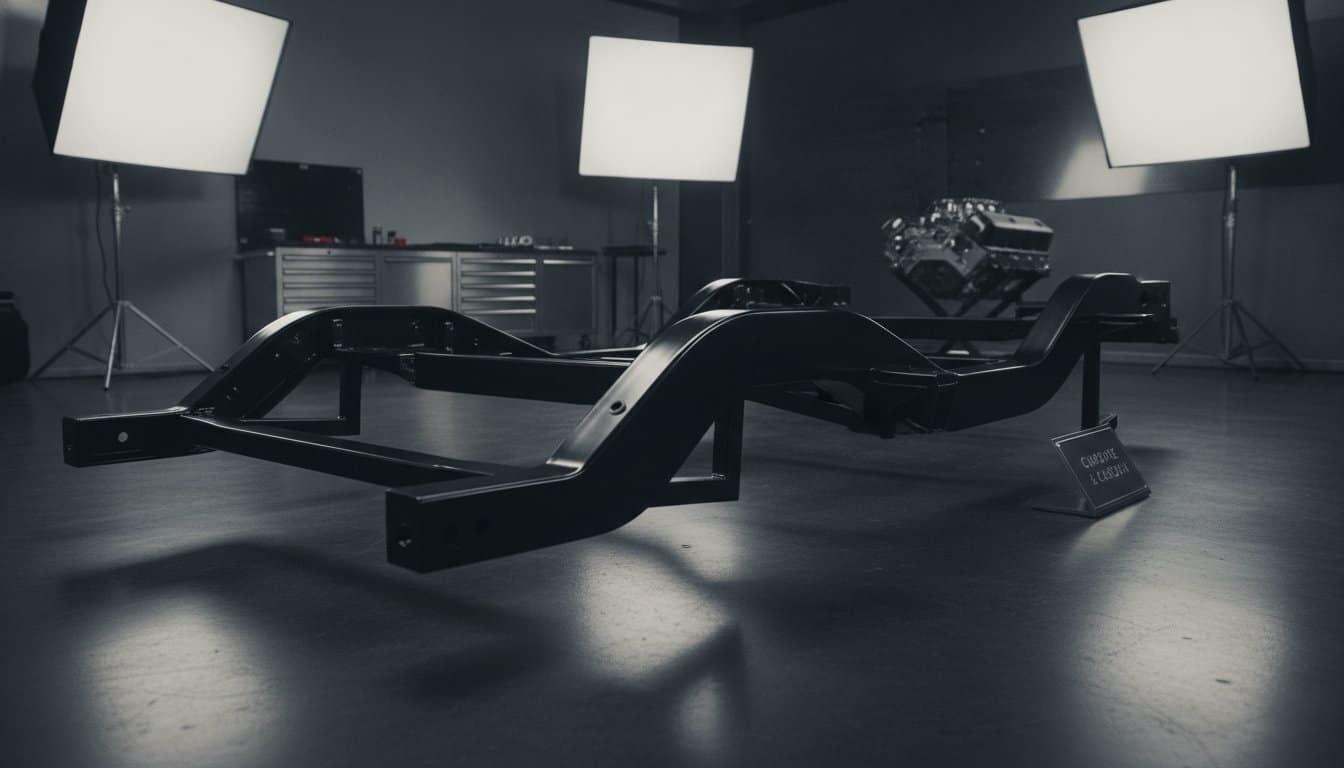
Your chassis is the structural foundation of every dream car, yet it’s often the most overlooked component once the body panels go on. A high-quality finish isn’t just about aesthetics; it’s about preserving a mechanical legacy against the inevitable creep of rust. If you’re currently staring at a bare metal frame, you’re likely wrestling with the decision of whether to spray it yourself or invest in a professional oven-cured finish. Understanding the real cost to powder coat a car frame is the first step in transitioning from a hobbyist to a master builder who values longevity as much as performance.
It’s natural to feel some hesitation when looking at shop quotes, especially when you’re trying to balance a tight project budget. We’ve all been there, weighing the immediate savings of a rattle can against the lifelong durability of a polymer bond. This guide promises to demystify the economics of chassis protection, providing you with a clear roadmap for your 2026 build. We will explore current market rates, which typically range from $1,000 to $1,500 for a full frame, and provide a technical checklist to ensure your metal is perfectly prepped before it ever hits the blast cabinet.
Key Takeaways
- Learn how to budget effectively by understanding that the typical cost to powder coat a car frame ranges between $1,000 and $1,500 depending on chassis size and prep needs.
- Discover why a thermosetting polymer finish offers superior structural protection and longevity compared to traditional chassis paint for high-performance builds.
- Master the essential preparation steps, such as degreasing and stripping, that reduce shop labor hours and keep your project expenses under control.
- Gain a professional checklist for inspecting your finished frame and clearing ground points to ensure a seamless transition to the assembly phase.
- Transition from a passive admirer to an active creator by leveraging technical justifications that turn a daunting restoration task into a logical, achievable step.
The Foundation of a Build: Why Powder Coating Your Frame Matters
Every legendary build begins with the bones. Stripping a vehicle down to its bare essence isn’t just about cleaning; it’s about preparing the canvas for a modern mechanical masterpiece. The powder coating process transforms old steel by applying a dry, thermosetting polymer electrostatically. Once cured in an industrial oven, this powder flows into a hard, continuous skin that is far more resilient than any liquid finish. For anyone building a high-horsepower project, this isn’t a luxury. It’s a structural requirement for a chassis that must withstand the massive torque and tension of modern performance engines.
Understanding the cost to powder coat a car frame is the first step in committing to a professional grade restoration. This investment ensures your foundation is sealed against the elements for decades. Unlike traditional paints that can pinhole or flake over time, powder creates a molecular bond that stands up to the rigors of the road. This durability is especially critical when you integrate precision components like rack-and-pinion steering or multi-link independent rear suspensions. A clean, coated frame provides a consistent, uniform surface for brackets and mounts, ensuring your alignment specs stay true and your hardware seats perfectly every time.
To see the scale of this work in action, watch this brief look at the process:
The Restomod Philosophy: Building for Longevity
True restomodding is about the marriage of vintage soul and modern reliability. This journey starts by stripping away decades of grime and oxidation to reach a sealed foundation. There is a profound psychological shift that happens when you roll a pristine, coated chassis back into your garage. Suddenly, the project feels achievable. You aren’t fighting rust or old grease anymore; you’re assembling a high-performance machine. You can learn more about this approach in our guide on what is a restomod. This finish provides a barrier against the harsh realities of modern driving, such as road salt and abrasive debris, which would quickly compromise a lesser finish.
Powder Coating vs. Chassis Paint: A Quick Overview
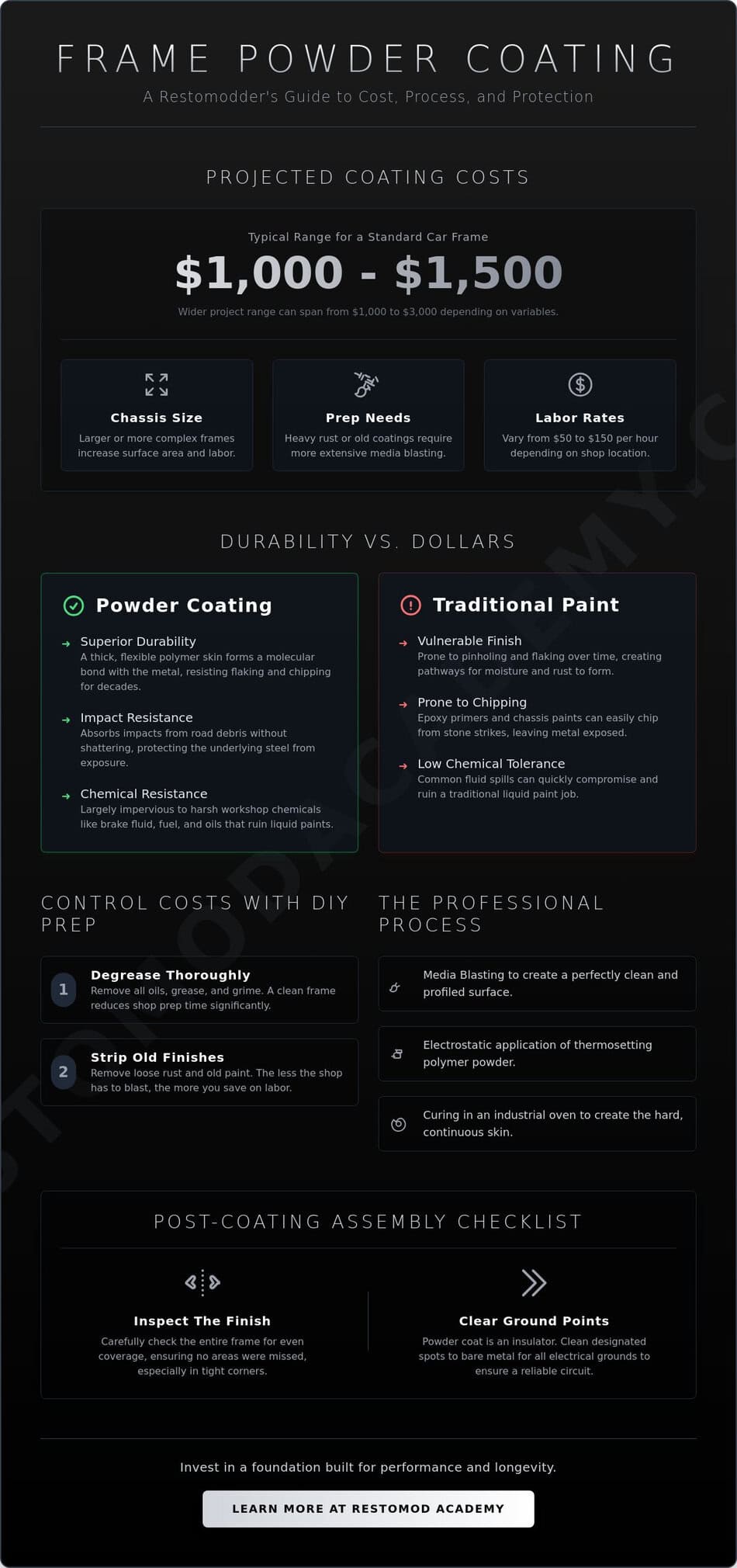
Epoxy primers have their place, but they often struggle with impact resistance. When a stone kicks up at highway speeds, traditional paint tends to chip, leaving the underlying metal vulnerable. Powder coating offers a flexible, thick layer that absorbs these impacts without shattering. It also provides superior defense against the chemicals found in a high-performance workshop. Brake fluid or spilled fuel can ruin a liquid paint job in seconds, but a cured polymer finish is largely indifferent to these hazards. You also gain immense aesthetic control. Whether you want a factory-correct semi-gloss black or a custom texture that highlights your fabrication work, the options are limitless.
Analyzing the National Averages: Real-World Costs for Frame Powder Coating
Analyzing the national averages reveals that the cost to powder coat a car frame is influenced by several technical variables. For a standard passenger car frame measuring up to 15 feet, you should expect to see quotes ranging from $1,200 to $1,400. However, the total project range can span from $1,000 to $3,000 depending on the complexity of the metal and the condition of the chassis. If you’re working on a heavy duty truck or a long wheelbase classic, the sheer surface area and weight will naturally command a premium. Beyond the materials, regional labor rates fluctuate between $50 and $150 per hour, which can significantly shift your final invoice depending on where your shop is located.
A professional quote is rarely a single number. It’s a combination of media blasting, surface preparation, and the application of a high-quality, durable finish. Shops typically price these projects per item rather than by square foot, meaning the intricacy of your frame’s design matters as much as its size. If you’re in the middle of planning a major powertrain upgrade, such as following the definitive guide to an ls engine swap, make sure all your brackets are welded and tested before the frame goes to the coater.
The Three Tiers of Frame Coating Costs
Budgeting for your chassis involves identifying which tier your project falls into. The Basic Tier covers stripped frames that arrive clean and only require standard media blasting and a single stage color. This usually stays near the $1,000 mark. The Mid-Tier, often around $1,500, includes frames with complex geometries that require extensive masking and multi stage blasting to reach every corner. Finally, the Premium Tier is for show quality builds. If you want custom candy colors, clear topcoats, or intricate detailing, expect your costs to exceed $2,000.
The Hidden Factors That Drive Quotes Up
When calculating the total cost to powder coat a car frame, don’t overlook the shop’s prep time. Several variables can inflate your estimate if you aren’t prepared. Excessive grease or old rubberized undercoating is a nightmare for coating shops; they will charge hourly for the labor intensive removal process. Specialty masking is another factor. Every threaded hole and precision mating surface must be protected to ensure your suspension bolts in correctly later. Lastly, older cast iron components or porous steel may require an outgassing cycle. This involves pre-heating the metal to release trapped gases that could otherwise cause bubbles in your finished coat.
Durability vs. Dollars: Powder Coating vs. Traditional Chassis Paint
Choosing between a spray gun and an industrial oven is a rite of passage for any builder. While liquid epoxy paints offer a lower entry price for materials, they rarely match the long term resilience of a polymer bond. Determining the total cost to powder coat a car frame requires looking past the initial shop quote and analyzing the hours you’ll spend on maintenance over the next decade. Professional powder coating provides a hard, non-porous shell that resists the chipping and flaking common with traditional paints. This structural integrity is why many high end builders view the finish as a one time investment rather than a recurring project expense.
Resale value is another critical factor in this equation. A chassis finished in a high quality powder coat signals to future buyers that the build was executed with a focus on longevity and precision. If you decide to sell your project down the road, the documented cost to powder coat a car frame often pays for itself in the form of a higher asking price. While paint is undeniably easier to touch up with a brush if you scrape the frame during assembly, the sheer frequency of those repairs on a painted surface can quickly become a nuisance. A powder finish is designed to survive the workshop environment and the open road with minimal intervention.
The Total Cost of Ownership Calculation
If you’re considering the DIY route, remember to factor in the hidden expenses. You’ll need a high volume compressor, professional HVLP spray guns, and a dedicated respirator system to handle epoxy fumes safely. These costs can easily climb toward $800 before you buy your first gallon of primer. By opting for a professional coater, you reclaim dozens of labor hours that would otherwise be spent in a sanding booth. A professionally applied powder finish typically offers a 20 year lifespan under normal driving conditions, whereas traditional chassis paint often requires a full strip and respray within a decade.
Performance Advantages on the Track and Street
High performance builds generate significant thermal energy. Modern types of powder coatings are engineered to withstand the intense heat cycles radiating from custom exhaust headers and turbocharged powerplants. This thermal stability prevents the finish from becoming brittle or discolored over time. On the street, the slick, glass like surface of a coated frame makes cleaning a simple task. Road grime and oil spills wipe away with a basic degreaser, allowing you to maintain a show quality undercarriage with a fraction of the effort required for a porous, painted surface. For those prioritizing a clean workspace, check out our list of recommended gear to help manage your frame during the preparation phase.
Preparation and Logistics: How to Control Your Coating Expenses
The shop’s blast cabinet is designed to remove rust and old paint, not to scrub away twenty years of accumulated engine oil and road grime. If you deliver a chassis covered in thick grease, the shop will likely charge their standard hourly labor rate, which ranges from $50 to $150 per hour, to degrease it before they can even begin the blasting process. You can drastically lower the total cost to powder coat a car frame by performing this dirty work in your own driveway. Use a heavy duty degreaser and a high pressure washer to strip the frame to its barest state. This labor ensures the media blaster can work efficiently without gumming up their expensive equipment with your old oil leaks.
Logistics play a major role in your project timeline and budget. Transporting a frame that can reach 15 feet in length requires a flatbed trailer or a dedicated vehicle transport service. Secure the chassis properly using soft straps rather than heavy chains that might gouge the metal. Once you arrive at the facility, walk the frame with the shop manager. Point out every threaded hole, VIN stamp, and precision mating surface that requires masking. Clear communication at this stage prevents the massive headache of trying to tap out hardened polymer from a blind bolt hole during the assembly phase.
Pre-Shop Checklist for Every Builder
Strip the chassis entirely before it leaves your garage. This means removing every rubber bushing, plastic clip, and brake line. These materials cannot survive the 400 degree Fahrenheit oven temperatures used during the curing process. Mark your masking areas with a high temp paint pen or provide the coater with a detailed diagram. Most importantly, finish all your fabrication first. If you need to weld on a new crossmember or a set of suspension mounts, do it now. Welding on a powder coated frame later will destroy the finish and compromise the structural bond you’ve worked so hard to create.
Saving Money Through Sweat Equity
Sweat equity is your best tool for staying under budget. While some shops include sandblasting in their flat rate, others itemize it at $25 to $45 per item. You can occasionally save by sourcing your own media blasting, but you must ensure the coater is ready to receive the frame immediately. Bare steel flashes with rust within hours in humid environments. To get your garage ready for this level of teardown, check out our recommended gear for the best disassembly tools. If you need a more structured plan for your build, consider our Premium Project Blueprints to ensure every step is calculated for precision.
Finalizing Your Chassis: Moving from Frame Coating to Assembly
The moment you roll your chassis off the trailer and back into the workshop, the entire energy of your build shifts. It’s no longer a collection of greasy components; it’s a clean, professional foundation ready for modern hardware. While the initial cost to powder coat a car frame requires a disciplined budget, the precision it brings to the assembly phase is where you truly see the return on your investment. Before you reach for the suspension arms, you must perform a methodical inspection. Run your hands over the rails and look deep into the gussets and pockets to ensure the mil thickness is consistent and there are no thin spots where the electrostatic charge might have struggled to reach.
Handling a freshly coated frame requires a different mindset than working with raw steel. Protect your investment by covering your jack stands with high density foam or heavy moving blankets. Even though the polymer finish is incredibly durable, a sharp metal edge on a stand can still cause a surface scratch that you’ll want to avoid. As you begin the assembly, keep your workspace organized and use clean tools to prevent transferring old grease onto your pristine finish. This stage of the project is about maintaining the high standard of quality you’ve established through the coating process.
Post-Coating Inspection and Prep
Your first technical task is to address the threaded holes. Even with the best masking, it’s common for a small amount of powder to creep into the threads. Don’t try to force a bolt through this residue, as you risk cross-threading the hole or chipping the surrounding finish. Instead, use a dedicated thread chaser or a tap and die set to gently clear the paths. You also need to establish clean electrical ground points. Since powder coating is a non-conductive polymer, you must grind away a small, inconspicuous patch of coating at your main ground locations to ensure a solid metal-to-metal connection for your wiring harness.
The Next Steps in Your Restomod Journey
With the frame prepped and grounded, you’re ready to transition into suspension and drivetrain installation. This is the most rewarding part of the journey, where the project begins to look like a vehicle again. If your plans include a modern powertrain upgrade, now is the time to consult the definitive guide to an ls engine swap to ensure your motor mounts and clearance requirements are perfectly aligned. View this finished frame as your first major victory. It represents a commitment to quality that will dictate the performance and reliability of your car for its entire second life on the road.
Sealing Your Legacy in Steel
You’ve now navigated the technical landscape of chassis protection and understand that the cost to powder coat a car frame is an investment in the structural integrity of your entire project. This choice separates a temporary fix from a generational restoration. By following the preparation steps we’ve discussed, you’re ensuring that every dollar spent on professional services translates directly into a finish that stands the test of time. You’ve transitioned from a passive admirer of fine machines to a creator who values precision and longevity.
To continue your journey with the same level of expertise, you need a mentor in your corner. Download The Ultimate Restomod Guide to master every stage of your build. This resource provides expert guidance from professional builder Brook Walsh and includes detailed blueprints for major classic car platforms. You’ll also find comprehensive reviews of the best automotive coating gear to ensure your workshop is equipped for excellence. The hard work of the teardown is finally behind you. It’s time to enjoy the meticulous process of assembly. Stay focused on the details, and remember that every bolt you tighten brings you one step closer to the first turn of the key.
Frequently Asked Questions
Is it worth powder coating a frame that has some existing rust?
Yes, powder coating is an excellent solution for rusty frames as long as the oxidation is limited to the surface. The professional media blasting process will strip the steel back to a white metal state, removing all rust before the polymer is applied. However, if the rust has caused structural thinning or holes, you must perform all necessary metal repairs and welding before the frame heads to the shop.
Can I powder coat a car frame in my own garage?
No, you cannot effectively powder coat a full chassis in a standard home garage. While small brackets can be cured in a dedicated toaster oven, a full car frame requires an industrial walk-in oven to reach and maintain the 400 degree Fahrenheit temperatures needed for the polymer to flow and cure. The scale of the equipment and the specialized electrostatic guns make this a task for professional facilities.
How much does it cost to powder coat a truck frame vs a car frame?
Truck frames command a higher price because their increased length and heavier mass require more materials and oven time. While a standard car frame up to 15 feet typically costs between $1,200 and $1,400, a heavy duty or long-wheelbase truck frame can see the cost to powder coat a car frame rise toward $3,000. The extra surface area simply demands more media for blasting and more powder for a consistent finish.
What is the best color for a restomod chassis?
Semi-gloss black is the most popular choice for restomod builders because it provides a clean, factory-plus appearance that highlights modern suspension components. This finish is excellent at hiding road grime and is much easier to maintain than high-gloss black, which shows every scratch and fingerprint. If you want a more industrial look, consider a dark charcoal or a chassis grey to make your hardware pop.
Does powder coating hide cracks or structural damage in the steel?
Powder coating will not hide structural damage and can actually make it more difficult to inspect the frame for cracks later. The thick, durable skin of the polymer can bridge tiny surface imperfections, but it won’t mask a failing weld or a stress fracture. Always conduct a thorough visual inspection of the bare metal immediately after it returns from the media blaster to ensure the foundation is sound.
How do I find a reputable automotive powder coating shop near me?
Seek out shops that specifically highlight automotive restoration work rather than those that focus on high-volume industrial batches. Ask potential coaters about their experience with chassis work and their specific masking procedures for VIN numbers and threaded holes. A reputable shop will be transparent about their outgassing cycles for older steel and should be able to show you examples of previous frame projects in their portfolio.
Should I powder coat the suspension components at the same time as the frame?
Yes, coating your control arms, sway bars, and crossmembers in the same batch as the frame ensures a perfect color match across the entire chassis. Many shops offer better pricing when you bring in a complete kit of parts, which helps manage the total cost to powder coat a car frame and suspension. This methodical approach saves you multiple trips to the coater and ensures your assembly phase is seamless.
What happens if I need to weld on the frame after it has been powder coated?
Avoid welding on a finished frame at all costs because the heat will vaporize the polymer and ruin the surrounding finish. If a modification is absolutely necessary, you must grind the coating away to reach bare metal, which creates a significant vulnerability in the protective shell. Any area touched by the welder will require a manual touch-up with chassis paint, which will never match the durability or texture of the original oven-cured powder.
Your chassis is the structural foundation of every dream car, yet it’s often the most overlooked component once the body panels go on. A high-quality finish isn’t just about aesthetics; it’s about preserving a mechanical legacy against the inevitable creep of rust. If you’re currently staring at a bare metal frame, you’re likely wrestling with the decision of whether to spray it yourself or invest in a professional oven-cured finish. Understanding the real cost to powder coat a car frame is the first step in transitioning from a hobbyist to a master builder who values longevity as much as performance.
It’s natural to feel some hesitation when looking at shop quotes, especially when you’re trying to balance a tight project budget. We’ve all been there, weighing the immediate savings of a rattle can against the lifelong durability of a polymer bond. This guide promises to demystify the economics of chassis protection, providing you with a clear roadmap for your 2026 build. We will explore current market rates, which typically range from $1,000 to $1,500 for a full frame, and provide a technical checklist to ensure your metal is perfectly prepped before it ever hits the blast cabinet.
Key Takeaways
- Learn how to budget effectively by understanding that the typical cost to powder coat a car frame ranges between $1,000 and $1,500 depending on chassis size and prep needs.
- Discover why a thermosetting polymer finish offers superior structural protection and longevity compared to traditional chassis paint for high-performance builds.
- Master the essential preparation steps, such as degreasing and stripping, that reduce shop labor hours and keep your project expenses under control.
- Gain a professional checklist for inspecting your finished frame and clearing ground points to ensure a seamless transition to the assembly phase.
- Transition from a passive admirer to an active creator by leveraging technical justifications that turn a daunting restoration task into a logical, achievable step.
The Foundation of a Build: Why Powder Coating Your Frame Matters
Every legendary build begins with the bones. Stripping a vehicle down to its bare essence isn’t just about cleaning; it’s about preparing the canvas for a modern mechanical masterpiece. The powder coating process transforms old steel by applying a dry, thermosetting polymer electrostatically. Once cured in an industrial oven, this powder flows into a hard, continuous skin that is far more resilient than any liquid finish. For anyone building a high-horsepower project, this isn’t a luxury. It’s a structural requirement for a chassis that must withstand the massive torque and tension of modern performance engines.
Understanding the cost to powder coat a car frame is the first step in committing to a professional grade restoration. This investment ensures your foundation is sealed against the elements for decades. Unlike traditional paints that can pinhole or flake over time, powder creates a molecular bond that stands up to the rigors of the road. This durability is especially critical when you integrate precision components like rack-and-pinion steering or multi-link independent rear suspensions. A clean, coated frame provides a consistent, uniform surface for brackets and mounts, ensuring your alignment specs stay true and your hardware seats perfectly every time.
To see the scale of this work in action, watch this brief look at the process:
The Restomod Philosophy: Building for Longevity
True restomodding is about the marriage of vintage soul and modern reliability. This journey starts by stripping away decades of grime and oxidation to reach a sealed foundation. There is a profound psychological shift that happens when you roll a pristine, coated chassis back into your garage. Suddenly, the project feels achievable. You aren’t fighting rust or old grease anymore; you’re assembling a high-performance machine. You can learn more about this approach in our guide on what is a restomod. This finish provides a barrier against the harsh realities of modern driving, such as road salt and abrasive debris, which would quickly compromise a lesser finish.
Powder Coating vs. Chassis Paint: A Quick Overview
Epoxy primers have their place, but they often struggle with impact resistance. When a stone kicks up at highway speeds, traditional paint tends to chip, leaving the underlying metal vulnerable. Powder coating offers a flexible, thick layer that absorbs these impacts without shattering. It also provides superior defense against the chemicals found in a high-performance workshop. Brake fluid or spilled fuel can ruin a liquid paint job in seconds, but a cured polymer finish is largely indifferent to these hazards. You also gain immense aesthetic control. Whether you want a factory-correct semi-gloss black or a custom texture that highlights your fabrication work, the options are limitless.
Analyzing the National Averages: Real-World Costs for Frame Powder Coating
Analyzing the national averages reveals that the cost to powder coat a car frame is influenced by several technical variables. For a standard passenger car frame measuring up to 15 feet, you should expect to see quotes ranging from $1,200 to $1,400. However, the total project range can span from $1,000 to $3,000 depending on the complexity of the metal and the condition of the chassis. If you’re working on a heavy duty truck or a long wheelbase classic, the sheer surface area and weight will naturally command a premium. Beyond the materials, regional labor rates fluctuate between $50 and $150 per hour, which can significantly shift your final invoice depending on where your shop is located.
A professional quote is rarely a single number. It’s a combination of media blasting, surface preparation, and the application of a high-quality, durable finish. Shops typically price these projects per item rather than by square foot, meaning the intricacy of your frame’s design matters as much as its size. If you’re in the middle of planning a major powertrain upgrade, such as following the definitive guide to an ls engine swap, make sure all your brackets are welded and tested before the frame goes to the coater.
The Three Tiers of Frame Coating Costs
Budgeting for your chassis involves identifying which tier your project falls into. The Basic Tier covers stripped frames that arrive clean and only require standard media blasting and a single stage color. This usually stays near the $1,000 mark. The Mid-Tier, often around $1,500, includes frames with complex geometries that require extensive masking and multi stage blasting to reach every corner. Finally, the Premium Tier is for show quality builds. If you want custom candy colors, clear topcoats, or intricate detailing, expect your costs to exceed $2,000.
The Hidden Factors That Drive Quotes Up
When calculating the total cost to powder coat a car frame, don’t overlook the shop’s prep time. Several variables can inflate your estimate if you aren’t prepared. Excessive grease or old rubberized undercoating is a nightmare for coating shops; they will charge hourly for the labor intensive removal process. Specialty masking is another factor. Every threaded hole and precision mating surface must be protected to ensure your suspension bolts in correctly later. Lastly, older cast iron components or porous steel may require an outgassing cycle. This involves pre-heating the metal to release trapped gases that could otherwise cause bubbles in your finished coat.
Durability vs. Dollars: Powder Coating vs. Traditional Chassis Paint
Choosing between a spray gun and an industrial oven is a rite of passage for any builder. While liquid epoxy paints offer a lower entry price for materials, they rarely match the long term resilience of a polymer bond. Determining the total cost to powder coat a car frame requires looking past the initial shop quote and analyzing the hours you’ll spend on maintenance over the next decade. Professional powder coating provides a hard, non-porous shell that resists the chipping and flaking common with traditional paints. This structural integrity is why many high end builders view the finish as a one time investment rather than a recurring project expense.
Resale value is another critical factor in this equation. A chassis finished in a high quality powder coat signals to future buyers that the build was executed with a focus on longevity and precision. If you decide to sell your project down the road, the documented cost to powder coat a car frame often pays for itself in the form of a higher asking price. While paint is undeniably easier to touch up with a brush if you scrape the frame during assembly, the sheer frequency of those repairs on a painted surface can quickly become a nuisance. A powder finish is designed to survive the workshop environment and the open road with minimal intervention.
The Total Cost of Ownership Calculation
If you’re considering the DIY route, remember to factor in the hidden expenses. You’ll need a high volume compressor, professional HVLP spray guns, and a dedicated respirator system to handle epoxy fumes safely. These costs can easily climb toward $800 before you buy your first gallon of primer. By opting for a professional coater, you reclaim dozens of labor hours that would otherwise be spent in a sanding booth. A professionally applied powder finish typically offers a 20 year lifespan under normal driving conditions, whereas traditional chassis paint often requires a full strip and respray within a decade.
Performance Advantages on the Track and Street
High performance builds generate significant thermal energy. Modern types of powder coatings are engineered to withstand the intense heat cycles radiating from custom exhaust headers and turbocharged powerplants. This thermal stability prevents the finish from becoming brittle or discolored over time. On the street, the slick, glass like surface of a coated frame makes cleaning a simple task. Road grime and oil spills wipe away with a basic degreaser, allowing you to maintain a show quality undercarriage with a fraction of the effort required for a porous, painted surface. For those prioritizing a clean workspace, check out our list of recommended gear to help manage your frame during the preparation phase.
Preparation and Logistics: How to Control Your Coating Expenses
The shop’s blast cabinet is designed to remove rust and old paint, not to scrub away twenty years of accumulated engine oil and road grime. If you deliver a chassis covered in thick grease, the shop will likely charge their standard hourly labor rate, which ranges from $50 to $150 per hour, to degrease it before they can even begin the blasting process. You can drastically lower the total cost to powder coat a car frame by performing this dirty work in your own driveway. Use a heavy duty degreaser and a high pressure washer to strip the frame to its barest state. This labor ensures the media blaster can work efficiently without gumming up their expensive equipment with your old oil leaks.
Logistics play a major role in your project timeline and budget. Transporting a frame that can reach 15 feet in length requires a flatbed trailer or a dedicated vehicle transport service. Secure the chassis properly using soft straps rather than heavy chains that might gouge the metal. Once you arrive at the facility, walk the frame with the shop manager. Point out every threaded hole, VIN stamp, and precision mating surface that requires masking. Clear communication at this stage prevents the massive headache of trying to tap out hardened polymer from a blind bolt hole during the assembly phase.
Pre-Shop Checklist for Every Builder
Strip the chassis entirely before it leaves your garage. This means removing every rubber bushing, plastic clip, and brake line. These materials cannot survive the 400 degree Fahrenheit oven temperatures used during the curing process. Mark your masking areas with a high temp paint pen or provide the coater with a detailed diagram. Most importantly, finish all your fabrication first. If you need to weld on a new crossmember or a set of suspension mounts, do it now. Welding on a powder coated frame later will destroy the finish and compromise the structural bond you’ve worked so hard to create.
Saving Money Through Sweat Equity
Sweat equity is your best tool for staying under budget. While some shops include sandblasting in their flat rate, others itemize it at $25 to $45 per item. You can occasionally save by sourcing your own media blasting, but you must ensure the coater is ready to receive the frame immediately. Bare steel flashes with rust within hours in humid environments. To get your garage ready for this level of teardown, check out our recommended gear for the best disassembly tools. If you need a more structured plan for your build, consider our Premium Project Blueprints to ensure every step is calculated for precision.
Finalizing Your Chassis: Moving from Frame Coating to Assembly
The moment you roll your chassis off the trailer and back into the workshop, the entire energy of your build shifts. It’s no longer a collection of greasy components; it’s a clean, professional foundation ready for modern hardware. While the initial cost to powder coat a car frame requires a disciplined budget, the precision it brings to the assembly phase is where you truly see the return on your investment. Before you reach for the suspension arms, you must perform a methodical inspection. Run your hands over the rails and look deep into the gussets and pockets to ensure the mil thickness is consistent and there are no thin spots where the electrostatic charge might have struggled to reach.
Handling a freshly coated frame requires a different mindset than working with raw steel. Protect your investment by covering your jack stands with high density foam or heavy moving blankets. Even though the polymer finish is incredibly durable, a sharp metal edge on a stand can still cause a surface scratch that you’ll want to avoid. As you begin the assembly, keep your workspace organized and use clean tools to prevent transferring old grease onto your pristine finish. This stage of the project is about maintaining the high standard of quality you’ve established through the coating process.
Post-Coating Inspection and Prep
Your first technical task is to address the threaded holes. Even with the best masking, it’s common for a small amount of powder to creep into the threads. Don’t try to force a bolt through this residue, as you risk cross-threading the hole or chipping the surrounding finish. Instead, use a dedicated thread chaser or a tap and die set to gently clear the paths. You also need to establish clean electrical ground points. Since powder coating is a non-conductive polymer, you must grind away a small, inconspicuous patch of coating at your main ground locations to ensure a solid metal-to-metal connection for your wiring harness.
The Next Steps in Your Restomod Journey
With the frame prepped and grounded, you’re ready to transition into suspension and drivetrain installation. This is the most rewarding part of the journey, where the project begins to look like a vehicle again. If your plans include a modern powertrain upgrade, now is the time to consult the definitive guide to an ls engine swap to ensure your motor mounts and clearance requirements are perfectly aligned. View this finished frame as your first major victory. It represents a commitment to quality that will dictate the performance and reliability of your car for its entire second life on the road.
Sealing Your Legacy in Steel
You’ve now navigated the technical landscape of chassis protection and understand that the cost to powder coat a car frame is an investment in the structural integrity of your entire project. This choice separates a temporary fix from a generational restoration. By following the preparation steps we’ve discussed, you’re ensuring that every dollar spent on professional services translates directly into a finish that stands the test of time. You’ve transitioned from a passive admirer of fine machines to a creator who values precision and longevity.
To continue your journey with the same level of expertise, you need a mentor in your corner. Download The Ultimate Restomod Guide to master every stage of your build. This resource provides expert guidance from professional builder Brook Walsh and includes detailed blueprints for major classic car platforms. You’ll also find comprehensive reviews of the best automotive coating gear to ensure your workshop is equipped for excellence. The hard work of the teardown is finally behind you. It’s time to enjoy the meticulous process of assembly. Stay focused on the details, and remember that every bolt you tighten brings you one step closer to the first turn of the key.
Frequently Asked Questions
Is it worth powder coating a frame that has some existing rust?
Yes, powder coating is an excellent solution for rusty frames as long as the oxidation is limited to the surface. The professional media blasting process will strip the steel back to a white metal state, removing all rust before the polymer is applied. However, if the rust has caused structural thinning or holes, you must perform all necessary metal repairs and welding before the frame heads to the shop.
Can I powder coat a car frame in my own garage?
No, you cannot effectively powder coat a full chassis in a standard home garage. While small brackets can be cured in a dedicated toaster oven, a full car frame requires an industrial walk-in oven to reach and maintain the 400 degree Fahrenheit temperatures needed for the polymer to flow and cure. The scale of the equipment and the specialized electrostatic guns make this a task for professional facilities.
How much does it cost to powder coat a truck frame vs a car frame?
Truck frames command a higher price because their increased length and heavier mass require more materials and oven time. While a standard car frame up to 15 feet typically costs between $1,200 and $1,400, a heavy duty or long-wheelbase truck frame can see the cost to powder coat a car frame rise toward $3,000. The extra surface area simply demands more media for blasting and more powder for a consistent finish.
What is the best color for a restomod chassis?
Semi-gloss black is the most popular choice for restomod builders because it provides a clean, factory-plus appearance that highlights modern suspension components. This finish is excellent at hiding road grime and is much easier to maintain than high-gloss black, which shows every scratch and fingerprint. If you want a more industrial look, consider a dark charcoal or a chassis grey to make your hardware pop.
Does powder coating hide cracks or structural damage in the steel?
Powder coating will not hide structural damage and can actually make it more difficult to inspect the frame for cracks later. The thick, durable skin of the polymer can bridge tiny surface imperfections, but it won’t mask a failing weld or a stress fracture. Always conduct a thorough visual inspection of the bare metal immediately after it returns from the media blaster to ensure the foundation is sound.
How do I find a reputable automotive powder coating shop near me?
Seek out shops that specifically highlight automotive restoration work rather than those that focus on high-volume industrial batches. Ask potential coaters about their experience with chassis work and their specific masking procedures for VIN numbers and threaded holes. A reputable shop will be transparent about their outgassing cycles for older steel and should be able to show you examples of previous frame projects in their portfolio.
Should I powder coat the suspension components at the same time as the frame?
Yes, coating your control arms, sway bars, and crossmembers in the same batch as the frame ensures a perfect color match across the entire chassis. Many shops offer better pricing when you bring in a complete kit of parts, which helps manage the total cost to powder coat a car frame and suspension. This methodical approach saves you multiple trips to the coater and ensures your assembly phase is seamless.
What happens if I need to weld on the frame after it has been powder coated?
Avoid welding on a finished frame at all costs because the heat will vaporize the polymer and ruin the surrounding finish. If a modification is absolutely necessary, you must grind the coating away to reach bare metal, which creates a significant vulnerability in the protective shell. Any area touched by the welder will require a manual touch-up with chassis paint, which will never match the durability or texture of the original oven-cured powder.